
Winter replacement · 9 min read
Replacing a conservatory roof in winter
A conservatory roof can be replaced in winter, but the season changes how the job is planned. Here is what the cold, the wet and the short days alter, and when waiting is the better call.
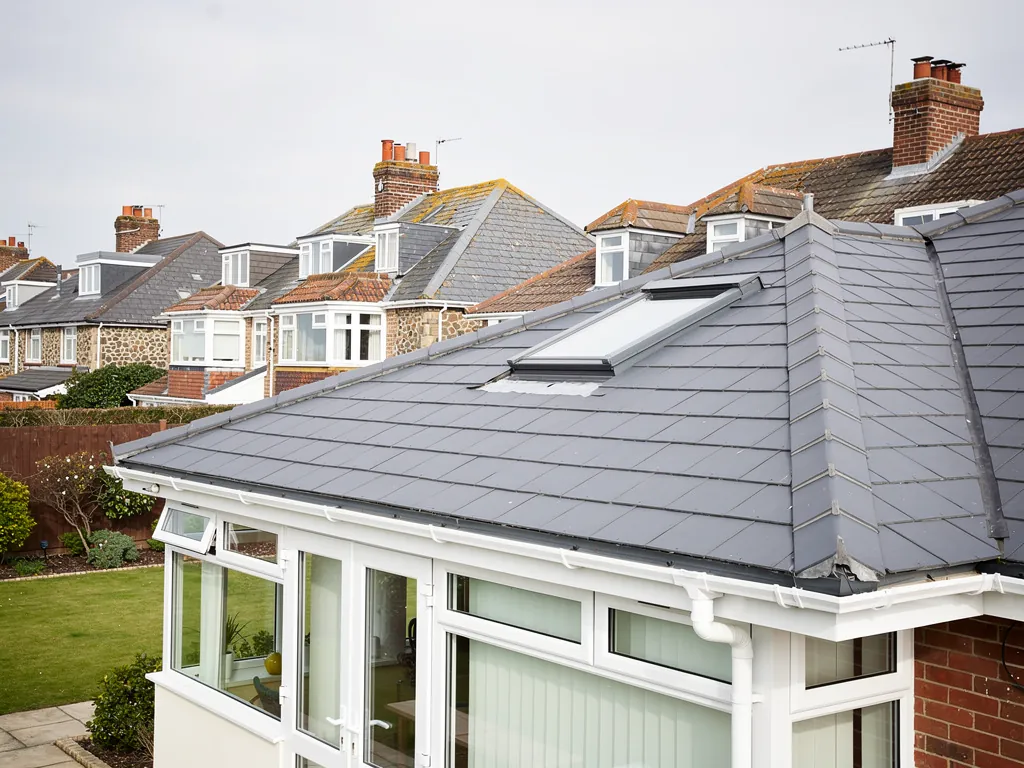
The roof starts to drip in November, a pane clouds over by December, and a gale in January finds the one loose cap. Whether to wait for spring is a fair question, and the answer is not always yes. A failing roof does more harm sitting through months of rain than it does being replaced on a cold day.
Winter does change the job, though. Daylight is short, surfaces stay damp, and the forecast matters more than usual because an open roof over a heated room is an expensive thing to leave exposed. Good planning handles most of that. A few parts of the job do need milder conditions, and a roofer who tells you otherwise is not being straight with you.
This guide explains what changes between a summer and a winter replacement, how the house is kept dry while the roof is open, which roof types suit winter fitting best, and how to decide between acting now and waiting. It also covers what to do when a roof has failed in bad weather and you need a temporary fix first. Our conservatory roof replacement page covers the work itself.
Is winter a bad time to replace the roof
Winter is not a bad time in itself, and plenty of roofs are replaced in it. It is a harder time to be careless. A roof can be stripped and fitted in any month when the weather allows, and a well run job closes the room in each day so that nothing is left open overnight. What changes is how many days are suitable, how much of each day is usable and how much slack the plan needs.
There are real reasons to go ahead in winter. A leaking roof damages carpets, plaster and the house wall the longer it is left, and a failing roof is more likely to let go in a gale than a sound one. Another is that a roof you have already decided to replace gains nothing from sitting through another few months of bad weather.
There are also real reasons to wait. Where the roof still keeps water out and the complaint is comfort, such as a room that is too cold to use, there is no emergency, and a spring start means more settled weather and longer light. A covering that is only tired can often be nursed through a winter with smaller repairs.
That choice is what the survey is for. We inspect the roof and the frame, record the faults on camera and tell you whether the job can wait. If it can, that is the advice. If not, we set out which parts need attention first and why. A fault that is letting water in should be dealt with now, even if the full replacement is booked for later.
What cold, wet and short days change on site
The weather affects a conservatory job in three ways: working conditions, materials and the schedule.
Working conditions come first. Rain makes ladders, scaffold boards and roof surfaces slippery, and wind makes it unsafe to lift large panes of glass or lengths of sheet. The roofing crew will stop in conditions that put people at risk, and a day lost to the weather is a day lost, not a failure. Short winter daylight also shortens the working day, so the same job takes more calendar days than it would in summer.
Materials come second. Sealants, adhesives and roofing membranes each have a temperature range printed on the manufacturer's data sheet, and a good roofer works inside that range, not outside it. Frost and damp surfaces can stop a seal from bonding properly. On a cold, wet morning it may be wiser to prepare and fit the dry components and leave the sealing for a better window, as long as the roof is closed in between.
Planning in slack
The third effect is on the schedule, and it is the one customers notice most. A summer plan can run to a tight order, but a winter plan builds in spare days and a weather rule: strip only what can be closed in, keep covers on site and be ready to stop. We agree that rule with you before we start.
Made-to-measure glass units and prefabricated roof components also have their own lead time, and the survey is where we ask the supplier how long it will be. A roof ordered in autumn for a December fit needs the order placed early, or the work slides into the new year.
Keeping the house warm and dry while the roof is open
The biggest risk in a winter replacement is not the cold on site. It is the damage that a gap in the roof can do to the room and to the house behind it. We plan to prevent that, and the plan is simple.
- The old roof is stripped in sections, and each section is closed in again before work stops for the day.
- Heavy-duty covers and battens are kept on site and put on whenever the forecast turns.
- The door between the house and the conservatory is shut and sealed with sheeting so that dust and cold air stay out of the house.
- Furniture, floor coverings and anything that water could spoil are moved out or covered before work begins, and any plants stay clear of the base.
You can help in two small ways: turn off any radiator or underfloor heating zone in the conservatory, so you are not paying to heat the outdoors, and tell us about any alarm sensors or smart devices in the room so we can work around them.
The junction between the conservatory and the house is the point to watch. That is where the wall is exposed when the old flashing comes off, and where rain can run behind the cladding or render if the opening is left unprotected. We cover it while it is open and form the new flashing as soon as the new roof is on. Our answer on why a conservatory roof drips with condensation explains what causes the damp you may already be seeing on the inside face.
Which roof types suit a winter fit best
Not every roof system responds to winter in the same way, and the choice can make the job easier or harder.
Polycarbonate
Sheets are light and go on quickly, which suits a job where you want the room closed in fast. They need careful sealing at the bars and eaves, and the seals should go on in conditions the data sheet allows. Weigh the lifespan before choosing it for any season: the Eco Experts give a polycarbonate roof around 10 to 15 years.
Glass
Glazed units are made to measure and are heavy. Once they are ordered, the job depends on delivery, on handling in wind and on a dry enough spell to seat the seals. They give a quick close-in once they are on the frame, but a wet or windy day can hold up the lift.
Tiled or solid roofs
A lightweight tiled system or a full solid roof has more layers and more joints, so it takes more working days. In exchange, each layer closes in the one below, and once the underlay and battens are on the room is much better protected than under a half-fitted glazed roof. The extra weight also means the frame check matters more, and a frame found wanting in winter is no easier to strengthen than in summer. A solid roof is a building control matter, and the Planning Portal's guidance is that a replacement roof must comply with the Building Regulations. The permission and notification steps can take their own time, and that is often the reason a solid roof is planned for spring.
Scaffold, licences and the calendar
Access takes planning in any season, and in winter the lead times matter more because every delay pushes the start into harder weather.
Scaffolding over a public pavement or road is licensed under section 169 of the Highways Act 1980, which takes notice. West Sussex County Council sets a minimum of 10 working days' notice and a fee of £266 for a month. Across the border in Hampshire the rule is ten clear working days, and the first fortnight costs £211.90. Treat that wait as part of the programme when you choose a month, and ask the scaffold firm for the latest start it can promise.
Planning and building control add their own steps for a solid roof, and a conservation area, a listed building or a property in the National Park may add more. If the paperwork is not in place, work cannot start however good the weather is. That is the usual reason a winter job slips to spring, and it is better to know in October than in January.
If you sign at home
Signing a contract in your own living room, after we have surveyed, gives you a 14 day cancellation period that begins on the day the contract is made. A written request from you is what allows work to begin inside it. Visits you ask for specifically to carry out an urgent repair fall under a different rule, so if water is coming in now, make that clear when you call.
Our guide on how long a conservatory roof takes to replace sets out what drives the length of a job.
When the roof fails in bad weather
Sometimes the decision is made for you. A gale lifts a sheet, a pane cracks, or a joint opens and water runs down the wall. In that case the first job is not the replacement. It is making the room safe and dry, and stopping further water from reaching the house.
Start by keeping people out from under any glass that has cracked. Then, if you can do it safely from inside, catch the water and move belongings. Do not climb onto a conservatory roof: glazed and polycarbonate roofs are not made to be walked on, and a fall through one is serious. If you ring us about a leak, a safe, dry room comes before any talk of a new roof.
If you think you may claim, your insurer should hear first. Which? recommends contacting them early, and if you pay for an emergency repair yourself, that you let them know and keep every receipt. Photographs count as vital evidence according to the Institution of Structural Engineers, so take them before anything is moved or cleared. Cover depends on the policy and the cause: Which? uses a badly maintained roof that admits water as an example of wear and tear, and quotes Financial Conduct Authority data showing only 32% of storm-related claims made in 2024 ended in a payout. Should the answer be no and you think it wrong, put the complaint to the insurer, then to the Financial Ombudsman Service, which costs nothing to use.
A temporary repair buys time for a proper survey, and then the replacement can be planned for the right moment. Our answer on whether home insurance covers a conservatory roof looks at that question in more detail.
Questions
Winter replacement questions
Should I wait until spring to have the conservatory roof replaced?
If the roof is leaking or damaged, do not wait, because water will damage the room and the wall. If the roof is sound but cold, a spring start is reasonable. The survey tells you which case you are in, and a temporary repair can hold a failing roof until the right window.
Does the conservatory heating get wasted during a winter job?
It can, since the room is open to the air for part of each working day. Switch off the radiator or underfloor zone in the conservatory before work begins, keep the house door shut and sealed, and leave the house heating at its normal setting. We cover and close in the roof as work goes on.
Is a winter quote different from a summer one?
The price is set by the roof size, the covering, the access and the condition of the frame, not by the month. A winter job can take more working days because of weather and daylight, and our written price comes after the survey, so ask what the programme allows for in lost days. Check that the figure includes VAT and any scaffolding.