
Slate roofing in Bognor Regis
Slate is a roof to repair where it can be repaired and to relay where it cannot. We inspect the slates, nails and battens, photograph what we find and give you a straight verdict ahead of any price.
- Repair or replace,
said plainly - Photos of
your own roof - Written quote,
one total price - Ridges and verges
fixed to BS 5534
Signs
Signs a slate roof needs attention
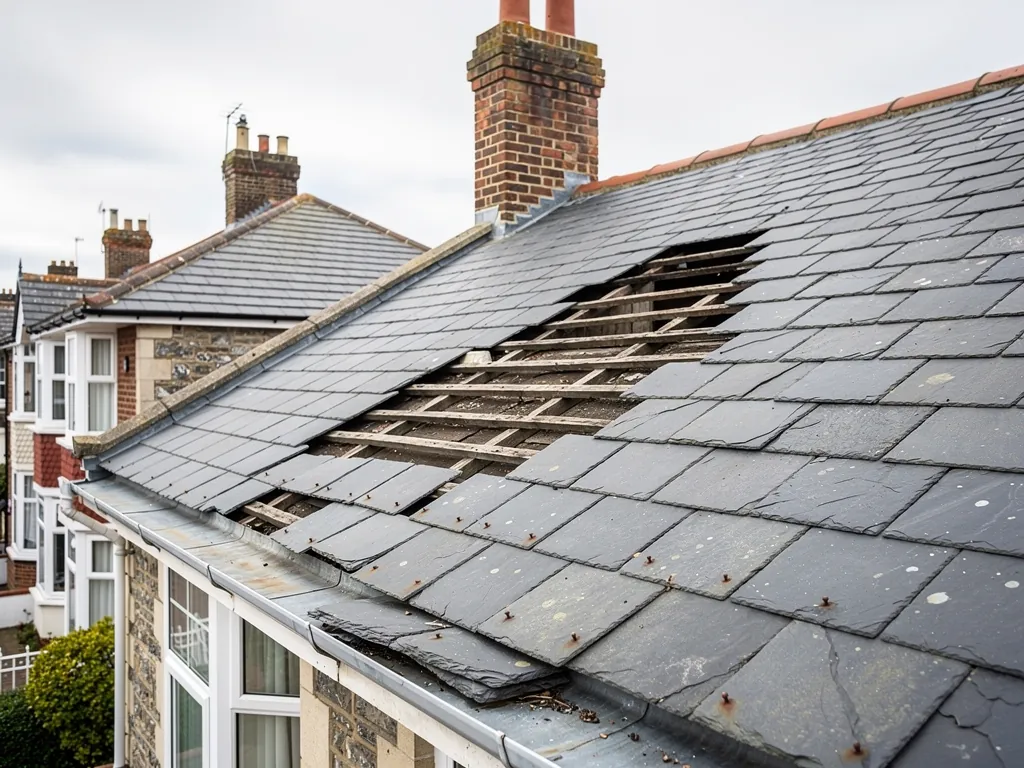
- Slates lying in the gutter or garden
- Dark gaps or crooked slates in a course
- Slate edges flaking into thin layers
- Moss and debris packed into the valleys
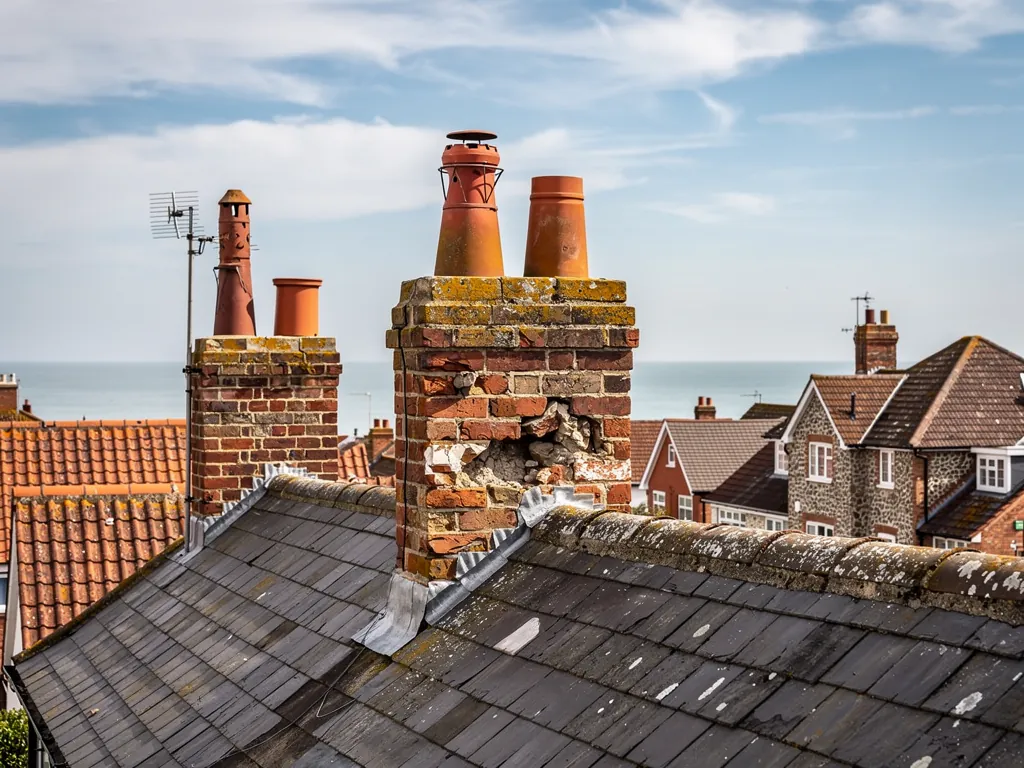
- Lead lifting away from the chimney stack
Slate work we carry out
Slate jobs we take on in Bognor Regis and West Sussex
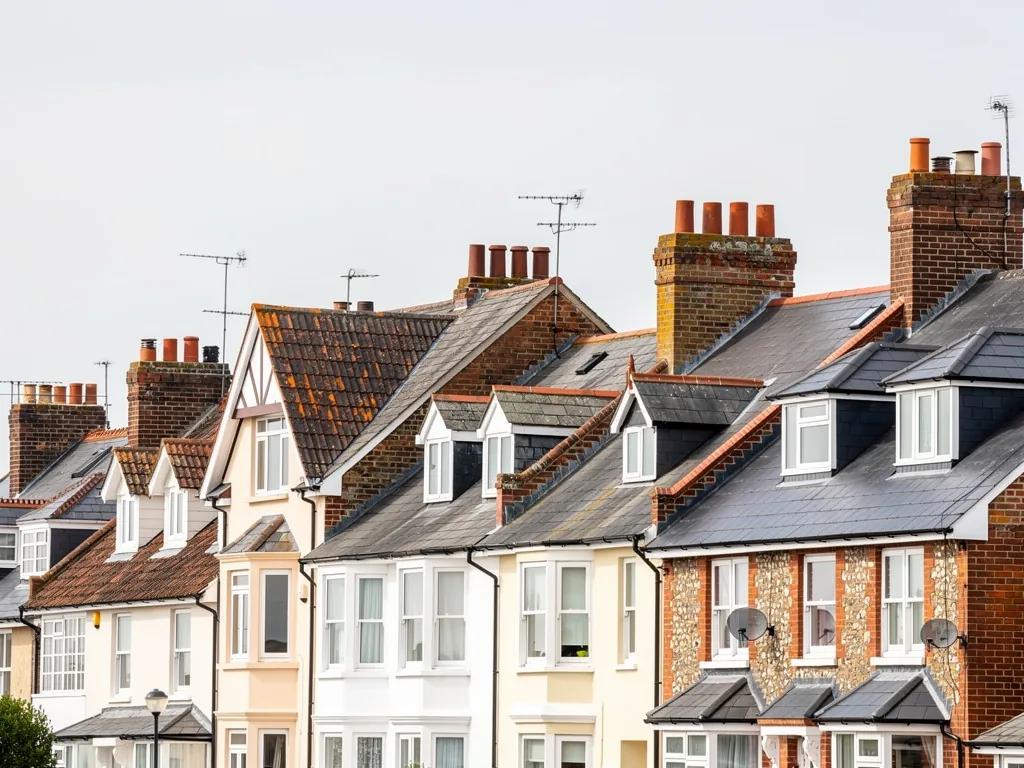
Slipped and cracked slates
We replace cracked slates to match in size and colour, and refix slipped ones with a tingle or fresh fixings, checking the batten behind each before we leave.
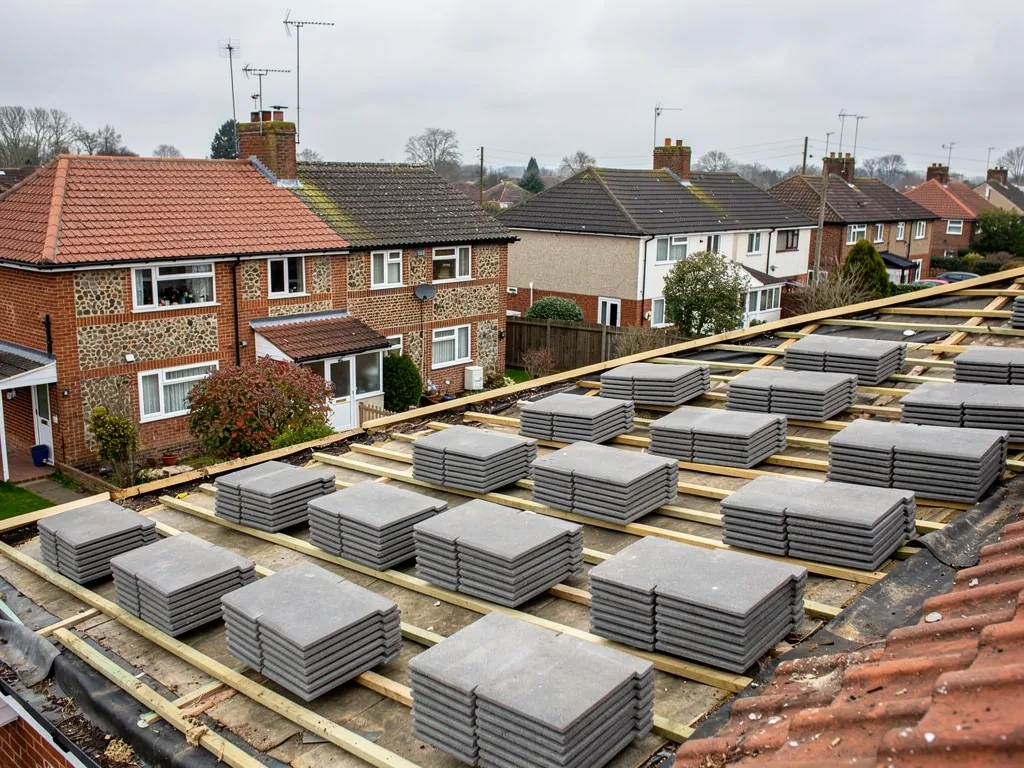
Re-slating a whole roof
The old slates are stripped and sorted, sound ones kept for reuse, underlay and battens renewed, and any shortfall made up with matching natural slate.
New slate roofs
On extensions, dormers and new builds we fix natural slate to suit the pitch and exposure of the site, working to BS 5534 and the slate maker's data.
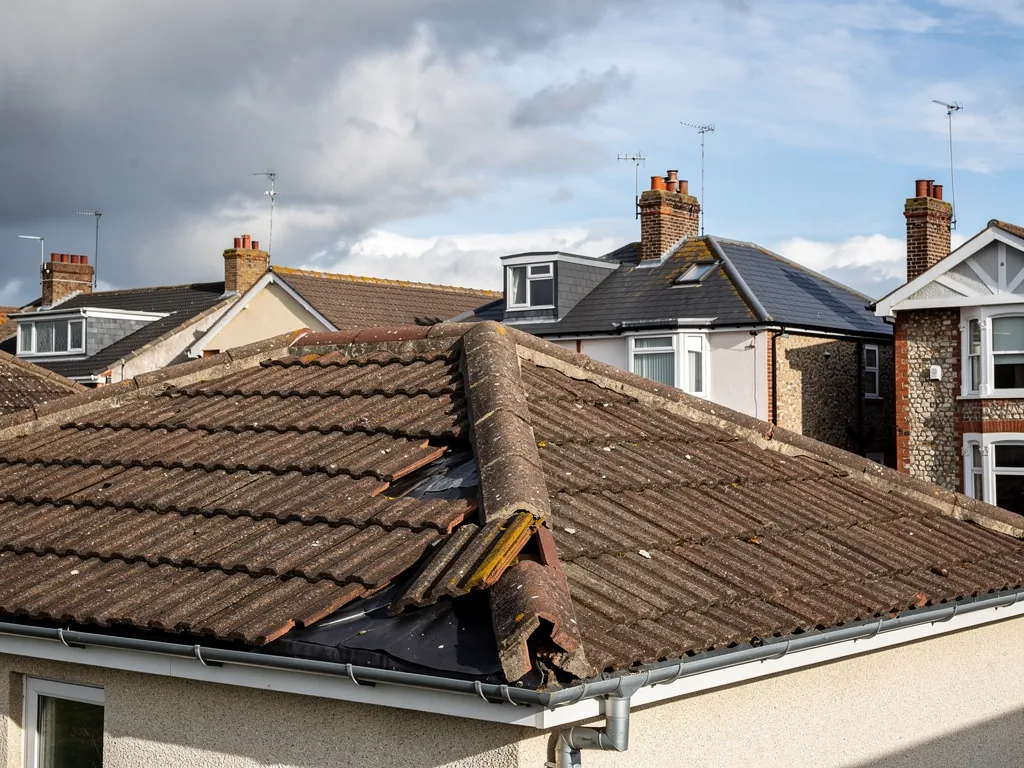
Ridges, hips and verges
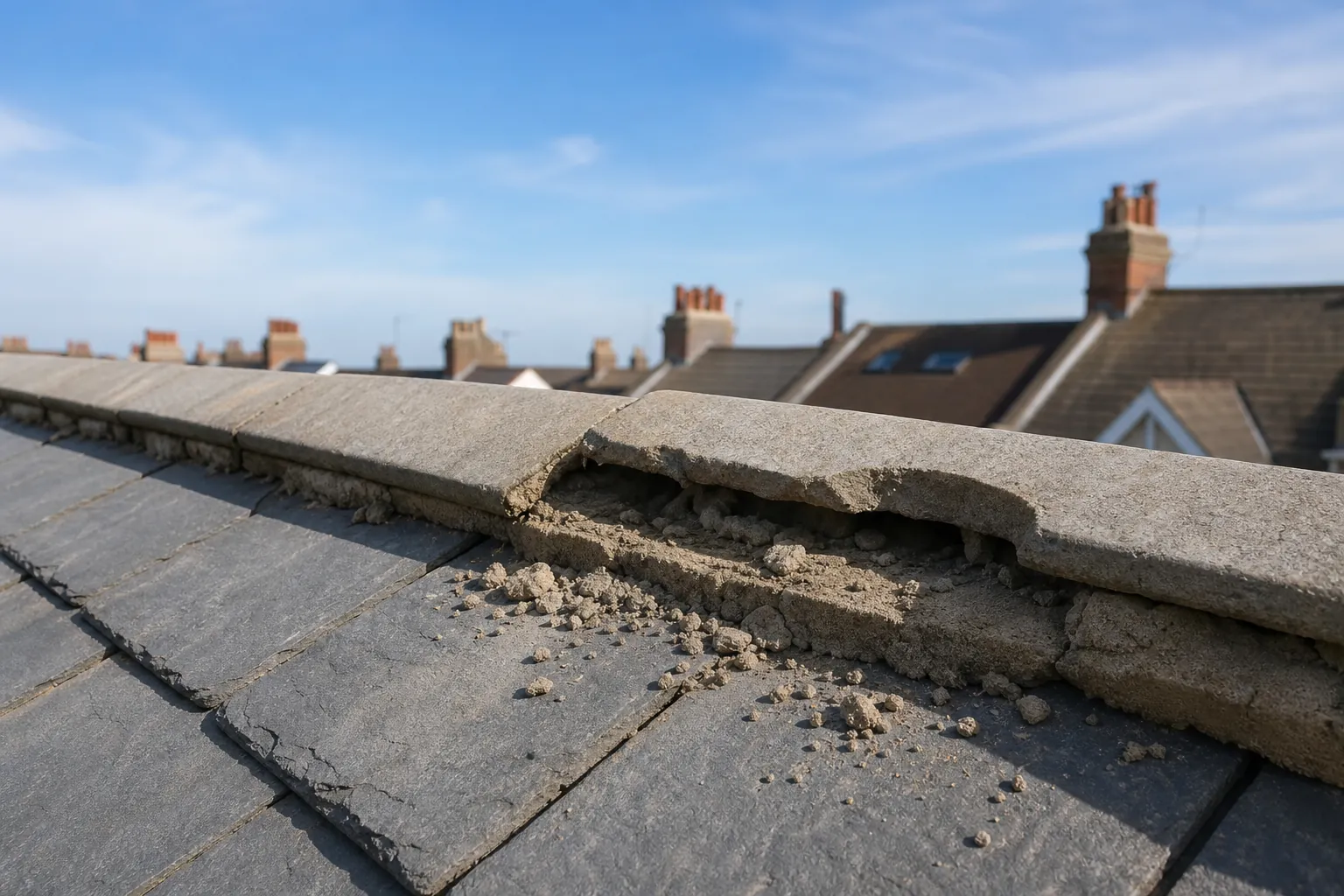
Ridge and hip fittings on slate are mechanically fixed, in clay, lead-clad or dry-fix form, chosen to suit the building and the street it sits in.
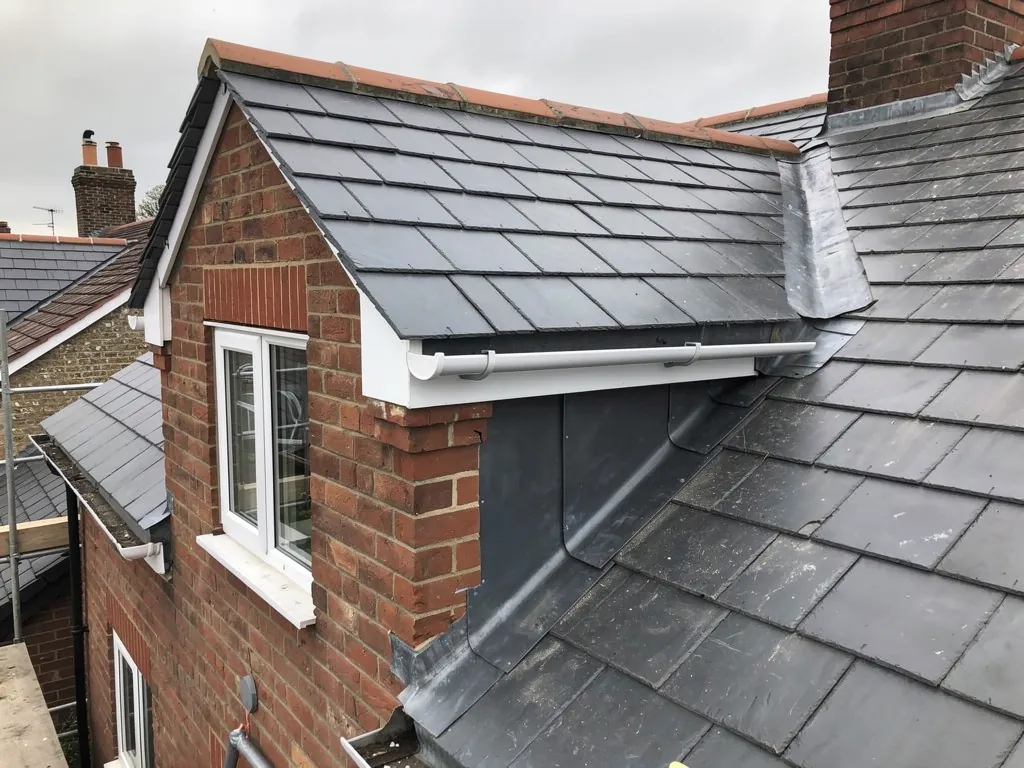
Lead work around slate
Soakers, flashings and valley linings are renewed in lead alongside the slating, so the weakest details do not wear out before the new roof does.
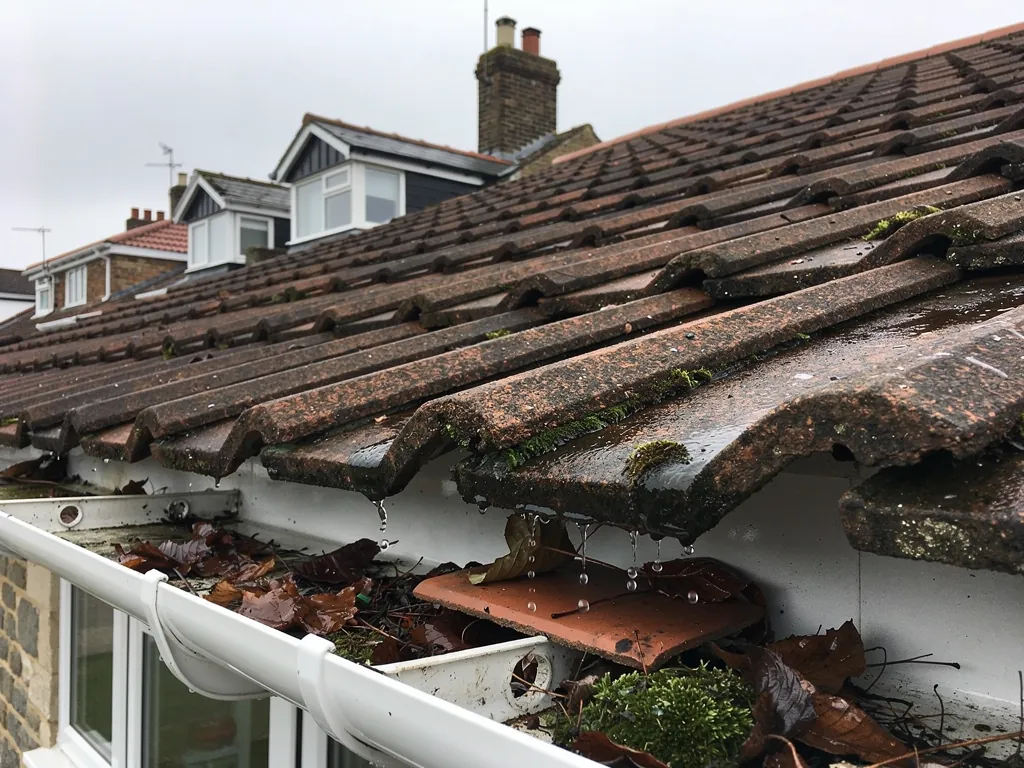
Upkeep and gentle cleaning
Moss removal, gutter clearing and a photographed condition check keep a sound but ageing slate roof going; any debris is cleared as we work.
What it costs
What slate roofing costs in Bognor Regis
£160 to £210 per m²
Typical UK range for natural slate roofing, Checkatrade, table of September 2026
The slate chosen, the shape of the roof and scaffold access set where a roof lands in this range, and the state of the battens decides the rest.
How a slate job goes, from survey to clear-up
- 1Send pictures and a few detailsRing 01243 252373 or WhatsApp photos of the slates, the lead and the gutters, and tell us the age and type of slate if you know them.
- 2We inspect slates, battens and nailsWe look at the underside from the loft and the slopes from the roof, photographing each fault and the cause behind it.
- 3Repair, relay or replace: the verdictThe verdict arrives illustrated with photographs, then a written quote giving one figure for the work we recommend.
- 4The work, then the clear-upSlates are sorted, refixed or renewed, lead is dressed, gutters are cleared of debris and every bit of waste leaves with us.
Slate roofing, in depth
Looking after slate on the Sussex coast
Slate in Bognor's older streets, how it is fixed, what it costs, repair or relay, lead details and the consents, in six chapters.
Chapter 1: Slate on Bognor's older streets1891
Sheet 01 / 06Slate belongs to the seafront terraces of the older town, and a well-laid slate roof can outlast several owners.
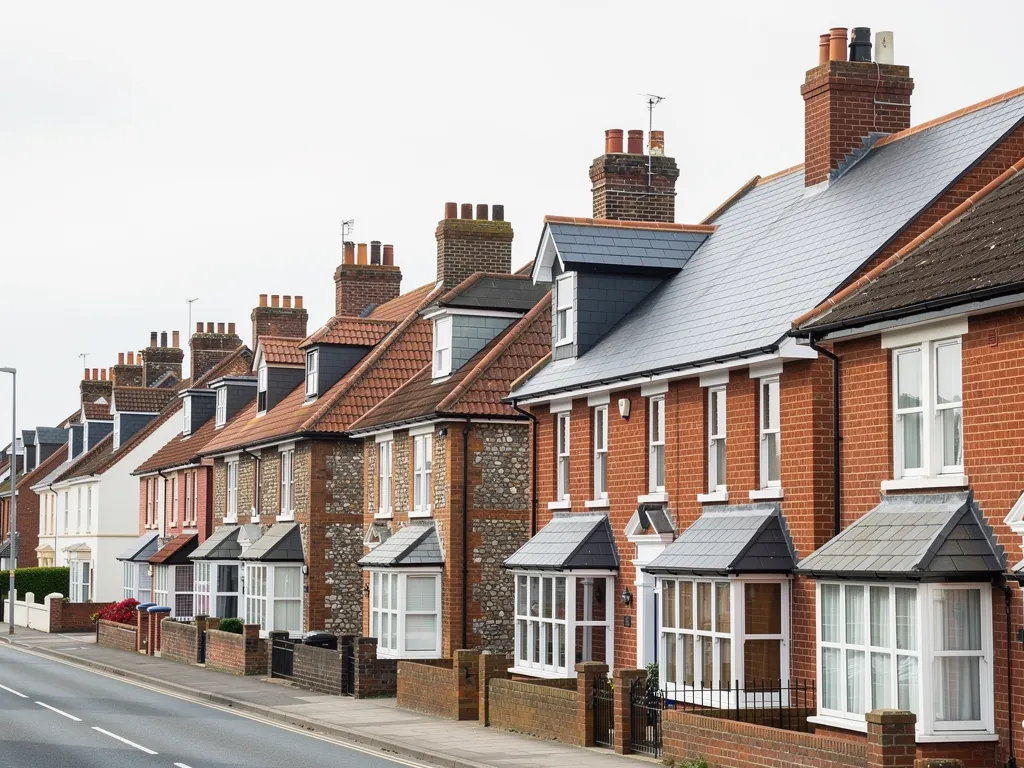
Slate roofing in Bognor Regis is bound up with the older streets. Arun District Council's conservation guidance describes Aldwick Road as a line of early 19th century, Victorian and Edwardian terraces with a predominance of stucco, slate and flint, and it asks for original roofing materials to be restored where slate has been replaced with concrete interlocking tiles. For The Steyne and Waterloo Square, its list of improvements starts with putting back natural slate or clay where modern materials have taken over, and it counts the chimneys there among the features of the skyline. Those streets set the standard for a good slate job on this coast, although slate also turns up on bays, porches and rear wings of houses in Felpham, Littlehampton, Chichester, Arundel and the villages between.
A century or more
typical life of maintained slate, trade guidance
A slate roof outlasts its fixings; the skill is knowing when the nails have gone.
Why the local record matters
The council's own guidance names slate on Aldwick Road and The Steyne, so a repair there should aim to keep the original material.
1.1 What slate is, and why a good roof lasts
Natural slate is rock that splits into thin, flat sheets. The sheets are cut to size and hung from battens, the narrow timber strips fixed across the rafters, so that each slate overlaps the course below it and water runs over joints that stay dry. Roofing trade guidance puts maintained slate at a century or more, and Checkatrade agrees that stone slate can outlast a hundred years. Those are typical lives for the stone, never a promise for one particular roof. Underlay, nails and battens tend to tire long before the slates do, so an old slate roof can be sound in the stone and failing in everything holding it up.
1.2 How slate compares with tile
Marley expects concrete tile to give around 60 years, though it stresses that is no warranty, so slate has the longer typical life on paper. Whether it is the better spend depends on the property, its street and your budget. Swapping one covering for another also changes the load on the roof timbers, and the Planning Portal suggests asking a structural engineer or surveyor to look first when the new covering is a lot heavier or lighter. Our guide to whether it is cheaper to slate or tile a roof sets the two side by side, and the answer on how long a slate roof lasts goes into age and wear.
1.3 Identifying what is on your roof
Before we price anything, we work out what is up there: the size and thickness of the slate, its colour and origin, and whether it is the original covering or a later repair. That decides whether matching slates can be bought new, found reclaimed or cut from a sound section elsewhere on the roof. We handle domestic roofs and small commercial ones in the same way, and the photographs of what we find come with the written quote.
Chapter 2: How a slate roof is built and fixed2135
Sheet 02 / 06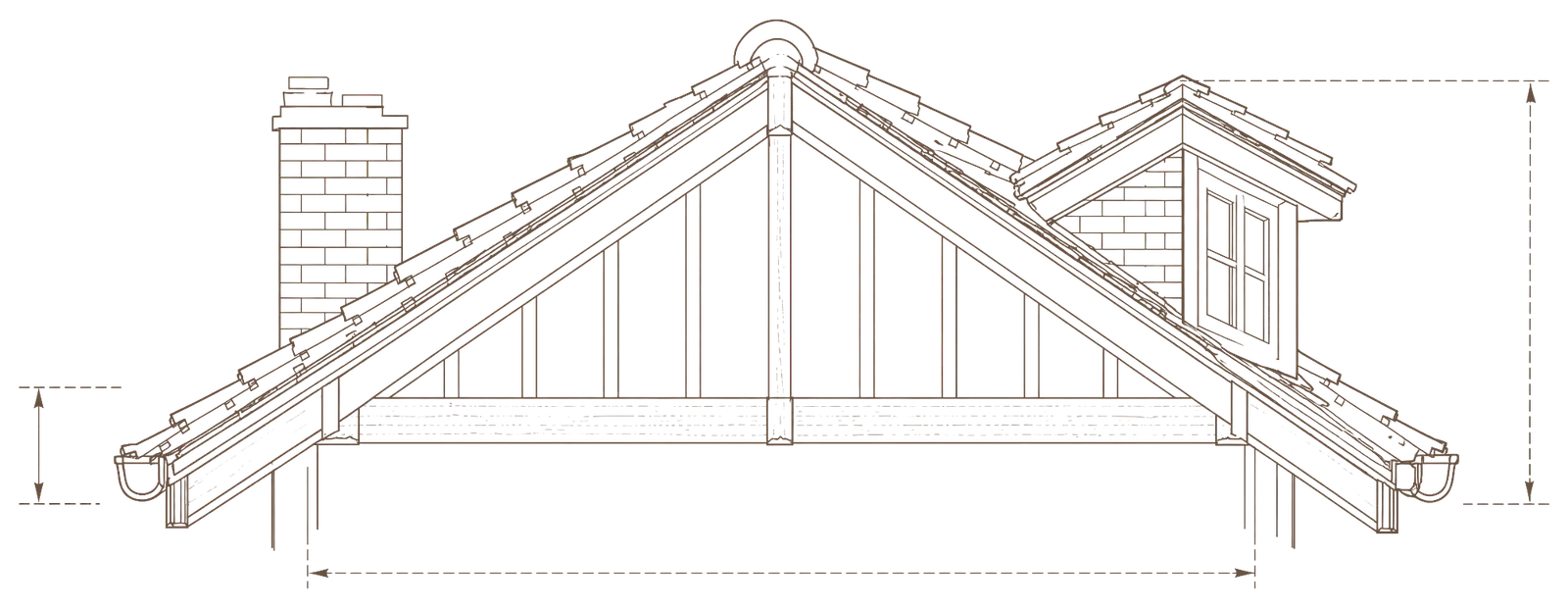
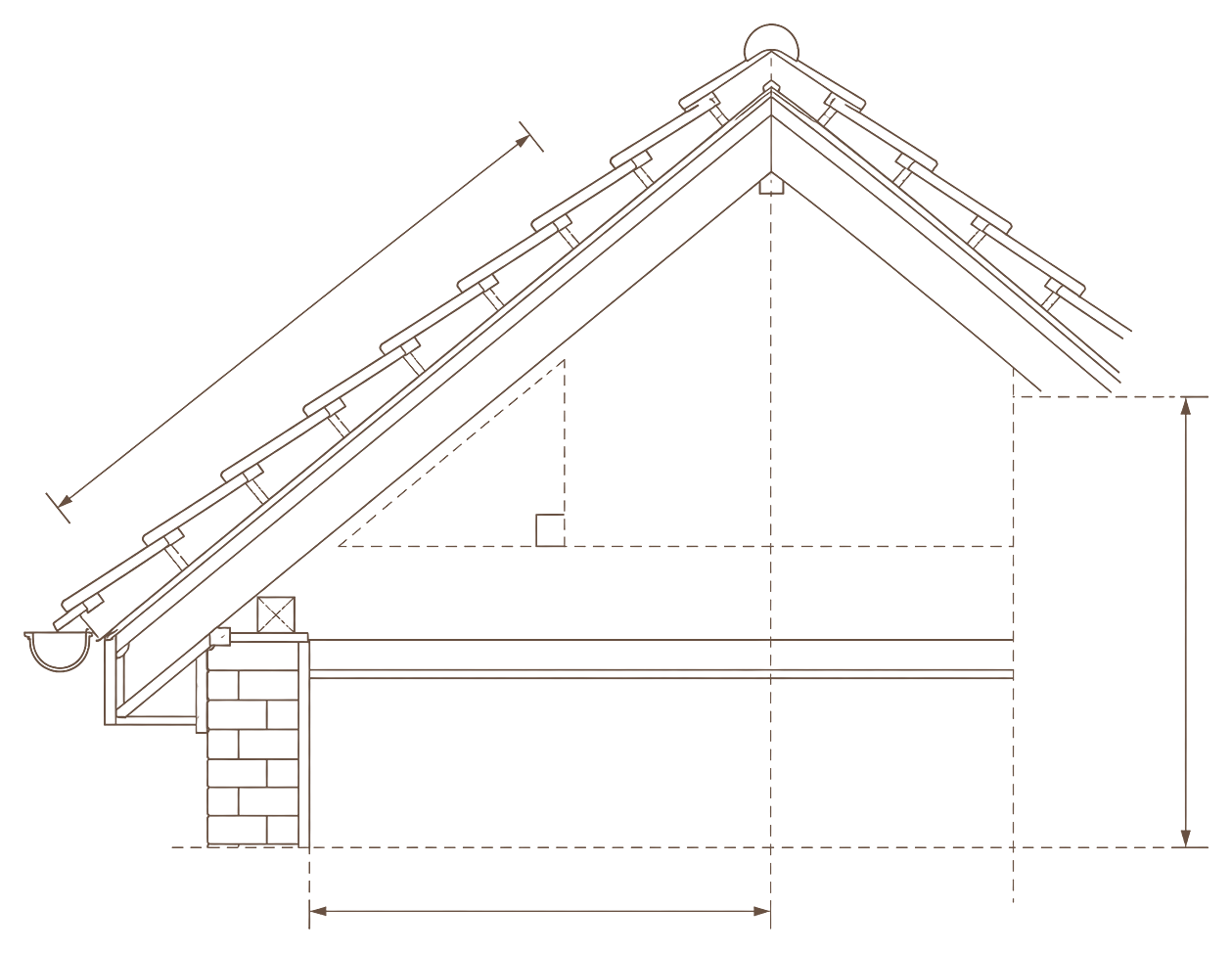
- Ridge Mechanically fixed fittings cap the top course of slates.
- Headlap Each slate overlaps the course two rows down, shedding driven rain.
- Battens Timber strips the slates hang from; soft ones lose their grip.
- Underlay Catches wind-blown water, and turns brittle at the eaves with age.
- Eaves and gutter The bottom course must overhang the gutter so water lands inside it.
Slates only keep water out when each one is held to a sound batten at the right overlap and on a steep enough pitch.
A slate roof is a stack of layers, and the slate is only the visible one. Rafters carry the battens. Underlay, a membrane laid under the battens, catches whatever wind pushes past the slates. The slates hang above in overlapping courses, each held at its holes or at its tail. The overlap between one slate and the course two rows below is the headlap, and it is what stops driven rain being pushed upwards and under the slate. It is set from the slate size, the pitch and how exposed the site is. Cupa Pizarras, a slate supplier, gives 115 mm for a 500 by 300 mm slate at 20 degrees in sheltered or moderate exposure. That figure is for that one case, and the headlap for your roof is worked out for your roof, with a little extra where the weather is likely to be hard on it.
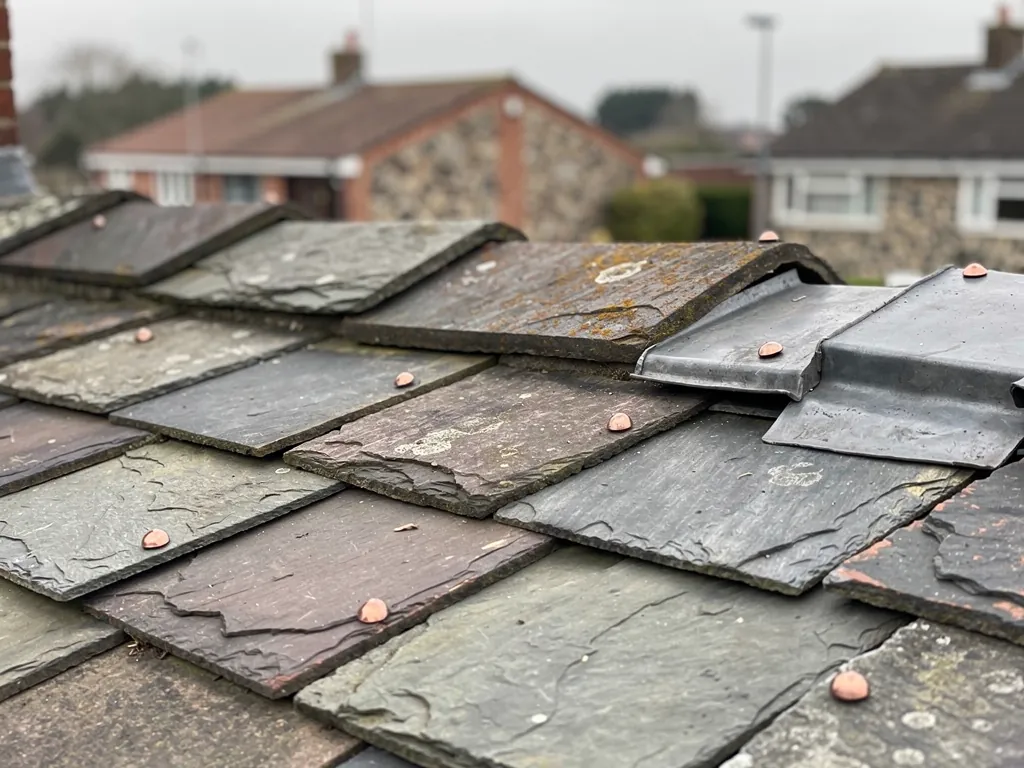
Nailed slate
Fixed through its holes to the batten; the traditional method on pitches from 20 degrees.
Hooked slate
Held by its tail with a hook; not suited to pitches below 25 degrees.
2.1 Pitch limits and the low slopes
Slate needs a slope steep enough to shed water. For a 500 mm slate in moderate exposure, Cupa Pizarras reads BS 5534:2014+A2:2018 as setting a floor of 20 degrees, and it also rules out hook fixings on any pitch under 25 degrees. Low slopes are where this bites: a porch roof, a shallow dormer, the lean-to at the back of a terrace. A slope below the limit is better covered in something made for that pitch, such as lead or a flat roof membrane, than in slate that lets the weather back in. The answer on the minimum pitch for a slate roof sets out how the limit works, and it is the first thing we measure on a new extension.
2.2 Nails, hooks and the old-roof caveat
Nails through the holes in each slate are the traditional fix. A hook holds the slate by its tail instead, and the pitch limit above applies to it. Where a roof has fixings of both kinds, the survey notes it and shows the photographs, because mixed fixings often mean an earlier repair that was done differently from the original build. Eaves are checked with the same care. The bottom course has to project over the gutter, and a slate cut too short there sheds water behind the gutter and onto the fascia, a fault that stays out of sight until the timber behind it is soft. Our page on nails or hooks compares them on cost and grip.
BSI itself cautions that BS 5534's advice may not fit some old roofs, especially those laid with traditional or reclaimed slate. So on an older roof we apply the standard with judgement, matching the original build where it still works and improving it where it does not, and we explain the difference in the written quote.
20 degrees
minimum natural slate pitch, BS 5534 per Cupa
Chapter 3: Slate types, sizes and cost1647
Sheet 03 / 06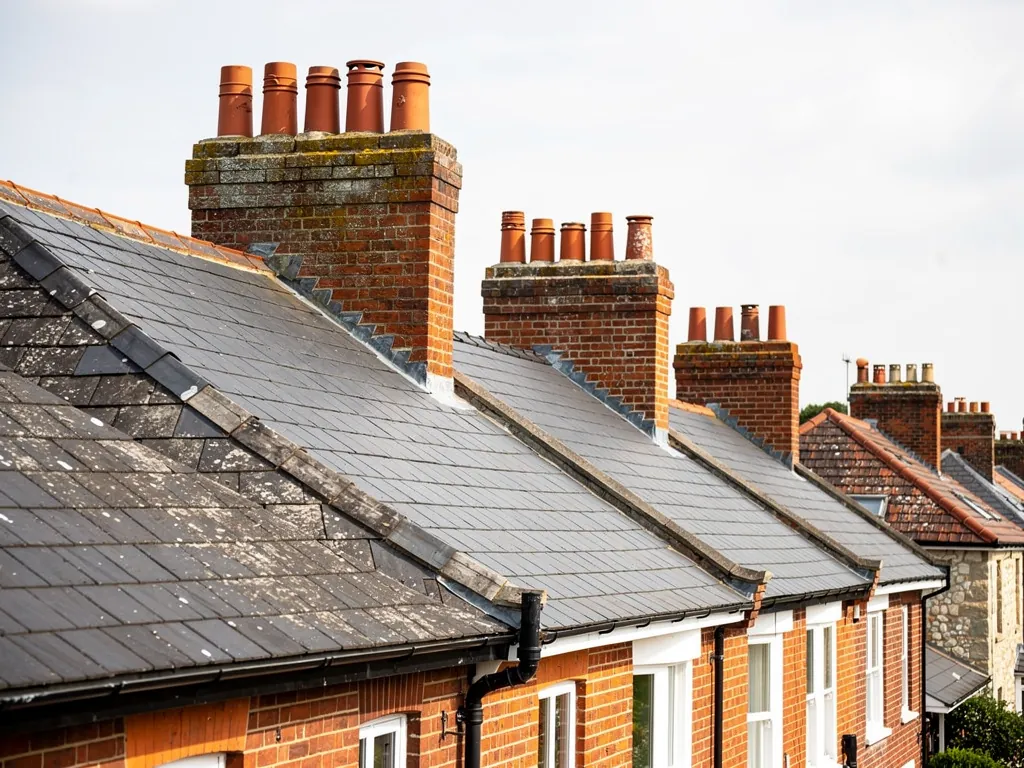
Natural slate differs in origin, thickness and price, and the cost for your roof depends on matching what is already there.
Price questions start with the slate itself. The slate section of Checkatrade's cost guides, whose table was refreshed in September 2026, puts a typical UK slate roof at £160 to £210 per m², with an average of £184 per m². Spanish slate sits lower, at £95 to £125 per m². Slate roofers' day rates in the same guide run from £280 to £360. Those are national figures for a typical job, useful for judging whether a quote is in the right area, and they are not a price for your house. When you read any quote, look at whether VAT and scaffold are inside the total, and whether the slate is named by type and size.
3.1 Where the slate comes from
Natural slate reaches UK roofs from more than one country, and Spain is one of them. The origin changes the colour, the thickness, the way the stone splits and the price. On a conservation-area terrace, matching an existing slate in size and colour matters more than saving on the material, because the council's guidance is about keeping original roofing. Our guide to how Welsh, Spanish and Brazilian slates compare goes through the differences, and the page on what size slates your roof needs explains sizing and why a few millimetres matter.
Typical UK rates for slate work
- Natural slate roof£160 to £210 per m²
- Spanish slate roof£95 to £125 per m²
- Slate roof repair£150 to £220 per m²
National per-metre rates for a typical roof; yours is set once we have inspected the slates, battens and lead, and arrives as a single written total.
Source: Checkatrade slate roof cost guide, table September 2026; roof repair cost guide, table June 2026
3.2 Natural against fibre cement and composite
Fibre cement and composite slates are manufactured rather than quarried. Each comes with its own fixing rules and its own lifespan claim from the maker, and that is a manufacturer's figure, not an independent one. They suit some roofs, particularly modern ones where appearance matters less than budget, and they sit badly beside original slate on a period terrace. We lay out the choice in our guide to natural slate against fibre cement and composite slates.
3.3 What moves the price on your roof
Access comes first. Checkatrade's scaffolding guide, table last updated in October 2026, puts scaffolding for a two-storey semi at around £875 a month and for a terrace at £800. Then comes the slate itself, then what the stripped roof shows underneath, because rotten battens or perished underlay add work that no one can see from the ground. Reusing sound slates cuts the new slate bought, but sorting and relaying them takes labour. For a whole-roof comparison in any covering, a three-bedroom semi re-roofed comes to around £12,000 in Checkatrade's October 2026 replacement guide, so a slate job on a larger or more complex house can sit well above that.
£184 per m²
average slate roof rate, Checkatrade September 2026
Our page on what a new slate roof costs in the UK works through the national figures in more detail. Fresh slate, reused slate and a mix of the two each price differently, and we say which we have in mind at the survey.
A cheaper slate that does not match the street rarely saves anything once it is up.
Chapter 4: Slipped slates, nail sickness and re-slating2684
Sheet 04 / 06A few slipped slates are a repair. Slates sliding across a whole slope mean the fixings have failed and the roof wants relaying.
Slate fails slowly and in ways you can learn to read. The covering often outlasts the things holding it, so the signs sit on the roof and in the gutter rather than in the stone. Slates on the path, a dark gap in a course, a slate hanging at an angle: each says a fixing has given way. We begin in the loft, where daylight through the roof, damp rafters and wet battens show what the underside is doing, and then go out onto the slope to see what lies behind it.
Repair, patch or re-slate
- RepairA few slates loose or cracked, with sound battens and nails around them.
- PatchStorm damage or a leak held for now, while the proper job is planned.
- Re-slateNails failing across slopes, soft battens or brittle underlay under sound slates.
4.1 One slipped slate or a failing slope
A single slate slips for plain reasons: a gust, a branch, a knock from a ladder, a nail that has finally let go. The remedy is a replacement slate held by a tingle, a thin tongue of lead or copper fixed to the batten above and turned up under the slate's tail so that it cannot slide. Where slates are slipping in different places across the same slope, the nails themselves are failing, a condition called nail sickness, and replacing slates one at a time only postpones the bigger bill. Our guides to why slates slip and what a slate tingle is show each repair step by step.
4.2 Flaking, layering and cracked stone
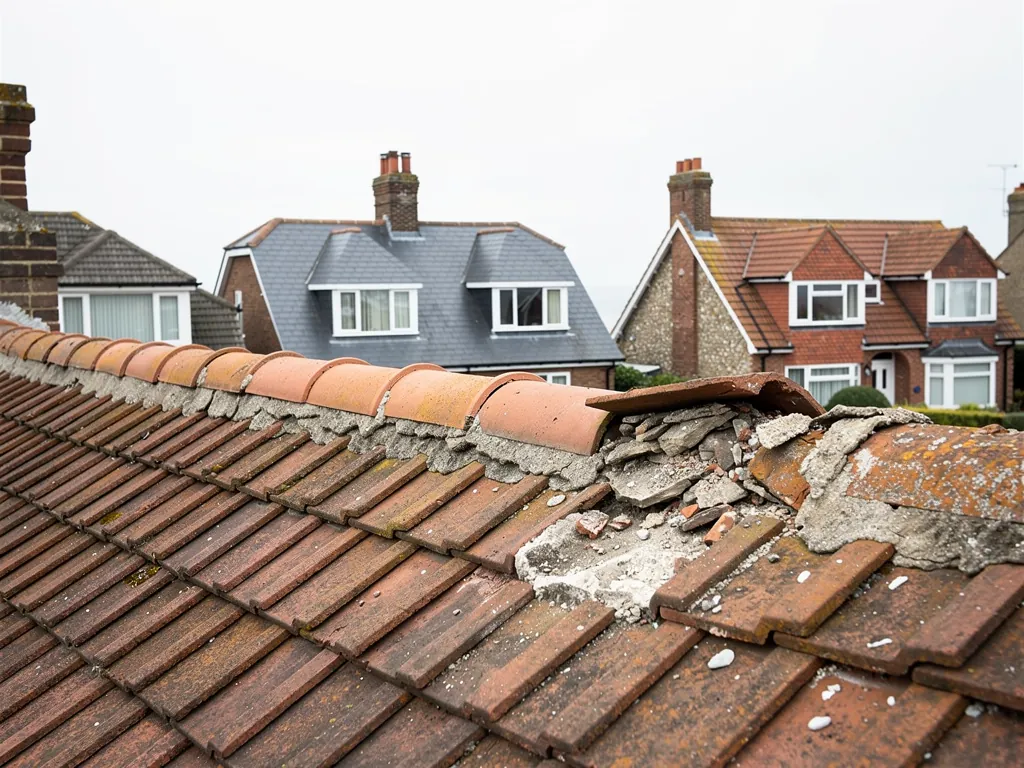
Some slates fail in the stone itself. They flake, split into thin layers, which is called delamination, or crack across the middle. A handful can be replaced and the roof carries on. When the slates themselves are reaching the end of their life across a slope, the honest answer is a re-roof. Reclaimed slate is one route to a matching repair, though it needs sorting, and a new roof in fresh slate is the other.
4.3 Deciding to re-slate
Re-slating means stripping the slates, sorting them by condition, renewing the underlay and any soft battens, then relaying the good slates with new ones making up the shortfall. It is a replacement of the covering, not a new roof from the rafters up, and it keeps the character of the original. We give the verdict as repair, patch or replace, and we recommend the least work that sorts the fault out for good. Our guide to re-slating a roof follows the stages from the scaffold to the last course.
After a gale, make the roof safe first, photograph the damage and tell your insurer before arranging a repair, keeping receipts for any temporary work. Which? quotes Financial Conduct Authority data showing that a payout followed only 32 per cent of 2024 storm claims, and ordinary wear and tear is normally excluded, so nobody can promise cover. If you disagree with the outcome, take it to the insurer's complaints team and, failing that, the free Financial Ombudsman Service. Our guides to slate roofs in storms and to whether home insurance covers slipped slates go through the steps, and a slipped slate that is left will usually be joined by its neighbours in the next blow.
Chapter 5: Lead, ridges, valleys and chimneys on slate2623
Sheet 05 / 06The lead and ridge details on a slate roof usually wear faster than the slates, and they are often where a leak begins.
Slates alone cannot seal a roof where it butts against brickwork, a stack or a neighbouring slope. For that the roofer uses a flashing, a lead strip tucked into a raked-out joint in the masonry and dressed down over the slates. Soakers are small folded lead sheets laid between courses where a slope meets a wall, and a valley is the trough where two slopes run together. Slate is flat and hard, so each of these pieces is cut to follow the exact line of the courses, with no gaps for wind to find. The quality of the lead is much of what makes a slate roof look right from the street, and it is also what decides how many years the new slating goes without a callback to the same corner.
What we check around slate details
- Soakers under each slate course
- Pointing that holds the flashings
- Mechanical fixings on ridge fittings
- Laps and joints in valley linings
- Fascia, soffit and gutter fall

5.1 Choosing lead sheet for the job
Lead sheet is graded by code, each number standing for a thickness and weight. In Royston Lead's table, code 4 at 1.80 mm covers four uses: soakers, flashings, a pitched valley and a dormer. Code 3, at 1.32 mm, is recommended for soakers alone. We match the code to the position and the length of run. Mastic smeared over lifted lead is a temporary hold, never a repair, and the lead round a slate roof is renewed when the slating is, because it should not be the part that fails first. Our page on lead roofing and lead work covers the specification.
Lead that stays down is cut to the line of the slates, not smeared over them.
Code 4, 1.80 mm
lead sheet for soakers and flashings, Royston Lead
5.2 Chimneys, flaunching and repointing
A chimney stack is exposed on every side. Flaunching is the mortar fillet at the top of the stack, sloped to shed water off the pots, and when it splits the rain finds its way into the brickwork below. Repointing the brickwork, renewing the flaunching and relaying the lead round the base often happen on one scaffold. MyJobQuote, last updated 22 September 2026, puts patching chimney leadwork at £150 to £250 and a full renewal at £350 to £460 without scaffolding, rising to £700 to £920 with it. Our chimney repairs page goes further into stacks.
5.3 Ridges, hips and verges on slate
Since BS 5534 was revised in 2014, ridge and hip fittings are expected to have a mechanical fixing, not just a mortar bed. BS 8612:2018 is the specification dry-fix ridge, hip and verge systems are tested to. Slate roofs take clay, lead-clad or dry-fix fittings, and the choice follows the roof and the street. The answer on what ridge goes on a slate roof covers the options.
Stripping a slate roof exposes the eaves, so a rotten fascia, a soffit that has let go or guttering that has lost its fall is neatest to deal with at the same time, from the same scaffold. Dormers and flat roof extensions meet the slate through lead, and a roof window set in slate needs a flashing kit made for it, with the lead dressed to the line of the courses.
Chapter 6: Consent, scaffold and old roofs1891
Sheet 06 / 06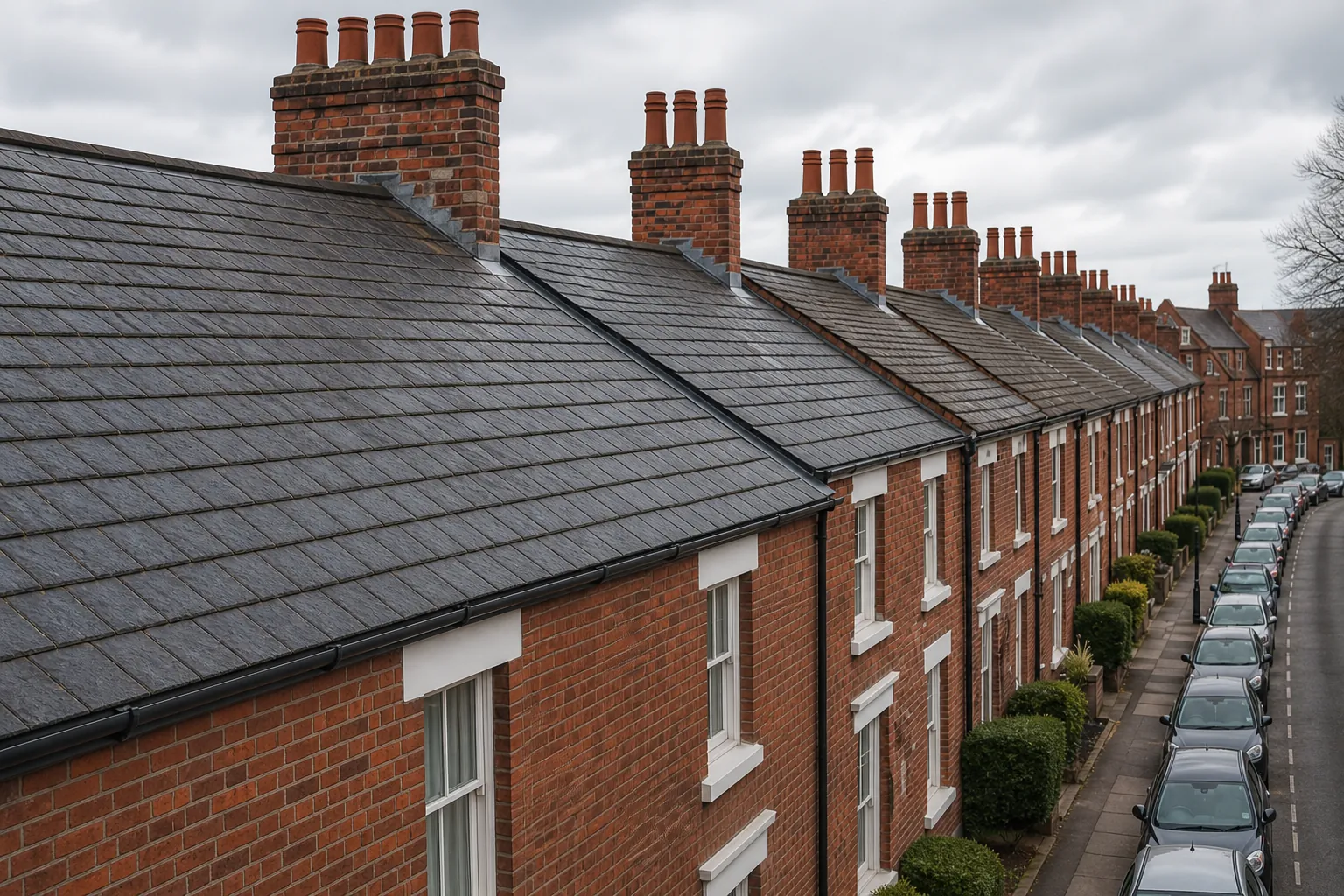
Like-for-like re-slating rarely needs planning permission, but Building Regulations, listed buildings, scaffold licences and old materials can each apply.
Planning comes first. Under section 55 of the Town and Country Planning Act 1990, work that leaves the outside appearance of the building materially unchanged is not development, so re-covering a roof in matching slate does not usually need planning permission. Listed buildings and Article 4 areas are the caveats. None of Arun's Article 4 directions around Bognor takes away roof rights, but a change from slate to another material can alter the look of a street. The Steyne and Waterloo Square conservation area dates from August 1979, with Waterloo Square added in July 1994, and Aldwick Road was designated in July 1994. Check with Arun District Council's planning team before you change a covering, and send photographs of the roof with your question.
Before a re-slate starts
- 1IdentifyWork out the slate, its size and whether the building is listed or in a conservation area.
- 2Check consentConfirm planning and building control with the right council before any slate is lifted.
- 3Book the scaffoldThe licence needs notice, so allow for that period.
- 4Strip and sortSlates come off course by course, are graded, and the sound ones are kept for reuse.
6.1 Listed buildings and the South Downs
Nobody may alter a listed building in a way that affects its character without consent. The Park authority treats routine maintenance and small like-for-like fixes as outside listed building consent. Inside the National Park, the authority decides planning in the Arun and Horsham parts, while the district council deals with applications for it in the Chichester part, so the right door depends on the address. Our answer on listed building consent for re-slating goes through the cases.
6.2 Building Regulations on a re-slate
Under the Planning Portal's tests, re-covering is usually outside building control only when the work touches less than 25 per cent of the building envelope and less than 50 per cent of the roof. A new covering that makes the roof 15 per cent heavier or more also brings building control into play, and the structure is checked before the slates go on. Arun District Council's own page names replacing roof coverings as work it expects applications for, so ask its team or your roofer to confirm. Where the job is notifiable, we explain the consent route and handle the Building Regulations notification. Re-slating can also bring an energy efficiency upgrade: Approved Document L 2021 applies until 24 March 2027, when the 2026 edition takes over. Our guide to re-slating and Building Regulations sets it out.
A scaffold that sits on a pavement comes under the Highways Act, and the licence is issued by the county as highway authority; ask your roofer who puts in the application. West Sussex County Council asks for at least 10 working days' notice and charges £266 for one month; Hampshire County Council, which covers Havant, wants a ten-working-day gap before the start date and charges £211.90 for the first two weeks. Two more checks come before stripping. HSE guidance regards any property built or refurbished before 2000 as likely to contain asbestos, which matters for old garage roofs, soffits and sheet products attached to a slate house. Bats are protected by law as well, and a roost under the slates is easily disturbed by stripping, so we check for signs of one before the first slate comes off. Neither check takes long, and both are far easier to deal with before the scaffold is up than after the roof has been opened.
Price guide
Typical UK slate roofing prices
| Job | Typical range |
|---|---|
| Natural slate roof | £160 to £210 per m² |
| Spanish slate roof | £95 to £125 per m² |
| Slate roof repair | £150 to £220 per m² |
| Slate roofer day rate | £280 to £360 per day |
National guide figures for a typical job. Your written quote follows the inspection and ends in a single total for the whole slate job.
Source: Checkatrade slate roof cost guide, table September 2026; roof repair guide, table June 2026; scaffolding guide, table October 2026
Guides and answers
Slate roof guides and answers
Short pages on slate types, fixing, repair, cost, consent and conservation areas, for slate roofs from Bognor to Chichester and the Downs.
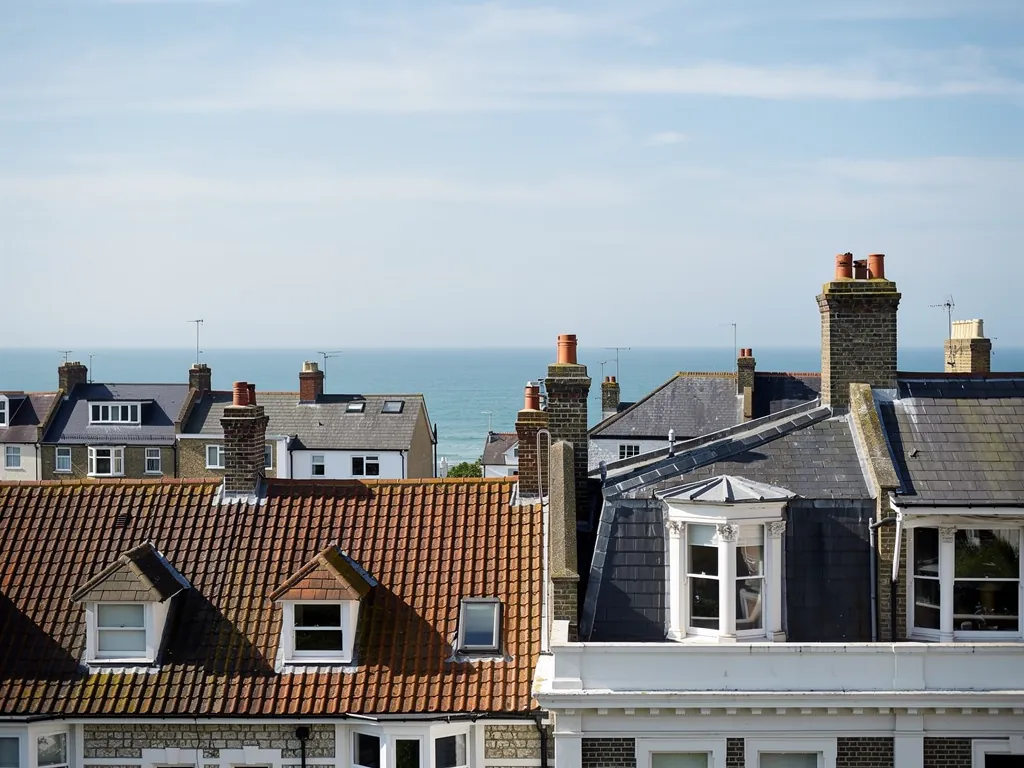
 How much does a new slate roof cost in the UK?8 min read
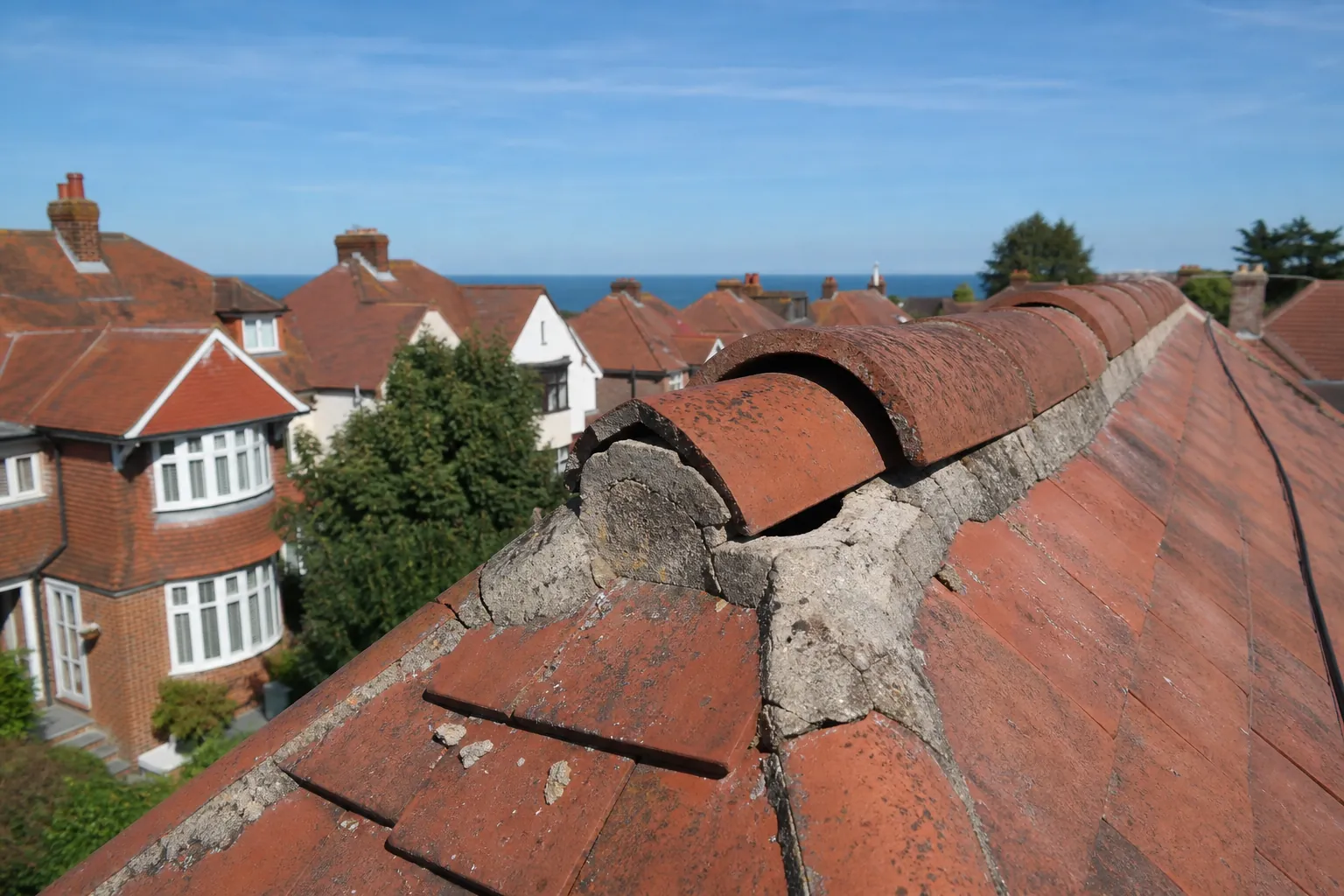
 Is it cheaper to slate or tile a roof?9 min read
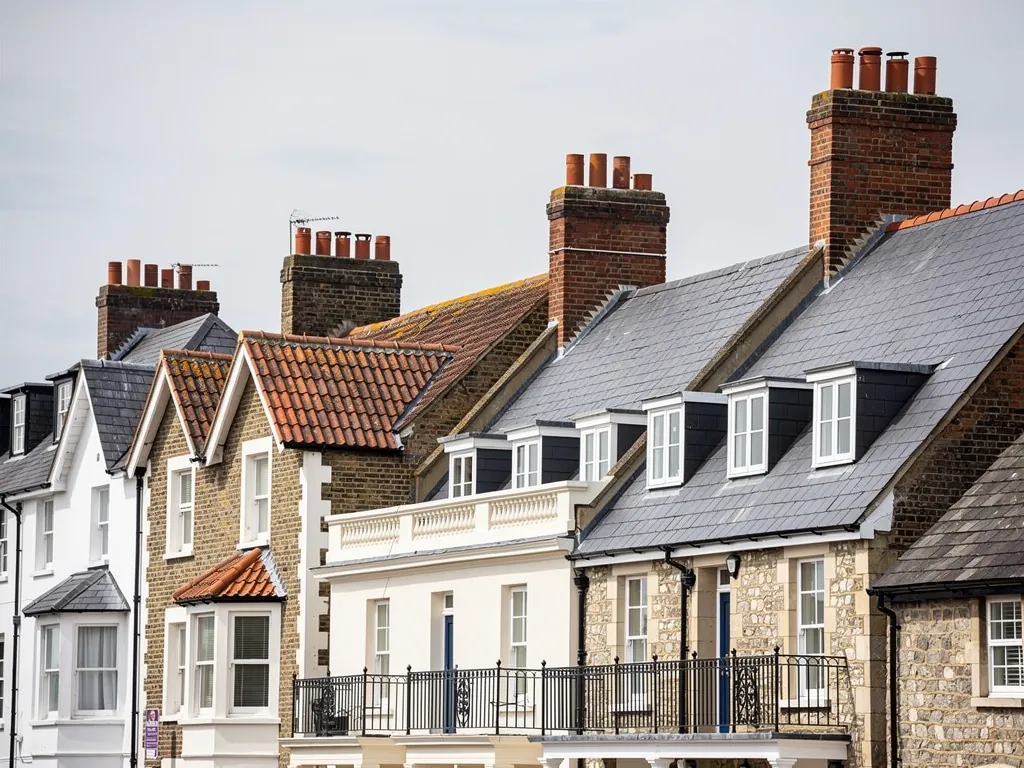
 Re-slating and Building Regulations: weight, insulation and approval9 min read
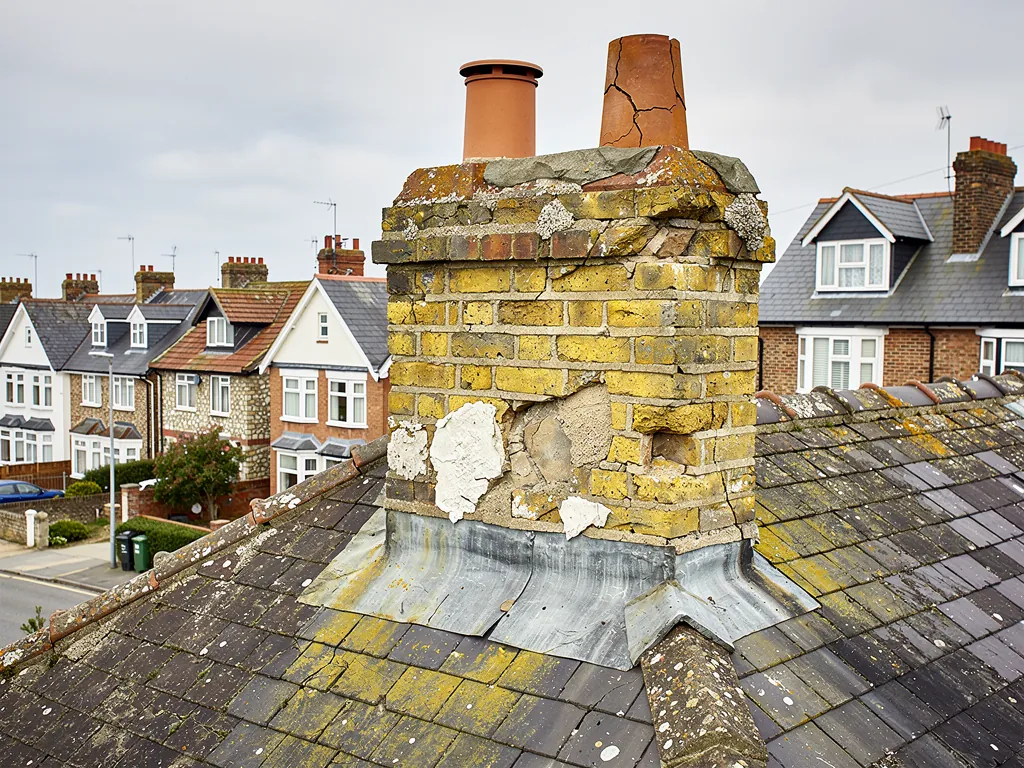
 Welsh, Spanish or Brazilian slate: how natural slates compare9 min read
 Natural slate vs fibre cement and composite slates9 min read
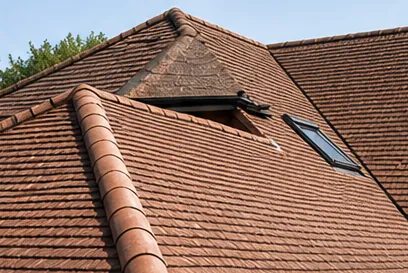 Re-slating a roof: strip, sort, reuse and re-cover9 min read
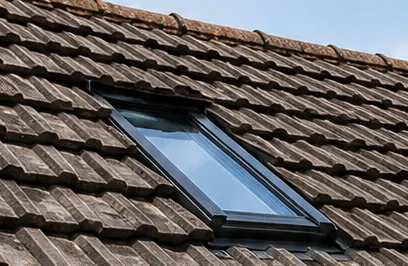 Slate roof repairs: slipped slates, tingles and broken slates9 min read
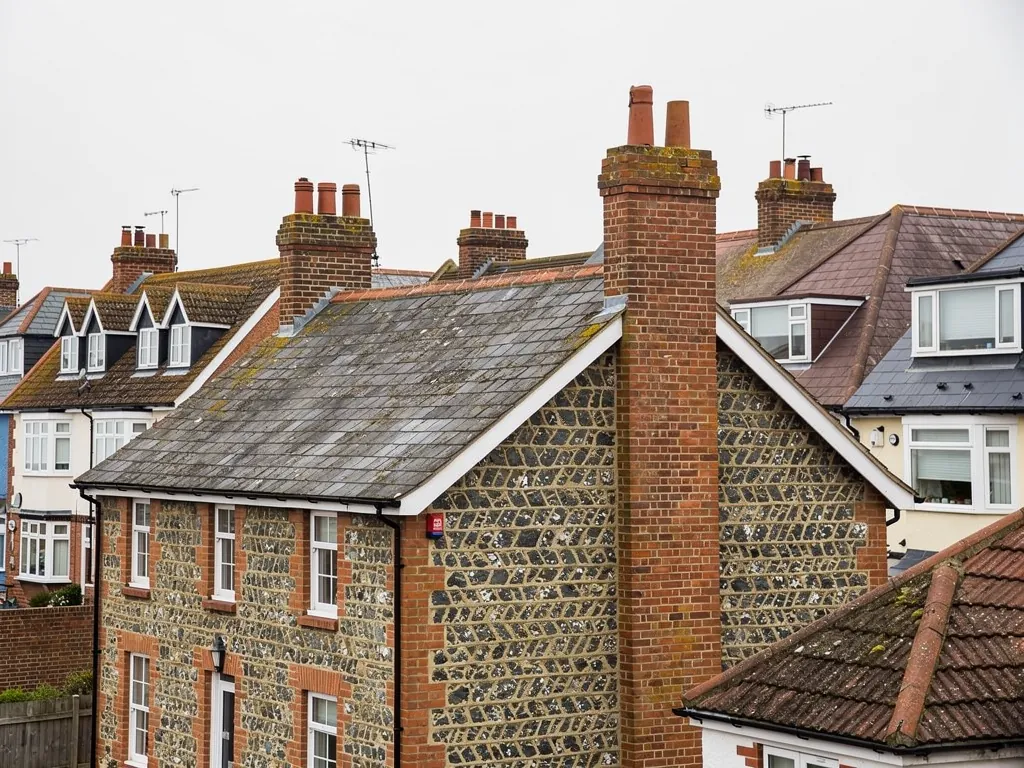 Signs your slate roof is failing10 min read
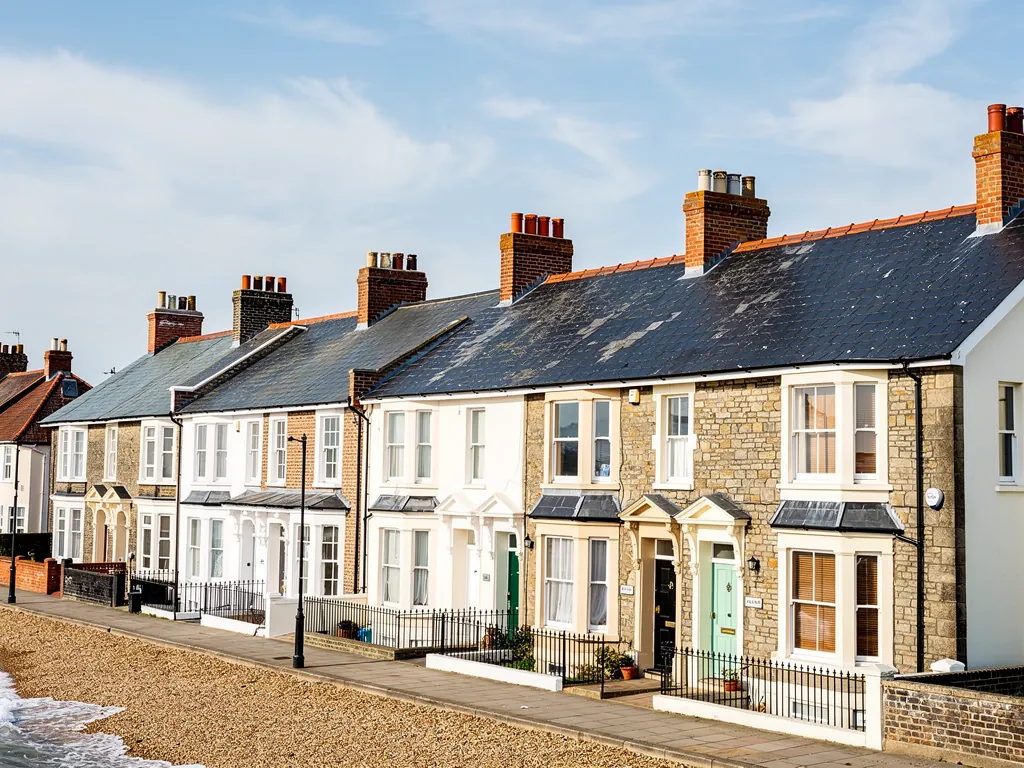 Slate roofs in conservation areas: reinstating slate on seafront terraces10 min read
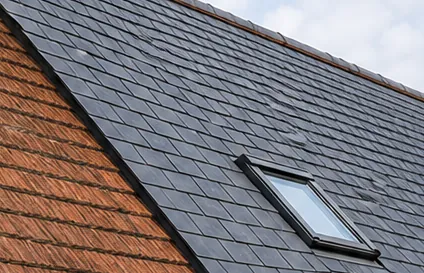 Victorian and Edwardian slate roofs: what fails and how it is repaired9 min read
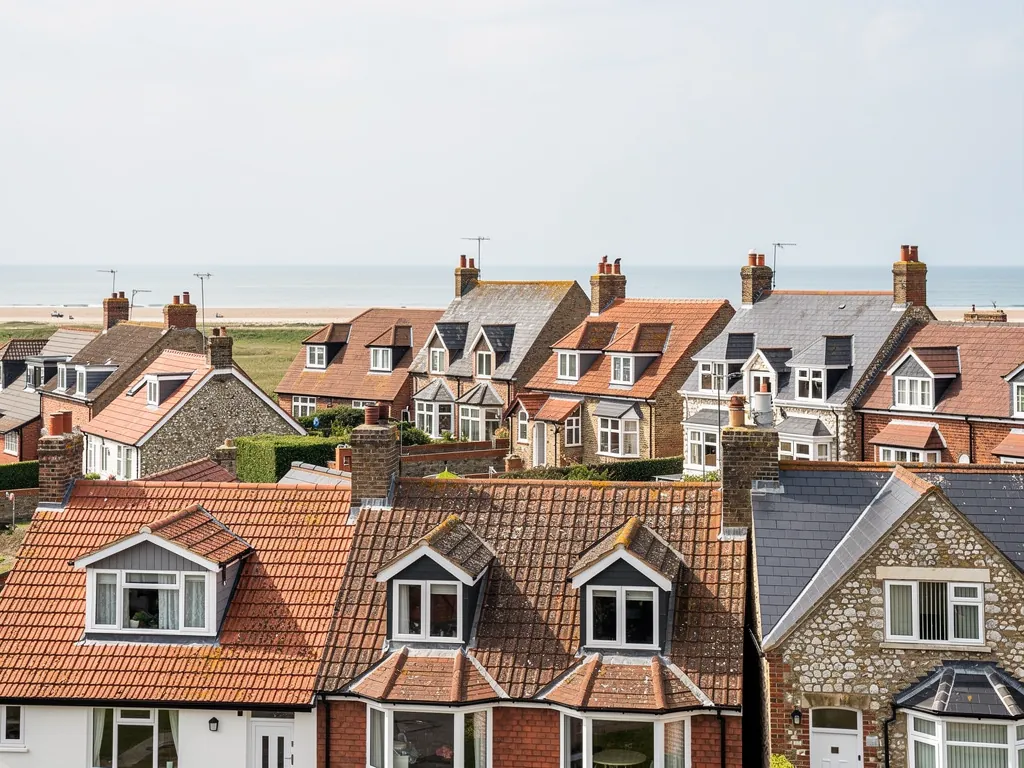 Nails or hooks: how slates are fixed9 min read
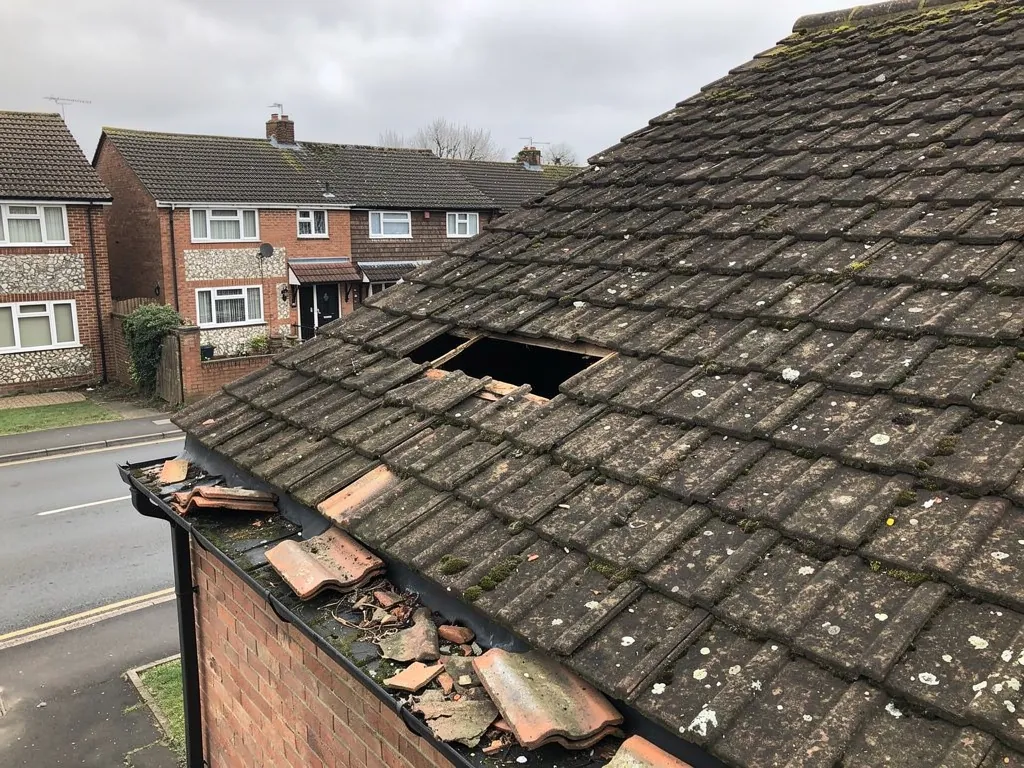 Slate roofs in storms and winter weather9 min read
Quick answers
- What is a major disadvantage of a slate roof?
- What is the average lifespan of a slate roof in the UK?
- How much does slating cost per square metre?
- Does home insurance cover slipped slates?
- Do you need listed building consent to re-slate?
- Can you replace slate with concrete tiles?
- What is a slate tingle?
- Why do slates slip, and how are they refixed?
- How is a single cracked slate replaced?
- What is the minimum pitch for a slate roof?
- Is reclaimed slate a good idea?
- What causes slates to flake or delaminate?
- How long do fibre cement slates last?
- Is a slate roof heavier than a tiled roof?
- What is headlap on a slate roof?
- What size slates does my roof need?
- What ridge goes on a slate roof?
- Do slate roofs need felt underneath?
- How is a slate roof ventilated?
- Can you walk on a slate roof?
Questions
Slate roofing questions, answered
Is it worth keeping an old slate roof rather than replacing it?
Often, yes, when the slates themselves are sound. Slate typically lasts far longer than the nails, battens and underlay beneath it, so a roof can be stripped, those parts renewed and the good slates relaid. If the stone is flaking or cracking across a whole slope, that changes the answer. We show you photographs of the slates, nails and battens, then say which route we would take and why.
Can slate go on a low-pitched extension or dormer?
Only if the slope is steep enough. Cupa Pizarras reads BS 5534 as setting 20 degrees as the floor for a 500 mm natural slate in moderate exposure, and says hooks should not be used below 25 degrees. A shallow dormer top or a lean-to can fall short, so those parts are usually covered in lead or a flat roof membrane while the steeper faces take slate.
Who do I ask before changing slate on a seafront terrace?
Start with Arun District Council's planning team, particularly if your street is in a conservation area such as The Steyne and Waterloo Square or Aldwick Road. Listed buildings need listed building consent for works that affect their character. Building control is a separate question, and Arun's building control team can confirm whether your job needs an application. We explain which consents apply before the work is booked.
Does a slate roof always need scaffolding?
On a two-storey house it nearly always does, for safe access and to catch debris. Single-storey roofs can sometimes be reached with ladders, a roof ladder or a tower. If the scaffold stands on a public pavement or road, a licence is issued by the county council as highway authority. Checkatrade's guide gives about £875 a month for a semi, so see whether any quote has it inside the total.
What should I look for in a slate roofing quote?
Look for one clear total, in writing, that names the slate by type and size, says whether VAT and scaffolding are inside it, and describes what happens to old battens, underlay and lead. Ask how long the work is covered in writing, and by whom. A quote that says only 'new slate roof' leaves too much open to argue about later.
Can slates from my own roof be reused?
Frequently, if they are sound. After stripping, each slate is checked for cracks, flaking and split nail holes, and you can see the sorted piles in our photographs. The good ones are kept for relaying, with new slate of the same size and colour making up any shortfall, usually placed on the less visible slopes. Where the stone is failing on every slope, full replacement is the better call.
Get a quote
Tell us about your slate roof
Send photos of the slates, the lead and the gutters, and say roughly how old the roof is; we start by checking the nails and battens behind the slates.
Loading the enquiry form. You can also call 01243 252373.