
Roof replacement and new roofs in Bognor Regis
Before we quote for a new roof we check whether a repair would hold, and tell you either way. When replacement is the right call, you get the reasons, photographs of your own roof and one written price.
- Repair or replace,
said plainly - Photos of
your own roof - Written quote,
one total price - Ridges and verges
fixed to BS 5534
Signs
Warning signs that a Bognor Regis roof is nearing the end
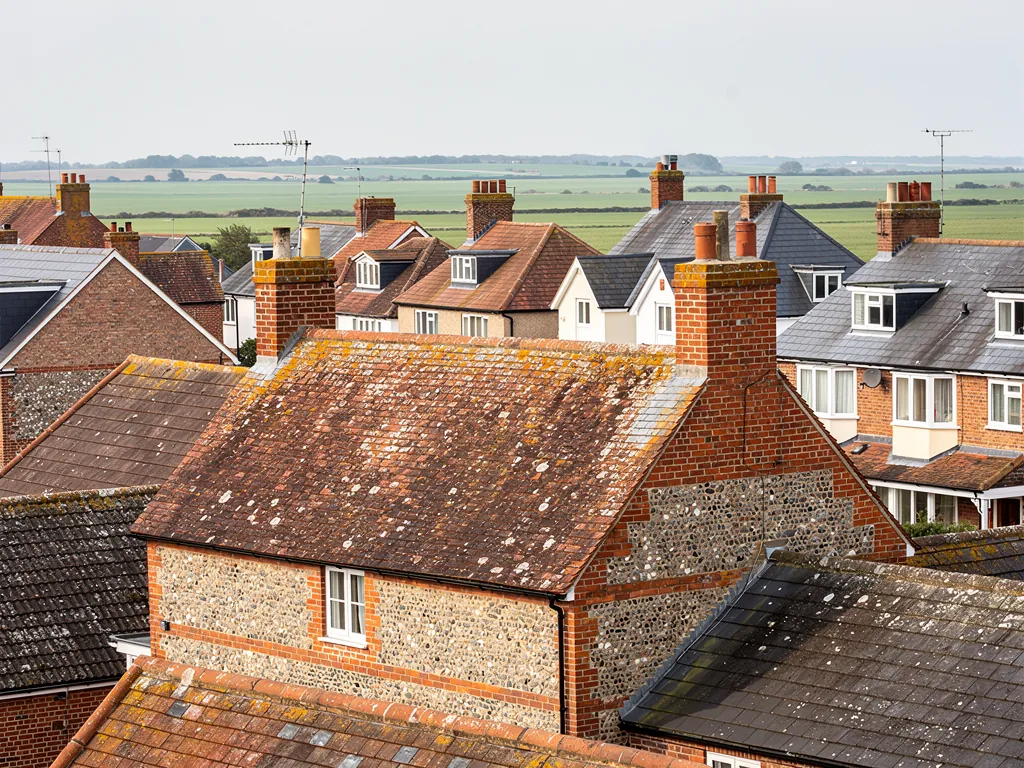
- Slates or tiles slipping across whole slopes
- Leaks appearing in different places each winter
- Underlay torn or crumbling at the eaves
- Battens soft or sagging under pressure
- A ridge line that dips or bows
Replacements we carry out
The new roofs we fit across Bognor Regis and West Sussex
Tiled re-roofs
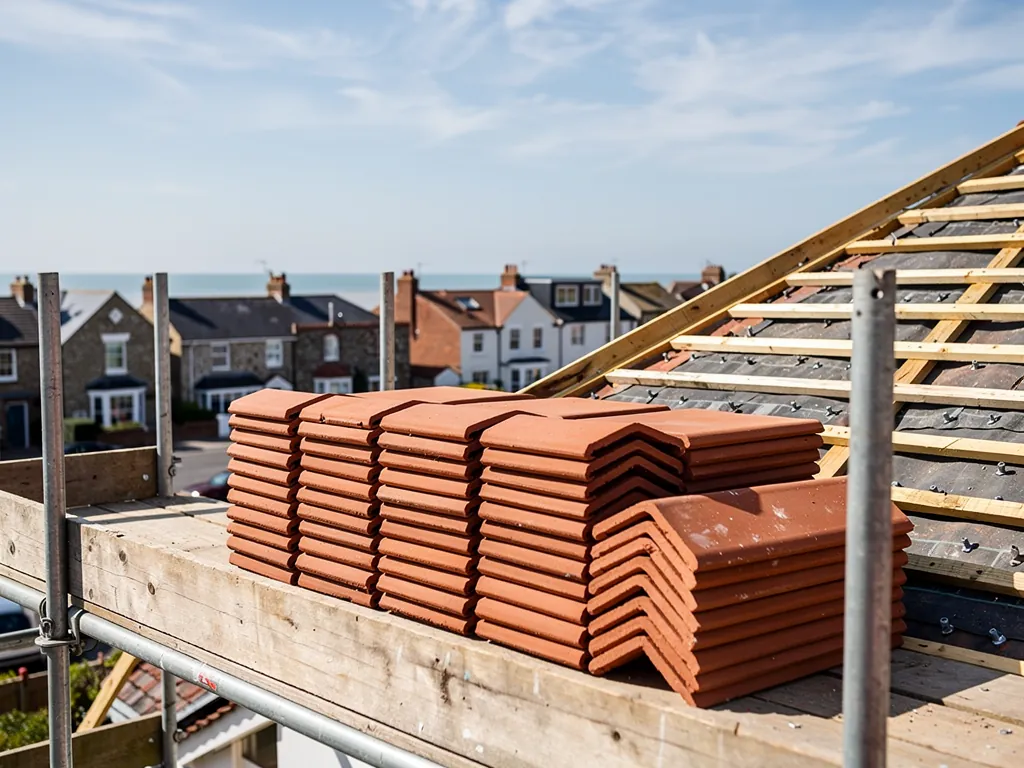
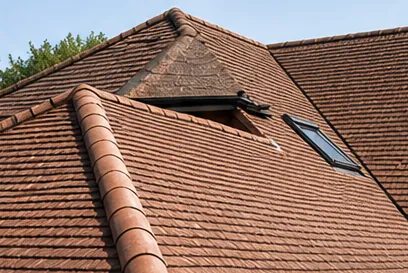
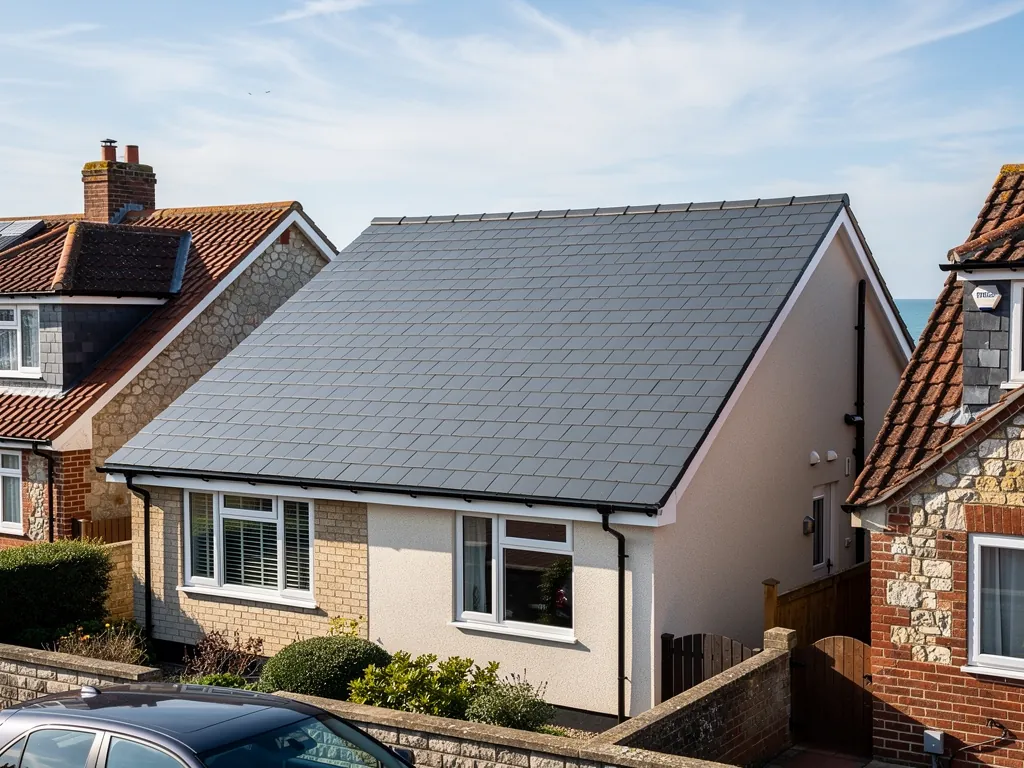
We strip the old covering, check the timbers, then lay new underlay, battens and tiles, finishing the ridges and verges with mechanical fixings.
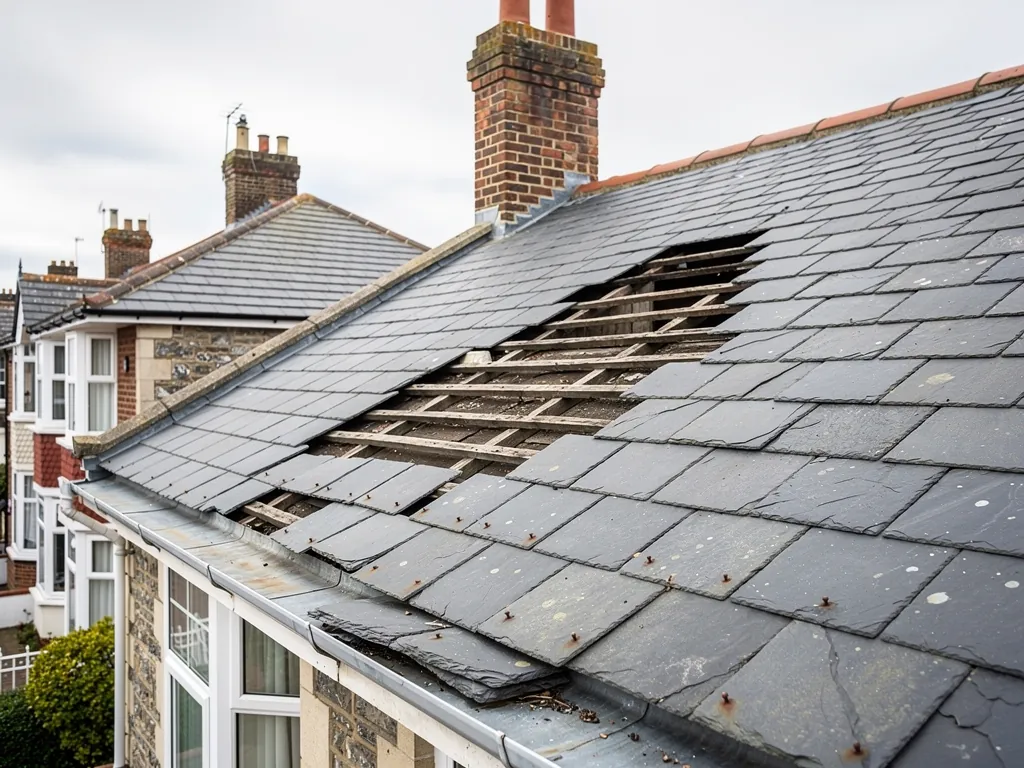
Slate re-roofs
New natural slate, or sound original slates relaid on fresh battens, with lead dressed at every chimney, wall and valley.
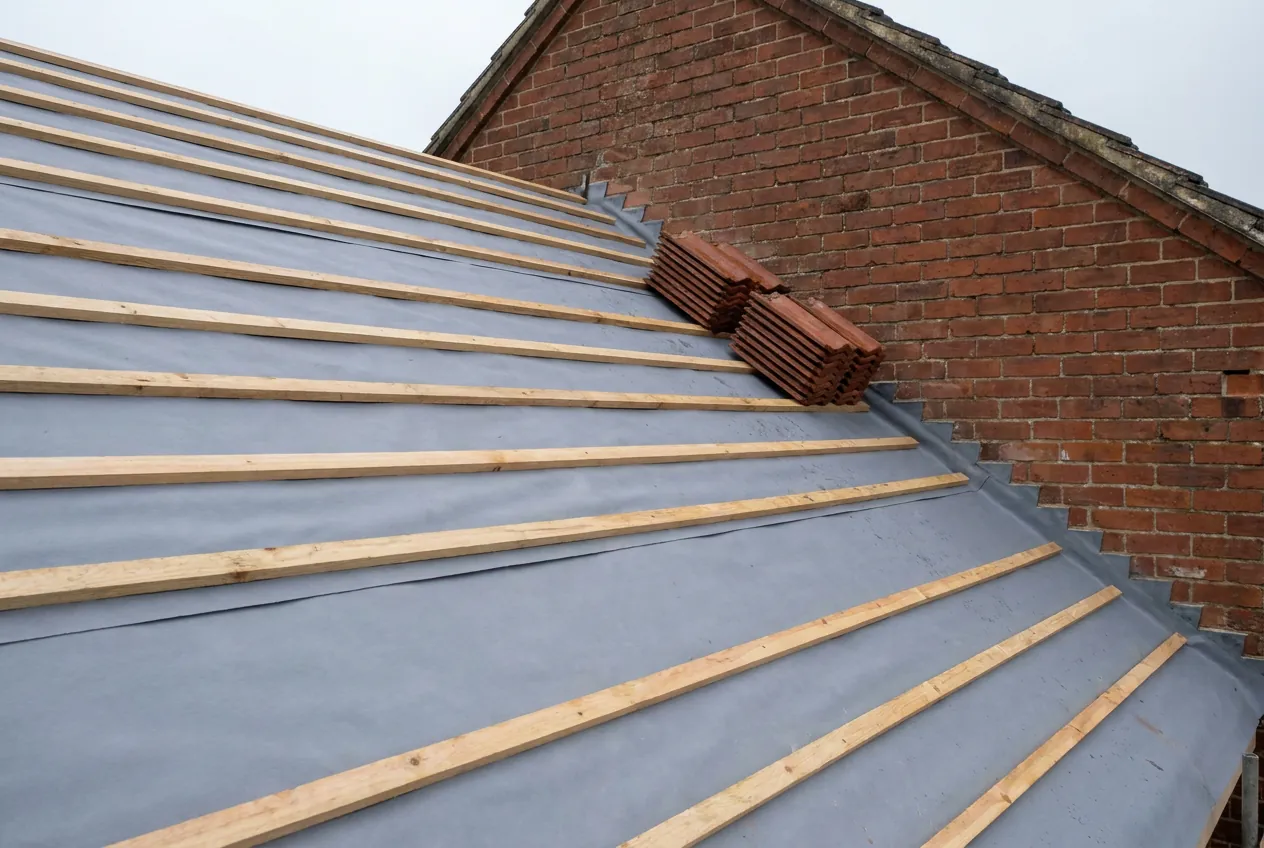
Flat roof replacement
Old felt or membrane comes off, the deck is checked, and new felt, EPDM or GRP is laid to proper falls with neat edge trims.
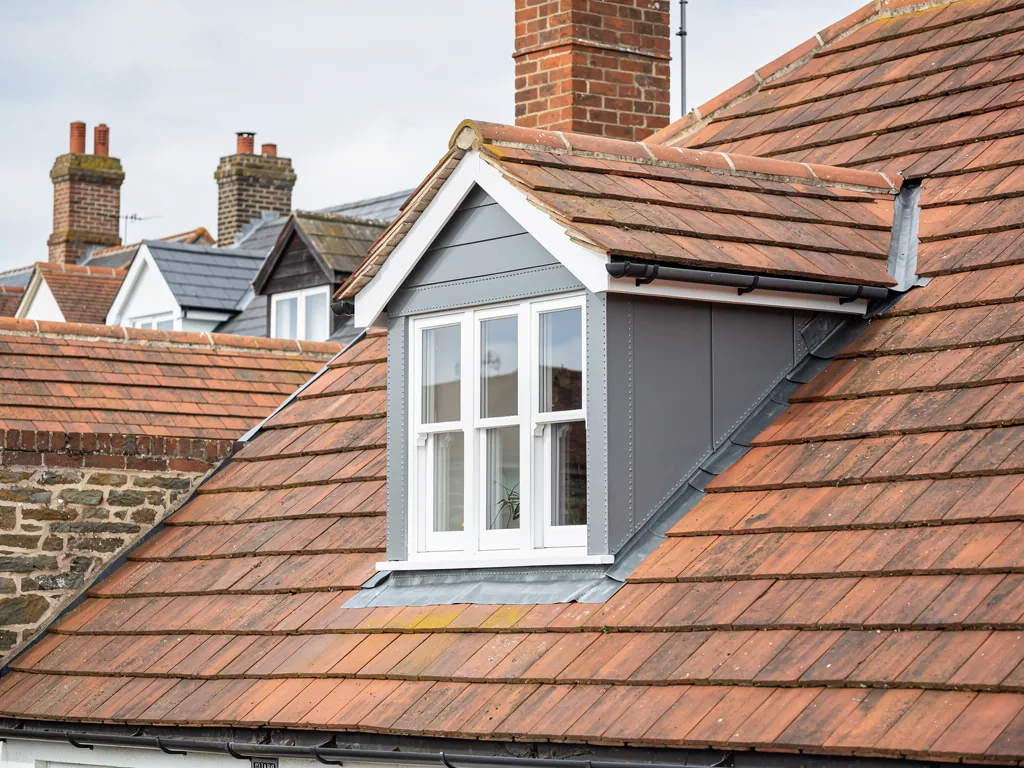
Dormers and extensions
Dormer cheeks, flat tops and extension roofs are re-covered alongside the main roof, so the lead, lines and materials match.
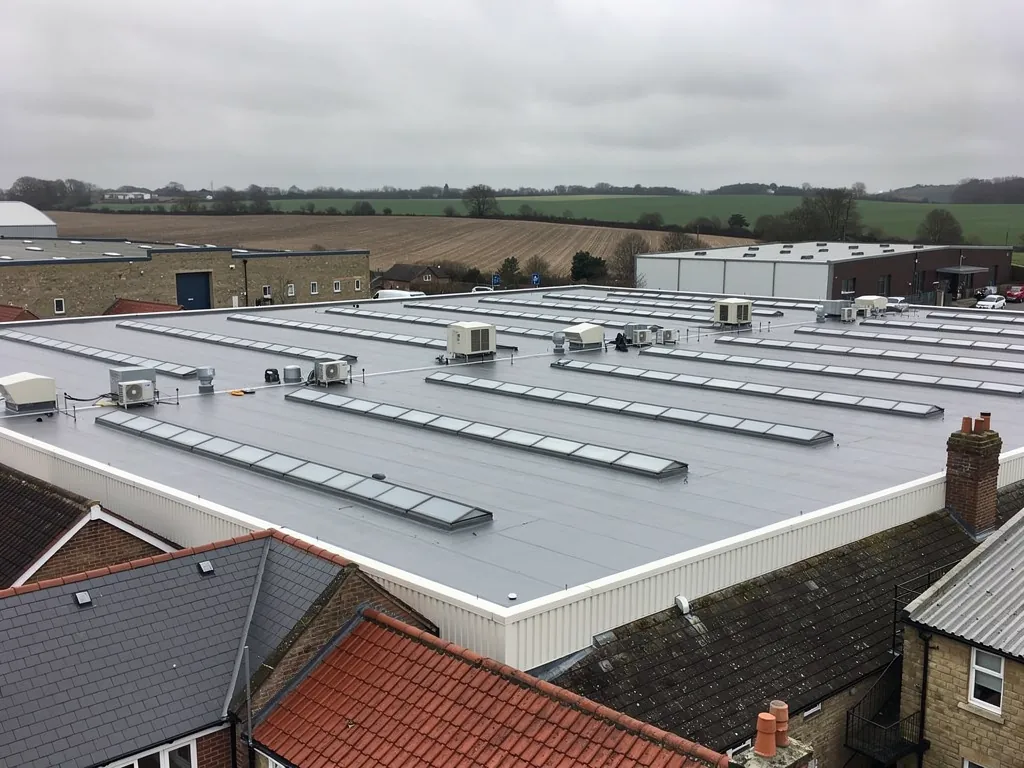
Commercial roofs
Offices, shops and flat-roofed blocks are re-covered in felt, single-ply or tile, with access and the people using the building planned first.
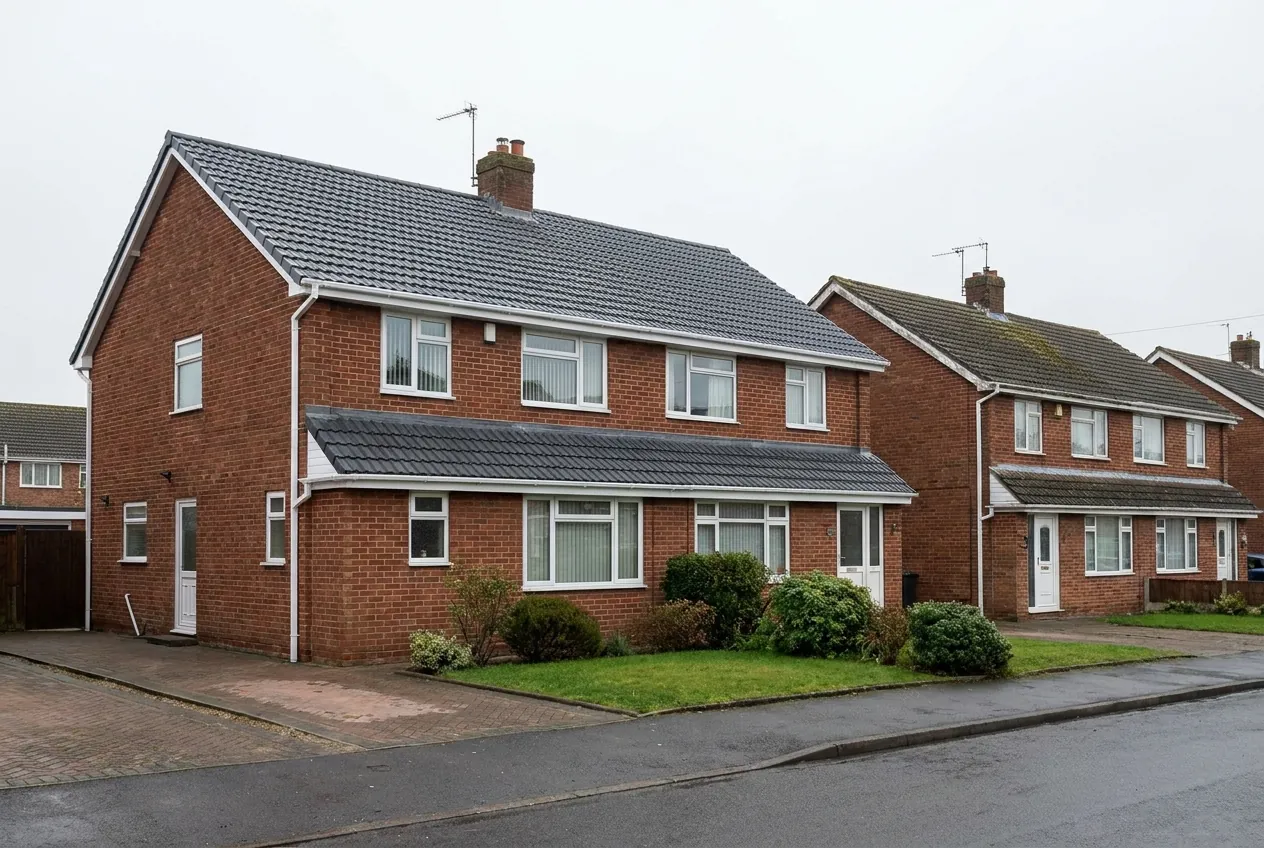
New roofs on new builds
Roofs for extensions and outbuildings, built to current Building Regulations and finished in a covering that suits the existing house.
What it costs
What a new roof costs in Bognor Regis
£4,000 to £19,000
typical UK range for a re-roof, Checkatrade October 2026
House size, pitch, covering and scaffold access move the figure most. Your own price follows the survey as one written total.
How a roof replacement runs, from survey to sign-off
- 1Survey with photographsWe go through the loft and then onto the slopes, photographing the faults and the timbers and measuring every slope.
- 2Verdict and written priceYou hear whether the roof needs replacing, patching or repairing, then receive one total price on paper.
- 3Scaffold, strip and rebuildThe scaffold goes up, the old covering comes off, and new underlay, battens and covering follow slope by slope.
- 4Finish and clear-upRidges, verges and lead are completed, the site is cleared, waste is taken away and any notifiable work is signed off.
Roof replacement, in depth
How a new roof is chosen and built near the Sussex coast
The repair-or-replace call, coverings, order of work, consent, cost and the checks to make on any roofer, in six chapters.
Chapter 1: Repair or replace: the evidence we look for2623
Sheet 01 / 06A new roof is the right spend when faults run across whole slopes; a single failed spot is a repair.
Nobody should buy a new roof they do not need, so the first question on every survey is whether the roof can be saved. A repair holds when the covering, the battens and the underlay around the fault are sound. Replacement comes into play when they are not. The difference shows in the pattern: a leak at one flashing points to one repair, while leaks at the eaves, the valley and the back slope in the same winter point to a roof wearing out everywhere at once.
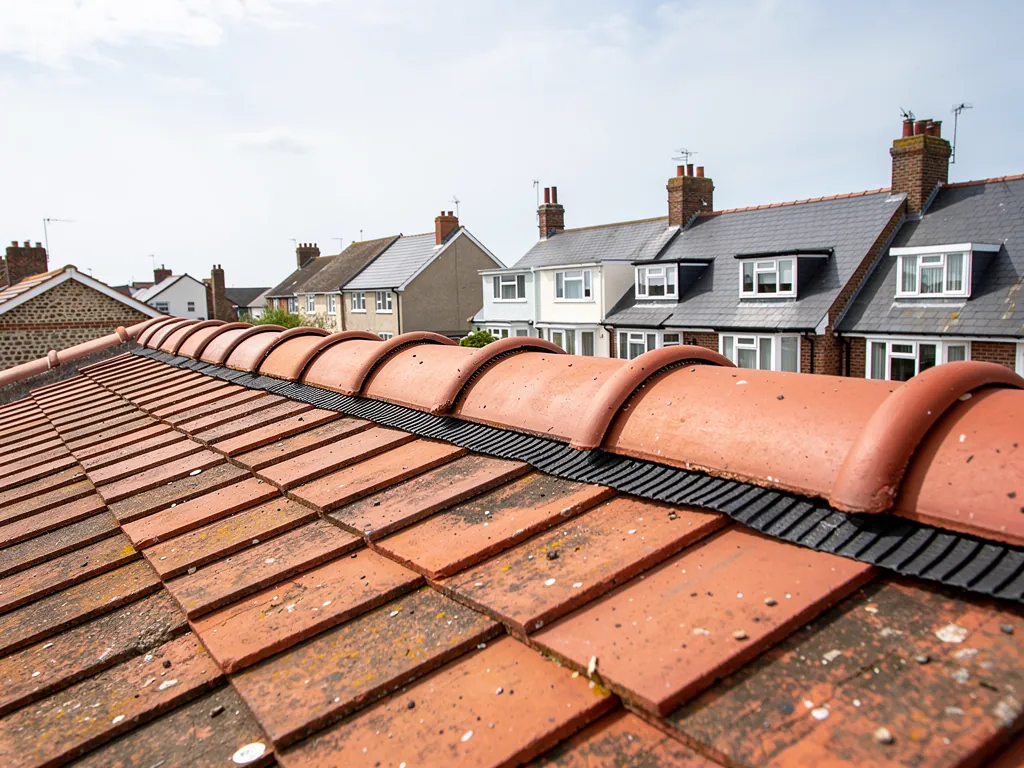
A new roof should be decided by what the loft shows, not by the quote.
Three verdicts for an ageing roof
- RepairOne failed detail, with sound battens, underlay and covering around it.
- PatchA temporary fix that stops water while a bigger job is planned.
- ReplaceFaults across whole slopes, perished underlay or battens soft in several places.
1.1 What points towards replacement
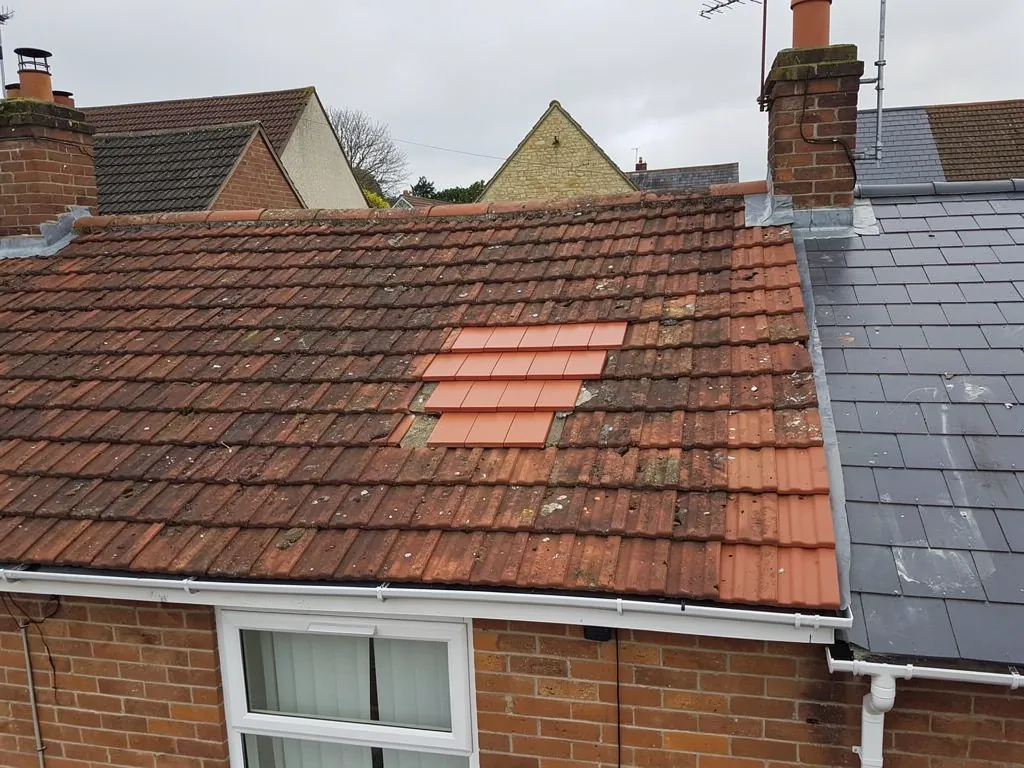
We look for faults spread across a slope rather than gathered at one detail. Slates slipping in rows suggest the nails have failed with age. Concrete tiles crumbling at their edges, felt that tears like paper when we lift it and battens that give under a thumb all say the same thing. So does a roof that has been patched three times in three places: each patch was reasonable, but together they show the fabric around them has run out of life. Our guide to the signs you need a new roof lists the rest, and the guide on when a roof should be replaced rather than repaired sets out the decision step by step.
1.2 What points towards a repair
Age alone proves nothing. An older roof with sound timbers and a covering still doing its job often needs one detail renewing, and that is what we recommend, because the cost effective solution is whichever job puts right only what is actually failing. Our roof repairs service covers that route, from slipped tiles to lifted lead. Regular maintenance helps here: cleared gutters, checked valleys and a flat roof repair made while the deck is still dry all stretch the life of a covering. A reliable fix needs sound material to tie into, though, and where the surrounding roof is failing, each repair sets up the next leak. When you have lived with a roof for years, it is easy to put up with small signs until a bad night of rain forces the issue, so an early survey costs little and gives you time to plan.
1.3 Photographs before any price
Everything above is judged on evidence. We photograph the loft side of the roof, the state of the battens and underlay, and the covering from above where we can reach it safely. The pictures travel with the written quote, so you see exactly what we saw and can pass it to anyone else. If you want a second opinion from another roofer, the photographs are yours to hand over.
Chapter 2: Choosing the covering for a new roof2196
Sheet 02 / 06The covering sets the look, the weight on the rafters, the minimum pitch and the lifespan, so it is chosen before anything is ordered.
A re-roof is the one time you can change what the roof is made of, and the choice carries more than looks. The covering decides how much weight the rafters carry, how shallow the pitch can be, how long the roof should last and what the street makes of it. A roofing system is more than the covering alone: underlay, battens, fixings and ventilation all work together. Our guide to the best roofing material for a UK home compares the options; this chapter sticks to what matters near the Sussex coast, where a material has to cope with sea weather as well as rain.
100 years or more
life of well-maintained slate, per CORC
Concrete interlocking
Lighter on the rafters, workable at lower pitches, with around 60 years expected by Marley.
Natural slate
Fine edges and the longest lifespans, but dearer per square metre and slower to lay.
2.1 Concrete, clay and slate
Concrete interlocking tiles are a practical choice for a straightforward re-roof. Marley expects concrete tiles to see out around 60 years, and stresses that this is no warranty of longevity. Clay plain tiles give a finer, more textured finish, and Marley quotes a Building Research Establishment minimum life expectancy of 60 years for clay. Natural slate lasts longest: the roofing contractors' body CORC says slate that is looked after can run past 100 years. Checkatrade's slate guide, table last updated September 2026, puts natural slate at £160 to £210 per m² and Spanish slate at £95 to £125 per m². Treat lifespans and prices as typical, never as promises, because fixings and underlay often give out well before the covering.
2.2 Pitch limits and weight
Every covering has a minimum pitch, the lowest slope at which it sheds water reliably. Marley gives 35 degrees for its concrete plain tile and 15 degrees for its Lincoln clay pantile, and Cupa Pizarras notes that BS 5534 indicates a minimum of 20 degrees for natural slate at moderate exposure. Check the manufacturer's data sheet against your real slope. Weight matters as well. The Planning Portal advises a word with a structural engineer or surveyor where the new tile is significantly heavier or lighter than the old one, and a covering that adds 15 per cent or more to the weight brings building control into the job.
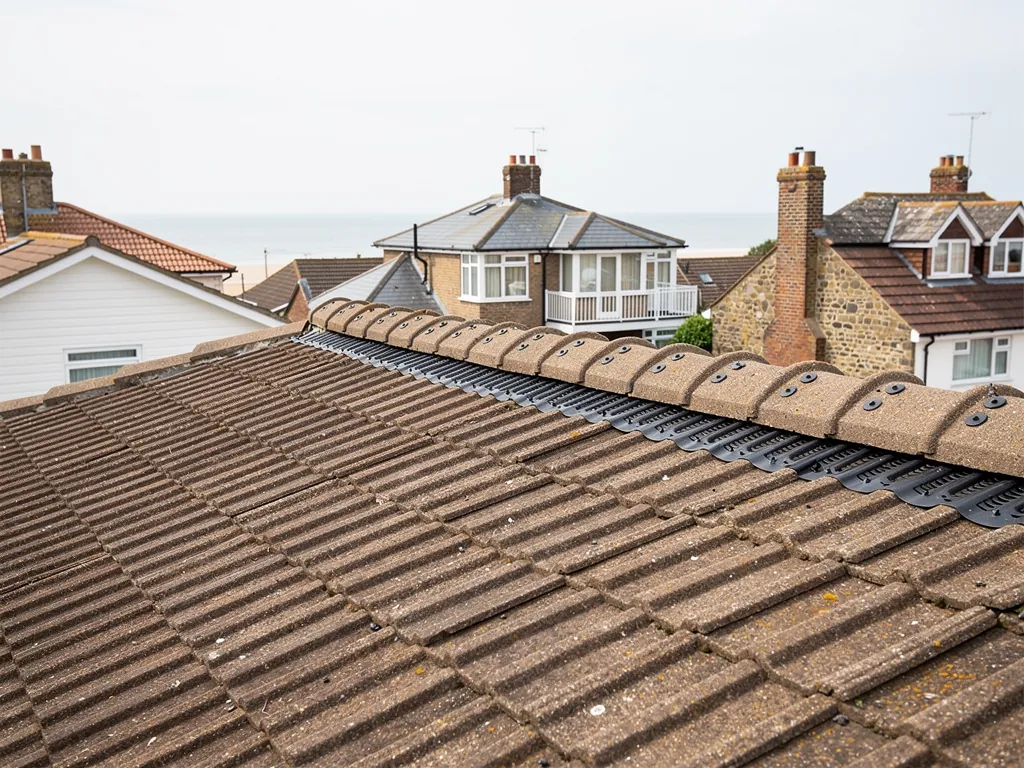
2.3 Changing the look of the roof
On some streets a different covering is welcome; on others it is a mistake. Arun's guidance for the Aldwick Road conservation area says original slate has often given way to modern concrete interlocking tiles, which it judges a loss to the buildings and the street. Whether a swap is sensible, and when consent gets involved, depends on the street, the age of the house and the pitch.
Flat roofs follow the same logic with different materials. Less puts torch-on felt at 10 to 20 years, GreenSpec gives EPDM an expected life of 20 to 30 years, and Less puts GRP at 25 to 40 years. BS 6229:2025 sets a minimum finished fall of 1:80. Our flat roofing service covers the detail. Domestic and commercial roofs are decided the same way, with a commercial property needing access and its users planned in first, and a house needing the neighbours told before the scaffold goes up.
Chapter 3: What a full strip and re-roof involves2318
Sheet 03 / 06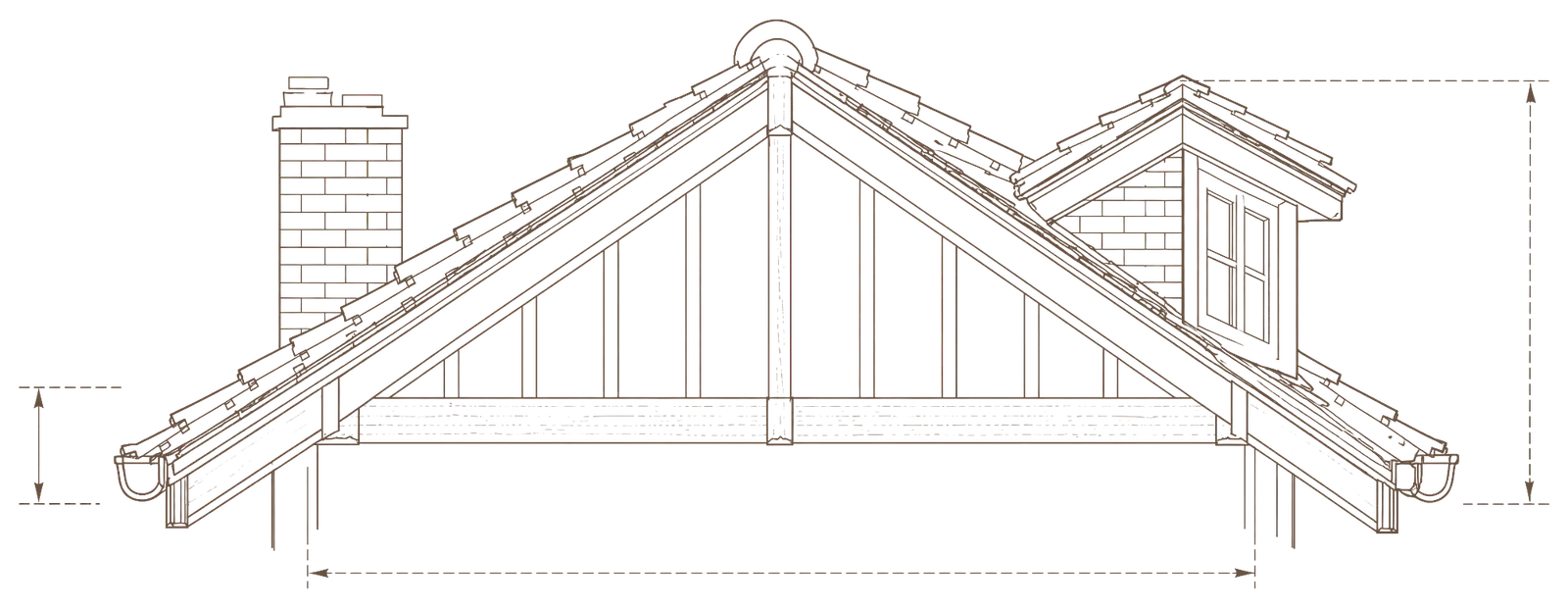
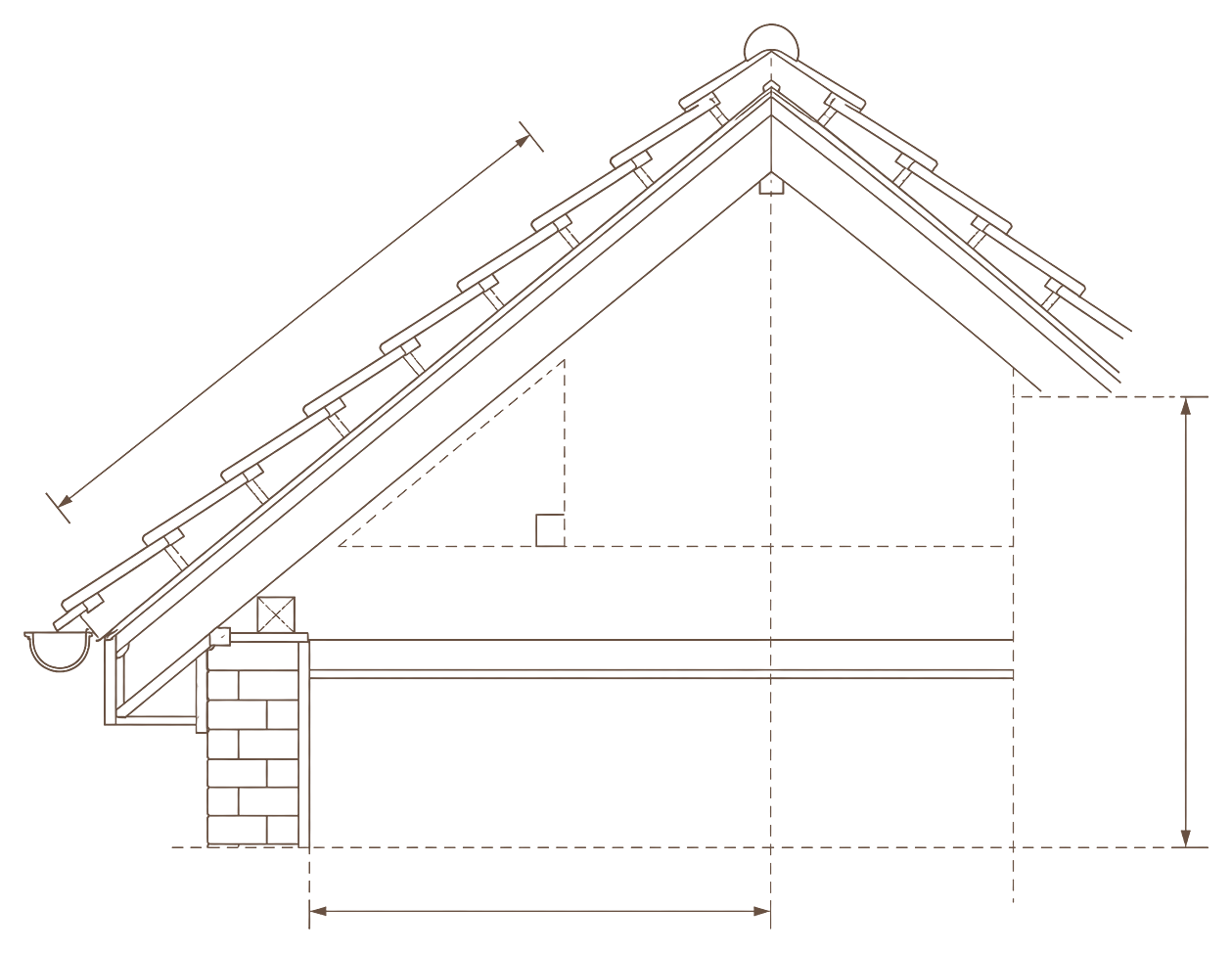
- Ridge Every ridge tile gets a mechanical fixing, bedded or dry.
- Eaves New underlay dressed into the gutter, with ventilation left clear.
- Dormer cheek Fresh lead and soakers where the cheek meets the main slope.
- Valley A new lining laid before the tiles are cut to it.
- Gutter outlet Cleared and checked so the new roof drains freely.
The old covering comes off slope by slope, the timbers are checked, and the new roof goes on in a fixed order.
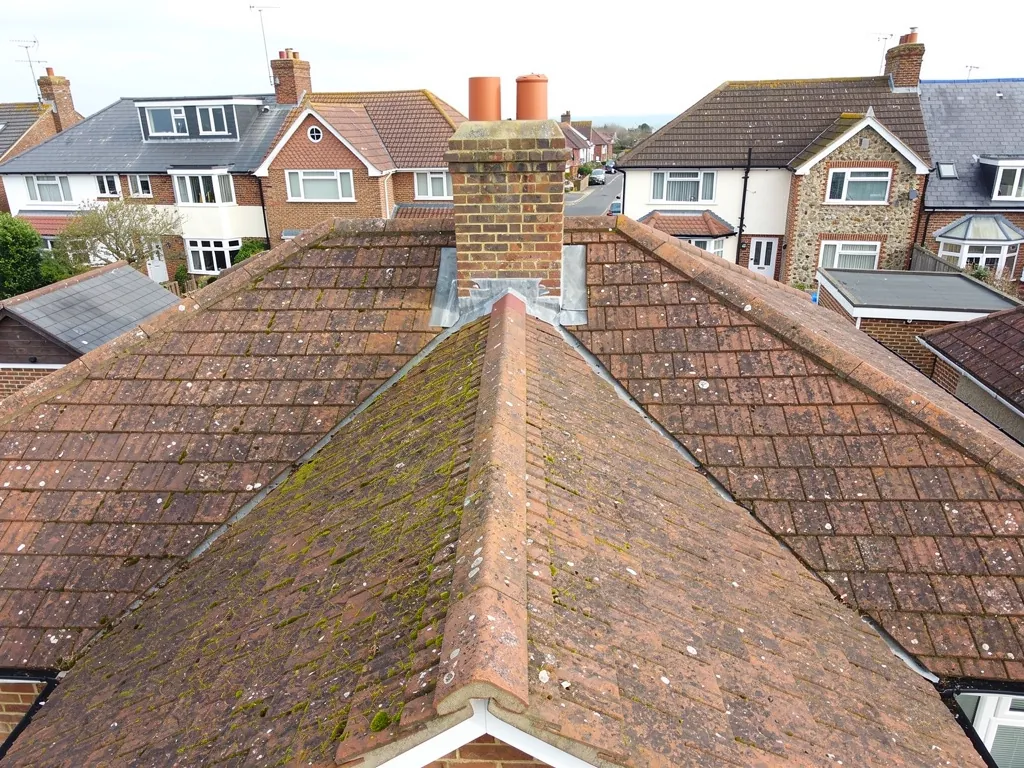
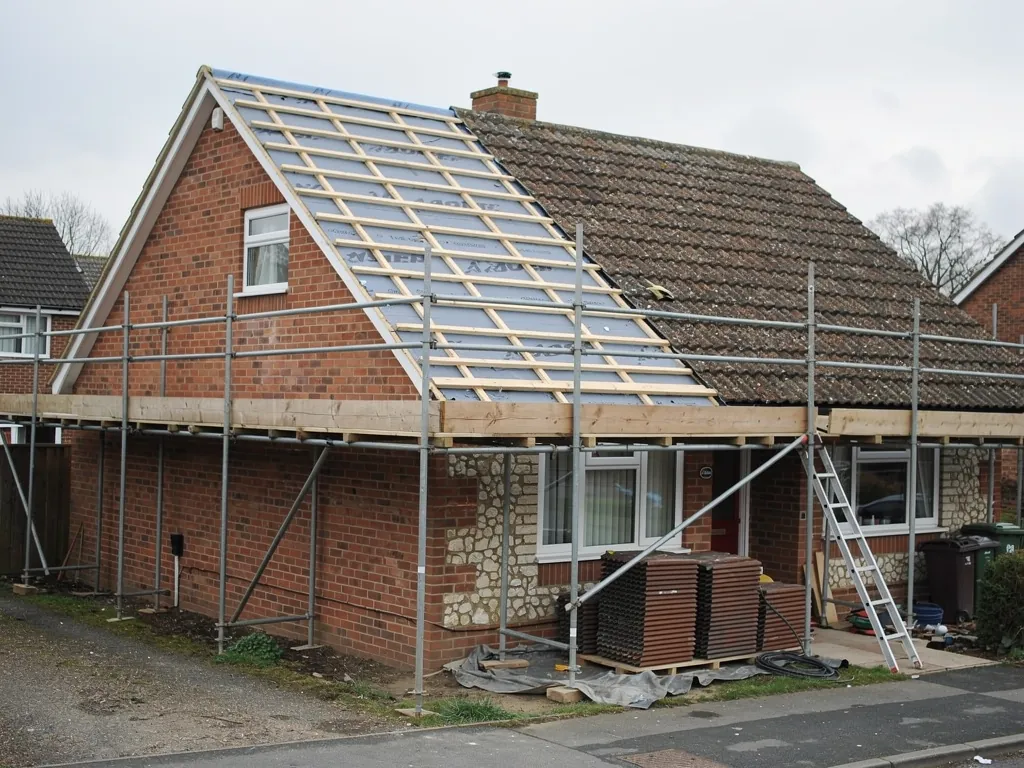
A full replacement is a sequence, and doing it in the right order is most of the quality. It starts with the scaffold, because working from ladders makes it impossible to strip a roof safely or keep the edges neat. Where the scaffold has to stand on the footway or road, the Highways Act requires a licence, which the highway authority issues, and it is worth asking your roofer who makes the application. West Sussex County Council asks for at least 10 working days' notice and charges £266 for one month, so the scaffold date often sets the date of the job. Weather conditions set the pace after that: a roof is never left open to rain, and the strip is planned slope by slope for that reason.
A re-roof in order of work
- 1ScaffoldErected and licensed first, so the strip can start safely.
- 2StripOld covering and underlay come off, slope by slope, and go to the skip.
- 3CheckThe rafters, wall plate and battens get inspected, and anything failing is replaced.
- 4Re-coverUnderlay, battens and the new covering are fixed from the eaves upwards.
- 5FinishRidges, verges and lead are completed and the site is left clear.
3.1 Stripping and checking the timbers
With the old tiles or slates off, the roof structure is visible. We check the rafters and wall plate for rot, the battens for softness, and replace what is failing, as set out in our answer on whether roof timbers need replacing. Two checks come before anything is stripped. Bats have legal protection, and replacing a roof can disturb them. Then there is asbestos: HSE says to presume it is present in a home built or refurbished before 2000 until a check proves otherwise, which matters for old cement sheets and soffits. Careful removal of asbestos cement is non-licensed work, but once the sheets break up substantially it becomes notifiable.
3.2 Underlay, battens and ventilation
Underlay is the membrane laid beneath the battens to catch what gets past the covering, and the battens are the timber laths that carry the tiles. A roof also has to breathe. For high-resistance underlay, Marley gives 25 mm of continuous eaves ventilation on pitches of 15 degrees or less and 10 mm above 15 degrees, with BS 5250 as the code on moisture in buildings. A vapour-permeable membrane changes those needs, which is why underlay and ventilation are chosen together as one roofing solution for the house.
3.3 Tiling, ridges, verges and lead
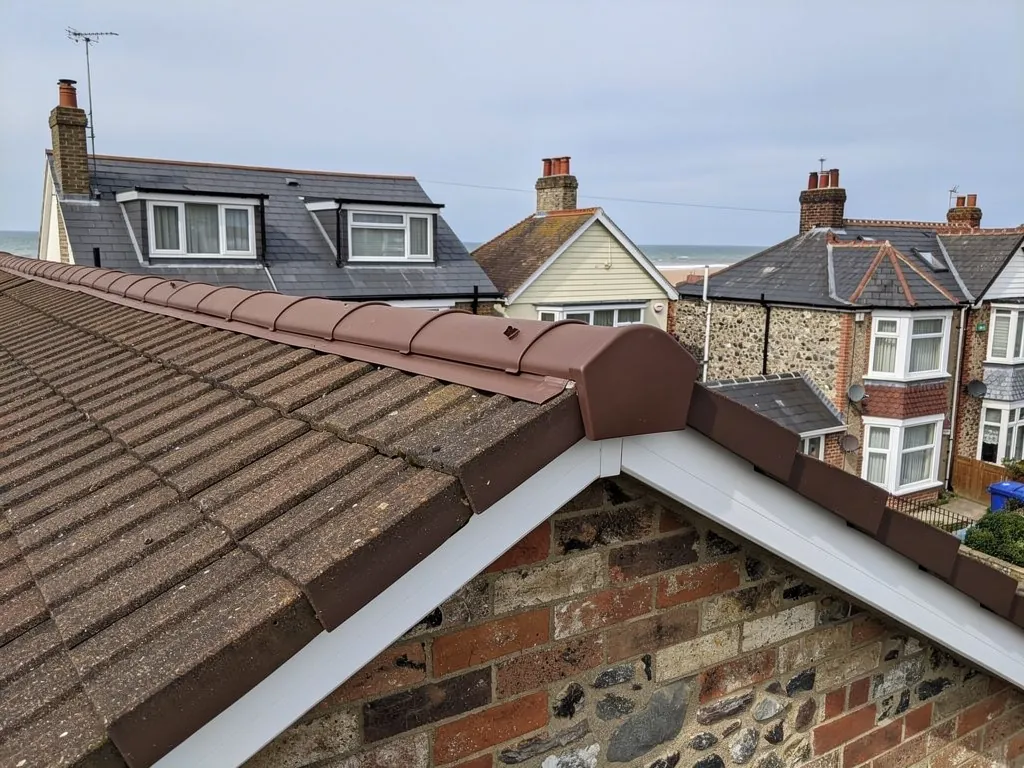
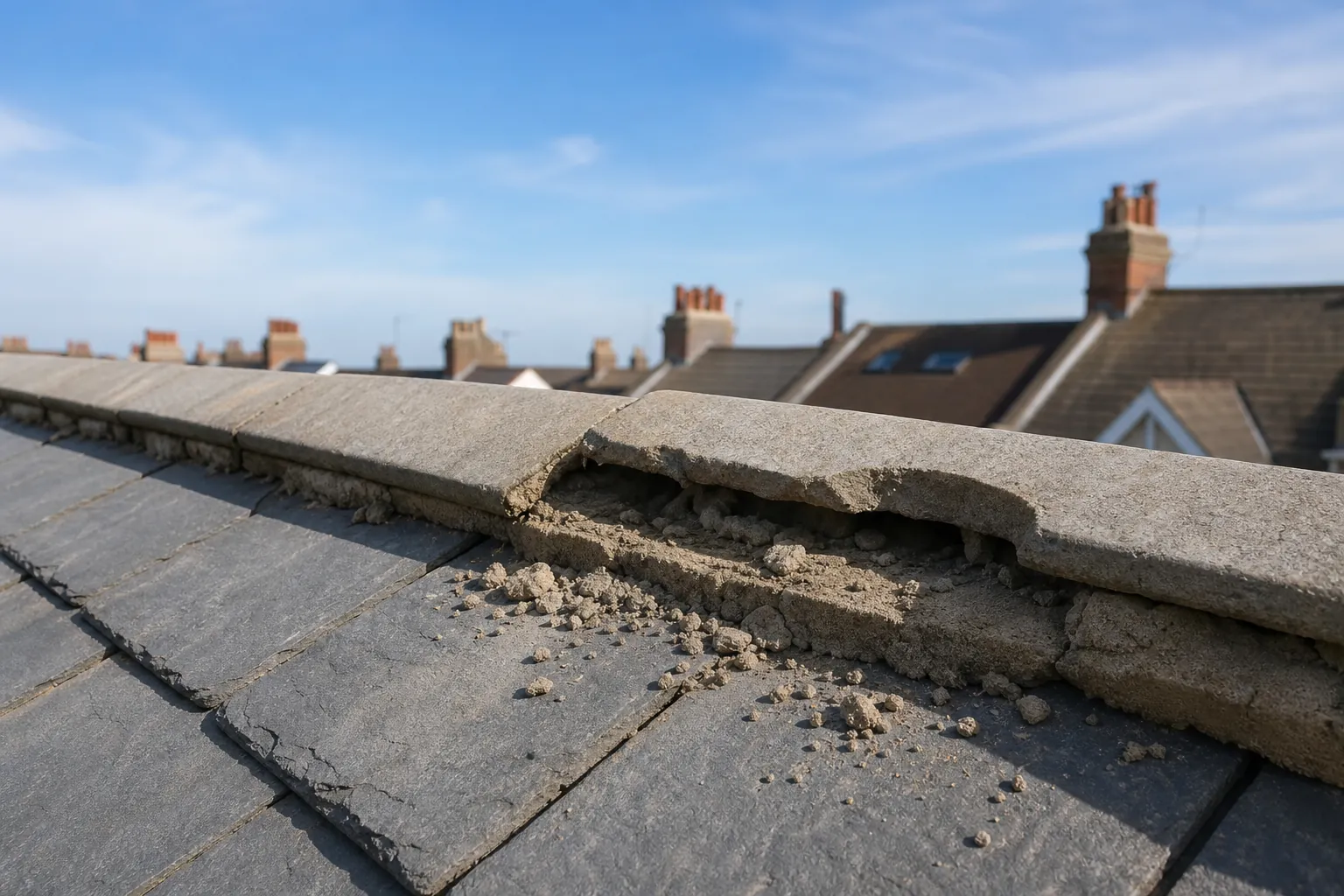
Tiles go on from the eaves upwards, each fixed as BS 5534 asks. Since the 2014 revision of that standard, mortar alone is no longer enough for ridge and hip tiles; each is also fixed mechanically, and dry-fix systems are tested to BS 8612:2018. The verge is the roof's outer edge above a gable end. Lead is dressed round chimneys and abutments, where a flashing seals the roof to the wall. When the last ridge is on, the gutters are cleared of debris and the waste leaves with us.
The order of work decides the quality of a new roof as much as the tiles do.
Chapter 4: Building Regulations, planning and consent2562
Sheet 04 / 06Whether a new roof needs approval turns on how much of the roof and the building is affected, and on the house itself.
Roof replacement sits between two systems. Building Regulations deal with how a roof is built; planning deals with how it looks. They ask different questions, and the answers change from one house to the next, so this chapter gives the working rules and your council confirms them for your address.
4.1 The 25 and 50 per cent tests
Under the Planning Portal's guidance you can normally skip a building control application when less than 25 per cent of the total building envelope is affected and less than 50 per cent of the roof is affected. The envelope means the walls, floor, roof, windows, doors, roof windows and rooflights taken together. Approval is needed where you exceed those limits, make structural alterations, choose a covering that behaves significantly differently in a fire, or fit one heavy enough to raise the roof's load by 15 per cent or more. Arun District Council's building control page lists replacing roof coverings on pitched and flat roofs among the work needing approval, so a whole-roof job in Bognor Regis is a conversation with Arun's team or a registered building control approver. That registration regime began on 6 April 2024, although private building control is older. Where the work is notifiable, we handle the notification to building control and explain what the consent covers. Our guide to re-roofing and Building Regulations works through both tests.
4.2 Insulation and Part L
A new covering can trigger a thermal upgrade. Approved Document L (2021) asks for it where more than 50 per cent of the surface of an individual thermal element is renovated, or where more than 25 per cent of the external envelope is renovated. For an existing roof, Table 4.3 sets a threshold of 0.35 and an improved value of 0.16 W/(m²·K). The 2026 edition takes effect on 24 March 2027, and replacing the waterproof membrane of a flat roof counts as renovation. We say at the survey whether insulation is likely to form part of your job.
4.3 Inspection and sign-off
Notifiable work is inspected as it goes and signed off at the end. Arun's building control team asks for a day's notice of a completion inspection and does not take requests for an inspection on the day itself, so the sign-off is booked ahead rather than left to the last afternoon. Once the certificate arrives, keep it with the house papers: a buyer's solicitor may ask to see it.
Questions settled before we order
- Share of roof and envelope
- Weight of the new covering
- Insulation upgrade triggered
- Listed or conservation area
- Bats and asbestos checked
15 per cent or more
added weight that brings building control in
Re-covering in matching materials seldom needs planning permission, since works that leave the outside appearance unchanged are not development. Listed buildings differ: works that affect their character need listed building consent. In Bognor, the conservation area around the Steyne and Waterloo Square was created in August 1979 and extended in July 1994. Arun's Article 4 directions around Bognor do not take roof rights away, but ask Arun's planning team before touching a listed or conservation-area roof, and tell us at the survey if your house is either, because it can change the covering we propose.
Chapter 5: What a new roof costs in West Sussex2196
Sheet 05 / 06Prices for a re-roof turn on the size of the roof, the covering and the access, so a range is a starting point only.
Homeowners ask for an average, and the plain answer is that averages hide a wide spread. Checkatrade's roof replacement guide, updated October 2026, gives a UK average of around £8,000, with most replacements between £4,000 and £19,000, and around £12,000 for a three-bedroom semi-detached of ordinary size. These are national figures, and none is a quote for your roof. Our guide to what a roof replacement costs goes through them in more detail.
Typical UK re-roof prices
- Flat roof£2,800 to £7,500
- Gable roof£7,000 to £16,250
- Hip roof£9,250 to £18,000
- Scaffolding for a re-roof£700 to £1,300
These are national guide figures shown plus VAT; after the survey, your own figure comes as one written total.
Source: Checkatrade roof replacement cost guide, table last updated October 2026
5.1 Hip, gable and flat compared
Checkatrade's replacement table, headed plus VAT and last updated October 2026, runs from £2,800 to £7,500 for a flat roof, £7,000 to £16,250 for a gable roof and £9,250 to £18,000 for a hip roof. A hip is the angled line running down an outward corner of the roof, where two slopes join. A hip roof means more cutting and more ridge to fix, which is why it costs more than a gable roof. Checkatrade also gives a garage re-felt at around £1,000 to £2,000, with an average of £1,500, which shows how far the cost falls when the roof is small and flat.
A national range is a starting point; only a survey puts a price on your roof.
Around £8,000
UK average re-roof, Checkatrade October 2026
5.2 What moves your figure
Access comes first. Checkatrade gives scaffolding for a roof replacement at £700 to £1,300, and a tall terrace needs more than a bungalow. Then the covering: natural slate costs more per square metre than concrete. Then the pitch, the number of dormers and chimneys, and whatever the strip reveals under the old covering, such as soft battens or rotten timber. Our figure is good and fair for your own roof, and only the survey sets it. The measurements, the covering and the state of the timbers all feed into it. Whoever quotes, see whether VAT and scaffolding sit inside the figure, and remember that two quotes for the same roof can differ widely when they cover different amounts of work, so compare what each one includes, not only the total.
5.3 Paying for the roof once
The lowest figure is not always the sensible one. A cost effective solution is the roof that does not need patching again in three winters, with underlay, fixings and flashings chosen to outlast the covering. We say what we would do on your roof and why, and you decide with the photographs in front of you. A roof that is sound underneath and only tired on top may simply need relaying, while one with soft timbers needs the structure dealt with first. Either way, the answer and the price are written down before any work starts.
VAT is charged at the standard 20 per cent on a re-roof. Where insulation goes in at the same time, whether that part is zero-rated depends on how the job is supplied, and the zero rate runs to 31 March 2027 before the rate reverts to 5 per cent. We explain how it applies to your job on the quote, so the final figure holds no surprises. Ask any roofer the same question, because a quote that leaves VAT out can look thousands lower than one that includes it, and it is not the same price.
Chapter 6: Insurance, grants and checking any roofer2501
Sheet 06 / 06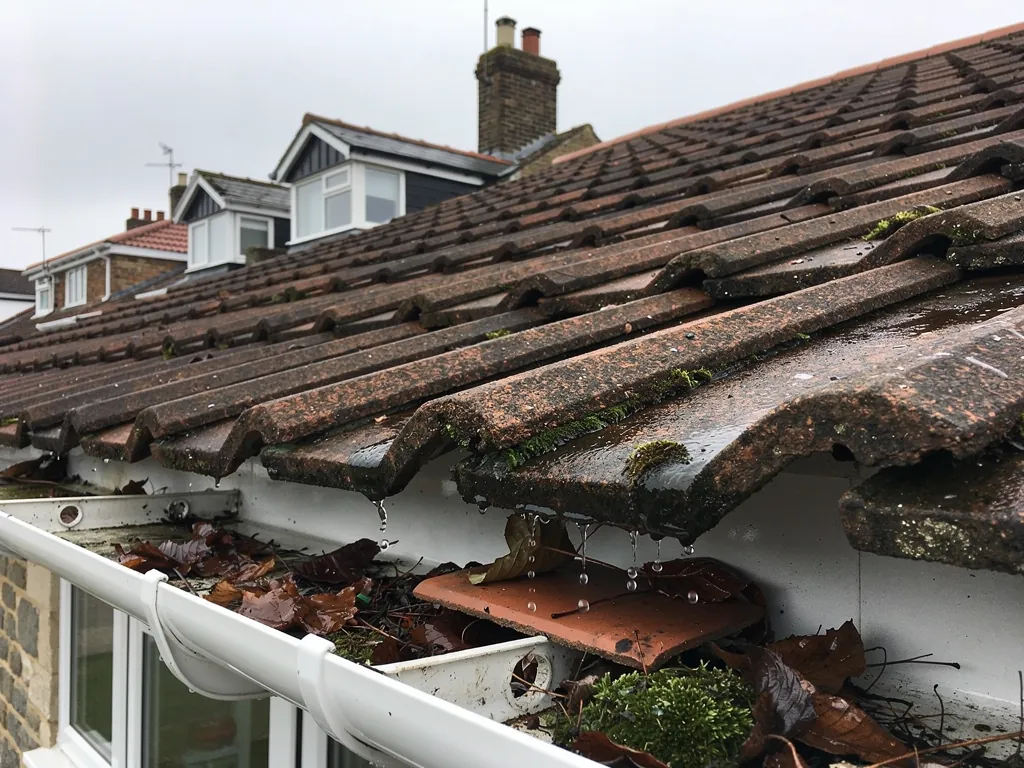
A new roof is a large bill, so it helps to know what insurance and grants cover, and how to check who you are hiring.
Three questions follow the price: will insurance pay, is there a grant, and how do I know the roofer is sound. The answers are shorter than you might expect, and none of them involves a promise from us.
Before you sign
Get the price, the start date and the terms of the cover on paper, and check whether VAT and the scaffold are inside the figure.
6.1 Insurance and storm damage
Home insurance is aimed at sudden damage, not wear. Which? says wear and tear is generally excluded, and cites water entering through a badly maintained roof as an example. The Financial Conduct Authority's figures, as reported by Which?, show just 32 per cent of storm claims made in 2024 ended in a payout. After a gale, ring your insurer before anything else, get the roof covered temporarily, take photos of the damage and keep every receipt. Should the outcome seem wrong, complain to the insurer first and the free Financial Ombudsman Service second. A new roof is never something to assume the insurer will fund, and the insurer decides whether a claim stands, not the roofer. Anything a policy does not cover is a private bill, which is why the written price matters.
6.2 Grants
A new roof rarely attracts a grant. Where help exists, it funds insulation and heating, not roof coverings. ECO4 runs until 31 December 2026. The Great British Insulation Scheme stopped taking new installations after 31 March 2026. Where a household is disabled or short of income, Arun District Council is the place to ask about local help, and the government website shows what is open at the moment, since nobody qualifies by default. Do not hand money to a firm offering a grant-funded roof until you have checked the scheme yourself.
6.3 How to check any roofer
Ask for the price in writing, as one total, and see whether VAT and scaffolding are in it. Ask what guarantee the firm gives on its work and how long it lasts, and get those terms on paper. Be wary of anyone who knocks after a storm and wants a deposit that day. Ask how experienced the firm is with the covering you have chosen, who will be on the roof, whether they are qualified for the work and whether it holds public liability insurance you can see. A local roofing contractor with a real address and a phone that gets answered is easy to check, and a recommendation from a neighbour is better still. Under the cancellation rules you have 14 days after signing at home to change your mind.
Price guide
Typical UK roof replacement prices
| Job | Typical range |
|---|---|
| Most UK re-roofs | £4,000 to £19,000 |
| Natural slate roof | £160 to £210 per m² |
| Spanish slate roof | £95 to £125 per m² |
| Garage roof re-felt | £1,000 to £2,000 |
| Scaffolding for a re-roof | £700 to £1,300 |
These are national guide figures, not ours. The price you receive is set after the survey and covers the whole job as one total.
Source: Checkatrade roof replacement and slate roof cost guides, tables last updated October and September 2026
Guides and answers
Roof replacement guides and answers
Guides on cost, consent, materials and timing, with short answers on scaffolding, tiles, timbers and living at home during a re-roof, written for homes around Bognor Regis.
 How much does a roof replacement cost in the UK?9 min read
 When should a roof be replaced rather than repaired?9 min read
 Re-roofing and Building Regulations: the 25% and 50% tests explained9 min read
 Do you need planning permission to replace a roof?9 min read
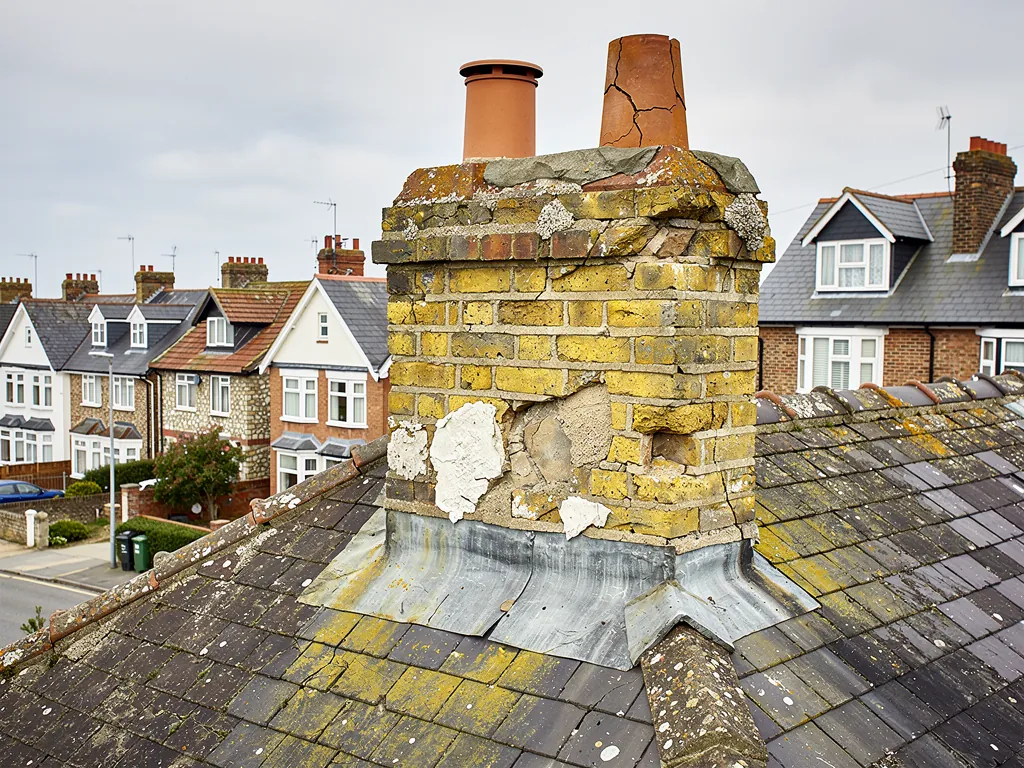 Which roofing material is best for a UK home?9 min read
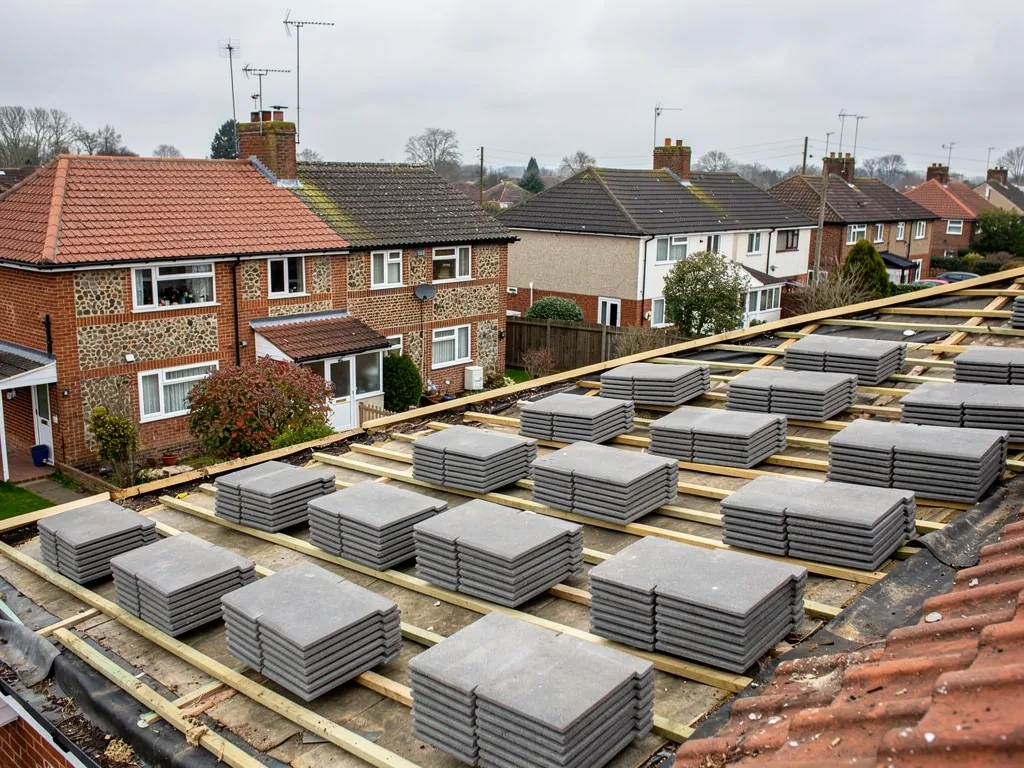 Signs you need a new roof9 min read
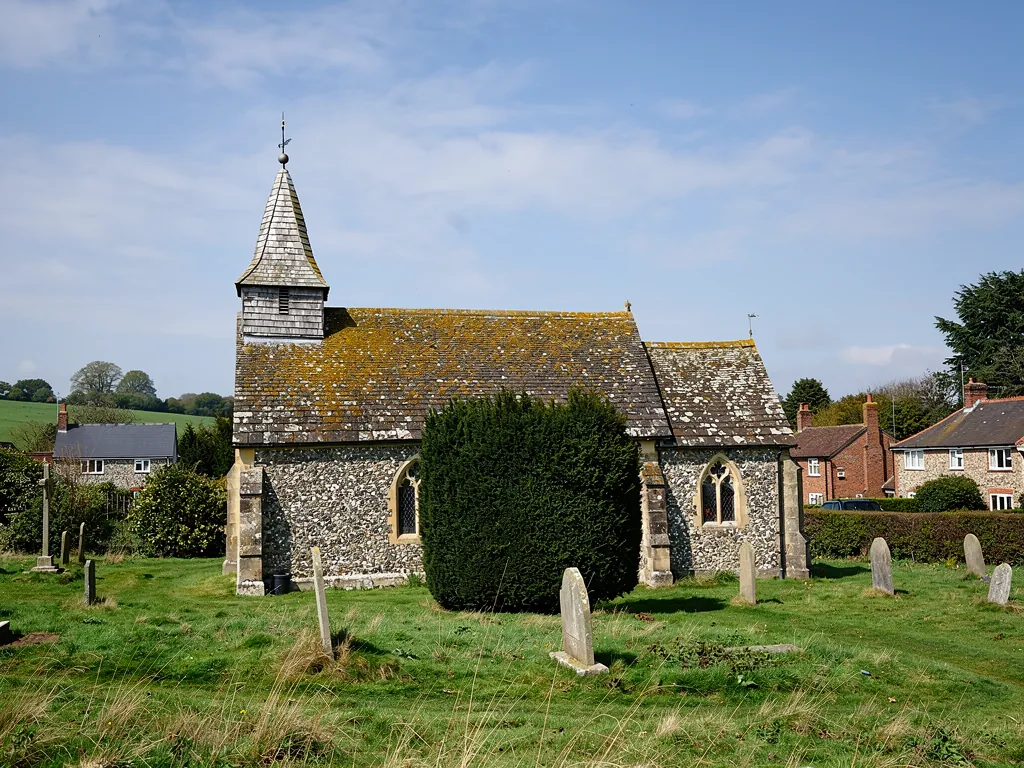 Re-roofing a listed building or a house in a conservation area9 min read
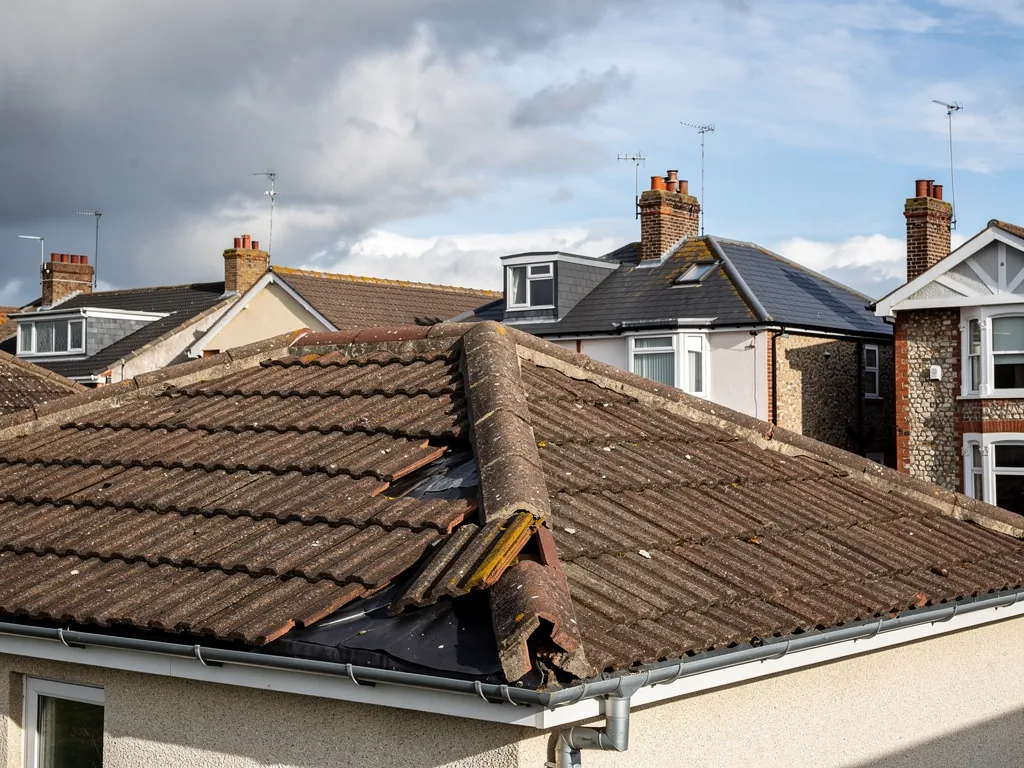 What happens during a roof replacement, day by day9 min read
 Insulating when you re-roof: what Part L asks for8 min read
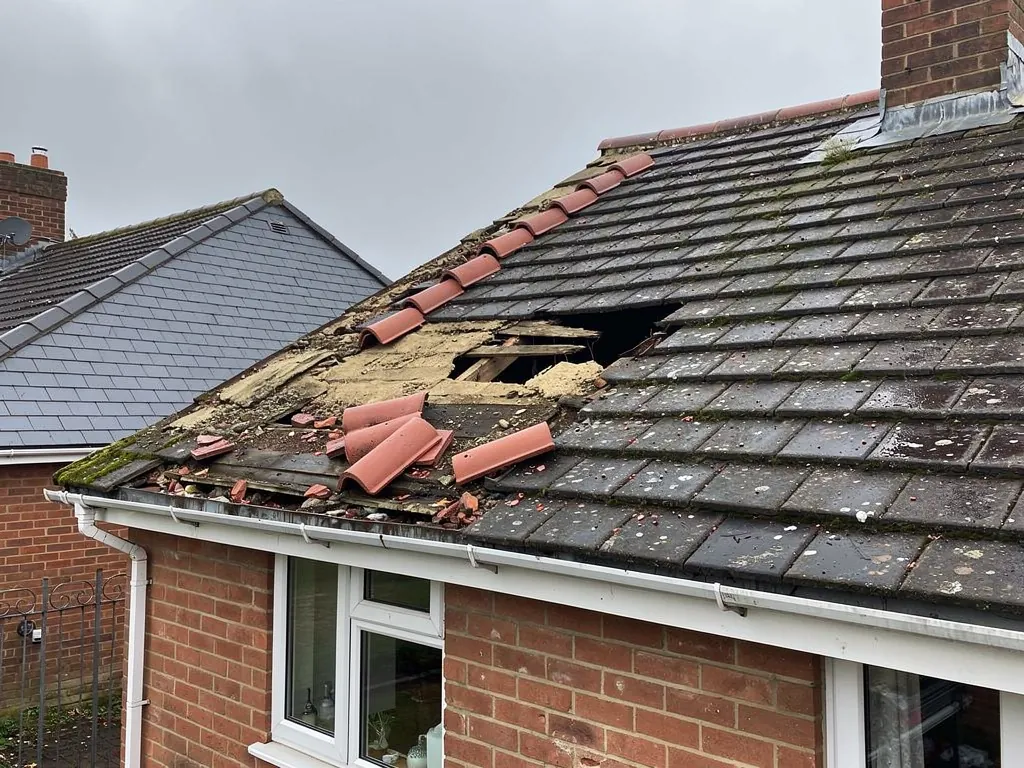 Re-roofing a bungalow: costs, materials and what to expect9 min read
 Re-roofing a terraced house: scaffold, access and the neighbours9 min read
 Can a roof be replaced in winter?9 min read
Quick answers
- What time of year is it cheapest to replace a roof?
- How much does a new roof cost per square metre?
- How much is a new roof on a three-bed semi?
- How much does it cost to replace a hip roof?
- How much does scaffolding cost for a roof replacement?
- How long does a new roof last?
- Will insurance pay for a new roof?
- Why do roof replacement quotes vary so much?
- How long does it take to replace a roof?
- Can you live in your house while the roof is replaced?
- What happens if it rains during a roof replacement?
- Can you re-roof over the existing tiles?
- Can old roof tiles be reused on a new roof?
- Do roof timbers need replacing when you re-roof?
- Can you change your roof covering when you re-roof?
- Should a new roof have a breathable membrane?
- Do you get a building control certificate for a new roof?
- Can you replace just one side of a roof?
- Should you re-roof before a loft conversion?
- Should a period house be re-roofed in natural materials?
Questions
New roof questions, answered
What does a roof replacement usually cost?
Checkatrade's October 2026 guide gives a UK average of around £8,000, with most replacements between £4,000 and £19,000. A three-bedroom semi-detached of ordinary size comes out at around £12,000. Those are national figures, and size, covering, pitch and scaffolding can move yours a long way either side. We give one written price after surveying the roof, so you are never working from an average.
Is there any government money towards a new roof?
Not for the roof itself. The national schemes pay for energy measures, not re-covering. ECO4 backs insulation and heating work for qualifying households until 31 December 2026, while the Great British Insulation Scheme is over. A disabled or low-income household can ask Arun District Council what local help exists, while gov.uk shows which schemes are currently open, because offers come and go and nobody qualifies by default.
What should I check on a roofer's quote before signing?
Look for one clear total, a stated start date, whether VAT and scaffolding are inside the figure, and what cover the roofer gives for the workmanship and for how long. Check that the firm has a real address and answers the phone. Be wary of pressure to pay a deposit on the doorstep. Sign at home and the cancellation window is 14 days.
Does the time of year change the price of a new roof?
We cannot point to a published figure showing prices rising or falling by season, so we do not promise a saving. What changes is the work. Mortar, felt and resin need dry spells, and nobody should be on a slope in a gale, so wet or windy weather moves start dates. A leaking roof is made safe first, and the full replacement is then booked for settled days.
Can I stay in the house during a roof replacement?
Many households do. Expect noise from the strip, some dust shaken down into the loft, scaffolding at the windows and tradespeople at the gutters and eaves. We tell you the plan before work starts, protect what we can and keep the site tidy each day. Move anything fragile off the loft floor and ceilings, and tell us about pets, night shifts and anyone unwell at home.
Can my existing slates or tiles go back on the new roof?
Sometimes. Sound natural slates or clay tiles can be relaid on new underlay and battens, and we judge that as the old covering comes off. Cracked, laminating or nail-sick pieces are rejected and replaced to match. BSI says the BS 5534 advice may not fit certain old roofs, especially those laid in traditional or reclaimed materials, so the fixing method is chosen for the roof in front of us.
Get a quote
Send us the roof you are weighing up
Send photos of each slope, the loft and any ceiling stains, and tell us the covering and age if you know them; we check repair against replacement first.
Loading the enquiry form. You can also call 01243 252373.