
Chimney repairs in Bognor Regis
Most chimney leaks start at the pointing, the lead or the cap, not in the whole stack. We check it from the loft and the roof, photograph the fault and say plainly whether it needs repair or rebuild.

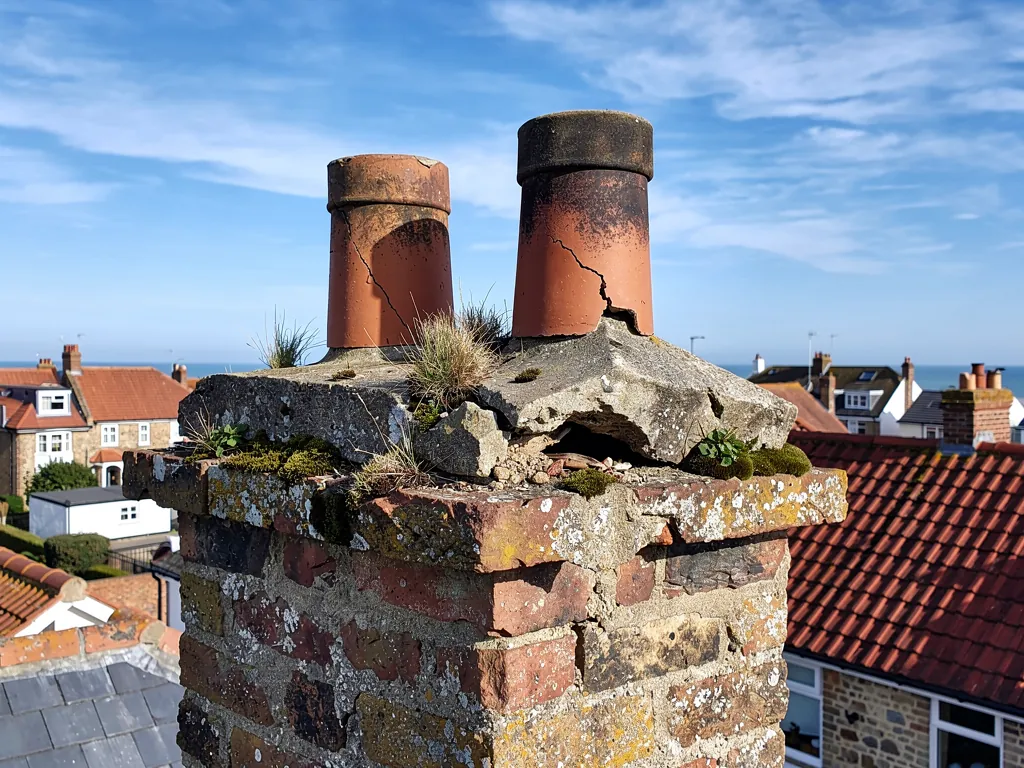
- Repair or replace,
said plainly - Photos of
your own roof - Written quote,
one total price - Ridges and verges
fixed to BS 5534
Signs
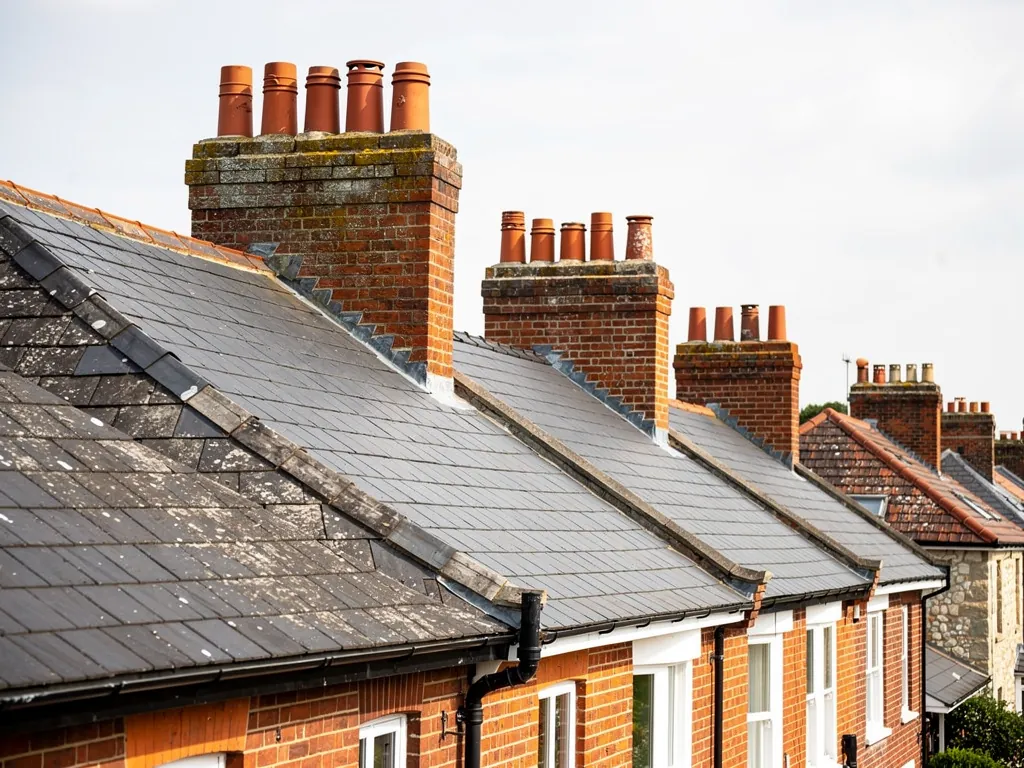
Signs a chimney stack needs repair
- A brown damp patch on the chimney breast
- Mortar crumbling out of the brickwork
- Lead lifted or split round the stack
- Cracked mortar around the pots
- Brick faces flaking off the stack
Chimney work we carry out
Chimney work across Bognor Regis and West Sussex
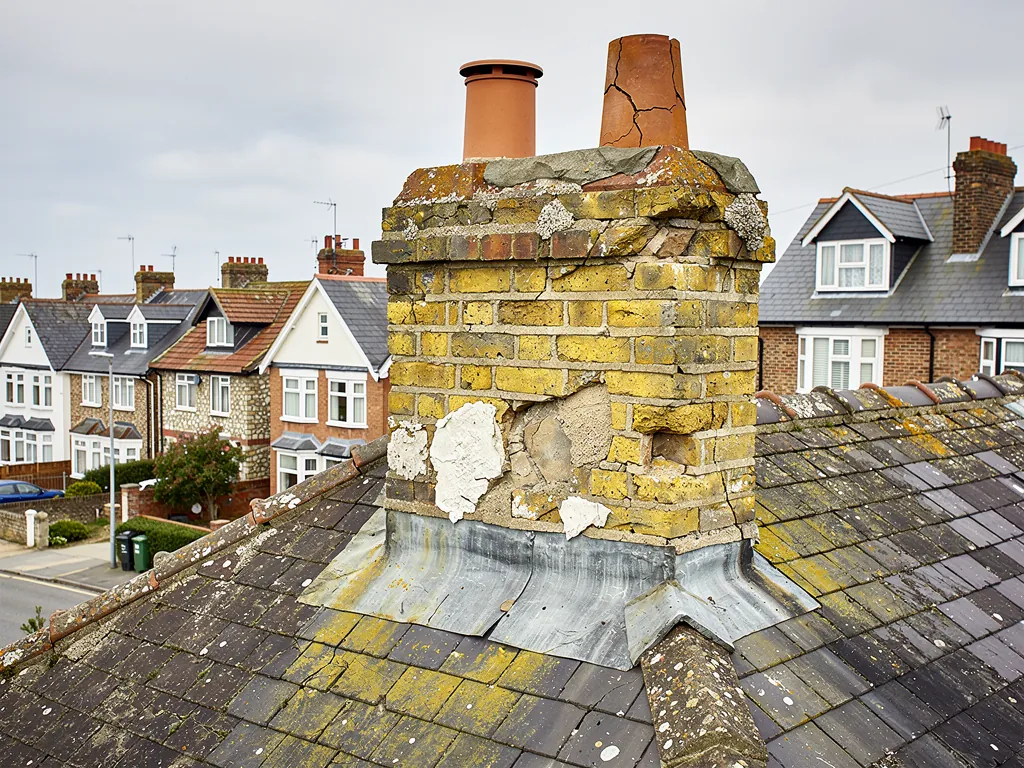
Repointing the stack
We rake out loose mortar and repoint the joints so the brickwork sheds water again, matching the colour and finish of the surrounding bricks wherever we can.

Flaunching and crowns
Flaunching is the sloped mortar bed that holds the pots. We cut out cracked flaunching and lay it again so rain runs off the stack, not into it.
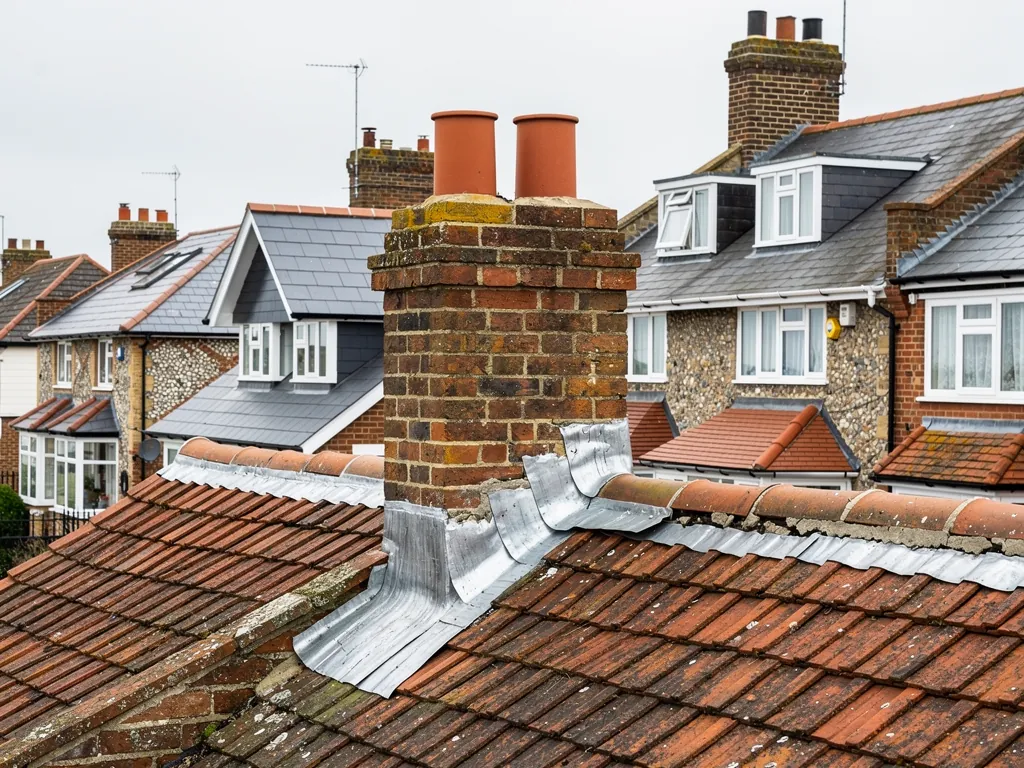
Lead flashing repair
A flashing is the lead that seals the roof to the stack. We renew lifted or split flashings and soakers, wedged and pointed into the brickwork.
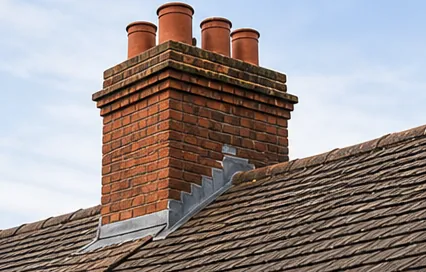
Pots, caps and cowls
We reset loose pots, replace cracked ones and fit a cap or cowl where the flue allows, so rain and nesting birds stay out of the stack.
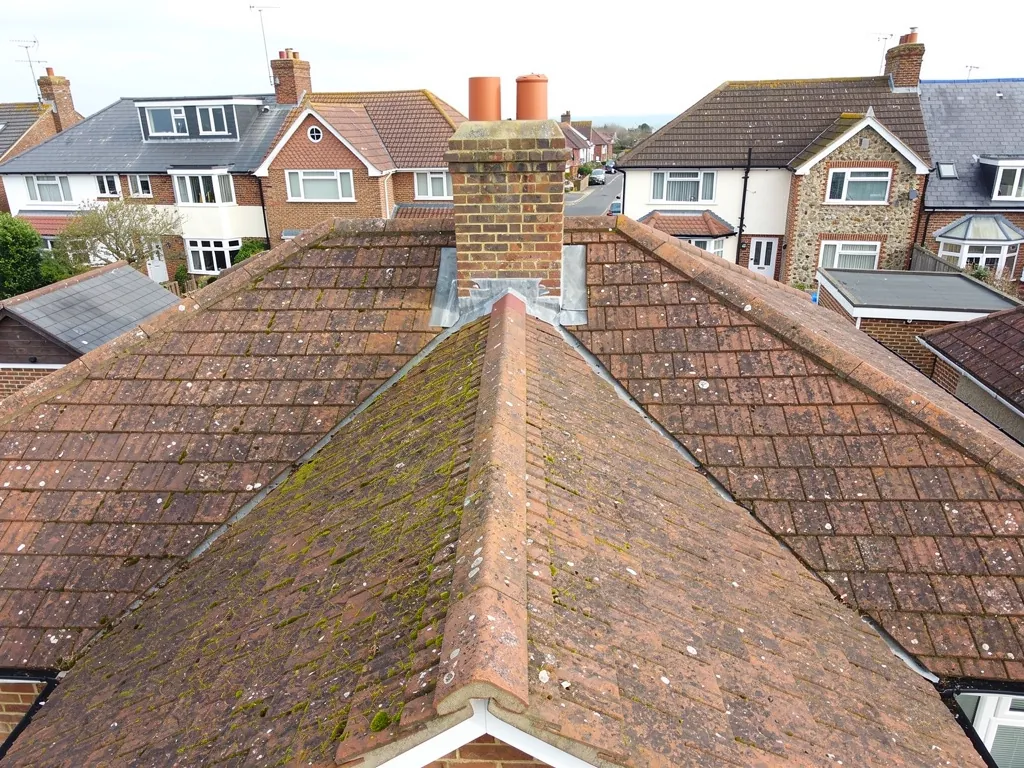
Rebuilding a stack
Where the brickwork has failed, we take the stack down to sound courses and rebuild it, reusing the bricks that are good enough to go back.

Taking a stack down
A stack nobody needs can come down below the roof slope with the roof made good. Removing a chimney breast inside is a separate job with its own rules.
What it costs
What chimney repairs cost in Bognor Regis
£300 to £3,000
JJ Roofing's published guide range for chimney repairs
A pot reset from a ladder sits near the bottom; a scaffolded rebuild with new lead and flaunching sits towards the top.
How a chimney repair goes, from first photo to clear-up
- 1Send the stack and the stainRing 01243 252373 or WhatsApp a photo of the stack, the damp on the chimney breast or the fallen pot, and tell us when you noticed it.
- 2Loft first, then the roofWe look at the brickwork where it passes through the roof from inside first, then from a ladder or the roof, and photograph each fault.
- 3A plain verdict, then one priceYou hear whether the stack needs a repair, a repoint or a rebuild and why, followed by a written quote with one total price.
- 4Repair, photographs, clear-upWe do the work, photograph the finished stack and lead, and carry the old mortar, bricks and every other bit of waste away.
Chimney repairs, in depth
How chimney stacks are kept sound on the Sussex coast
Six chapters covering how a stack is read, repointed and reflashed, when it is rebuilt, what the work costs and which rules apply to old chimneys.
Chapter 1: Reading a chimney stack for trouble2135
Sheet 01 / 06Chimney trouble tends to show twice: as weathering on the stack outside, and as damp or staining somewhere inside the house.
A chimney stack is the most exposed part of a house. It stands clear of the roof, takes weather on every face and relies on brick joints, lead and a mortar cap, each doing a different job at once. When one of them fails, the first sign is usually indoors. On a bungalow in Aldwick or Felpham the stack is often the only brickwork above the roofline, so rain and sea weather work on it from every side. A chimney repair starts by finding which part has let go, because the cure for a cracked cap is nothing like the cure for a failed flashing.
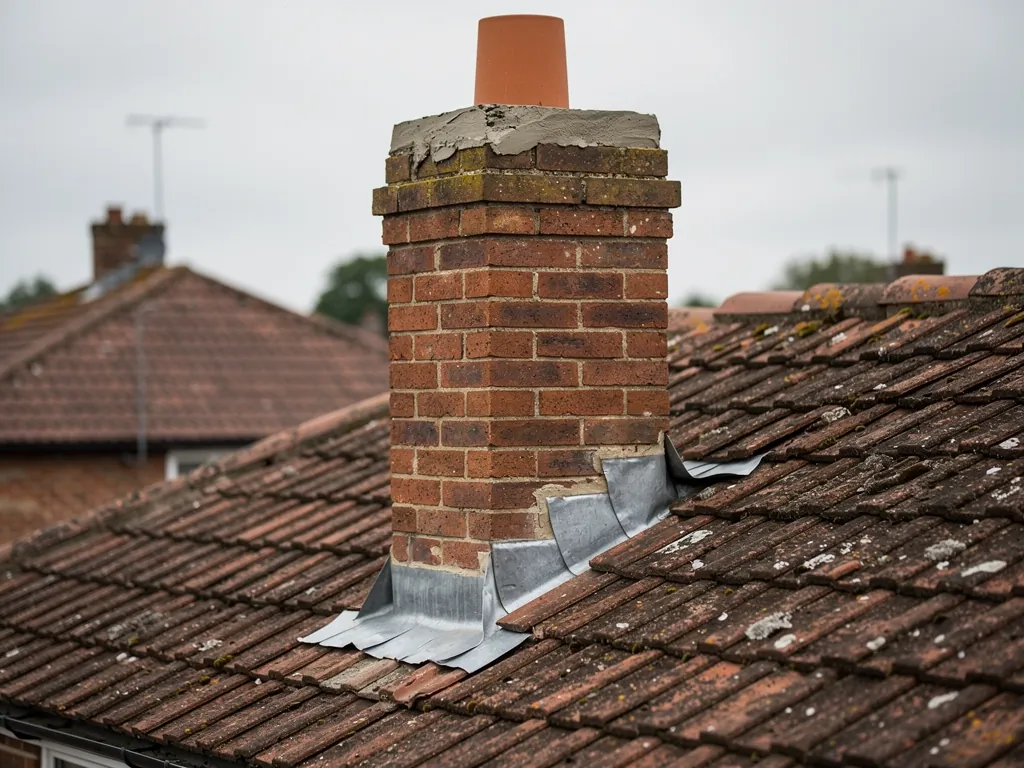
The stain on the chimney breast shows where the water arrives, not where it got in.
Tracing chimney damp, in order
- 1BreastNote where the stain sits and whether it grows after rain.
- 2LoftLook for tide marks and wet timber where the stack passes through.
- 3Roof lineCheck the lead and the pointing at the foot of the stack.
- 4Stack topCheck the pots, the cap and the mortar bed holding them.
1.1 What you can see from the ground
Stand back in the garden or across the road and look at the stack, with binoculars if you have them. Pointing that has washed out leaves dark gaps between the bricks, and a pot that looks fine from the road can still hide a cracked bed beneath it. Brick faces that are flaking show as pale, rough patches. A pot sitting at an angle, a cracked cap or lead standing proud of the tiles are all worth a photograph. Keep your feet on the ground while you look. The photograph is enough for us to start from, and a stack that leans is better reported than inspected from a ladder.
1.2 What the chimney breast and the loft show
Indoors, a brown stain on the chimney breast, wallpaper lifting or powdery salts on the plaster point to water finding a way down. In the loft, look where the brickwork passes through the roof: dark tide marks, wet timbers round the stack or daylight at the flashing all narrow the search. Damp on a chimney breast is not always a roof fault, so we check from the roof side before anyone opens up a wall. Our guide to a damp chimney breast explains how the causes differ.
1.3 How we inspect a stack
We start in the loft, then go to a ladder or the roof, and photograph the pointing, the flaunching, the pots and the lead from close range. Where the inspection cannot reach something safely, we tell you what it would take to look. The photographs arrive alongside the quote, so you can see what we saw and pass the pictures on to anyone you like. Regular maintenance helps too: a look at the stack after a hard winter costs little, and small faults are cheap to put right before they let water in.
Chapter 2: Repointing, flaunching and the crown2196
Sheet 02 / 06Mortar joints and the sloped cap at the top of the stack are the first things the weather takes apart.
Repointing is the most common chimney repair, and the one most often put off. Mortar joints are the stack's raincoat: they keep water out of the brickwork and hold the bricks together. Rain, sun and frost wear them back until water sits in the gaps, and then the bricks begin to take the damage. Repointing means raking out the loose mortar to a sound depth and filling the joints again, so the stack sheds water. Done early, it saves the bricks. Done late, it often turns into a rebuild. Our guide to chimney repointing goes through what is involved in more detail.
Repoint the stack
Loose joints raked out and filled, bricks left in place, for a stack that is otherwise sound.
Rebuild the top courses
Bricks lifted and relaid where the faces have flaked or the courses have moved.
2.1 Matching the existing brickwork
A repointed stack should look as if nothing has happened to it. We match the joint colour and finish to the surrounding brickwork, and on an older stack we talk through the choice of mortar at the survey, because what suits a Victorian chimney in central Bognor is not always right for a 1960s stack in Rose Green. Raking out is slow, careful work: cut too deep or too roughly and the brick edges are damaged. Ask any roofer what depth they will rake out and what mortar they will use.
2.2 Checking the bricks first
Before any mortar goes in, we check the brickwork itself. Bricks that sound solid and hold their shape take new joints well. Bricks that crumble under a screwdriver or have lost their faces cannot hold pointing for long, and we tell you at that stage rather than after the scaffold is up. A rendered stack needs the same check, because render can hide the state of the bricks beneath it, and a hollow sound when it is tapped tells us it has come away from the wall.
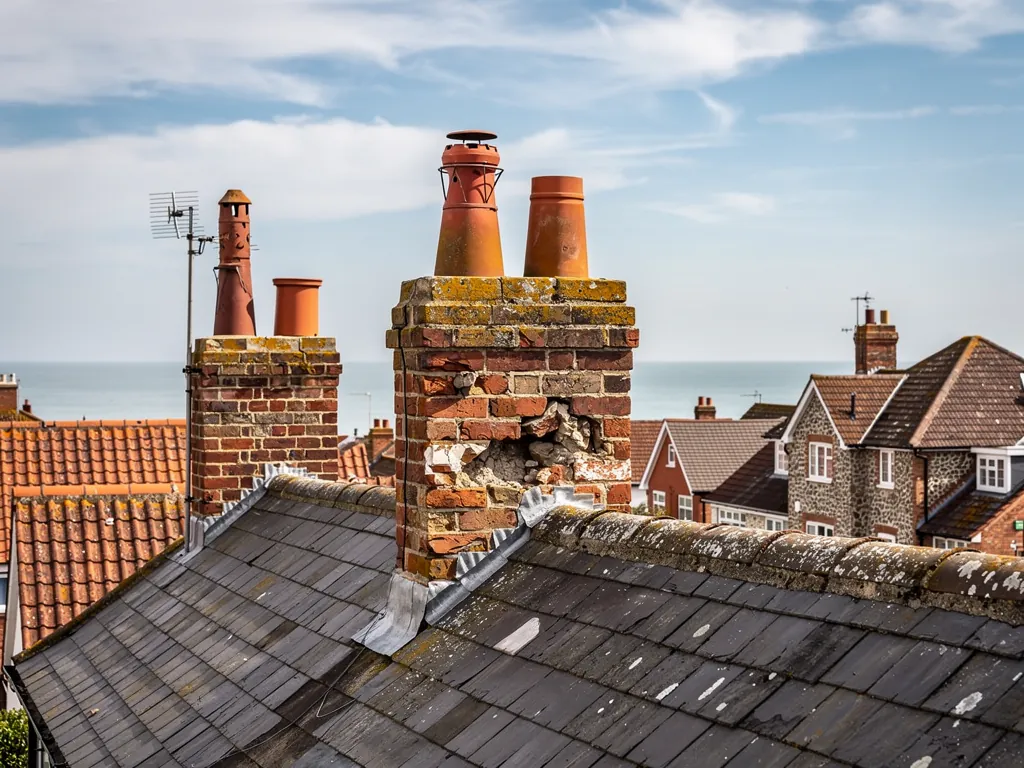
2.3 Flaunching and the crown
The flaunching is the sloped mortar bed that holds each pot in place and sheds rain away from the flue. The crown is the top of the stack, where the flaunching and the pots sit. A cracked flaunching lets water into the flue and the brickwork below, so it is one of the first details we look at. Pieces of failed mortar also drop onto the roof and into the guttering, where they can block an outlet. Replacing flaunching means lifting or resetting the pots, cutting out the old bed and laying a new one with a fall on every side.
Stacks on the seafront terraces and the Peninsula bungalows take driving rain and gales head on, which is why pointing and flaunching are the first things we check there. The best time to deal with them is when the first joints open, not when a pot moves. Repointing is also the natural moment to look at the lead, since the same access serves both, and a stack that has been neglected for a long time is better pointed and flashed in one visit than in two.
Chapter 3: Lead flashings, soakers and the back gutter2623
Sheet 03 / 06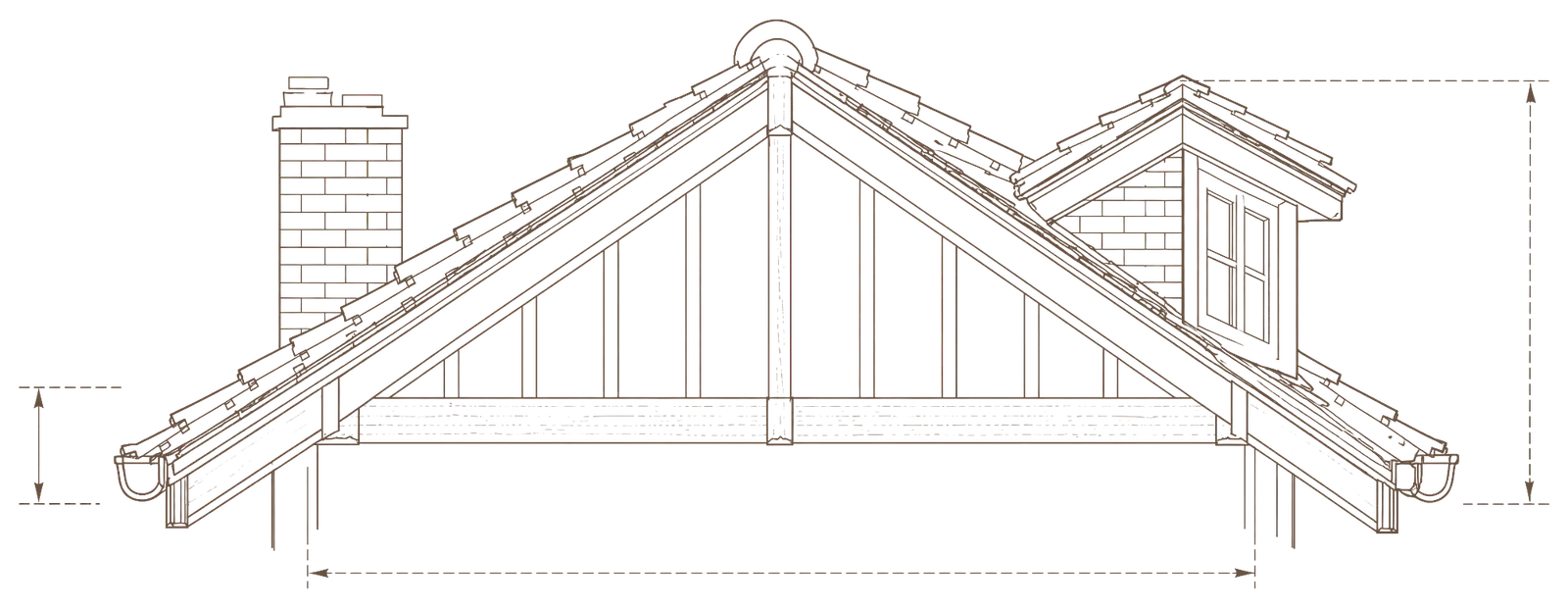
- Pots and cap Cracked pots and flaunching let rain into the flue.
- Eaves guttering Failed mortar from the stack can block the guttering below.
- Stepped flashing Lifted lead on the side lets water behind the brickwork.
- Back gutter A split lining behind the stack sends damp into the loft.
- Outlet Debris from the stack collects at the gutter outlet.
Where the stack meets the roof, lead carries the water round the brickwork and back out over the tiles.
Wherever a chimney meets the roof, lead does the sealing. A flashing is the lead sheet dressed over the tiles at the foot of the stack and tucked into the brickwork above them. Lead is used because it can be bent to shape and moves with the building without splitting, and it is the detail that decides whether a stack stays dry. Arun's conservation guidance describes the chimneys of The Steyne and Aldwick Road terraces as skyline features, so the lead beside them has to look right as well as work.
What we check at the stack
- Pointing that holds the lead
- Soakers between the tile courses
- Back gutter joints and fall
- Lead code for each position
- Mortar bed round the pots
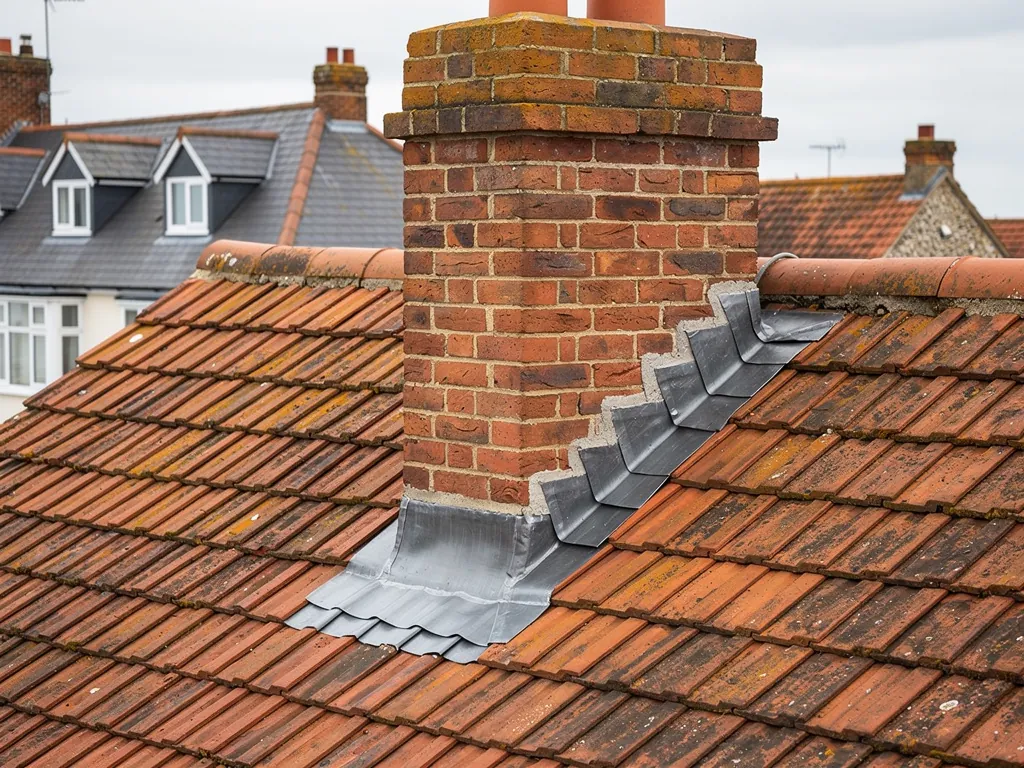
3.1 Flashings, soakers and the back gutter
A stack has four sides and each is treated differently. At the front, an apron flashing sheds water onto the tiles below. Up each side, stepped flashings follow the slope and work with soakers, small folded pieces of lead laid between the tile courses to guide water out over the top. Behind the stack, on the high side, sits the back gutter, a lead-lined channel that sends rain round the brickwork instead of letting it build up. When the pointing that holds a flashing falls out, the lead lifts. A blocked, split or badly formed back gutter is where damp in the loft often begins.
3.2 Cement fillets and other shortcuts
Some older stacks have a cement fillet, a sloped band of mortar, where lead should be. Cement cracks because the stack and the roof move at different rates, and once it splits, water follows the crack straight in. Replacing a fillet with lead is a common chimney repair. Long runs of flashing are laid in sections with the laps placed where water cannot sit, and the pointing over them is checked again at each visit.
3.3 Choosing the lead code
Each sheet of lead carries a code number, and the higher the number, the thicker the lead. Royston Lead's brochure lists code 4, at 1.80 mm, for soakers, flashings and valleys, and code 5, at 2.24 mm, for flashings and gutters. We choose the code for the position and the size of the piece. A lead flashing repair done properly means wedging the lead into a raked joint and pointing over it, not smearing sealant along the top edge. Mastic can get a leak through a wet week, but it is a holding measure, and it has to come off before the real repair begins.
Patching a small section is sometimes enough. MyJobQuote, last updated 22 September 2026, puts patching chimney leadwork at £150 to £250 and says lead flashing can last for over 80 years, a good reason to renew it properly once it has failed instead of patching it again. A flashing repair that stops at one side of the stack often leaves another side with the same fault, so we check all four. Our guide to chimney flashing shows each piece in turn, and larger jobs are covered on our lead roofing and leadwork page.
£150 to £250
patching chimney leadwork, MyJobQuote September 2026
Chapter 4: Pots, cowls, rebuilds and removal2013
Sheet 04 / 06Some stacks need more than a repair: a new pot, a rebuilt top section or, in the end, taking the stack down.
Not every chimney fault is a repoint or a patch of lead. Pots crack, caps blow off, and stacks lean or shed their brick faces until repair is no longer the right answer. The decision is made on the evidence at the survey: how far the damage runs, whether the bricks below it are sound and what the stack still has to do. We recommend the least work that cures the fault, and we say plainly when that means taking some of the stack down.
Repair, rebuild or take down the stack
- RepairSound bricks and local faults: pointing, flaunching, lead or a pot.
- RebuildFaces gone, courses moved or a visible lean: take down and relay.
- Take downA flue nobody needs, with the roof made good beneath.
4.1 Pots, caps and cowls
A chimney pot sits in the flaunching at the top of the flue. Cracked or loose pots can be reset or replaced to match. A cap or cowl goes over the pot to keep rain and birds out, and the right type depends on whether the flue is in use, so we ask what it serves before we fit one. Pot replacement and cowl installation are short jobs once the access is in place. Nesting birds are protected: it is an offence to intentionally damage or destroy a nest while it is in use, so work on a stack in use by birds waits.
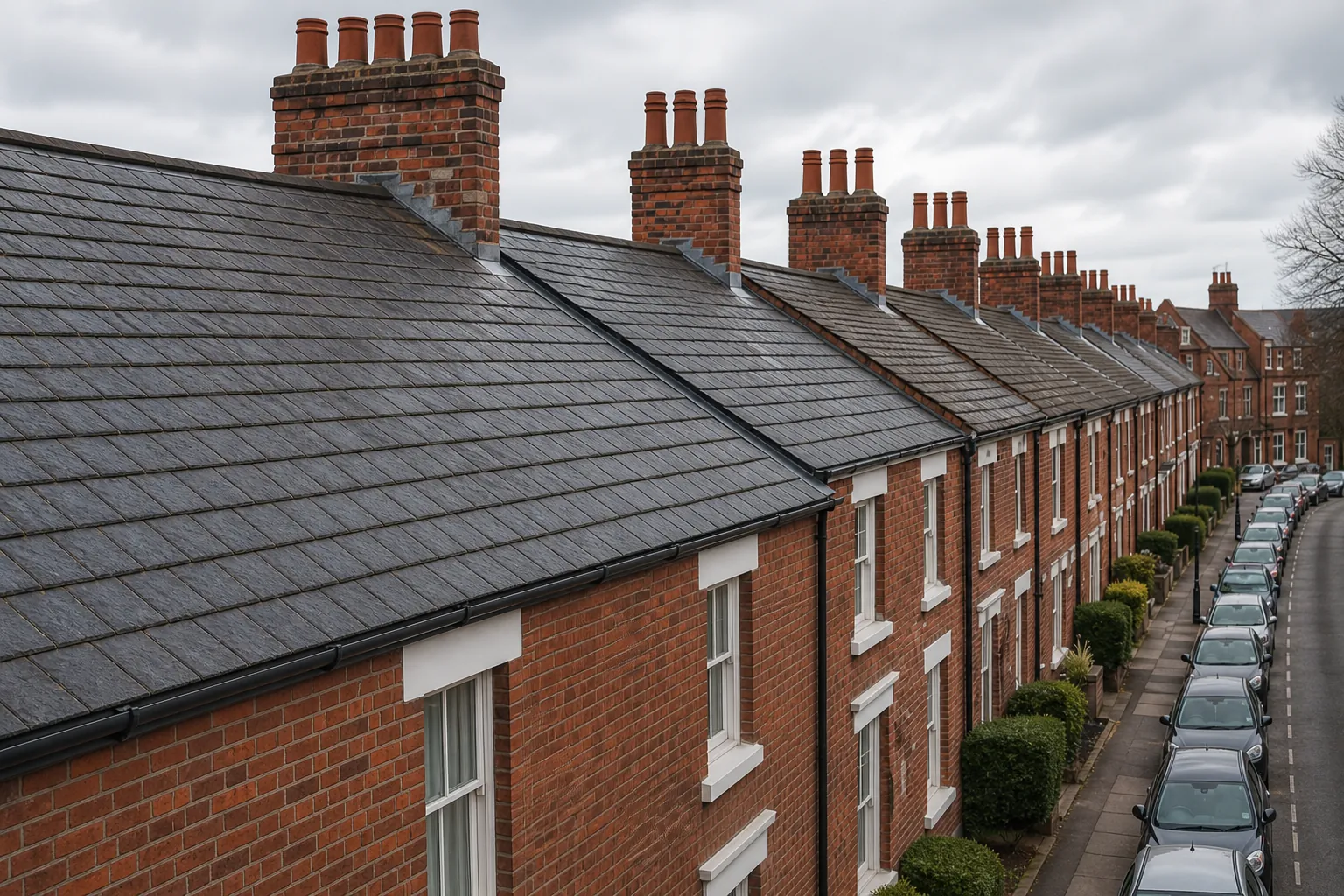
4.2 When a stack needs rebuilding
Rebuilding is for stacks where the damage is deeper than the joints. The signs are brick faces that have gone, courses that have moved apart, cracks running through the brick and a lean you can see against the sky. The usual repair is to take the stack down to sound brickwork, rebuild it with the good bricks and matching replacements, and renew the lead and the flaunching on the way up. A leaning stack is a safety matter as well as a leak risk, which is why we treat it as a priority. Our guide to rebuilding a chimney stack goes through when repair stops being enough.
4.3 Taking a chimney down
Taking a redundant stack down above the roof is a different job from removing the chimney breast inside the house. The breast is part of the building's structure. The Planning Portal says Building Regulations approval will always apply when a chimney breast is removed, and where the breast sits on a party wall, a party wall notice is needed as well. When a stack does come down, the roof is made good with matching tiles or slates and the lead is dressed so the opening stays watertight.
Chapter 5: What chimney repairs cost near Bognor Regis2623
Sheet 05 / 06Access, how much of the stack has failed and the amount of lead involved move the price more than anything else.
JJ Roofing's published guide range for chimney repairs runs from £300 to £3,000. That is wide because the jobs are: resetting a pot from a ladder is a small visit, while a scaffolded rebuild with new lead and flaunching takes several days. Three things move the price more than any other. The first is access, because a stack on a bungalow ridge can often be reached with ladders, while one on a three-storey terrace needs scaffolding. The second is how much of the stack has failed. The third is the lead, since the length of flashing and the code of the sheet set the cost of the material. Our prices are good and fair for the work the survey turns up.
Typical chimney repair costs
- Chimney repairs, JJ guide£300 to £3,000
- Repointing, small stack to scaffolded semi£300 to £1,000
- Leadwork patch£150 to £250
- Lead renewal with scaffold£700 to £920
After the survey you receive a single written total, and that figure holds unless the work itself changes.
Source: JJ Roofing guide range; Checkatrade chimney repointing guide, table updated October 2026; MyJobQuote, last updated 22 September 2026
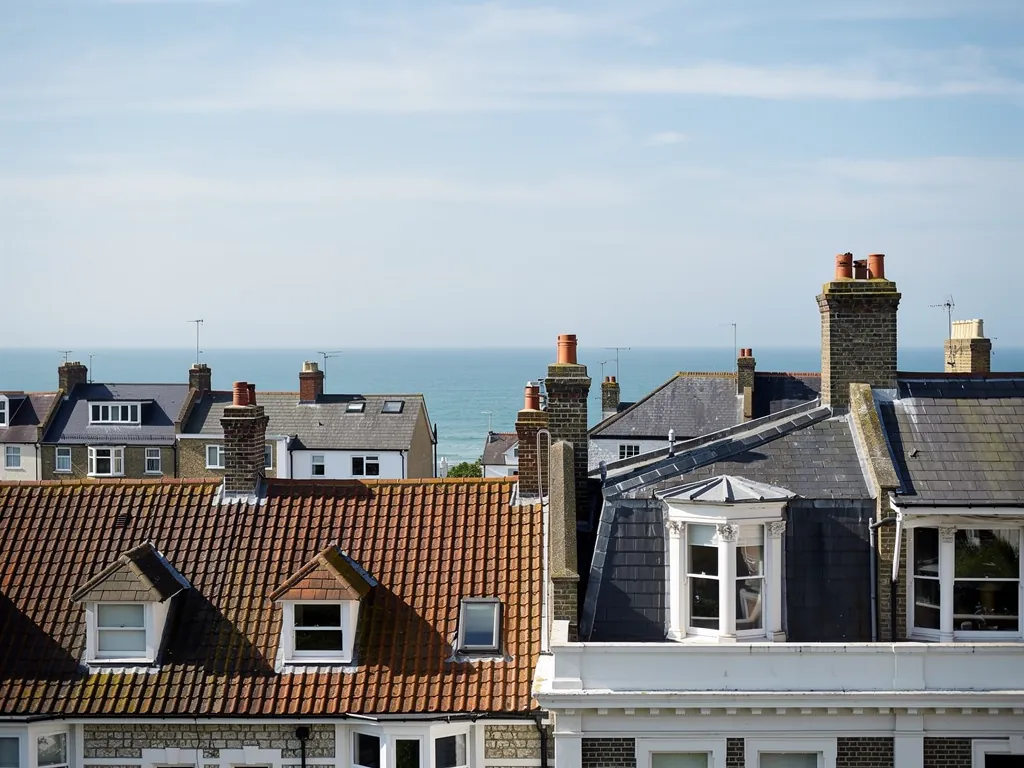
5.1 What national guides show
MyJobQuote, last updated 22 September 2026, puts patching chimney leadwork at £150 to £250 and a full renewal at £350 to £460 without scaffolding, rising to £700 to £920 with it. Checkatrade, in a table updated October 2026, gives around £750 as the average for repointing a chimney. These are typical UK ranges and not a price for your stack. They do show how much scaffolding changes a total, which is why we tell you at the survey whether your job needs it. A pot replacement or a short length of pointing sits at the lower end of any range, while a stack taken down and rebuilt belongs near the top, with new lead and flaunching as part of it. Cost also follows the number of faults found: a stack with one problem and a stack with four are priced differently even when they look the same from the road.
Paying for the least work that cures the fault beats paying twice.
£300 to £3,000
JJ Roofing guide range for chimney repairs
5.2 Scaffolding, licences and VAT
Checkatrade's scaffolding guide, table last updated October 2026, puts scaffolding for chimney work at around £660 a week and a two-storey semi-detached house at around £875 a month. Under section 169 of the Highways Act 1980, a scaffold that obstructs the highway needs a licence from the highway authority, which takes notice. West Sussex County Council asks for at least 10 working days' notice and charges £266 for one month. Hampshire County Council, which covers Havant and East Hampshire, asks for ten clear working days and charges £211.90 for the first two weeks. In Portsmouth the licence comes from the city council as highway authority. The standard VAT rate is 20 per cent, so ask whether any price you are given includes it, and whether it includes the scaffold.
A quick fix that leaves the lead alone often costs twice: once now and once when the water returns. Where the survey shows a single cracked flaunching, that is the job we price. Where the pointing, the lead and the cap are all failing together, doing them under one scaffold is usually the lower total. Our guide to what a chimney repair costs works through typical jobs side by side, and the written quote you receive covers the whole job.
Chapter 6: Permission, insurance and older chimneys2440
Sheet 06 / 06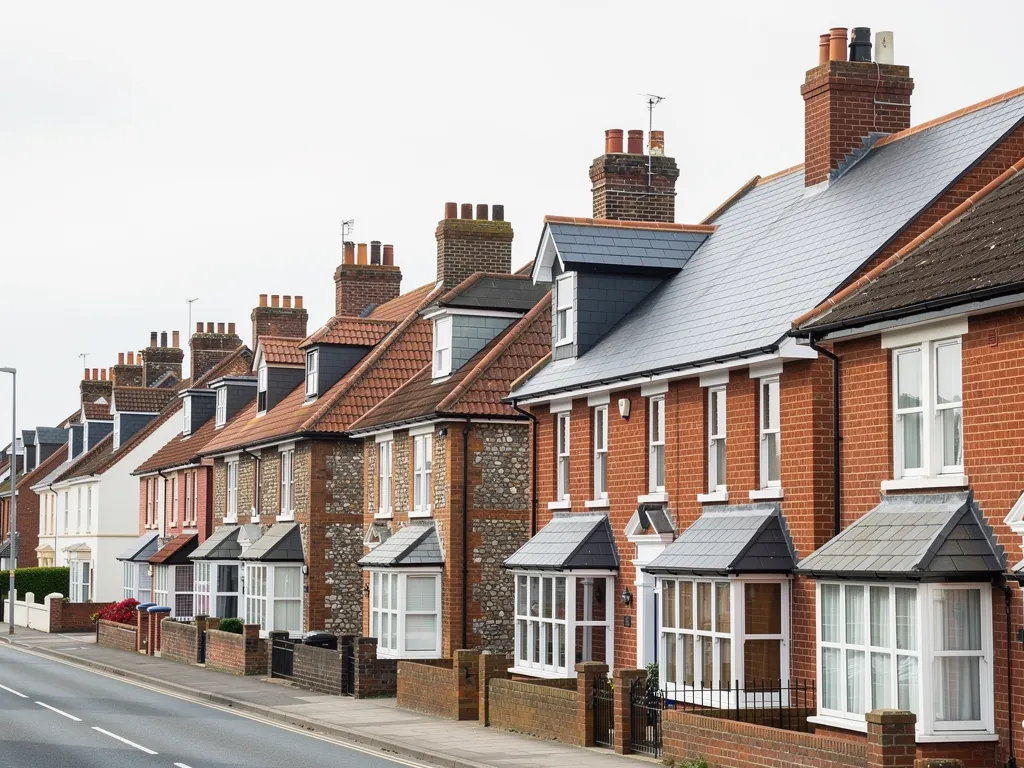
Most chimney repairs need no consent, but conservation areas, listed buildings and insurers each have a say.
Most chimney repairs need no permission. Works that do not materially affect the outside appearance of a building are not development under the Town and Country Planning Act, and a like-for-like repair to pointing, flaunching or lead falls on that side of the line. The exceptions are the ones to check: a listed building, a conservation area with a direction that removes rights, and any plan to take a stack down or change how it looks.
Before work starts
Listed, or in a conservation area? Tell us on the first call, and check with the council before any stack comes down.
6.1 Conservation areas and listed buildings
In central Bognor, the conservation area at The Steyne and Waterloo Square dates from August 1979 and was extended in July 1994, and the Aldwick Road area dates from July 1994. None of Arun's Article 4 directions covering Bognor removes a roof right, so a like-for-like stack repair there is not caught by one. A listed building is different: listed building consent is needed for works that would affect its character, although the South Downs National Park Authority says minor like-for-like repairs in place do not need it. Old Portsmouth has an Article 4 direction covering the removal or alteration of chimney stacks, and Havant's Langstone direction covers demolishing a stack visible from the highway. For Chichester, Bosham and the harbour villages, check with Chichester District Council's planning team before any work that changes a stack. Our guide to chimneys in conservation areas and on listed buildings covers the rules in more depth.
6.2 Insurance and storm damage
Home insurance may cover a chimney damaged in a storm, though ordinary wear and tear is usually excluded. Which? advises contacting the insurer as soon as possible, and if you have to arrange emergency repairs yourself, telling the insurer and keeping every receipt. Photograph the damage and keep any damaged pieces unless they are a danger to health. If a stack has lost pots or bricks, the first job is to make it safe, and we prioritise leaks and storm damage. Ask the insurer what it expects before work begins, because some want to see the damage or a written estimate first. If a stack has come through the roof, make the house safe, keep out of the affected room and ring the insurer. We can make the roof weathertight, and our photographs of the damage come with the quote for you to pass on.
Damage to the roof around a stack, such as slipped tiles after a gale, is covered on our roof repairs page. An expert chimney repair is a reliable one when it deals with both the stack and the roof it stands on, so we look at the tiles round the foot of the stack on every visit. Maintenance is the quiet part of chimney work: a clear gutter below the stack, sound pointing and lead that sits flat. A short check after each winter, from the loft or the roof, catches faults while they are still small.
Price guide
Typical UK chimney repair prices
| Job | Typical range |
|---|---|
| Patching chimney leadwork | £150 to £250 |
| Full lead renewal, no scaffold | £350 to £460 |
| Full lead renewal with scaffold | £700 to £920 |
| Chimney repointing, small stack to scaffolded semi | £300 to £1,000 |
National guide figures, as published. Ask whether any chimney price includes VAT and scaffolding.
Source: MyJobQuote, last updated 22 September 2026; Checkatrade chimney repointing guide, table updated October 2026
Guides and answers
Chimney guides and quick answers
Brief guides on repointing, flashing, flaunching, rebuilds, damp and the rules, written for chimneys in and around Bognor Regis.
 What is the average cost to repair a chimney in the UK?9 min read
 Chimney repointing: when it is needed and what it involves9 min read
 Rebuilding a chimney stack: when repair is no longer enough9 min read
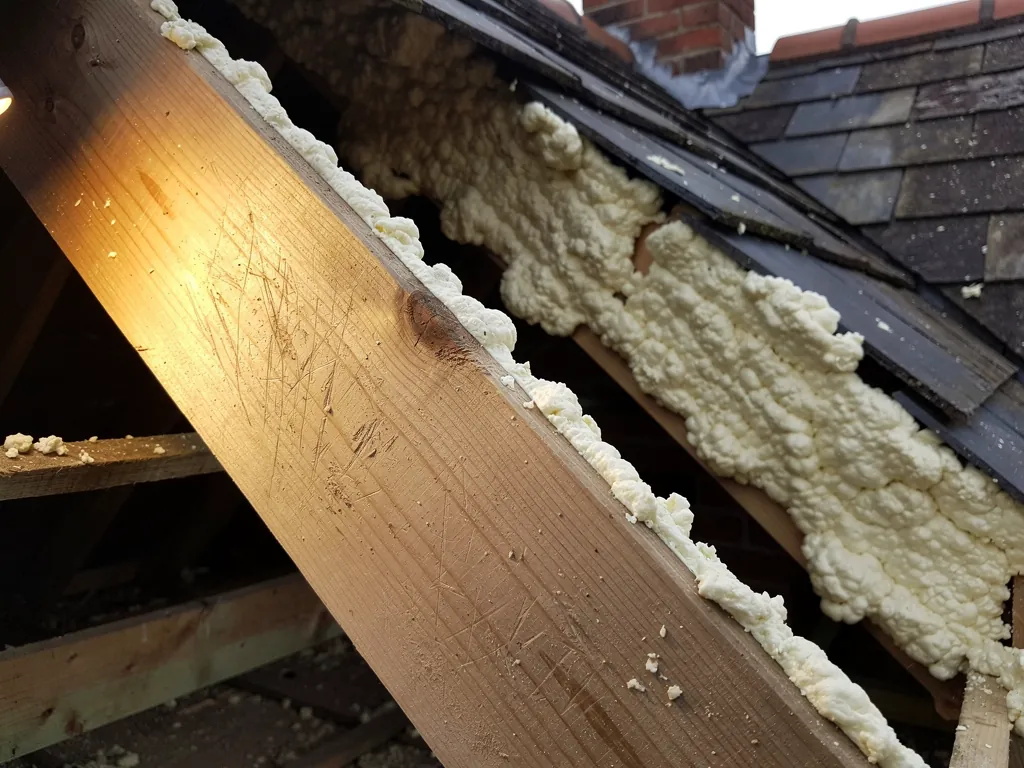 Chimney removal: taking down a stack and the regulations that apply9 min read
 Does house insurance cover chimney repairs?10 min read
 Chimneys in conservation areas and on listed buildings9 min read
 Chimney flashing: lead, soakers and why stacks leak9 min read
 Chimney flaunching: repair and replacement9 min read
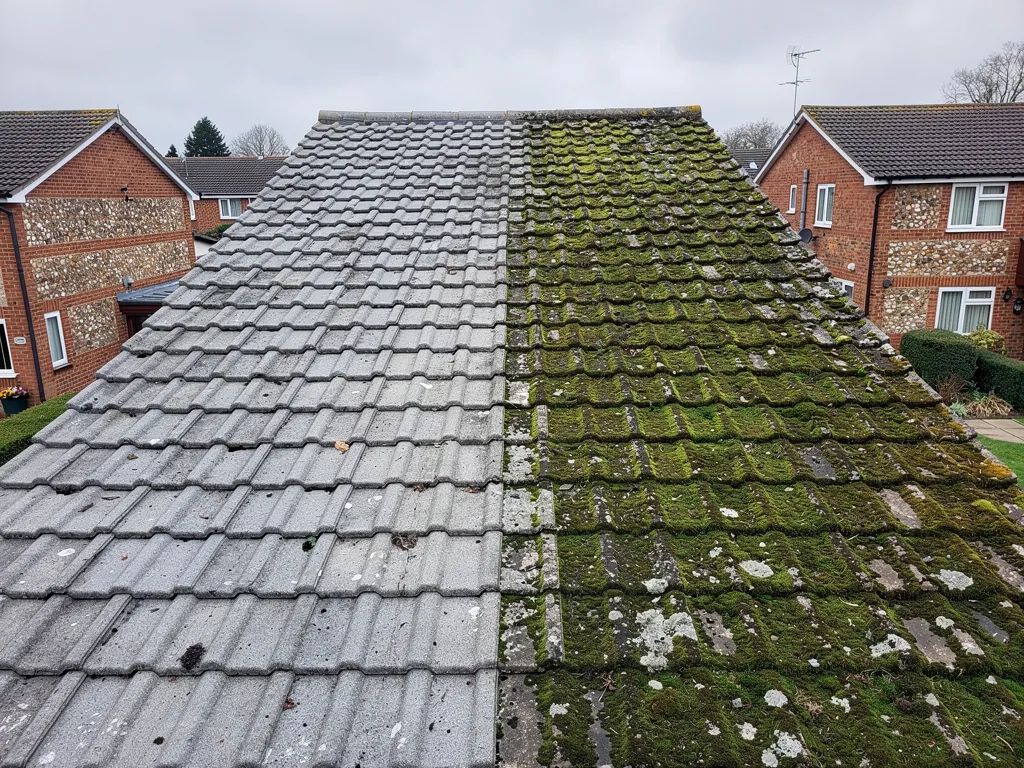 Damp chimney breast: causes and cures from the roof side9 min read
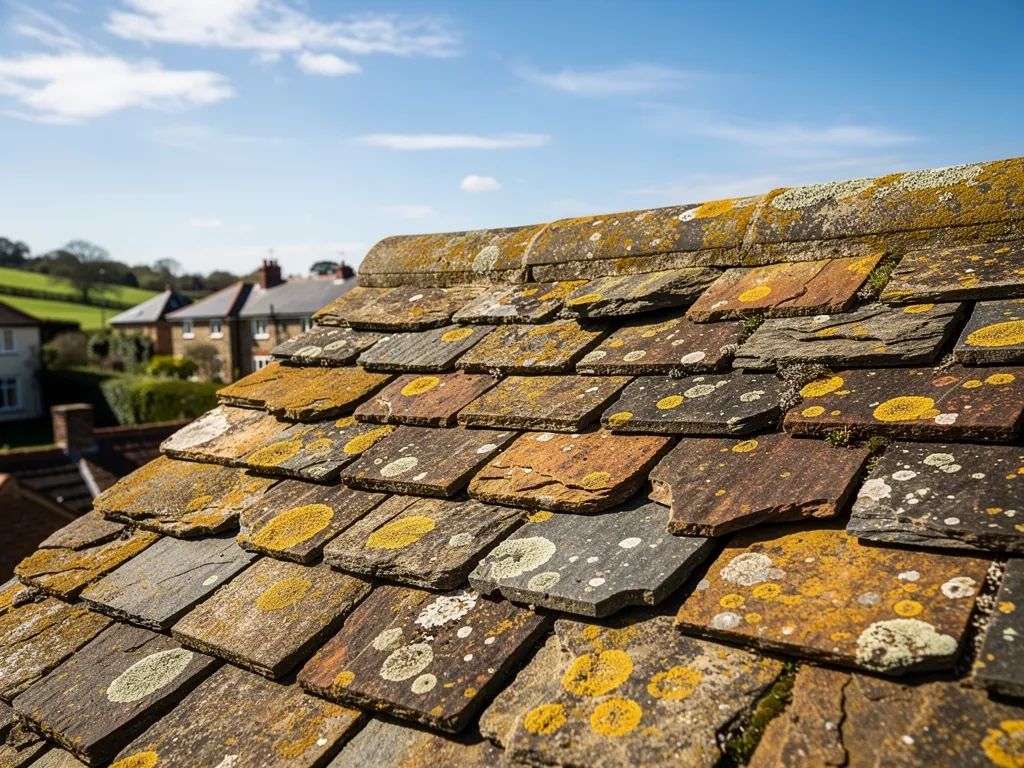 Leaning chimney stack: causes, risks and repair9 min read
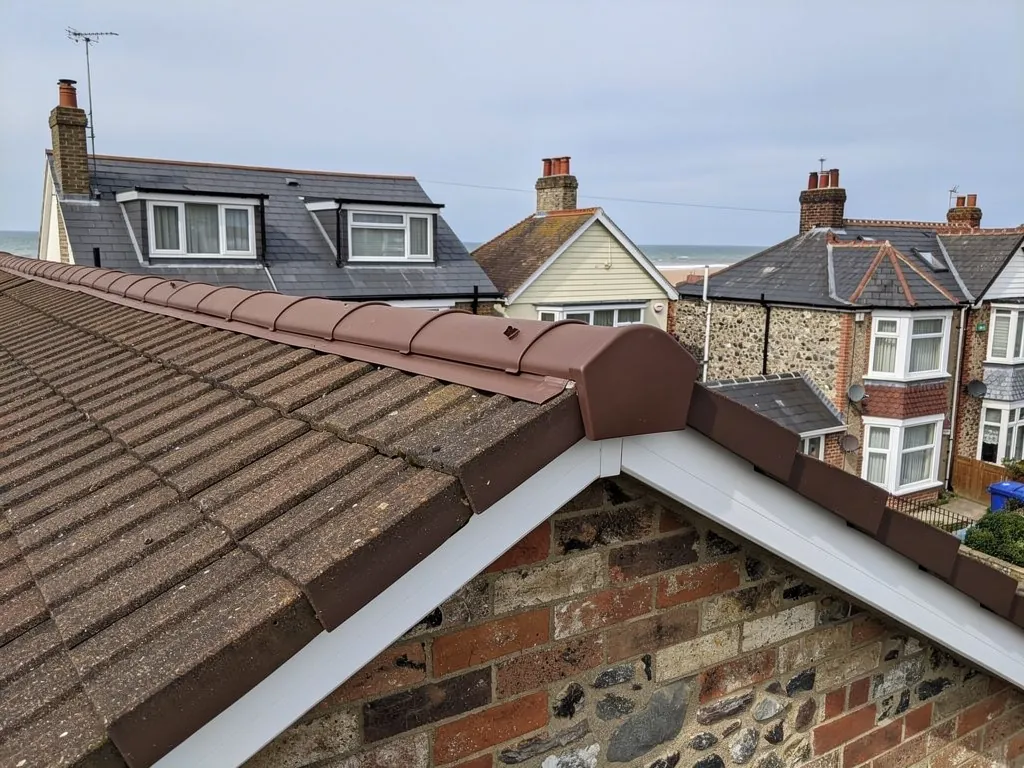 Chimney pots, caps and cowls: capping, venting and replacing9 min read
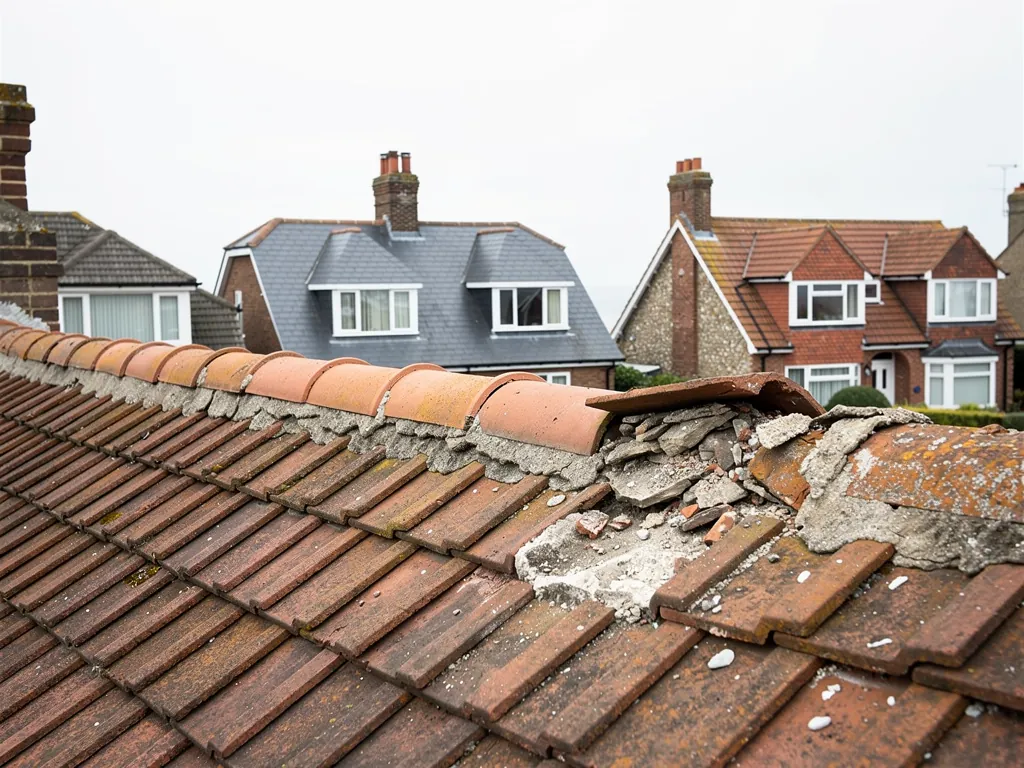 Chimneys in winter storms: the checks to make before the gales9 min read
Quick answers
- Do roofers repair chimneys?
- How much does chimney repointing cost?
- How much does it cost to replace chimney lead flashing?
- Do you need planning permission to remove a chimney?
- Do you need Building Regulations approval to remove a chimney breast?
- Why does my chimney leak when it rains?
- Why are my chimney bricks crumbling?
- Should you cap an unused chimney?
- Do you need scaffolding for chimney repairs?
- How long do chimney repairs take?
- Can a cracked chimney pot be replaced?
- Which lead code is used for chimney flashing?
- Chimney sweep or roofer: who do you call?
- What is stepped flashing on a chimney?
- What is a chimney back gutter?
- Should a chimney stack be rendered?
- Water in the loft around the chimney: what does it mean?
- Should old chimneys be repointed in lime mortar?
- How often should a chimney stack be checked?
- Can a TV aerial damage a chimney?
Questions
Chimney repair questions, answered
How expensive is it to fix a chimney around Bognor Regis?
It depends on the fault and the access. JJ Roofing's published guide range for chimney repairs is £300 to £3,000, with a ladder job on a single-storey roof near the bottom and a scaffolded rebuild near the top. Nationally, MyJobQuote gives £150 to £250 to patch chimney leadwork, and Checkatrade gives about £750 on average for repointing. We survey the stack first, then give one written price for the whole job.
Will home insurance pay for a damaged chimney?
It can, depending on the policy. A storm may be an insured event, whereas a stack that has crumbled over many winters is more likely to be treated as wear and tear. Which? advises telling the insurer first, keeping receipts for any emergency repair and keeping photographs. If you dispute the outcome, take it up with the insurer, then the free Financial Ombudsman Service. We photograph every fault we find, and those pictures are yours to send on.
Is chimney repair a job for a roofer or a sweep?
A sweep cleans the flue from inside the house. We work on the stack above the roofline and the roof around it: pointing, flaunching, pots, cowls, lead flashings and the tiles at the foot. Some faults involve both, such as a leak that shows on the chimney breast and starts at the lead. If you are unsure which you need, send us a photo and we will tell you what we see.
Can a chimney be repaired without scaffolding?
Sometimes. A cracked pot or a small patch of lead on a bungalow can often be reached with a ladder or roof ladder. Taller houses, a stack that needs rebuilding and any job with several faults usually need a scaffold for safe working. We tell you at the survey which applies, and where a licence is needed for the pavement, we say how long it takes.
Why is my chimney breast damp when the loft looks dry?
Water can run down the inside of a stack from a cracked cap or washed-out pointing and appear on the breast without a drip in the loft. Condensation and a blocked or unused flue can also cause damp, so the cause needs confirming from the roof. We check the pointing, the flaunching, the pots and the lead before anyone opens up a wall or replasters.
How do you decide between repointing and rebuilding a stack?
We look at the bricks, not just the joints. If the bricks are sound and the courses sit true, repointing and new flaunching usually fix it. If the faces have flaked, the courses have moved or the stack leans, repointing only hides the problem and the top section needs taking down. We show you the photographs of what we find and give you the verdict that costs least while still fixing the fault.
Get a quote
Send us a photo of the stack
Send a photo of the stack, the stain on the chimney breast or the fallen pot, and we begin with the loft and the lead.
Loading the enquiry form. You can also call 01243 252373.