
Horsham stone roofing in West Sussex
Horsham stone is heavy, hand-sorted work, and every slab counts. We survey the timbers and each slope, photograph the faults, then give you a plain call on repair, partial re-lay or full strip before any price is mentioned.
- Repair or replace,
said plainly - Photos of
your own roof - Written quote,
one total price - Ridges and verges
fixed to BS 5534
Signs
Signs a stone roof needs attention
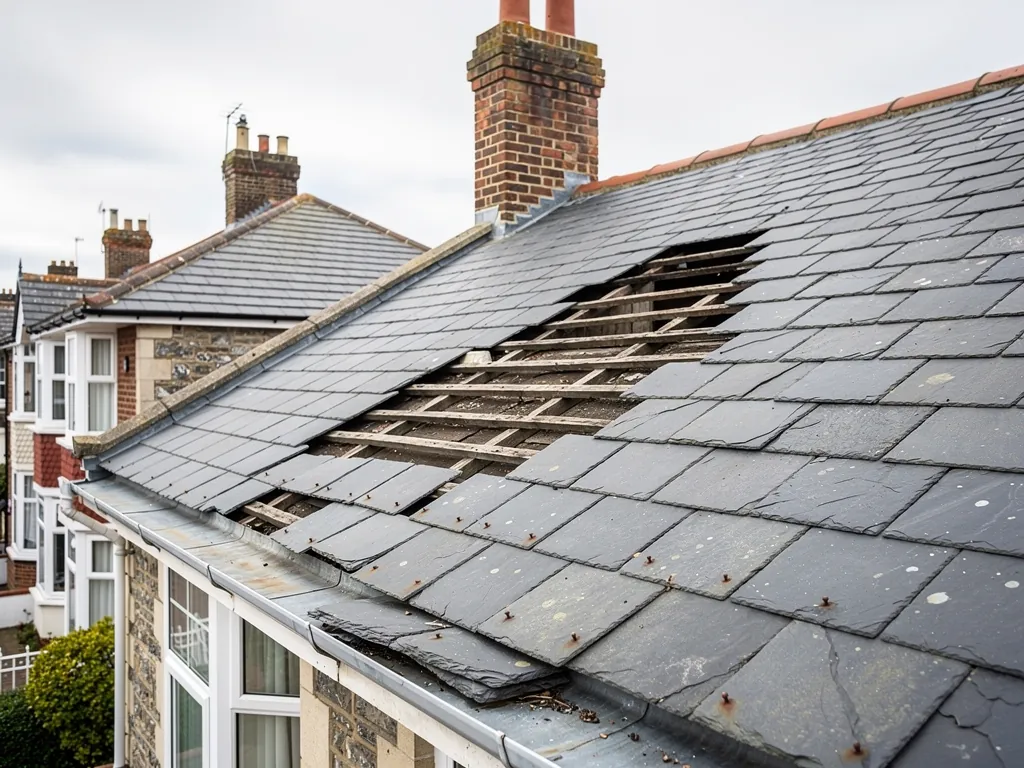
- Stone slabs slipped down the slope
- Cracked or flaking slabs along the eaves
- Daylight showing between the loft timbers
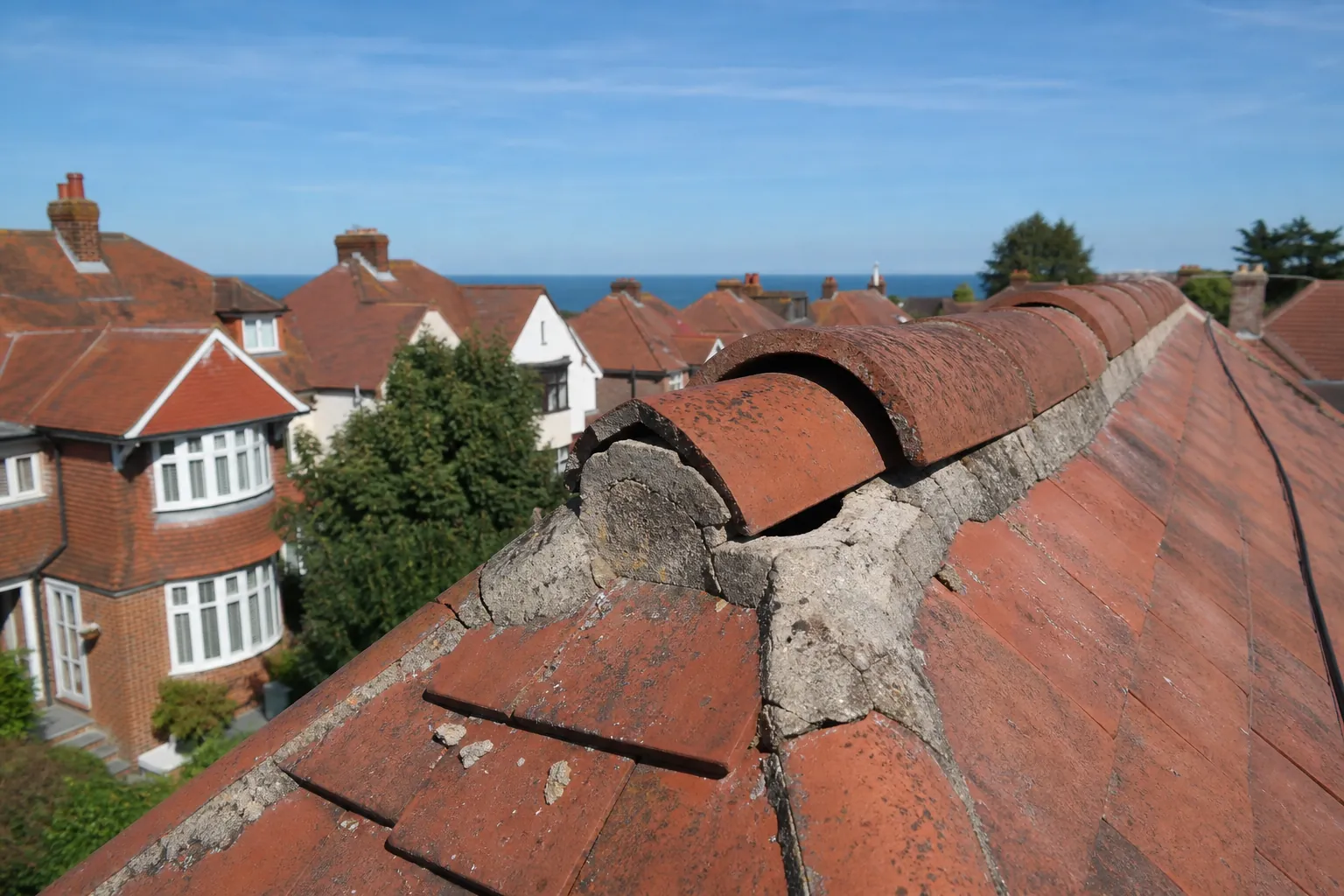
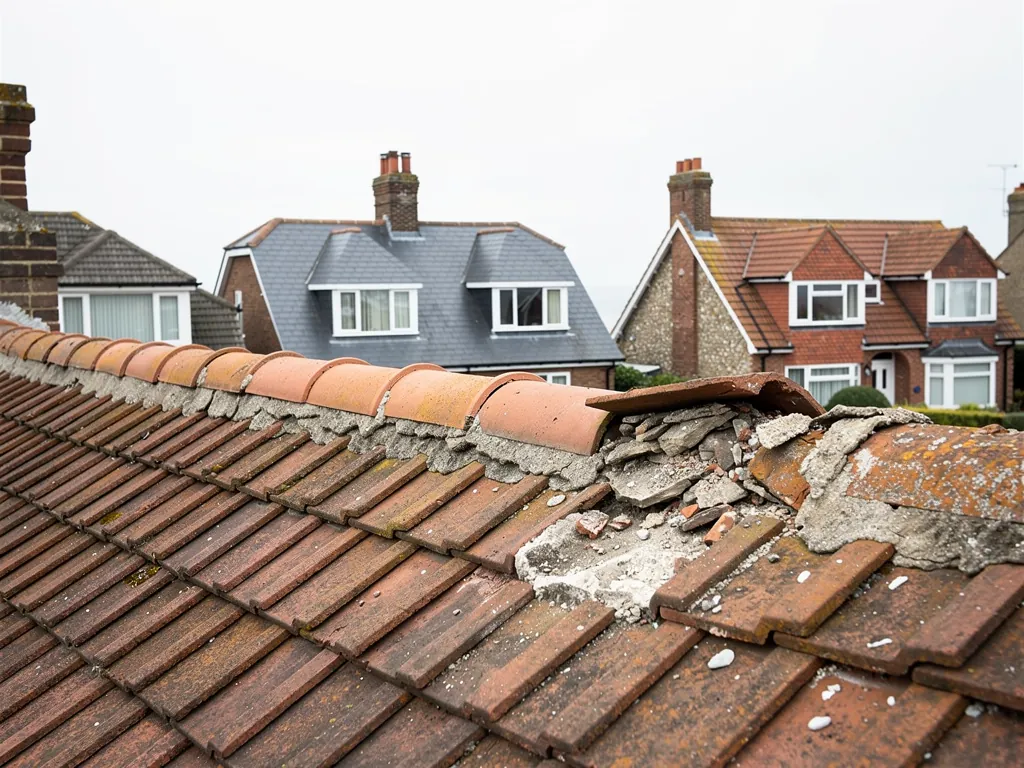
- Mortar crumbling at the ridge or valley
- Thick moss holding water on the stone
Stone roof work we carry out
The Horsham stone roofing work we carry out in West Sussex
Slipped and cracked slabs
We lift and refix slipped slabs, swap cracked ones for matched stone and check the timber holding each course before the repair is closed up.
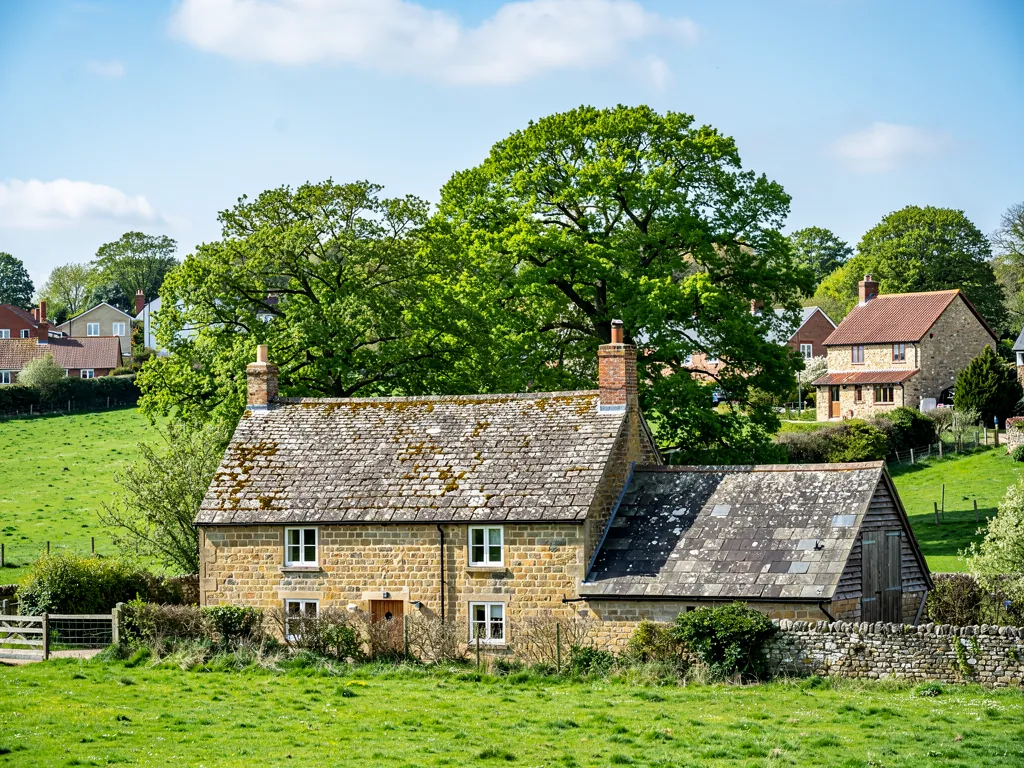
Re-laying a stone slope
Where the stone is sound but the fixings are tired, we strip the slope, grade every slab by size and lay it back in diminishing courses.
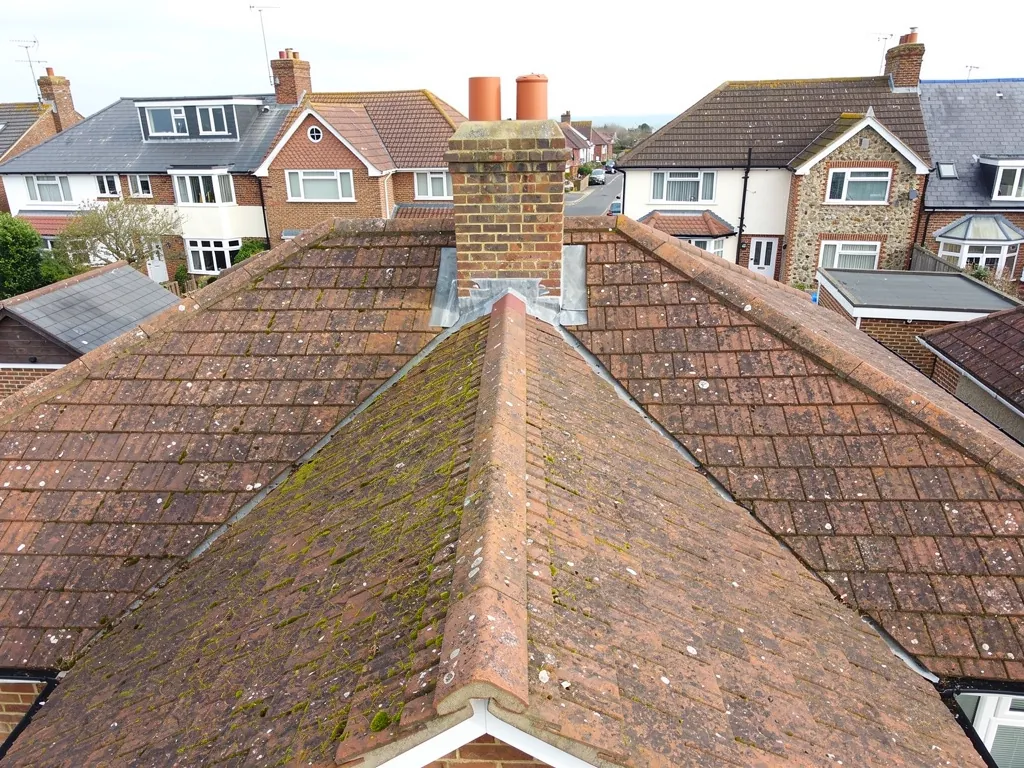
Ridges and hips
The ridge runs along the top of the roof and a hip rises at its outer corners. We rebed both in a mortar chosen to suit the old work.
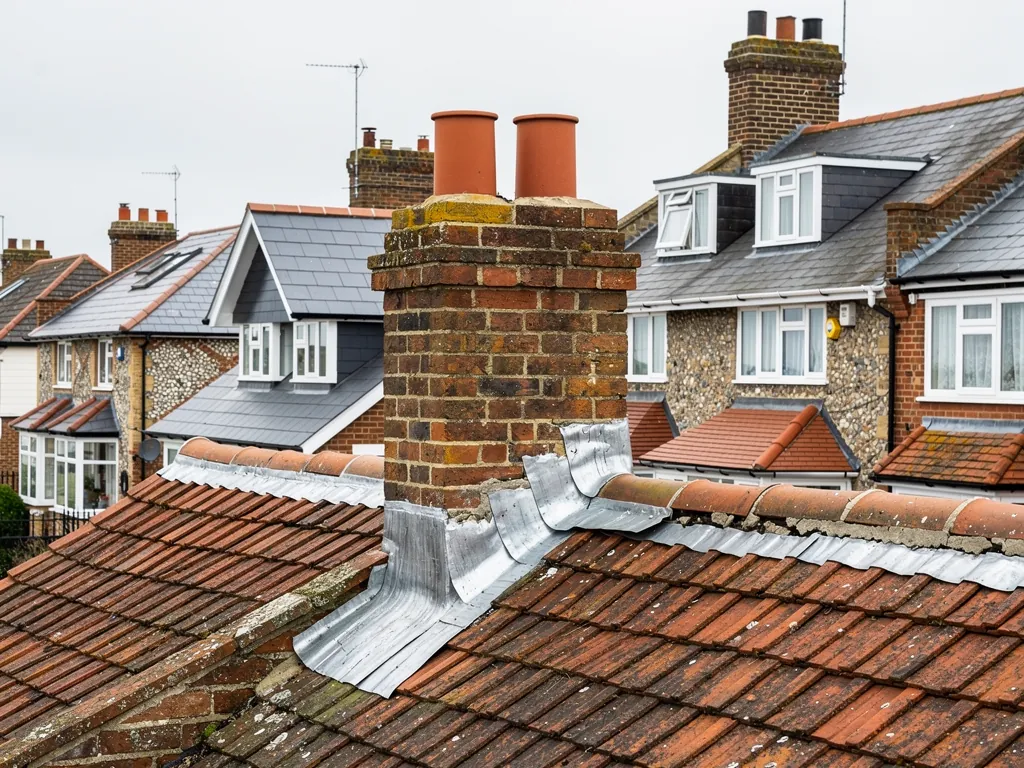
Valleys and leadwork
A valley is the inside channel where two slopes meet. We rebuild swept or lead-lined valleys and dress new flashings in lead, matched to the roof.
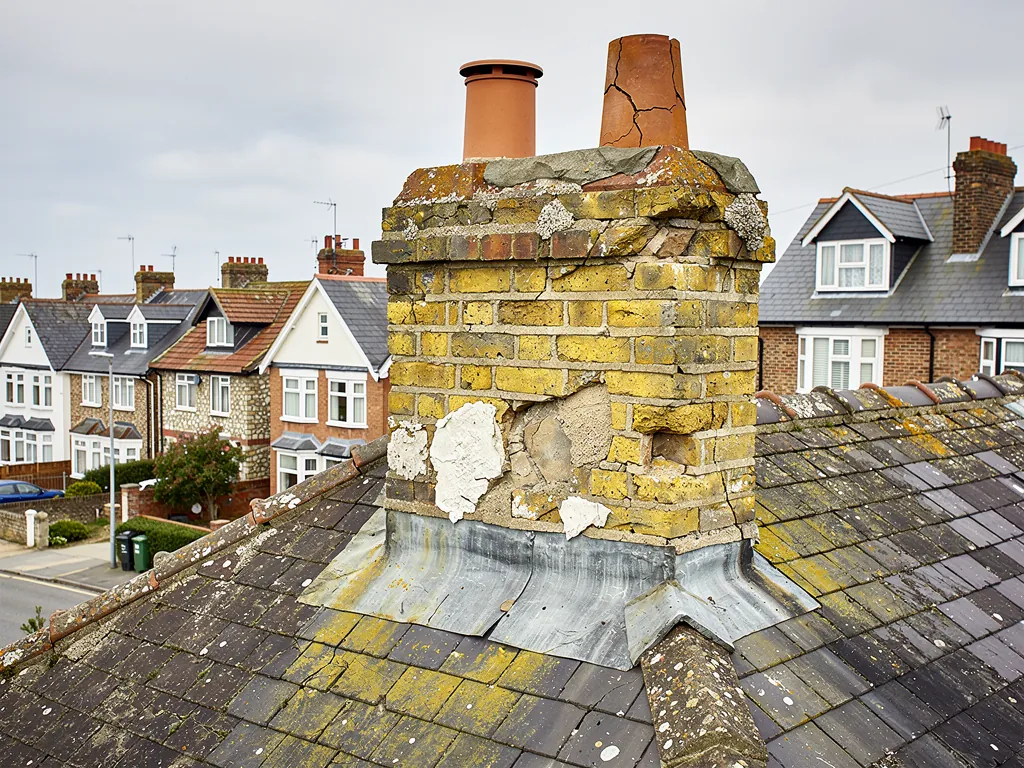
Moss, mortar and upkeep
Gentle moss removal, repointing at ridges and verges, and clearing valleys and gutters help a sound stone roof stay sound for years.

Heritage roof surveys
A written survey for listed, period and conservation-area roofs, with photographs of each slope and a clear view of which consents the work may need.
What it costs
What Horsham stone roofing costs
priced on survey
Every stone roof is priced after the survey
Access, how many slabs can be reused and the state of the timbers underneath set the cost, so no two stone roofs price alike.
How a stone roof job runs, from first photograph to clear-up
- 1Tell us about the roofRing 01243 252373 or send WhatsApp photos of each slope, the chimney stacks and any room where water shows.
- 2Survey from loft and slopesWe look at the timbers from inside the loft, then at every slope, and photograph slipped, cracked and flaking stone.
- 3Our verdict, then one priceWe tell you which of repair, partial re-lay or full strip fits the roof, show the photographs, and follow with a written quote at one total price.
- 4Stone sorted, roof laid, site clearedSlabs are graded by size, the best are reused in diminishing courses, and all waste leaves with us.
Horsham stone roofing, in depth
How Horsham stone roofs are surveyed, repaired and re-laid
Six chapters on the stone itself, repairs, ridges and valleys, consent, cost and the choice between repairing and re-laying.
Chapter 1: What Horsham stone is and where it sits2379
Sheet 01 / 06Horsham stone is a heavy, split sandstone slate laid in graded courses, and it shapes how every repair on these roofs is done.
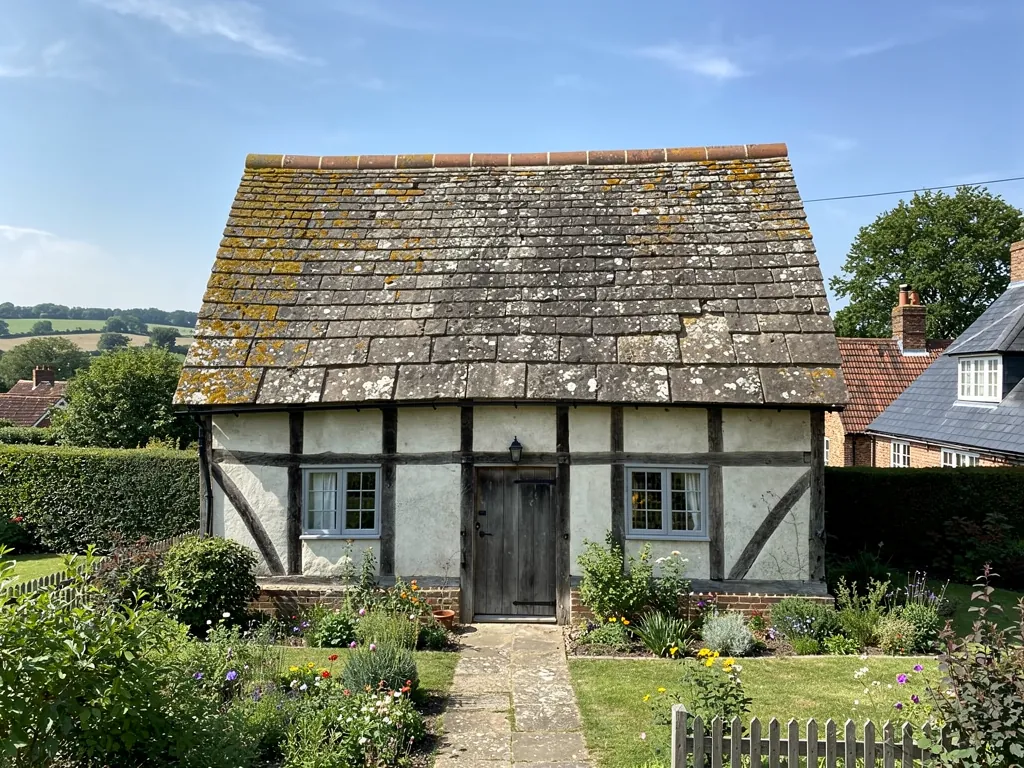
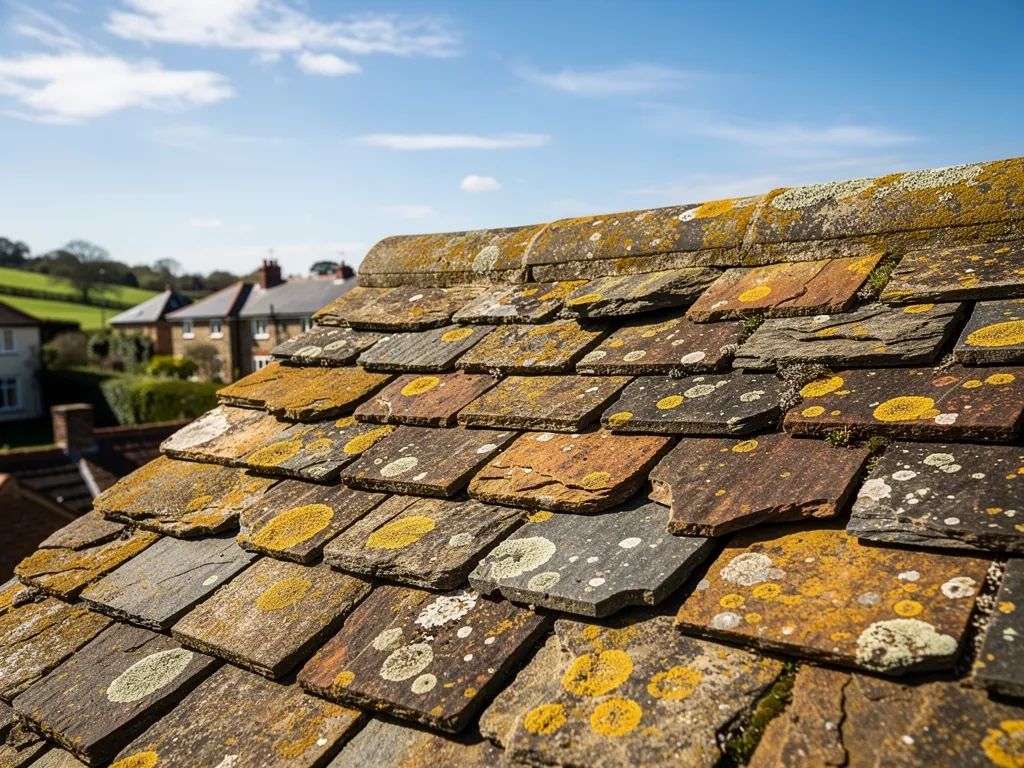
Horsham stone roofing means a covering of thick sandstone slabs, split from the rock of the Weald and laid where most houses would have tiles or thin slate. People who search for stone roofing Horsham usually want the same three answers: what the material is, who can work on it and what the job involves. The slabs go by several names, including Horsham slabs and stone slates. They are uneven, thick and heavy, and no two are quite alike. Colours run from honey and rust to grey-green, and age and lichen soften them further. That variety is why these roofs look the way they do, and why a repair that ignores it stands out from the lane.
Over 100 years
stone slate life, per Checkatrade, September 2026
Stone slates are graded by size, big at the eaves and small at the ridge.
Horsham stone
Thick, uneven sandstone slabs, graded large to small, hung from battens and heavy on the roof timbers.
Welsh or Spanish slate
Thin, regular, fine-grained sheets laid in even rows, far lighter per square metre.
1.1 Not the same as slate
Welsh and Spanish slate are fine-grained rock split into thin, regular sheets, laid in even rows. Stone slates are a coarser sandstone, split into much thicker slabs of every size. The two behave differently on the roof, and a roofer who works mostly in slate has to learn a different habit for stone. Our page on slate roofing covers the thinner material; this page is about the stone that came before it in the villages of the Weald. A sandstone slab is also far heavier than a slate, so the timbers under a stone covering are stout, and that shapes what can safely be changed.
1.2 Diminishing courses, explained
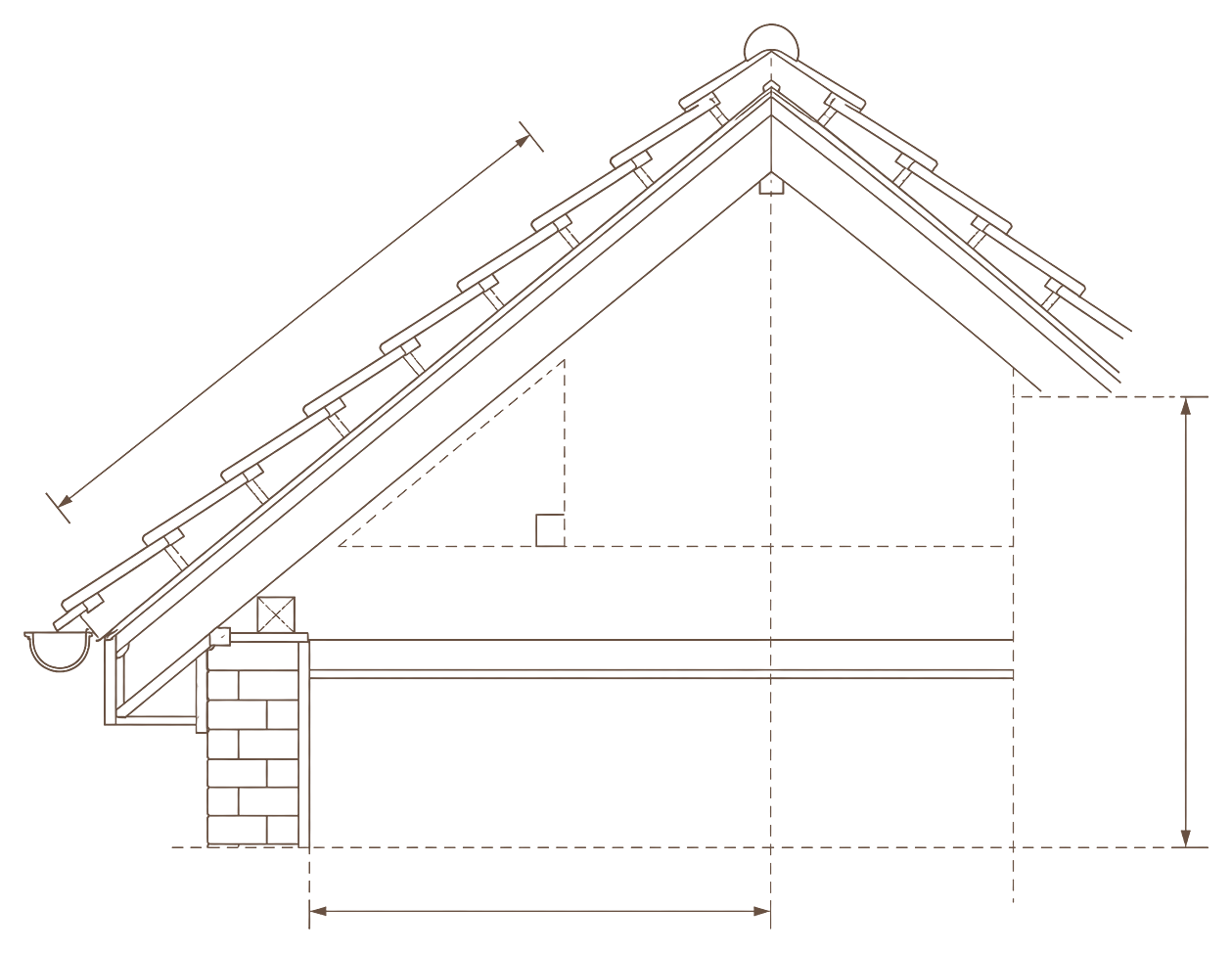
A course is one horizontal row of covering. On a stone roof the courses diminish: the largest slabs sit along the eaves, the lower edge of the roof, and each row above is a little smaller until the smallest slabs reach the ridge. Big slabs at the bottom carry the water and the wind; small ones at the top keep weight off the upper timbers. Every slab hangs from a timber batten, a narrow strip fixed across the rafters, and each row overlaps the one beneath. Our guide to diminishing courses goes through the laying, and our answer on what Horsham stone roofing is covers the stone's history.
1.3 Where these roofs turn up around us
The Victoria County History records a roof of Horsham slate on the house at Bailiffscourt in Climping, built in the twentieth century from reused medieval masonry. Mid Sussex District Council's appraisal lists Horsham stone among the roof materials in the centre of East Grinstead. Our patch reaches Pulborough, Petworth, Midhurst and Horsham itself, where old farmhouses, barns and churches can carry stone, and we work on it across West Sussex.
Chapter 2: Repairing slipped, cracked and failing stone2684
Sheet 02 / 06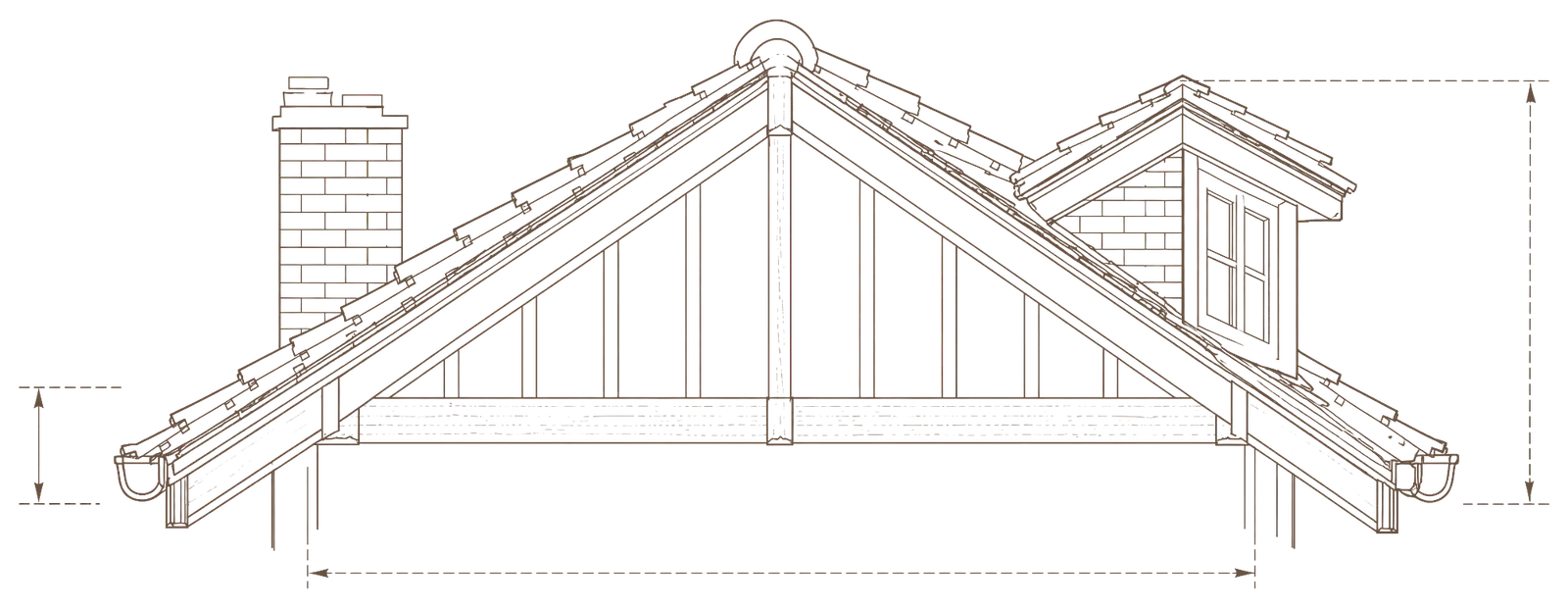
- Ridge Failed bedding lets rain run under the top courses.
- Eaves The largest slabs sit here; one slipped slab opens the lowest course.
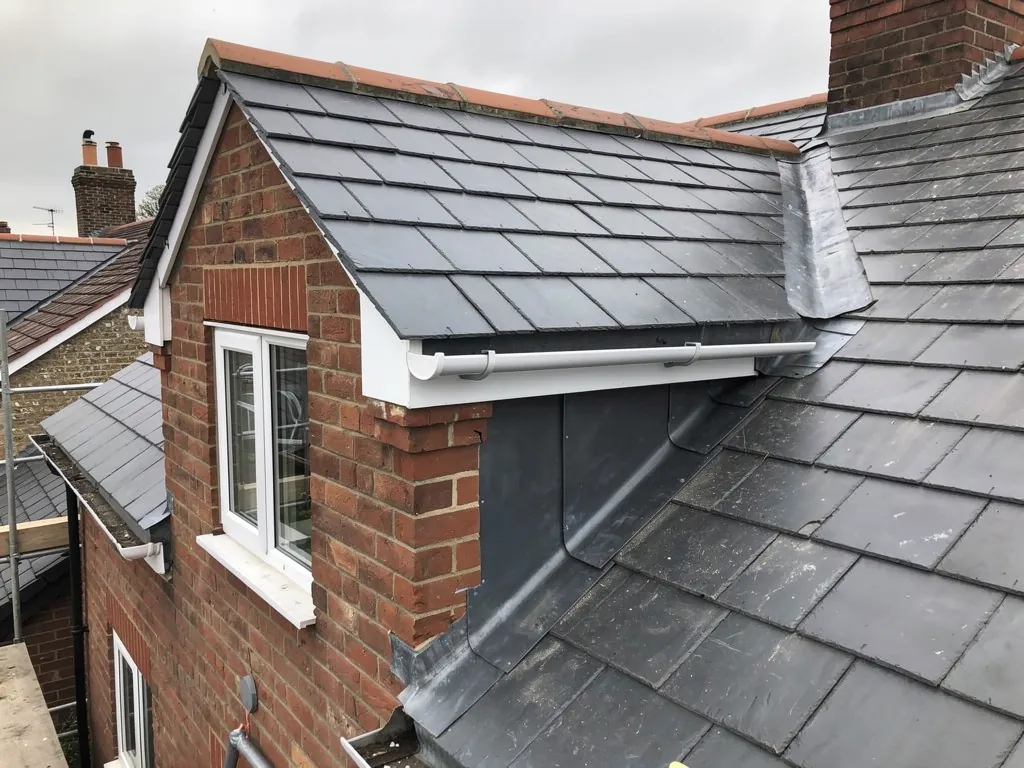
- Dormer cheek Lead aprons and soakers at the cheek lift or crack.
- Valley Swept or lead-lined channels clog with moss and debris.
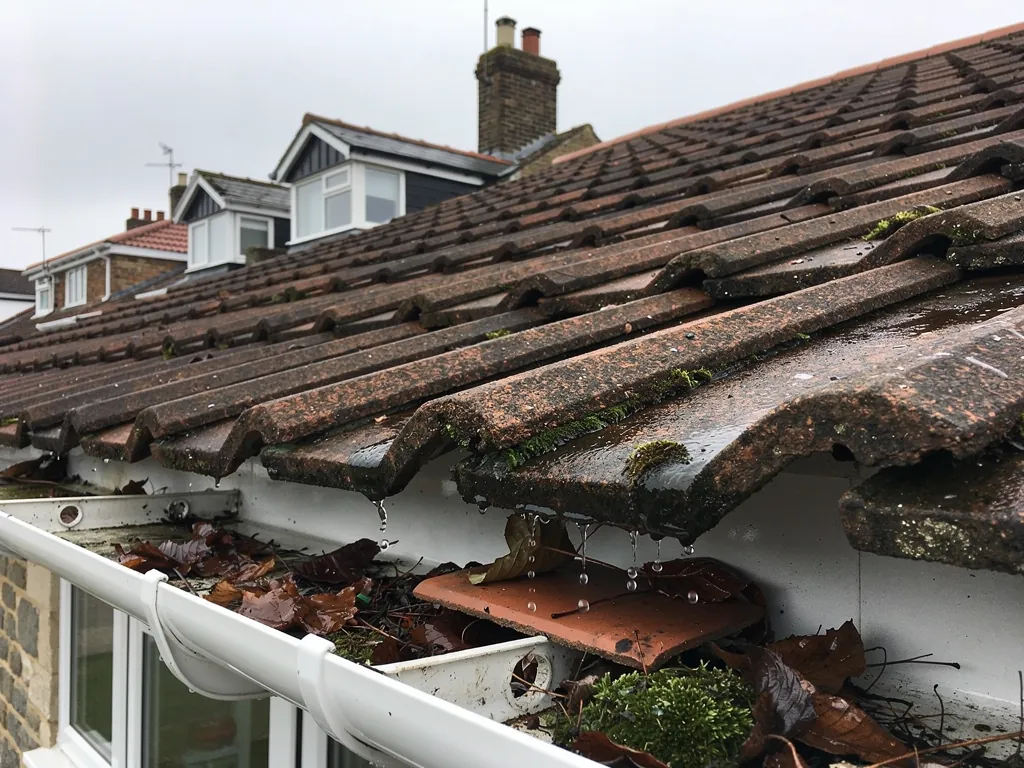
- Gutter outlet Debris at the outlet sends water under the lowest course.
Most stone roof repairs begin with the fixings and the timbers rather than the stone, which is why a survey starts in the loft.
A Horsham stone roof can outlast several generations of owners, but the parts that hold it up do not last as long as the stone. Slabs slip when the fixings give way, when a batten behind them softens, or when water and frost have flaked the stone around a fixing hole. So a repair starts with one question: why did that slab move? Putting a slab back onto a rotten batten only moves the leak a few weeks down the calendar. A reliable repair finds the cause, fixes it and then restores the stone.
Repairing a slipped slab, in order
- 1Find the causeTrace the leak from the loft and note which slabs have moved.
- 2Check the timberTest the batten under the slab and replace any length that has gone soft.
- 3Match the stoneChoose a slab of the right thickness, size and colour for that course.
- 4Refix and checkSecure the slab, settle the course and photograph the finished repair.
2.1 Slipped slabs and failed fixings
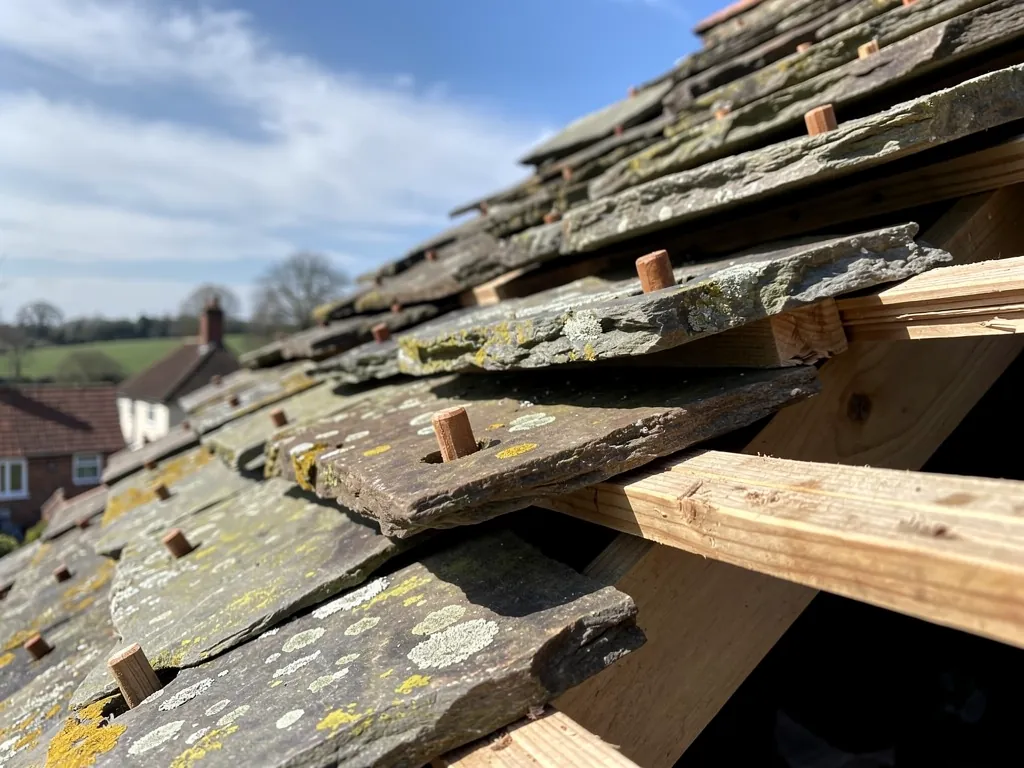
Many stone slates are held by a peg or a nail through a hole near the head of the slab. When the peg rots or the nail rusts through, the slab slides until its own weight catches on the course below. We lift the slipped slab and its neighbours, check the batten, renew the fixing and set the stone back in its place in the course. Where the batten has gone soft we replace a length of it, because a new fixing in old timber does not hold. On our survey we mark every slab that has moved, not just the one over the stain, and photograph the line it has travelled along. Tell us if water has shown at the same spot more than once; a repeat leak usually means a hidden cause such as a rotted batten or a broken peg.
2.2 Cracked, flaking and missing slabs
A cracked slab can sometimes be left where it sits; one that lets water through has to come out. Stone also flakes in layers, and a slab that has lost its face stops shedding water. Replacements are matched to the old ones by thickness, size and colour, because a thin or pale slab among thick, weathered ones looks wrong and sits badly in the course. Reclaimed slabs from a stripped outbuilding or a neighbouring job are often the best match, since they carry the same weathering. If slabs are flaking across a whole slope, that points towards a re-lay rather than another patch, and the survey photographs show you why.
2.3 Moss, lichen and gutters
Lichen is part of the look of an old stone roof and is usually left alone. Thick moss that holds water against the stone, or blocks a valley, is another matter. We prefer gentle hand work to blasting the surface with a pressure washer, which can strip a worn stone face. Clear gutters and outlets as well, since a blocked gutter sends water back under the bottom course.
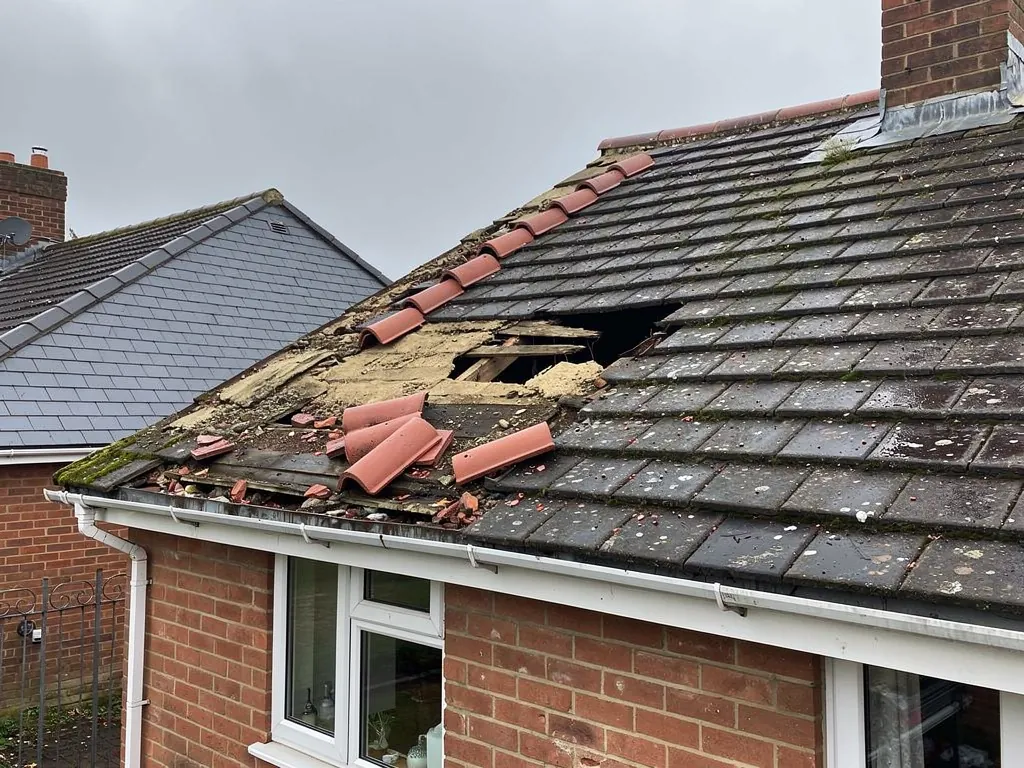
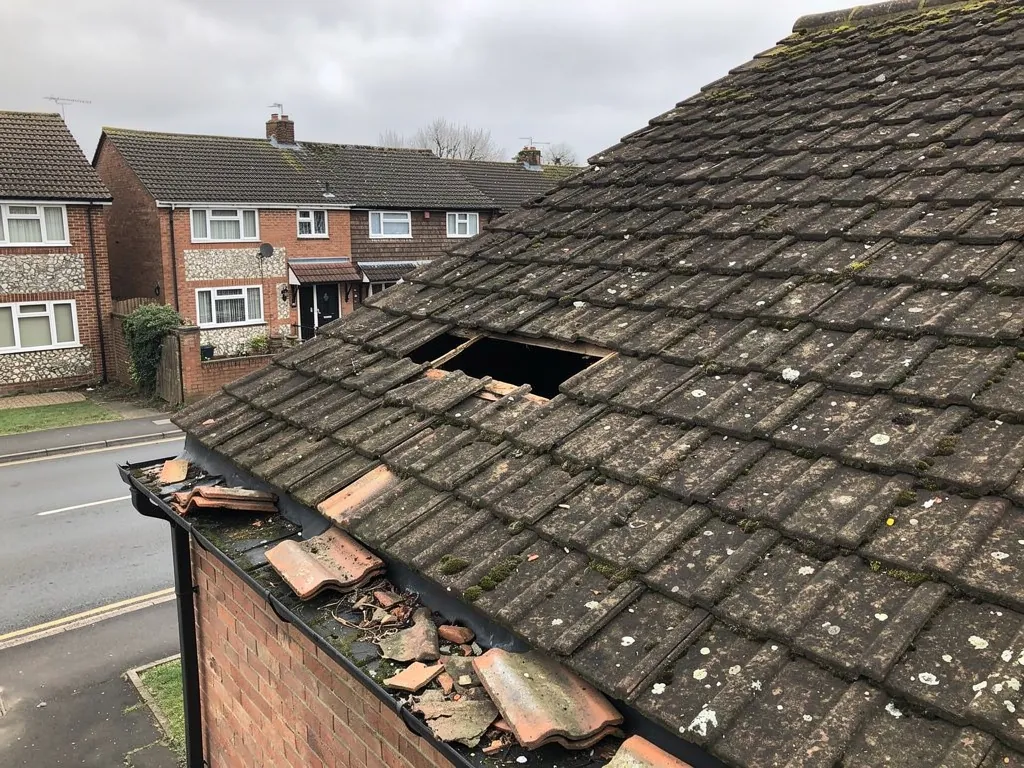
A gale can leave a slope open to the rain. We cover it temporarily, make the roof safe first and return for the full repair in settled weather; leaks and storm damage go to the front of our list. Ring your insurer early, take photographs and keep every receipt for temporary cover, which is the advice Which? gives. Bats may roost in old roof voids and are protected by law, so we check for them before stripping any slope, and a nesting bird stops the work too.
Chapter 3: Ridges, valleys, lead and lime mortar2257
Sheet 03 / 06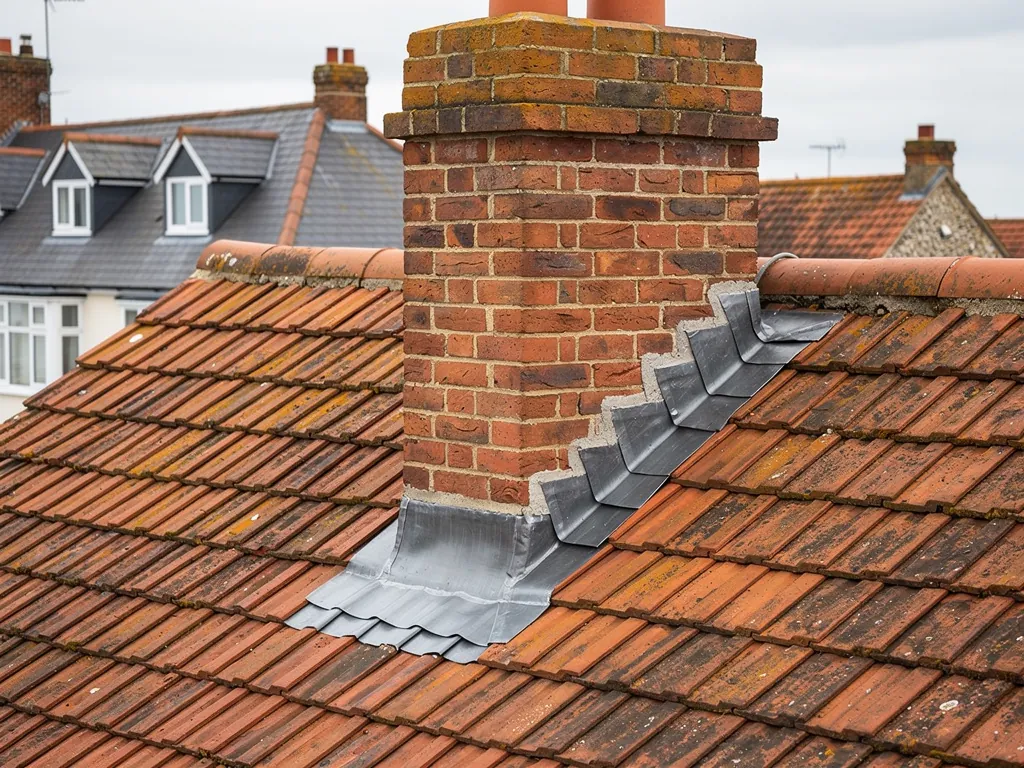
The top line, the inside corners and the lead that joins them are the details where water finds its way in first.
The slabs are what you see from the lane. The ridge, valleys and lead are what the weather tests. Earlier repairs on these parts were often made with whatever was to hand, so they reward a slow look from the loft hatch and from the scaffold.
3.1 Ridge, hips and lime mortar
The ridge crowns the roof where two slopes meet, a hip is an outside corner running down the slope, and the verge is the edge that finishes over a gable wall. On stone roofs these are usually capped with ridge pieces bedded in mortar. BS 5534 is the code of practice for roof slating and tiling, and since it was revised in 2014, ridge and hip tiles are no longer left to mortar alone: a mechanical fixing goes in as well. BSI also notes that its recommendations might not suit the re-slating or re-tiling of some old roofs, particularly where traditional and reclaimed materials are used. So on a stone roof the detail is settled at the survey, roof by roof, and agreed with the conservation officer where the building is listed. Old roofs were bedded in lime-based mortar, which is softer and more flexible than cement mixes, and our guide to lime mortar on old roofs explains why that matters.
On old roofs
We match the original method first. Modern fixings and parts go in where they suit the roof, never because they are quicker.
BS 5534
slating code that cautions on old, traditional roofs
3.2 Valleys
Where two slopes meet at an inside angle, rain gathers into a valley and runs to the gutter. On stone roofs that angle is often a swept valley, with the slabs cut and curved round the corner, or a lead-lined channel. Moss, leaves and grit silt both up, and a clogged valley spills under the slabs beside it. Rebuilding one means lifting every neighbouring slab and laying them back in order, which is why it takes longer than it looks.
3.3 Lead and chimneys
Where a roof butts a wall or a chimney, lead is turned up the masonry as a flashing, and small folded pieces called soakers are woven between the courses beside it. At the top of a stack, the flaunching is the sloping mortar crown that holds the pots and sheds rain. Lead is graded by code, which gives its thickness. Royston Lead's brochure recommends code 4, 1.80 mm thick, as suited to soakers, flashings, valleys and dormer work, while code 5, 2.24 mm, is listed for flashings, gutters and dormers. MyJobQuote, updated 22 September 2026, puts the life of a lead flashing at over 80 years. Chimneys on old stone houses are often the tallest part of the roof, so repointing, lead and flaunching tend to be done in one visit. Our lead roofing and leadwork page explains the codes further.
Ridge, valley and lead decide whether a stone roof stays dry.
Chapter 4: Listed buildings, conservation areas and the National Park3538
Sheet 04 / 06Whether stone roof work needs consent depends on the building, its location and what changes, so ask before the first slab comes off.
Like-for-like work on an ordinary house does not normally need planning permission, because the Town and Country Planning Act 1990 says works that leave the outside of a building materially unchanged are not development. Stone roofs are often found on buildings with extra protection, though, so the first question is always whether the building is listed, in a conservation area or inside the National Park. For roofing in Horsham town and the villages around it, the answer shapes the whole job, from the timing to the type of stone.
4.1 Listed buildings
Section 7 of the Listed Buildings Act 1990 bars works that would alter a listed building in any manner affecting its character as a building of special architectural or historic interest, unless they are authorised. The South Downs National Park Authority says regular maintenance and minor like-for-like in-situ repairs do not need listed building consent. Re-laying a slope in the same stone is usually like-for-like. Changing the covering is not, and nor is altering the pitch or the roof structure. Our guide on re-roofing a stone roof in a conservation area goes through permission step by step, and your local council's conservation officer can confirm what applies to a listed home. If you are unsure whether your house is listed, the council's planning team can tell you. What we need from you is simple: the address, photographs of each slope and any listing or conservation-area papers you already hold. From the survey we then write the proposed work up in plain terms that you or your agent can pass to the conservation officer. Timing matters too. Consent decisions take time, and stone often has to be ordered or salvaged, so a planned repair avoids the pressure of working in midwinter.
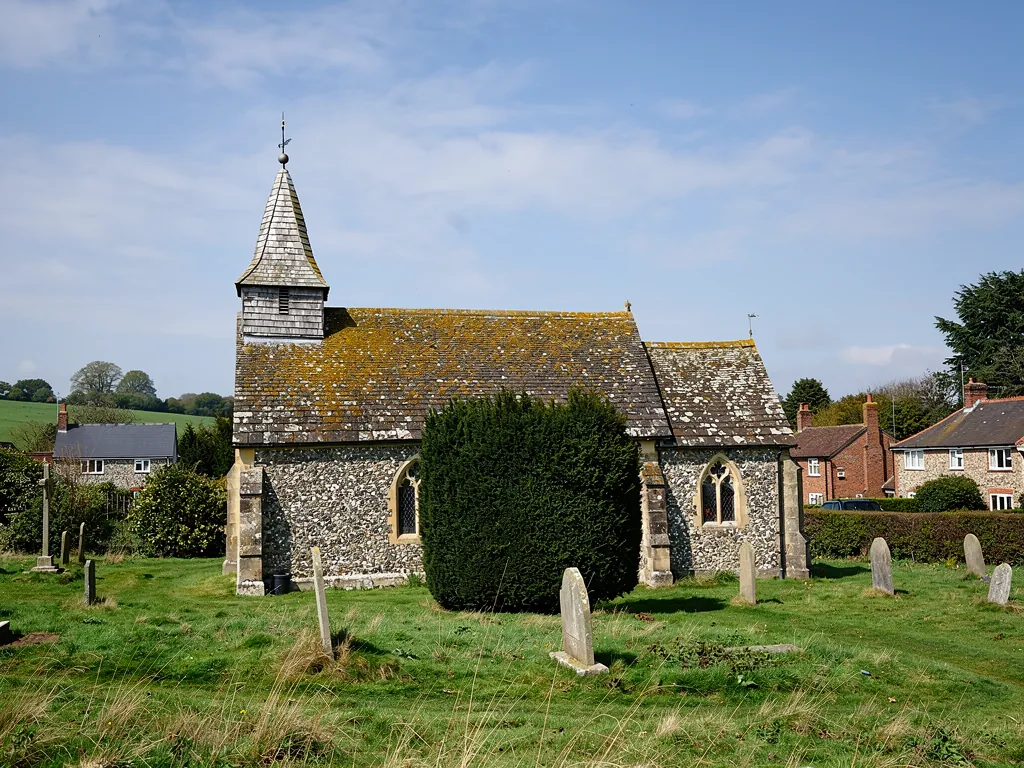
4.2 Conservation areas and the National Park
Conservation areas and Article 4 directions can remove rights that ordinary houses have, so check with the council's planning team before work starts. Petworth and Midhurst sit inside the South Downs National Park, where Chichester District Council handles applications on the SDNPA's behalf. In the parts of the Park inside Horsham or Arun districts the SDNPA decides directly. Pulborough, Billingshurst and Horsham town are in Horsham District Council's area. Building control stays with the district council even inside the Park, so a re-roof there can involve two bodies: one for planning, one for the Building Regulations.
Churches and monuments
Churches carry their own routes. A Church of England church in use is exempt from listed building consent and goes through the faculty jurisdiction instead; some other denominations run their own procedure. A closed church, or one held by the Churches Conservation Trust, comes under normal listed building control, and a scheduled monument needs scheduled monument consent. Where work on any of these buildings is notifiable under the Building Regulations, we explain which consents apply and handle the notification, and talk through our survey findings with whoever decides.
Settle these before work starts
- Is the building listed?
- Is it in a conservation area?
- Is it inside the National Park?
- Which council decides?
- Is it a church or monument?
Chapter 5: What Horsham stone roofing costs1952
Sheet 05 / 06Stone roofs are priced after the survey, because the stone, the timbers and the access differ on every one.
A stone roof is priced as one written total, after we have been up and into the loft. Heritage work costs more to carry out than a plain tile re-cover, and our guide to why Horsham stone roofs cost more explains the reasons in full. Here are the things that move the figure most.
Slate rates as a yardstick
- Spanish slate roof£95 to £125 per m²
- Natural slate roof£160 to £210 per m²
- Natural slate repair£150 to £220 per m²
- Ridge tile repairs£50 to £70 per metre
These are slate rates before VAT, a yardstick only, since stone is sorted and laid slab by slab.
Source: Checkatrade slate roof and roof repair cost guides, tables last updated September and June 2026
5.1 Four things behind the number
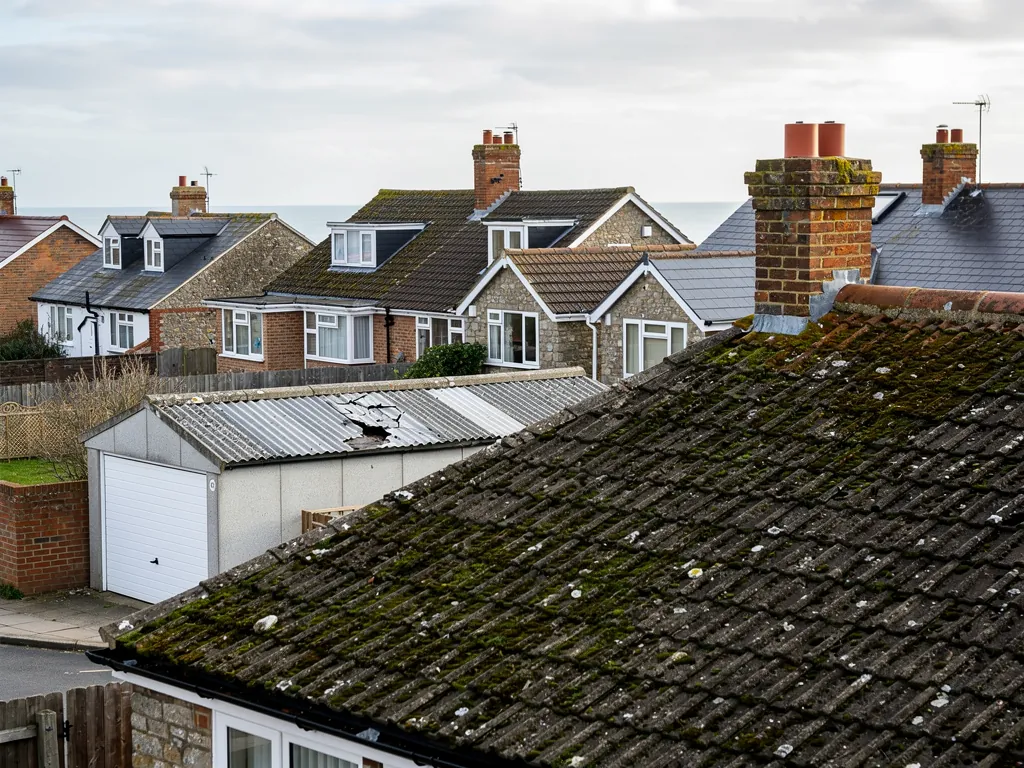
Access comes first. A farmhouse with a long single-storey wing is quick to reach; a three-storey manor with chimneys in the middle of the roof needs a full scaffold. Next is how much of the stone can be reused. Sound slabs go back on the roof, which saves buying stone, but the sorting and grading takes time, and any shortfall is made up with reclaimed or new quarried stone matched to the old. Then the timbers: soft battens and rotten rafter ends turn up once a slope is opened, and they add work that no look from the ground can predict. Finally the details, such as lead, swept valleys and ridge pieces, which are slow to form and fit by hand. A price that ignores any of these four has left something out.
Skimp on the survey and the surprises turn up after the scaffold is built.
£280 to £360
typical slate roofer day rate, Checkatrade 2026
Time on the roof is the other half of the story. Taking off, sorting, stacking and relaying slabs course by course is slow, and weather stops it, so a roof that looks small from the garden can occupy a crew for longer than a larger tiled one. We give you the expected working period with the written quote, along with whatever protection the house needs while a slope is open. Stone slabs are also heavy to carry down a ladder, so the access plan matters as much as the laying.
5.2 Scaffolding, VAT and licences
For scale, Checkatrade's scaffolding table (updated October 2026) puts a month of scaffold at about £875 for a semi of two storeys and £1,000 for a detached bungalow. A scaffold that occupies the pavement or road needs a highway licence; West Sussex County Council wants at least 10 working days' notice and charges £266 for a month. The standard VAT rate is 20 per cent. Whoever quotes for your roof, check whether the figure includes both VAT and scaffolding, since each can shift the total by a large sum.
Day rates and reclaimed stone
Day rates give a sense of the labour. Checkatrade puts slate roofers at around £280 to £360 a day, and stone is slower to lay than slate because every slab is chosen for its place. Reclaimed stone comes from other roofs and carries the colour and wear of age, which helps new work blend in, while newly quarried stone is cleaner and more regular. The mix depends on what your own roof gives back when it is stripped. Be wary of a price far below the rest for stone work; either the stone is being skimped or the timbers have not been looked at. Our pricing follows the lightest repair that will hold, never the biggest job on offer.
Chapter 6: Repair, re-lay or replace a stone roof2318
Sheet 06 / 06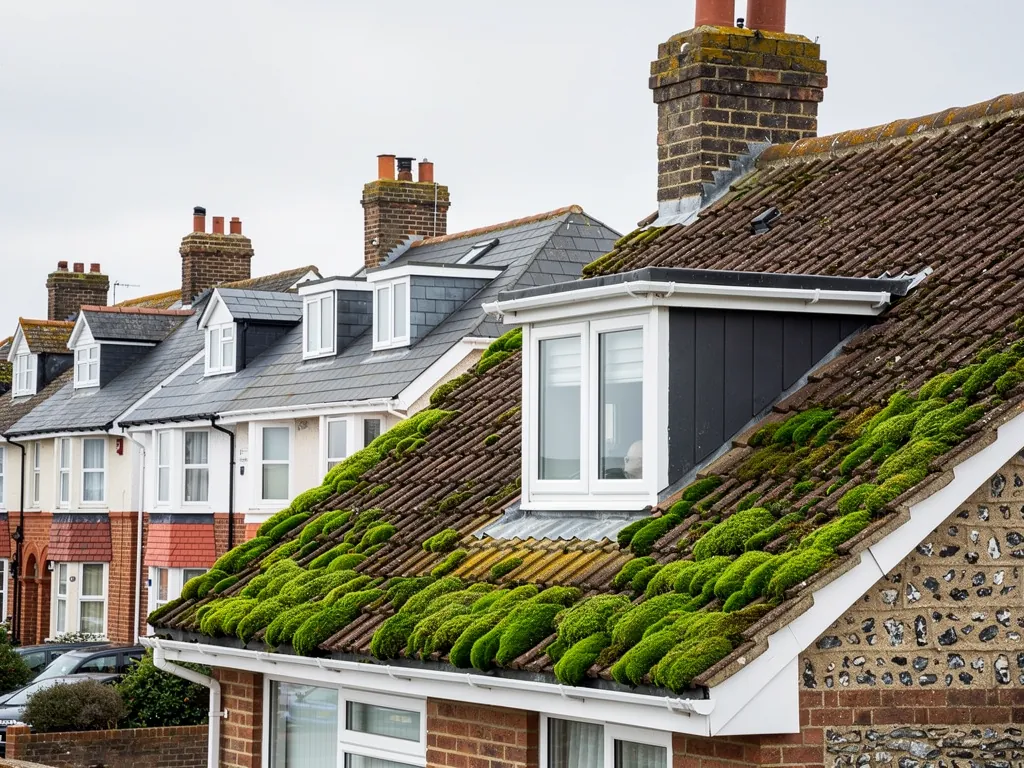
The right answer is the lightest job that cures the fault, and sound stone is worth keeping on the roof.
After every survey we give one of three verdicts: repair it, re-lay it, or replace the covering. Stone is the one covering where replacement is rarely the first answer, because the material itself is long-lived. Checkatrade says stone slate can last more than a hundred years, and a trade body, the Confederation of Roofing Contractors, gives well-maintained slate 100 years or more. What gives out first is usually the fixings and the battens, and those can be put right without discarding the stone. None of these figures is a promise for your roof, which is why the verdict rests on what we photograph on it. If your roof has been repaired before, the earlier work tells us a lot: mismatched stone, cement-heavy pointing and a patchwork of fixings show where past repairs fell short.
Repair, re-lay or replace the covering
- RepairA few slabs or one detail have failed; the stone and timber around them are sound.
- Re-layThe stone is good, but fixings or battens are failing across a whole slope.
- ReplaceStone is flaking widely or missing, so only a matched or different covering will do.
6.1 When repair is enough
A repair is the answer when only one area has failed and the stone and timbers around it are sound: a few slipped slabs, a lifted flashing, a crumbled ridge bed or a blocked valley. We photograph the fault and its cause, fix both, and tell you what to watch for next. A repair also tells us something about the rest of the roof, since the slabs we lift show how the timbers beneath are holding up.
6.2 When a slope needs re-laying
A re-lay means stripping a slope, sorting the stone, renewing the battens and fixings and laying the best slabs back in diminishing courses, topped up with matched stone. It suits a roof where the stone is good but the fixings are failing across the whole slope, and it keeps the look of the building. Our guide on repairing, re-laying or replacing a Horsham stone roof sets the choices side by side.
15 per cent or more
added roof weight that brings in building control
6.3 Weight, structure and approval
Stone is heavy, and the roof structure was built for it. Where a new covering would add 15 per cent or more to the weight on the roof, the Planning Portal says a building control application is needed, and it advises a structural engineer or surveyor where a replacement is significantly heavier or lighter. It also says no application is normally needed when less than 25 per cent of the total building envelope and less than 50 per cent of the roof is affected. Swapping stone for tile or slate lightens the roof, changes the building and may need consent; check with your building control body first.
Under Approved Document L, replacing a roof covering can count as renovation, and if over half the roof area is renovated, the insulation can need to be improved. The 2021 edition applies until 24 March 2027, when the 2026 edition takes over. You will hear at the survey whether that is likely on your roof, because it changes both the work and the cost. For a listed or conservation-area home, ask the council before any change of covering is even priced.
Price guide
Typical UK prices that sit around a stone roof job
| Job | Typical range |
|---|---|
| Slate roofer day rate | £280 to £360 per day |
| Patching chimney leadwork | £150 to £250 |
| Full chimney leadwork renewal | £350 to £460 |
| Chimney leadwork with scaffolding | £700 to £920 |
These are national guide figures for neighbouring work, not stone prices. The written quote that follows our survey carries a single total for the job.
Source: Checkatrade slate roof cost guide, table last updated September 2026; MyJobQuote chimney leadwork guide, 22 September 2026
Guides and answers
Horsham stone roofing guides and answers
Guides on the stone, the laying, consent, cost and care, plus short answers to what people ask before a stone roof is touched.
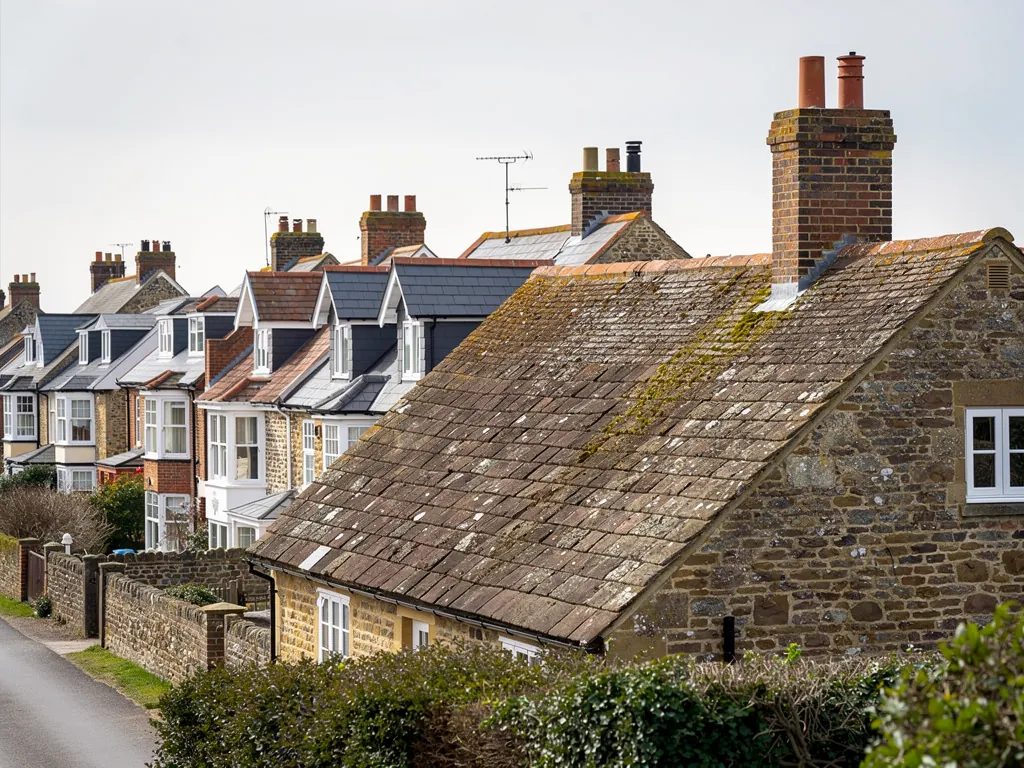 What is Horsham stone roofing?9 min read
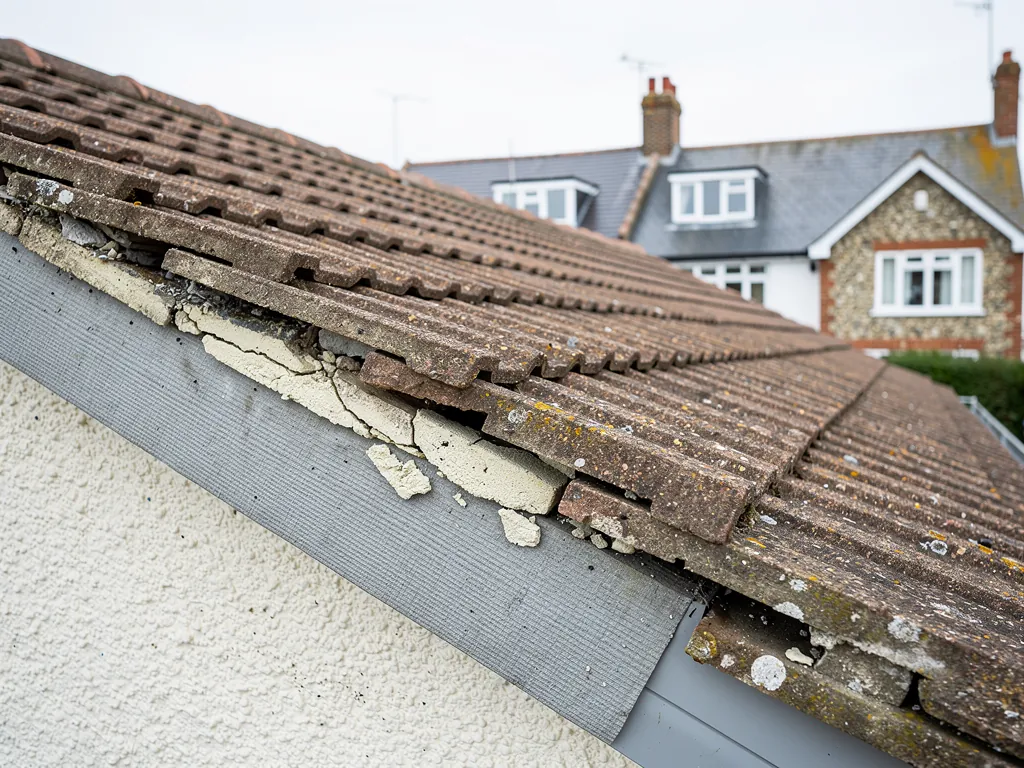 Why Horsham stone roofs cost more, and what drives the price9 min read
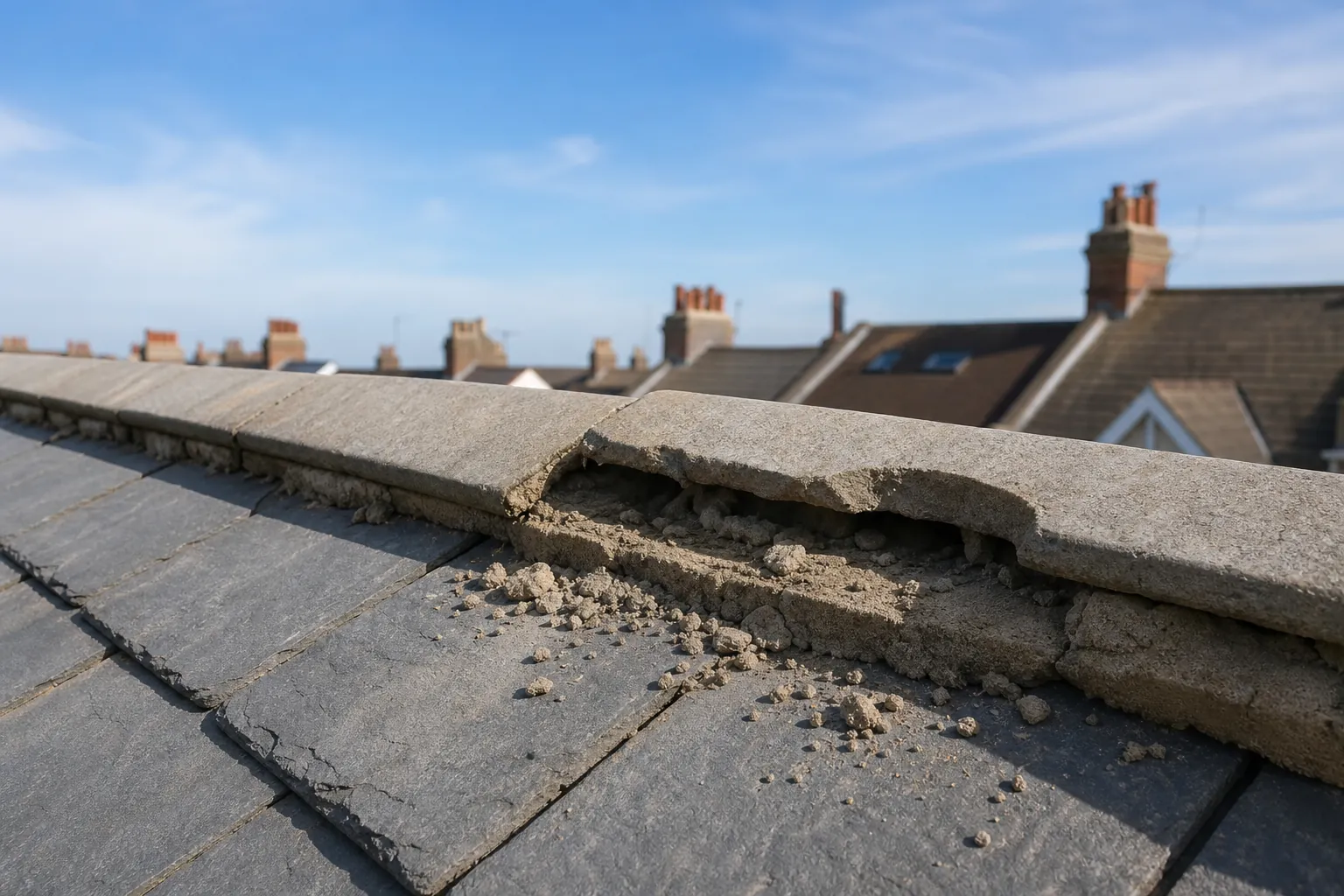 Repair, re-lay or replace a Horsham stone roof?9 min read
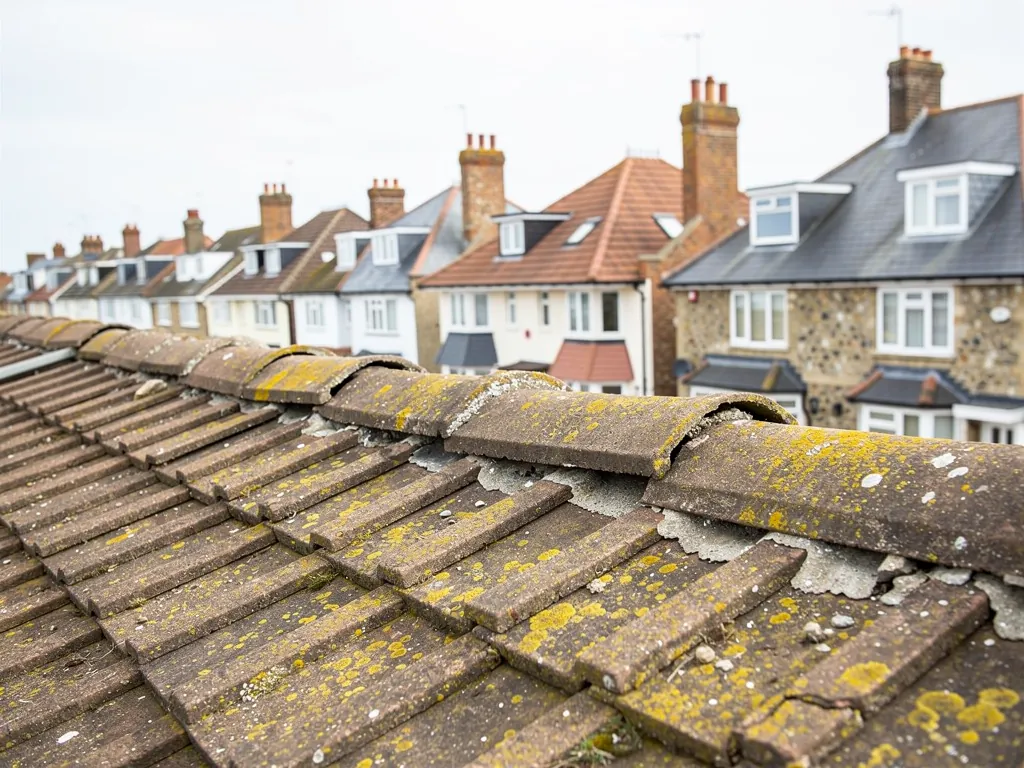 Re-roofing a stone roof in a conservation area: do you need permission?9 min read
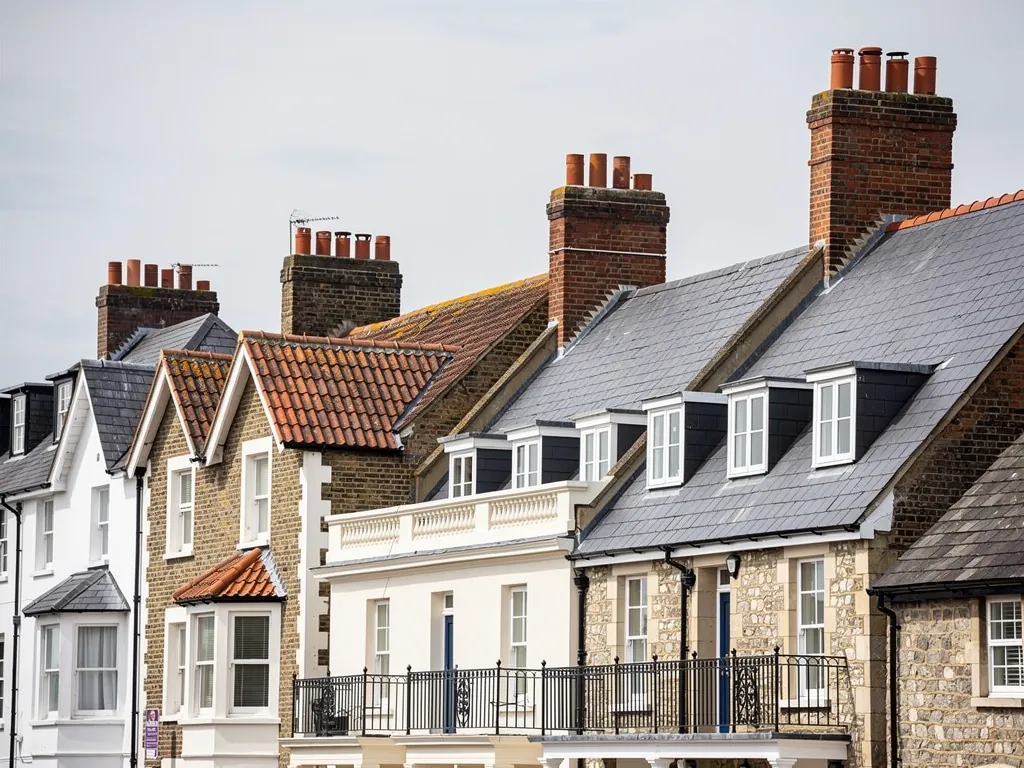 Horsham stone roofs on listed buildings: consent and the conservation officer9 min read
 Reclaimed or newly quarried Horsham stone?9 min read
 Horsham stone vs sandstone, slate and reconstituted stone8 min read
 Why must lime mortar be used on old roofs?9 min read
 Roof structure under stone: weight, timbers and pitch10 min read
 Diminishing courses: how stone roofs are laid9 min read
 Stone roofs in the South Downs National Park: planning and who decides9 min read
 Stone roofs in frost and winter storms9 min read
Quick answers
- Is heritage roofing more expensive?
- How long does a Horsham stone roof last?
- Do like-for-like stone roof repairs need listed building consent?
- Will a roofer deal with the conservation officer for you?
- Can you replace a stone roof with tiles?
- How long does it take to re-lay a stone roof?
- What does a survey of a stone roof look for?
- Is Horsham stone the same as slate?
- Does BS 5534 apply to an old stone roof?
- What pitch does a stone roof need?
- What are oak pegs on a stone roof?
- Where does Horsham stone come from today?
- What ridge goes on a Horsham stone roof?
- Why do stone slates slip?
- Can a cracked stone slate be repaired?
- What is torching on a stone roof?
- Should a stone roof have an underlay?
- What is a swept valley on a stone roof?
- Should moss be removed from a stone roof?
- Do you need scaffolding to repair a stone roof?
Questions
Stone roof questions, answered
Can part of a Horsham stone roof be repaired without stripping all of it?
Usually, yes, if the damage is confined to one area and the timbers under the stone are sound. Slipped or cracked slabs can be lifted out, the batten checked and the stone replaced with a matched slab. A whole-slope re-lay only comes up when fixings or battens are failing right across it. We photograph the roof from the loft and the slopes, and tell you which applies before we write the price.
Which council do I ask about a stone roof near Petworth or Midhurst?
Both towns sit inside the South Downs National Park, where Chichester District Council handles planning applications on the SDNPA's behalf. Building control stays with the district council. If the house is listed, the conservation officer is the person to ask about listed building consent. Other parts of the Park are decided by the SDNPA directly, so check with the council's planning team for your exact address.
What should I ask a roofer before they touch my stone roof?
Ask whether they have laid stone before and can show photographs of that work. Ask how the slabs will be sorted and reused, what will hold them, and who deals with consent if the building is listed. Check whether the quote includes VAT and scaffolding, and ask what guarantee covers the workmanship and for how long. A reliable roofer will answer all of it in writing.
Will moss and lichen harm old stone slabs?
Lichen is usually part of the character of an old roof and is best left. Thick moss is different: it holds water against the stone and can block valleys and gutters. Gentle hand removal is kinder to a worn surface than aggressive washing. If moss is heavy across the whole roof, tell us, because it can also hide slipped slabs and failing fixings.
How quickly should a storm-damaged stone roof be covered?
As soon as it is safe to do so. A temporary cover can keep the water out first, and the proper repair follows once the weather settles. Contact your insurer promptly, take photographs and hold on to receipts for any emergency work. Which? says wear and tear generally is not covered, and no roofer can promise that a claim will be paid.
Can I get a grant towards re-laying a stone roof?
A new roof rarely qualifies for a grant, as no national scheme funds re-roofing. ECO4, which funds energy measures for eligible households, closes on 31 December 2026; its sister scheme, the Great British Insulation Scheme, closed on 31 March 2026. Check gov.uk for any scheme currently open, because they change and being eligible is never guaranteed. A household with limited income or a disabled member can ask the council about local help.
Get a quote
Send us photographs of the roof
Photograph each slope and the loft timbers, note whether the house is listed, and send them by WhatsApp or the form. We start our survey with the loft.
Loading the enquiry form. You can also call 01243 252373.