
Roofers in Littlehampton
Georgian terraces, river rows, slate and clay
Littlehampton's roofs run from three-storey Georgian terraces on South Terrace to slate and plain clay tile in East Street and the 1830s rows beside the River Arun.

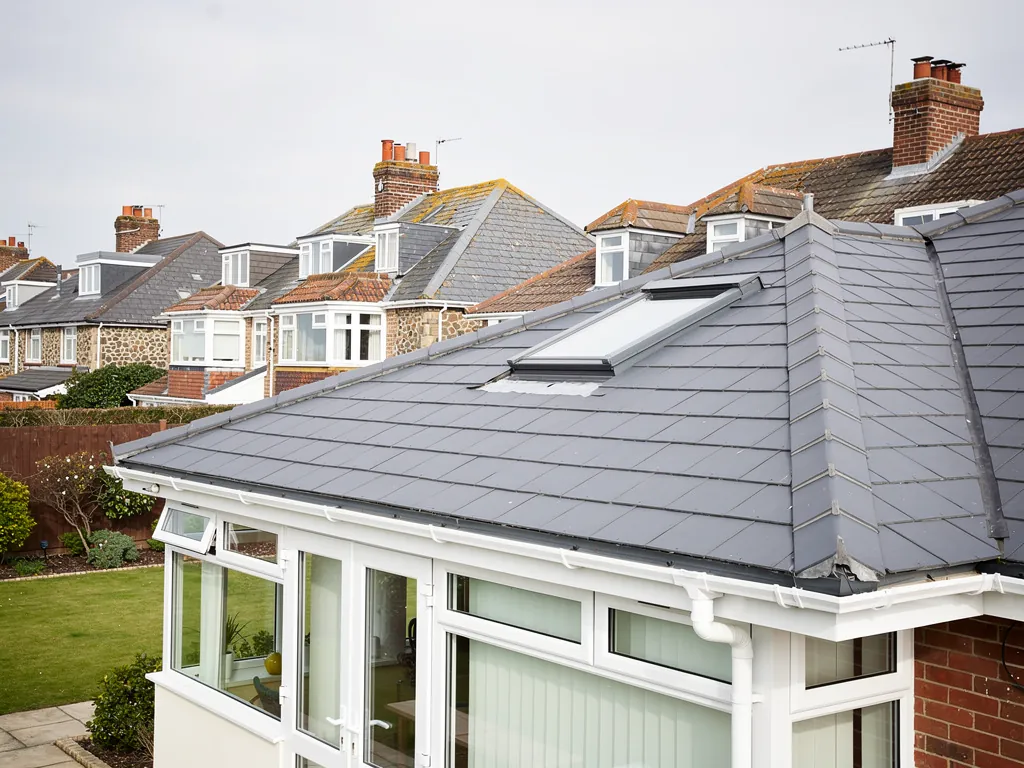
Littlehampton roofs
From South Terrace to Ferry Row on the Arun
-
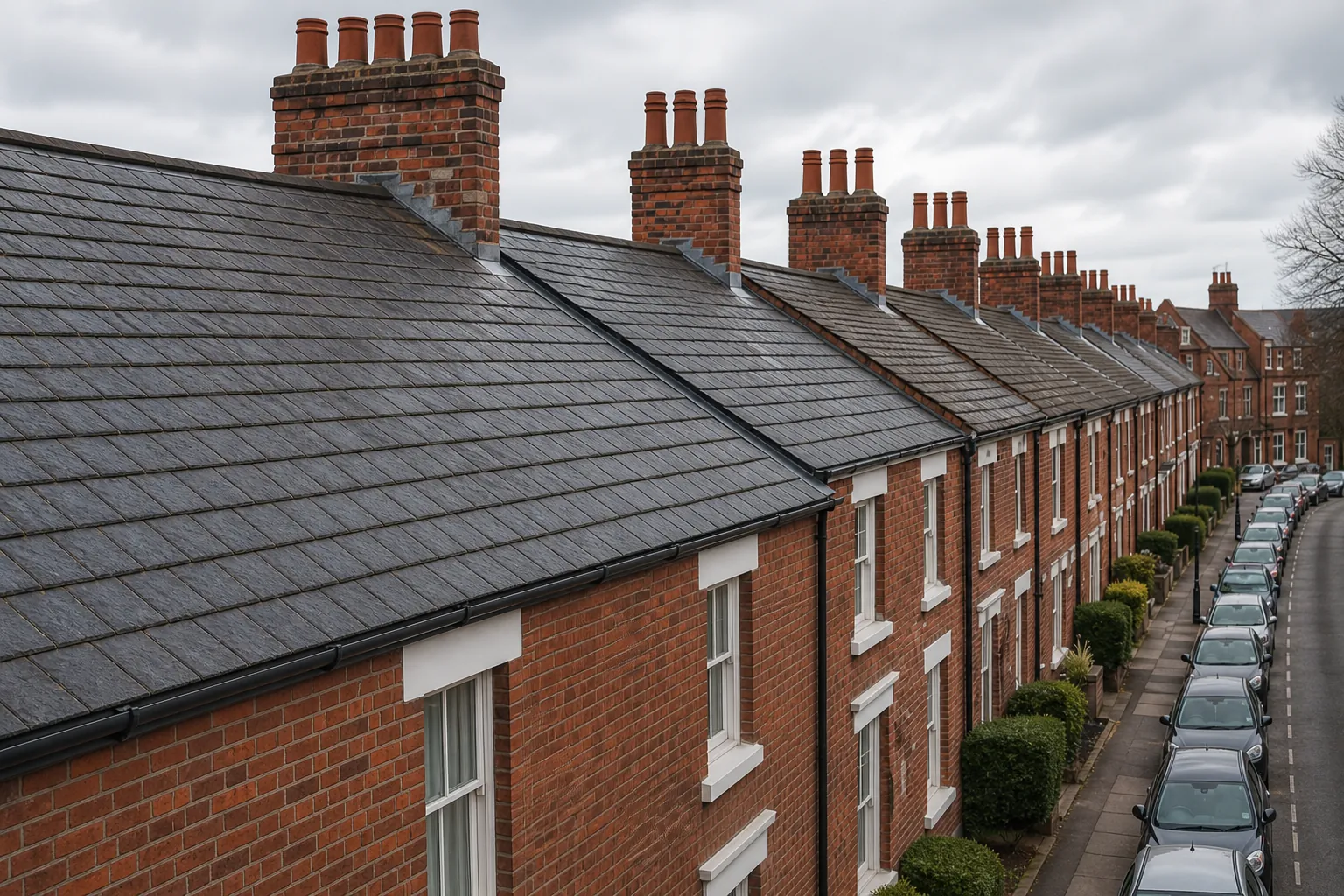
Georgian pairs on South Terrace
The oldest buildings in the Seafront conservation area are three-storey Georgian and Regency houses, built in pairs and short rows as part of a longer terrace along South Terrace, so the stacks and eaves sit high.
-
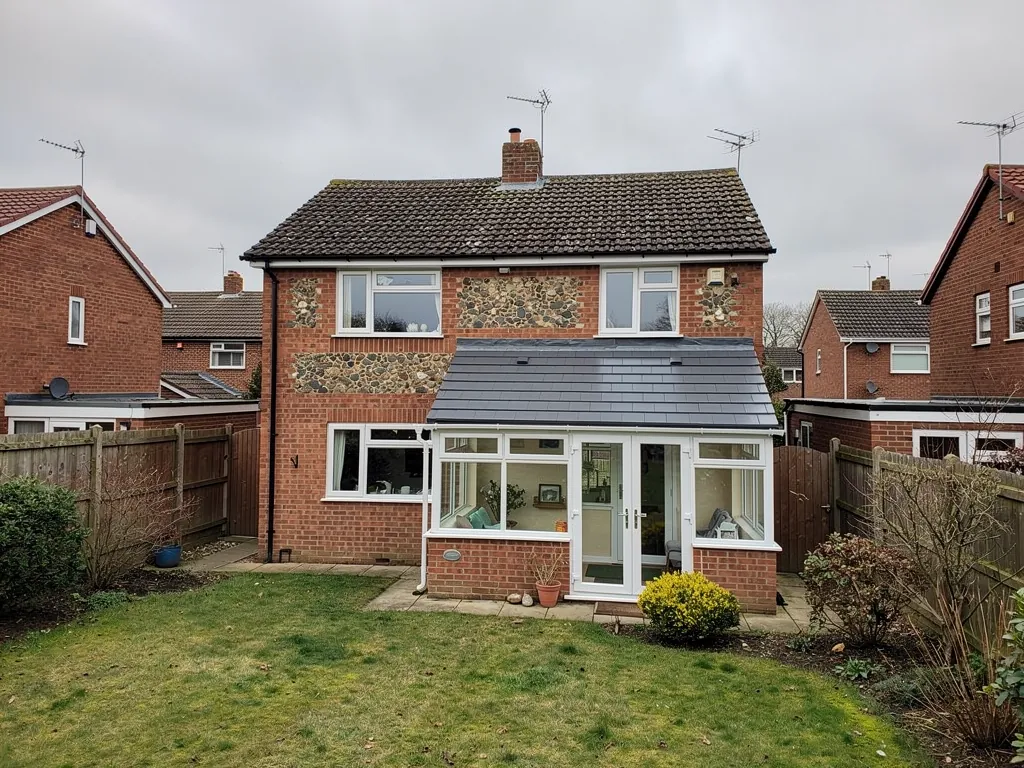
Brick, clay tile, flint and slate
Brick and clay tiles are the predominant materials along the seafront. Nos. 12 to 15 Granville Road are stuccoed under a partly slated roof, and Nos. 11 to 13 Irvine Road are brick and flint with slate.
-
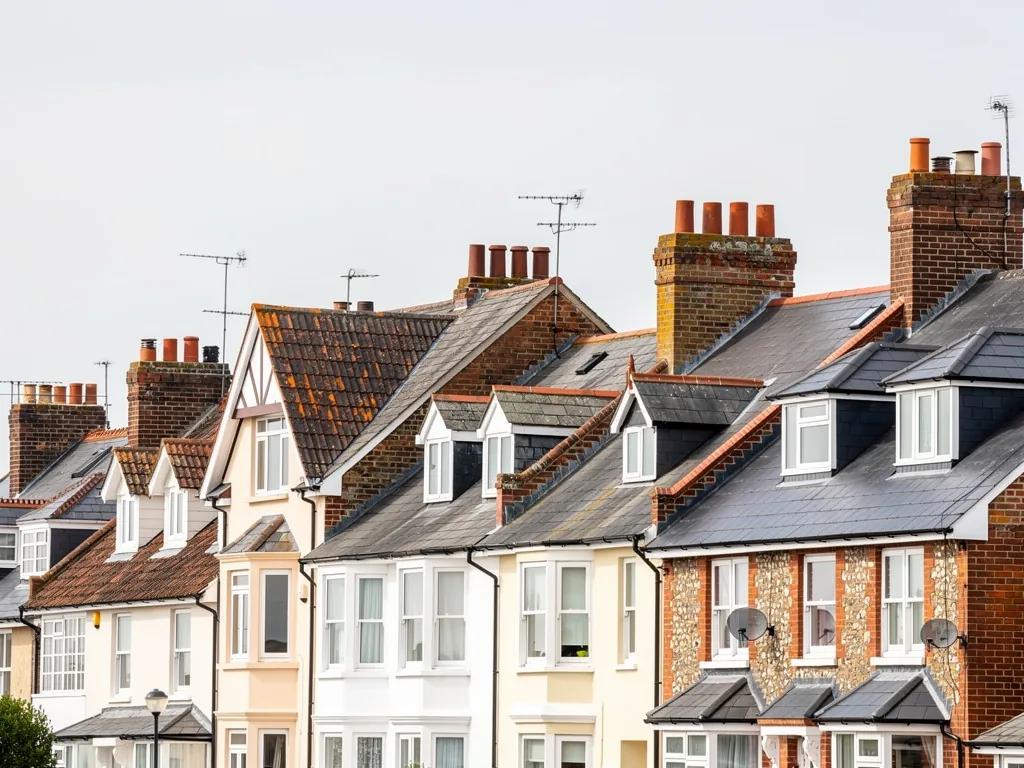
River Road and the chain ferry
River Road runs parallel to the Arun and was developed in stages during the first half of the 19th century. Ferry Row dates from the 1830s, soon after the chain ferry across the river came into operation.
Map of Littlehampton, 8.2 road miles east of Bognor Regis, with the nearest towns we also cover.
Three conservation areas by the sea and river
- Council
- Arun District Council
- County
- West Sussex County Council
- Conservation areas
- Seafront (designated June 1975, extended July 1994), River Road (June 1989) and East Street (July 1994)
- Article 4
- None recorded for Littlehampton on Arun's conservation areas page; Arun's direction for houses in multiple occupation in River ward removes no roof rights
- Listed landmarks
- St Mary's parish church, the Manor House in Church Street and St Catherine's Catholic church, all Grade II
- Distance
- 8.2 road miles east of Bognor Regis, about 15 minutes by car
Littlehampton notes
Seafront Georgian, East Street slate, river rows
A port and resort at the mouth of the Arun, and the roofs that three different stretches of it have left behind.
Chapter 1: Georgian seafront terraces from South Terrace to Irvine Road3660
Sheet 01 / 03Arun District Council designated the Littlehampton Seafront Conservation Area in June 1975 and extended it in July 1994. Its oldest buildings are the three-storey Georgian and Regency houses on South Terrace, built in pairs and short rows. For a roofer that means tall chimney stacks and high eaves, which are all places where lead, pointing and gutters meet. Brick and clay tile are the predominant materials in the area, though the council's guidance singles out a few exceptions. Nos. 12 to 15 Granville Road are stuccoed (finished in smooth render) with a partly slated roof, and Nos. 11 to 13 Irvine Road are brick and flint under slate. Littlehampton sits outside any National Park, so Arun District Council decides on planning here, and its conservation team is the first call for anything that changes how a roof looks.
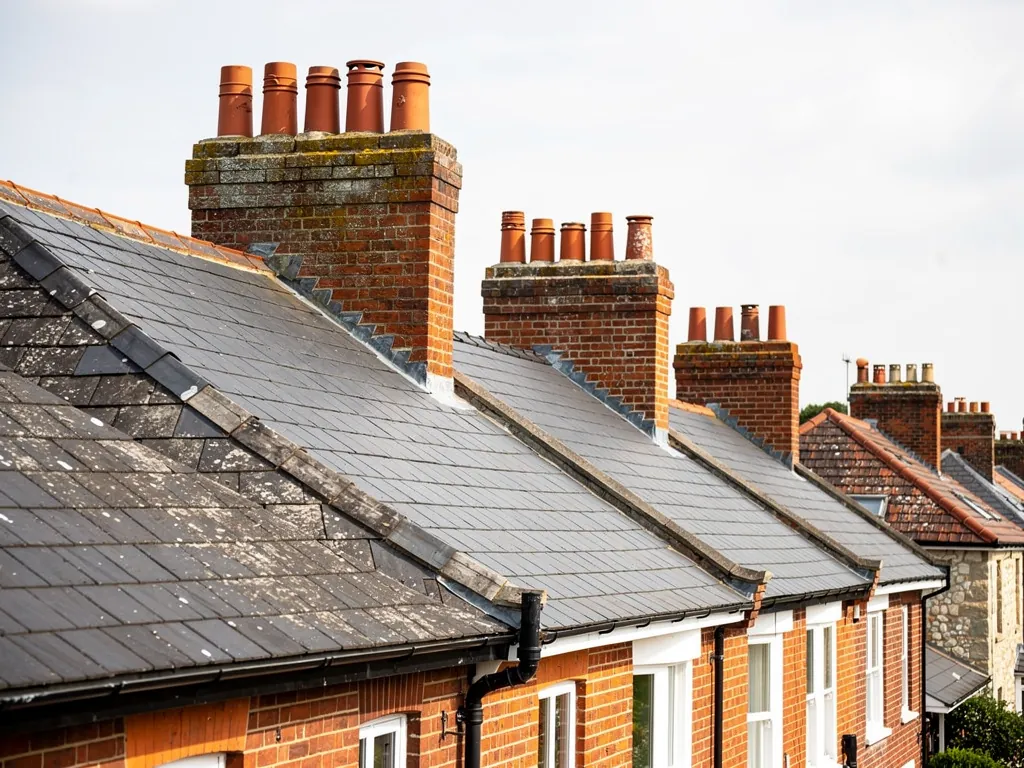
Before roof work on the seafront terraces
- Confirm the conservation area
- Plan the scaffold licence early
- Match slate or clay tile
- Check any heavier covering
1.1 Three storeys and the scaffold
A three-storey terrace is not a job for a ladder and a bucket. The eaves are high, the chimney stacks are taller still, and any fault at the ridge means a working platform. Should the poles go up over the footway, the licence comes from West Sussex County Council as highway authority, and the council wants a minimum of 10 working days' notice for it. We allow for that in the programme from the start, so the timetable you are given already includes the wait. On a terrace, the scaffold is also the moment to look at the gutters and the fascias, since access is paid for once.
1.2 Clay tile, slate and the join between them
On a street where one house has a clay tile roof and the next has slate, the covering that suits each is different, and so is the edge detail. Clay tiles are hung on battens and held with nibs and nails. Slates are nailed, and a broken one can be held with a tingle, a thin metal strap that grips it from below. A repair that swaps a slate roof for something heavier needs a structural check, and the Planning Portal says that a new covering that is 15 per cent or more heavier brings in building control. Our slate roofing page sets out how slate is repaired, relaid and replaced, and which one the survey usually points to.
Chapter 2: East Street slate and the River Road rows2501
Sheet 02 / 03The East Street Conservation Area was designated in July 1994. The council's guidance says its walls are stucco, brick and flint, and its roofs are slate and plain clay tiles. River Road, which runs parallel to the Arun, was developed in stages in the first half of the 19th century, and Ferry Row at its edge dates from the 1830s. The River Road area was designated in June 1989. Streets that grew in stages, house by house, have roofs that were never all done at the same time, and that shows when you look along a row from the road.
Typical UK repair costs for a Littlehampton roof type
- Clay tile repair, per m²£110 to £160
- Natural slate repair, per m²£150 to £220
- Ridge tile repair, per metre£50 to £70
- Lead flashing repair, per metre£50 to £70
These are national typical ranges, not our prices. Access, covering and the size of the fault set the real figure, which you receive in writing as one total after the survey.
Source: Checkatrade roof repair cost guide, table last updated June 2026
2.1 Chimneys, party walls and plain tiles
A terraced row shares more than a wall. Chimney stacks sit astride the party wall, gutters run on across property lines and a leak in one roof can be someone else's damp patch. When the lead round a stack has failed, repairing it is a small job. Removing a chimney breast is not, because the Planning Portal says building regulations approval always applies, and a breast on a party wall also needs a party wall notice. Plain clay tiles are small, curved slightly in both directions and hung in overlapping rows, so a repair can be done a tile or two at a time. Our chimney repairs page explains the stack work in detail.
2.2 Valleys, hips and the corners of a terraced roof
A valley is the internal angle formed by two slopes, and it carries the rain from both. A valley lined in lead or in a formed tray is the weak point on many a roof of this kind, because a few leaves in the channel make it overflow under the tiles. A hip is the outer corner, a sloping line that has its own capping tiles. On a 19th-century terrace both are worth checking from a ladder before anyone starts talking about a new roof, because a cleared valley and a refixed hip cost far less than a re-roof and often cure the leak. We show you the valley in the photographs, with the debris still in it.
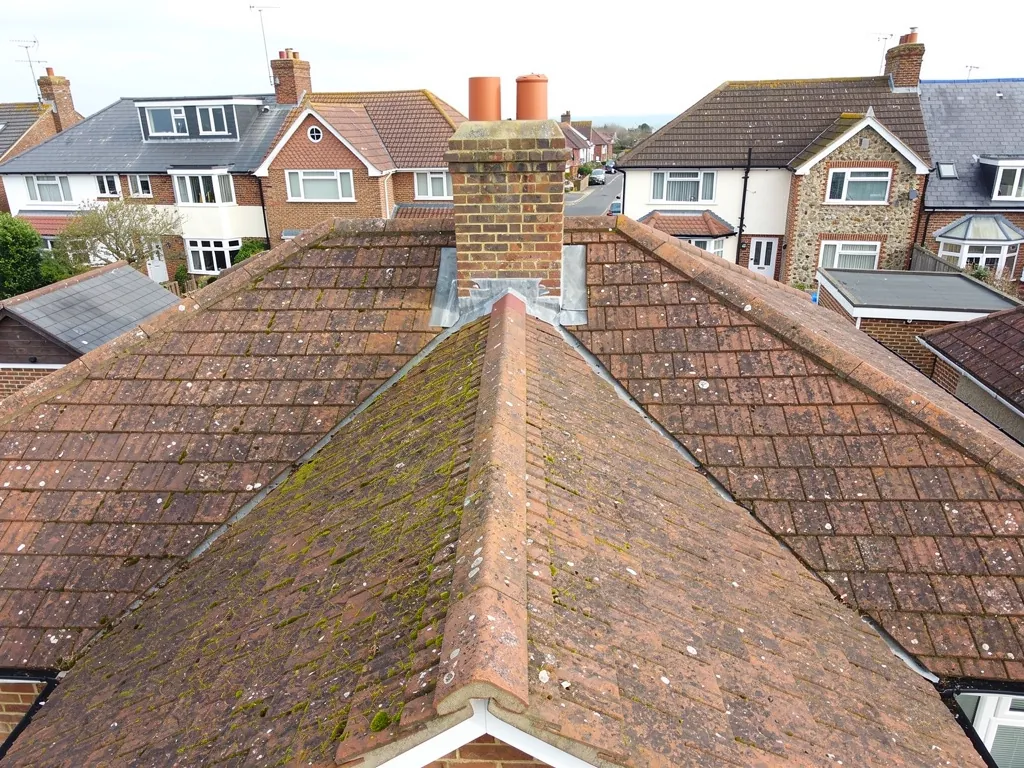
2.3 What slate and clay last, and what a repair costs
Checkatrade describes stone slate as able to outlast a century, while Marley cites a Building Research Establishment minimum life of 60 years for clay tiles. Neither figure is a promise, and an old roof that has been patched repeatedly may be nearing the end of its useful life sooner. The typical UK ranges below are published per square metre of repair, exclude VAT and give a sense of scale only. Your written quote follows the survey.
Chapter 3: Harbour-mouth roofs and a growing port town2623
Sheet 03 / 03A new river mouth was cut in 1735 as port activities grew, together with a wooden harbour, and Littlehampton went on to become a holiday resort as well as a port. Its population grew from 584 in 1801 to 5,954 in 1901. Growth like that meant houses went up in several waves, and the roofs of each wave have their own habits. Georgian terraces carry their age in the lead and the chimneys, and the later streets carry theirs in the slates and the hips.
Three answers for a tired flat roof
- PatchLocal repair to one failed area while the rest of the roof stays as it is.
- OverlayA new covering laid on a sound deck, with the edges and upstands redone.
- Strip and relayOld covering and wet deck removed, new deck laid with the correct fall.
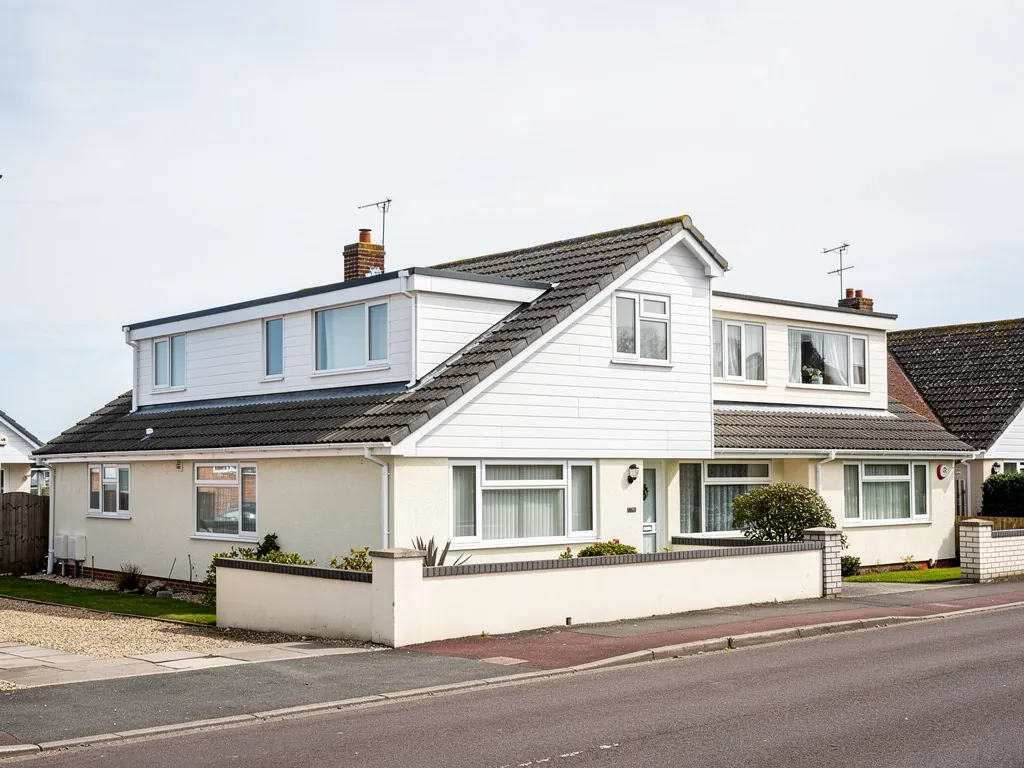
3.1 Flat-roofed additions behind the terraces
A terraced house often gains a flat-roofed back addition or a porch over the years. These roofs are the ones that leak soonest, because they depend on the covering, the falls and the edge trims. BS 6229:2025 sets a minimum finished fall of 1:80, and roofers usually aim for a steeper fall, so water clears the finished surface. Under Approved Document L, laying a new waterproof membrane across a flat roof counts as renovation, which raises the insulation question whenever the covering is renewed. Published lifespans give a feel for the choice: Less puts torch-on felt at 10 to 20 years and GRP at 25 to 40, while GreenSpec gives EPDM 20 to 30 years. Our flat roofing page explains the coverings we fit and what a repair involves.
3.2 Churches and the consent route
St Mary the Virgin is the parish church and St Catherine's is the Roman Catholic church, and both are listed Grade II. Roman Catholic churches in use are exempt from listed building consent and use their own denomination's procedure, but work that alters the outside may still call for planning permission. If the parish church is in regular Church of England use, the faculty system covers its works. We work from the approved scope and give the parish a written quote with photographs of the roof.
3.3 Sea weather at the river mouth
At the mouth of the Arun, wind-driven rain, gales and sea air reach the roofs with little in the way. The places that fail first are usually the ones held on by mortar alone, such as ridges, hips and verges, so we check how they are fixed before we look at anything else. Roofs can hold bat roosts and birds' nests, both protected, so we look before lifting a tile.
Roof work we cover in Littlehampton
Frequently asked questions
Questions from Granville Road to Ferry Row
Can the slate on a Granville Road terrace be repaired rather than swapped for concrete tile?
Usually, provided the slates have not gone brittle. Slipped or cracked slates are replaced singly and clipped back with tingles, and failed nails along a slope can be dealt with by relaying that slope and reusing the good slates. Inside the Seafront conservation area, matching the existing covering is the safer course. Ask Arun District Council's conservation team before changing the material.
Is there an Article 4 direction on roofs in Littlehampton's conservation areas?
Arun District Council's conservation page names Craigweil House in Aldwick as the only place with Article 4 Directions. Arun's separate direction covering River ward is about houses in multiple occupation and removes no roof rights. Directions can be made later, so put the question to Arun's planning officers before altering a roof in the Seafront, River Road or East Street areas.
How are shared chimneys on the River Road rows repaired without upsetting the neighbours?
A repair to the lead, the pointing or the pots can usually be carried out from your own side, and we photograph the stack so both owners can see what was done. Removing a chimney breast is different: building regulations approval always applies, and a breast on a party wall also needs a party wall notice. We tell you at the survey which of the two your job is.
Does a new covering on a flat-roofed back extension in Littlehampton need building control?
It depends on the job. Under the Planning Portal's guidance you do not normally need a building control application if less than 25 per cent of the building envelope and less than 50 per cent of the roof are affected, but Arun's building control page names replacement roof coverings among the work needing approval. Approved Document L also treats a new flat-roof membrane as renovation. We explain which applies and handle the notification.
Nearby areas
Get a quote
Tell us about your roof
Describe what's happening and we'll call you back.
Loading the enquiry form. You can also call 01243 252373.