
Guttering, soffits and fascias in Bognor Regis
Gutters, fascias and soffits keep rain off your walls and your roof timbers dry. We inspect the whole roofline, photograph what has failed and tell you plainly whether to refix, repair or replace it.
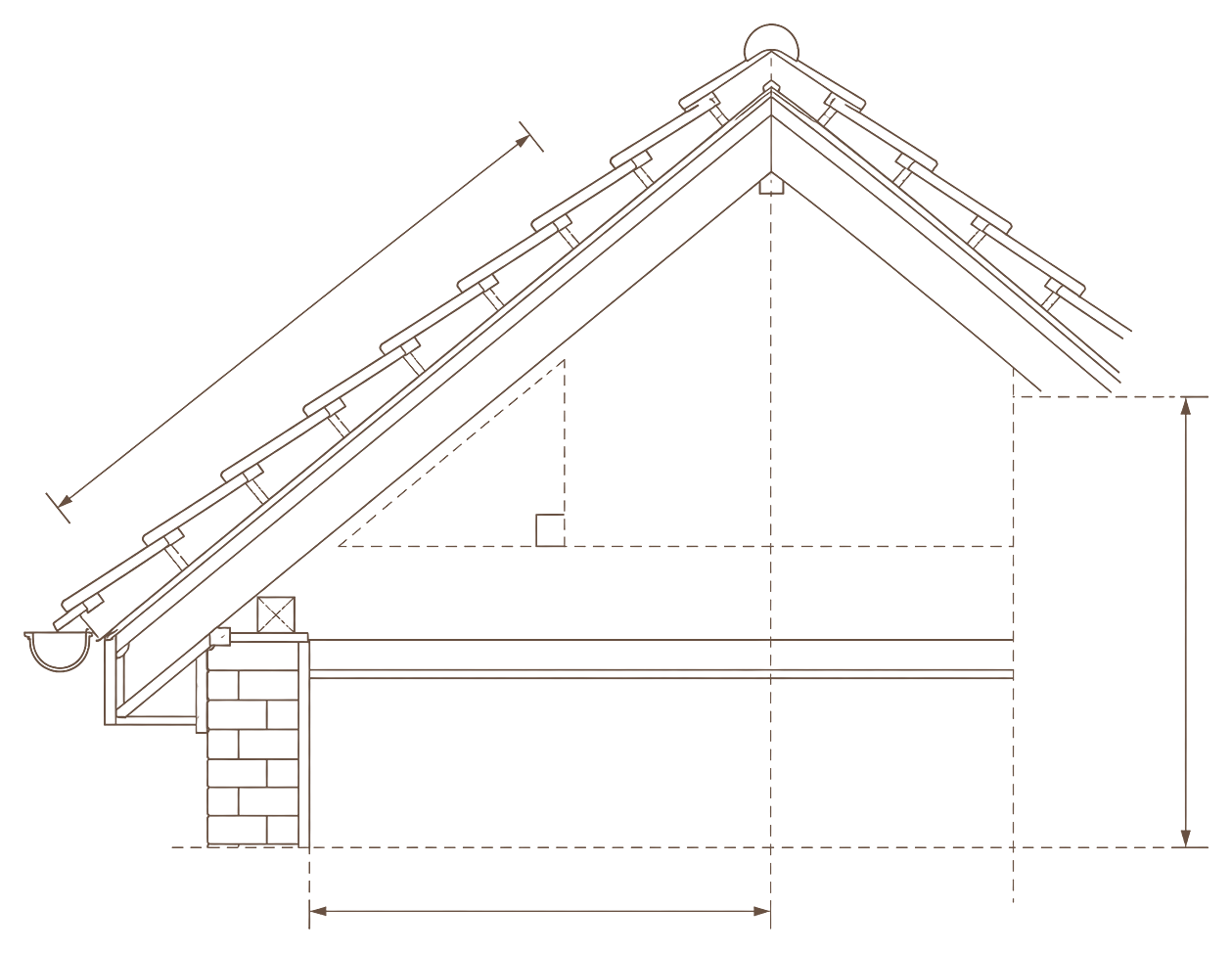
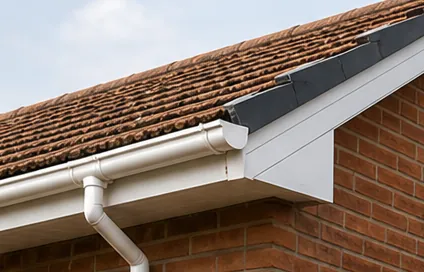
- Repair or replace,
said plainly - Photos of
your own roof - Written quote,
one total price - Ridges and verges
fixed to BS 5534
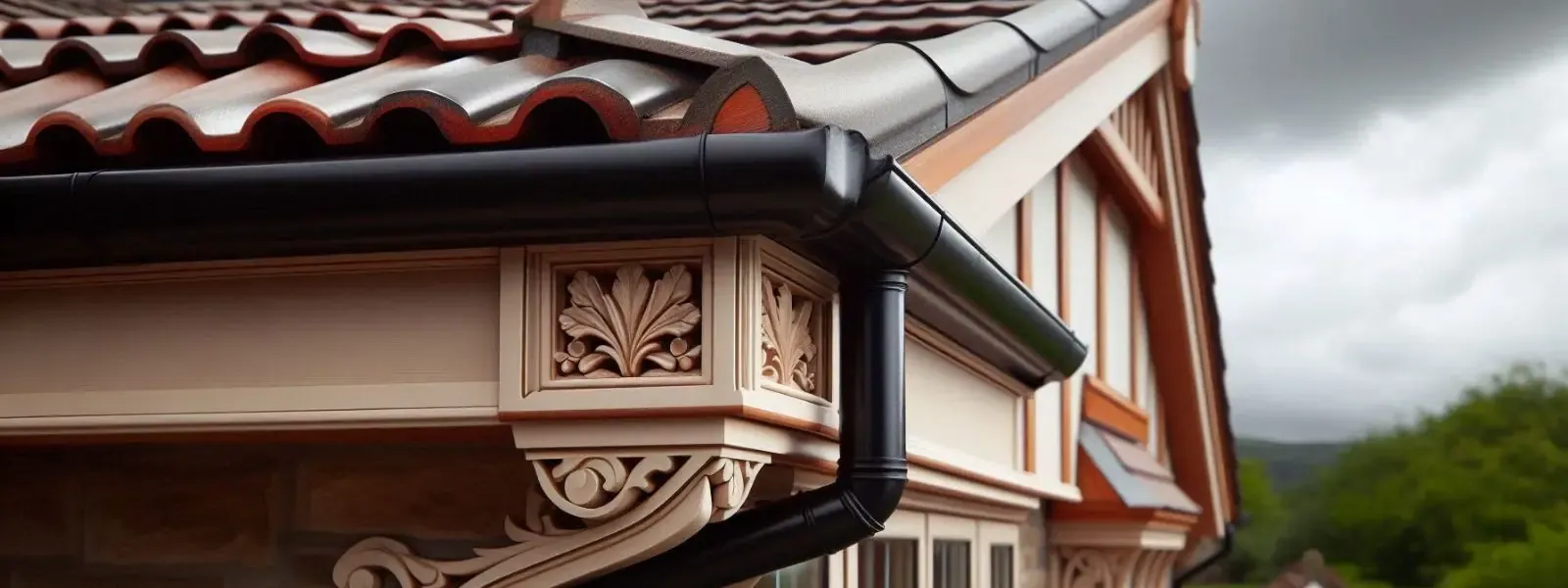
Signs
Signs the roofline on your Bognor Regis home needs attention
- Water pouring over the gutter lip in rain
- Green staining or damp patches below the gutter
- Gutter sagging or pulling away from the fascia
- Fascia board soft, flaking or split
- Gaps or holes in the soffit boards
Roofline work we carry out
Gutter, fascia and soffit jobs we take on around Bognor Regis
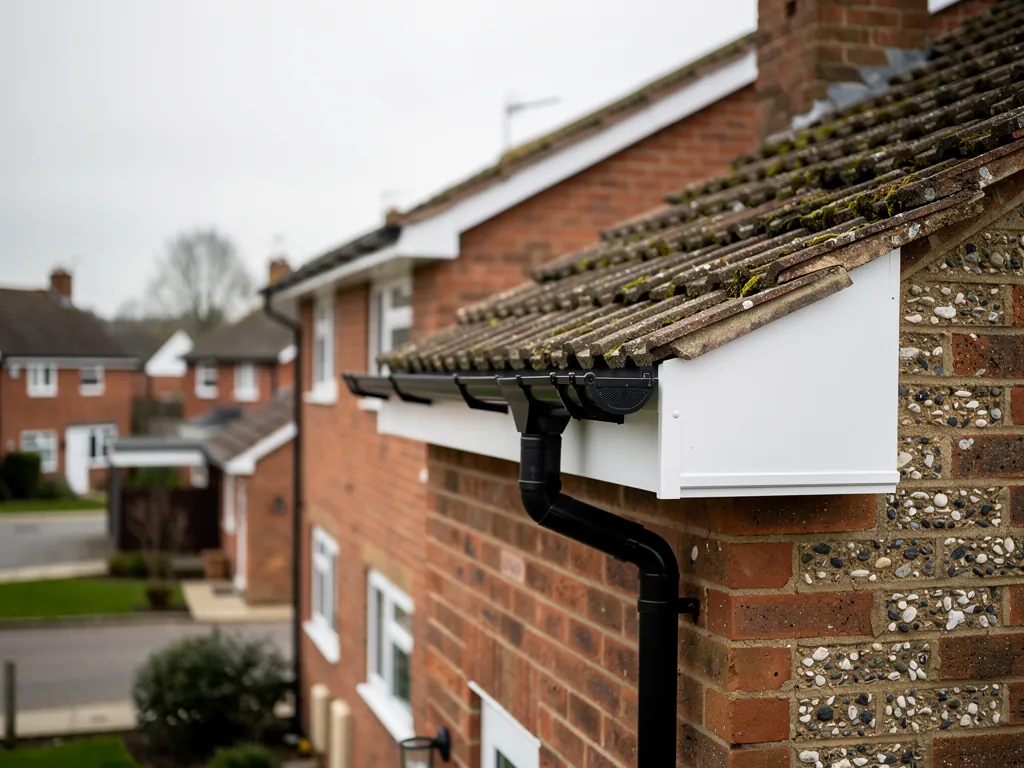
Gutter replacement
We fit a new guttering system along the full run, with brackets spaced correctly, a steady fall to each outlet and joints that seal and stay sealed.
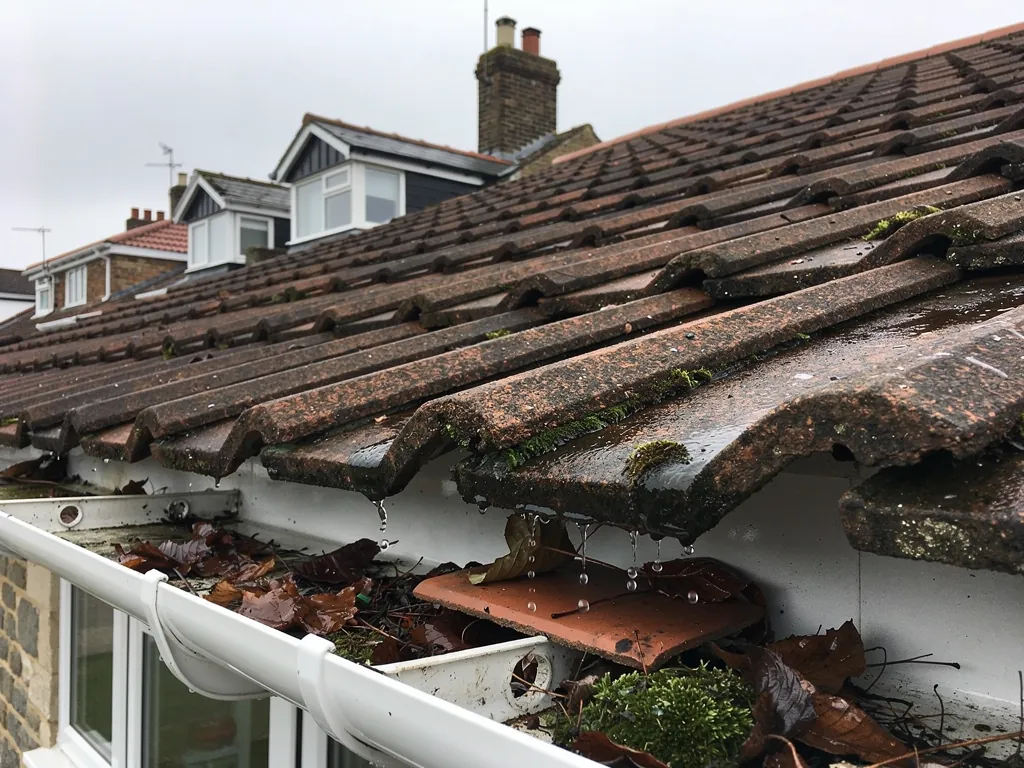
Gutter repairs
A leaking joint, a cracked length or a loose bracket often needs a small repair, not a new run. We fix what has failed and say if more is coming.
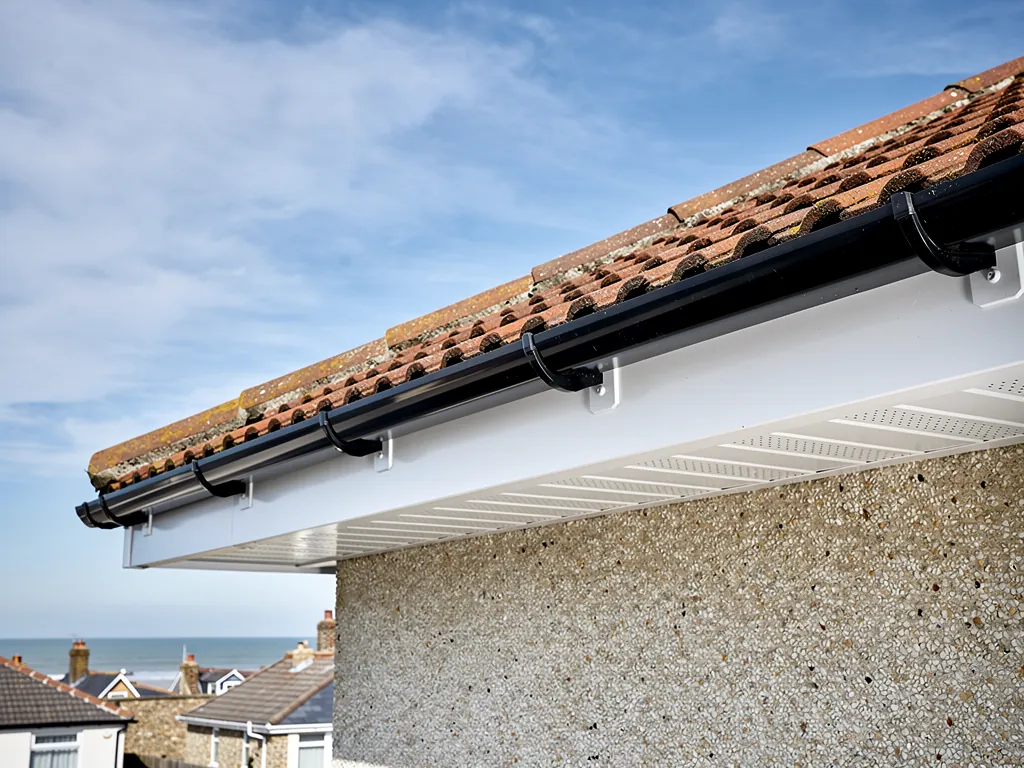
Fascia boards
Along the foot of the roof, the fascia board carries the gutter. We replace rotten timber with new boards, or cap boards that are still sound.
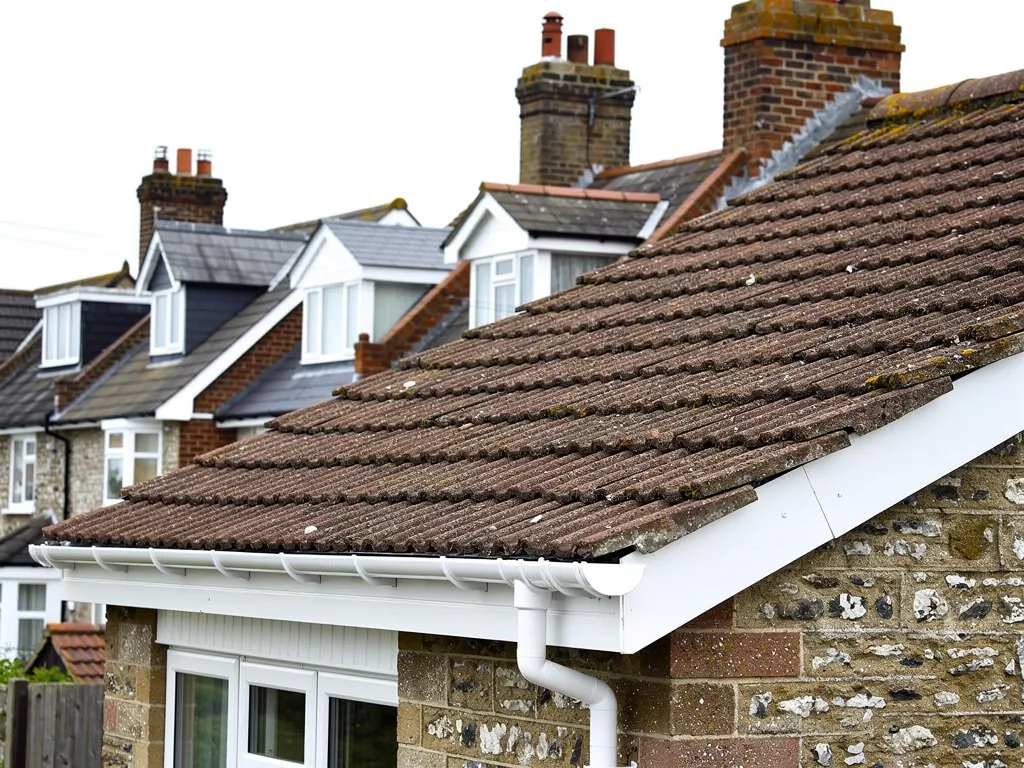
Soffits
A soffit is the board under the roof overhang, closing the gap between fascia and wall. We renew damaged soffits and fit vented ones so the loft keeps breathing.
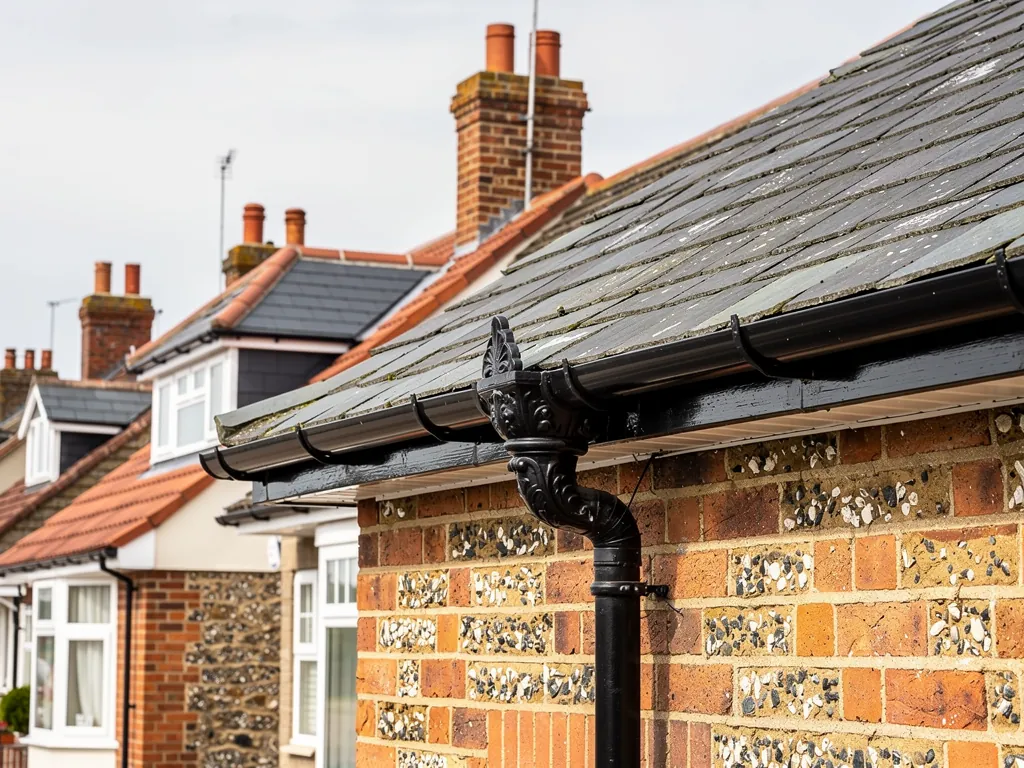
Downpipes and outlets
We clear, realign or replace downpipes and gutter outlets, and check each one discharges to a gully or drain instead of down the face of the wall.
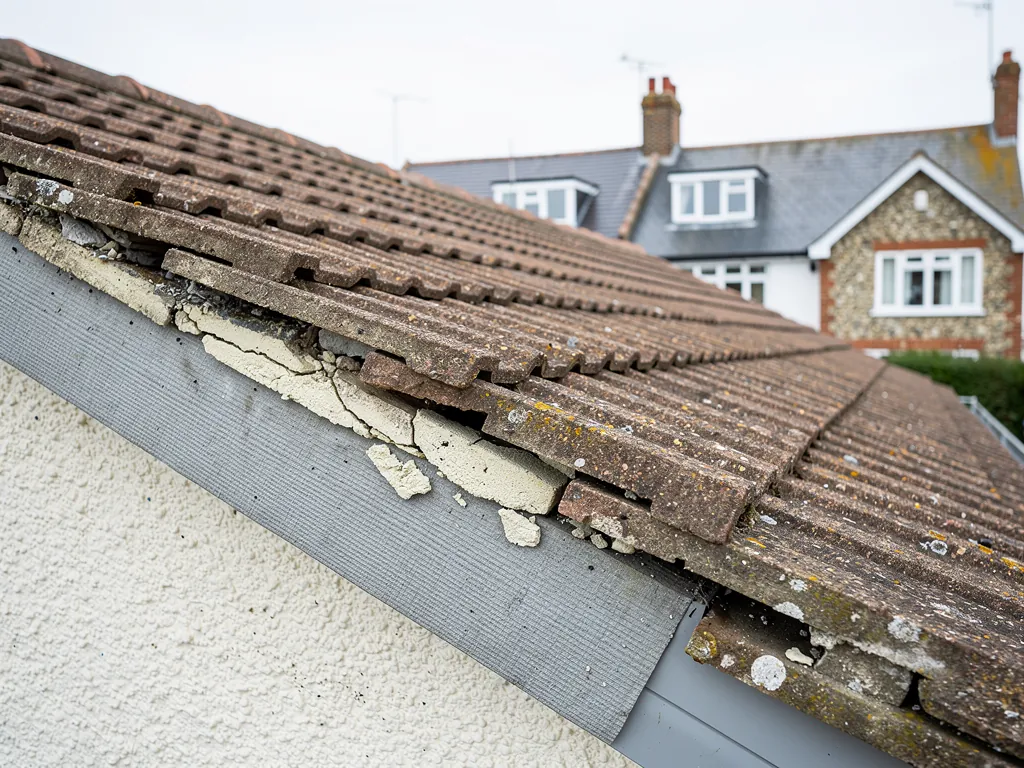
Bargeboards and gable trims
A bargeboard is the board that follows the sloping edge of a gable. We renew or cover bargeboards so the whole roofline matches along every side of the house.
What it costs
What guttering, soffits and fascias cost in Bognor Regis
£500 to £2,000
JJ Roofing's published guide range for guttering, soffit and fascia replacement
A short bungalow run reached from ladders sits towards the bottom; a full roofline on a tall terrace, with scaffold along both elevations, sits nearer the top.
From first message to a clear site: how a roofline job runs
- 1Send us the house and faultRing 01243 252373, send a WhatsApp photo of the sagging gutter or soft board, and say how many storeys the house has.
- 2We inspect the whole rooflineWe check gutters, fascias, soffits and downpipes from a ladder or scaffold, and photograph each fault along with the damp or rot it has caused.
- 3Our verdict, then your priceYou hear whether to refix, repair or replace, with photographs, and the written quote follows with one total price and no obligation to go ahead.
- 4Fitting, testing and clear-upWe strip the old roofline, fit the new boards and guttering, test the flow with water, and leave the site clear with the waste taken away.
Gutters, fascias and soffits, in depth
How a roofline is replaced and kept dry on the Sussex coast
Replacement, materials, boards and ventilation, fitting a gutter with the right fall, cleaning, and what it all costs, in six chapters.
Chapter 1: Gutter, fascia and soffit replacement in Bognor Regis3233
Sheet 01 / 06Replacement makes sense when boards are soft, joints keep failing or the gutter cannot hold a fall; a repair covers everything short of that.
Your roofline is the strip where the roof meets the walls, and four parts do the work there. The gutter catches rain from the slope, the downpipe carries it to the drain, the fascia is the board the gutter screws to, and the soffit is the board under the overhang that closes the gap between the fascia and the wall. When one fails, the others follow. A gutter that overflows soaks the fascia, a wet fascia rots and lets go of the gutter, and a soffit that drops opens the loft to weather, wind and nesting birds. Most replacement work in Bognor Regis comes down to how much of that chain has already gone. A homeowner can usually spot the early signs from the garden: a stain below the gutter, a board with flaking paint, a downpipe that no longer carries water. Roofline work covers fascia, soffit, guttering and downpipes together, and the quickest way to a reliable result is to look at all of them in one survey.
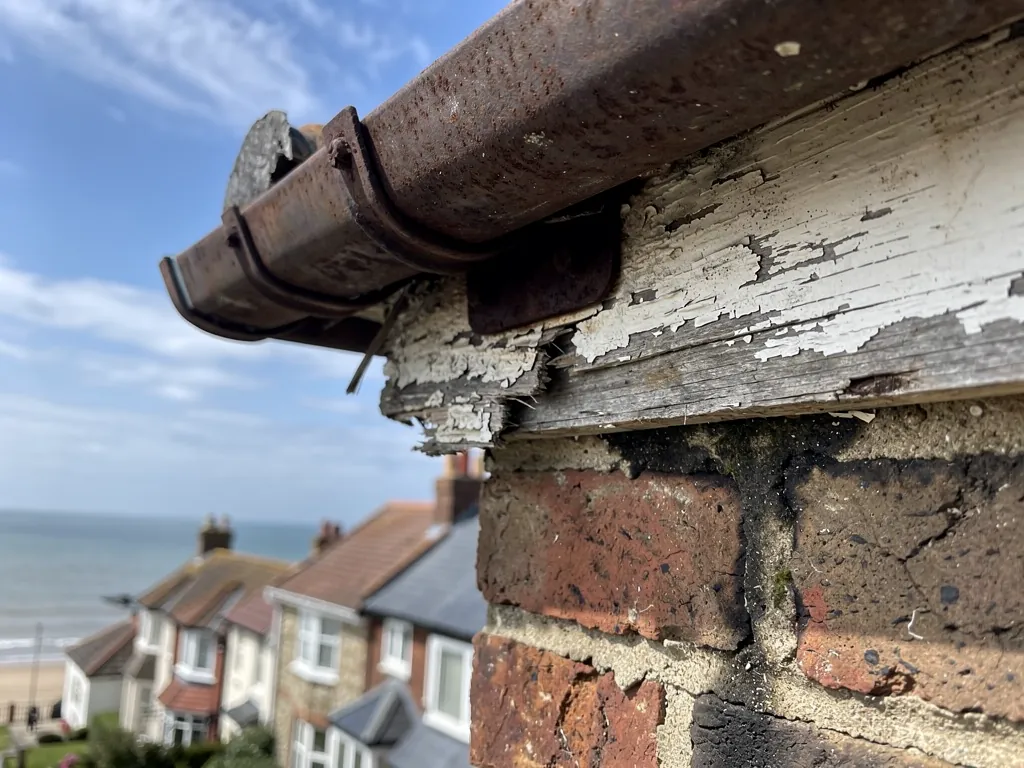
Refix, repair or replace the roofline
- RefixSound boards with a loose bracket or joint: tighten, reseal and realign the run.
- RepairOne failed length, outlet or short section of board, with the rest still sound.
- ReplaceSoft boards, a gutter that holds water, or joints failing all along the run.
£85
per linear metre to cap old fascias in uPVC, Checkatrade September 2026
Soft boards and failing joints along the whole run are what turn a repair into a replacement.
1.1 When a repair is enough
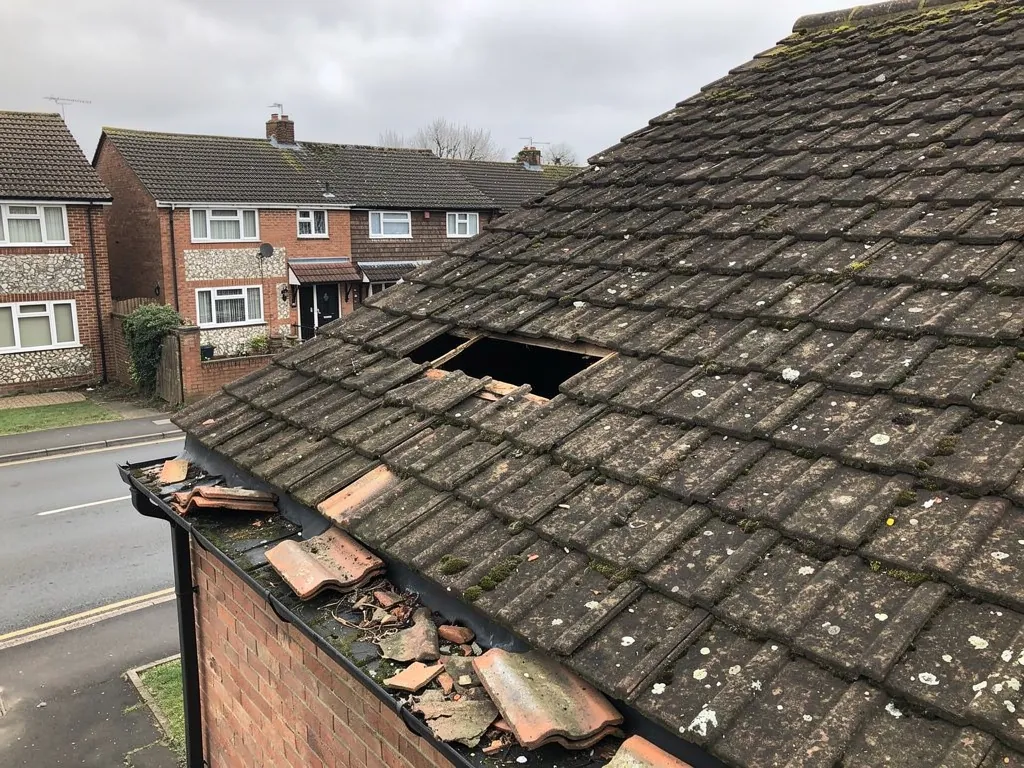
Plenty of faults are local. One leaking joint, a cracked length, a bracket that has pulled out of sound timber or a downpipe knocked out of line can be put right in a single visit, and a repair is the right call. Where a small job will hold, that is the job we recommend, and we photograph the fault before and after so you can see the difference. Refixing and resealing a gutter works while the fascia behind it is solid. An experienced roofer will press a screwdriver into the board: if the tip goes in easily, the screws are holding nothing and a repair will not last.
1.2 When replacement is the better spend
Replacement comes up when faults are spread along the run rather than sitting in one place. The warning signs are boards that are soft, split or flaking along most of their length, a gutter that has lost its fall and holds standing water, joints failing in several places, and soffits that are stained, sagging or holed. Old systems also fail at the fixings, where brackets were spaced too wide or screwed into rotten wood. Checkatrade says no hard and fast rule sets when fascias and soffits need replacing, while a retailer's guide from Plastic Centre puts uPVC boards at 20 to 40 years. The real life of yours depends on the material, the exposure and how well it has been looked after. Patching a roofline in the last years of its life tends to cost more than doing the job once.
Replacing in one go also tidies the finish. New boards, a matching gutter and trims fitted true to the wall line look right from the street, and you pay for access only once. Where the roof edge can be reached only from a scaffold, that is a real saving. Our page on replacing soffits and fascias takes the job through board by board.
Many homes along the seafront in Bognor stand two or three storeys high, so the fascia and gutter sit well out of ladder reach. Arun's conservation guidance describes The Steyne as an area of modest terraces, with two and three storey houses, bay windows and balconies. Work on those is a scaffold job from the start, and it makes sense to deal with a whole elevation at once rather than one bay at a time. Bungalows in Aldwick, Felpham and Pagham, by contrast, can often be reached from ladders or a low tower, which keeps the access cost down.
Chapter 2: Guttering materials: uPVC, aluminium and cast iron3050
Sheet 02 / 06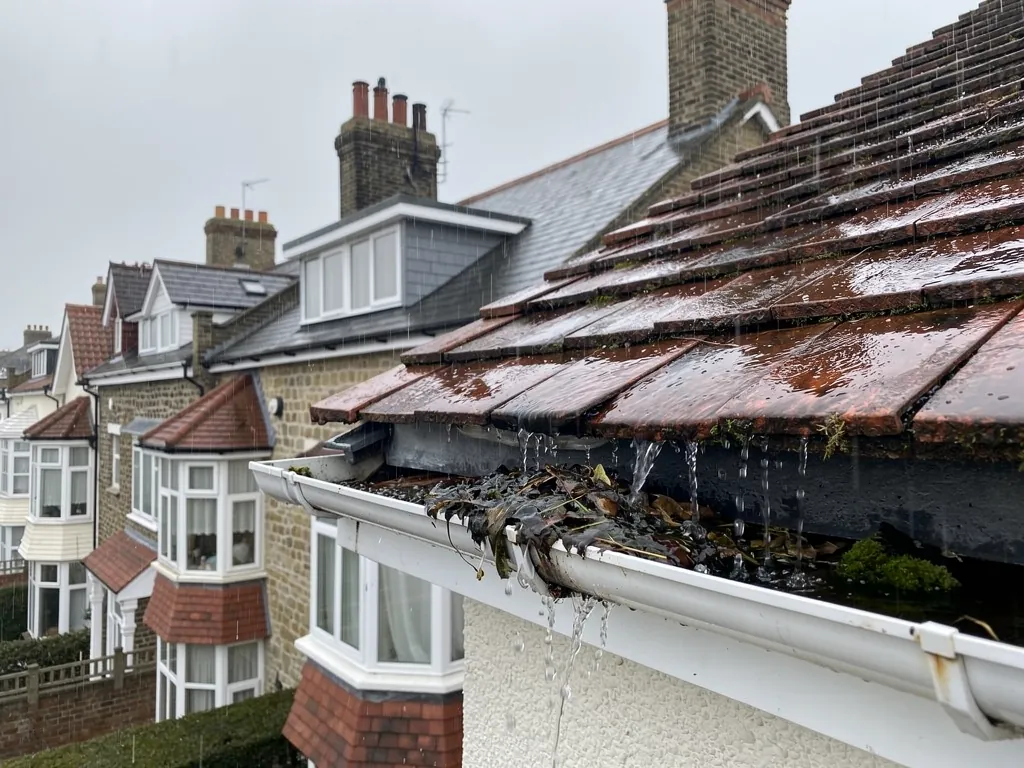
The material sets how long a gutter lasts, how it looks on the street and how it is repaired, so settle it before the profile.
Most houses in the area carry uPVC guttering, the plastic system stocked by every merchant, and for good reason. It is light, it does not rust, it is quick to fit and it comes in black, white, brown and grey. A uPVC guttering system is built from lengths of gutter, stop ends, angles, outlets and unions, held on brackets, with a rubber seal at each joint. The seals are the first thing to tire. When a joint starts to drip, it is usually a seal or a bracket that has let the gutter shift, not the plastic itself.
uPVC
Light, rust-free and quick to fit; the rubber seals at each joint are what tire first.
Cast iron
Heavy and long-lived when painted; often the right match on older and listed houses.
2.1 Half-round, square and deep profiles
Profile is the shape of the channel. Half-round is the classic curve and suits most homes. Square-section gutter has a flat bottom and straight sides and sits neatly against modern fascias. Deep-flow or high-capacity profiles carry more water and suit big roof areas, such as a wide hipped bungalow roof or a long extension, where a standard channel can overflow in heavy rain. We choose the profile from the roof area draining into it and the number of downpipes available, not from catalogue habit.
2.2 Cast iron and aluminium
Cast iron is heavy and long-lived when it is painted and looked after, and it is often the right material on older houses, including listed buildings and conservation area terraces, where changing it would change the look of the building. Its drawbacks are weight, rust at the joints and cracking if a bracket loosens or water freezes in a blocked section. Repairs usually mean new bolts, resealed joints or a broken length replaced with a matching section. Aluminium sits between the two: light, rust-free and available in several colours and profiles, though it dents more easily than iron and costs more than plastic. Heavily rusted cast iron is the case where we say plainly that replacement beats another coat of paint. Our comparison of uPVC and cast iron guttering sets the options side by side.
Colour and finish matter more than people expect. White boards with black gutters are a common pairing, but the best choice is the one that suits the brickwork, the windows and the rest of the street, so ask to see a sample against the wall. Whichever material you pick, ask for the manufacturer and product name to be written on the quote. That way you know what is going on the house and can check it is a high quality system rather than a basic stock line.
Chapter 3: Fascia boards, soffits and capping2074
Sheet 03 / 06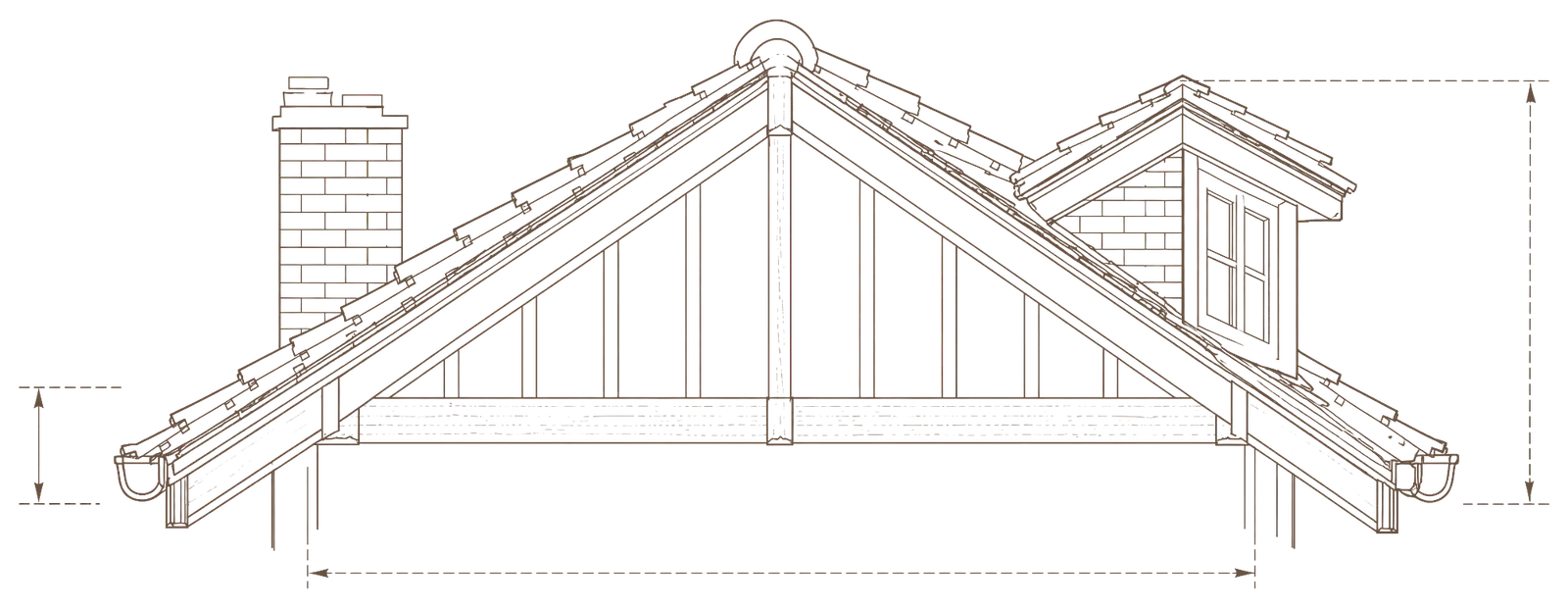
- Fascia Carries the bracket screws, so it must be sound timber or solid board.
- Soffit Closes the eaves gap between the fascia and the wall.
- Gutter bracket Spaced at the maker's limit, commonly no more than 900 mm.
- Eaves vent A vented soffit lets air into the loft above the insulation.
- Outlet Where gutter meets downpipe; a blocked outlet backs water up.
Fascia and soffit boards hold the gutter up and keep the weather out of the eaves; timber, uPVC and capped boards each age differently.
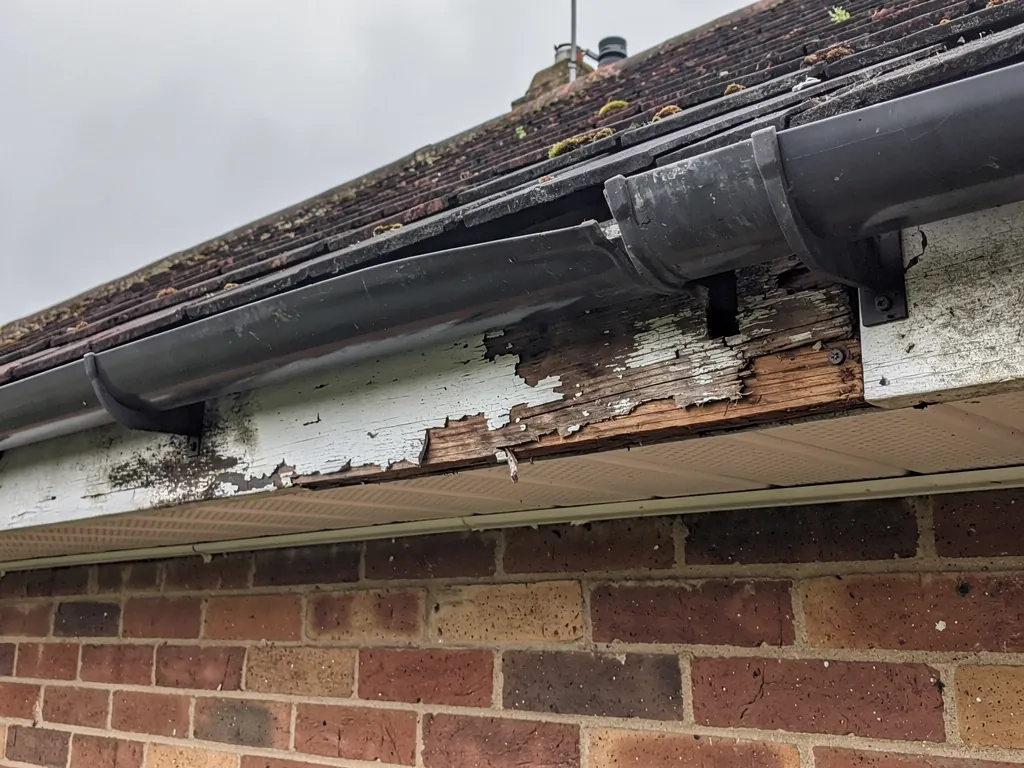
Running along the foot of the roof is the fascia, which is the timber or plastic face that the gutter hangs from. Under the overhang sits the soffit, which closes the gap up to the wall. On a gable end, the bargeboard follows the sloping edge of the roof, and together these boards make up what the trade calls the roofline. For a long time the usual material was painted softwood, and a great many older homes still have it. Timber rots when the paint fails and the gutter above it leaks, and rot typically starts at the joints and the board ends, where water sits.
What we check along the roofline
- Boards that still hold a screw
- Soffit gaps and ventilation
- Joints and board ends
- Signs of nests or roosts
- Possible asbestos in old soffits
3.1 Timber, uPVC and capping
Replacement boards today are usually hollow uPVC, in white, black, grey or a woodgrain foil, because they need washing rather than repainting. Timber still has a place on period houses where the profile matters, and well-painted softwood or primed hardwood can last if it is kept sealed. A third route is capping: new boards or cladding fitted over existing timber that is still sound. It costs less than a full strip-out, but it only works when the wood underneath is dry and solid, and capping over rot simply hides the problem. We press the boards at the survey and the photographs show which route applies.
3.2 Soffit ventilation
Soffits do a second job that is easy to miss: they let air into the loft. Marley's guidance, drawing on BS 5250, the code of practice for managing moisture in buildings, asks for a 10 mm gap running the length of the eaves where the pitch is above 15 degrees and a high-resistance underlay is used, and 25 mm at 15 degrees or less. A solid soffit that blocks that path can leave a loft damp and the underside of the felt wet. A vented soffit board, or a vent strip fitted into a replacement, puts the air back, and loft insulation should be kept clear of the eaves so it can pass. Our page on soffit vents explains the options.
Two cautions apply before any old soffit comes down. HSE guidance says to assume asbestos is there in any building built or refurbished before 2000, and it names external soffits among the places insulating board turned up. That board is hard to tell from modern board by eye, so a suspect soffit is tested before anyone touches it, and most insulating board removal is licensed work for a specialist. Second, bats and nesting birds use eaves and soffit gaps. Both are protected, so boards stay on until we have checked for signs of use.
Capping over rot hides the problem; it does not cure it.
Chapter 4: Fitting a guttering system with the right fall2806
Sheet 04 / 06Guttering installation is a small job done to a few exact numbers. Water leaves a gutter only if it runs downhill to an outlet, so the channel is laid with a slight fall. Manufacturers set it, not a British Standard: Brett Martin gives 1 mm for every 600 mm, and FloPlast gives 1:350 for its MiniFlo system, so the working figure is roughly 1:600 to 1:350 depending on the system. That is almost invisible by eye, and when we install a new run the string line is our check on it. It is why is why a gutter fitted without a string line so often ends up holding a puddle. Brackets matter just as much. Brett Martin says to fix supports no more than 900 mm apart, so the channel cannot sag between them once it fills with water.
A gutter that looks level can still hold water; fall, bracket spacing and outlet position decide whether it drains.
1 mm per 600 mm
gutter fall in Brett Martin's fitting guidance
4.1 Outlets, downpipes and where the water goes
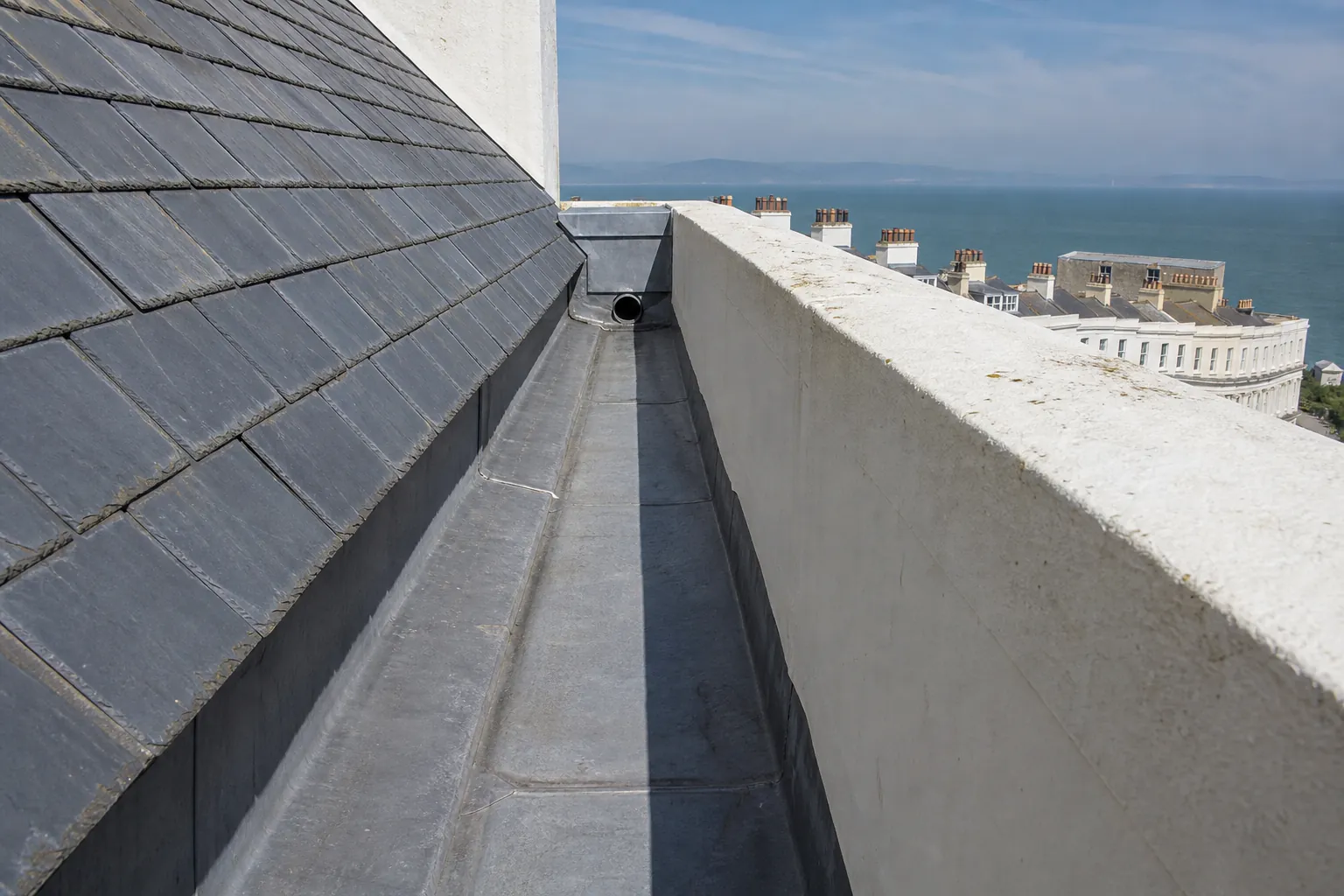
The outlet is the opening where the gutter drops into the downpipe. Every run needs at least one, and a long run or a large roof area may need more, or one placed part-way along instead of at the end. Downpipes should discharge to a gully or drain, not onto a path or against the wall, and the sections need fixing so they cannot pull apart. The most common point of failure is the foot of the pipe, which gets knocked or blocked. On a chalet bungalow, the dormer cheeks and the lower roof both shed water, so we trace where each stream ends up before deciding where the outlets go. Our short guide to gutter fall shows how the slope is set out.
4.2 Where the gutter sits against the roof edge
The gutter must sit so that water running off the bottom course of tiles lands in the channel. Set too high, the water runs behind it and soaks the board; set too low, it overshoots in a downpour. We check that the underlay and edge trims guide water into the channel instead of down behind the fascia, since that detail is the cause of a fair number of rotten boards. On a flat-roofed extension or garage, the edge trim does the same job, and it needs to push water over the front of the gutter rather than under it.
A good installation ends with a water test. We run a hose into the highest point of each run and watch the flow travel to the outlet, looking for drips at the joints and standing water along the way. Any drip is cured before the scaffold comes down, which is far easier than finding it later. It is also the moment we check every fixing has gone into sound timber and that the finish looks neat from the street, because workmanship shows at the joints and corners.
Order of work on one gutter run
- 1StripRemove the old gutter, brackets and downpipes, then examine the board behind them.
- 2BoardRenew or cap the fascia so every bracket bites into sound material.
- 3Set the fallFix the highest bracket first and string a line down towards the outlet.
- 4Water testRun a hose into the gutter and watch each joint and the foot of every downpipe.
Chapter 5: Cleaning and maintenance to prevent damp2440
Sheet 05 / 06Most gutter trouble starts with a blocked outlet; keeping the channel clear costs less than repairing the wall, board and ceiling it floods.
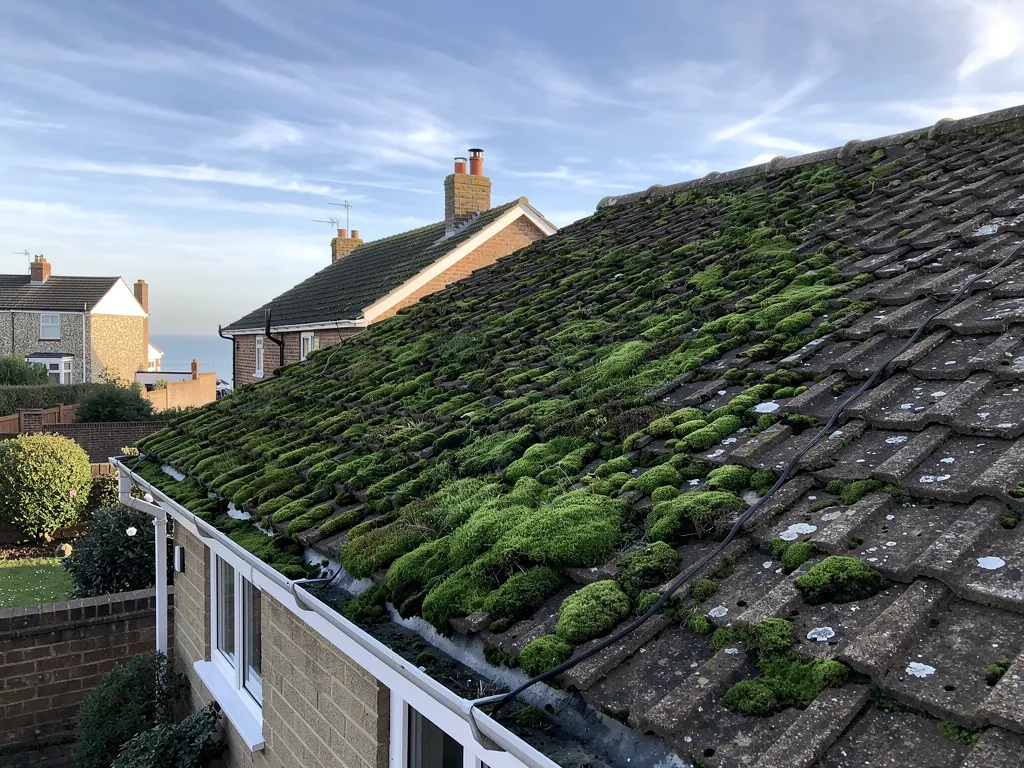
Gutters are the part of a house that gets ignored until it fails. Leaves, moss washed down from the tiles, roof grit and the odd football collect in the channel and settle at the outlet, and then every downpour sends the overflow over the front edge. Water that spills down a wall soaks the brick or render, can stain it green, and in time reaches the inside as damp. The same overflow soaks the fascia and soffit, which is how a blocked gutter turns into a rotten board. Preventing that water damage is the main reason to keep a guttering system maintained.
Check after the next downpour
Stand outside in heavy rain and watch the gutter edge, each outlet and the foot of every downpipe; trouble shows within minutes.

5.1 How often to clear them
There is no single date. Houses under trees or with mossy roofs need more attention than those in the open, and a check is worth making after a gale or a leafy autumn. Watch from the ground in heavy rain: water pouring over the lip, a downpipe that stays dry, or a gutter with plants growing in it all point to a blockage. Cleaning means taking the debris out by hand or with a suitable vacuum system, flushing the channel and checking that water runs freely to the outlet. Our guide to gutter cleaning covers methods and timing. We work from proper access, whether that is a tied-off ladder, a tower or a scaffold, and if your gutters are beyond ladder reach, ask for the access to be included in the price.
5.2 Moss, roof grit and the roof above
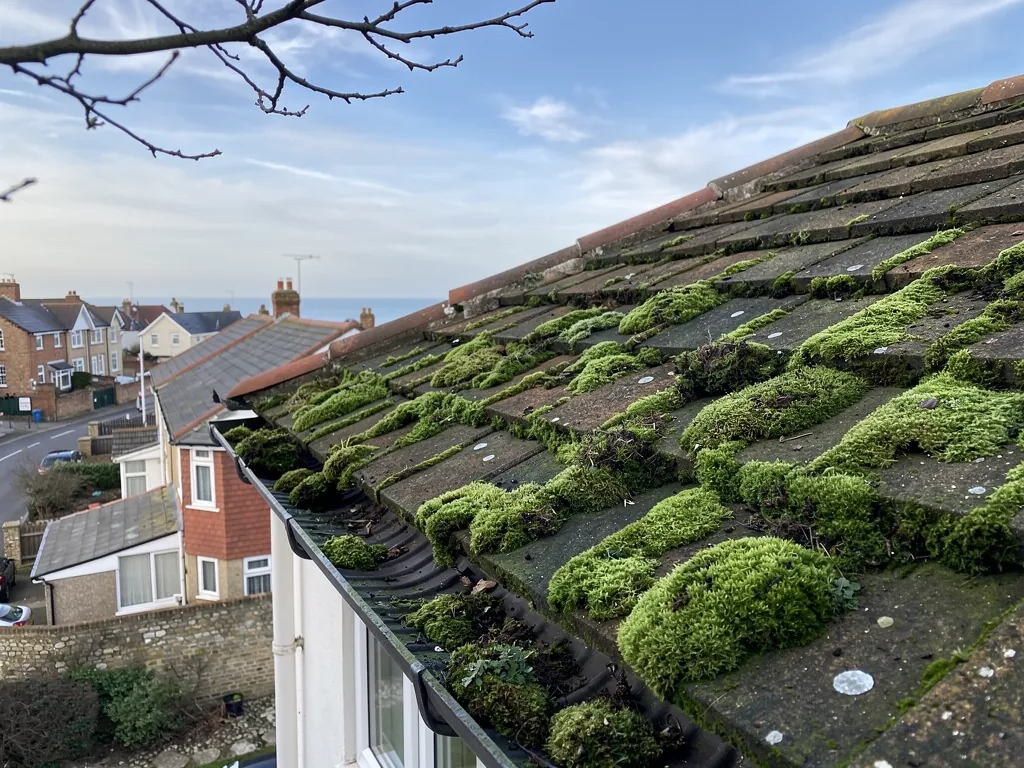
Gutters are often blocked by what the roof above is shedding. Old concrete tiles lose grit, shaded slopes shed moss, and bitumen felt can break up at the edge. Clearing the gutter without looking at the roof only restores the problem for a season. When we clear a run we also look up at the tiles and the edge detail, and if the roof is the source, our roof cleaning and moss removal page explains the next step. Gutter guards can cut the leaf load, but they need cleaning too and have to match the gutter profile.
Sea weather adds its own load. Driving rain along the front fills a gutter quickly, and gales blow debris and nesting material into it. Birds nest in gutter ends and soffit gaps, and an active nest is protected, so if one is in use we leave it alone and return once the birds have gone. If damp shows on a ceiling or a wall below a gutter, look at the gutter before you suspect the roof; it ranks high on our list of checks, and the fix is often a clean and a refix rather than anything larger.
A blocked outlet today becomes a stained wall and a rotten board later.
Chapter 6: Guttering costs, scaffolding and permission2623
Sheet 06 / 06around £150 per metre
typical fascia and soffit rate, Checkatrade September 2026
Roofline prices turn on access, material and how much timber has rotted, which only a survey can settle.
JJ Roofing's published guide range for guttering, soffit and fascia replacement is £500 to £2,000. A short run on a bungalow, reached from ladders, falls at the lower end; a full roofline on a two-storey house with scaffold at the front and back sits higher. National guides price by length. Checkatrade's guide puts fascias and soffits at around £150 per linear metre, in a table updated September 2026, and its repair guide gives roofers' rates as around £280 to £360 per day, so even a modest job takes time along a long roofline.
Typical national scaffold hire, by type of house
- Terracearound £800 a month
- Two-storey semi-detachedaround £875 a month
- Detached bungalowaround £1,000 a month
- Detached housearound £1,200 a month
Scaffold hire is one part of a roofline job; the figure for your house comes as one written total after the survey.
Source: Checkatrade scaffolding cost guide, table last updated October 2026
6.1 What decides the price
Access leads, followed by the length of roofline and then the material. After that come the number of corners, outlets and downpipes, the condition of the timber behind and any extra work such as bargeboards, a dormer or a porch. Once the old boards come off, rafter ends behind them may turn out to be rotten, and that can only be seen at the strip-out; we say at the survey if we expect it. Whoever quotes, ask if the figure includes VAT at the standard 20 per cent and whether scaffolding is in it. Because one scaffold serves the soffit and guttering as well as the fascia, doing them together saves paying for access twice. Our guide to guttering costs works through typical jobs.
6.2 Scaffolding and highway licences
Checkatrade's scaffolding table, last updated October 2026, shows monthly hire at around £800 for a terrace, £875 for a typical semi, £1,000 for a detached bungalow and £1,200 for a detached house. Poles and boards that take up part of the public footway or carriageway call for a permit from the county's highways team, and your roofer can tell you who makes that application. West Sussex County Council asks for at least 10 working days' notice and charges £266 for one month. That notice period is one reason a scaffold job cannot always start at once, and it is why a ladder-only job avoids the wait where the roof allows it.
Like-for-like replacement of gutters and boards is rarely a planning matter, since the appearance of the building stays the same. Listed buildings are different: any work that changes a listed building's character needs listed building consent. Bognor has several conservation areas, among them The Steyne and Waterloo Square (August 1979, extended July 1994) and Aldwick Road (July 1994), where materials deserve care. Should your house be listed, or a change of material be planned, ask Arun District Council's planning team before ordering anything. If a failed gutter has let water into the house, tell your insurer first, take photographs of the damage and hold on to receipts for temporary repairs; Which? notes that wear and tear is generally not covered.
Price guide
Typical UK roofline prices
| Job | Typical range |
|---|---|
| Guttering, soffit and fascia replacement | £500 to £2,000 |
| Roofer's rate | £280 to £360 per day |
| Scaffold hire per month, terrace to detached house | £800 to £1,200 |
Figures are national guides apart from JJ Roofing's own range. We price your roofline only after surveying it, and the written quote carries one total with VAT stated.
Source: JJ Roofing's published guide range; Checkatrade roof repair guide, table last updated June 2026; Checkatrade scaffolding cost guide, table last updated October 2026
Guides and answers
Gutter, fascia and soffit guides and answers
Quick reads on gutter costs, materials, falls, vents and cleaning, written for rooflines in and around Bognor Regis.
 How much does it cost to get guttering done?9 min read
 How much should soffits and fascias cost?9 min read
 Is it worth replacing soffits and fascias?9 min read
 uPVC, cast iron or aluminium gutters: which to choose9 min read
 Gutter cleaning: how often, how it is done and what it costs9 min read
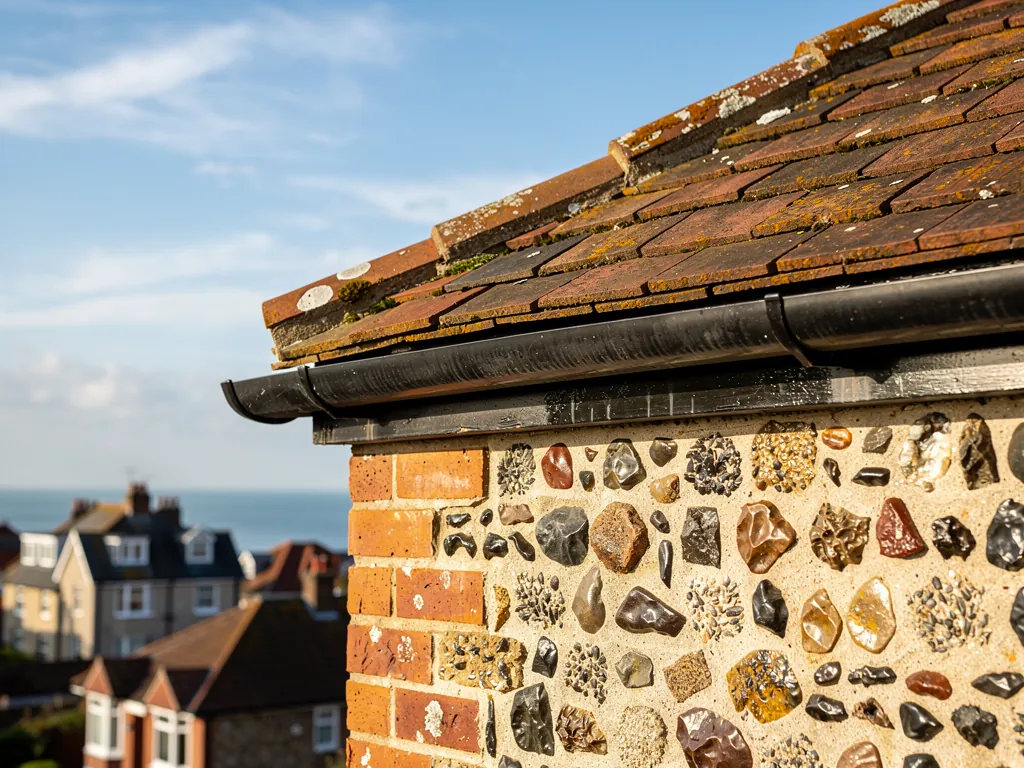 Replacing soffits, fascias and gutters on a four-bed house9 min read
 Cast iron gutters on period and listed homes9 min read
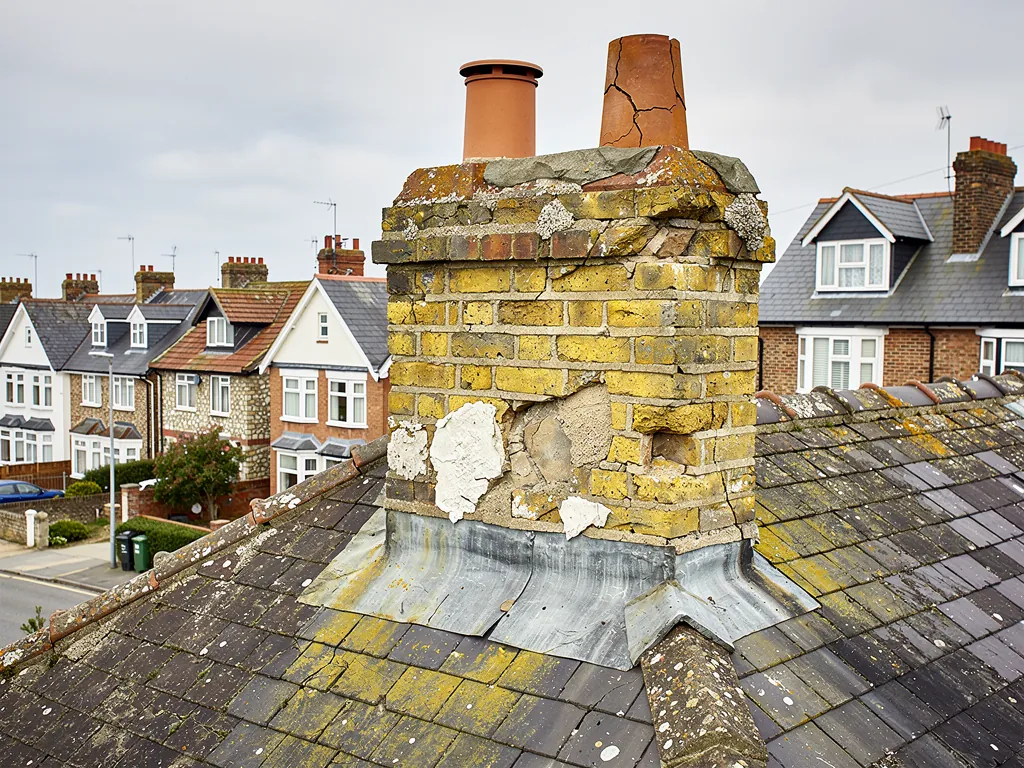 Leaking gutter joints and sagging runs: repairs explained9 min read
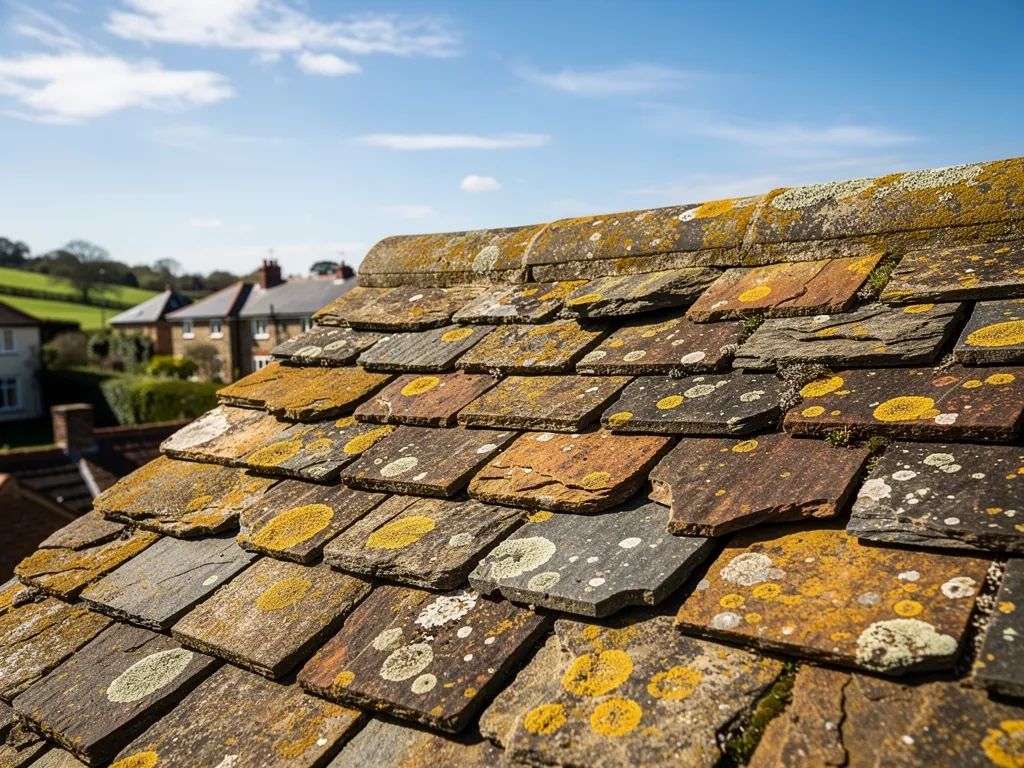 Rotten fascia boards: repair, cap or replace?9 min read
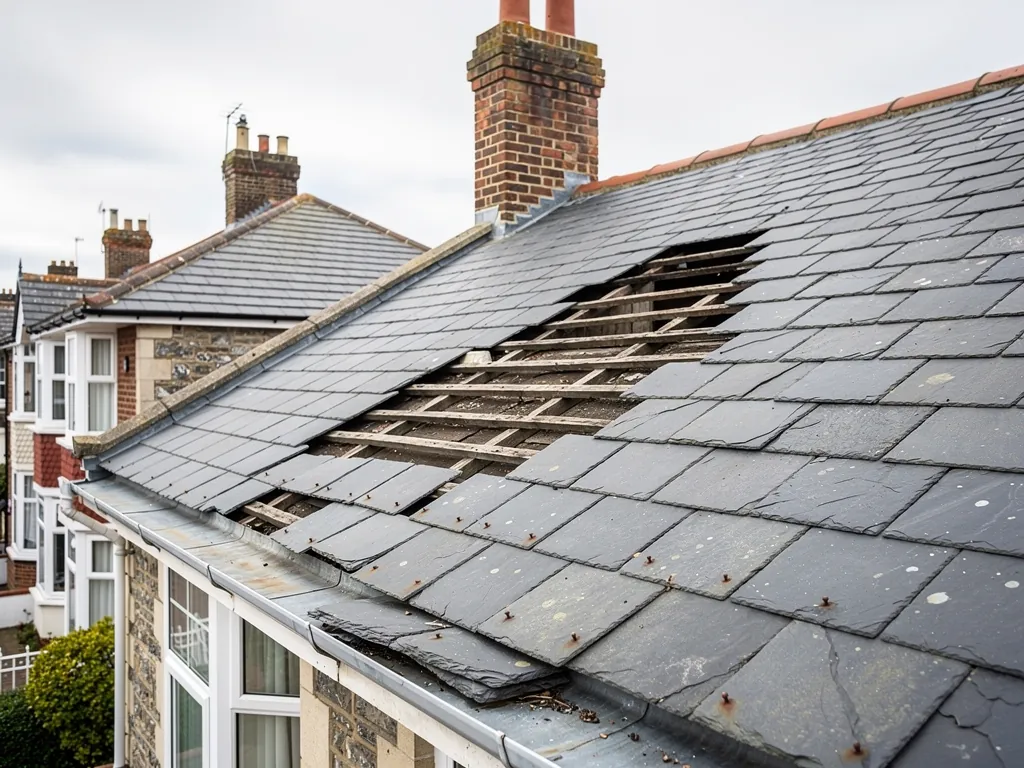 Downpipes, hoppers and where roof water goes10 min read
 Gutter guards and leaf mesh: do they work?9 min read
 Gutters in autumn and winter: leaves, overflow and ice9 min read
Quick answers
- Should you replace 20-year-old gutters?
- What is the going rate to clean gutters and fascias?
- Are seamless gutters worth it in the UK?
- How long do uPVC gutters last?
- Do you need planning permission for new guttering?
- Does home insurance cover gutter damage?
- How often should gutters be cleaned?
- Why is my gutter overflowing?
- Can a blocked gutter cause damp?
- What is fascia capping, and is it a good idea?
- Do soffits need vents?
- Why is my gutter sagging?
- What fall should a gutter have?
- How do you unblock a downpipe?
- Half-round, square or ogee gutters: which is best?
- Black, white or wood-effect fascias: does colour matter?
- How far apart should gutter brackets be?
- Why is my soffit board coming loose?
- Can gutters be cleaned from the ground?
- Why is rain staining the wall below my gutter?
Questions
Gutter, fascia and soffit questions, answered
How much should soffits and fascias cost on a four-bed detached house?
It depends on the length of roofline, the number of storeys and whether scaffolding is needed, and a large detached house usually needs it. JJ Roofing's published guide range for guttering, soffit and fascia replacement is £500 to £2,000, and Checkatrade's national guide gives around £150 per linear metre. Ask any roofer whether their quote includes VAT and scaffold. Ours is one written total, sent after the survey.
Should I replace 20-year-old gutters?
Age alone does not decide it. Look at the system: joints that drip, brackets that have pulled loose, a sag between supports, brittle or cracked plastic and a soft fascia behind all point to replacement. If the gutter is sound and the board is solid, a refix and a clean may be all it needs. Where the gutter is failing and the fascia is old as well, doing both in one visit saves paying for access twice.
Is it worth replacing a soffit and fascia?
It is worth it when the boards are soft, holed or no longer hold a screw, because rot at the eaves spreads to the rafter ends and lets in water, wind and nesting birds. If the boards are only dirty or faded, a clean may be enough, and sound timber can sometimes be capped. We press the boards at the survey and photograph what we find, so the decision rests on the condition of your boards.
Can my neighbour's guttering overhang my property?
That is a boundary matter rather than a roofing one, and we cannot give legal advice on it. In practice a gutter that oversails a boundary is best settled by a conversation and a fix on the roof edge, instead of taking it down yourself, which risks damaging their property. We can tell you whether a gutter can be refitted to stay on its own side, and a solicitor can advise on rights.
What is the going rate to clean gutters and fascias?
Cleaning is priced on access and length. A ground-floor bungalow gutter reached from a ladder is a short job, while a three-storey terrace needing a tower or scaffold takes longer. Checkatrade gives roofers' rates as around £280 to £360 per day. The price for your house is fixed in the written quote after we have seen how high the gutters are and how much has built up.
How long does fitting new guttering take in Bognor Regis?
The time follows the length of roofline, the number of storeys and the weather. A short bungalow run is quick, while a full roofline on a tall terrace takes longer because the scaffold goes up first and the boards are replaced before the gutter. We do not fit in a gale. We tell you at the survey how long we expect the job to take, and what would change that.
Get a quote
Send us photos of the roofline
Send photos of the gutter, the fascia and any staining on the wall, with the number of storeys, and we check what has failed before we price the job.
Loading the enquiry form. You can also call 01243 252373.