
Garage roof replacement in Bognor Regis
A leaking, sagging or ponding garage roof is not always a new roof, but when it is, the covering, the deck and any asbestos cement need settling before the quote. We photograph it and give a plain verdict first.
- Repair or replace,
said plainly - Photos of
your own roof - Written quote,
one total price - Ridges and verges
fixed to BS 5534
Signs
Signs a garage roof needs replacing
- Water pooling and staying after rain
- Felt split, blistered or lifting at the laps
- A ceiling or lintel stained and bowing
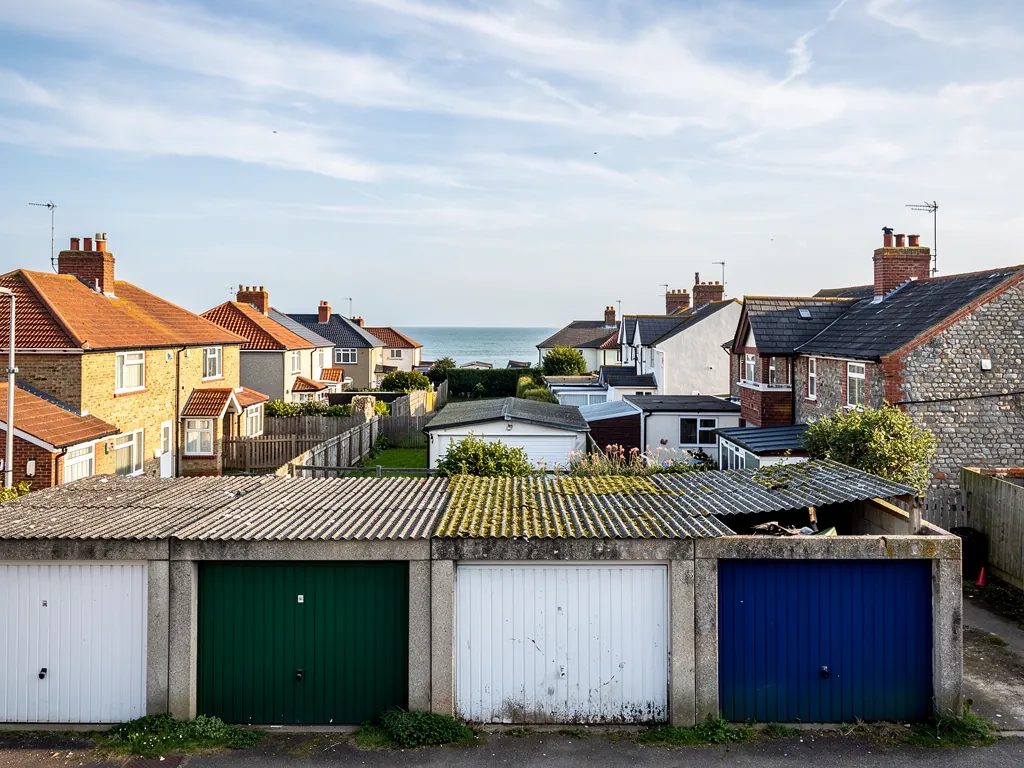
- Corrugated sheets cracked, mossy or sagging
- Daylight showing through the roof timbers
Garage roofs we replace
The garage roofs we replace across Bognor Regis and West Sussex
Flat felt roofs
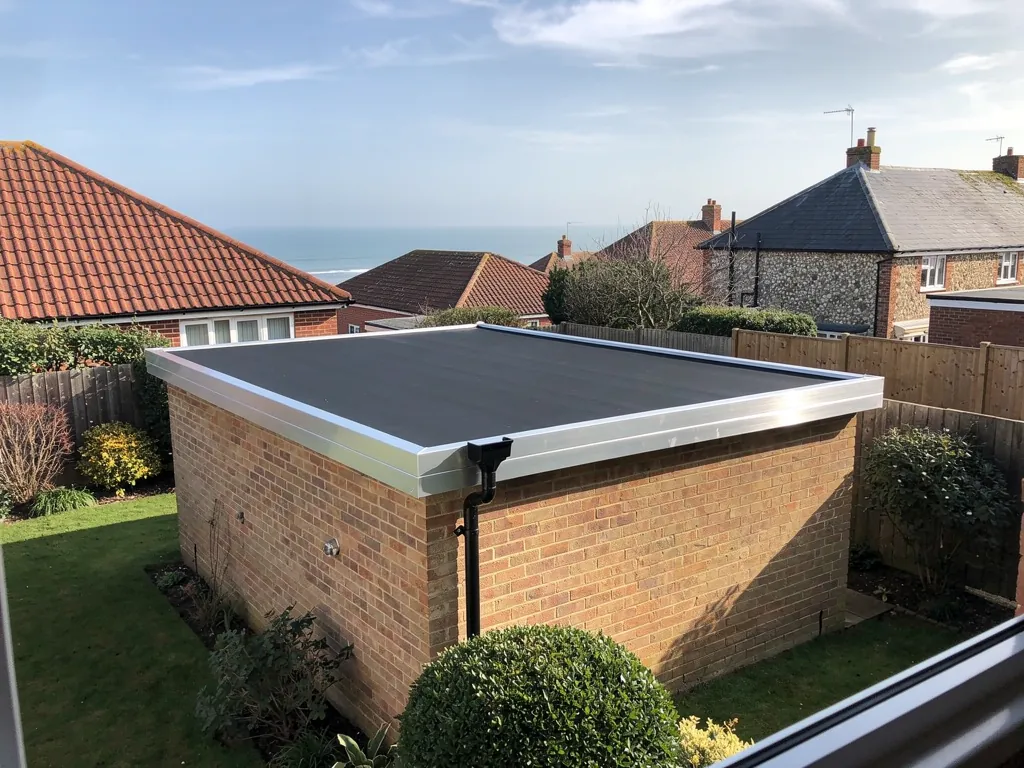
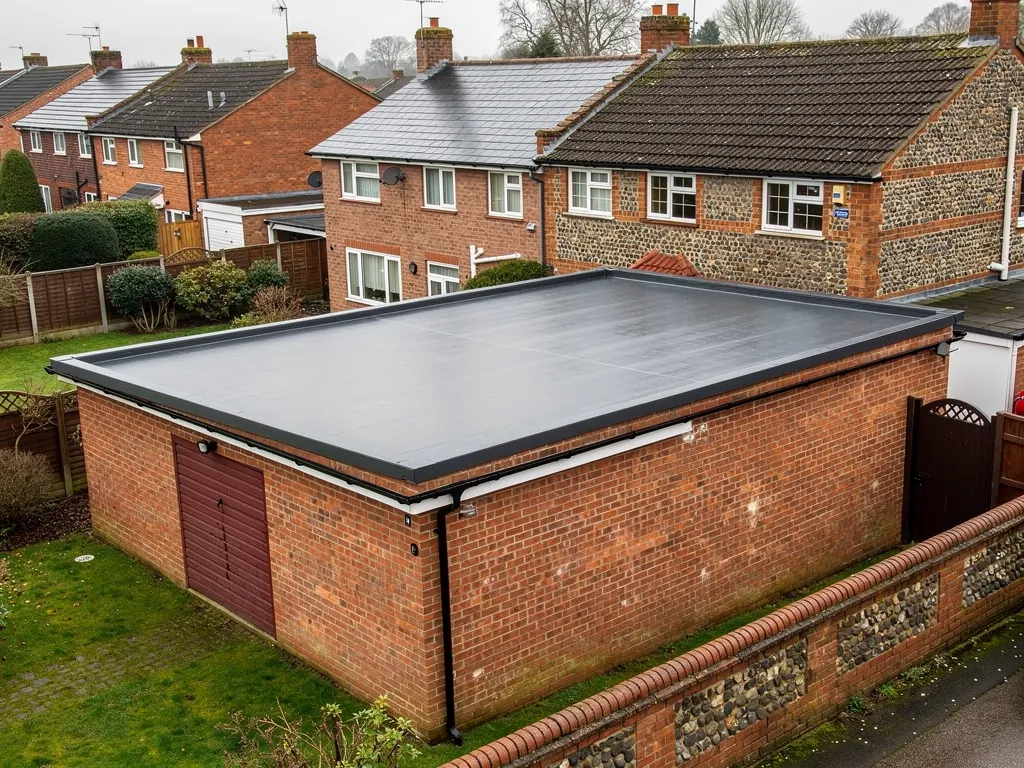
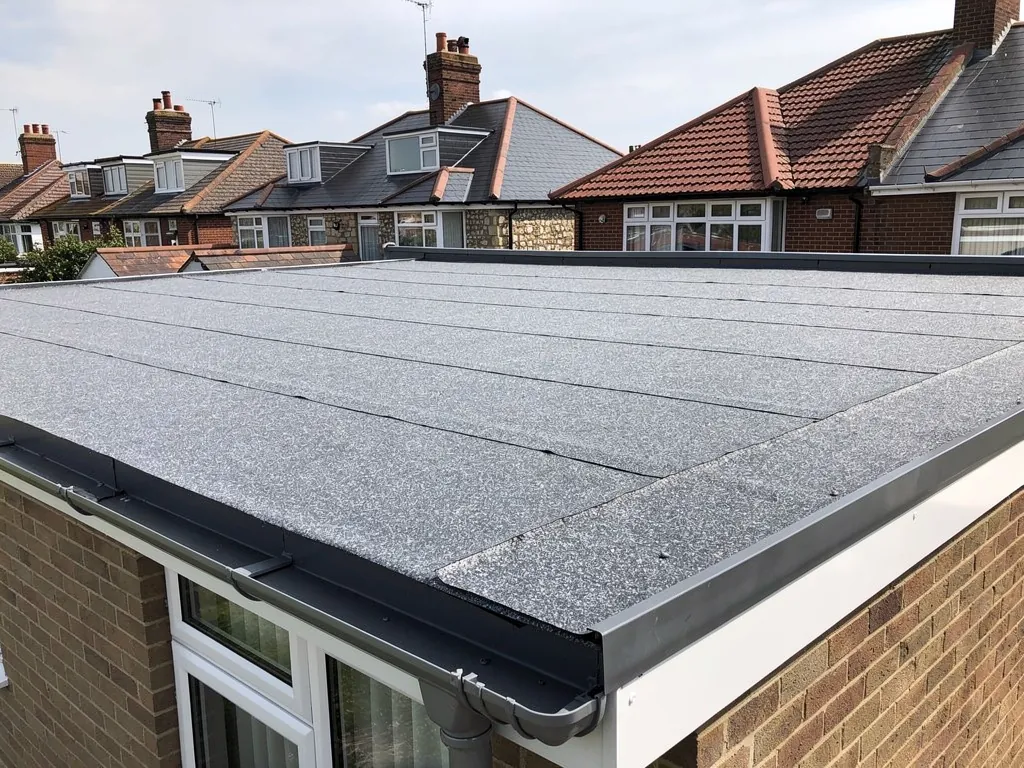
The classic bungalow garage: a flat deck under bitumen felt. We strip the failed layers, check the boards, relay the falls and fit a new covering with neat edge trims.
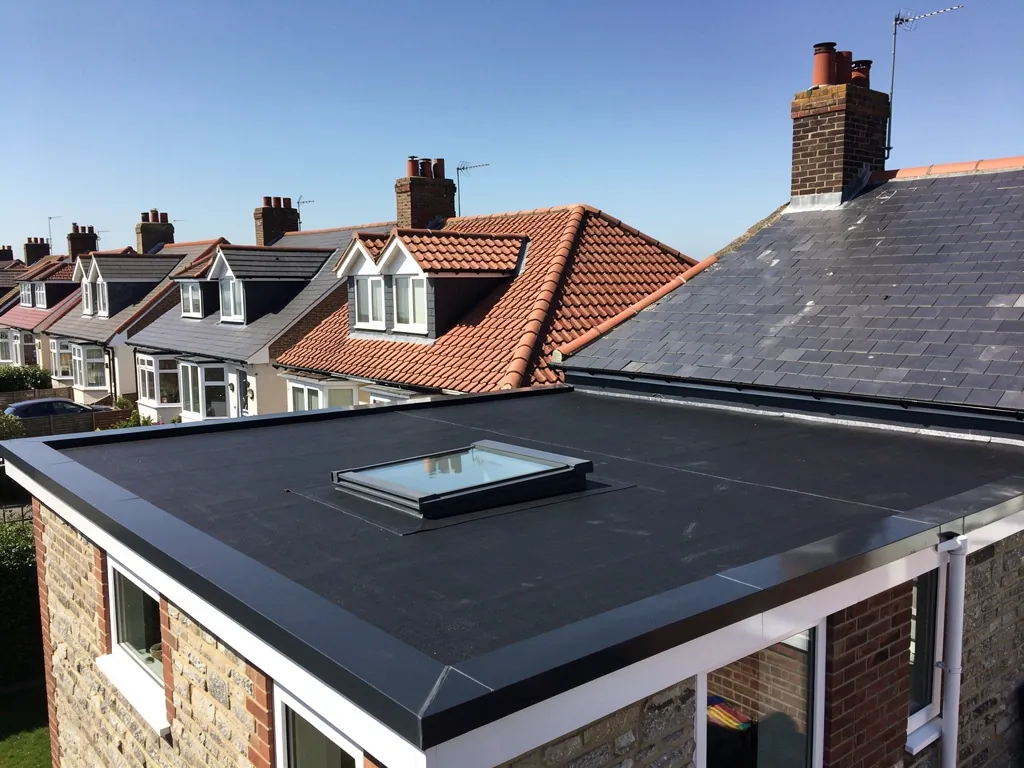
EPDM rubber roofs
EPDM is a synthetic rubber sheet. On a garage that means very few joins to fail, and we fit it to a sound deck with tight upstands.
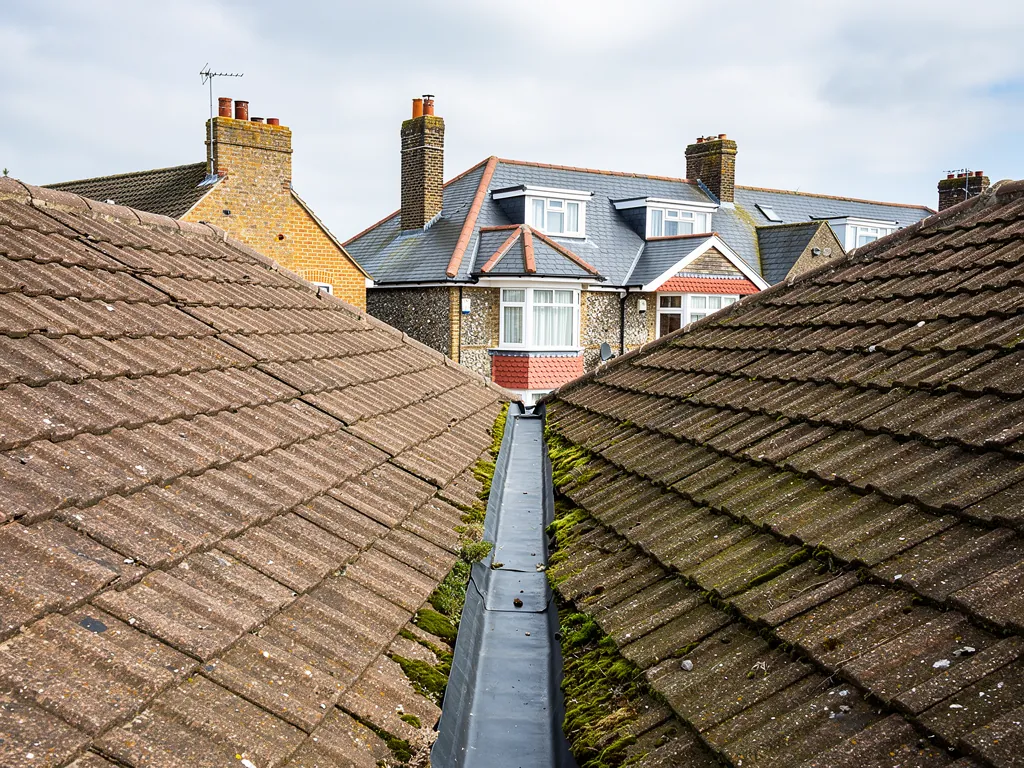
GRP fibreglass roofs
GRP is glass-reinforced plastic, laid as wet resin over a deck. It suits awkward shapes and small roofs, and it dries to one continuous surface with trims.
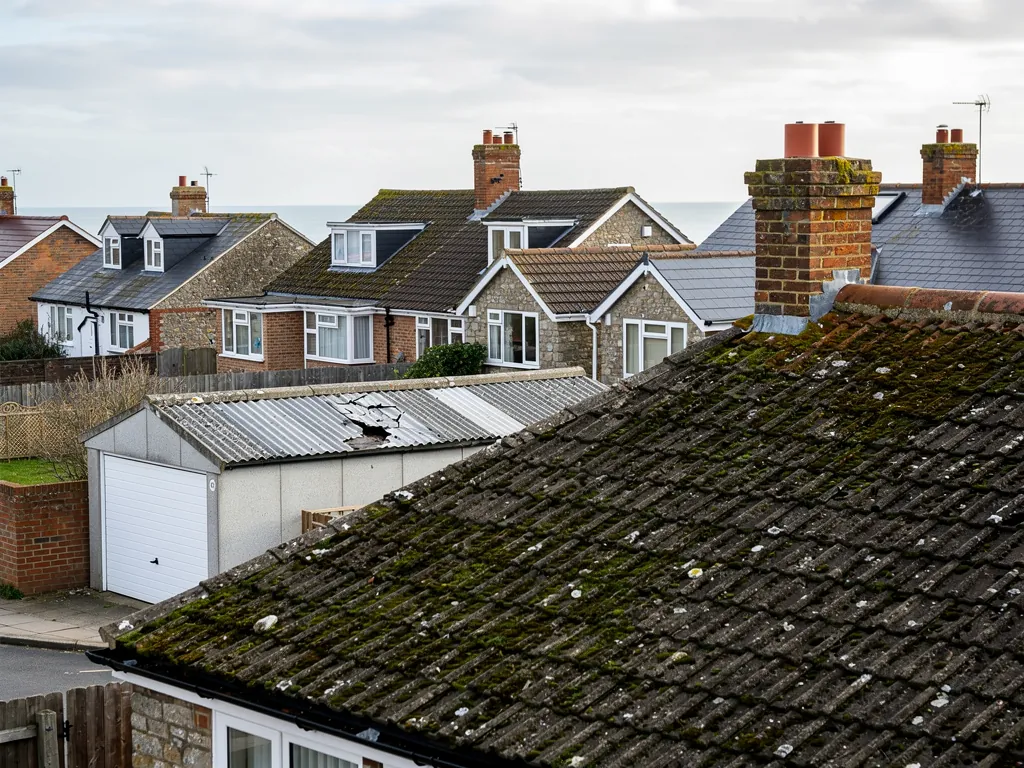
Asbestos cement sheets
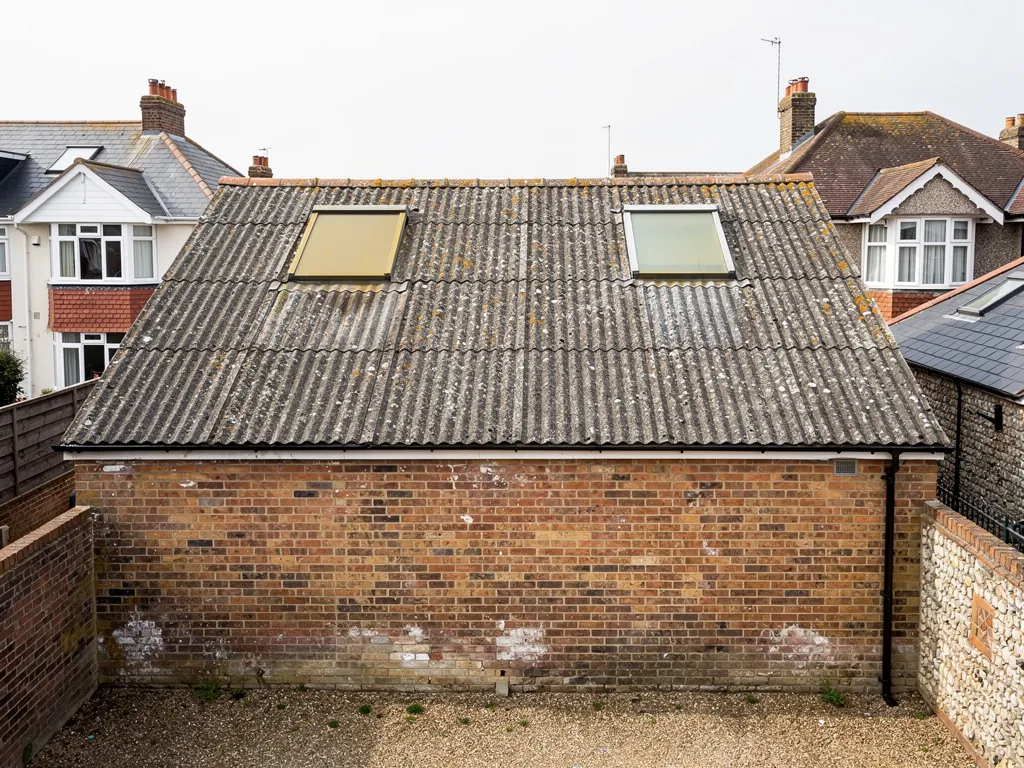
Corrugated asbestos cement was common on older garages. We survey the sheets first, explain the removal route that applies, then fit a new roof in their place.
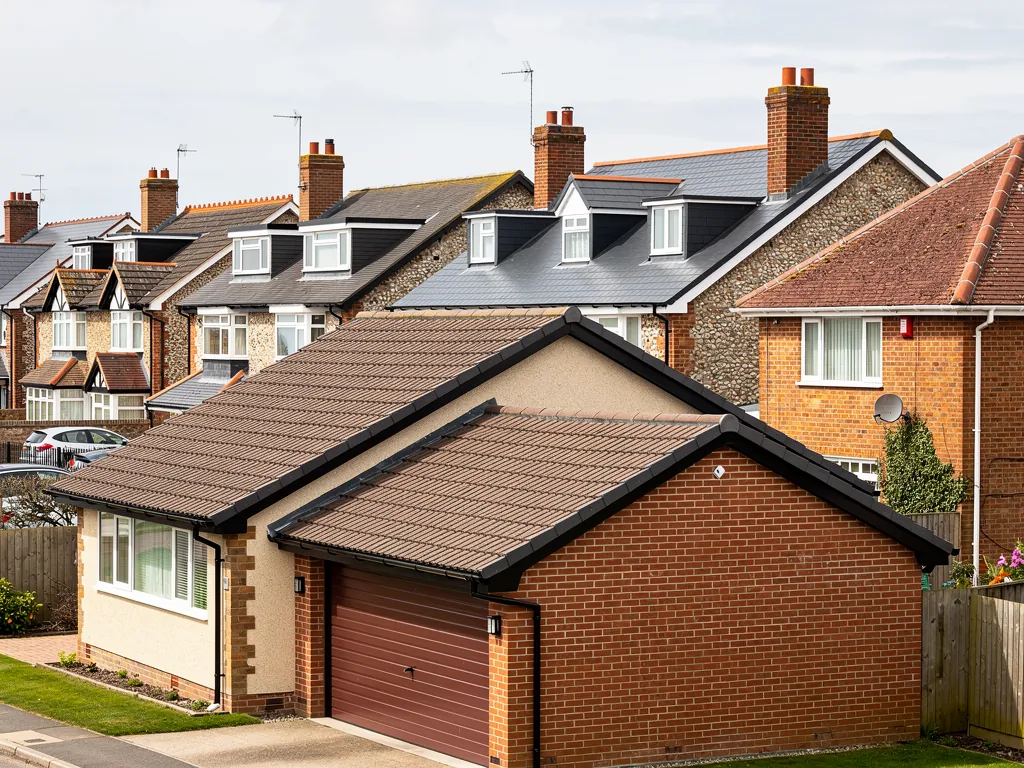
Pitched garage roofs
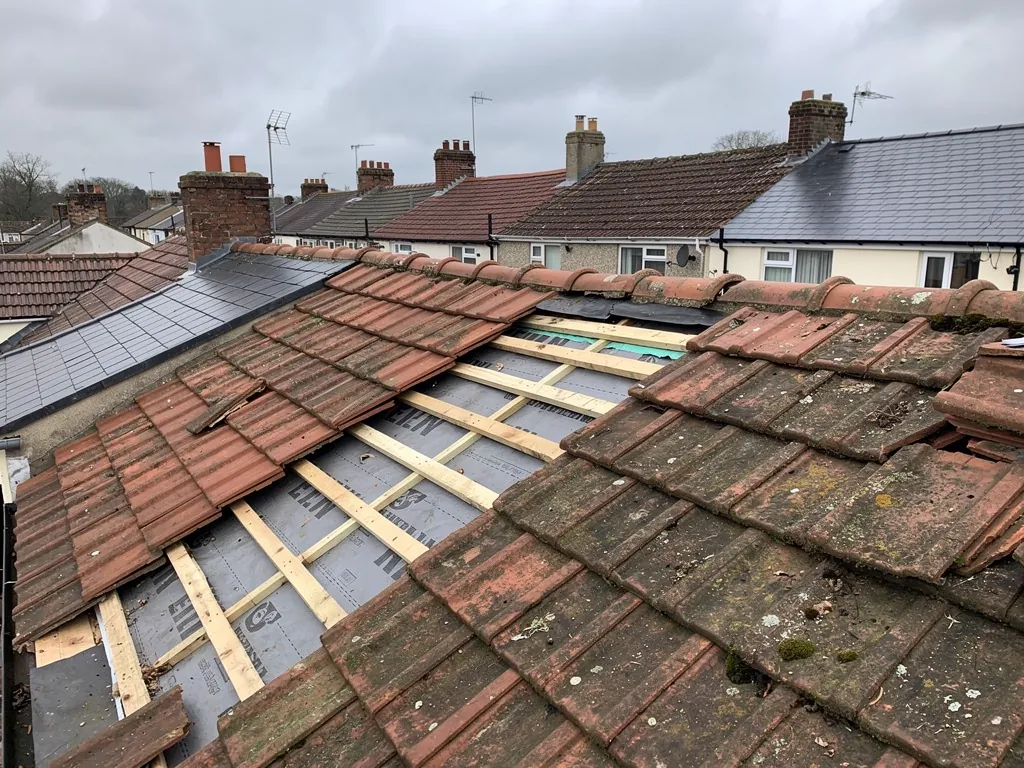
Tiled or slated garages need the same care as a house roof: sound battens, underlay, mechanically fixed ridges and verges, and lead where the roof meets a wall.
Sectional concrete and garage blocks
Older sectional garages and rows of lock-ups have their own roof panels and joints. We replace single garages and whole blocks for owners, landlords and managing agents.
What it costs
Garage roof replacement cost in Bognor Regis
priced on survey
Set by the covering, the size and what is found under it
A small felt garage with a sound deck sits at one end of the scale; a double garage with asbestos sheets and rotten timbers sits at the other.
From the first message to a finished garage roof
- 1Tell us what it is doingRing 01243 252373, or message a photo on WhatsApp showing the covering, the size of the garage and the spot where water gets in.
- 2We survey roof and deckWe check the covering, press the boards, look at the timbers from inside and photograph anything that suggests asbestos cement.
- 3Verdict first, then one quoteYou hear whether the roof needs a repair, a patch or a replacement, with photographs, followed by a written quote giving one total price.
- 4The new roof, then the clear-upWe take off the old covering, relay the deck where needed, fit the new roof, test that rain runs off and remove all the waste.
Garage roofs, in depth
Replacing a garage roof properly around Bognor and along the coast
Chapters on repair or replacement, the coverings, falls and timber, asbestos cement, what a garage roof costs and the work around conversions and upkeep.
Chapter 1: Repair or replace: judging a garage roof2440
Sheet 01 / 06A garage roof is easy to forget until it leaks, so the first question is whether the roof is tired or only damaged.
Garage roofs are the roofs nobody inspects. Nobody lives under them, the covering sits out of sight, and the first sign of trouble is often a damp patch on the wall or a stain across stored boxes. So the choice between a repair, a patch and a garage roof replacement deserves a proper look, not a guess from the drive. An experienced roofer recommends the least work that genuinely cures the leak, and a full new roof only when the evidence on your own garage supports one.
What the garage roof needs
- RepairOne split, a lifted upstand or a blocked outlet, with a dry, firm deck.
- Patch for nowAn ageing covering still keeping most of the water out this winter.
- ReplaceFailure across the surface, a wet deck, ponding or a third patch.
1.1 What we check on a flat garage roof
We begin with the covering. Felt that has blistered, split along its laps or turned crazed and brittle is close to the end of its life. We press the surface near any damage, because soft or spongy boards underneath mean water has been getting in for a long time. Then we look at the edge trims, the junction where the roof meets the house wall, and the outlet or gutter that carries rain away. From inside the garage a torch shows dark tide marks on the joists, daylight at the edges and a lintel or ceiling beginning to bow. Each of those findings is photographed, and the photographs travel with the quote. Photographs matter on a garage in particular, because the owner rarely climbs up to look and the evidence is the only way to judge the advice for yourself.
1.2 Signs it is a repair, not a replacement
A single split in otherwise sound felt, a lifted upstand or a blocked outlet is a repair job, and we will tell you so. Our guide to whether to repair or replace a garage roof sets out the tests in more detail. A repair is the sensible choice when the damage is local, the deck is dry and firm and the covering around the fault has years left in it.
A patch on a failing garage roof only moves the leak a metre along.
1.3 Signs the roof has come to the end
Replacement is the better spend when the covering has given up across the entire surface, when the deck is wet or rotten, when water ponds across the middle of the roof or when the same roof has already been patched more than once. A patch on a failing roof only moves the leak a metre along. At that point the money is better put into a new covering laid over a sound, properly drained deck. Age alone is not the test: a ten-year-old roof with a flaw in one corner is a different case from a roof that has leaked at three separate points in two winters.
Timber matters as much as the covering. Joists that have been wet for several winters can lose strength, and a deck that gives underfoot is no place to lay a new membrane. If boards or joists need replacing we tell you at the survey, show you the photographs and fold the work into the one written price, so nothing comes as a surprise once the old roof is off. The first aid for an active drip is covered in our page on a leaking garage roof.
Chapter 2: Felt, EPDM, GRP, metal or sheets: choosing the material3355
Sheet 02 / 06The right garage roof covering depends on the shape, the deck, the budget and how long you plan to keep the building.
No single material suits every garage, and a reliable roofer explains the options instead of pushing one. The choice should follow the roof's shape, the state of the deck, your budget and how many years you expect to keep the building. Our guide to the best garage roof material goes through the decision in full; here are the main contenders and the quality points that separate a good job from a poor one.
10 to 20 years
typical felt life, Less, March 2026
Two common flat garage coverings
Torch-on felt
Layered bitumen melted together; Less gives 10 to 20 years, workmanship deciding where.
EPDM rubber
One sheet with few joins; GreenSpec lists 20 to 30 years as expected service life.
2.1 Torch-on felt
Felt for flat roofs is bitumen membrane laid in layers, the top one melted onto the layer below with a gas torch. The cost guide Less, last updated March 2026, gives it a life of 10 to 20 years, adding that careful work can reach 20 years but a poor job might not last ten. The difference between those two outcomes is craftsmanship: how the laps are made, how the upstands are turned up the wall and how the edges are finished. Felt is familiar, easy to repair and sensible for a small, simple roof, which is why so many garages around Bognor still wear it.
2.2 EPDM and GRP
EPDM is a rubber membrane delivered as one large sheet, so a garage roof may have almost no joins to leak. GreenSpec lists 20 to 30 years as its expected service life, whereas Less quotes a longer range, which tells you that published lifespans vary and none is a promise. GRP is a fibreglass and resin laminate that Less puts at 25 to 40 years. It is formed in place and copes with awkward edges, but the deck must be dry and firm, because resin does not take to damp boards. Our spoke on EPDM garage roofs looks at the rubber option more closely.
2.3 Metal and profiled sheets
Some pitched and lean-to garages take profiled metal or coated sheets. They are light and quick to fix, but need the right fixings, correct laps and a plan for condensation underneath. Our comparison of felt against metal for a garage roof sets the trade-offs side by side, and the finish at every edge tells you who did the work with care. Weight and span matter as well. Heavy coverings need a deck and walls that can carry them, and a light, old garage may call for a lighter material than the one you first had in mind.
Whichever material wins, look past its name to the detail. Check the laps, the upstands against the wall and the trims along each edge. A neat edge that sends water cleanly into the gutter tells you the same hands paid attention to the parts you cannot see from the ground. We photograph those details when the job is finished, so you have a record of what sits under the finished surface.
Chapter 3: Falls, decks and pitched garage roofs2257
Sheet 03 / 06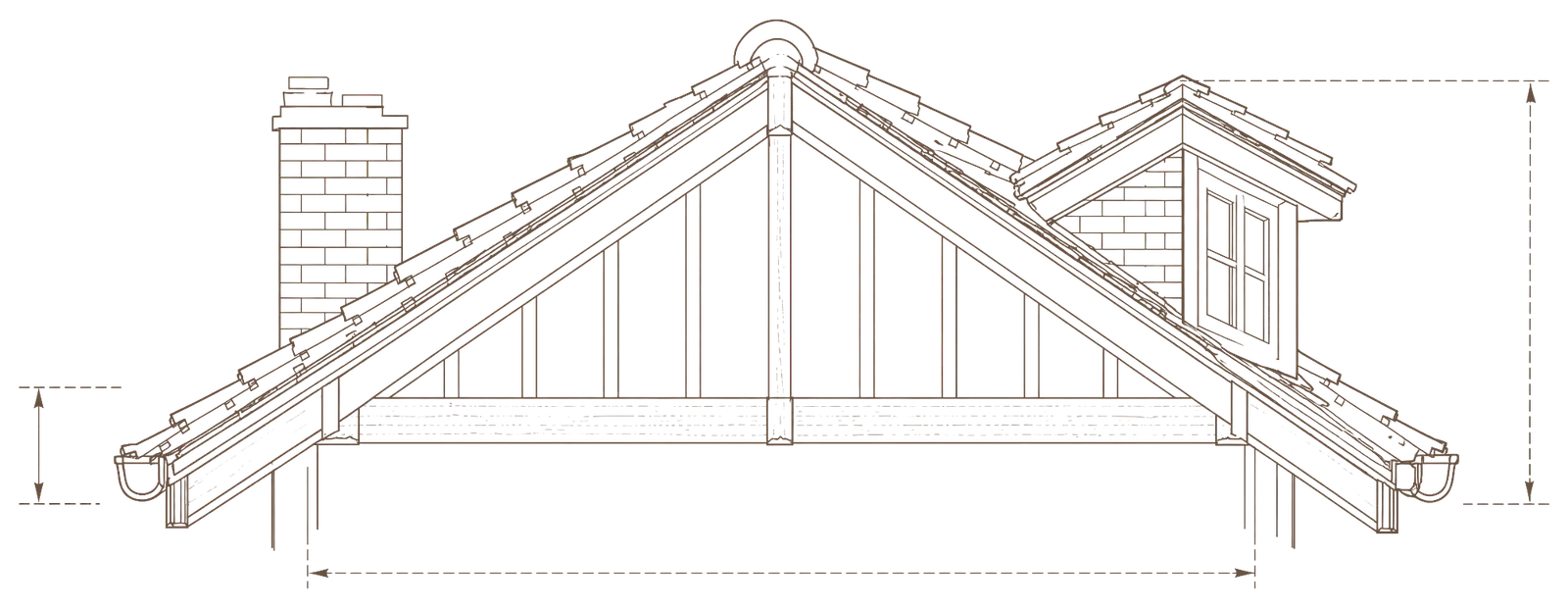
- Ridge On a pitched garage, ridge tiles also need mechanical fixings.
- Eaves The edge trim must push rain into the gutter, not behind it.
- House abutment Lead or a sealed upstand stops water running down the wall.
- Gutter outlet A blocked outlet leaves a flat garage roof ponding.
A garage roof that holds water will fail again, so the slope and the boards beneath matter as much as the new covering.
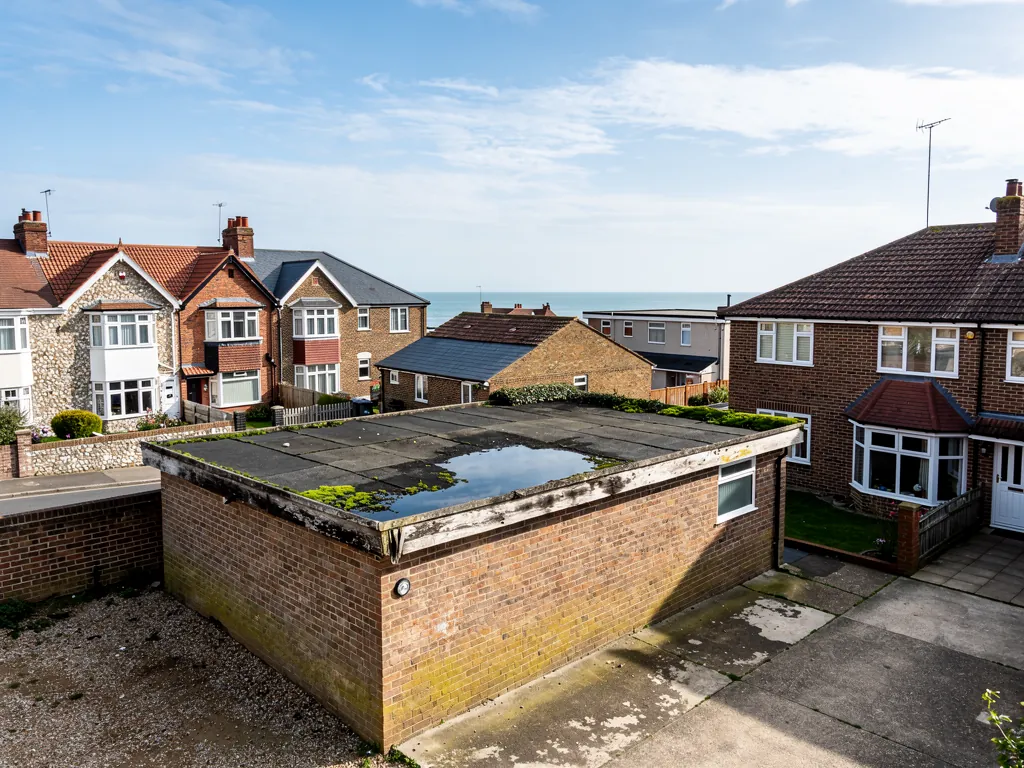
A flat garage roof is only flat to the eye. It needs a fall, a gentle slope that carries rain towards the gutter or outlet, and when the old roof ponded the new one must not copy the mistake. BS 6229:2025 replaced the 2018 edition in December 2025 and retains a minimum finished fall of 1:80 on general roof areas. Roofers often design for around 1:40, so water still runs off once the structure has settled a little. Lay a fresh covering across the old low spot and the puddle comes straight back. Our page on the fall of a flat garage roof explains how a slope is built in.
Check before you agree
Ask where the new roof's fall comes from, and what happens to any boards found soft once the old covering is off.
1:80
minimum finished fall under BS 6229:2025
3.1 The deck under the covering
The deck is the boarded surface that carries the membrane. On older garages it is frequently thin boarding or plywood laid across joists. We lift a corner of the old covering, test the boards for softness, rot and gaps, and replace any that have failed. Where the slope needs correcting we fit firring strips, tapered timbers that build the fall, before new boarding goes on top. That is carpentry as much as roofing, and it is a big reason two garage roofs of the same size can end up with different prices. Skipping it leaves the same low spot under shiny new material.
3.2 Pitched garage roofs
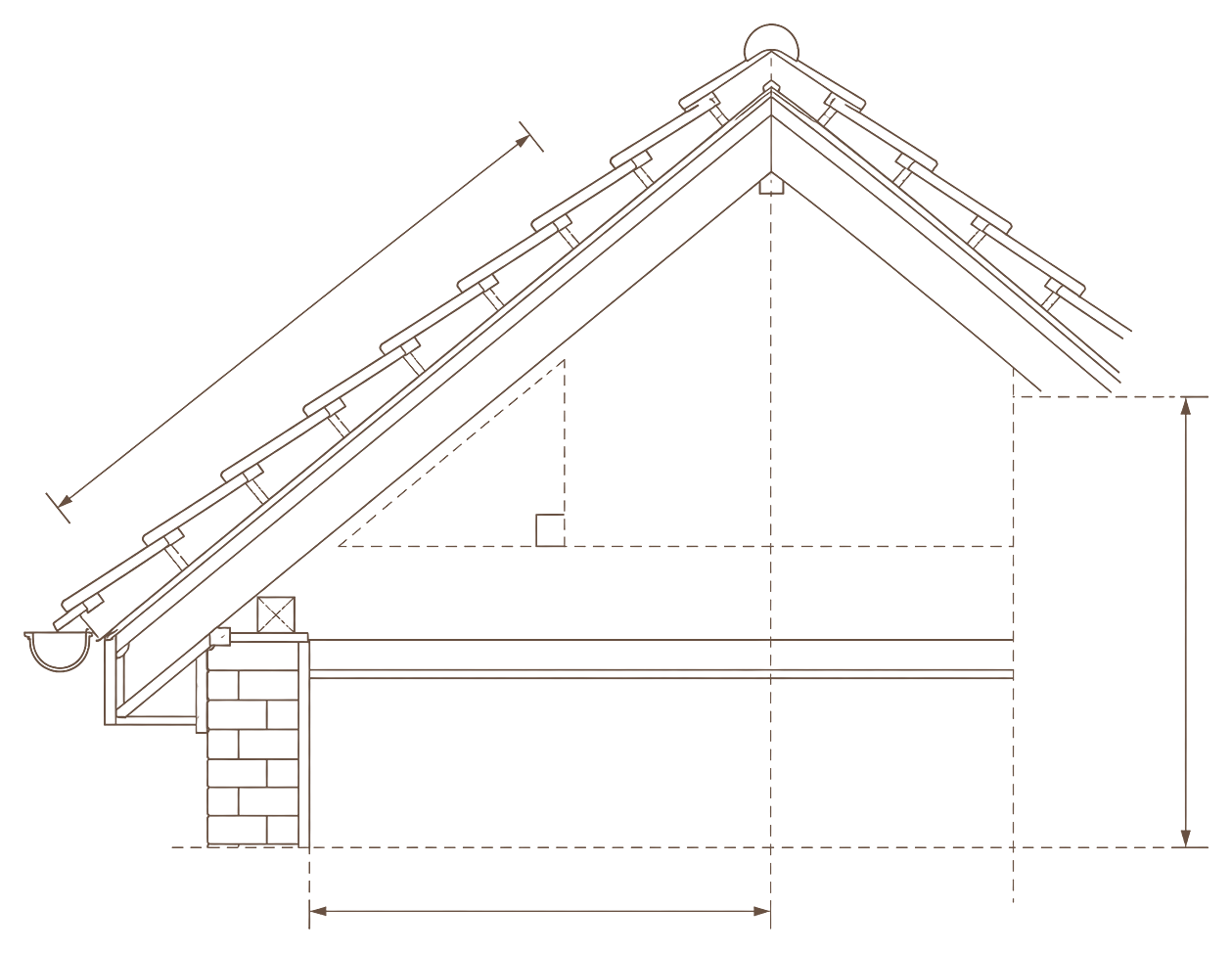
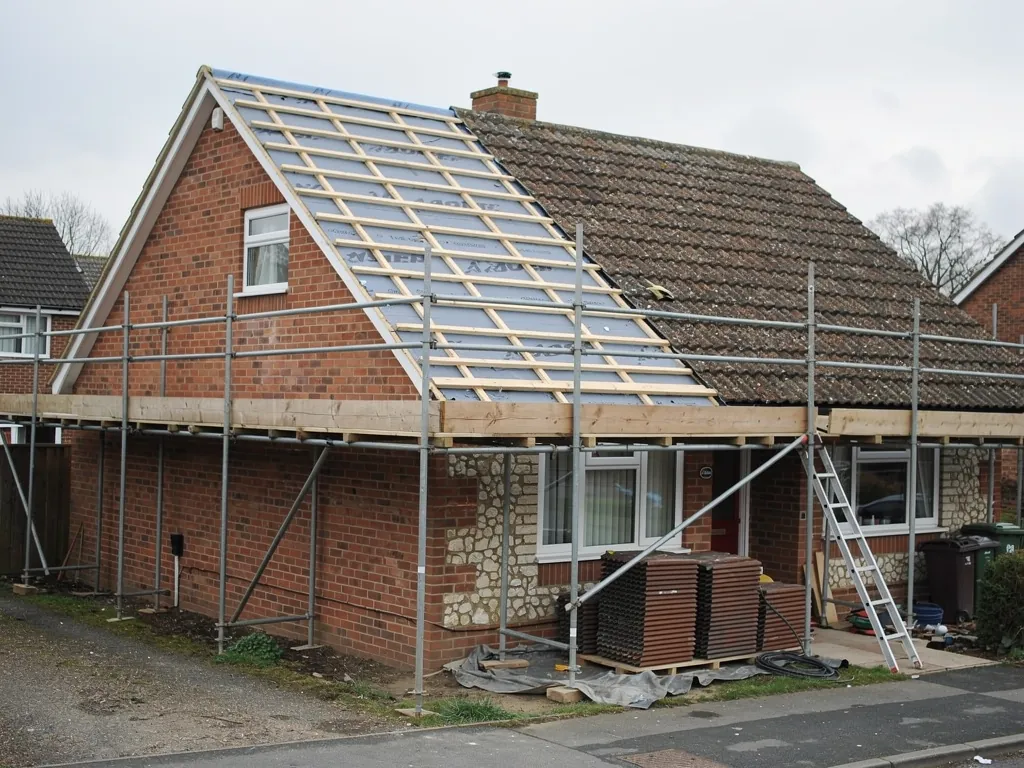
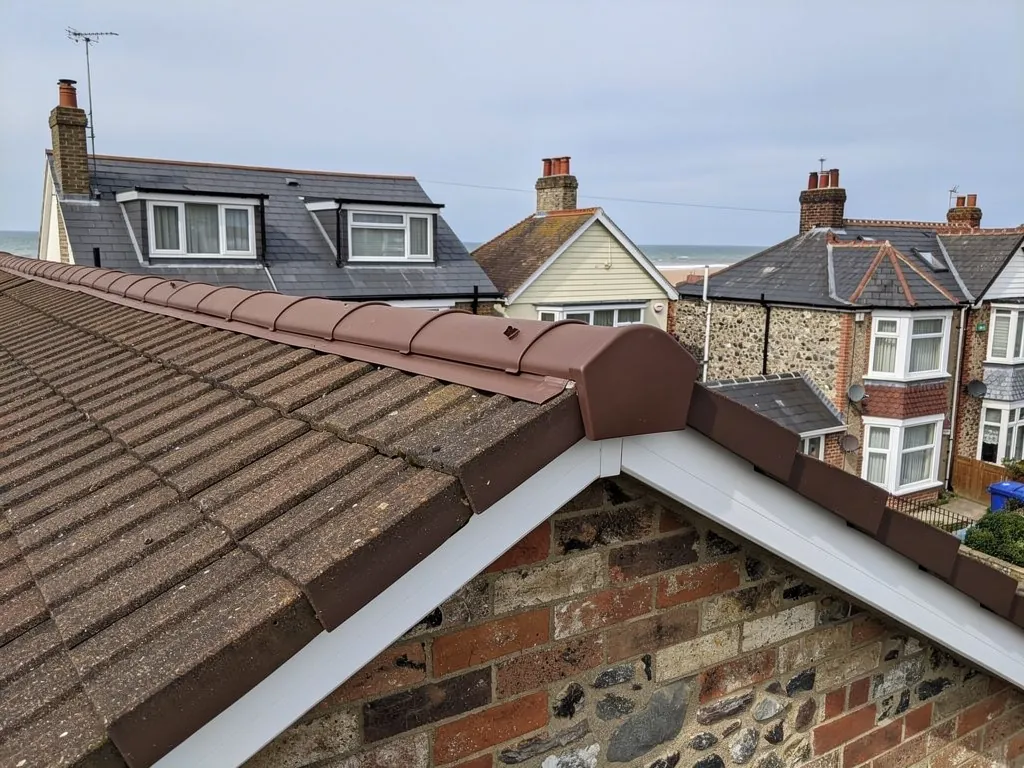
A garage with a tiled or slated roof is a small version of a house roof, with the same weak points. The ridge is the top line and the verge is the edge over a gable wall, and both should be mechanically fixed to BS 5534, because after the 2014 revision of the standard, ridge and hip tiles are fixed mechanically as well as bedded. Where the garage meets the house wall, lead flashings seal the joint. If the tiles are sound and only the underlay and battens have given up, we strip and relay the same tiles on new battens. That job, and its limits, is described in our spoke on pitched garage roofs. Slipped tiles on a garage often go unnoticed for a season, and the underlay beneath then takes the rain that the tiles were meant to shed.
On a roof close to the sea, wind and driving rain test the edges first, so these are the places we fix carefully and photograph at the end.
A new membrane laid over the old low spot just brings the puddle back.
Chapter 4: Asbestos cement garage roofs1708
Sheet 04 / 06Many older garages carry corrugated asbestos cement, and how it is handled decides whether the job stays routine or becomes notifiable.
Corrugated cement sheets were widely used on garages, sheds and outbuildings, and plenty of them are still in place. The Health and Safety Executive advises that if a building was built or refurbished before 2000, you should assume asbestos is present until it has been checked. We do not guess from the garden: we survey the sheets, photograph their markings and condition and tell you what we have found before the quote is written. The Victoria County History records interwar houses with asbestos walls on estates at Elmer and Middleton-on-Sea, a reminder of how common these materials once were on this coast, though it says nothing about any named house.
4.1 Is it asbestos cement?
Our guide on how to tell if a garage roof is asbestos lists what to look for, but only a sample analysed in a laboratory can confirm it. Do not drill, scrub, pressure-wash or break the sheets to find out. Asbestos cement is generally harmless while it stays whole and undisturbed, and the hazard comes from the dust released when it breaks up.
4.2 How the work is classed
HSE treats the careful removal of asbestos cement sheeting as non-licensed work, provided the material is handled and taken off without being broken up, and that includes sheets which are weathered but not otherwise substantially damaged. If the sheets are substantially damaged or have broken up, the work becomes notifiable non-licensed work: notice has to be given before it starts, with no minimum notice period, and health records are kept for 40 years. HSE guidance also calls asbestos cement roofs fragile, so nobody should walk on one, and large pieces are lowered to the ground, never dropped or sent down a rubble chute.
4.3 Waste and the new roof
HSE guidance on waste says to double-wrap and label it, use a lockable skip for the sheets and never mix it with ordinary waste. For household asbestos waste, the contractor completes the hazardous waste consignment note as the waste producer. The detail is in our spokes on asbestos garage roof removal, and once the sheets are gone the new roof goes on a deck that has been checked rather than assumed. Where the rafters or purlins under the old sheets have rotted, they are replaced at that stage, before the new covering goes anywhere near them.
Before any asbestos roof is touched
- Sheets surveyed and photographed
- Whole or broken sheeting identified
- Removal route agreed in writing
- Waste wrapped, labelled, skipped
- Consignment note completed
Some owners ask whether the old sheets can simply be covered over. Overcladding leaves the asbestos in place; it is a separate decision with its own limits, and we do not want it chosen for convenience. Whichever route suits your garage, ask any contractor to explain in writing how the sheets will be handled, who will carry them away and where they will go. If a contractor cannot answer that, you have learned something useful before a single sheet is moved.
Chapter 5: Garage roof prices, VAT and what moves them2623
Sheet 05 / 06Garage roof prices turn on the covering, the size and what lies under it, so a national range only goes so far.
People ask for the average cost of replacing a garage roof, and the sensible answer starts with the covering and the deck. Checkatrade's roof replacement guide, updated October 2026, puts a garage re-felt at around £1,000 to £2,000, with an average of £1,500. Its table of flat roof replacement prices, headed plus VAT and last updated in October 2026, runs from £2,800 to £7,500, but that covers roofs on houses and extensions, and a single garage normally sits well below it. Our guide to what a garage roof costs goes further than any one range can.
Typical UK garage and flat roof prices
- Garage re-felt£1,000 to £2,000
- Flat roof replacement, plus VAT£2,800 to £7,500
- Roofer's day rate£280 to £360
National guide figures; your own quote arrives in writing as one total once we have surveyed the garage, with VAT and clear-up covered.
Source: Checkatrade roof replacement guide, October 2026; roof repair guide, table last updated June 2026
5.1 What moves a garage roof price
Floor area leads, then the covering. EPDM and GRP cost more per square metre than felt, though a longer life can change the sum over the years. The deck is next: replacing boards and fitting firring strips adds timber and time. Access matters too. A low garage can often be worked from a ladder or a small tower, but a roof beside a boundary wall or at the end of a narrow drive slows the job down. Asbestos sheets add handling, wrapping, a skip and paperwork. Checkatrade gives roofers' rates as around £280 to £360 a day in its roof repair guide, last updated June 2026, which helps explain why a small felt job and a double garage with a rebuilt deck land so far apart.
Ask every roofer whether the quote includes VAT, access and the waste.
£1,000 to £2,000
typical garage re-felt, Checkatrade October 2026
5.2 VAT and comparing quotes
The standard rate of VAT is 20 per cent, and some published guides exclude it while others include it, so check which you are reading. When quotes arrive, ask whether each one includes VAT, any scaffolding or access equipment, the removal of the old roof and the waste. That is how you tell a fair quote from one that only looks low until the extras appear. Ours is good and fair for the job, and the written quote follows the survey. Ask, too, what happens if the deck turns out worse than it looks: the answer shows whether the number was thought through. A figure with no mention of the old covering, the skip or the edges is a figure to question.
If cost is the worry, ask your roofer for the lowest-cost route that still lasts. Sometimes that means a repair now and a replacement planned for next summer. Sometimes it means doing the whole job properly once. We would rather tell you which, with photographs of your own roof, than sell a new roof the garage does not need. A leak that is left to run costs more in the end, because wet boards and joists then join the bill. If you need to pay for work in stages, say so at the survey and we will talk it through.
Chapter 6: Conversions, insulation, condensation and upkeep2928
Sheet 06 / 06
What you plan to do inside the garage affects the roof above it, so say so before the covering is chosen.
A garage roof is often asked to do more than keep rain off. Some garages become workshops, studios or gyms, and some are converted into living space. Others stay as they are, holding a car, a freezer and a lawnmower. Tell us the plan at the survey, because it changes what goes on the roof. Our guide to the roof of a garage conversion covers the main choices.
A garage roof replacement, in order
- 1SurveyCheck the covering, the deck, the timbers and the sheets for asbestos.
- 2StripRemove the old covering, handling any asbestos cement as the survey directs.
- 3Repair the deckReplace soft boards and fit firring strips where the fall needs correcting.
- 4New coveringLay the new roof with sealed upstands, neat trims and a clear outlet.
- 5Clear-upRemove all waste and check the gutter runs freely.
6.1 Insulation and condensation
Warm, damp air meeting a cold surface leaves water on it, and a garage ceiling or the underside of metal sheets is a cold surface. Condensation can look exactly like a leak, so we work out which one you have before replacing anything. Where insulation goes above or below a roof, ventilation has to be planned with it. If spray foam has been applied to a garage roof, the RICS consumer guide of March 2023 notes that incorrectly installed insulation can lead to dampness, and by November 2024 some lenders said they would not lend on homes with spray foam, while others assess case by case.
6.2 Rules, permission and wildlife
Re-covering a garage roof in matching materials is generally not development needing planning permission, though a listed building or an Article 4 area can differ, so check with Arun District Council's planning team or your own council. For Building Regulations, the Planning Portal says building control approval is normally not required while under 25 per cent of the building envelope and under 50 per cent of the roof is affected. Ask your building control body about your own garage, and especially about any conversion. Bats and nesting birds are protected, and we check for roosts and nests before any stripping begins.
6.3 Looking after the new roof
Maintenance is cheap compared with replacement. Clear leaves and moss from the roof and gutters each autumn, keep an eye on the outlet and have the edges and upstands checked after a hard gale. We also replace roofs on commercial garage blocks, lock-ups and carports for landlords and managing agents. For the wider picture, see our flat roofing service, which covers extension and outbuilding roofs of the same kind. Ask what the new roof will be asked to carry later, such as solar panels or a rooflight, because upstands and falls are easier to plan before the covering is laid. A roof that is simply left alone for years is the one that tends to fail without warning.
Price guide
Typical UK garage roof prices
| Job | Typical range |
|---|---|
| Garage re-felt | £1,000 to £2,000 |
| Flat roof replacement, plus VAT | £2,800 to £7,500 |
| Roofer's day rate | £280 to £360 per day |
National guide figures. The survey comes first; after it, your quote in writing shows a single total for the entire garage roof.
Source: Checkatrade roof replacement guide, October 2026; roof repair guide, table last updated June 2026
Guides and answers
Guides and answers for garage roofs
Shorter pieces on coverings, asbestos, drainage, conversions and cost, each written with a Bognor Regis garage in mind.
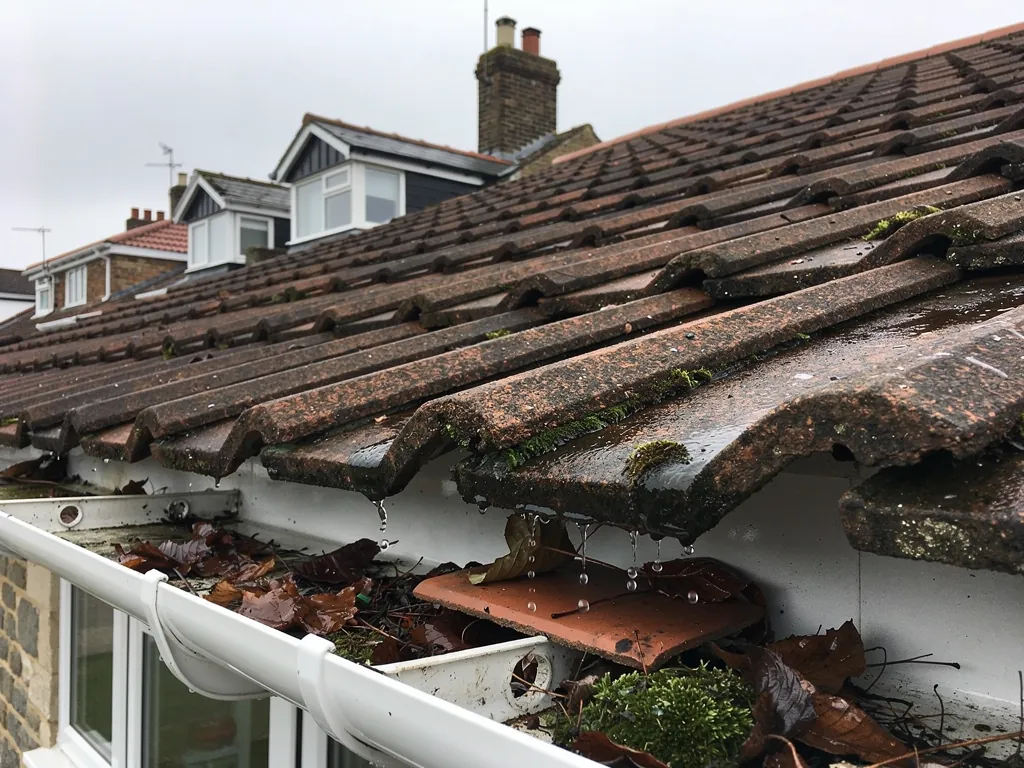 What is the average cost of replacing a garage roof?9 min read
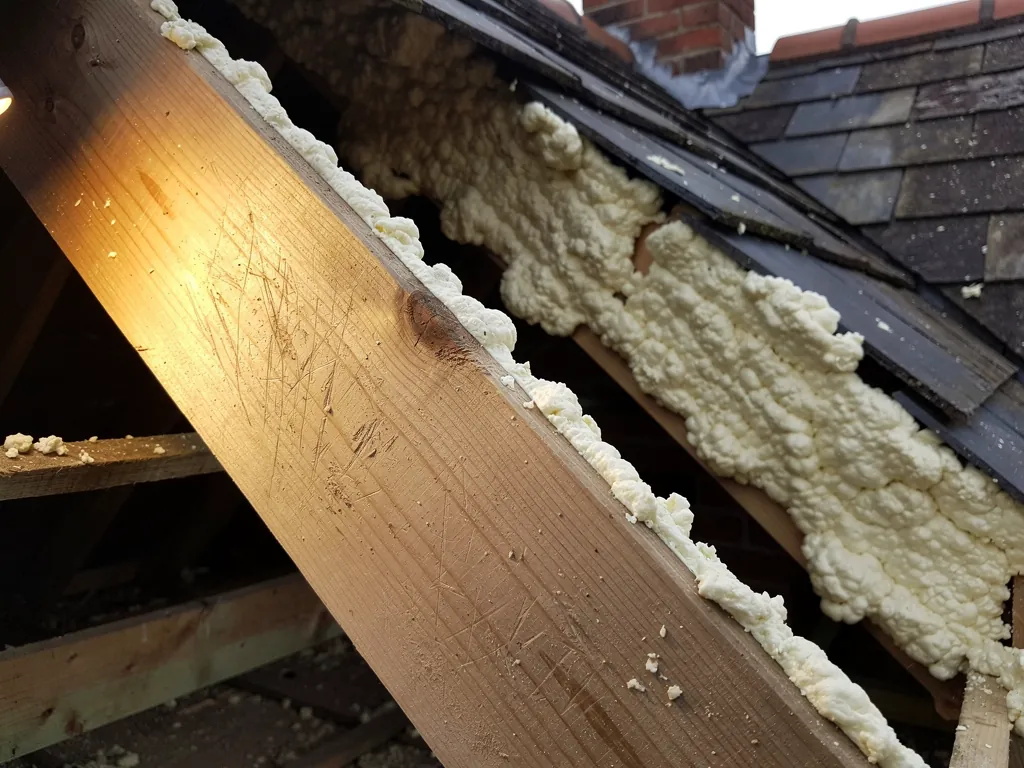 What is the cheapest way to replace a garage roof?9 min read
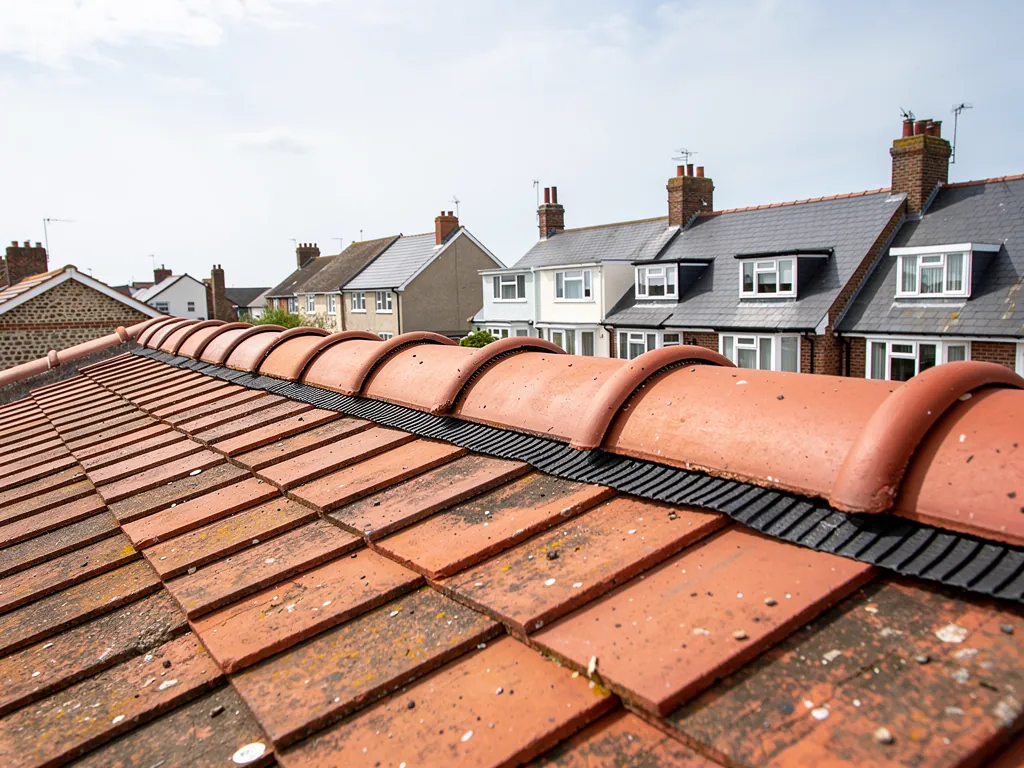 Garage roof repair or replacement?9 min read
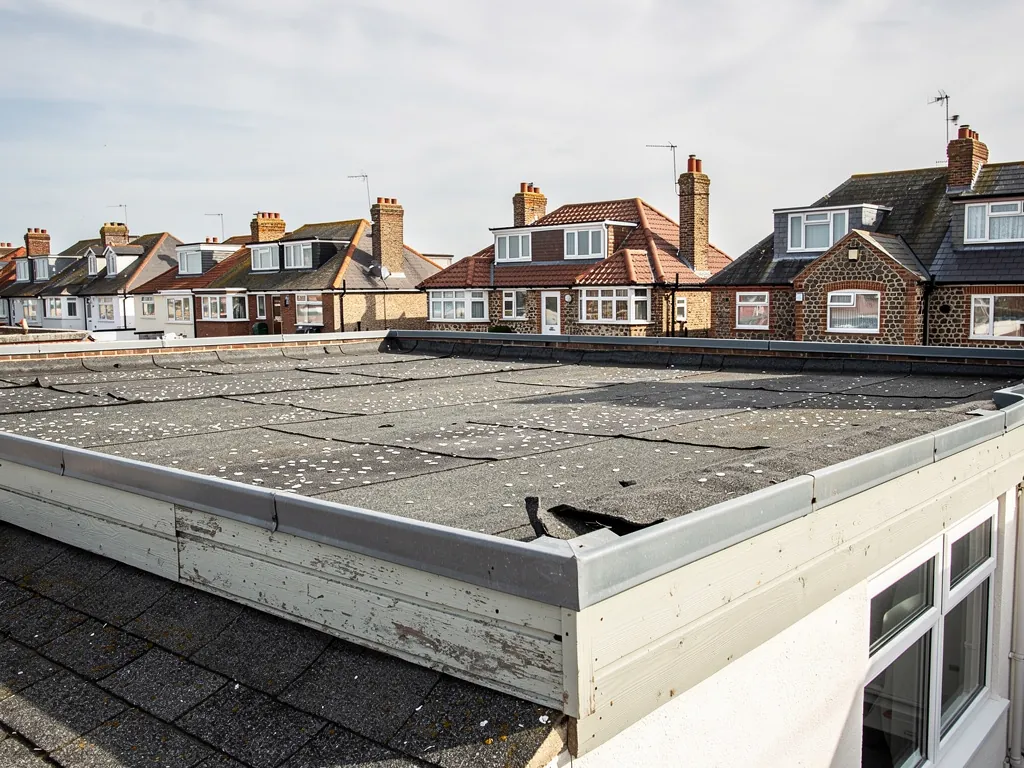 Felt, EPDM, GRP or sheeting: choosing a garage roof9 min read
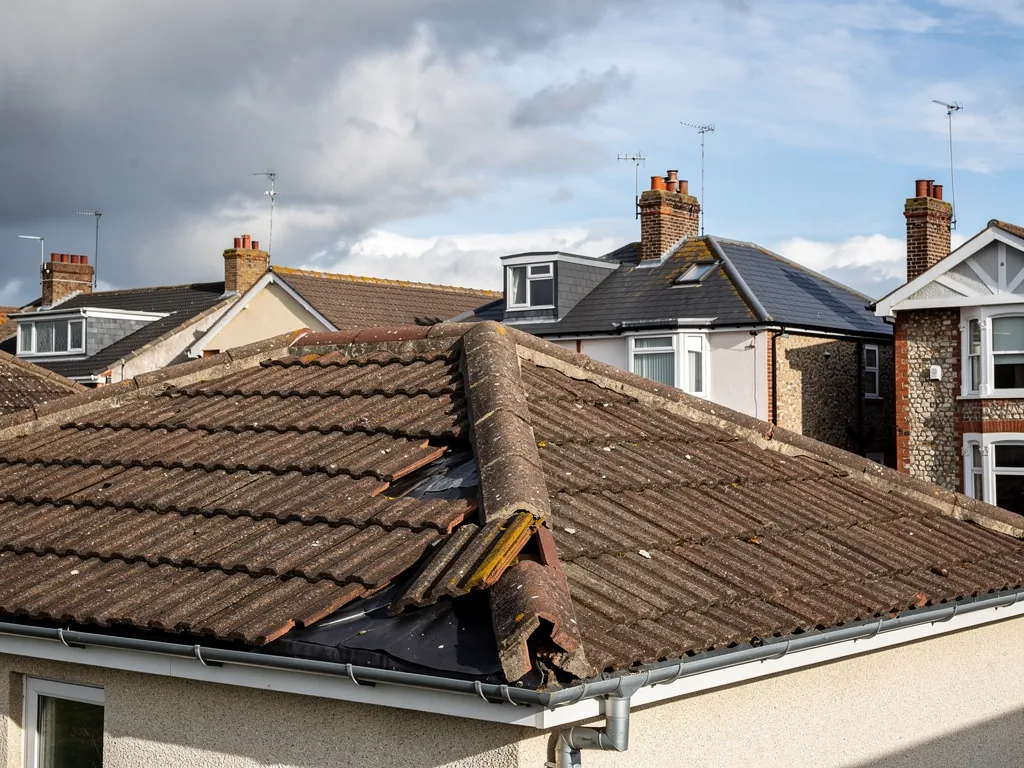 Asbestos garage roofs: removal, rules and what to expect9 min read
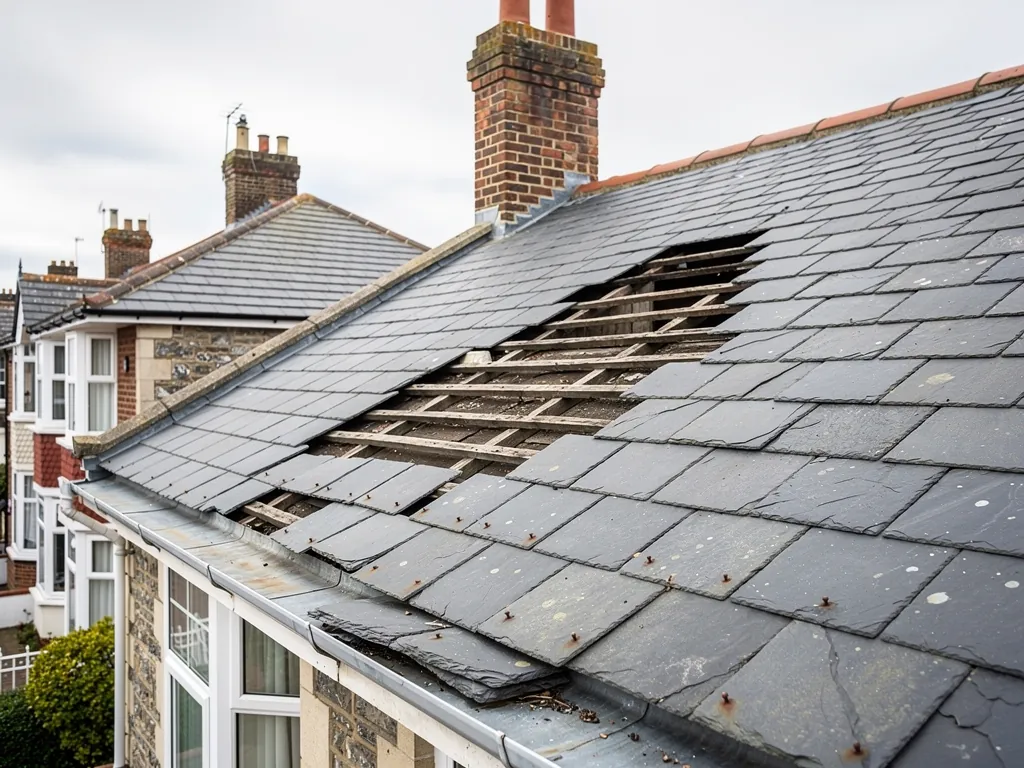 Is my garage roof asbestos? How to tell9 min read
 Overcladding an asbestos garage roof: when it is an option9 min read
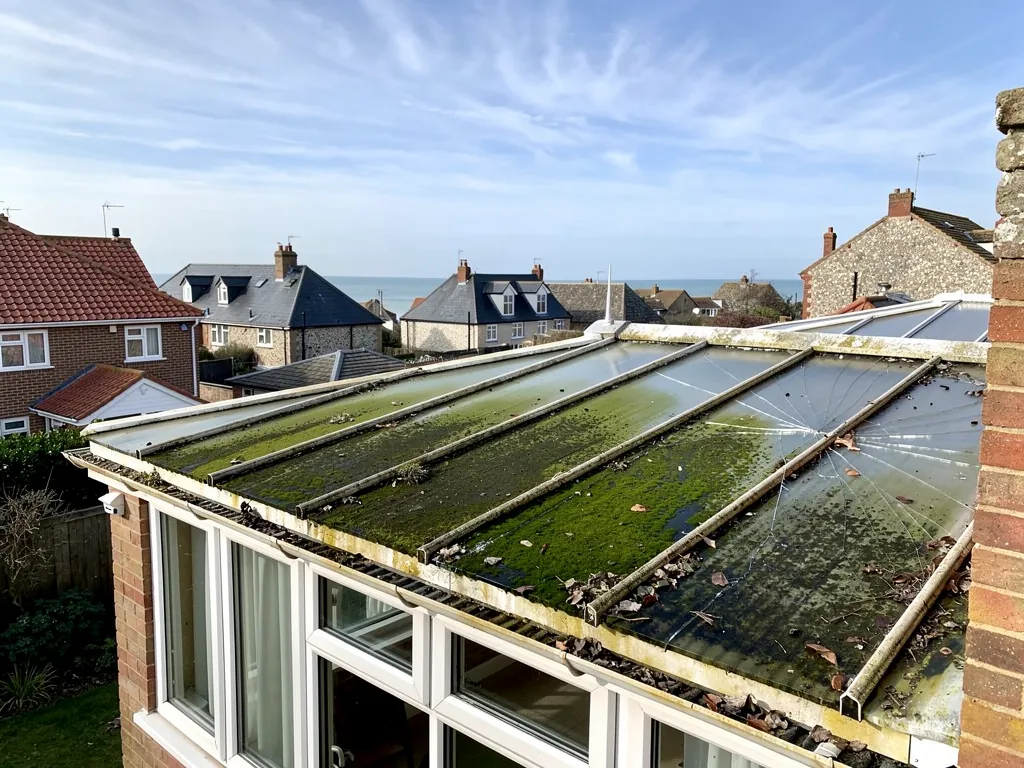 Corrugated garage roof sheets: fibre cement, steel and bitumen10 min read
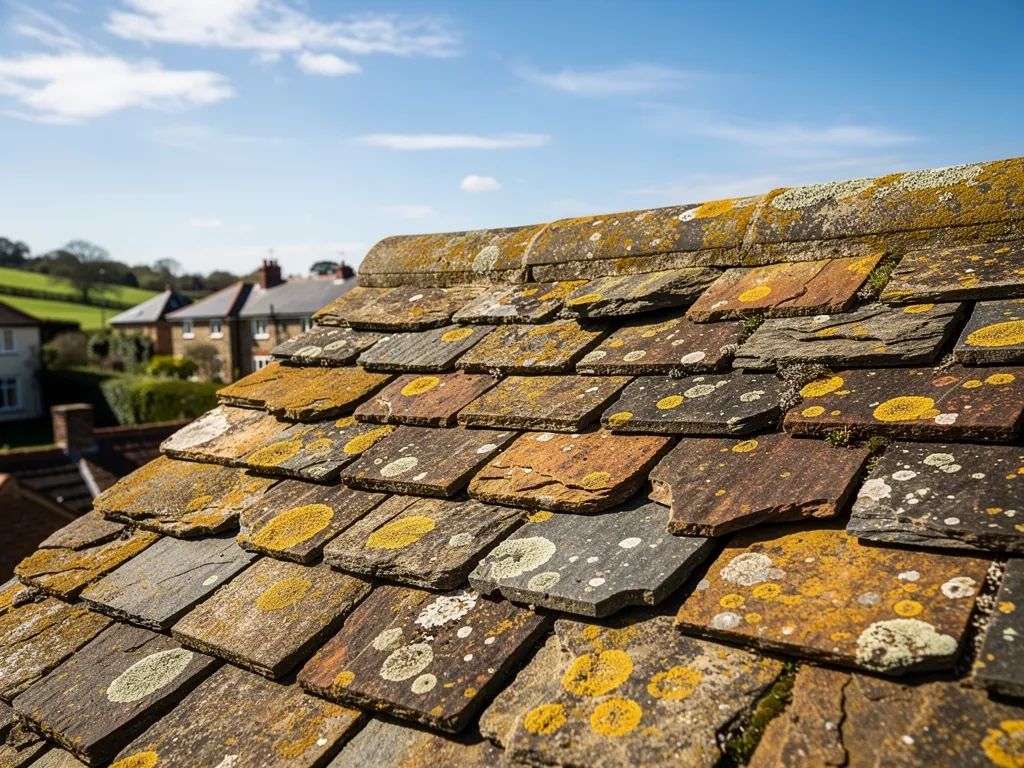 Insulating a garage roof9 min read
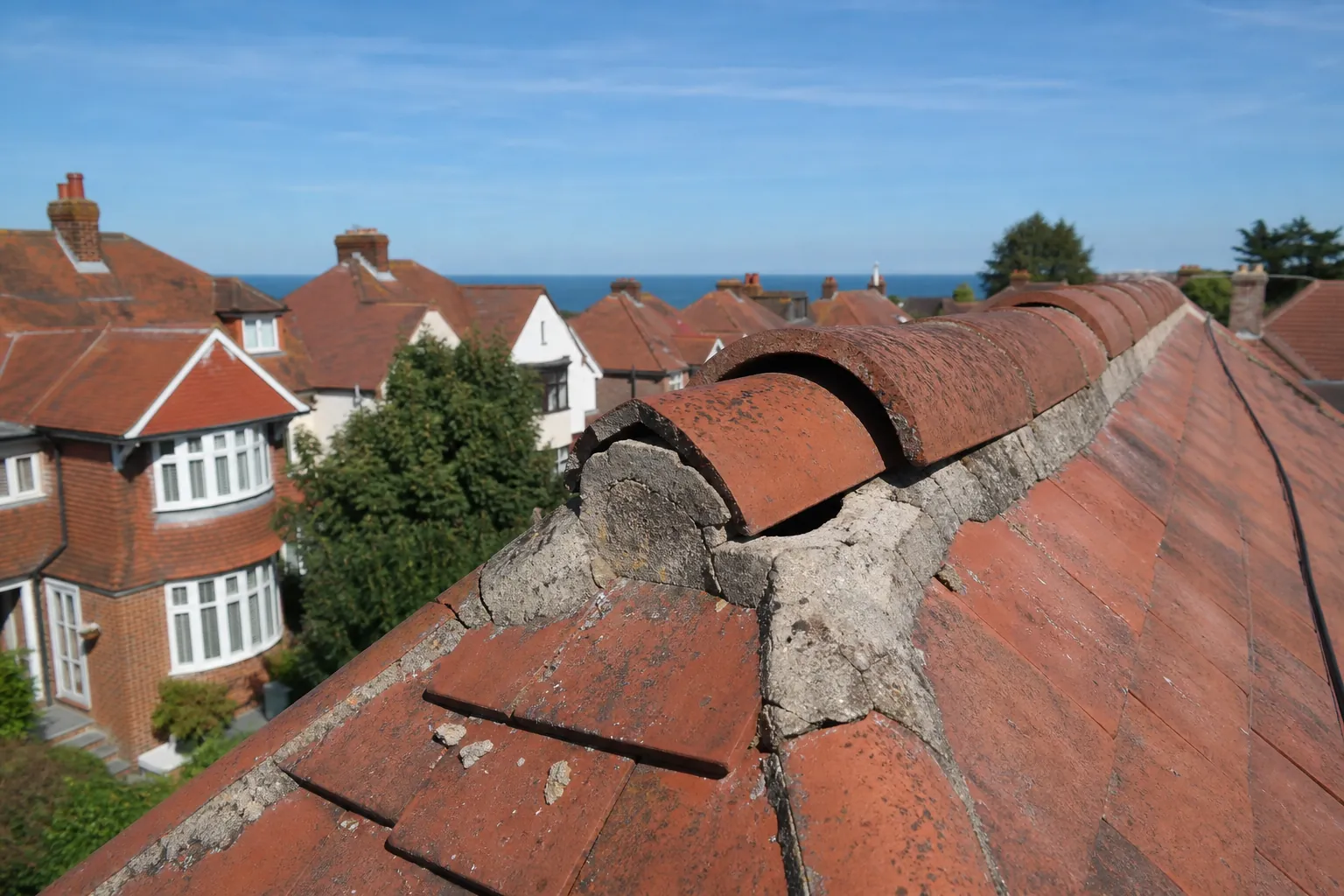 Garage conversions: what the roof needs9 min read
 Pitched garage roofs: re-tiling and re-felting9 min read
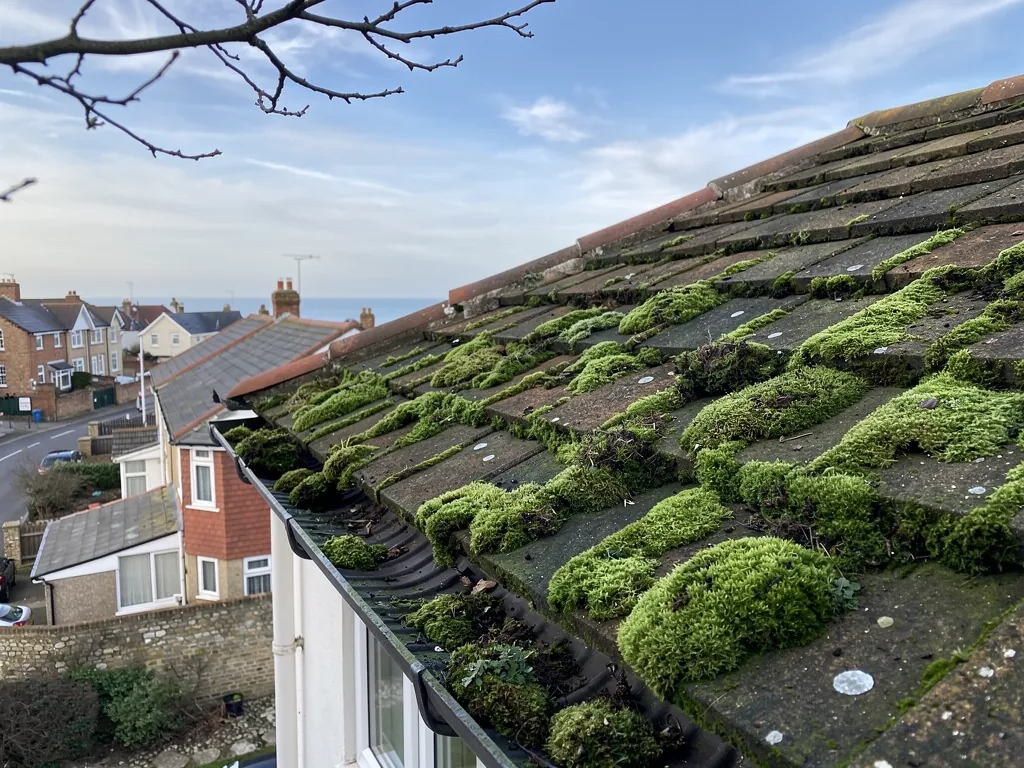 Leaking garage roof in winter: quick fixes and real repairs9 min read
Quick answers
- How much does it cost to re-felt a garage roof?
- How much does asbestos garage roof removal cost?
- How long does a garage roof last?
- Do you need planning permission to replace a garage roof?
- Does a garage roof replacement need Building Regulations approval?
- Does home insurance cover a garage roof?
- Do you need a licence to remove an asbestos garage roof?
- What is notifiable non-licensed asbestos work?
- How is asbestos roof sheeting disposed of?
- Can you stand on an asbestos garage roof?
- Are old garage gutters asbestos too?
- Why does my garage roof drip inside?
- Is EPDM good for a garage roof?
- Felt or box-profile sheets on a garage?
- What fall does a flat garage roof need?
- How long does it take to replace a garage roof?
- How do you re-roof a concrete sectional garage?
- Can you add rooflights to a garage roof?
- How are carport and lean-to garage roofs replaced?
- Re-roofing a garage in a block or row
Questions
Garage roof questions, answered
How much does a garage roof replacement usually cost?
It depends on the covering, the size and the state of the deck. A re-felt of a typical garage is quoted by Checkatrade at around £1,000 to £2,000, averaging £1,500. Asbestos sheets, rotten boards or awkward access push a job higher. A survey with photographs comes first, then the written quote gives a single total, so you can see what the number covers before you decide.
What is the lowest-cost way to replace a garage roof?
Usually it is the simplest covering that suits the shape of the roof, laid on a deck that does not need rebuilding. Felt costs less to fit than rubber or resin, but it may need replacing sooner. A repair costs less still, if the roof is sound. Lowest cost on the day is not always lowest cost over the years, so ask each roofer to explain the trade-off.
Is there government money for a new garage roof?
Probably not. National schemes pay for insulation and heating, not for re-covering a roof; ECO4 ends on 31 December 2026 and the Great British Insulation Scheme finished on 31 March 2026. If money is tight or someone at home is disabled, ask Arun District Council what it offers, and gov.uk lists schemes open now. Eligibility is never automatic, so never pay a firm that promises a grant-funded roof.
How long does a garage roof replacement take?
A single garage is a smaller job than a house roof, but the time depends on the covering, the weather and what the survey finds. Rotten boards need replacing, asbestos sheets need careful handling and resin needs a dry deck. Rain or a gale will stop work on any roof. You get the expected programme with the written quote, once we have seen the garage.
Does replacing a garage roof need planning permission or building control?
Re-covering in matching materials does not usually need planning permission, but listed buildings and Article 4 areas can differ, so ask Arun District Council or your own council. For Building Regulations, the Planning Portal sets thresholds based on the building envelope and the roof, and Arun's building control team treats roof re-covering as approval work, so ask them. Notifiable work comes with an explanation of the consent route from us, and we handle the Building Regulations notification.
Will home insurance pay for a storm-damaged garage roof?
It might, since wear and tear is generally excluded, so check your policy for outbuildings. Which? advises telling your insurer straight away, making a temporary repair if you must, keeping every receipt and photographing the damage. A decision you think is wrong can go back to the insurer and then to the free Financial Ombudsman Service. Whether a claim pays out is for the insurer to decide.
Get a quote
Send us your garage roof
Send a photo of the covering and the underside, say how big the garage is and whether the sheets are corrugated; we survey the roof and deck first.
Loading the enquiry form. You can also call 01243 252373.