
Commercial roofing in Bognor Regis
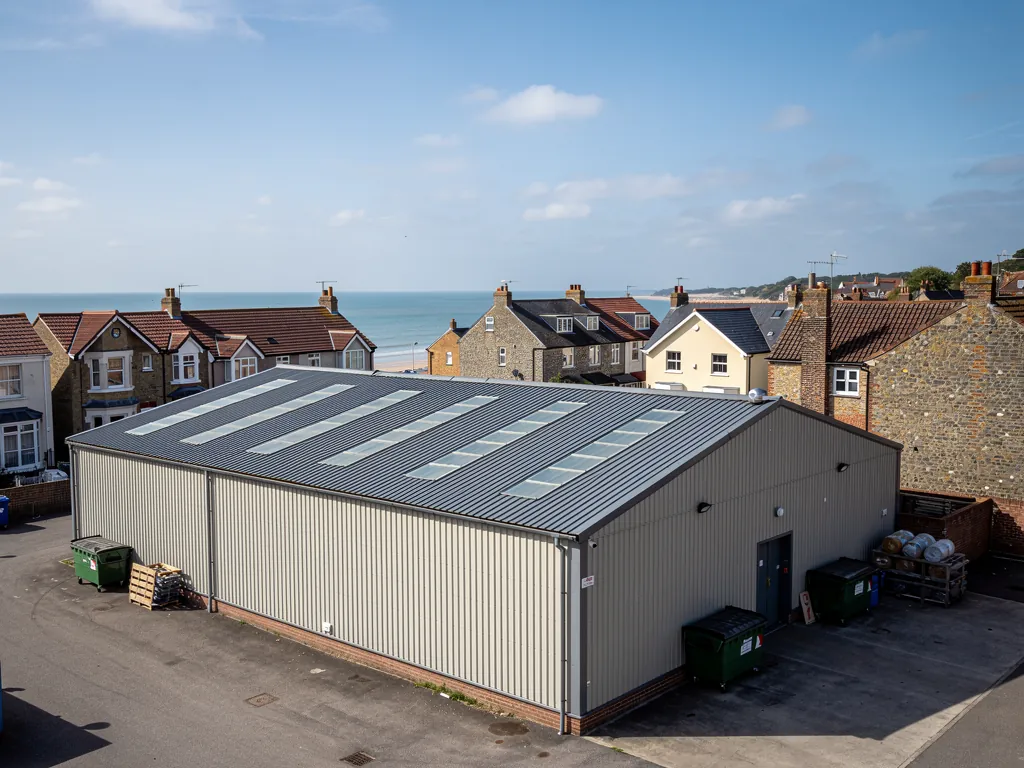
Commercial roofing in Bognor Regis means flat roofs on shops and units, pitched roofs on offices and flats, and gutters over all of them. We survey, photograph the fault and give a plain verdict before any price.

- Repair or replace,
said plainly - Photos of
your own roof - Written quote,
one total price - Ridges and verges
fixed to BS 5534
Signs
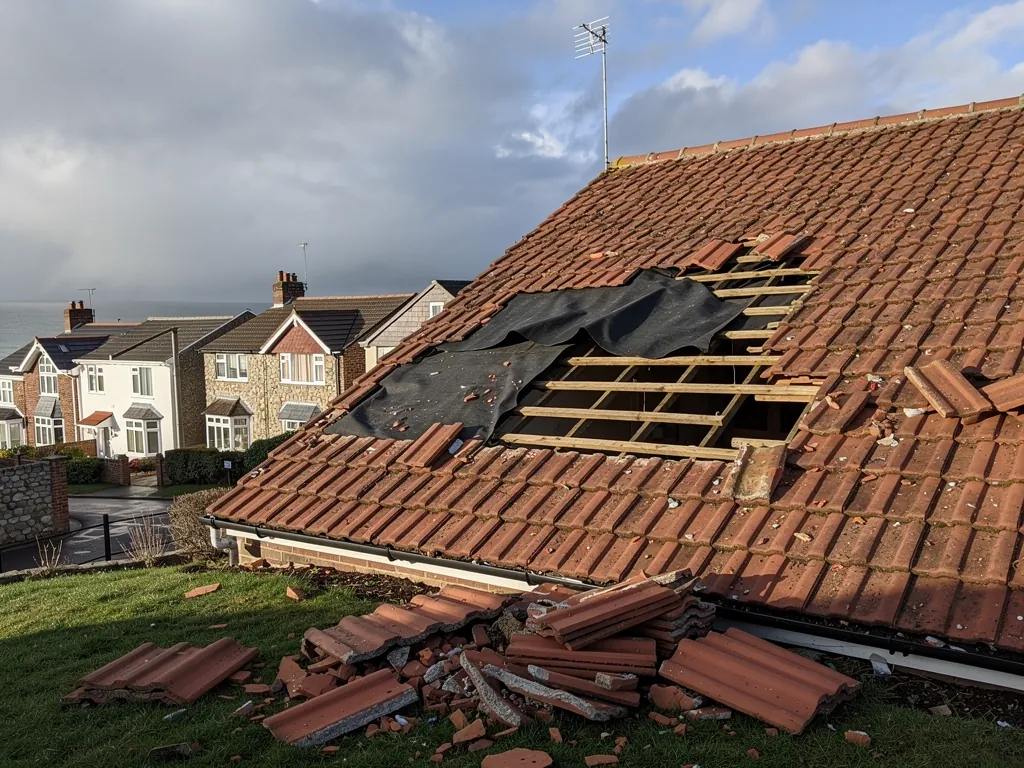
Signs a commercial roof needs attention
- Brown stains spreading across a ceiling tile
- Water ingress around rooflights or outlets
- Ponding that stays long after the rain
- Blistered, split or lifting membrane
- Overflowing gutters and damp fascias
Commercial work we carry out
The commercial roofing work we carry out across West Sussex
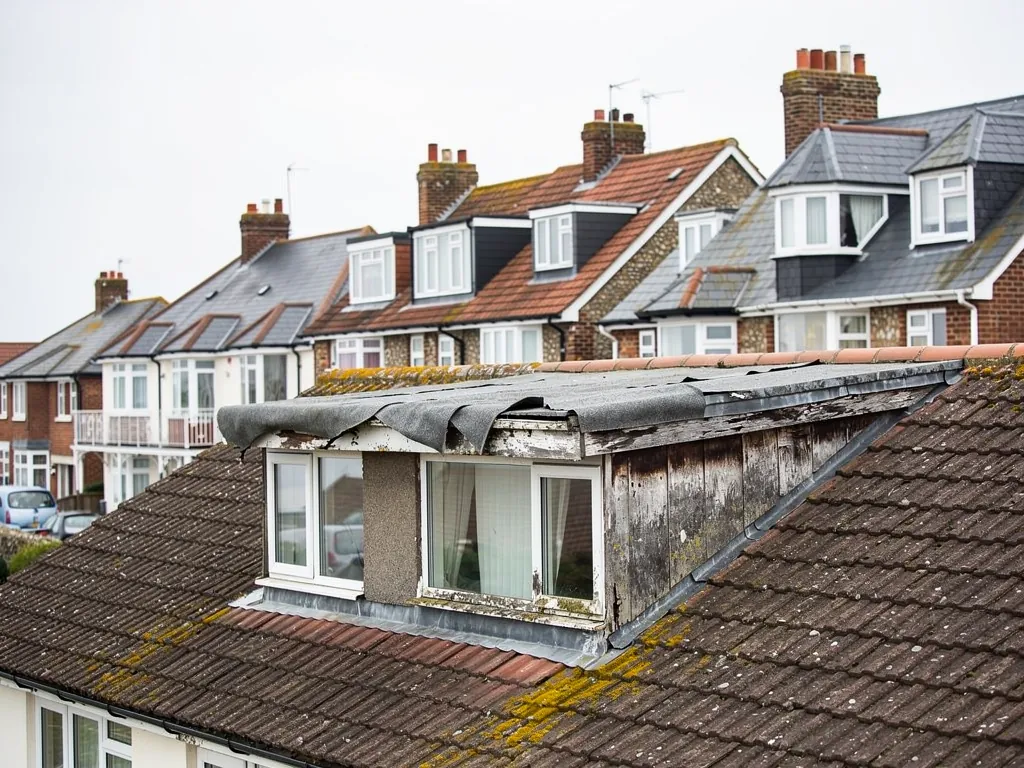
Flat roof repairs
A split, blister or open lap is sealed or patched in the right material for the existing covering, once we have checked that the deck underneath is still dry.
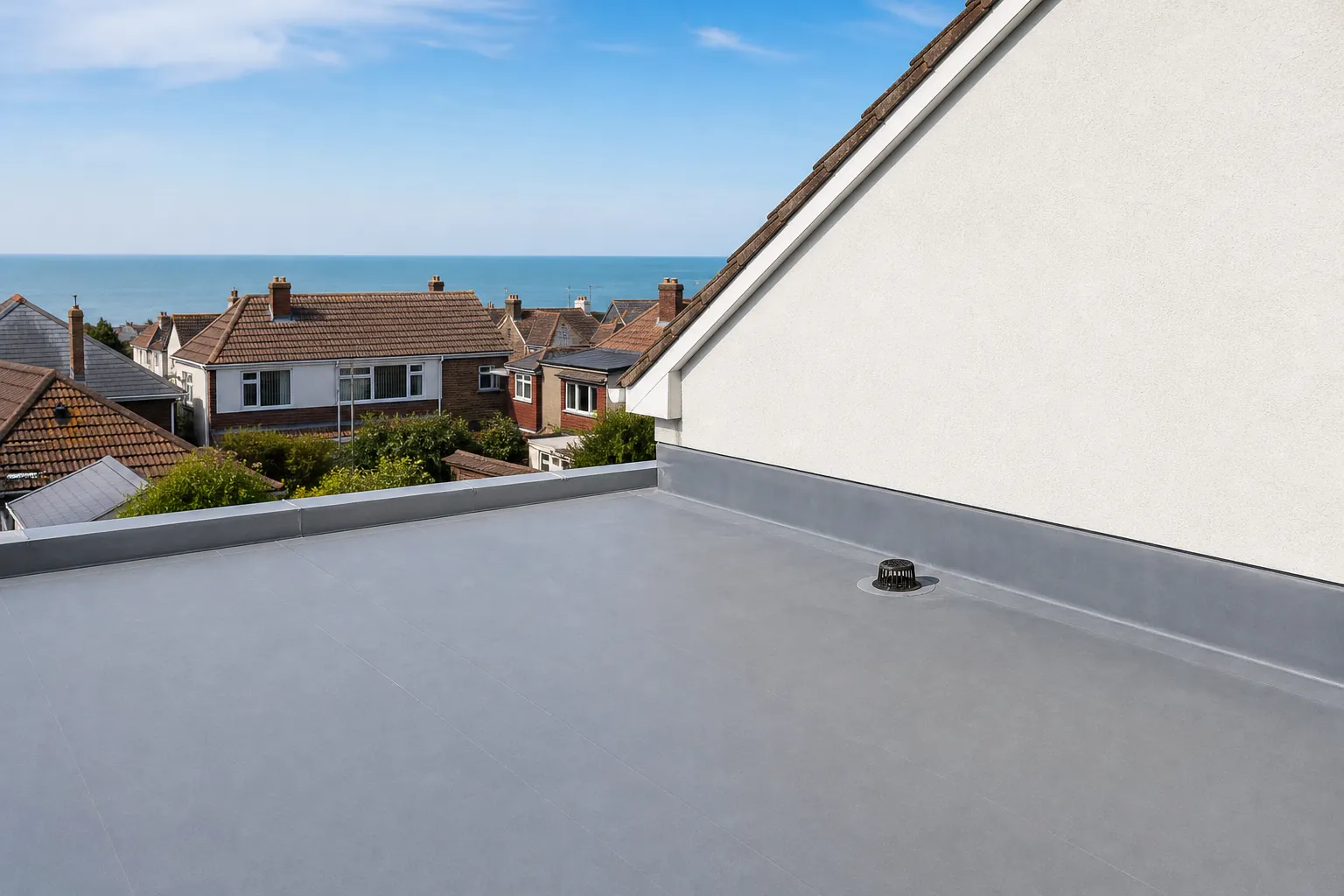
New flat roof systems
Where the covering has failed across the whole roof, we install a new roof in felt, EPDM or GRP, laid to proper falls with the trims finished neatly.
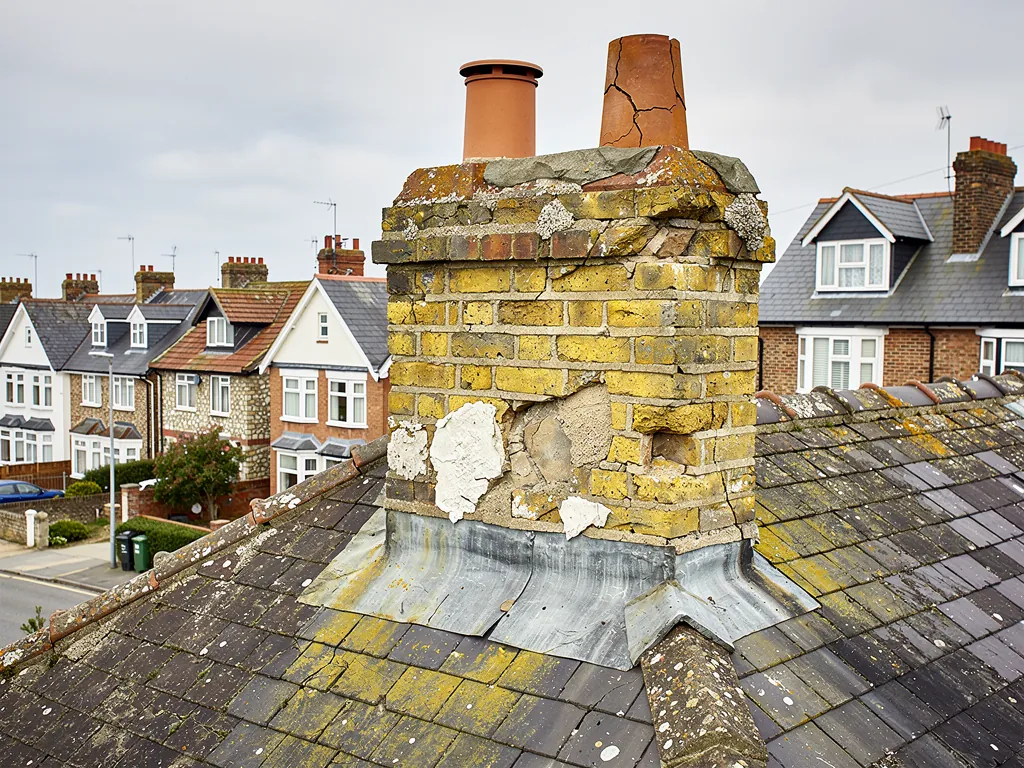
Pitched tile and slate roofs
Tile and slate repairs, relaying and re-roofing on offices, flats and halls, with ridges and verges mechanically fixed to BS 5534.

Lead, flashings and chimneys
Flashings, soakers, valleys and chimney stacks renewed in dressed lead wherever a pitched roof meets a wall, a parapet or a stack.
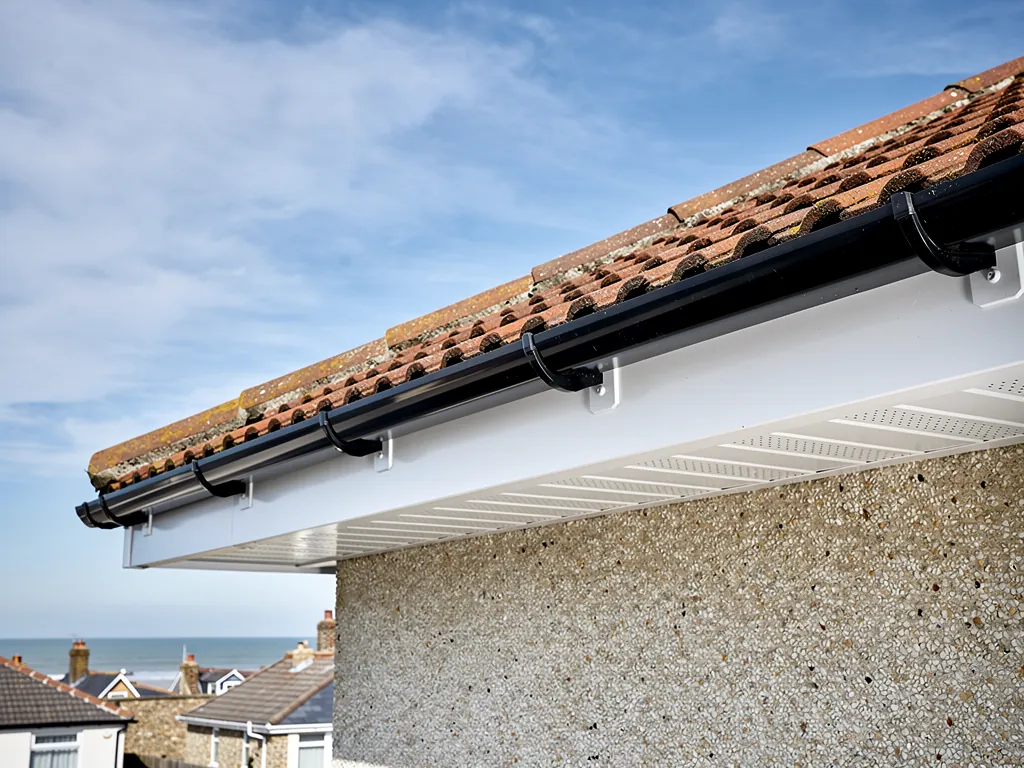
Guttering, fascias and soffits
Gutters cleared, realigned or replaced, and fascias and soffits repaired or renewed, so rain reaches the downpipe instead of running down the wall.
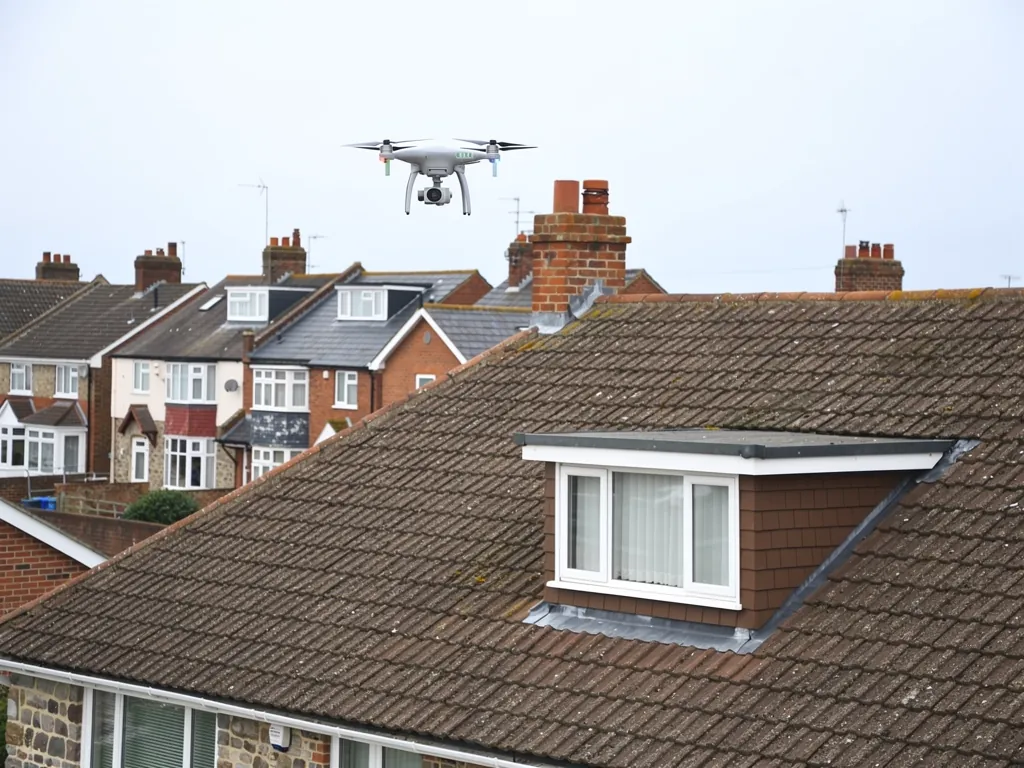
Surveys and planned maintenance
A written survey with photographs, then planned inspections and cleaning, so small faults are put right before they become water ingress inside.
What it costs
What commercial roofing costs in Bognor Regis
priced on survey
No fixed rate: the roof, its access and its covering set the price
Roof area, height, access equipment and the condition of the deck beneath decide the figure, which is why we survey the building before we price it.
How a commercial roofing job runs, from first call to handover
- 1Tell us about the buildingRing 01243 252373 or WhatsApp photos of the roof, the stain and the gutters, with the address and who manages the lease.
- 2We survey the roofWe inspect the covering, deck, upstands, outlets and rooflights, check inside for water ingress and photograph every fault we find.
- 3The verdict, then the pricePhotographs and reasons come first: repair, maintain or replace. The written quote that follows carries a single total for the work.
- 4The work and the handoverWe agree access and working hours with you, repair or renew the covering, photograph the finished roof and take all waste away.
Commercial roofing, in depth
How commercial roofs are repaired and renewed on the Sussex coast
Flat roofs, leaks, pitched roofs, gutters, cost and re-roofing, explained for shops, units, offices and blocks of flats.
Chapter 1: Flat roofs on shops, units and extensions2501
Sheet 01 / 06A flat roof is never truly flat: it needs a fall to the outlets, a sound deck and a covering matched to the building.
Flat roofs sit over the rear extension of a shop, the workshop unit, the small office building and the top floor of a block of flats. Failure tends to follow a pattern. Old felt splits and blisters, laps open at the edges, and an upstand, the short vertical return where the covering climbs a wall or parapet, peels away. Outlets silt up with grit, so rain stands where it ought to drain. Because a commercial flat roof can cover a wide area, and the rooms beneath it are in daily use, one small fault can send water into a suspended ceiling, a stockroom or the flat below before anyone notices a mark from outside.
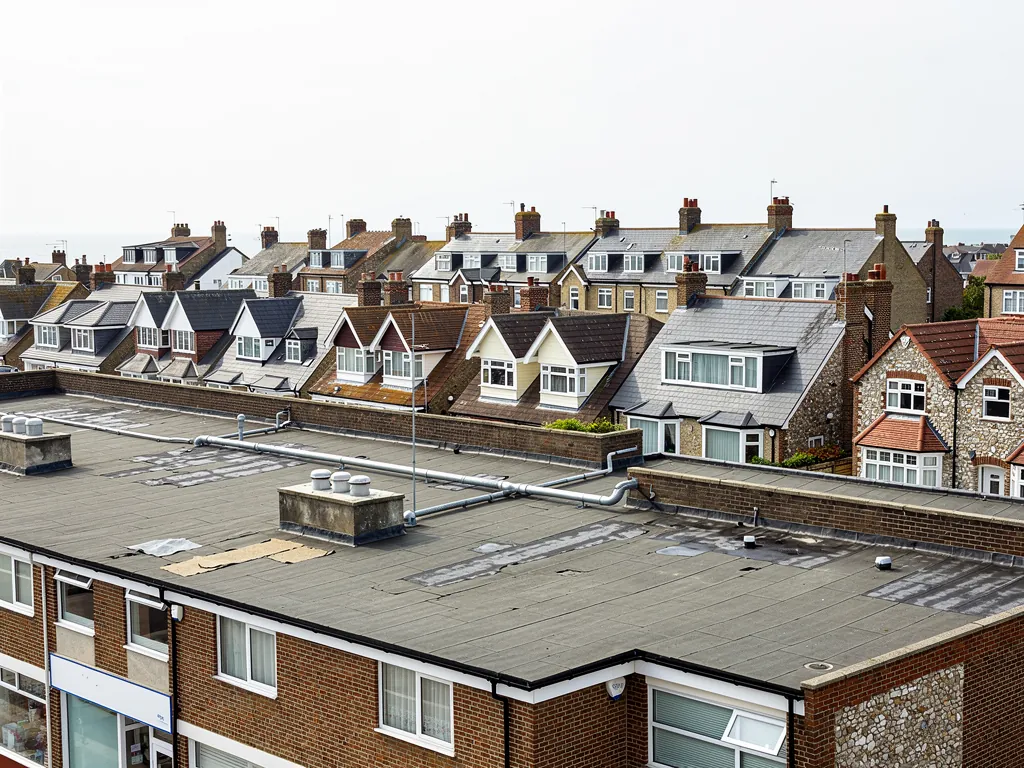
Three verdicts for a commercial flat roof
- PatchOne split or open lap on a dry deck, with sound covering around it.
- ResealUpstands, outlets or penetrations admitting water while the field of the roof is intact.
- ReplaceWet insulation, ponding in several places, or repairs stacked on earlier repairs.
1:80
minimum finished fall under BS 6229:2025
Water follows the fall, so a roof that cannot drain will always find the weakest lap.
1.1 Felt, EPDM and GRP on a commercial roof
Built-up felt is bitumen sheet melted onto the deck by gas flame, in layers. The guide site Less, updated March 2026, quotes 10 to 20 years for it and adds that a poorly laid roof might fail within ten. EPDM is a rubber membrane supplied as a single sheet, with an expected service life of 20 to 30 years according to GreenSpec. GRP, short for glass-reinforced plastic and better known as fibreglass, is laid as a resin laminate, and Less puts it at 25 to 40 years. A repair has to use the same family of material as the covering around it, since a felt patch will not bond to rubber or resin. Our guide to commercial flat roof systems compares the three, and the page on built-up felt explains why the older system still turns up on buildings today. A roofing solution that suits one building rarely suits the next, so the covering is chosen to suit the building, its foot traffic and the budget, never because it is what we happened to have in stock.
1.2 Falls, ponding and the deck underneath
Pools that linger after rain mean the roof was laid with too little fall, the gentle gradient that sends water to the outlets. BS 6229:2025, current since December 2025, sets a minimum finished fall of 1:80, and designers normally aim nearer 1:40 so that the roof still drains after the structure has moved a little. When ponding spreads across the middle, patching the low spot rarely holds, and tapered firring strips may have to go under a new covering to create the gradient. Beneath the membrane, the deck matters just as much. Soft boards or damp insulation turn a patch into a short-term fix at best. We press, probe and photograph before we say which situation you have, and the plain verdict names it. For the replacement work in full, see our flat roofing service.
A commercial flat roof also carries plant, aerials, ducts and walkways, and every penetration adds an upstand that has to be sealed. Edge trims need to throw water into the gutter instead of letting it run down the fascia. At each survey we check every penetration and every edge, note the details likeliest to fail next and tell you what to look at between visits, whether that is a cracked sealant bead, a lifted trim or a walkway worn through to the membrane.
Chapter 2: Leaks and water ingress on a large roof2379
Sheet 02 / 06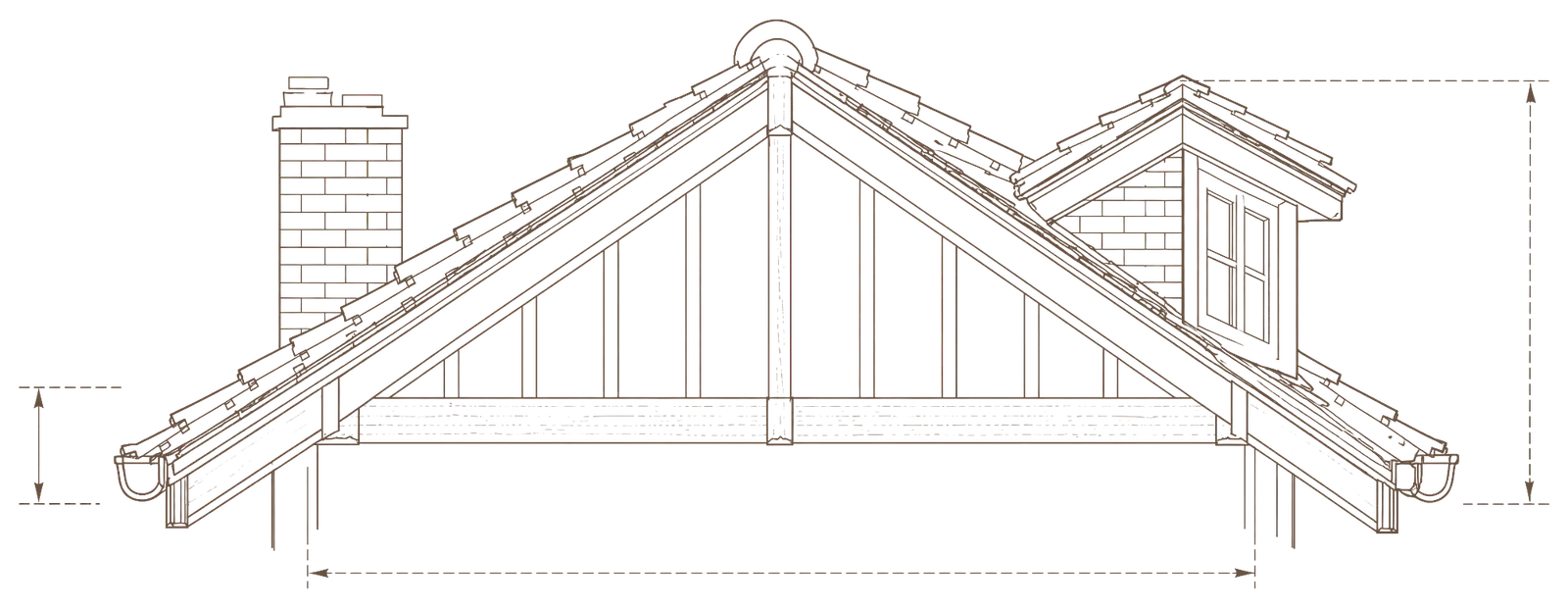
- Parapet Cracked capping lets rain behind the wall and into the ceiling.
- Upstand Covering that pulls off the wall lets water run behind it.
- Outlet Grit in the outlet leaves water standing against the laps.
- Rooflight Kerb, glazing and covering meet here, so every seal is checked.
- Gutter box Lined channels behind the parapet clog and overflow inwards.
On a large roof the stain inside is a clue, not an address: water travels before it drips, so we trace it from both sides.
Water ingress is the trade's name for a leak that has already got inside. On a commercial building it rarely shows where it enters. Rain finds a gap at a lap, a rooflight kerb or a flashing, runs along the deck or a purlin, soaks the insulation and only then marks a ceiling tile, often some distance away from the real fault. The first job is therefore to trace the water, and that starts inside the building as well as on the roof. A damp patch near a stairwell, a stained tile above a stockroom or a drip at a light fitting all tell us where to look first. A dated photograph of the stain, with a note of the weather that brought it on, saves time at the survey, and so does the name of whoever holds the keys to the roof hatch or access ladder.
Tracing water ingress, in order
- 1InsideNote where the stain sits and which weather brought it on.
- 2DeckFollow the fall and the insulation uphill to the wettest point.
- 3DetailCheck the upstand, outlet, rooflight or lap above that point.
- 4Hose testIf the cause stays unclear, wet one detail at a time, lowest first.
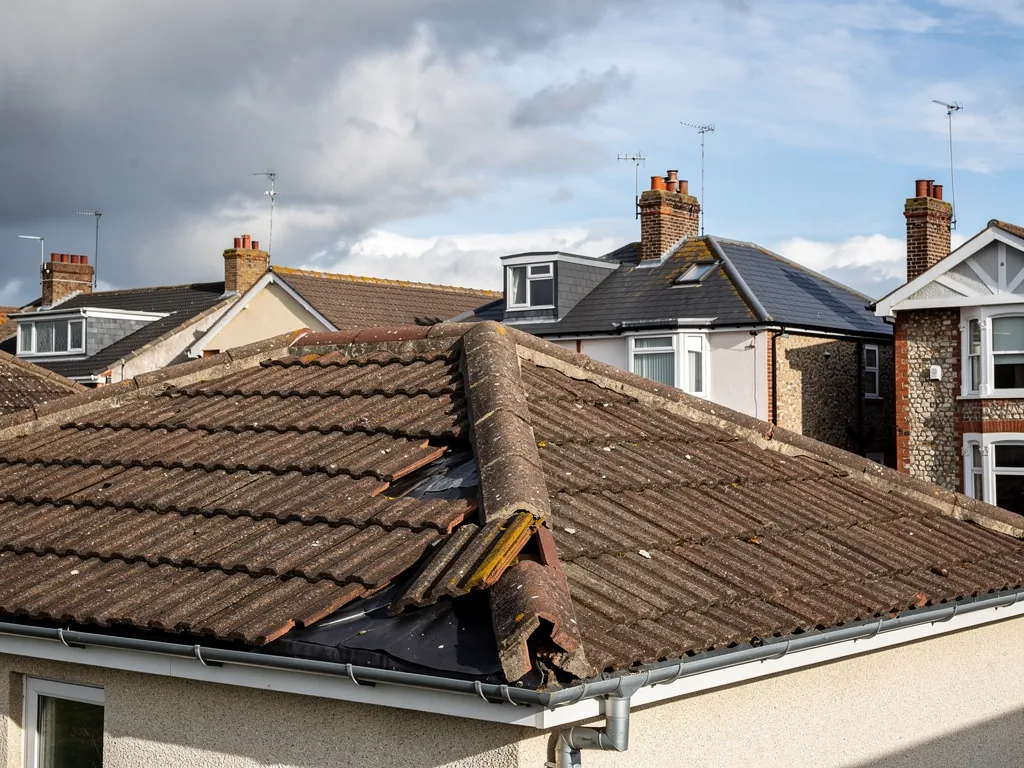
2.1 Where water gets in
The usual entry points are details rather than open roof. Parapet walls and upstands, where the covering turns up a wall and is capped or flashed at the top. Outlets and gutter boxes, the lined channels that collect rain behind a parapet. Rooflights, where the kerb, the glazing and the covering all meet. Pipe, vent and duct penetrations. Laps between sheets or strips of membrane. Each is checked by eye, then by hand, and the fault is photographed beside its cause so you can see both. Our guide to finding leaks on large commercial roofs goes through the methods in more detail.
2.2 Tracing the route, step by step
We start at the ceiling stain and work uphill along the likely route, because water follows the slope of the deck and the fall of the insulation. If the cause is not obvious, we test one detail at a time with a hose, beginning at the lowest point so the test does not hide the answer. Condensation is ruled in or out as well. Warm, damp air meeting a cold deck can leave droplets that look like a leak, and BS 5250, the code of practice on managing moisture in buildings, is the reference for ventilation guidance. Refixing a covering will never cure condensation, so we find out which you have before anyone quotes for a repair. On a shared roof over flats or units, we tell you which one the water is reaching so the right person is told promptly.
A leak after a storm deserves the same method. First make the area safe, then tell your insurer, photograph the damage and keep receipts for any temporary repair; our answer on business insurance and storm damage sets out the same steps. Leaks and storm damage get priority from us, and a leaking roof is made safe before anything permanent is planned. A temporary cover can protect stock and fittings while the proper repair waits for settled weather, and the survey photographs double as evidence if you later need to show the insurer what the roof looked like.
Chapter 3: Pitched tile and slate roofs on commercial buildings3172
Sheet 03 / 06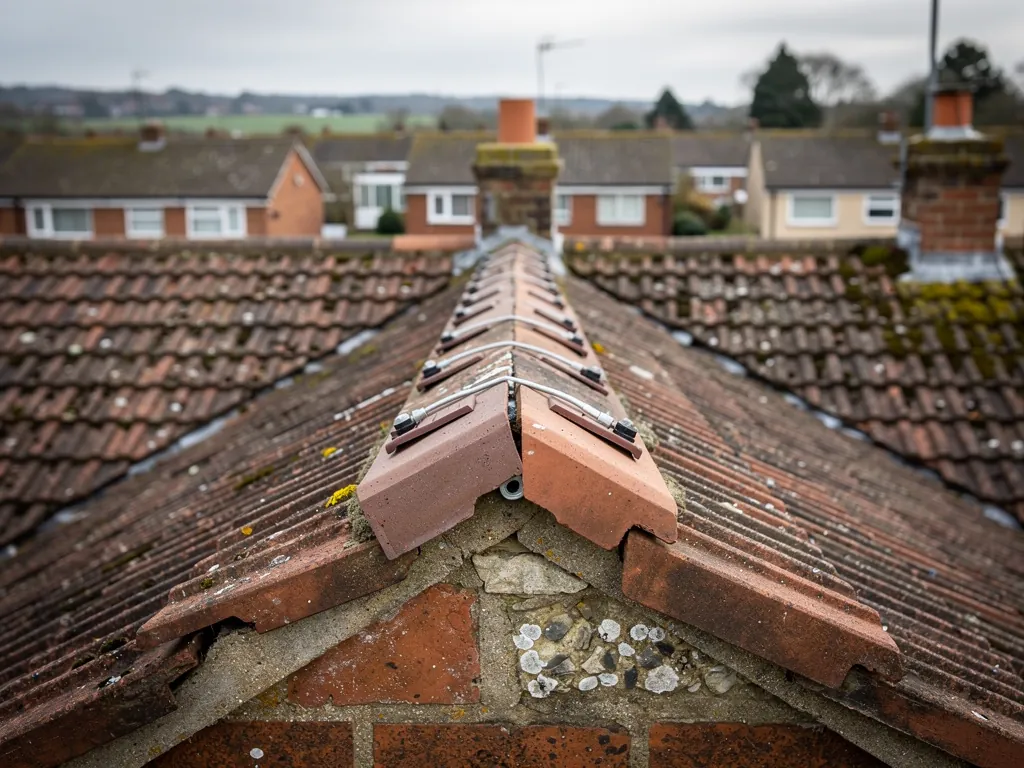
Offices, flats and halls often sit under tile or slate, and the ridges, edges and lead are where those roofs let go.
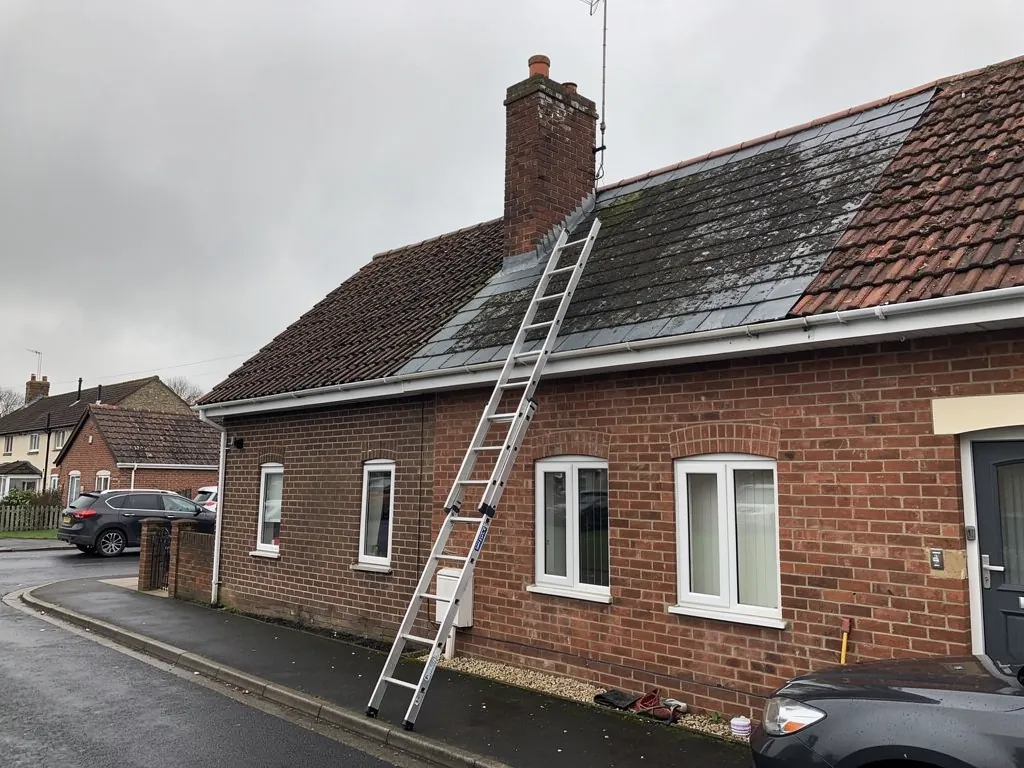
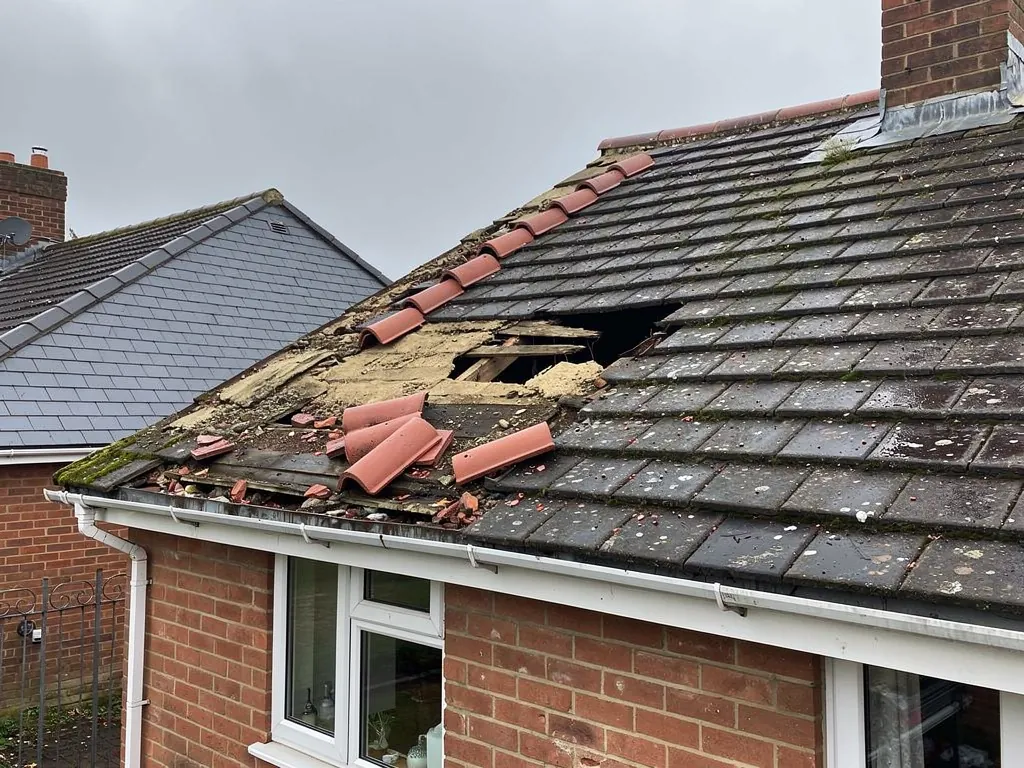
Not every commercial roof is flat. Offices in converted houses, the floors above a row of shops, blocks of flats, halls and some older workshops sit under pitched roofs of tile or slate. The repair logic matches a house, with two differences: the roof is usually bigger and higher, and access costs more. A scaffold or a tower often earns its place because it lets the work be done properly in one visit instead of being patched from a ladder.
3.1 Tile, slate and the fixings that hold them
Catch a slipped or cracked tile early and the fix is modest. Tiles hang on timber battens, and slipping usually traces back to a snapped nail, a broken nib or a batten gone soft. Slate has a habit of its own: once the nails holding the slates have rusted through, slates slide down a whole slope, and replacing them singly stops making sense. When a re-roof is justified, the new roof covering can be tile, slate or another material, and the choice should suit the building, the street and the budget, and the survey says which materials the structure can carry. Marley expects concrete tiles to last around 60 years but is clear that this is not a guarantee or warranty of longevity, while the Confederation of Roofing Contractors puts well-maintained slate at 100 years or more.
What we check on a pitched roof
- Ridge and hip fixings
- Verge and eaves courses
- Battens and underlay at the eaves
- Lead at walls and stacks
- Valley linings and laps
BS 5534
the British Standard for slating and tiling
On a tall roof, the scaffold is what lets the repair be done properly once.
3.2 Ridges, verges and exposure
At the apex runs the ridge, hips are the sloping outer corners of a hipped roof, and a verge is the sloping edge where tiles end at a gable wall. These are the places the wind attacks first. Under BS 5534, the British Standard for slating and tiling, revised in 2014, ridge and hip tiles are held by mechanical fixings as well as their mortar bed, which is how we fix them. Marley warns that on pitches under 30 degrees the windward slope can suffer severe suction, a point that counts for low-pitched roofs near the sea. Sea weather, gales and driving rain work on every edge, and a dry-fixed ridge or verge tested to BS 8612:2018 is one answer on an exposed gable. Whatever is chosen, the workmanship matters as much as the product, because a good tile badly fixed lets go in the first strong gale.
3.3 Matching materials on older buildings
Commercial buildings in Bognor's conservation areas can keep original slate or clay tile. Where a repair involves two materials, we match the colour, size and laying pattern so the roof still reads as a single roof from the street.
Chapter 4: Lead, chimneys and gutters that carry water away2928
Sheet 04 / 06Rain that cannot leave the roof stays on it, so lead, outlets, gutters and fascias decide how a commercial roof ages.
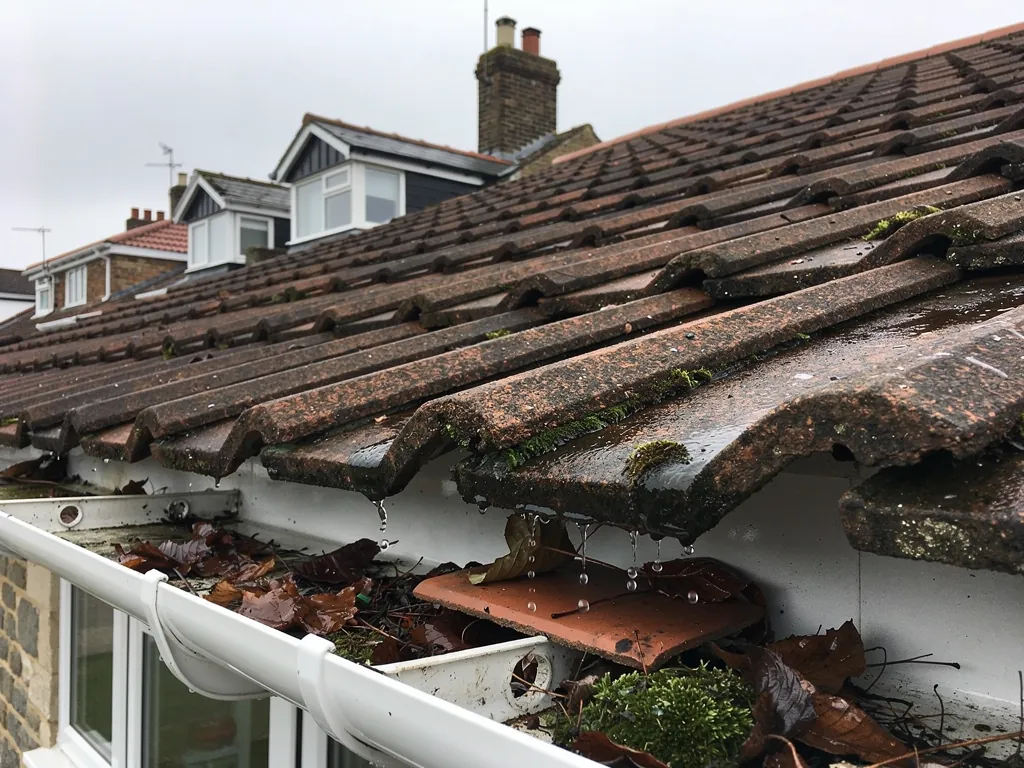
A roof sheds water only as well as its weakest junction and its most neglected outlet. On a commercial building the gutters often run a long way, drain through hidden outlets and sit behind parapets, so a blockage can go unnoticed until water shows inside. Leaves, moss and grit collect in outlets and valleys. When they stop the flow, water backs up under the bottom course, or over the lap of a flat roof, and finds its own way in. Autumn leaf fall and spring seed drop both matter, which is why planned clearing beats waiting for the first overflow.
4.1 Lead flashings and chimney stacks
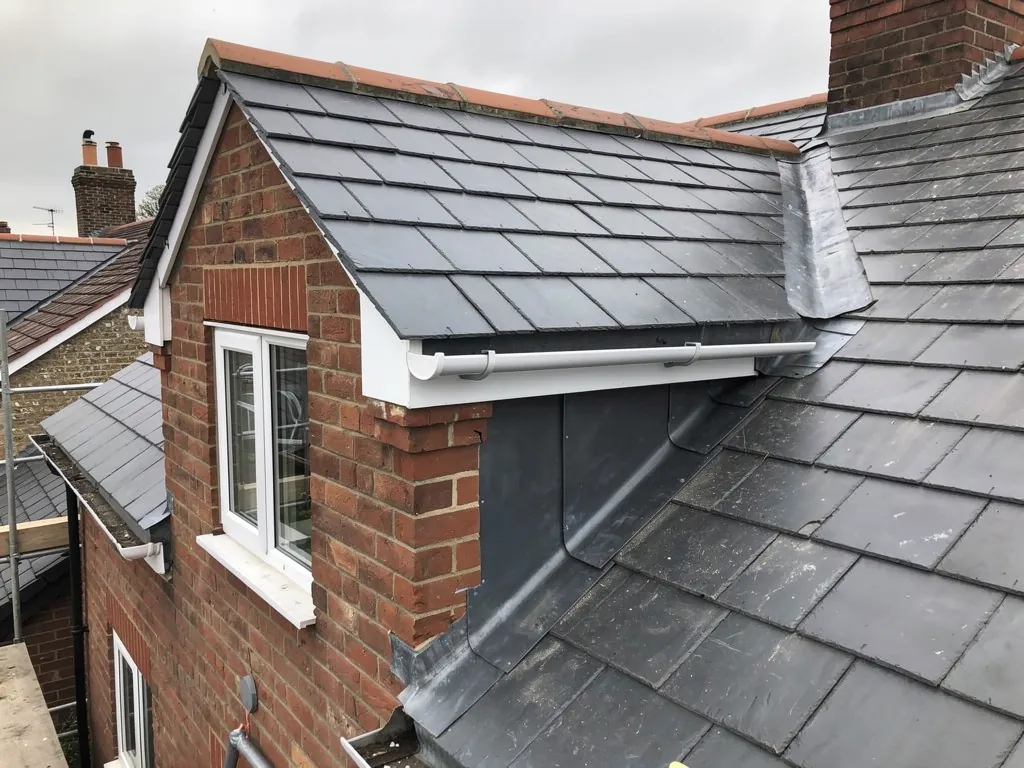
Where a roof meets a wall or a stack, a lead flashing seals the joint, and soakers, small folded pieces of lead, sit between the tile courses at the abutment. Lead is specified by code, a number that fixes its weight and thickness; Royston Lead's brochure lists code 5, at 2.24 mm, for flashings, gutters and dormers. Round the chimney pots sits the flaunching, a sloped mortar cap, and once it cracks, rain reaches the brickwork below. Pointing, flaunching and lead often share a single scaffold, which is sensible because access is a large part of the price, and doing them together means the lead is not disturbed again by a later mortar repair. Dressing lead properly takes patience, and it is the detail that keeps a wall junction dry for years.
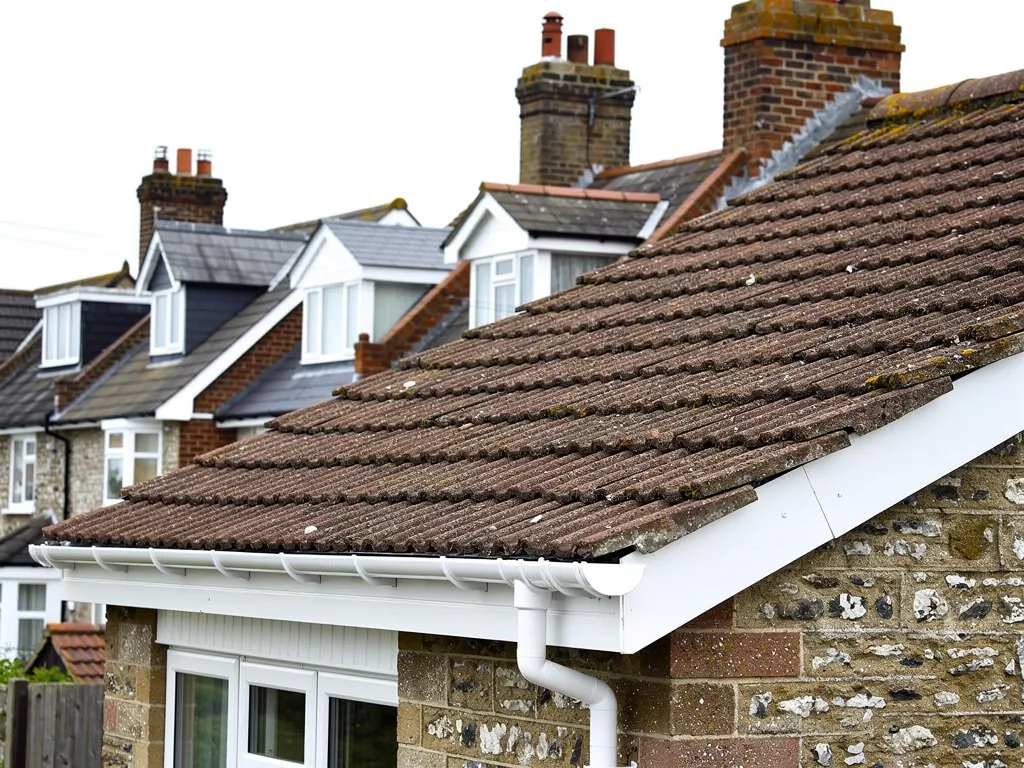
4.2 Guttering that carries the load
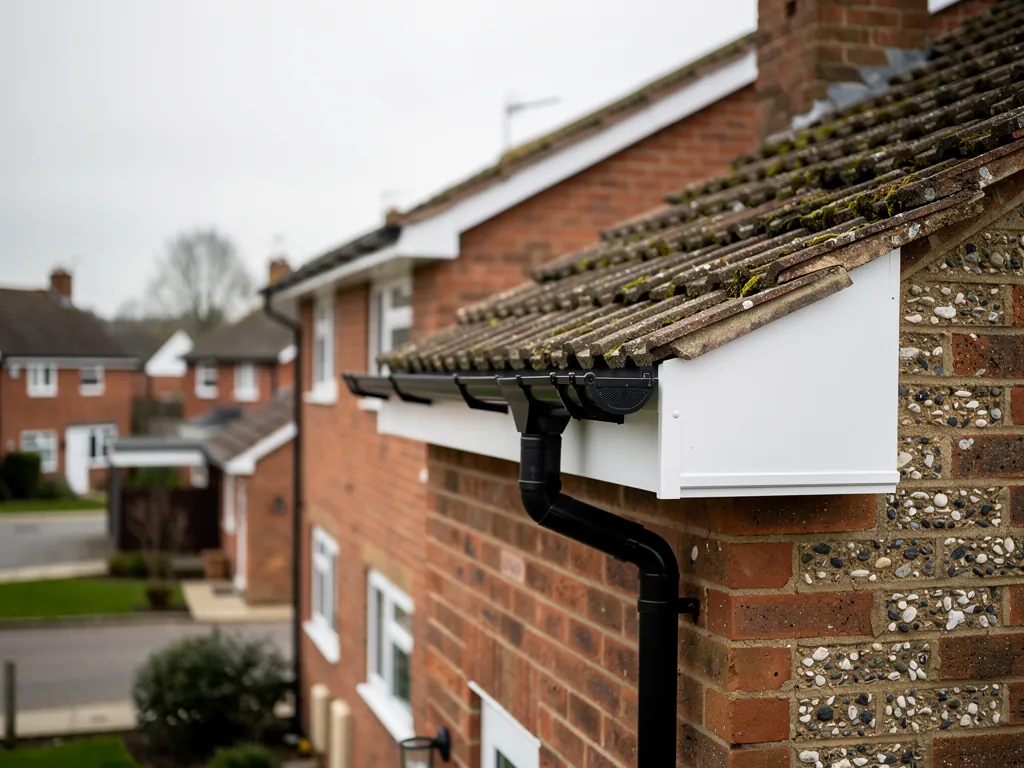
Guttering needs a slight fall towards the outlet, roughly 1:600 to 1:350 depending on the system, and Brett Martin's installation guidance puts supports no more than 900 mm apart. A sagging run holds water, grows moss and overflows at the joints. We clear, realign or replace guttering as the survey shows, and the guttering, soffits and fascias page covers domestic and commercial runs. For long valley channels, an industrial gutter lining can be an alternative to replacement, and the survey says whether the existing channel is sound enough to line.
4.3 Fascias, soffits and cleaning
Along the eaves, the fascia board carries the gutter brackets and the soffit closes the underside of the overhang. Rot or splits there let water and nesting birds into the roof void, so we repair or renew them alongside the gutters. Roof cleaning is a separate job from repair: moss and debris are lifted off so they stop holding water against the covering, but cleaning never mends a split or a slipped course, and the survey tells you which of the two you need. Done on a planned schedule, cleaning and clearing are among the least costly parts of keeping a roof reliable.
A tidy roofline
Clear outlets and valleys after autumn leaf fall and again after a gale; an hour on a gutter costs less than a wet ceiling.
Chapter 5: What commercial roofing costs and what moves the price3294
Sheet 05 / 06There is no single price for a commercial roof, because area, access and covering vary widely from one building to the next.
Search for a price and you will find domestic cost guides, not commercial ones. That is because commercial roofs differ too much to share a rate: a single-storey shop extension and a three-storey block of flats have little in common beyond the word roof. What moves the price is the same list on every job, and knowing it helps you read any quote you are given, ours included.
Typical UK roof replacement guide prices
- Garage re-felt£1,000 to £2,000
- Flat roof replacement£2,800 to £7,500
- Gable-end pitched roof£7,000 to £16,250
- Hip-end pitched roof£9,250 to £18,000
House-sized guide figures, plus VAT; a shop, unit or block of flats is priced from its own survey and arrives as one written total.
Source: Checkatrade roof replacement cost guide, table last updated October 2026
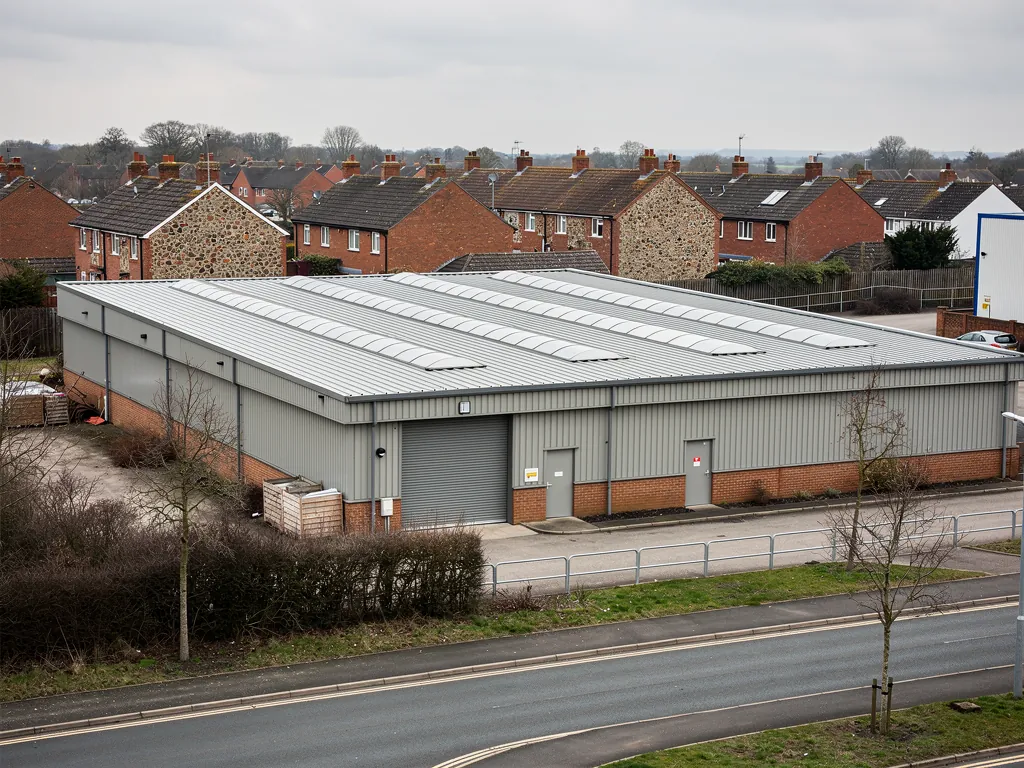
5.1 What sets the price
Area comes first, then height and access, because work slows wherever the roof is hard to reach. Next is the covering and its quality, because material choice sets both the first cost and the years you can expect from it: felt, EPDM, GRP, slate and clay tile all differ in what they cost to supply and fix. Then comes whatever the survey finds once the roof is opened up, such as wet insulation or a soft deck. Working hours matter too. A job planned around trading hours, or squeezed into short winter days, takes longer than one done in a clear week, and a roof that must stay in use throughout needs more careful phasing. Checkatrade gives roofers' rates as around £35 to £45 an hour or £280 to £360 a day, which is why a one-day patch and a two-week re-roof sit so far apart. The standard rate of VAT is 20 per cent, so check whether any quote you receive includes it.
5.2 Scaffold, access and licences
Checkatrade's scaffolding guide, table updated October 2026, lists about £875 a month for a semi-detached house of two storeys and about £1,000 for a detached bungalow. A commercial frontage can need a different set-up altogether. If the scaffold sits over the footway or carriageway, a licence from the highway authority is needed under the Highways Act. West Sussex County Council asks for at least 10 working days' notice and charges £266 for one month, and Hampshire County Council, which covers Havant, asks for ten clear working days. That lead time belongs in your plan before a start date is fixed.
5.3 Reading a commercial quote
Check what the one total covers: scaffold, waste removal, VAT and any insulation work. Ask who stands behind the workmanship, for how long, and whether that is in writing, and whether a membrane carries a manufacturer's warranty on top. A warranty is not a lifespan. Our guide to commercial roof replacement costs goes into more detail.
£280 to £360
typical roofer day rate, Checkatrade June 2026
Chapter 6: Re-roofing, consent and safe working on commercial buildings3660
Sheet 06 / 06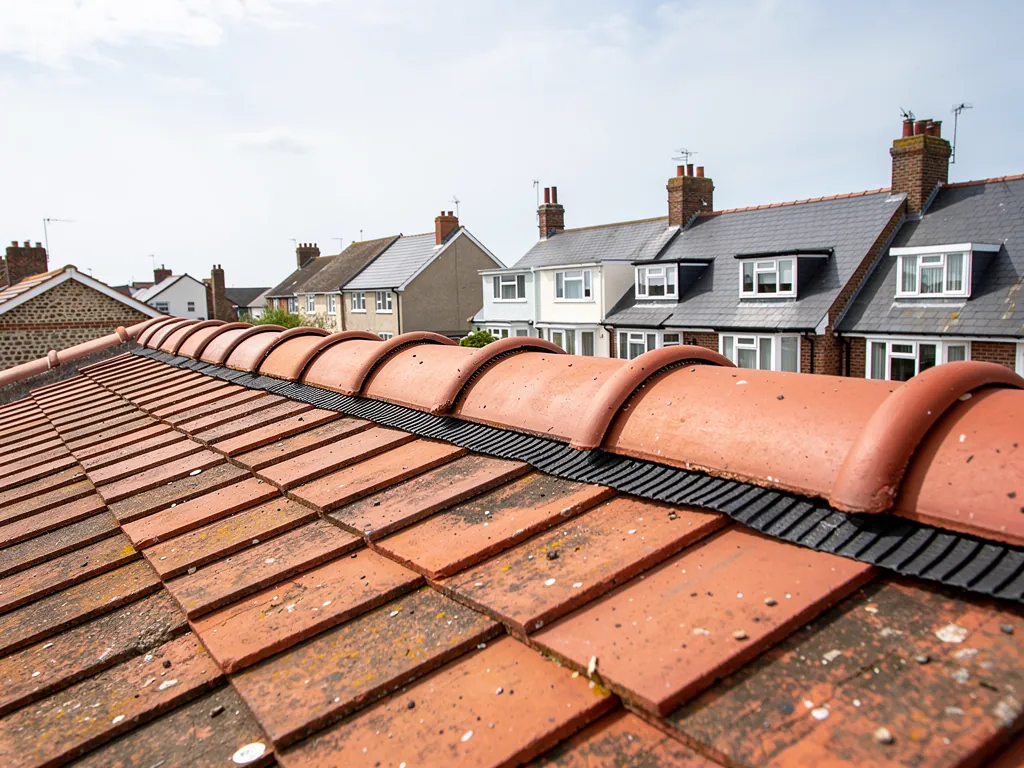
A new roof on a commercial building brings consent, asbestos and access questions that are easier to settle before the first sheet comes off.
A re-roof is justified when the evidence is broad: a covering failing across the whole roof, soaked insulation, or a third repair at the same detail. A repair needs sound material to tie into, and a new covering needs a sound structure beneath it, and if the surrounding covering is tired too, every patch invites the next leak. Our guide to repairing or replacing a commercial roof sets out the decision, and the survey photographs show you the reasons. Typical lives by covering help when you are weighing one more repair against a new roof. A new roof is a significant outlay for any business, so the plain verdict also says what could wait a year and what cannot.
Maintain and repair
Sound covering, a local fault and a dry deck: repair now and plan inspections.
Re-roof
Failing covering, wet insulation or repeat leaks: fit a new roof system.
6.1 Building Regulations and planning
A re-roof can be building work that has to be notified. The thresholds the Planning Portal publishes are written for houses, and a shop, unit or block of flats is a different building, so we ask your registered building control approver or the council's building control team before the work is priced. Any insulation upgrade alters the specification and the figure. Re-covering in matching materials normally falls outside planning control because the works do not materially affect the building's external appearance, but a change of look can need permission, and a listed building needs consent before any alteration that changes its special character. Check with Arun District Council's planning team, or with the South Downs National Park Authority inside the Park. Our Building Regulations guide covers insulation in detail.
6.2 Programme, trading hours and the weather
A shop or office rarely closes for a roof, so the programme is agreed with you before the work starts. Noisy or disruptive stages can be placed outside opening hours, deliveries and fire exits are kept clear, and the covering is never left open overnight when rain is forecast. Winter shortens the working day but does not stop the work, and we talk through the practical side with you at the survey.
6.3 Asbestos, fragile roofs and bats
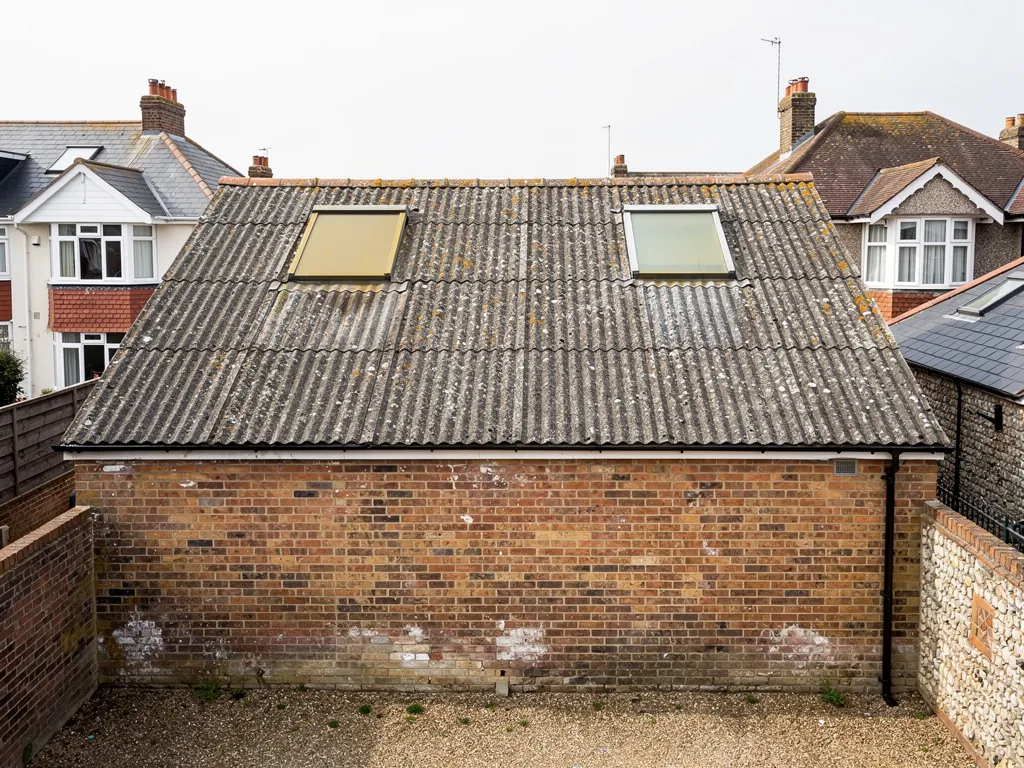
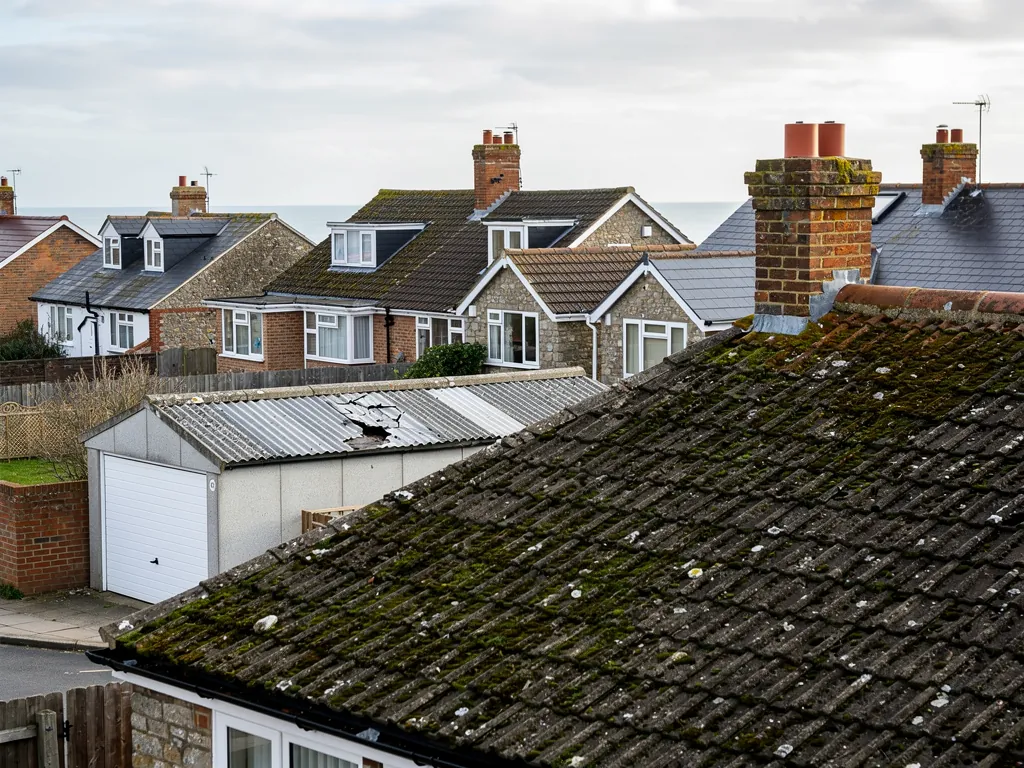
For any building put up or refurbished before 2000, HSE tells owners to treat asbestos as present until a check proves otherwise. Cement sheeting taken off with care is non-licensed work under that guidance, and sheets that break up badly turn it into notifiable non-licensed work. A roof of asbestos cement sheets is always fragile, as are some rooflights, so access is planned from the first visit; our guide to asbestos cement on industrial roofs explains the route. Every bat species and its roost is protected, and GOV.UK names repairing or replacing a roof as an activity that can affect them, and we check for signs of roosting before any covering comes off.
Conservation areas bring their own checks. Aldwick Road was designated in July 1994 and the Railway Station area in September 1994, and Arun's character guidance describes the station group as late Victorian and Edwardian. Churches and halls follow other consent routes, which differ by denomination and by whether the building is listed, so we ask before work is priced, and we put the answer in writing. Work can usually be programmed around opening hours, with noisy or access-heavy stages agreed with you beforehand.
Price guide
Typical UK repair prices for flat commercial roofs
| Job | Typical range |
|---|---|
| Small flat roof repairs | £150 to £500 |
| Bitumen felt roof repair | £100 to £140 per m² |
| EPDM rubber roof repair | £120 to £170 per m² |
| GRP fibreglass roof repair | £130 to £180 per m² |
National guide figures before VAT. Ours is a survey first, then a written quote giving a single total for the whole commercial job.
Source: Checkatrade roof repair cost guide, table last updated June 2026; Less flat roof cost guide, last updated March 2026
Guides and answers
Commercial roofing guides and answers
Short guides on flat roof systems, over-roofing, cladding, safety, surveys and consent, written for shops, units, offices and blocks of flats in and around Bognor Regis.
 Commercial roof replacement costs: what drives the price8 min read
 Repair or replace a commercial roof?8 min read
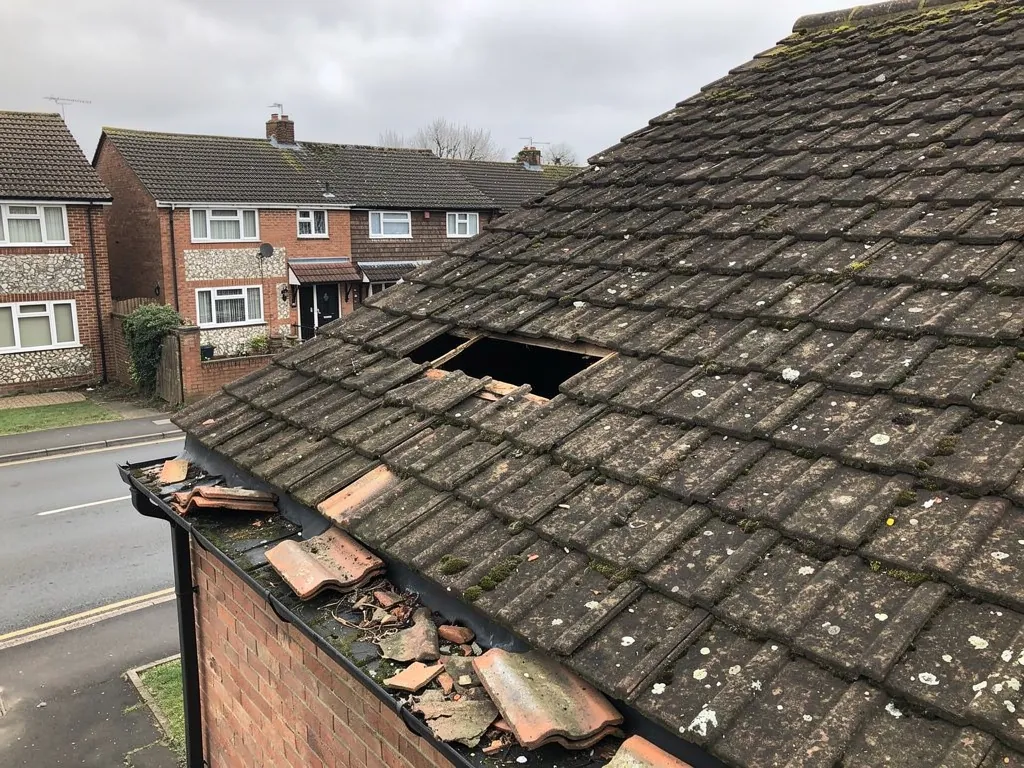 Commercial re-roofing, Building Regulations and insulation9 min read
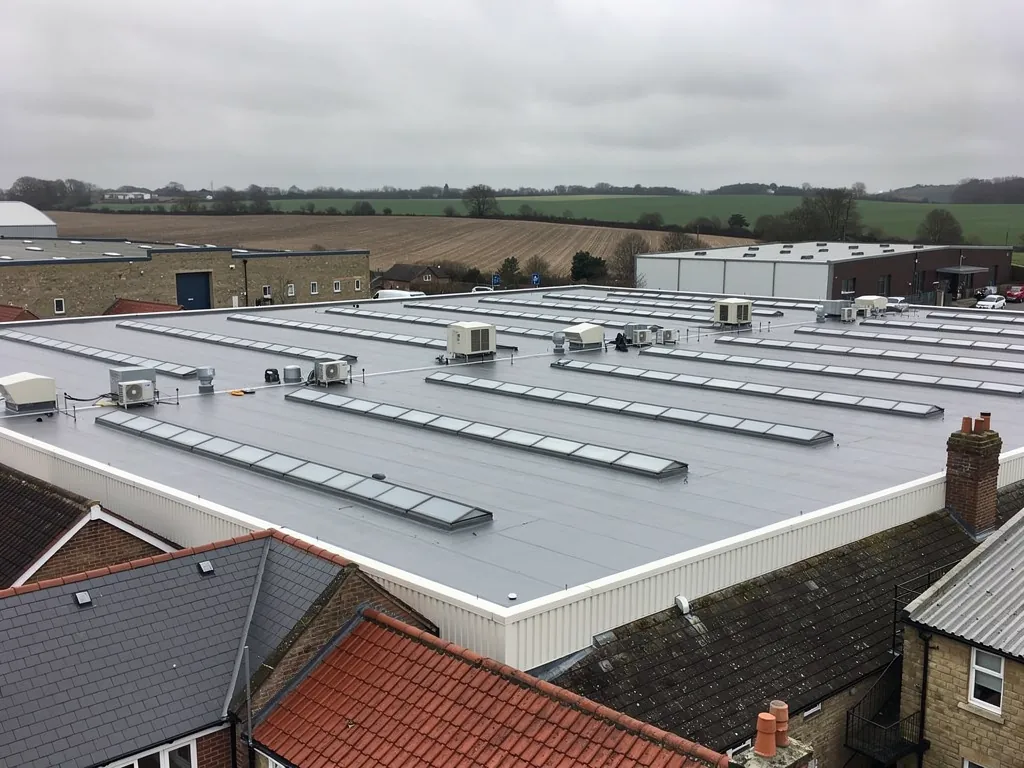 Commercial flat roofs: built-up felt, liquid and single-ply compared8 min read
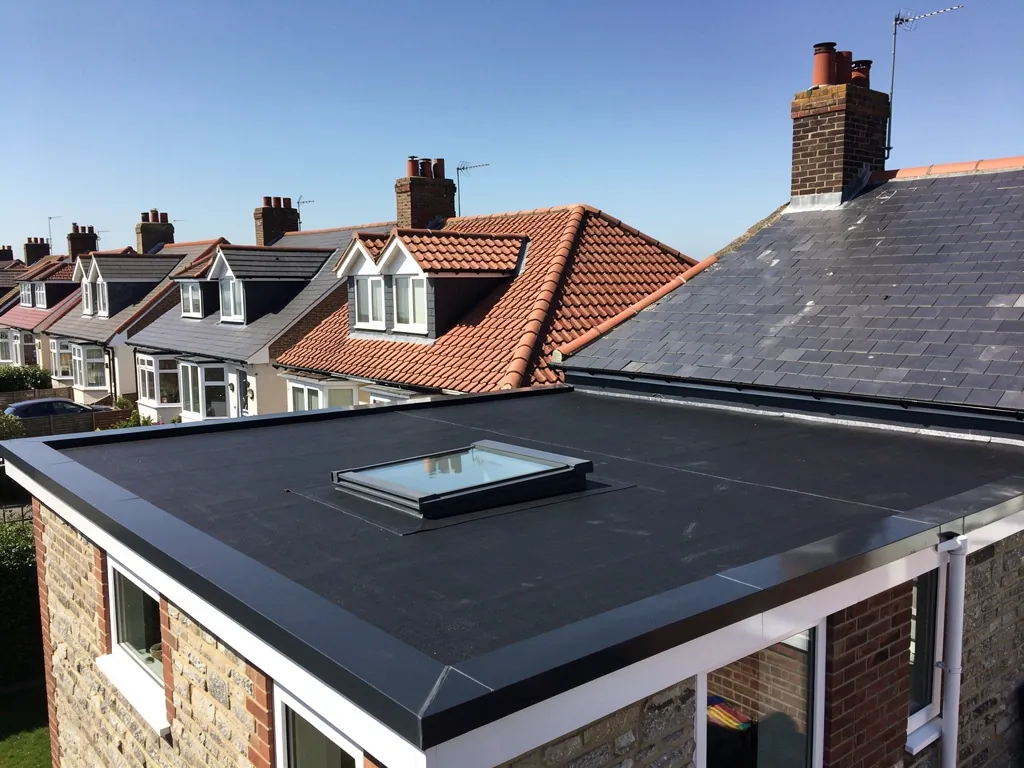 Single-ply roofing: PVC, TPO and EPDM membranes10 min read
 Cut-edge corrosion on metal roofs: treatment and repair9 min read
 Over-roofing an industrial unit: when to overclad instead of strip9 min read
 Commercial cladding repair and over-cladding9 min read
 Fragile roofs and rooflights: safe access on commercial buildings9 min read
 Asbestos cement roofs on industrial units9 min read
 Planned maintenance for commercial roofs9 min read
 Planning commercial roof work around winter and trading hours9 min read
Quick answers
- How long does a commercial roof last?
- Does business insurance cover storm damage to a roof?
- Does a commercial re-roof need planning permission?
- Church roof repairs and the ecclesiastical exemption
- What does a commercial roof survey cover?
- PVC or TPO membrane: what is the difference?
- Why do metal roofs leak at the laps?
- Can a liquid coating save a metal roof?
- Can individual steel roof sheets be replaced?
- How are rooflights replaced on an industrial roof?
- What is an industrial gutter lining?
- What is a composite panel roof?
- When does a commercial roof need edge protection?
- Why does water pond on a commercial flat roof?
- How are leaks found on large commercial roofs?
- Can roof work go ahead while the business stays open?
- Is built-up felt still used on commercial roofs?
- Roof-mounted plant and AC units: protecting the membrane
- Why does a warehouse roof drip condensation?
- Re-roofing barns and agricultural buildings
Questions
Commercial roofing questions, answered
What is the average cost of replacing a roof in the UK?
Checkatrade puts the UK average at around £8,000 for a house, with most jobs between £4,000 and £19,000, and its replacement table lists flat roofs at £2,800 to £7,500 plus VAT. A commercial building is priced from its own area, height and covering, so a survey comes before any figure. Whoever prices the work, check whether the figure includes VAT and scaffolding.
Which season is best for replacing a roof?
Price follows the size, access and covering, not the calendar. What the season changes is the programme. Mortar wants dry, frost-free days to cure, a felt or resin covering has to go onto a dry deck, and short winter days stretch a job out. A re-roof planned for settled weather keeps the building protected throughout, so ask for the work to be scheduled around the forecast and your opening hours.
How do you check a roofer before a commercial job?
Look for a named business with a landline or mobile you can call back, a survey with photographs of your own roof, and a written quote with one total price. Be wary of anyone who knocks on the door after a storm, cannot explain the fault in plain words, or pushes a new roof when a repair would hold. Ask who stands behind the workmanship, in writing.
Is any grant available for re-roofing business premises?
Not through a national scheme that we have checked. Government schemes fund insulation and heating, ECO4 ends on 31 December 2026, while the Great British Insulation Scheme has finished. Eligibility is never automatic, so see which schemes are open at gov.uk. A business, landlord or housing provider can also ask Arun District Council whether any local help exists for its building.
How far from Bognor Regis do you take commercial roofing work?
We cover Bognor Regis and every place within 30 road miles, including Littlehampton, Chichester, Worthing, Havant and Portsmouth, and up into the South Downs and Horsham. Send the address with a few photographs of the roof and we confirm whether it is within reach, then arrange a survey around the times the building is open, so staff and customers are disturbed as little as possible.
What guarantee should a commercial roof come with?
Ask any roofer what the guarantee covers, how long it runs and whether it is in writing. Workmanship and materials are separate questions, because a membrane can carry a manufacturer's warranty that covers the product but not the installation. A warranty is not a lifespan either: a covering can outlast its paperwork or fail before it. Keep the quote and the paperwork together with your survey photographs.
Get a quote
Send us the roof and the building
Send photos of the roof, the stains and the gutters, with the address and who manages the building, and we plan the survey around your opening hours.
Loading the enquiry form. You can also call 01243 252373.