
Roofers in Felpham
Flint cottages, seaside houses, garden estates
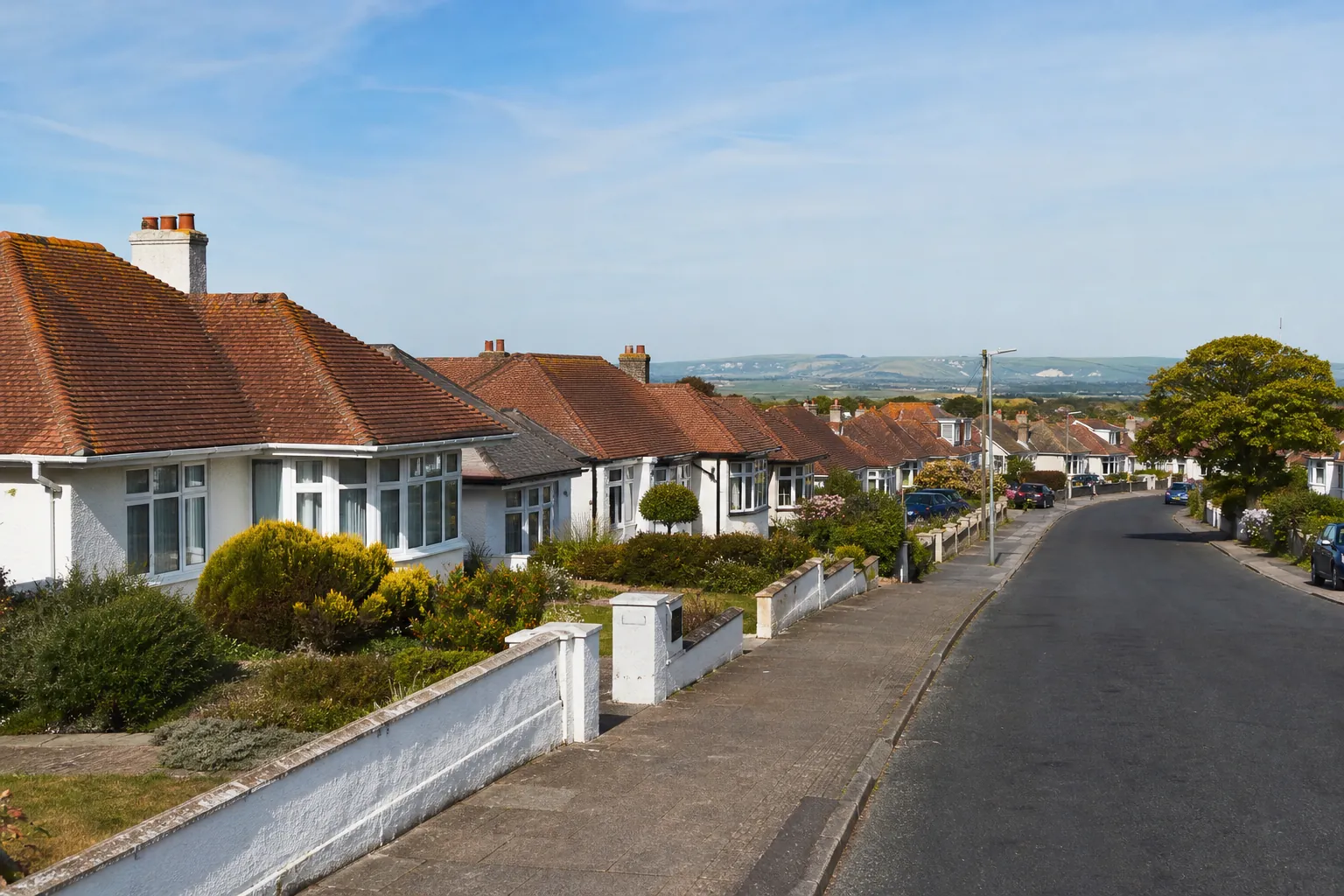
Felpham's roofs run from thatch, slate and orange-red clay tile in the 1985 conservation area to the Sea Road seaside houses and the interwar estates of Summerley, the Roundle and Hurstwood.
Felpham roofs
From thatched Felpham Road to the Summerley estate
-
Flint cottages under thatch
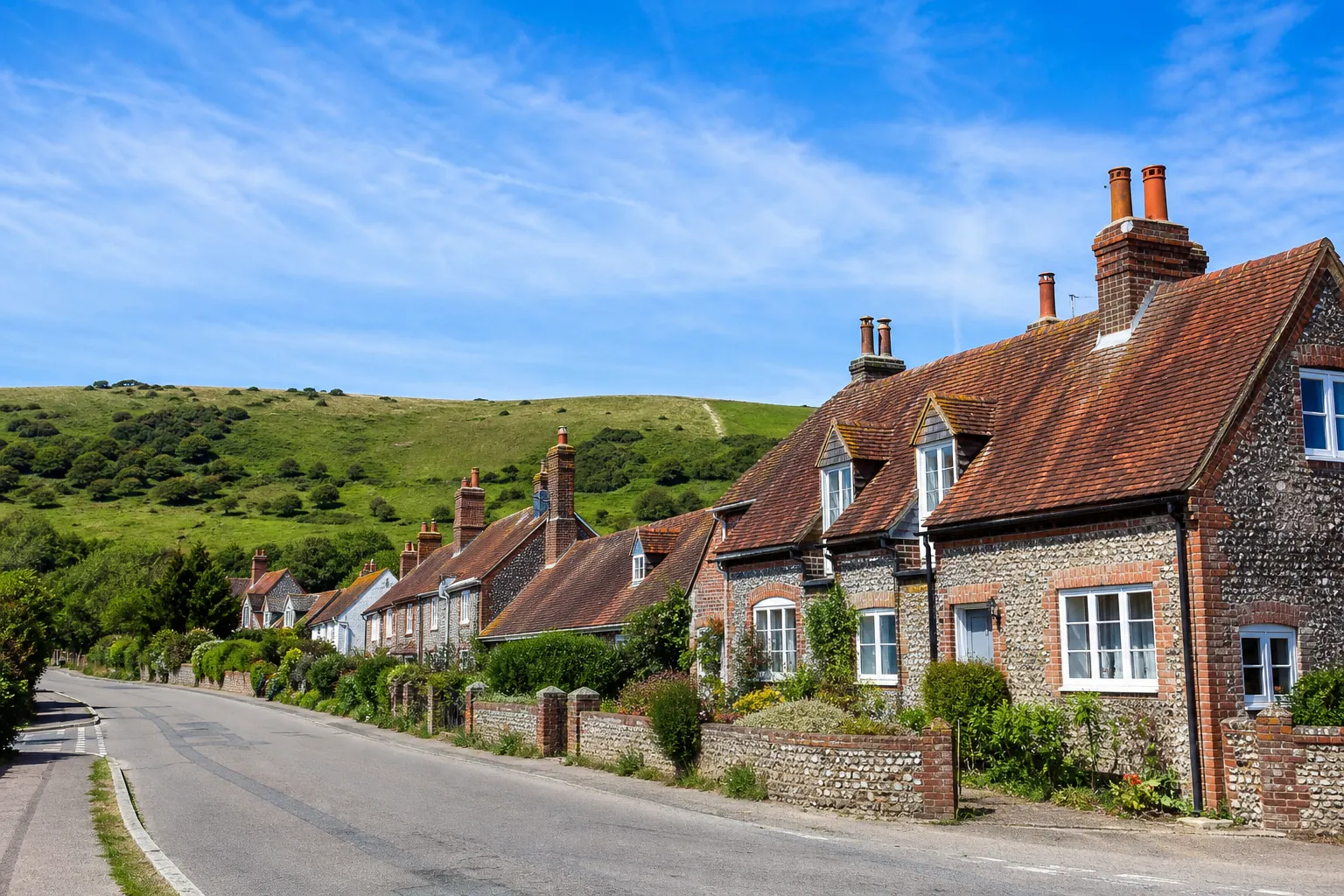
Around St Mary's church, Felpham Road keeps listed flint cottages under thatch, and Blake's Cottage, where William Blake lived from 1800 to 1803, is thatched too. Their neighbours carry orange-red clay tile or slate, with chimney stacks and lead tied into older walls.
-
Seaside houses by Sea Road
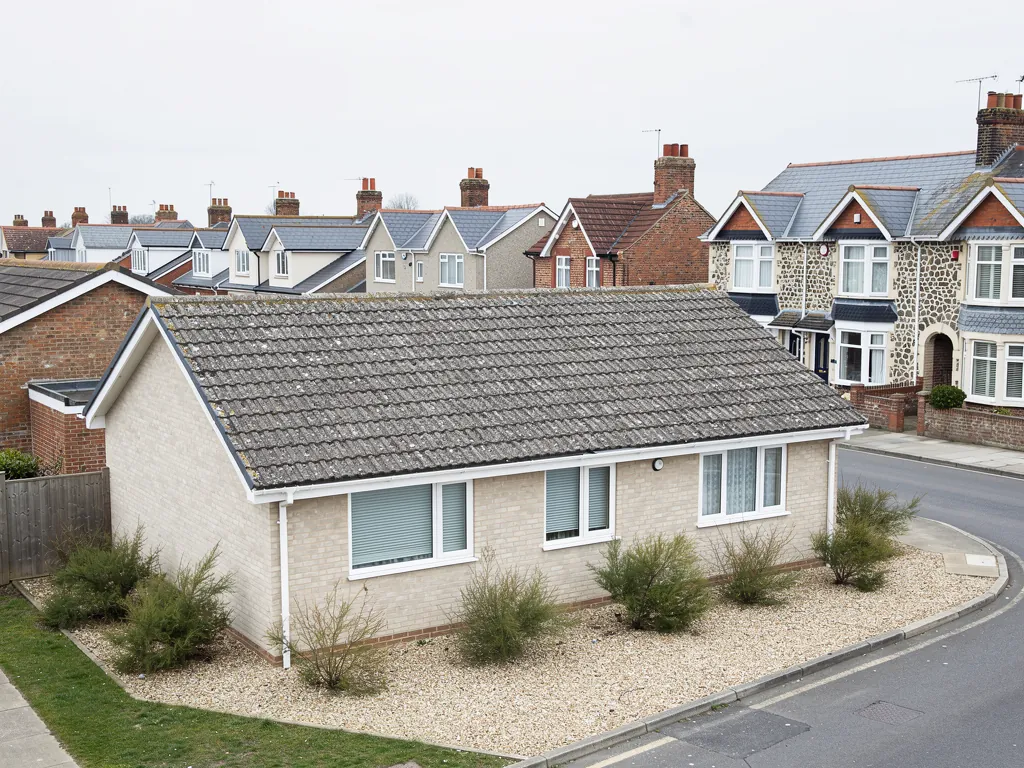
Felpham by the sea grew from 1884: small brick and rendered terraces east of Sea Road, then 1910s houses raised on stilts with verandas and roof gardens, and post-war flats beside a sea wall rebuilt in the mid 1950s.
-
Interwar garden estates
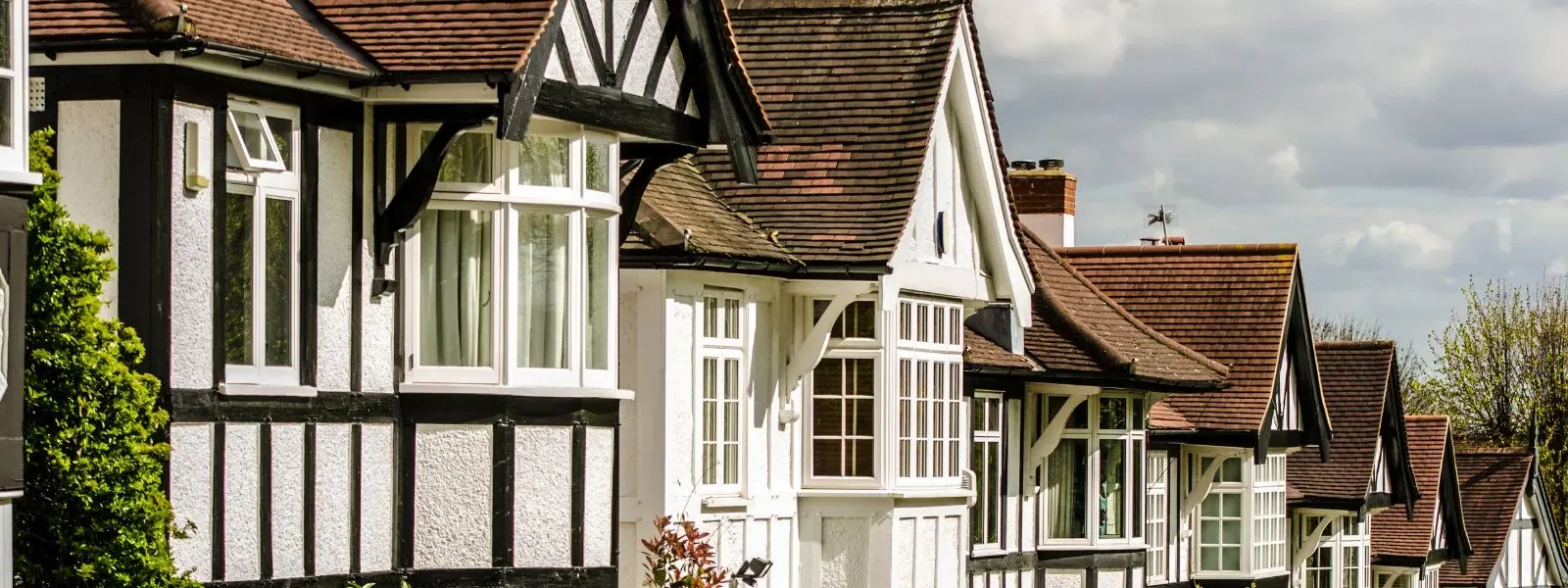
Felpham Beach, Summerley, the Roundle and Hurstwood were laid out between about 1918 and the 1930s, with council houses in Felpham Way and Flansham Lane. A roof from those years that has never been stripped is now close to a century old.
Map of Felpham, 1.5 road miles east of Bognor Regis, with the nearest towns we also cover.
Felpham village and its 1985 boundary
- Council
- Arun District Council
- County
- West Sussex County Council
- Conservation area
- Felpham Conservation Area, designated February 1985
- Article 4
- None recorded for Felpham on Arun's conservation areas page
- Listed landmark
- Parish church of St Mary, Grade II*
- Distance
- 1.5 road miles east of Bognor Regis, about 5 minutes by car
Felpham notes
From Blake's thatch to Summerley's verges
Three parts of Felpham, each built in its own era, and what each one means for the roof over your head.
Chapter 1: Flint, thatch and clay round St Mary's2318
Sheet 01 / 03Felpham's old village sits a short way inland from the beach, gathered around the parish church of St Mary, whose tower the council's character appraisal treats as the key landmark. Arun District Council designated the Felpham Conservation Area in February 1985. It covers about 9 hectares and 261 properties, of which 18 are statutorily listed and another 18 locally listed as buildings of character. The appraisal names the traditional palette: coursed flint cobbles, first gathered from the beach and laid in tight even courses, orange and red clay brick, and orange and red clay tile for the roofs. Flint is the material that dominates, in houses, outbuildings and the high boundary walls along Vicarage Lane, Limmer Lane and Felpham Road. Where a roof meets one of those walls, the joint deserves as much care as the roof itself.
Before work inside the 1985 boundary
- Check the conservation area map
- Look up any list entry
- Match the clay tile or slate
- Ask Arun's conservation officer
1.1 Thatch on Felpham Road and at Blake's Cottage
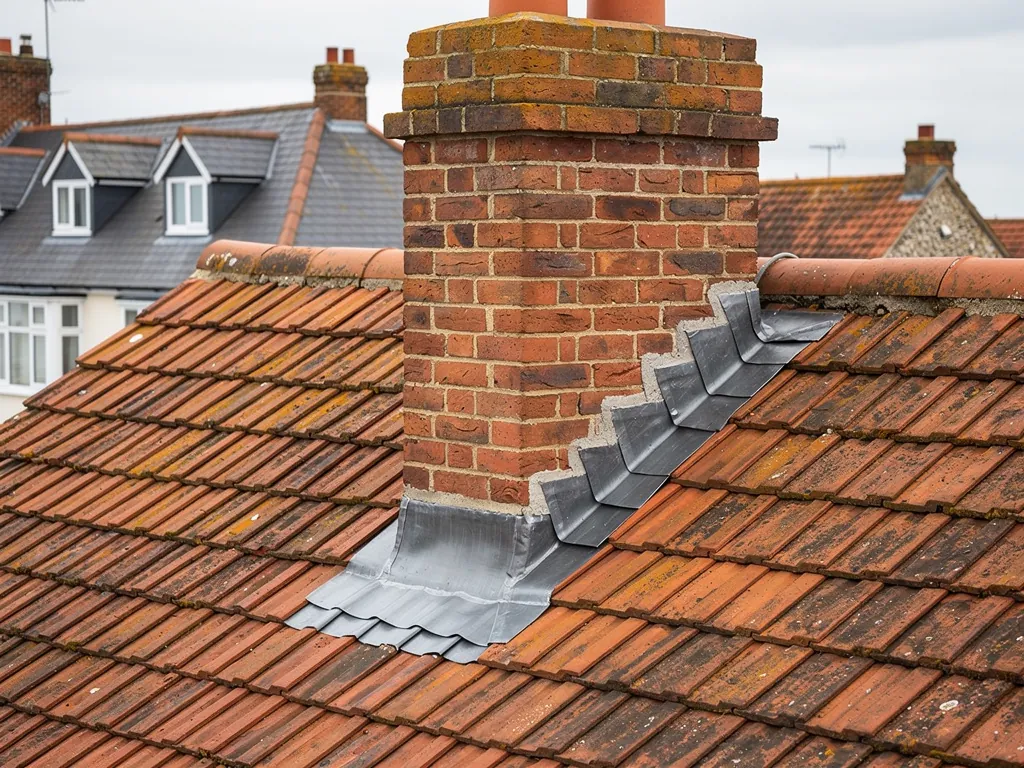
Thatch is the surprise here. Along Felpham Road the appraisal lists the flint cottages at numbers 101 and 103 and the barn at 104 under thatch, all of them listed. Pear Tree Cottage in Vicarage Lane, which the Victoria County History dates to the early 16th century, keeps a hipped thatched roof over its timber frame. Blake's Cottage is roughcast and whitewashed under thatch. Thatching is a craft of its own. Our part on these lanes is the lead flashing (the strip that seals a roof to a wall or stack), the chimneys, and the tiled and slated roofs next door, many of which meet something far older at a party wall or a shared gutter.
1.2 Slate and chimneys along Waterloo Road
A few minutes' walk away the roofs change. The terraced cottages on Waterloo Road, Fisherman's, Southside, Seaway and Thimble among them, are rendered two-storey houses with slate roofs and chimneys, and the appraisal records slate alongside orange-red clay tile across the Vicarage Lane area. Common slate jobs are refixing slipped slates with a tingle (a small metal clip that holds a slate without stripping the course above) and renewing the lead around those stacks. On a listed house, works that would affect its character need listed building consent, so we read the list entry before quoting anything beyond a like-for-like repair. Our pitched roofing page explains how tiled and slated slopes are stripped and relaid. If you are weighing up roof windows inside the boundary, read our guide to skylight planning permission first.
Chapter 2: Sea Road stilts, roof gardens and sea walls2623
Sheet 02 / 03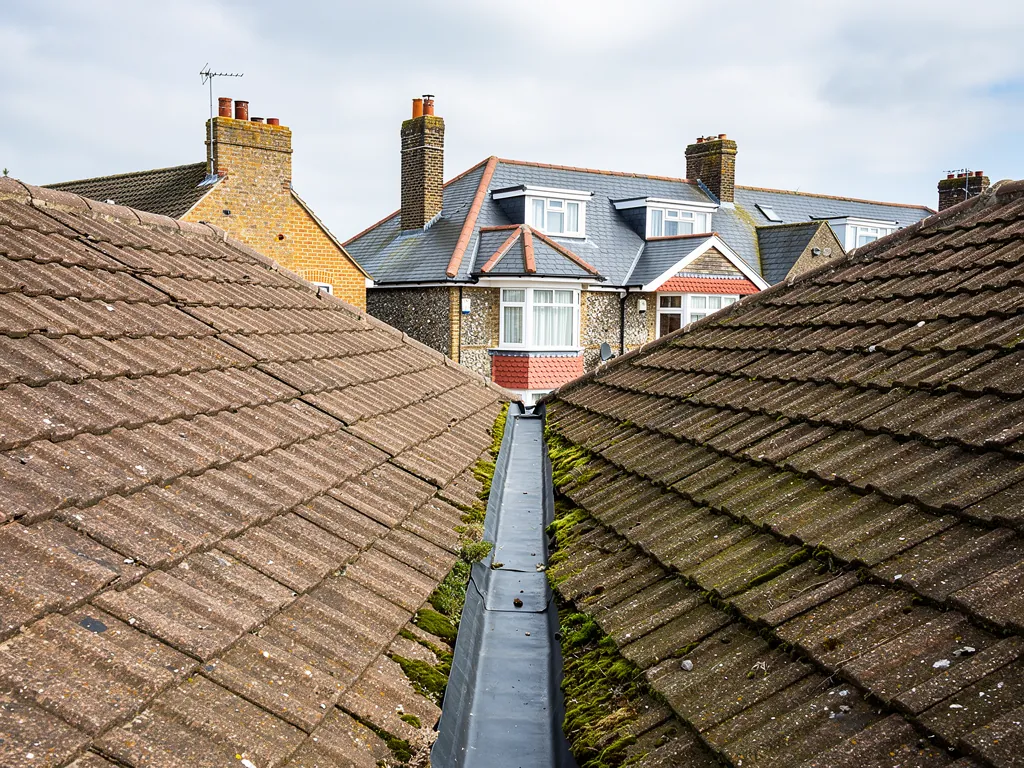
Felpham's seaside half grew up apart from the village. Land between the coastguard station and the sea was offered for sale as the Felpham Mill building estate in 1884, and over the next 25 years the streets east of Sea Road filled piecemeal with small brick or rendered terraces and semis, many of them let as apartments in summer. In Canning Road one terrace was given a continuous balcony along its front. Through the 1910s and 1920s this corner was known as Felpham by the sea, and it stood apart from the village in those years. To the west, the meadows that once separated Felpham from Bognor gave way to Butlin's holiday camp in 1960.
Two kinds of Felpham flat roof
Plain flat roof
Drains to a gutter and sees feet only when someone climbs up to inspect it.
Roof garden or balcony
Carries people, pots and furniture, so the surface needs protecting and the upstands need careful detailing.
2.1 The 1910s houses raised on stilts
Directly in front of the sea and down the west side of Sea Road, a group of cheaper houses went up in the 1910s standing on stilts to keep clear of flooding. Some were built around old railway carriages, and the Victoria County History records outdoor staircases, decorated verandas and roof gardens. A roof that doubles as a garden or balcony is a flat roof carrying feet, planters and furniture. Its covering has to drain and take wear, and the upstands (the lip of covering turned up a wall or door frame) and thresholds are where water gets in. Where a roof like this has been patched again and again, the sounder call may be a new deck and covering laid to a proper fall. BS 6229:2025 sets a minimum finished fall of 1:80, and roofers design steeper so the surface still drains. Our flat roofing page sets out the coverings we lay.
2.2 Sea walls rebuilt in the 1950s and 1990s
The shoreline itself has been rebuilt more than once. By the 1930s only a short stretch of low sea wall with a promenade ran along part of the coast, and the rest of the parish edge was low cliffs of Upper chalk. A new sea wall and promenade were built between Bognor and Blake's Road in the mid 1950s, another in the south-west corner of the parish around 1993, and rock groynes followed around 1995. After the Second World War three blocks of flats went up near the sea, one at the south end of Sea Road and two on the promenade further east. On these front-line roofs, sea weather means gales, driving rain and salt air, so we look closely at edge trims, cappings and how each flat roof sheds water before choosing between a repair and a new covering.
Chapter 3: Garden city estates from Summerley to Hurstwood2867
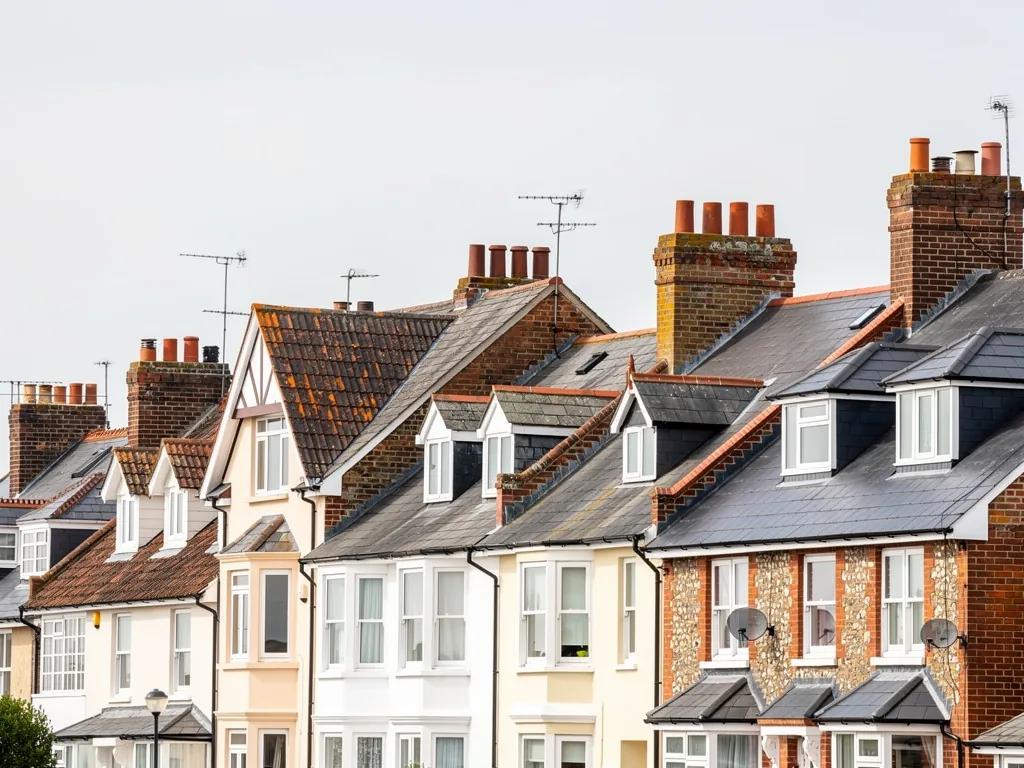
Sheet 03 / 03Between the wars Felpham filled up estate by estate, and the Victoria County History says the trees and grass verges gave the south of the parish the look of a garden city by the sea. Several of those estates were still private in 1992. Each has its own date, and on a roof the date matters, because it hints at the age of the battens (the softwood laths each course of tiles hooks over), the underlay (the sheet beneath them) and the nails, if nobody has re-roofed since. A house on Summerley built in the late 1920s and one on Flansham Park built in the 1970s can stand a mile apart and need quite different work.
Three outcomes for an interwar estate roof
- RefixSlipped tiles and loose ridge capping put back and mechanically fixed where needed.
- OverhaulRidges, hips and verges renewed while the main covering stays in place.
- Re-roofCovering, battens and underlay renewed once the old ones have reached their end.
3.1 Felpham Beach, Summerley and Limmer Lane
The Felpham Beach estate south of Limmer Lane had at least four houses in 1918 and many by 1927, its streets set out in a rectangle around an oblong green. Summerley, further east, was laid out after about 1922 and was called the chief estate in the parish in 1927. Its western part has straight roads; the later part to the north and east curves round a patch of woodland in Crossbush Road, and its eastern end was not finished until after 1945. Big houses went up along Limmer Lane itself. North of the main road, the Roundle estate had its first houses by 1932, with Roundle Square set around a central lawn, and Downview Road was laid out by 1934. West of the village, the lower part of Links Avenue was built up by the farmer E. F. Sait around 1909 to 1912, and by 1934 the old golf course land to its north held detached houses and bungalows.
3.2 Hurstwood, Flansham Park and the council houses
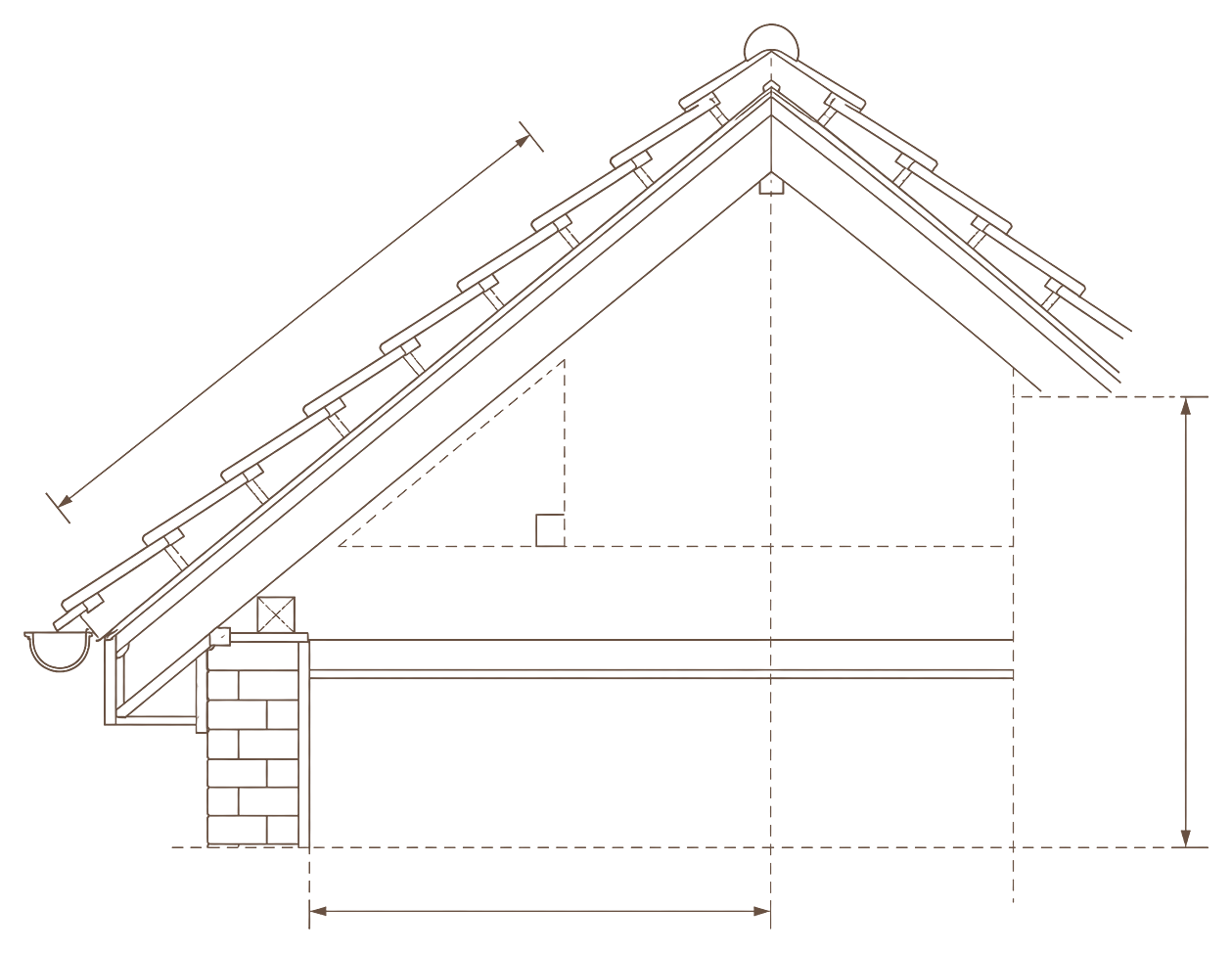
East of Flansham Lane the private Hurstwood estate was built during the 1930s, while the rural and urban district councils put up council houses in Felpham Way and Flansham Lane in the 1920s and 30s. In 1963 the Bognor Regis urban district council bought 200 acres beyond Hurstwood, and the large Flansham Park estate followed in the 1970s. Where an older roof's ridge (the capping along the top) and hips (the sloping outer corners) still sit on nothing but a bed of mortar, they fall short of BS 5534 as revised in 2014, under which new ridges and hips get screws or clips too. The verge, the edge where tiles stop at a gable wall, is treated the same way. The HSE says to assume a garage or outbuilding built or refurbished before 2000 contains asbestos until checked. Our roof repairs page covers the smaller jobs these estates tend to need.
Our services in Felpham
Frequently asked questions
Questions from Felpham Road to Flansham Lane
Can the slate roofs on Waterloo Road's cottages be repaired rather than relaid?
Usually yes, provided the slates themselves are in good order. Slipped or cracked slates can be replaced one at a time and held with tingles, and the lead at the chimneys can be renewed without stripping the slope. Inside the conservation area we match the slate rather than switching to a concrete tile, and on a listed cottage we check the list entry first. If the nails have failed across a whole slope, relaying it with the sound slates reused is the better repair.
Do the roof gardens on Felpham's 1910s seafront houses need a different covering?
They need a covering that drains and also stands up to foot traffic. A felt that would be fine on a garage wears fast under chairs and planters, and the weak points are the upstands along the walls and the threshold of the door onto it. We check the deck underneath first. If it is soft, the old covering comes off and a new deck goes down to a proper fall before the new surface is laid.
Are the Summerley and Roundle estate roofs due for replacement because of their age?
Age alone does not decide it. A roof laid in the 1920s or 30s may have had its tiles relaid, its ridges refixed or its underlay renewed since, and two houses on the same road can be in very different states. We climb up, take pictures of each fault and say whether a repair, an overhaul of the ridges and verges or a full re-roof is the right job, then send a written quote showing a single total price.
Is there an Article 4 direction on roofs in Felpham village?
Arun District Council's conservation areas page lists Article 4 Directions only for Craigweil House in Aldwick, not for Felpham. The council's character appraisal, surveyed in 2014, noted that unlisted homes in the village keep their permitted development rights, while listed ones need listed building consent where works touch their character. Rules change, so check with Arun District Council's planning team or its conservation officer before altering a roof in the conservation area.
Nearby areas
Get a quote
Tell us about your roof
Describe what's happening and we'll call you back.
Loading the enquiry form. You can also call 01243 252373.