
Emergency roof repairs in Bognor Regis
When water is coming through the ceiling or a gale has taken tiles off, the first job is to make the roof safe and stop the leak. We prioritise leaks and storm damage, then give a plain verdict.
- Repair or replace,
said plainly - Photos of
your own roof - Written quote,
one total price - Ridges and verges
fixed to BS 5534
Signs
Signs a Bognor Regis roof needs urgent attention
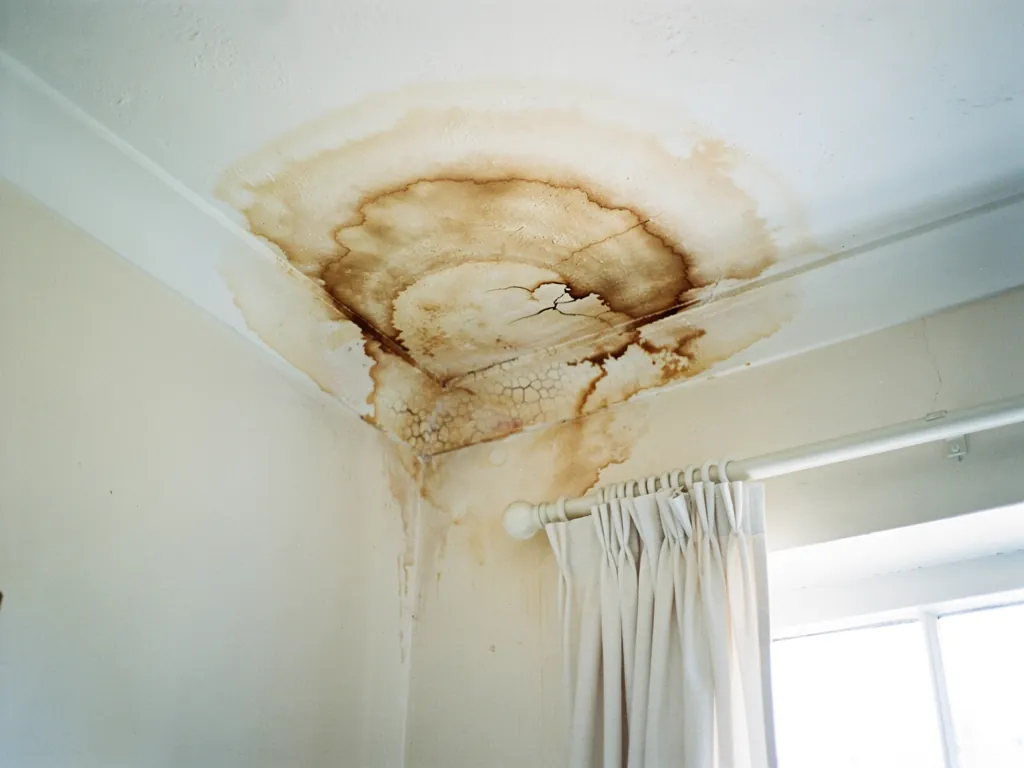
- Water dripping or running through a ceiling
- A bulging, sagging patch of ceiling plaster
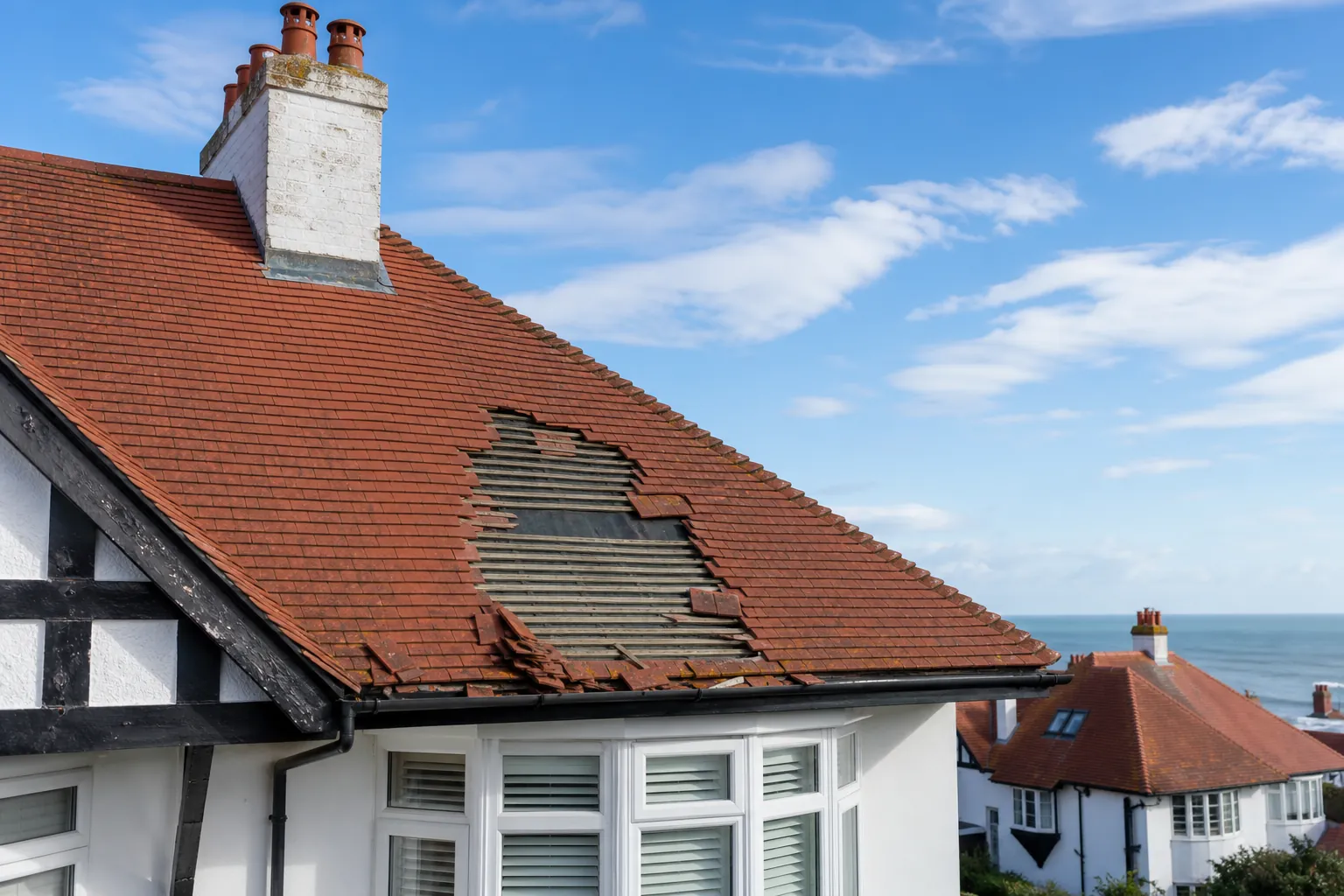
- Tiles or slates scattered after a gale
- Daylight showing through the loft roof
- Lead flashing peeled back from a chimney
Emergency work we carry out
Emergency repairs across Bognor Regis and West Sussex
Make-safe visits
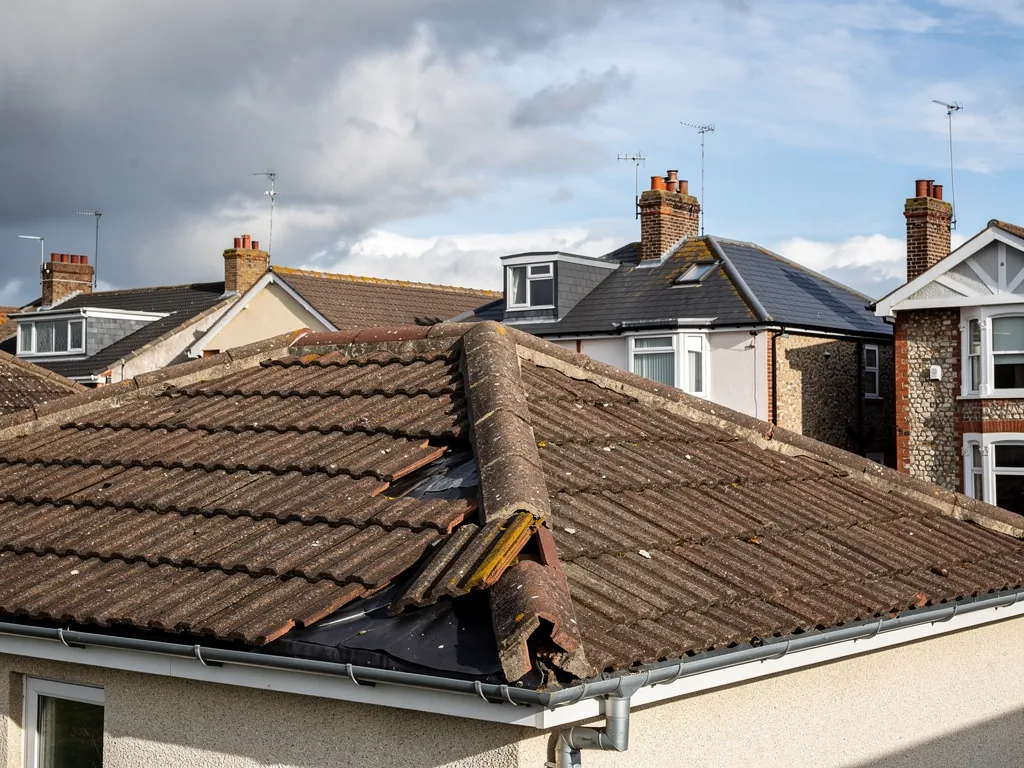
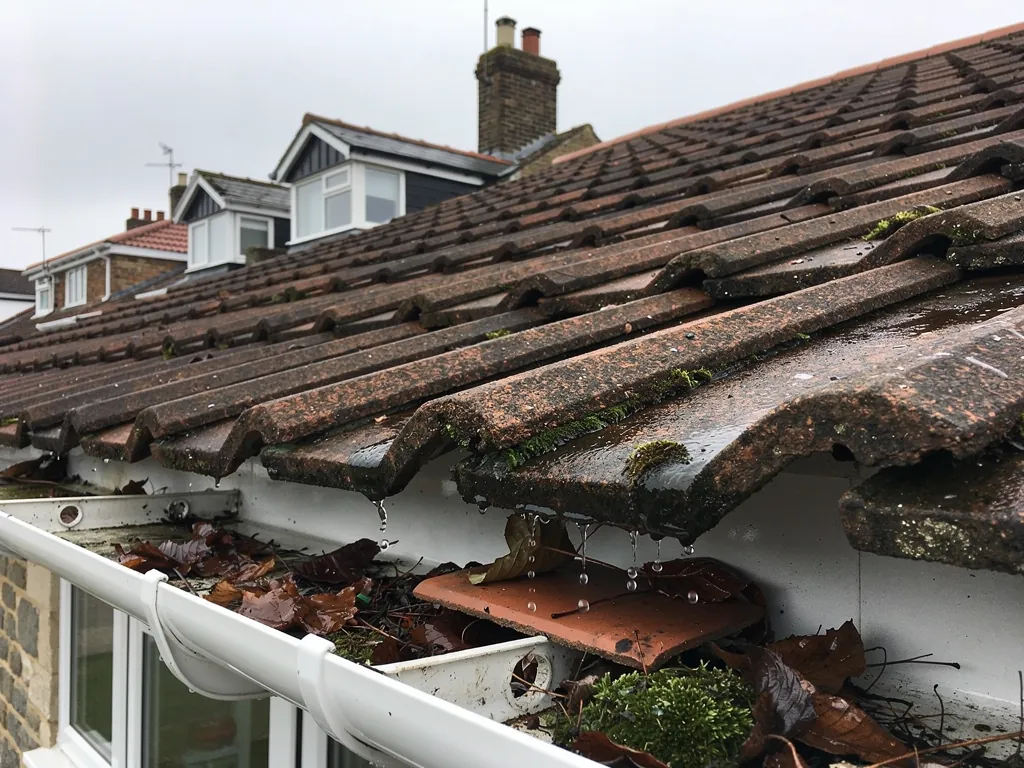
We stop water getting in first: a temporary covering over the opening, loose tiles secured, and debris cleared from gutters and valleys so rain can leave the roof.
Blown tiles and slates
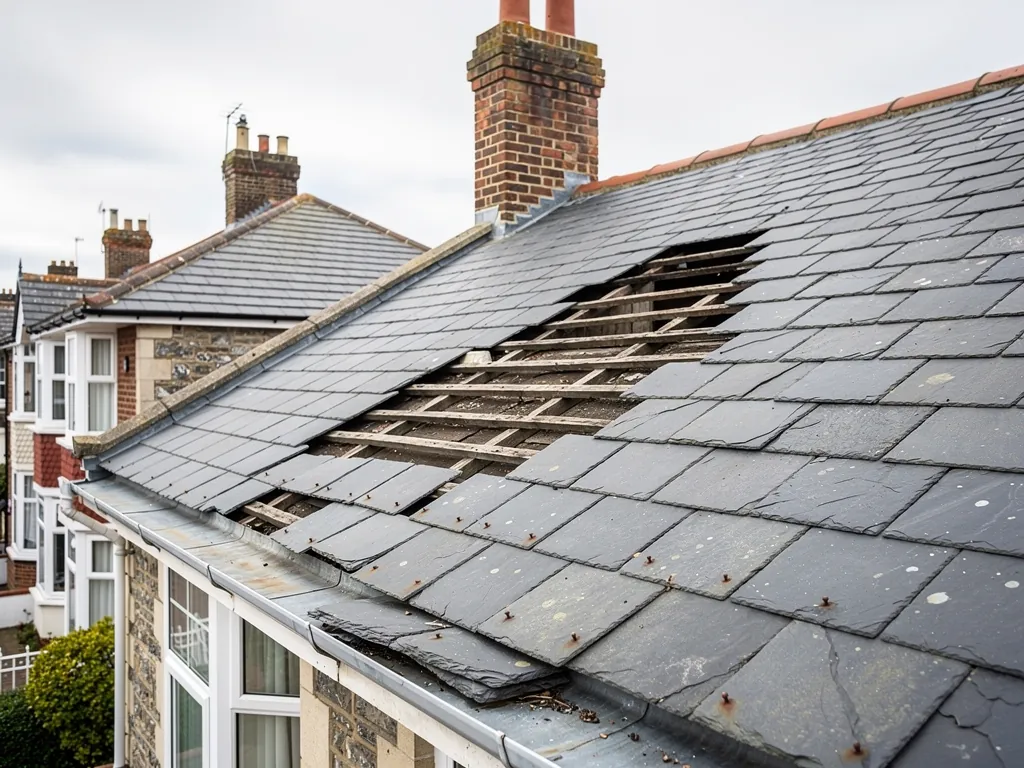
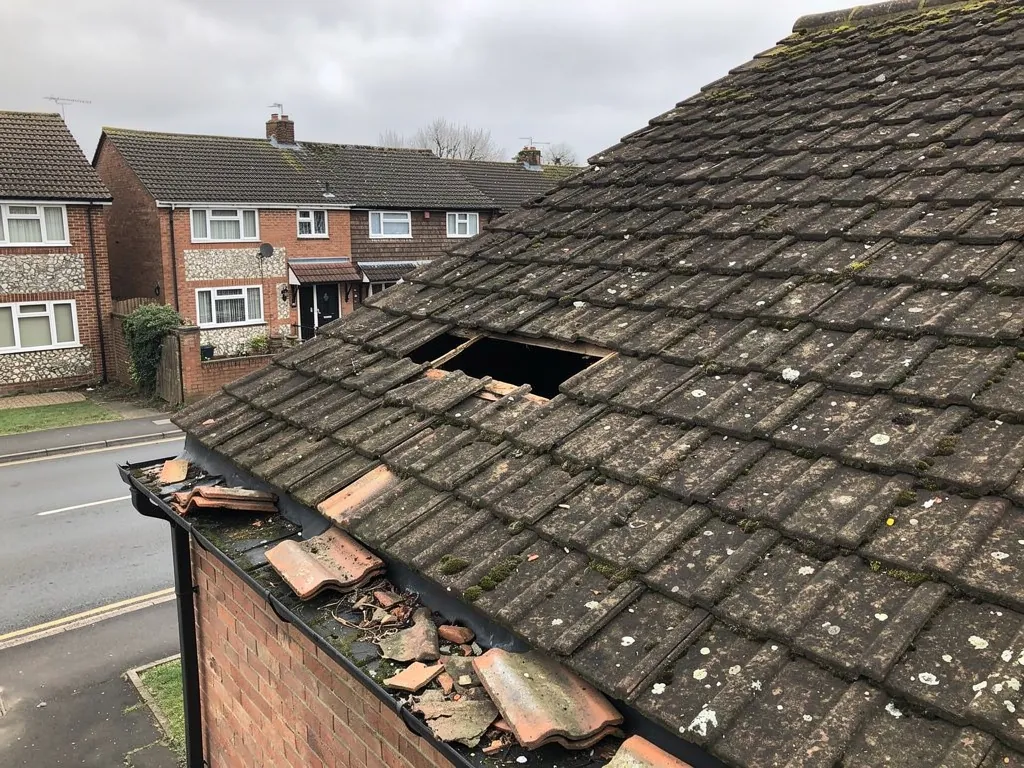
We refix or replace slipped and missing tiles and slates to match, check the battens beneath them, and photograph the exposed underlay before it is covered.
Ridge and hip damage
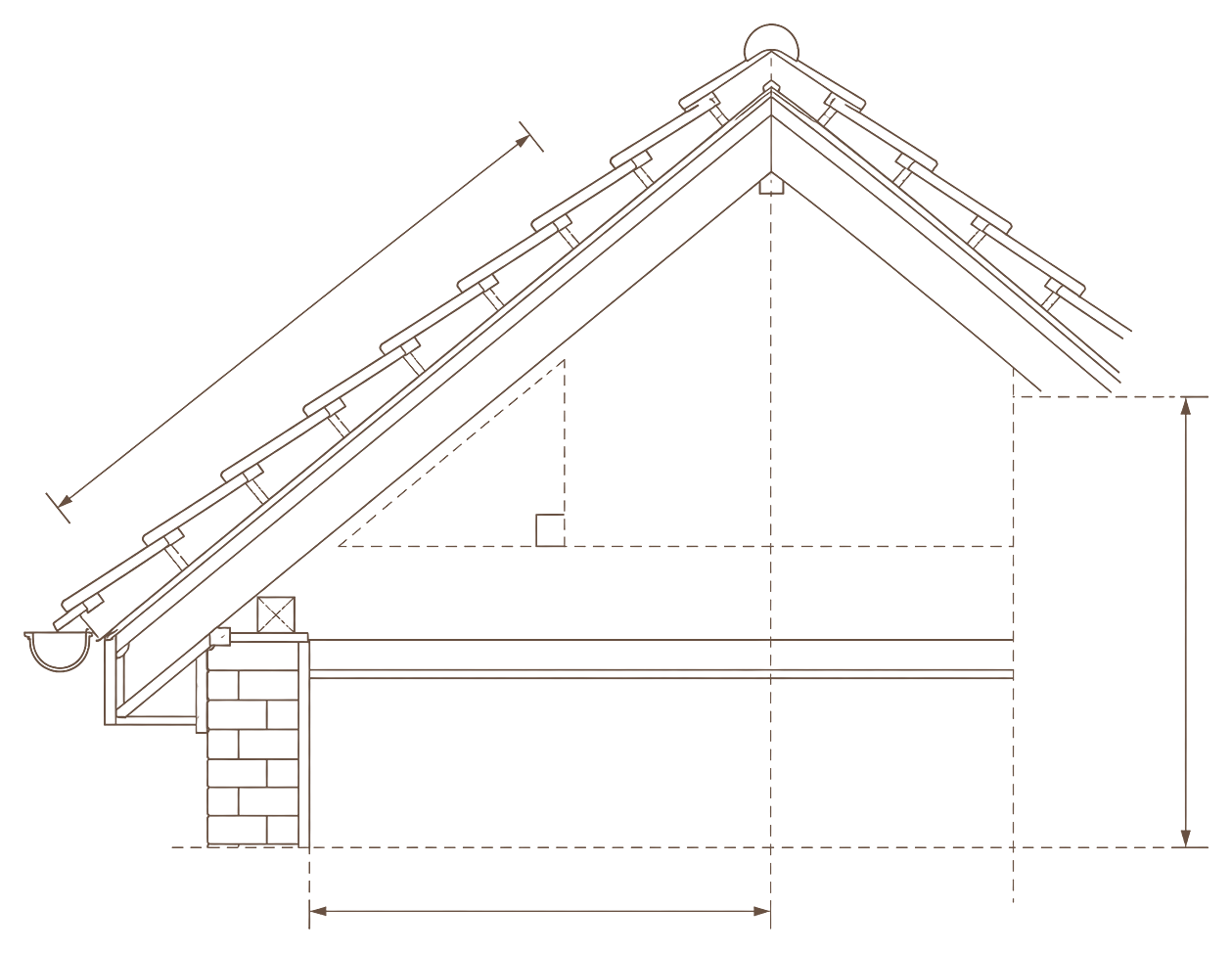
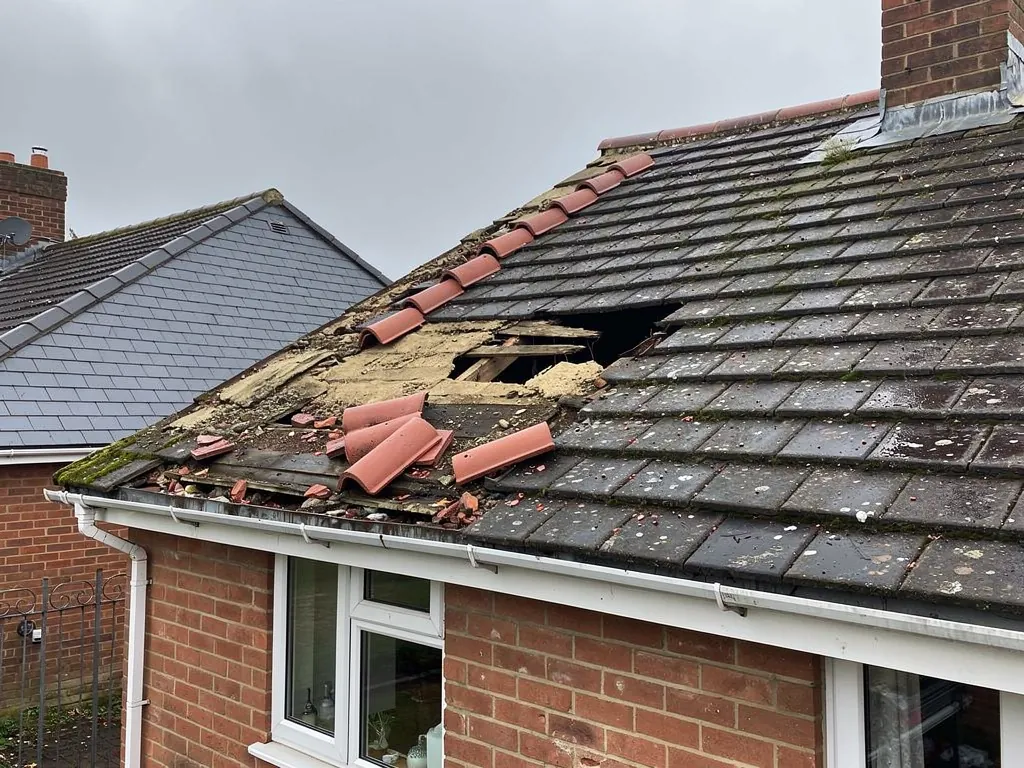
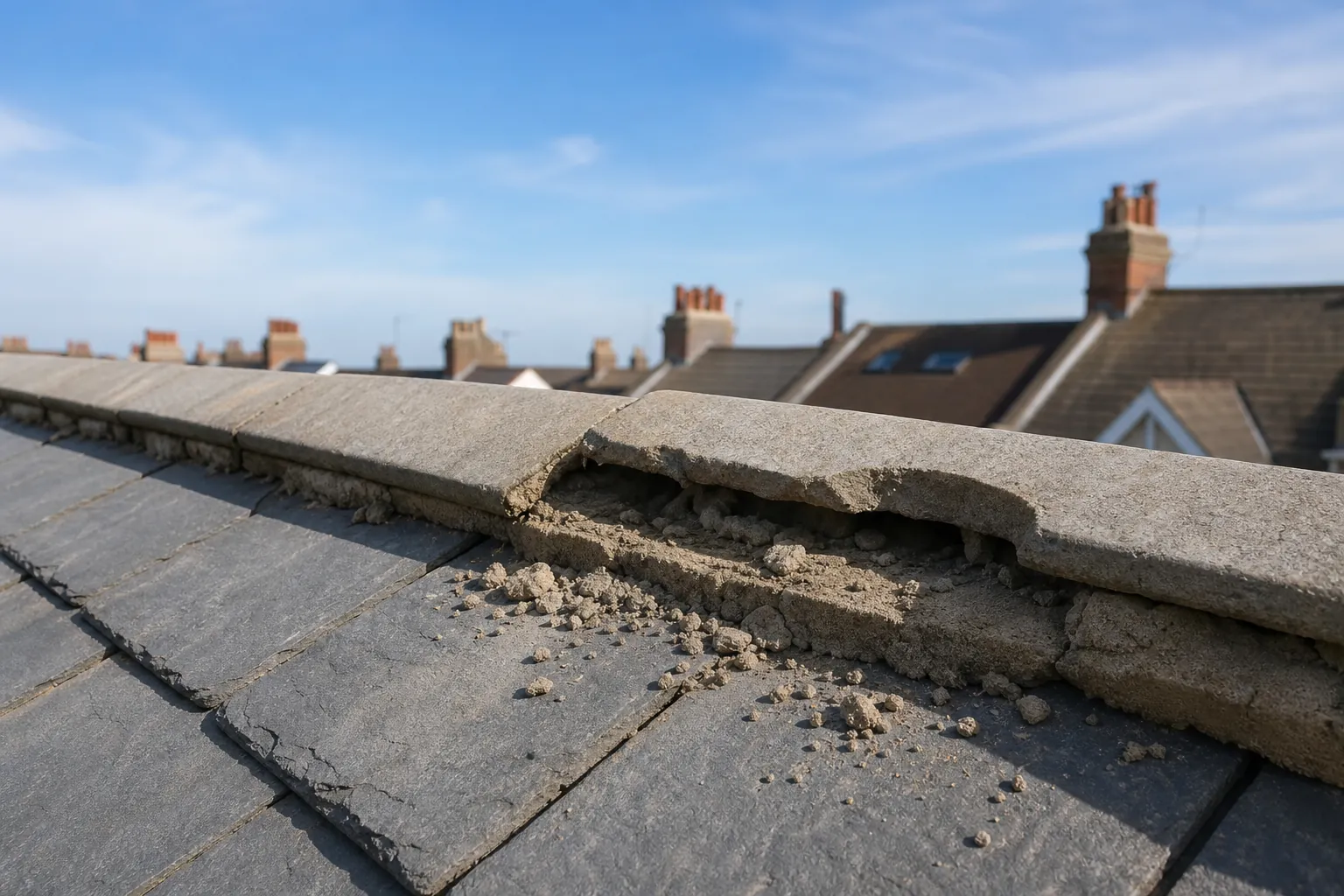
A ridge is where two slopes meet at the top; a hip runs down a sloping outer corner. We close up lifted ridge and hip tiles and fix them mechanically.

Chimney and lead leaks
Lifted flashing, cracked flaunching and open pointing round a stack are sealed or relined, with repointing where the brickwork has opened up.
Flat roof splits
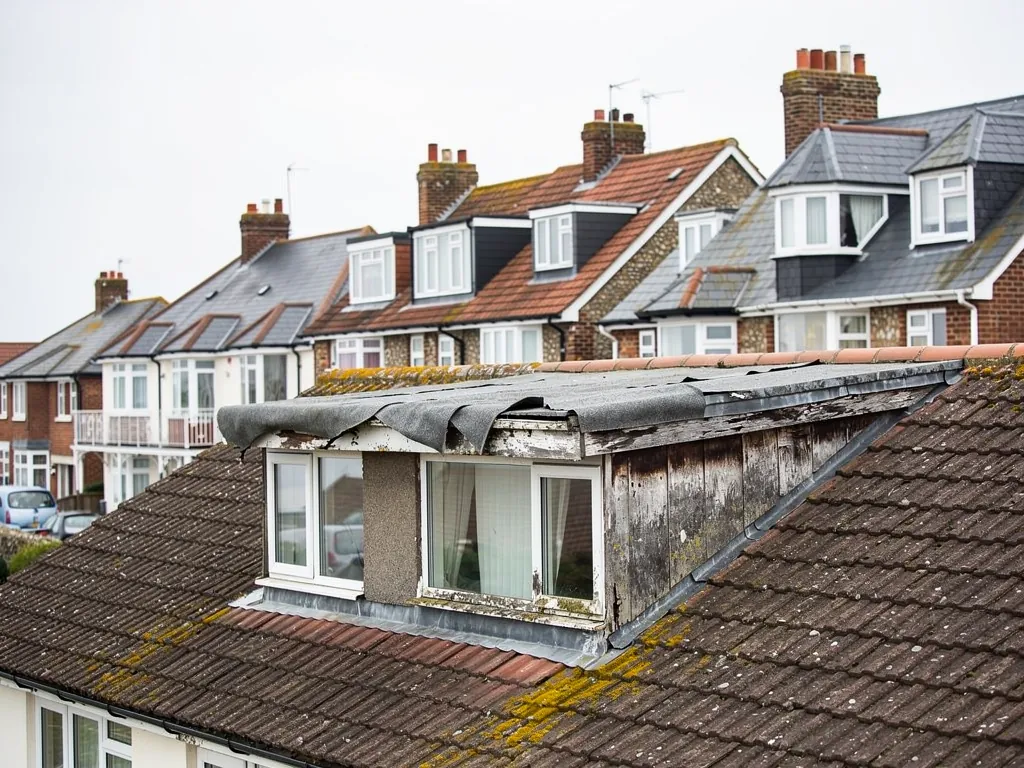
We repair flat roof splits, blown laps and ponding on felt, EPDM and GRP, provided the timber below has stayed sound and dry.
Storm-hit guttering
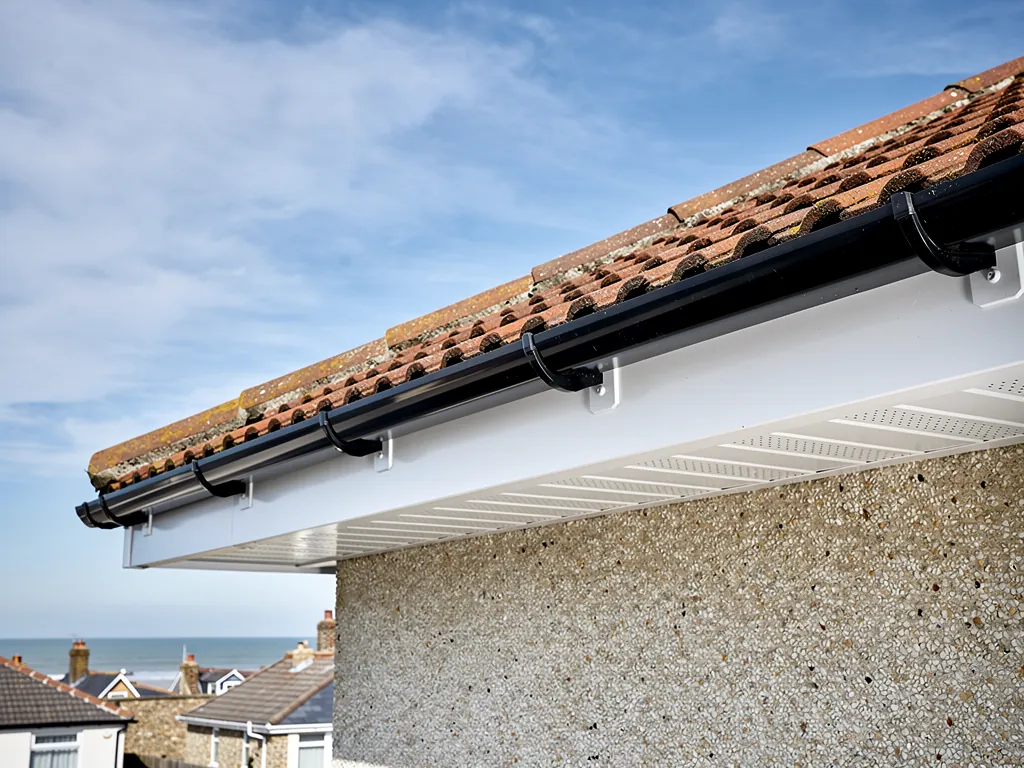
Guttering pulled away by wind or a branch is made safe and refitted, with damaged fascia (the board it fixes to) and soffit (the boards under the overhang) repaired.
What it costs
What an emergency roof repair in Bognor Regis costs
priced on survey
No standard price: it turns on access, covering and damage
The height of the eaves, the covering and whatever the opened-up damage reveals set the price, so a figure given blind is only a guess.
How an emergency repair runs, from the first call to the last bag of waste
- 1Tell us what you seeRing 01243 252373 or send WhatsApp photos of the ceiling, the roof damage and the room below, and tell us when the water began.
- 2We make it safeWe cover the opening, secure loose tiles and clear blocked gutters and valleys so that water leaves the roof instead of the house.
- 3Survey and plain verdictWhen the weather allows, we survey the roof, photograph the fault and tell you whether it needs a repair, a patch for now or a replacement.
- 4Permanent repair, then clear-upThe quote arrives in writing with one total, then we do the repair and carry all the waste away.
Emergency roof repairs, in depth
How emergency work is handled on the coast of West Sussex
Covers making a roof safe, gale damage, flat roofs and chimneys in heavy rain, temporary covers, insurance evidence and what the work costs.
Chapter 1: Making a leaking roof safe first1952
Sheet 01 / 06Before any permanent repair, someone has to stop the water, remove the danger and record the damage.
An emergency roof repair is a different job from a planned one. The aim is to stop damage getting worse, not to finish the roof. A make-safe visit gets water out of the house, secures or removes anything loose, and leaves the roof covered until the weather lets the permanent work happen. Leaks and storm damage jump the queue, and water is stopped before anything else is attempted. The survey, the verdict and the written quote all come after that, once you are dry and the risk has passed. Our guide to making a roof safe walks through the visit in more detail.
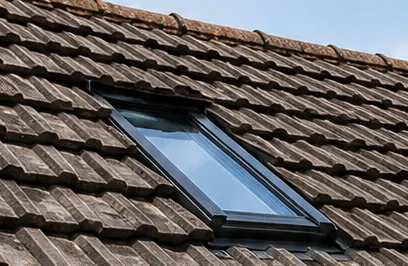
The cover stops tonight's damage; the survey decides what the roof really needs.
A make-safe visit, in order
- 1CheckLook at the ceiling below and the access before anyone climbs.
- 2CoverClose the opening with sheeting fixed to sound timber, not weighted down.
- 3ClearLift out loose tiles and debris so water has a clean route off the roof.
- 4RecordPhotograph the damage and the cover for you and for any insurer.
1.1 What counts as an emergency on a roof
Water coming through a ceiling counts, especially near a light fitting or where the plaster has started to bulge. So does a gap in the roof where a gale has stripped tiles off, a chimney stack that has shifted, or a branch lying across the slope. A stain that appears only after the heaviest rain is still worth acting on, though it may be able to wait for a proper look in the loft. If you cannot tell which roofing issue you have, send photographs by WhatsApp or ring 01243 252373 and we will talk it through. Anything that puts people at risk, such as a ceiling close to coming down, always comes first.
1.2 Keeping yourself and the house safe
Stay off the roof yourself. Wet slopes, loose tiles and gutters that give way underfoot cause injuries that a bucket under the drip would have avoided. Indoors, move furniture and valuables out of the way and lay towels or sheeting under the leak. If water is reaching a light fitting or a socket, switch that circuit off at the consumer unit and have an electrician check it before you use it again. Photograph the stain, the drip and anything damaged before you move it, because those pictures help us and any insurer later.
1.3 What a make-safe visit includes
We reach the damage by ladder, roof ladder, tower or scaffold, depending on the height and the pitch. Loose tiles are refixed or lifted clear, the opening is covered with sheeting fixed to sound battens, and gutters and valleys are cleared so that water has somewhere to go. We then photograph the covered area and tell you plainly what the permanent repair will be, so the cover does not become a long-term fix by accident.
Chapter 2: Tiles, slates and ridges after a gale2257
Sheet 02 / 06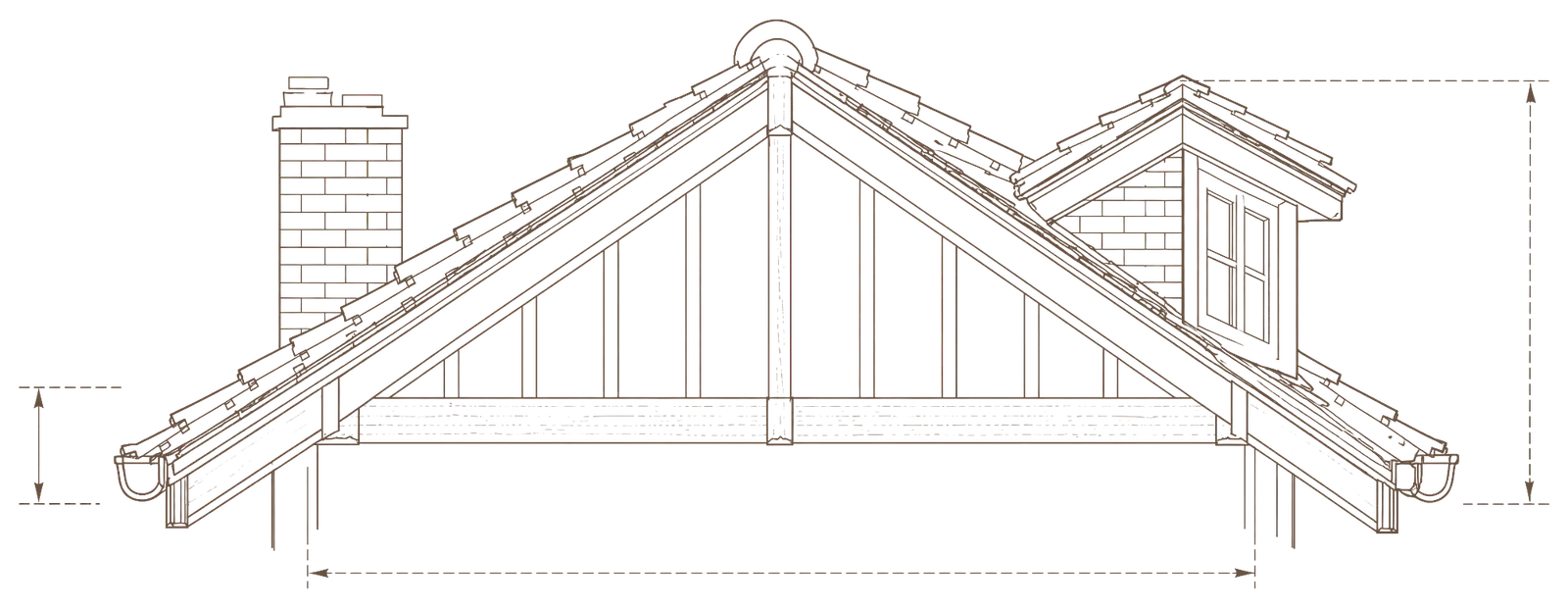
- Ridge Bedding cracks and tiles lift; mechanical fixings hold the line.
- Eaves Wind drives rain under the first course and onto the wall plate.
- Dormer cheek Soakers and lead aprons peel away where wind works at the joints.
- Valley Debris and broken tiles block the channel and send water sideways.
- Gutter outlet Leaves and slipped tiles choke the outlet, so water backs up.
Wind finds the edges of a roof first, so storm repairs usually start at the ridge, the hips, the verges and the eaves.
After a gale the damage tends to sit along the edges of the roof. The ridge is the top line where the two slopes meet, and a verge is the edge of the tiling at a gable end. Each one is cut, bedded and exposed on more than one side, which is why high wind gets its grip there first. Where the pitch is under 30 degrees, Marley says suction on the windward slope can be severe, a negative pressure that tries to lift the tiles away from the battens. A slipped tile, a lifted ridge or an opened-up verge is a common result of bad weather conditions, and all three can be repaired. For the step-by-step version, see our guide to tiles blown off in a storm.
Checks from the ground after a storm
- Tiles or slate lying in the garden
- A ridge line that sags or bows
- Gaps in the pattern of the tiling
- Gutters hanging or full of debris
- Damp smell or daylight in the loft
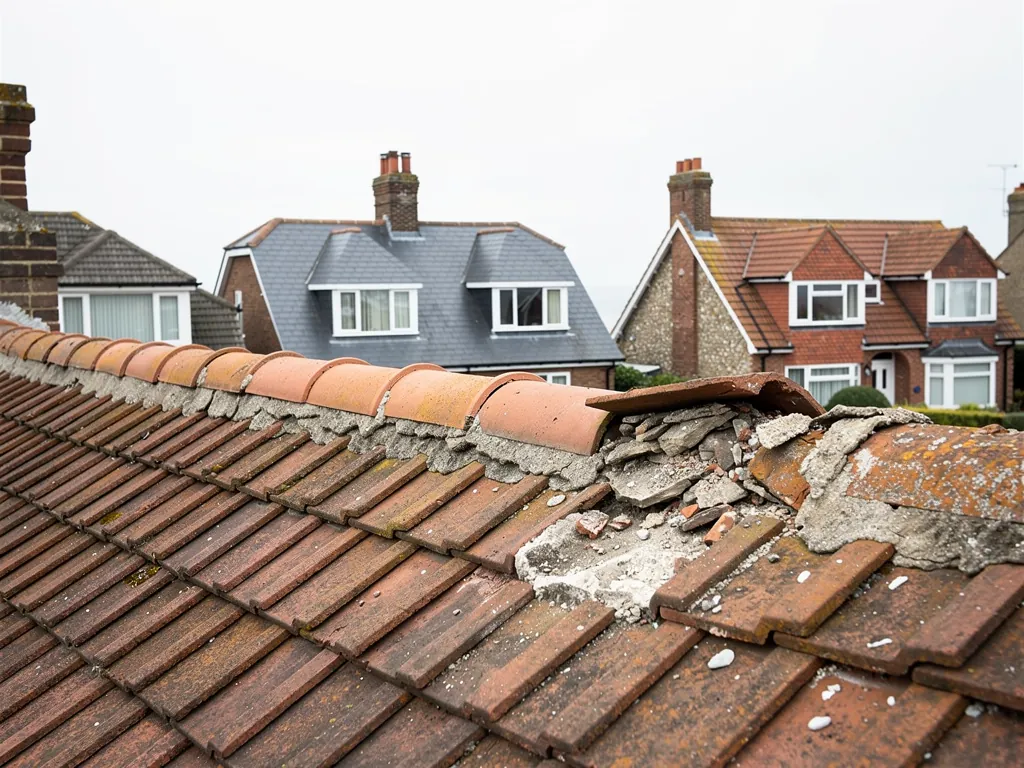
2.1 Checking from the ground
You can see a good deal without leaving the garden. Walk round the house in daylight and look for tiles or pieces of slate on the lawn, the path or a flat roof below. Look for gaps in the pattern of the tiling, a ridge line that no longer runs straight and gutters hanging at an angle. Use the zoom on your phone rather than a ladder, and photograph the debris where it landed, because that shows where it came from. Inside, a damp smell in the loft or daylight at the eaves tells you the covering is open. Send us what you find and the pictures help us plan the visit, whether the house has slate or tile roofing.
2.2 Slipped, cracked and missing tiles
A slipped tile has lost its grip, often because a nail has rusted through or the tile has snapped at the back. We lift the courses around the gap, check the batten (the timber strip the tile hangs from) and the underlay beneath, then fit a matching tile held with a proper clip or nail. Matching matters. Plain clay tiles on an interwar estate and concrete interlocking tiles on a 1960s bungalow need different replacements, and old slates may have to be sourced to suit. We recommend a repair of this kind only where the battens are sound and the quality of the surrounding tiling justifies it. Where slates have gone from a whole slope, the evidence under them decides whether we patch or advise re-covering.
Ridges and verges lifted by wind
Older ridges were bedded in sand and cement and nothing more. Since BS 5534 was revised in 2014, ridge and hip tiles are not left to rely on mortar alone: they get a mechanical fixing as well. We refix a lifted ridge with fixings added, or dry-fix it, which means clips and screws with no mortar. A verge gets the same treatment, with interlocking caps screwed down if the old mortar has gone. Our ridge tile repairs page compares rebedding with dry-fixing.
BS 5534
British Standard behind mechanical fixing of ridge and hip tiles
Chapter 3: Flat roofs, chimneys and lead in a downpour2623
Sheet 03 / 06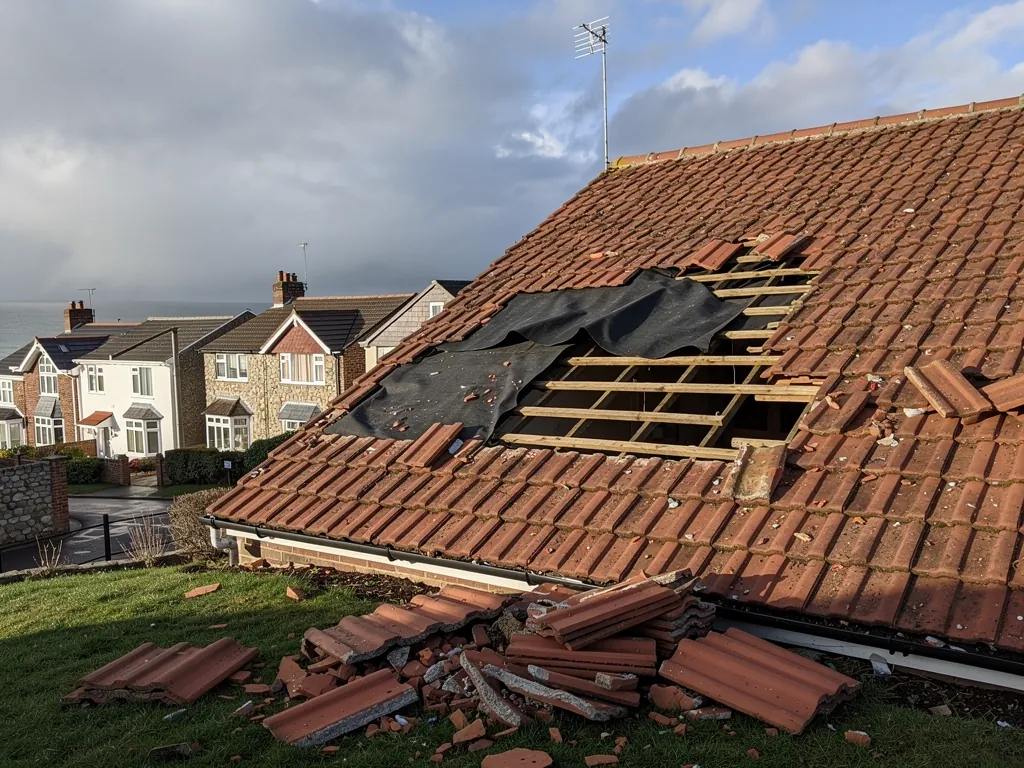
Heavy rain tests the details between surfaces: flat roof laps, chimney lead and the outlets that carry water away.
Heavy rain finds every weakness at once, and the weaknesses sit in the joints rather than the open surface. Think of where a flat roof meets a wall, where lead meets a chimney, where a gutter meets a fascia. A leak that begins with the first heavy shower after a dry spell is often one of these, and it is worth knowing which, because each is repaired with different materials. For any roof repair, flat or pitched, the fault is nearly always found at a junction.
3.1 Flat roof storm damage
Flat roofs over extensions, garages and dormers fail in a few recognisable ways in a storm. A lap in the felt lifts, a split opens over a joint, an upstand pulls away from a wall, or an outlet blocks and water ponds until it finds the weakest point. A patch is the right call where the membrane is otherwise healthy and the deck beneath, the board it lies on, is dry. If that deck is soft or the insulation underneath is wet, a patch only hides the problem, and you will hear that from us before any price. Felt is a layered bitumen membrane, EPDM a single sheet of synthetic rubber and GRP a fibreglass resin laminate. Each is repaired with its own material, because felt repair material will not stick to a rubber or resin surface. Standing water after rain points to too little fall, and BS 6229:2025 sets a minimum finished fall of 1:80. Our flat roof storm damage guide goes further, and a full flat roofing replacement is a separate job.
Patch, make safe or replace after a downpour
- PatchDry timber below, a single split or open lap, the rest sound.
- Make safeCause unclear or weather too poor; cover now, repair when it is dry.
- ReplaceA soft deck, wet insulation or ponding across most of the roof.
BS 6229:2025
current code of practice for flat roof coverings
3.2 Chimney stacks and lead flashings
A chimney stands tall and takes the weather from every side. The lead flashing, the strip sealing the joint between roof and stack, can lift or tear in high wind. The flaunching, the sloping mortar cap round the pots, can crack and let water into the brickwork. The water can appear as damp on the chimney breast inside the house, a long way below the fault. A make-safe may mean dressing the lead back and sealing it for the time being, with repointing, new flaunching or new lead to follow once the brickwork can be examined properly. If the stack itself is leaning or moving, that is a safety matter first, and it is secured or taken down before anything else. Our chimney repair page covers the permanent work, and leadwork is its own trade skill.
Valleys, gutters and the roofline
Where two slopes meet, the valley carries rain down to the gutter. After a storm it is often choked with broken tile, leaves or moss, and water then spills sideways under the covering. We clear the channel, check its lining and look for slipped tiles beside it that have let the debris in. Guttering torn off by wind or a falling branch, and the fascia and soffit boards behind it, are made safe too, because water running down a wall does damage beyond the roof.
Whether the roof is flat or pitched, a storm leak is nearly always found at a junction.
Chapter 4: Temporary repairs and what they buy you2379
Sheet 04 / 06A cover or a patch buys time. It does not replace the permanent repair, and we tell you which one you are getting.
A temporary repair is what it says. It keeps water out for now so that the permanent work can be planned, priced and done in decent weather. It is a means to an end, and it should come with a clear plan for what happens next. If a roofer offers to cover the hole and offers nothing else, ask what the permanent repair is and when it needs to happen. The right roofing solution for a leaking roof is nearly always a short cover followed by a proper fix. Our guide to temporary roof repairs covers the options in more depth.
4.1 Sheeting, patches and temporary tiles
The simplest cover is heavy-duty sheeting stretched over the damaged area and battened to sound timber, with the edges tucked in so the wind cannot get under it and make it flap. It has to be fixed to the roof structure rather than weighted with bricks, and it should run up and over the ridge or be tucked beneath the tiles above the opening, so that water runs over it rather than under it. On a flat roof, a patch of compatible membrane or a sealed cover closes a split for the moment. On a pitched roof, a temporary tile or a lead patch can close a small gap. A reliable cover is fixed through sound timber, sits tight at every edge and can be lifted off cleanly when the permanent work starts. None of these suit being left to see out a winter, because sheeting chafes, patches lift and the hole beneath stays open.
4.2 Sealant, foam and other quick fixes
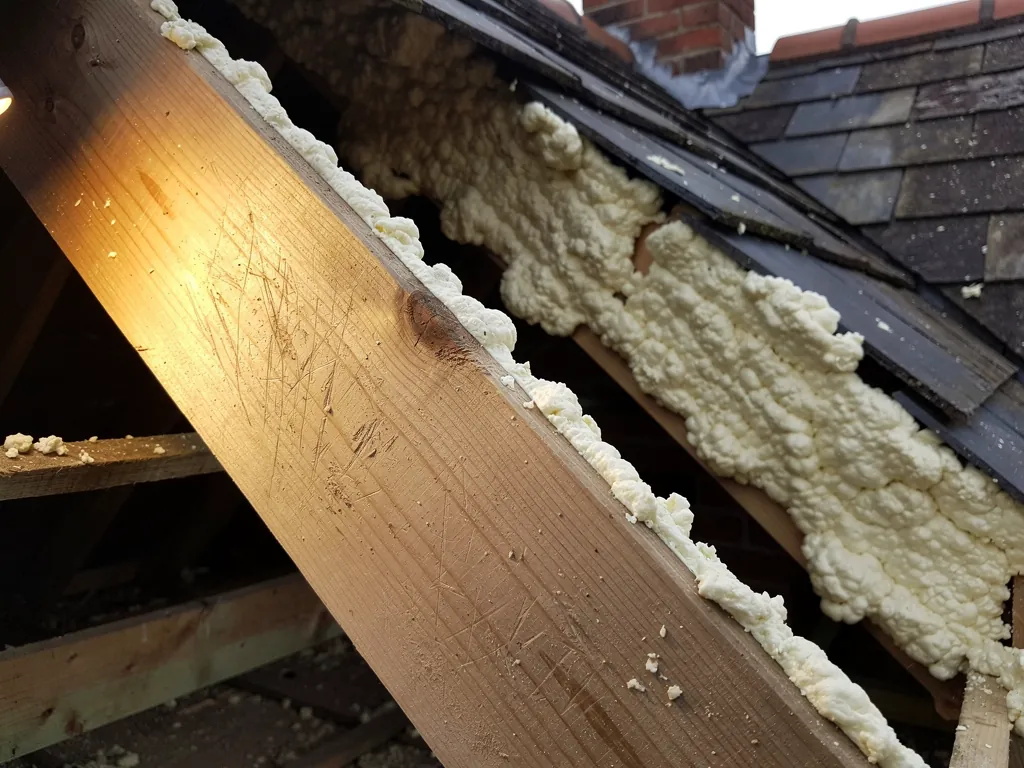
Bitumen paint over a split, sealant smeared across lead, or foam pushed into a gap may stop a drip for a few dry weeks. They also hide the fault, trap water behind the repair and have to be cut away before the real work can start. We would rather make a roof safe properly, with a cover that can be lifted off cleanly, than leave you with something that makes the permanent repair harder and dearer. If someone has already applied one of these, tell us when we visit so we know what is under it.
Planning the follow-up
When the weather settles we return for the permanent repair. Our survey photographs, taken with the cover in place and again with it removed, show what lay beneath. Ask any roofer to put the permanent repair in writing, with one total price, before the cover comes off, so you know what you are agreeing to, and so nothing changes after the work starts. Ask too how long their workmanship is guaranteed, and for that answer in writing.
Cover or repair
Temporary cover
Sheeting or a patch that keeps rain out until conditions allow proper work.
Permanent repair
Refixed, relined or replaced material, finished to the standard the roof needs.
Chapter 5: Storm claims, evidence and your rights2318
Sheet 05 / 06You do not need to decide about a claim before the roof is safe, but a few early steps protect your position.
Whether an insurer pays depends on the policy and on the cause of the damage, and that is for the insurer to decide. What we can do is describe the usual sequence and the evidence that helps. Which? advises getting in touch with your insurer as soon as possible, because most insurers run emergency helplines. If you arrange emergency repairs yourself, tell the insurer and keep every receipt, as it forms part of the claim. Do not throw away damaged items unless they pose a health risk. Our guide to the storm damage insurance claim sets out the sequence step by step.
Before you ring the insurer
Photograph the damage, keep damaged items and every receipt, and ask what your policy says about temporary repairs.
5.1 Storm damage or wear and tear
Policies tend to separate storm damage from wear and tear. Which? uses a poorly maintained roof letting water in as an example of what may fall on the wear-and-tear side, and it reports Financial Conduct Authority figures showing that only 32 per cent of claims for storm damage made in 2024 ended in a payout. Our survey describes in plain words what we find: a tile that has snapped, a nail that has rusted, a batten that has softened. We photograph each one. What caused the failure is a decision for your insurer, and nobody can promise you that a claim will succeed.
Photographs taken before anything is moved are the best evidence you can have.
32 per cent
of storm claims paid in 2024, per Which?
5.2 Photographs and receipts
The Institution of Structural Engineers advises photographing the affected areas, because photographs give visual evidence of the damage, and telling the insurer about any urgent repairs you have undertaken, such as temporary coverings to stop water getting in. Take wide pictures and close ones, with the date on your phone. Keep the receipts for sheeting, scaffold hire or any emergency visit. If the structure itself looks dangerous, the local authority's Building Control team takes reports of dangerous structures. A short note of when the leak started and what the weather was doing completes the file.
Urgent repairs and the 14-day right to cancel
A contract signed at your home normally carries a 14-day cancellation right under the Consumer Contracts Regulations 2013. That right does not apply where you have specifically asked the trader to visit to carry out urgent repairs. Extra work sold to you on the same visit still carries it. Read what you are signing, and ask for the work and the one total price in writing. If you are unhappy with an insurer's answer, complain to the insurer first and then to the free Financial Ombudsman Service.
Chapter 6: What emergency repairs cost and when to re-roof2867
Sheet 06 / 06£875 a month
scaffold for a two-storey semi, Checkatrade October 2026
Cost turns on access, the covering and what the damage reveals, and a patch stops making sense once the roof around it is failing.
Emergency work has no standard price list. The figure depends on what failed, how easy it is to reach and what the opened-up roof shows. For orientation, Checkatrade, in a table last updated in June 2026, prices tile and slate repairs at £90 to £220 per m² and puts roofers at about £35 to £45 an hour or £280 to £360 a day, excluding VAT, which is charged at the standard 20 per cent. Whoever you ask for a price, find out whether the figure covers VAT and scaffold. Ours is written after the survey as one total, with no obligation to go ahead. Our guide to emergency roof repair cost explains what moves the figure.
Typical UK repair prices
- Patch chimney leadwork£150 to £250
- Renew leadwork, no scaffold£350 to £460
- Renew leadwork, scaffolded£700 to £920
- Small flat roof repair£150 to £500
National guide figures only; what you pay is set by the survey and arrives as one total.
Source: MyJobQuote, last updated 22 September 2026, and Less, last updated March 2026
6.1 Access, scaffolding and highway licences
Access can cost more than the repair. Checkatrade's scaffolding table, updated October 2026, gives around £875 per month of hire for a two-storey semi and nearer £1,000 for a detached bungalow. A scaffold that stands on the pavement or road needs a licence under the Highways Act 1980, issued by the highway authority. West Sussex County Council asks for at least 10 working days' notice, charges £266 for one month, and offers a fast track within 1 working day for an additional £52. In Hampshire, which covers Havant and East Hampshire, the county council wants ten clear working days' notice and charges £211.90 for the first fortnight. That is why a make-safe is often done from a ladder, roof ladder or tower, with the scaffold following for the permanent repair.
6.2 Reading the survey before you commit
Ask for the verdict and the photographs before agreeing anything. A good emergency visit ends with a covered roof, a clear picture of the fault and a plain recommendation. We recommend the least work that fixes the fault properly, which is not always the biggest job a roof could take, and the quality of the finished repair matters more than the speed of the first visit. If you are weighing two proposals, compare what each one actually does to the roof, not just the total.
When a repair gives way to a new roof
Replacement comes up only when the evidence points to it: slates sliding across a whole slope, perished underlay, battens soft in several places or patch laid over patch. Checkatrade, updated October 2026, gives around £8,000 as an average roof replacement in the UK, and around £12,000 for a typical three-bedroom semi. Our roof replacement page covers a new roof, and our roof repairs page covers the planned repairs that can avoid one. Any new roof is a bigger decision than a repair, so it is made on evidence from the survey, never in the middle of a storm.
Price guide
Typical UK prices for roof repair work
| Job | Typical range |
|---|---|
| Roofer, hourly rate | £35 to £45 per hour |
| Roofer, daily rate | £280 to £360 per day |
| Ridge tile repairs | £50 to £70 per metre |
| Lead flashing repairs | £50 to £70 per metre |
These are national guide rates, excluding VAT. A quote from us comes in writing after the survey, as a single total for the whole job.
Source: Checkatrade roof repair cost guide, table last updated June 2026
Guides and answers
Storm damage and urgent leak guides
Shorter guides covering storm damage, temporary covers, leaks near lights and insurance evidence for homes around Bognor Regis.
 How much does an emergency roof repair cost?8 min read
 Storm-damaged roof: what to do first9 min read
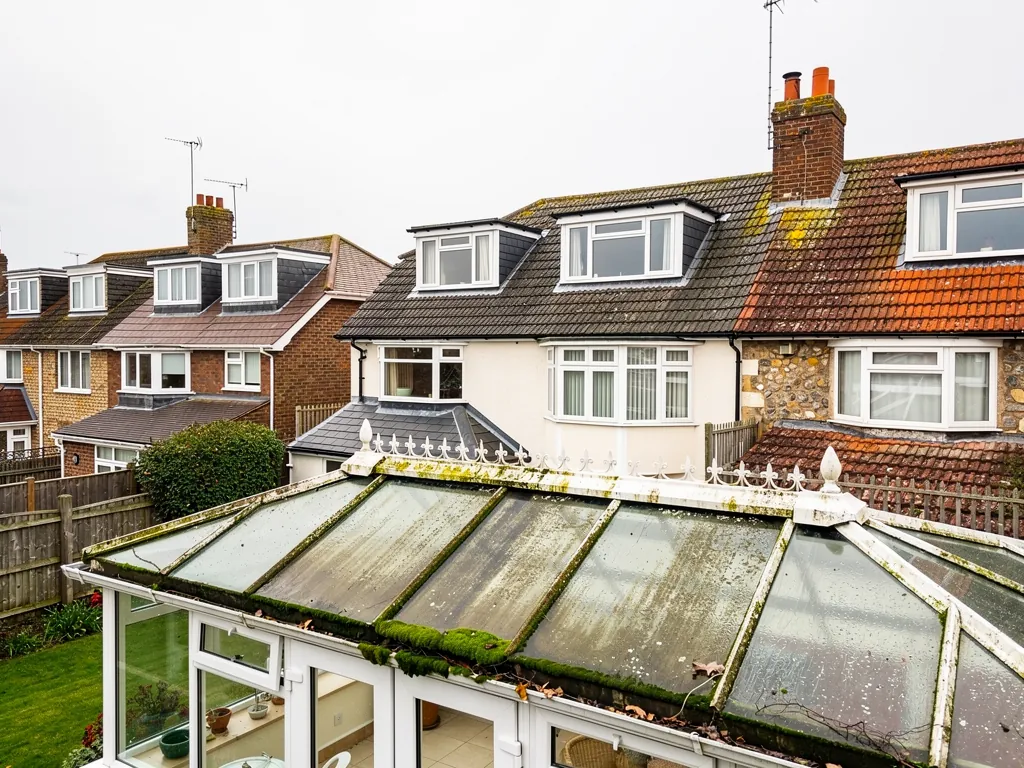 When is a roof problem an emergency?9 min read
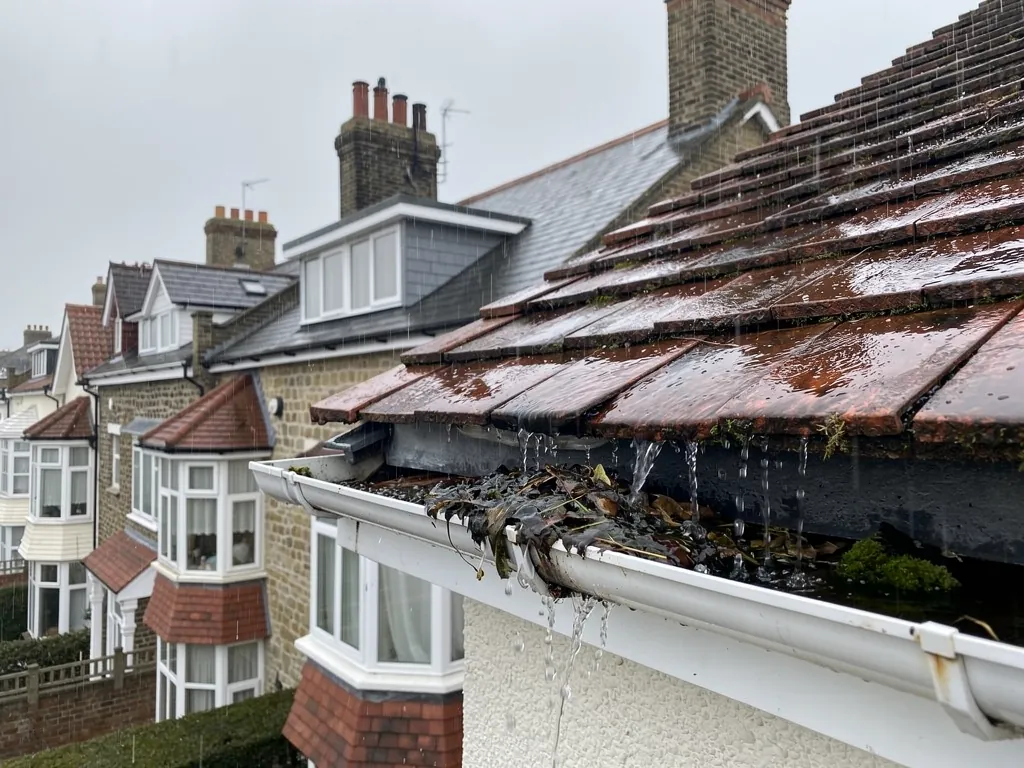 How to do a temporary roof repair safely9 min read
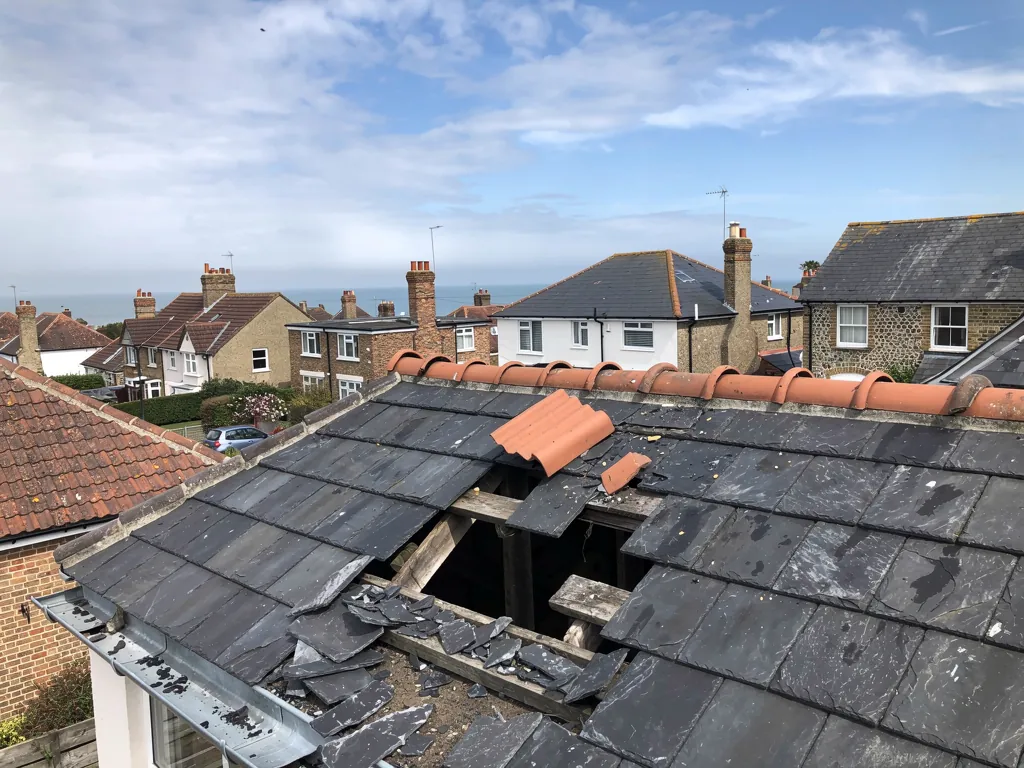 Claiming on insurance for storm damage to your roof10 min read
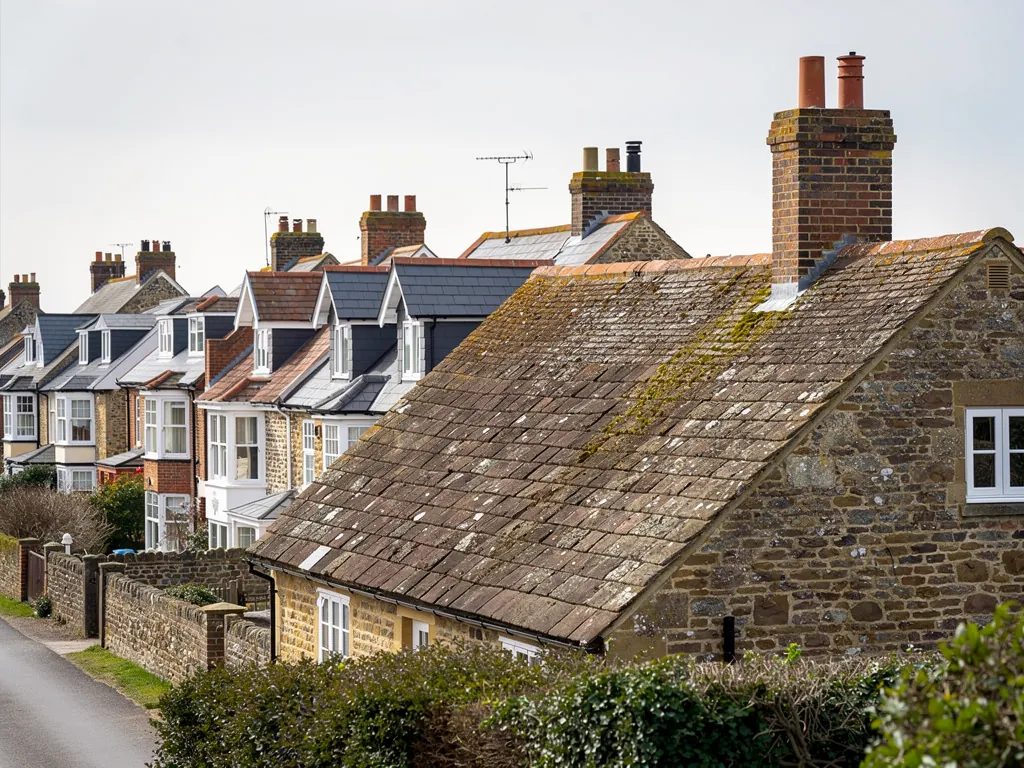 Roof leaking in heavy rain: causes and fixes10 min read
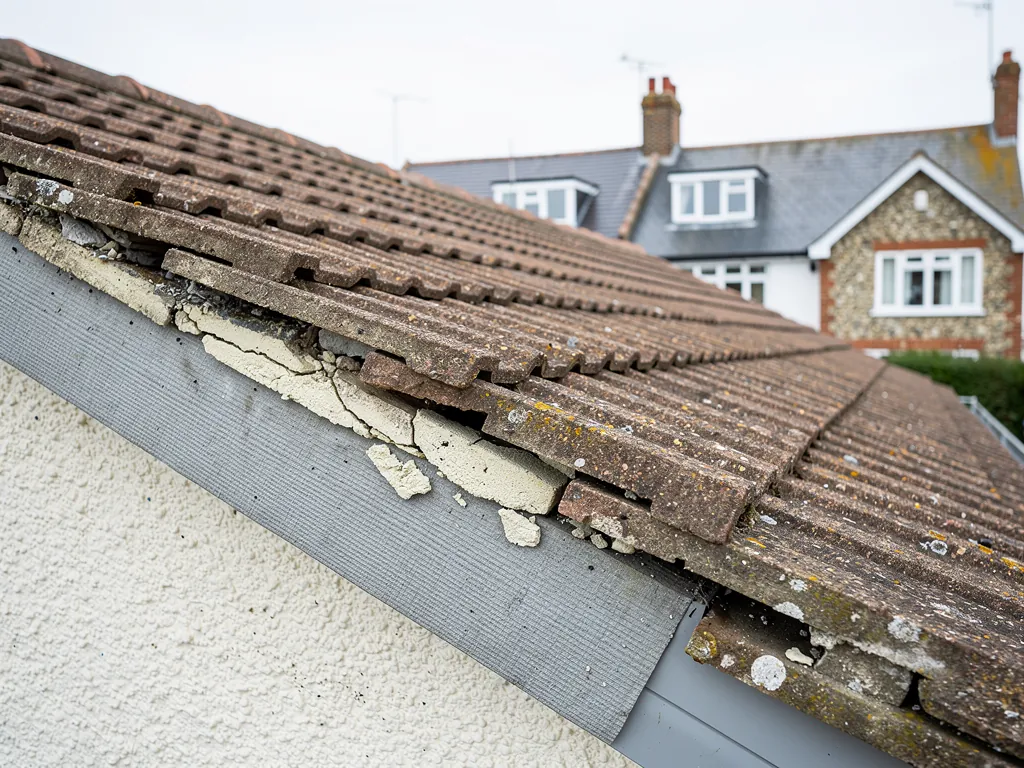 What a roof make-safe involves: covers, tarpaulins and scaffold9 min read
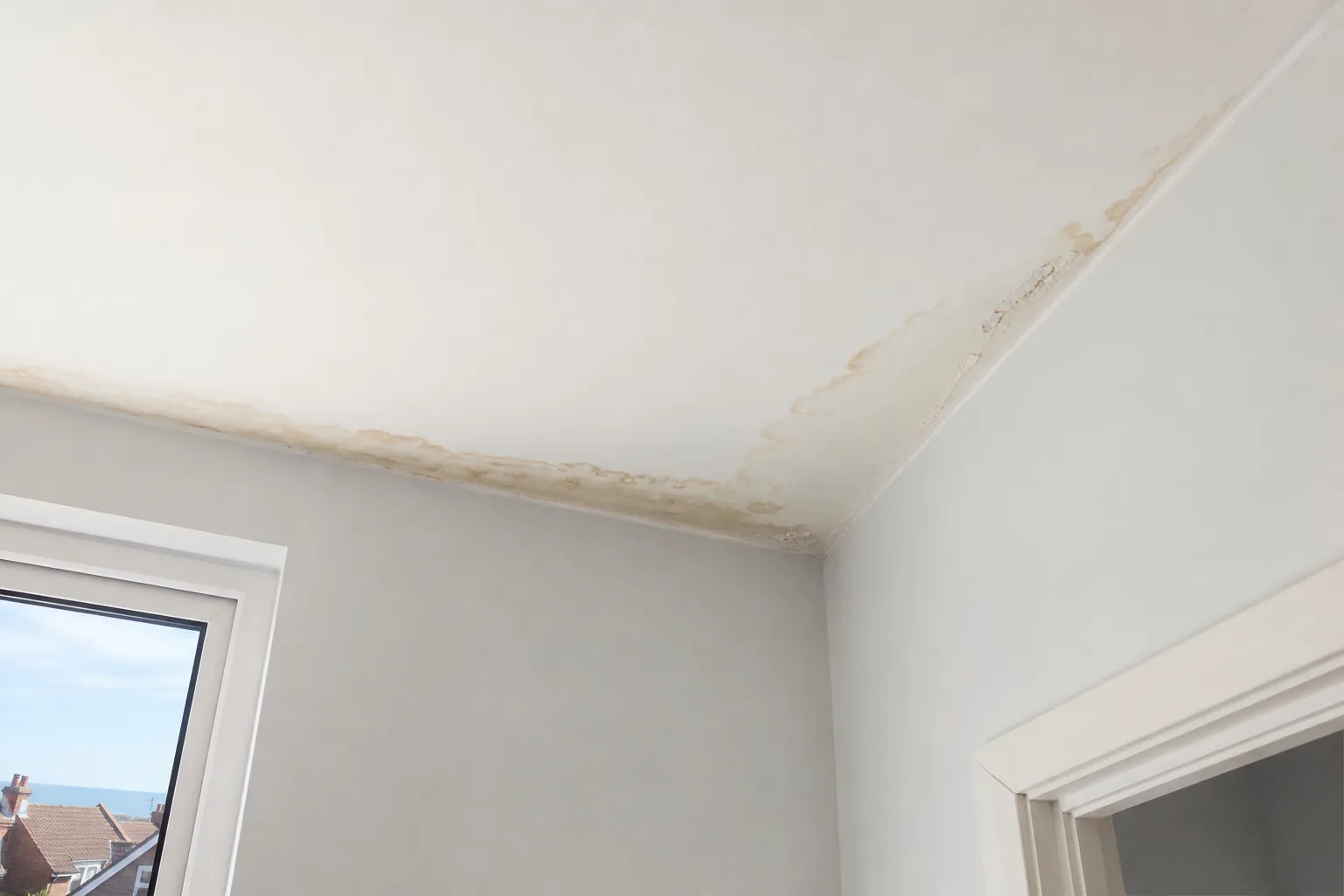 Water coming through the ceiling: what to do now9 min read
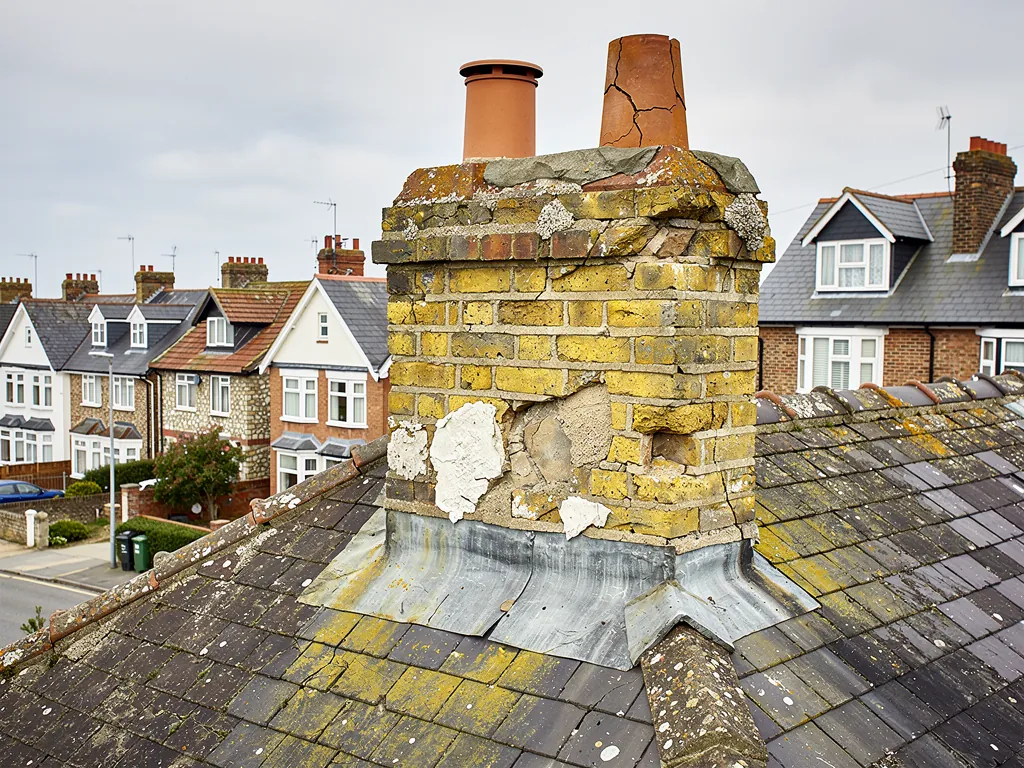 Tiles or chimney pots blown off: dealing with storm damage safely10 min read
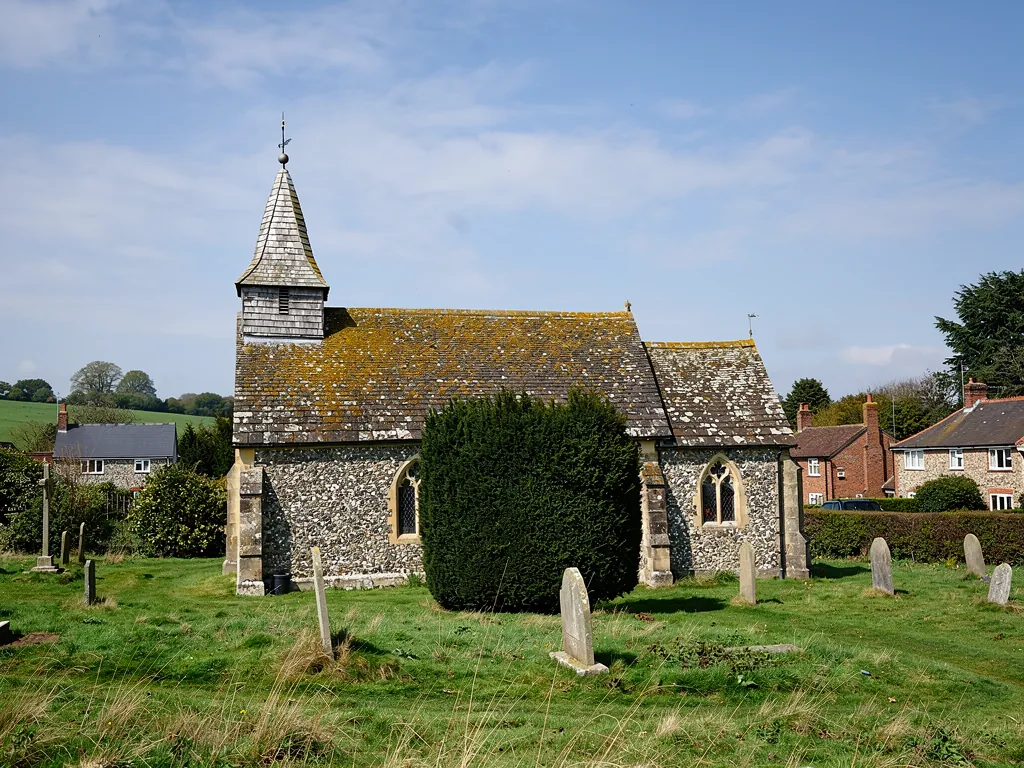 Emergency repairs on listed and conservation-area roofs9 min read
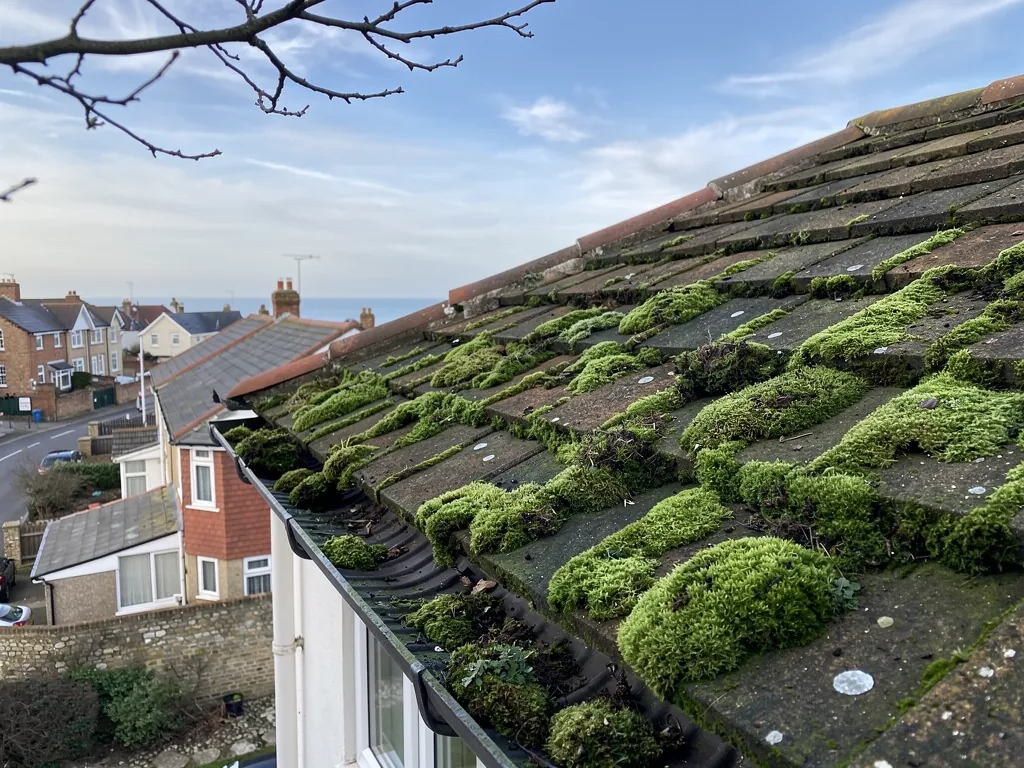 Before the storms: preparing a coastal roof for winter gales9 min read
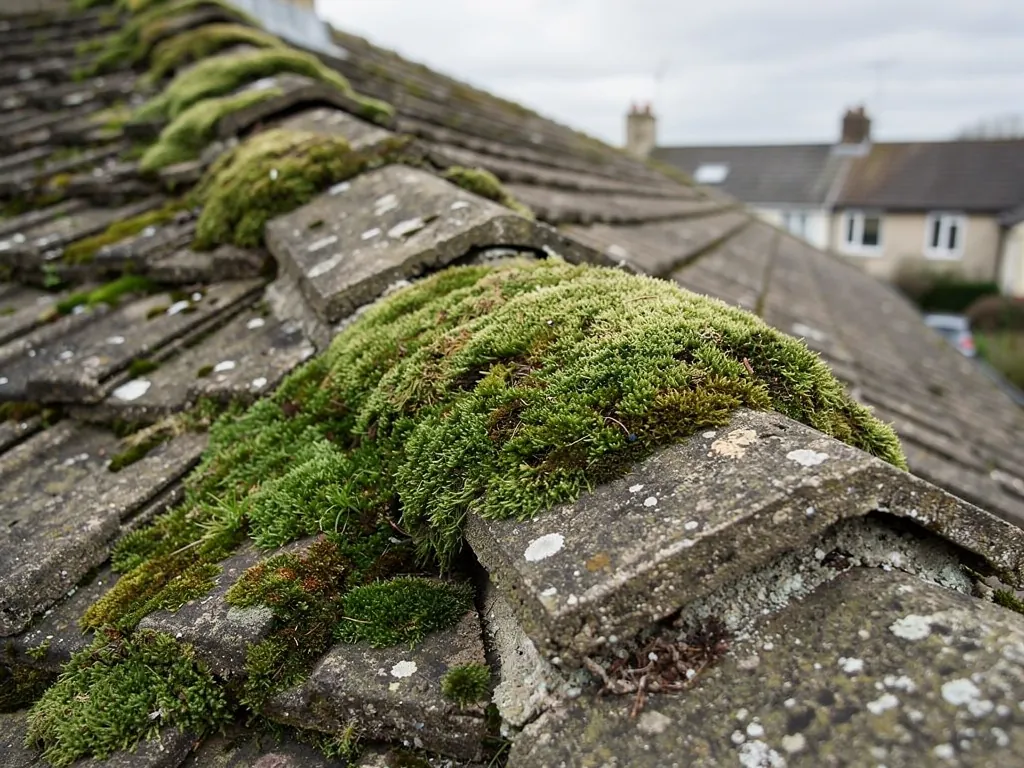 Frost, ice and snow damage on roofs9 min read
Quick answers
- Who is the best person to fix a leaking roof?
- Is a roof leak an emergency?
- How much does it cost to fix a leaking roof?
- Does home insurance cover a roof leak?
- Storm damage or wear and tear: why insurers refuse roof claims
- Should you pay for a temporary roof repair before the insurer agrees?
- What photos of roof damage should you take for your insurer?
- Do cooling-off rights apply to urgent roof repairs?
- Can you put a tarpaulin on a leaking roof?
- How long does a temporary roof repair last?
- Water near lights after a roof leak: what to do
- Who do you tell about a dangerous roof or chimney?
- How to check your roof for damage after a storm, from the ground
- How do you check the loft for a roof leak?
- Flat roof lifted or torn in a storm: what next?
- A tree has fallen on my roof: what should I do?
- Why does my roof only leak when it is windy?
- Is it a roof leak or condensation?
- Why do flashings leak in storms?
- Roof tiles rattling in the wind: should you worry?
Questions
Emergency roof repair questions, answered
What should I do first when a storm starts a roof leak?
Keep yourself safe before the roof. Stay off it, move belongings out of the way, catch the drip and switch off any circuit that water is reaching. Photograph the damage, then ring 01243 252373 or send photos on WhatsApp. Leaks and storm damage come first with us, and the roof is covered before the survey and written quote follow. Tell your insurer too, as early as you can.
How do I know whether a roofing problem needs a rush visit?
Rush work is for water that is coming in and cannot be contained, material that could fall on people, or a structure that looks unsound. A slow stain, one slipped tile on a dry day or a gutter that overflows only in heavy rain can usually wait for a booked survey. Send photographs and we will help you judge which you have. If you are unsure, treat it as urgent until someone has looked.
Why does an urgent repair price vary so much from roof to roof?
Because the job is never the same twice. A couple of tiles on a bungalow eaves take little time, while a chimney on a tall house may need scaffold, a licence for it, lead and repointing. The covering matters too, since natural slate takes longer to match than concrete tiles. The written quote follows the survey, and every price we give is one total that is good and fair for the work.
Should I arrange the temporary cover myself before my insurer replies?
If water is coming in, protecting the house comes first, and Which? advises that you tell your insurer, keep receipts and hold on to damaged items. Do not climb a wet roof to do it yourself. Photograph the damage before and after the cover goes on. Ask your insurer what it expects, since policies differ, and remember that a cover is a holding measure rather than the permanent repair.
Does an urgent roof repair need Building Regulations or planning permission?
Usually not for a repair in matching materials. The Planning Portal says no building control application is normally needed where under 25 per cent of the building envelope and under 50 per cent of the roof is affected, though Arun District Council lists re-covering roofs as work needing approval, so check with its building control team. Listed buildings can differ, and bats are protected, so we look for signs before stripping any covering.
What if a storm has broken the asbestos cement sheets on my garage roof?
Keep people and pets away and do not sweep, drill or break the pieces up. HSE advice is to assume asbestos may be present in a building built or refurbished before 2000, and asbestos cement roofs are fragile. Careful removal is non-licensed work, but if the sheets have broken up badly it becomes notifiable non-licensed work, and asbestos waste needs a consignment note. Tell us what you can see and we will explain the safe route.
Get a quote
Send us the damage and we start with safety
Send photos of the ceiling stain and the damaged roof, and tell us where the water is coming in; we make the roof safe, then survey.
Loading the enquiry form. You can also call 01243 252373.