
Roofers in Bersted
Thatch, flint farmhouses, Shripney chimneys
Bersted's roofs include thatched flint and brick cottages in North Bersted, old farmhouses, the 1675 Manor House at Shripney with its crowstepped stack, and the tiled roof of South Bersted's beach-boulder church.

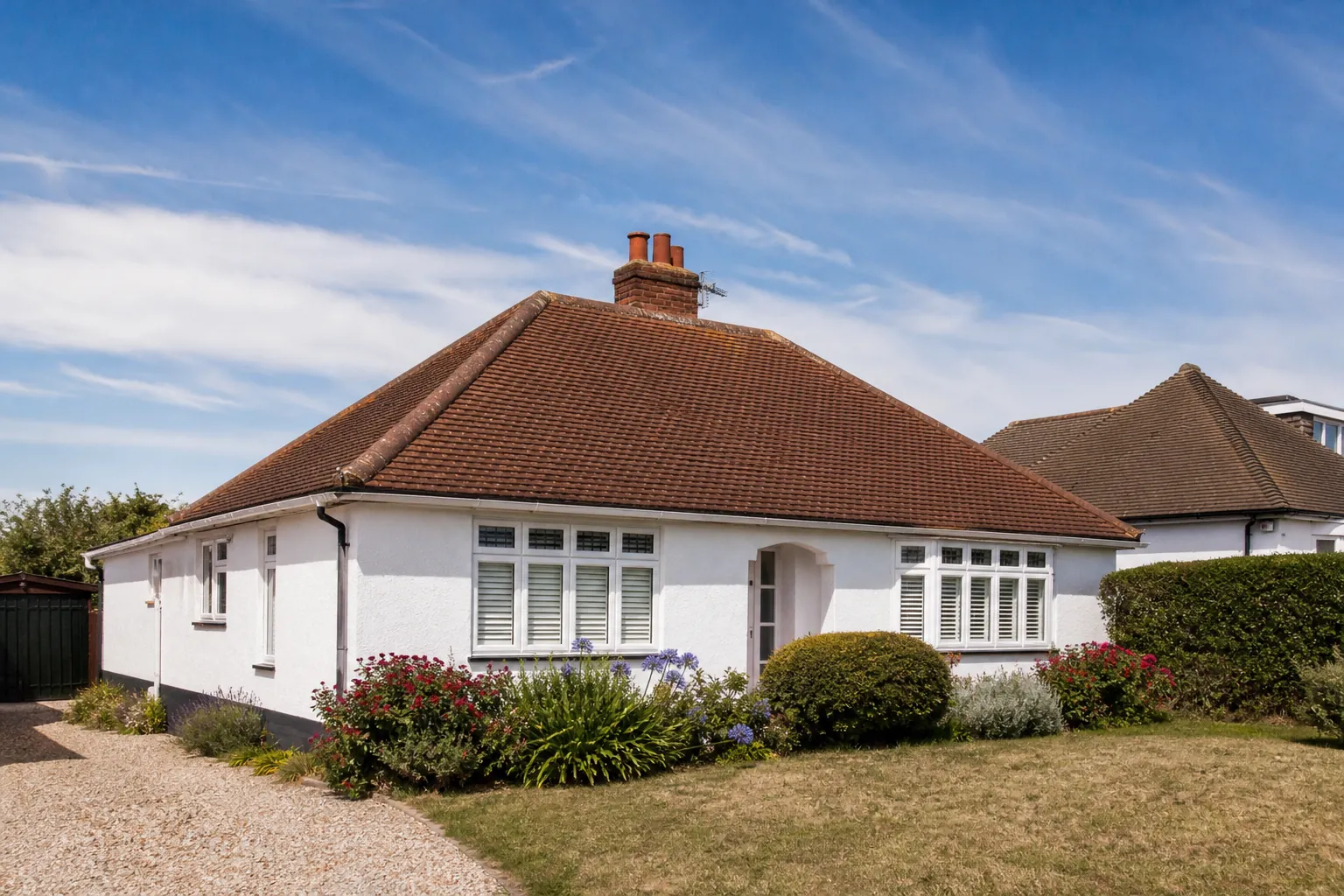
Bersted roofs
Thatch, a manor stack and a church of beach boulders
-
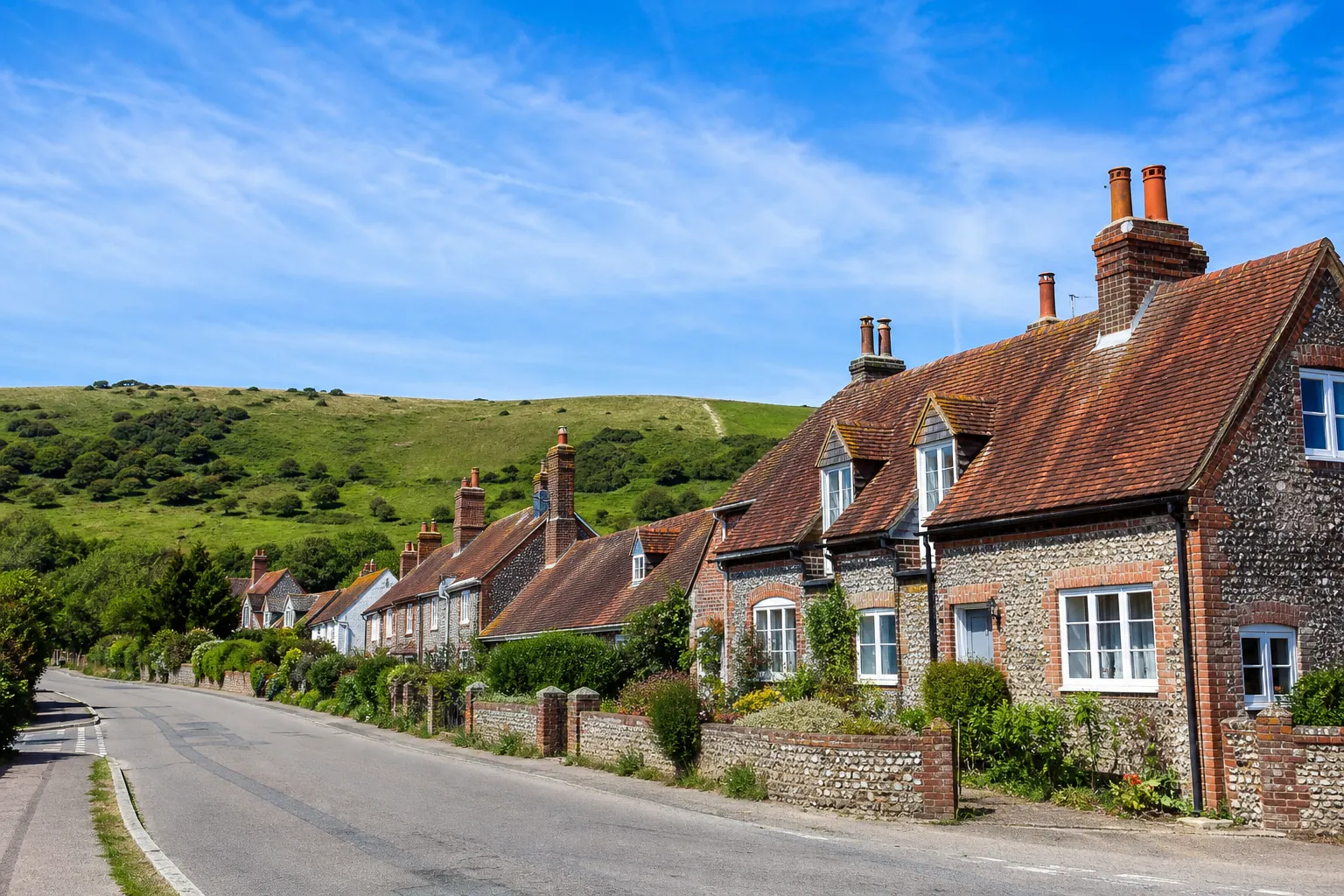
Thatched cottages in North Bersted
The Victoria County History records six or seven flint and brick thatched cottages of about 1700 on North Bersted's main street, among the 16th, 17th and 18th century farmhouses that Arun's conservation area covers.
-
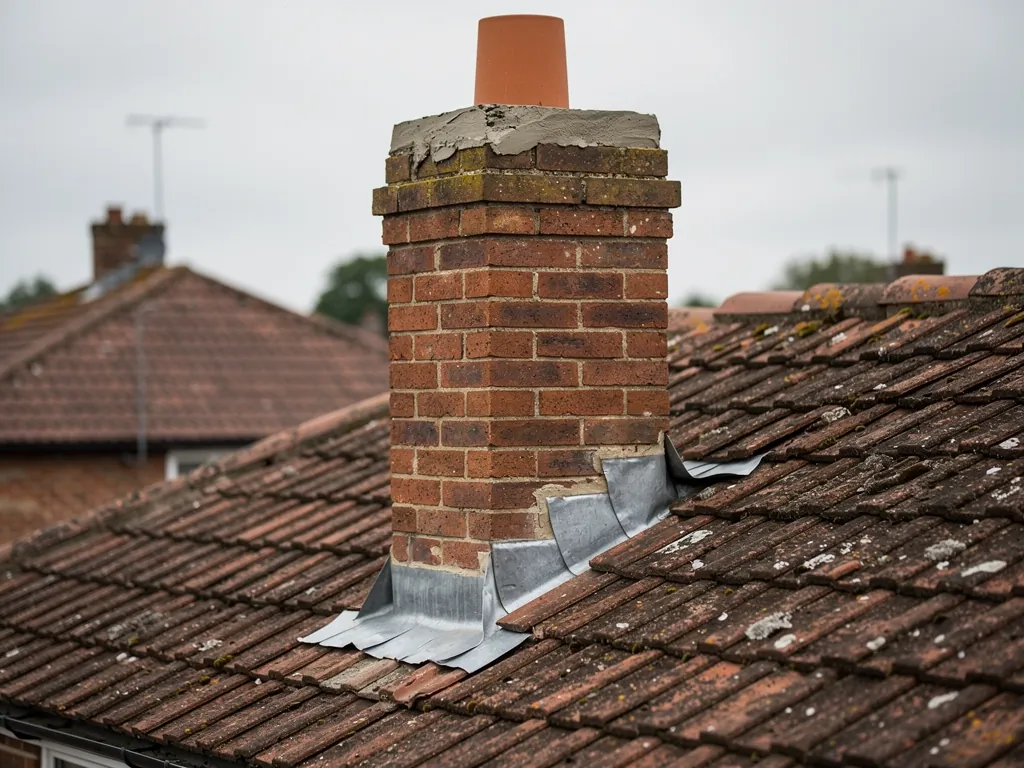
The Manor House stack at Shripney
Shripney's Manor House dates from the early 17th century and was remodelled in 1675, when it gained a carved Dutch gable. Its early chimney stack has crowstepped sides, the brick stepping up like a stair.
-
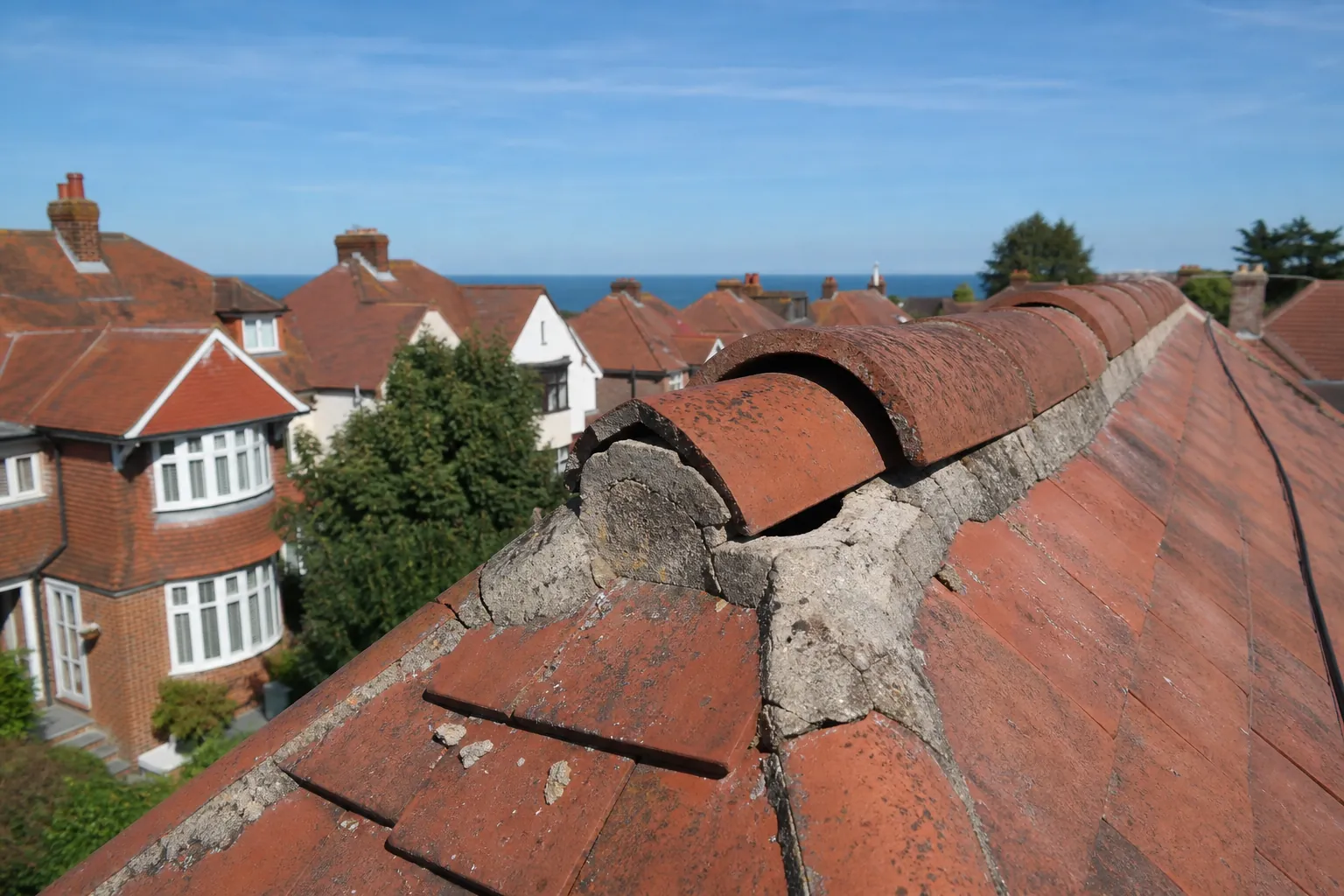
South Bersted's tiled church roof
St Mary Magdalene is built of rubble that includes beach boulders, with ashlar dressings. Its roof is tiled, apart from the shingled broach spire, and the church itself carries a Grade II* listing.
Map of Bersted, 2 road miles north of Bognor Regis, with the nearest towns we also cover.
Two conservation areas inside Bersted parish
- Council
- Arun District Council
- County
- West Sussex County Council
- Conservation areas
- North Bersted, designated February 1975; Shripney, designated 1998 according to Arun's January 2026 draft appraisal
- Article 4
- None recorded for Bersted by Arun
- Listed landmarks
- Homing Cottage and the Church of St Mary Magdalene, both Grade II*
- Distance
- 2 road miles north of Bognor Regis, about 6 minutes by car
Farmhouse villages
Thatch, flint and the Shripney stack
Bersted is two old villages and a manor hamlet, and each pushes a roof job in a different direction.
Chapter 1: North Bersted: thatch beside tile and flint2623
Sheet 01 / 03North Bersted's conservation area was designated in February 1975, and Arun's guidance remembers it for its many fine 16th, 17th and 18th century farmhouses. The Victoria County History, writing in 1953, adds that the main street had six or seven flint and brick thatched cottages of about 1700. Those descriptions are dated and individual roofs have changed since, so none of it tells us what covers your house. It tells us what the village is built from, and that old buildings sit tight against each other.
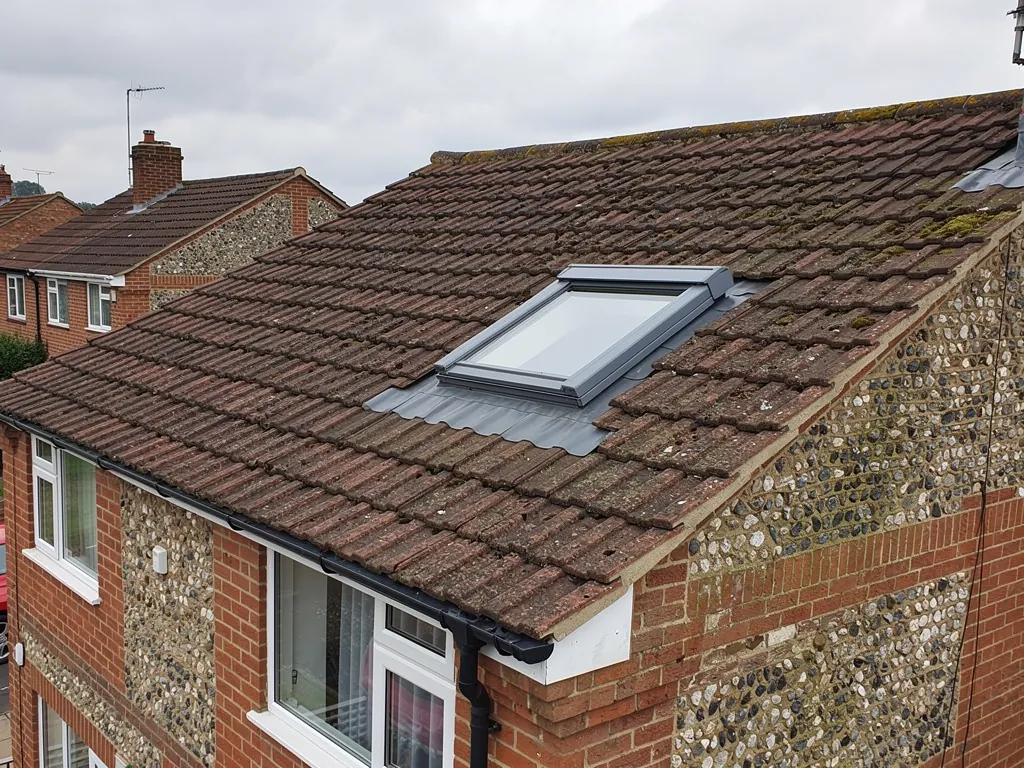
Before roof work in the old village
- Consult the conservation area map
- Look for a list entry
- Agree the join with neighbours
- Inspect rafters from the loft
1.1 Where thatch meets tile and lead
Thatching is a specialist craft, and a thatcher is the right person for the thatch itself. Our part in a village like this starts where the thatch stops: the tiled or slated roof next door, the chimney that rises beside a thatched ridge, and the lead that seals a roof against an older wall. Wherever a newer roof butts up to an old one, the junction takes water from both slopes, and a back gutter or a soaker (a small folded piece of lead worked in between the courses) has to carry it away. A shared gable means a word with the neighbour before anything is fixed to it. Our pitched roofing page explains how tiled slopes are stripped and relaid, and the lead roofing and leadwork page covers the junctions.
1.2 Flint, brick and a farmhouse roof
Flint and brick walls are sound but unforgiving: they hold water where a flashing fails and show the stain months later. A farmhouse roof tends to be long, with valleys (the sunken line where two slopes join) and chimneys at awkward points, so a survey covers the loft as well as the outside, looking at rafters and battens from below. A published 60-year life for clay tile tells you little about an old peg-tile roof, so condition and survey photographs decide our verdict. For a sense of scale, Checkatrade's repair costs (table dated June 2026) give clay tile repairs at £110 to £160 per square metre, with VAT added on top, which is worth confirming on any written quote you receive.
Listed building consent is required for work that alters the character of a listed house such as Homing Cottage in Bersted (Grade II*), so the list entry is the first document we ask to see on any old property. Repairs that keep the look and materials of the roof are a different matter from changing the covering, and the council's conservation officer can say which side of the line your job falls on.
Chapter 2: Shripney: a 1675 gable and a crowstepped stack2806
Sheet 02 / 03Shripney folds into Bersted parish, and Arun's draft conservation area appraisal of January 2026 says the area was designated in 1998 and that thatch is particularly notable as a roofing material there. That appraisal is a consultation draft and has not been adopted, so look at Arun's website for the current position before relying on it for a decision about your own roof. Whatever its final wording, the draft shows how much weight the council puts on the character of roofs in this small hamlet.
Three outcomes for an old stack
- RepointSound brick with failed joints: mortar raked out and renewed, lead checked.
- Rebuild the topLoose upper courses taken down and relaid with a new flaunching.
- Rebuild the stackLeaning or crumbling brick taken down to sound work and rebuilt.
2.1 What the Manor House stack tells us
The Manor House at Shripney is an early 17th century building, remodelled in 1675, and a Dutch gable carries that date. Its early-17th-century chimney stack has crowstepped sides, meaning the brickwork steps up each flank like a staircase. A stack of that kind shows what any chimney asks of a roof. The brick, the mortar joints, the flaunching (the mortar slope that holds the pot in place) and the lead around the base all age at different rates, and the weakest of them sets the leak. Crowstepped brick adds a further point: every step is a small ledge that can hold water, so the joints along each flank get a close look. We look at a stack from the ground and from the roof, photograph each joint, and say whether it needs repointing, a rebuild of the top courses or a full rebuild. Our chimney repairs page covers each option.
2.2 Repoint, rebuild or leave alone
Not every stack needs rebuilding. Joints that have eroded but brick that rings sound can be raked out and repointed, and the lead renewed at the same visit. Brick that crumbles under a thumbnail, or a stack leaning visibly, points to taking it down to sound work and rebuilding. MyJobQuote (22 September 2026) puts a patch to chimney lead at £150 to £250, and a full renewal at £350 to £460 without scaffold or £700 to £920 with it. Scaffold is a real part of the bill, since Checkatrade's scaffolding guide gives about £660 per week for a chimney. Lead flashing can last over 80 years, according to the same MyJobQuote page, so a stack with a sound old flashing is often best left alone. Where the stack of an old house is listed or sits inside a conservation area, we check the list entry and Arun's map first and match brick and mortar to what is there.
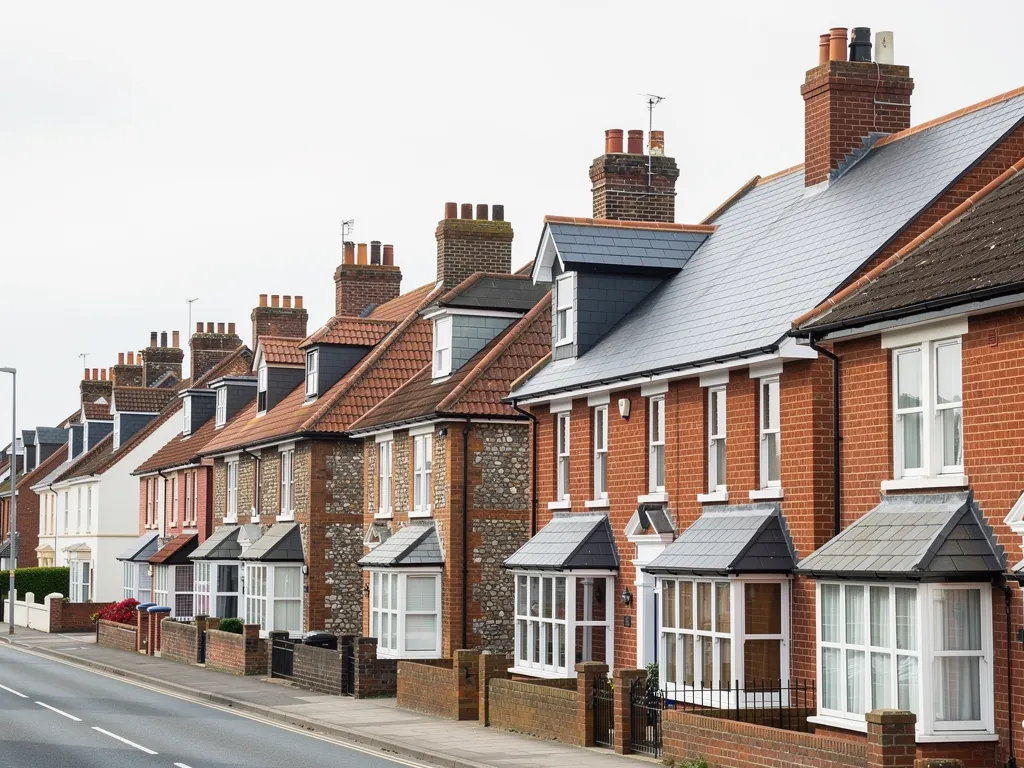
Chapter 3: South Bersted's beach boulders and tiled church2867
Sheet 03 / 03Moving south, St Mary Magdalene in South Bersted is built of rubble that includes beach boulders, with ashlar dressings (squared stone around the corners and openings). The Victoria County History says it is roofed with tile, apart from the shingled broach spire. The church is listed Grade II*, and it shows how an old roof is judged: by its covering, and by the consent route that applies to it.
Site note
Bats and nesting birds have legal protection, so we check the eaves and roof void for both before lifting tiles.
3.1 Who consents to a church roof
St Mary Magdalene is a parish church in use for Church of England worship, so the ecclesiastical exemption applies: listed building consent is replaced by the faculty system within the Church. Changes to the outside of the building can still call for planning permission. Other denominations follow their own procedures, and a church that has closed for worship, or a redundant building in the care of the Churches Conservation Trust, falls under the ordinary listed building controls. Our church roof repairs guide sets out how we approach them.
3.2 What a tiled church roof needs
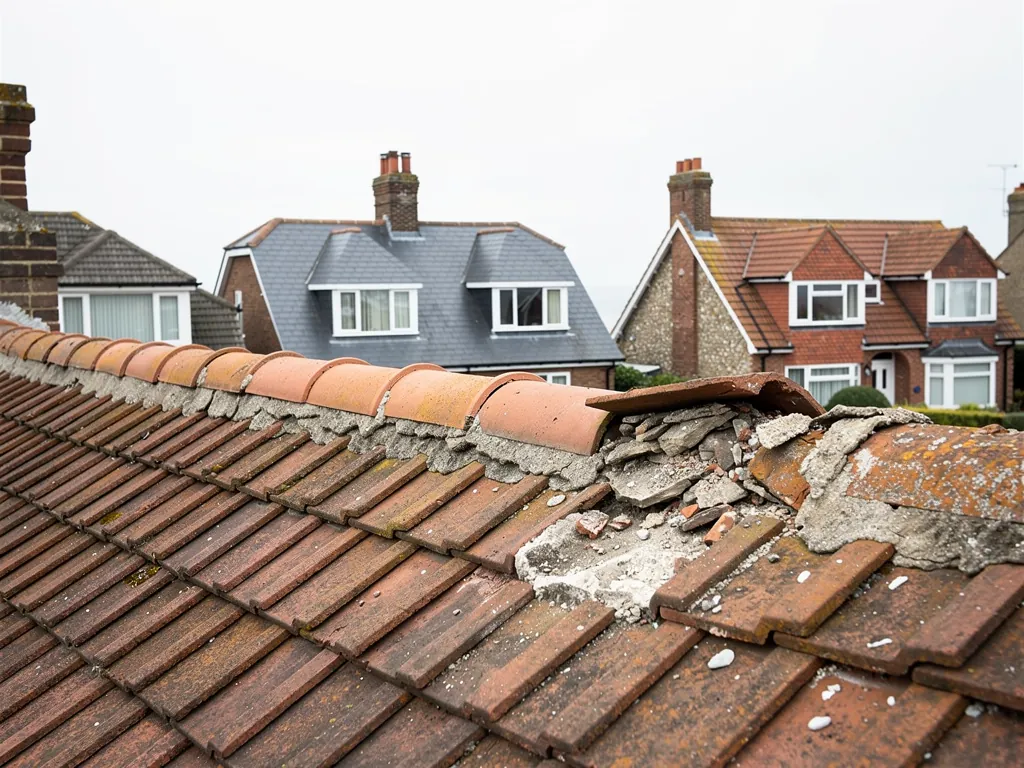
A big tiled roof on a rubble building has plenty to look after. Tiles slip, ridges loosen, and the gutters and downpipes carry a lot of water onto walls that soak it up. From the ground we look for slipped tiles, blocked outlets and green staining that shows where water is running the wrong way. Up close we check the flashings where the roof meets a tower or a higher wall, since that junction is where a long roof most often lets water in. A repair that matches the existing tile in colour and size looks right from the churchyard, and a sound old roof is usually better patched than replaced. Scaffold on the public footway needs a licence, which West Sussex County Council issues as the highway authority.
3.3 Open ground and the water a roof sheds
Bersted lies on the coastal plain north of Bognor, with the Aldingbourne Rife crossing the parish. Open ground gives a roof little shelter, and manufacturers such as Wienerberger say a fixing specification depends on the location, the altitude and the local wind exposure, so we fix ridges, hips and verges to BS 5534 and check them after a gale. A long farmhouse run also needs a gutter that sheds water properly. Brett Martin suggests a fall of 1 mm for every 600 mm and brackets no more than 900 mm apart, and a sagging length of gutter is the first thing a survey tends to find. We lift or flush a section to see where the water actually goes, rather than guess from the ground.
Services for Bersted roofs
Frequently asked questions
Bersted: thatch, stacks and listed farmhouses
Can a tiled roof beside a thatched cottage on North Bersted's main street be repaired without disturbing the thatch?
Usually the repair stops at the join. We work on the tiles, the lead and the chimney, and leave the thatch to a thatcher. The junction is where water from both slopes meets, so we photograph it from the loft and from outside, and agree the work with the neighbour where a shared gable is involved. The written quote then states one total price for the job we recommend, and if the thatch itself needs attention we tell you plainly.
Does Shripney's draft conservation area appraisal change how I re-roof?
Not yet. Arun's January 2026 draft says Shripney was designated in 1998 and that thatch is notable there, but it is a consultation draft and has not been adopted. Re-roofing in the same material is generally not development, and a listed building is a separate matter. Put your address to Arun's planning team, and we will describe what the survey finds, with photographs of the stack, the lead and the covering.
How do I find out whether my old Bersted farmhouse is listed before I re-roof?
Search the National Heritage List for England by address or postcode. Homing Cottage, for example, is listed Grade II*. If your house is listed, work that alters its character requires listed building consent, though like-for-like repairs can be a different matter, so ask the council's conservation officer. The list entry is the first thing we look at, and we tell you what we find in plain terms, whatever it says.
Do North Bersted's conservation area rules stop me renewing lead flashings?
Arun has no Article 4 direction recorded for Bersted, and renewing worn lead flashings in matching lead is a repair, not a change of appearance. That said, the rules turn on your address and on whether the house is listed. Check with Arun's planning team before work begins, and let us know what the council says so the written quote reflects it.
Nearby areas
Get a quote
Tell us about your roof
Describe what's happening and we'll call you back.
Loading the enquiry form. You can also call 01243 252373.