
Roof repairs in Bognor Regis
A leak, a slipped tile or a split flat roof is usually a repair, not a new roof. We trace the fault from the loft, photograph what we find and tell you plainly what the roof needs before any price.
- Repair or replace,
said plainly - Photos of
your own roof - Written quote,
one total price - Ridges and verges
fixed to BS 5534
Signs
Signs a Bognor Regis roof needs repair
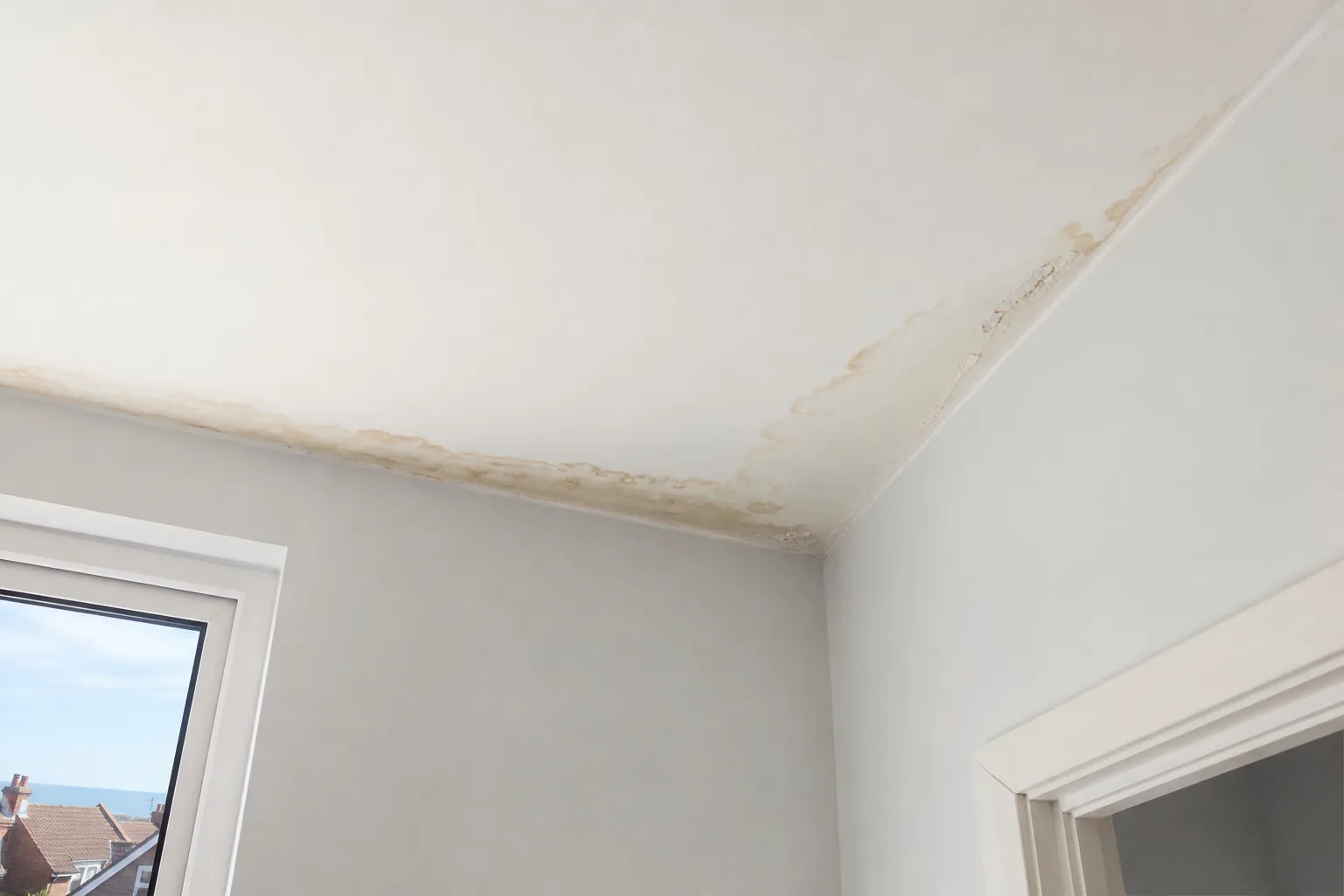
- A brown stain spreading across a bedroom ceiling
- Tiles or slates lying on the path
- Ridge mortar crumbling into the gutter
- Lead lifted away from the chimney stack
- Puddles still sitting on a flat roof
Repairs we carry out
The roof repairs we carry out across West Sussex
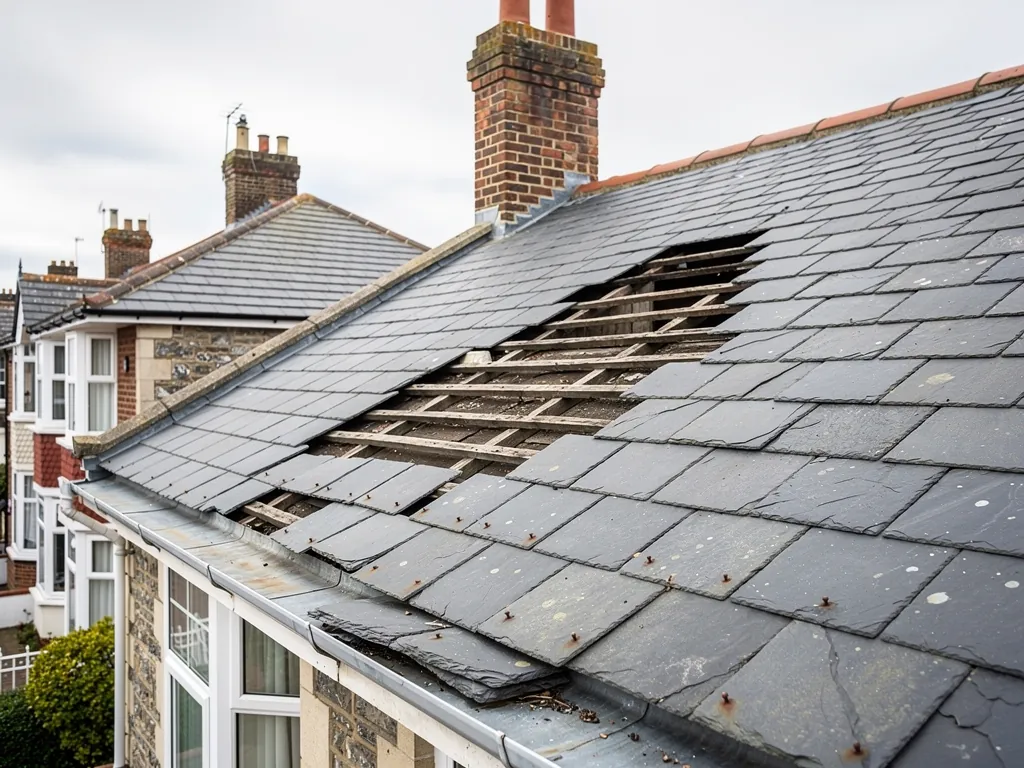
Slipped and broken tiles
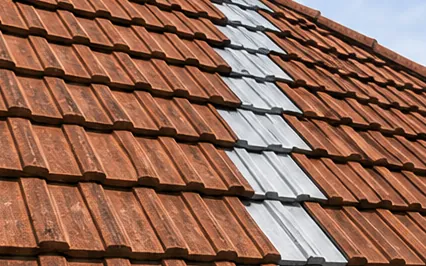
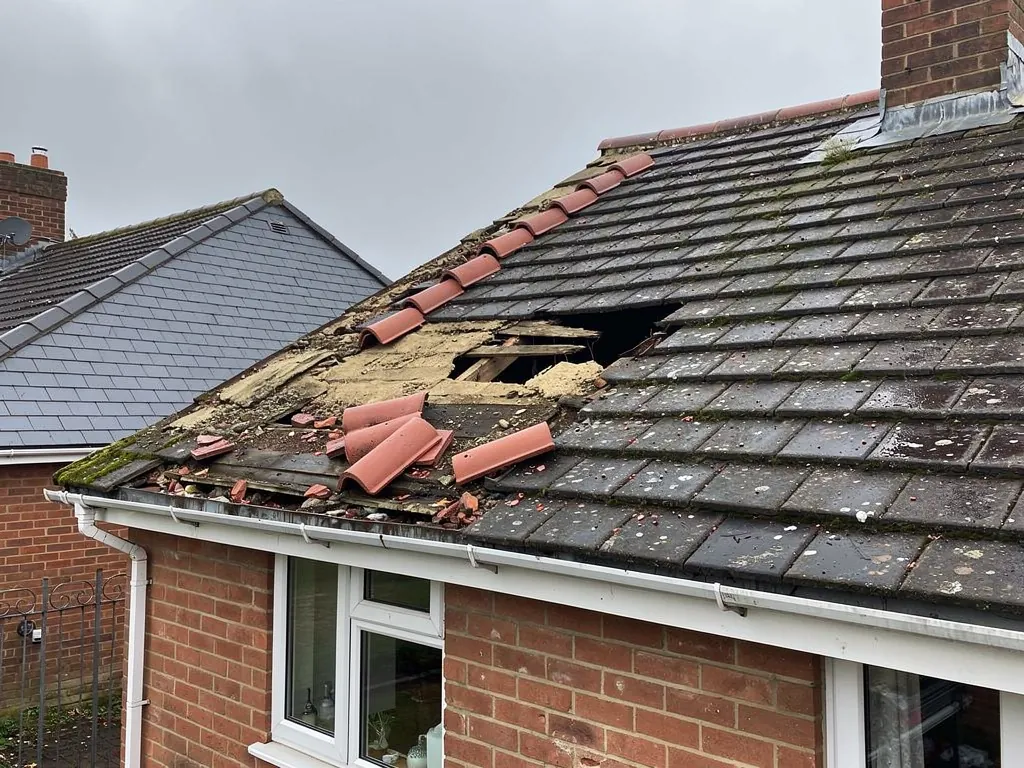
We replace cracked or missing tiles and slates to match, refix loose ones with the right nails or clips, and check the battens behind them before we leave.
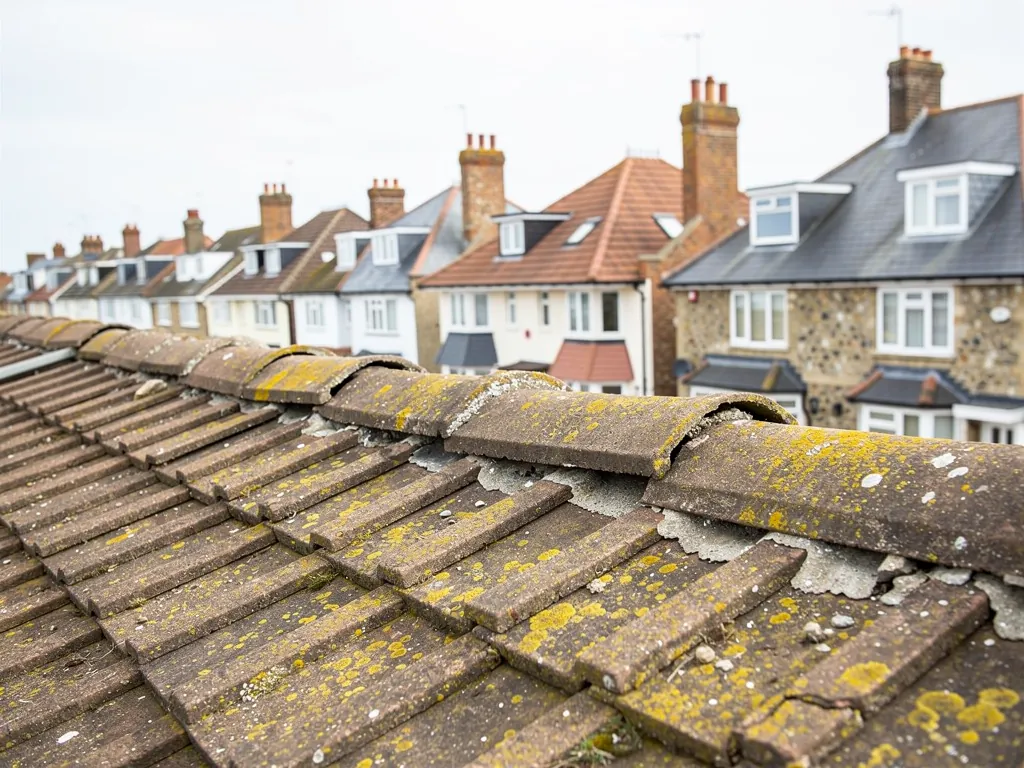
Ridges and hips
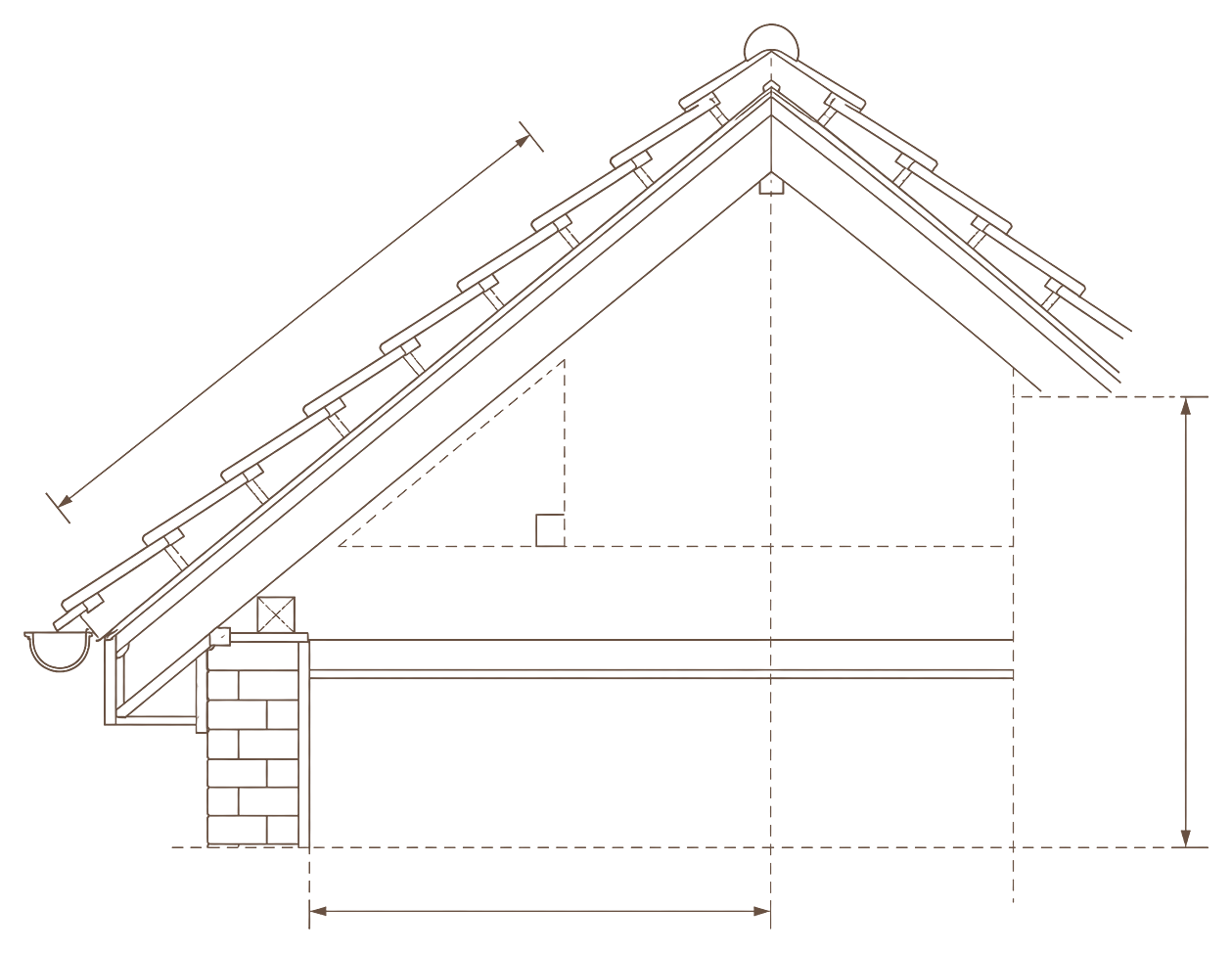
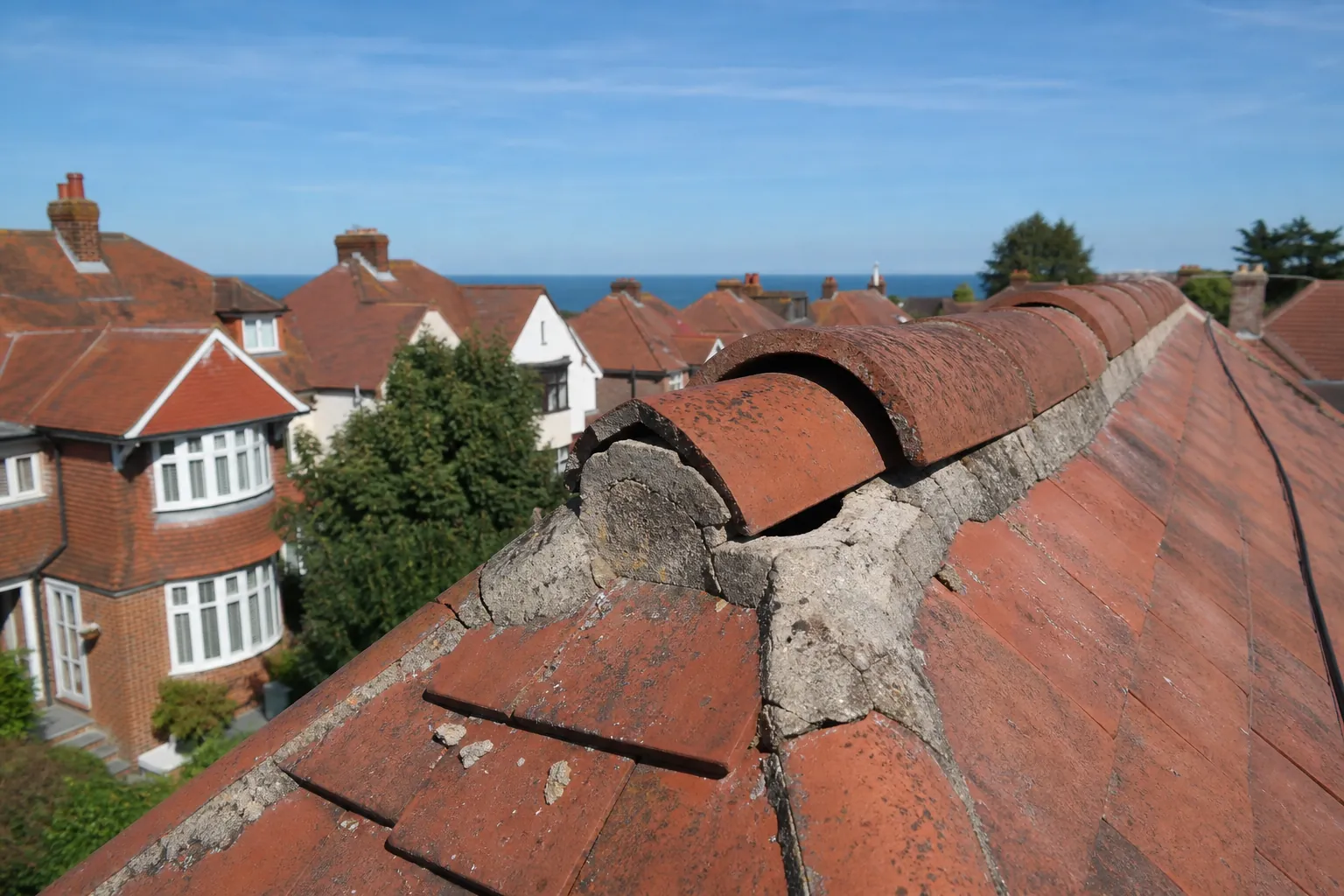
The ridge is the top line of the roof and a hip is a sloping outside corner. We rebed or dry-fix both, with mechanical fixings to BS 5534.
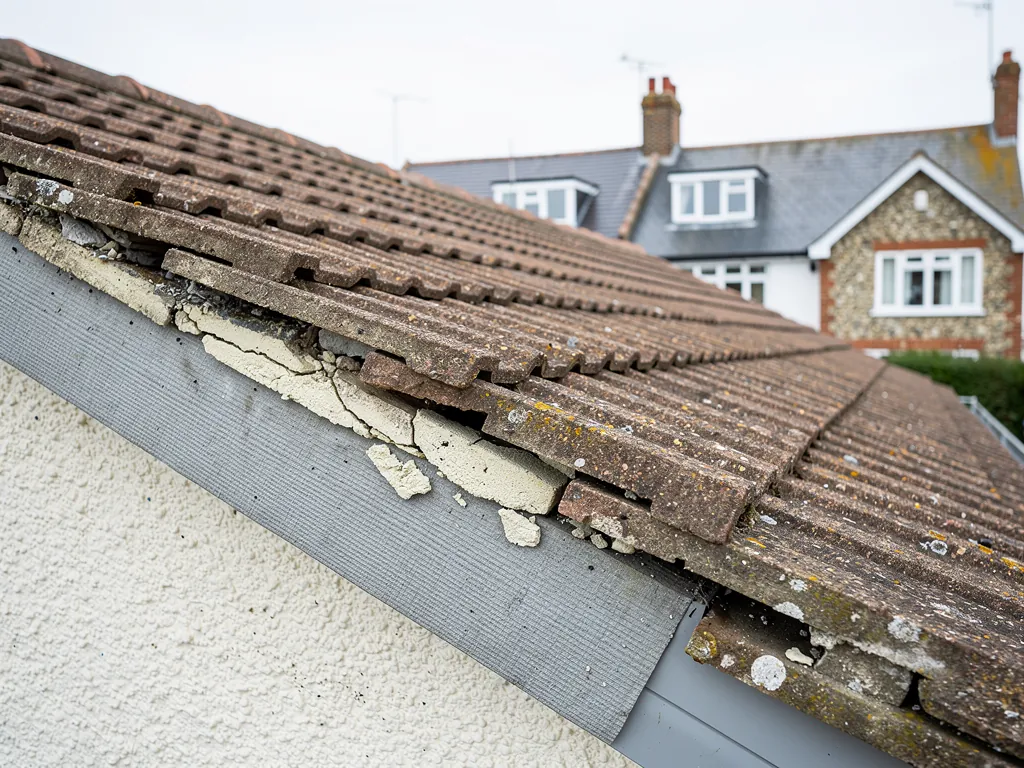
Verges
A verge is where the tiles finish over a gable wall. We repoint or dry-fix loose verge tiles so the wind cannot get under the end course.
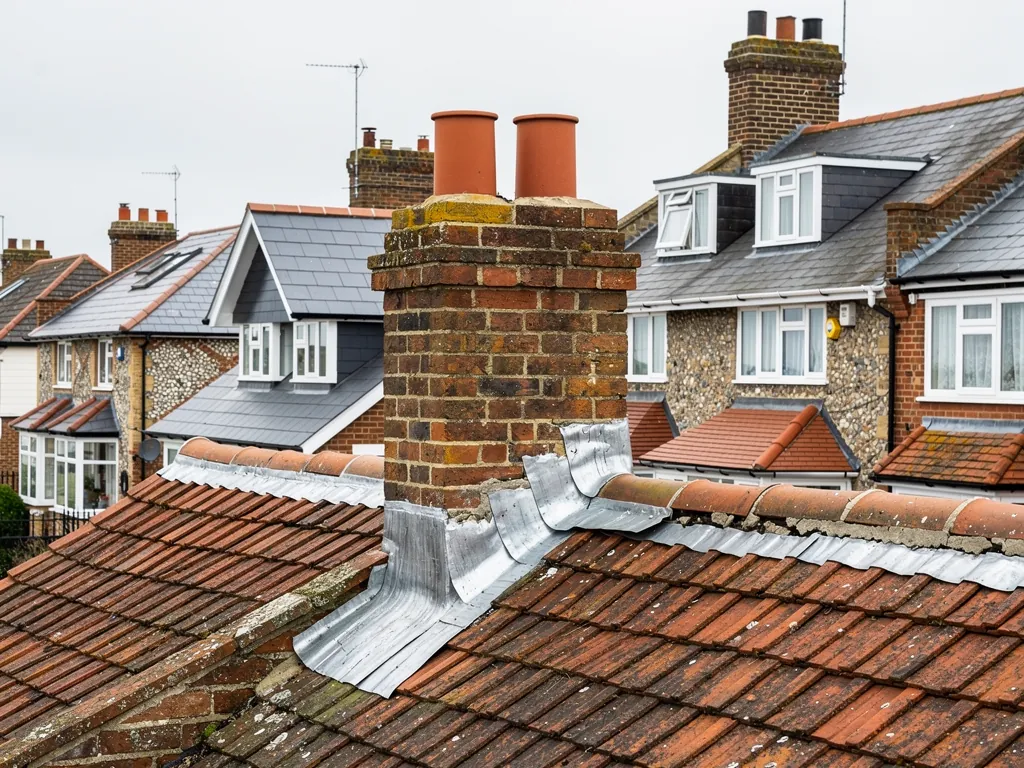
Lead flashings and soakers
A flashing is the lead sealing the roof to a wall or chimney; soakers are small lead pieces under each tile course. We renew lifted or cracked lead.
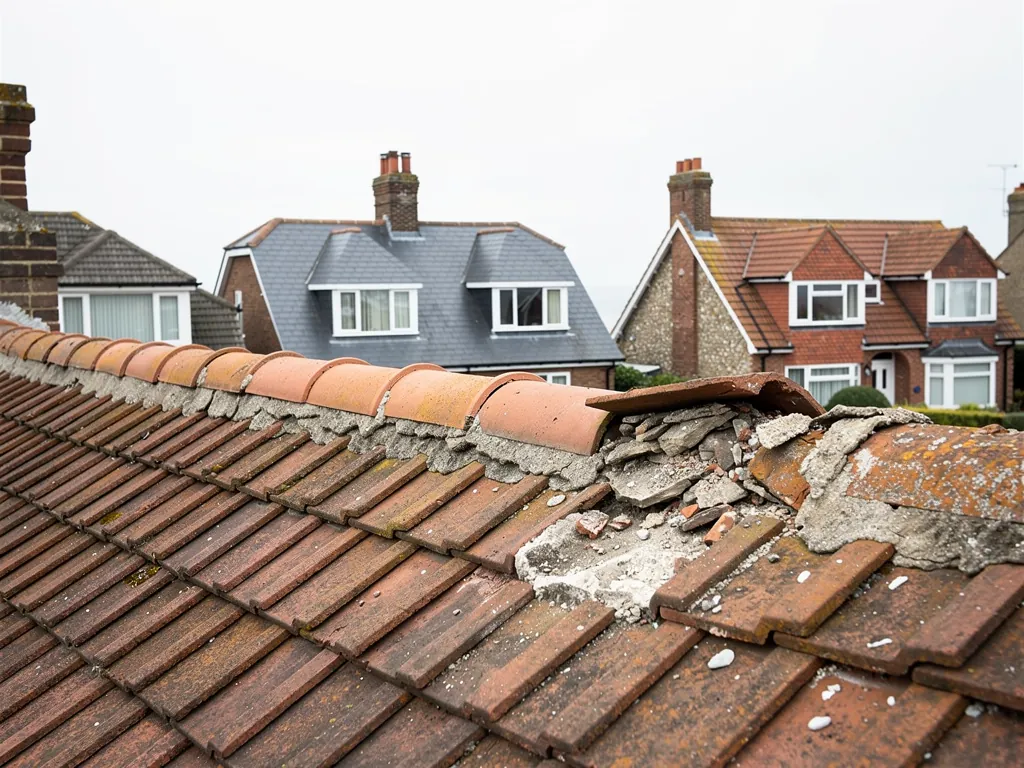
Valleys
A valley is the internal channel where two slopes meet. We clear, reline or rebuild leaking valleys in lead, GRP or tiles, matching how the roof was built.
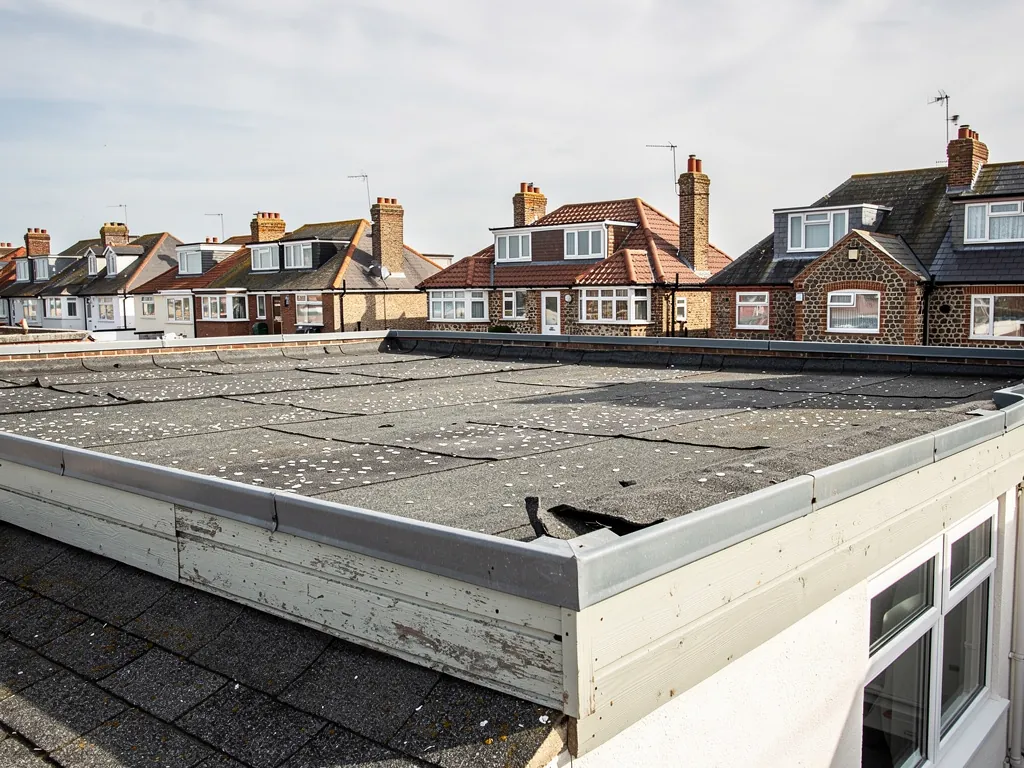
Flat roof splits and blisters
On felt, EPDM and GRP roofs we patch splits, reseal upstands and outlets, and tell you plainly when the deck beneath is too wet to patch.
What it costs
What a roof repair costs in Bognor Regis
£100 to £1,000
JJ Roofing's published guide range for roof repairs
A few tiles reached from a ladder sit near the bottom; scaffolded lead or ridge work on a tall terrace sits nearer the top.
How a roof repair goes, from first call to clear-up
- 1Send us what you can seeRing 01243 252373 or send a WhatsApp photo of the stain, the slipped tile or the lifted lead, and tell us when it started.
- 2We trace it, loft firstWe look at the underside of the roof from the loft, then from a ladder or roof access, and photograph both the fault and its cause.
- 3A plain verdict, then the priceYou hear whether to repair, patch for now or replace, with reasons and photographs, followed by a written quote showing one total price.
- 4The repair and the clear-upWe fix the fault, photograph the finished work, clear any debris from your gutters and take every bit of waste away.
Roof repairs, in depth
How roof repairs are done properly on the Sussex coast
Six chapters on tracing leaks, the details that fail first, flat roofs, what repairs cost and when a repair stops making sense.
Chapter 1: Tracing a leak back to its source2013
Sheet 01 / 06Water travels along felt, battens and rafters before it drips, so the ceiling stain is a clue rather than the answer.
A roof leak is a question of route. Rain gets past the covering at one point, runs down the underlay or along a batten, and drops onto the ceiling wherever the timber lets it go. On a hipped bungalow in Aldwick or Pagham that can put the damp patch well away from the actual gap. So the first job on any roof repair is to trace the water back, and an experienced roofer does that from inside before touching a tile.
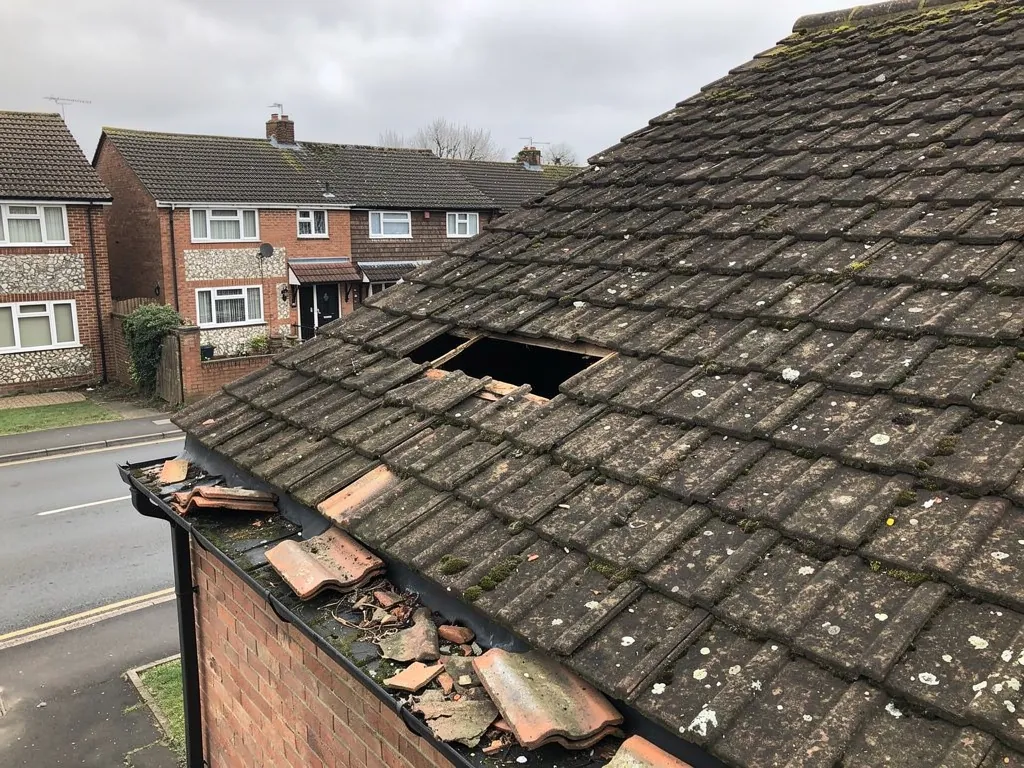
The stain on your ceiling tells you there is a leak, never where it starts.
Tracing a leak, in order
- 1CeilingMark the stain and note which weather, wind or heavy rain, brought it on.
- 2LoftFollow the tide marks on rafters and battens uphill to the wettest point.
- 3RoofCheck tiles, lead and mortar directly above that point and a little upslope.
- 4Water testWhere the cause is still unclear, run a hose over one detail at a time.
That order matters for cost. A guess made from the garden often leads to the wrong tiles being lifted, and the leak returns with the next band of rain. Tracing it first means you pay for the repair that actually stops it.
1.1 What the loft tells us
With a torch in the loft we look for dark tide marks on the rafters, wet or soft battens, stained underlay and daylight where there should be none. Underlay is the membrane or felt laid under the battens, and battens are the timber strips the tiles hang on. Older roofs on the post-war estates around Felpham and Bersted often have bitumen felt underlay that has gone brittle at the eaves, and torn felt there lets wind-driven rain reach the wall plate. Where the loft is boarded or insulated right up to the slope, we tell you, and we look harder from outside.
1.2 Leak or condensation
Not every wet patch is a leak. Condensation forms when warm, damp air from the house meets a cold roof, and it shows as droplets across the underside of the felt or mould on the timbers rather than one wet trail. It often follows loft insulation being packed into the eaves so the air path is blocked. BS 5250, the code of practice on moisture in buildings, sets the ventilation guidance roofers follow; with a high-resistance underlay, Marley gives 10 mm of continuous eaves ventilation for pitches above 15 degrees. Refixing a tile will never cure condensation, so find out which you have before paying for a repair.
Every survey ends with photographs of what we found: the slipped slate, the cracked mortar, the stain on the underlay and the route the water took. They come with the written quote, so you can see the fault without climbing a ladder and show it to anyone you like. If the leak followed a storm, keep those photographs with your own; Which? says to contact your insurer early and hold on to the receipt for any urgent work you pay for yourself. Our guide to how roofers find a roof leak takes the tracing through in more detail.
Chapter 2: Ridges, verges and slipped tiles near the sea2745
Sheet 02 / 06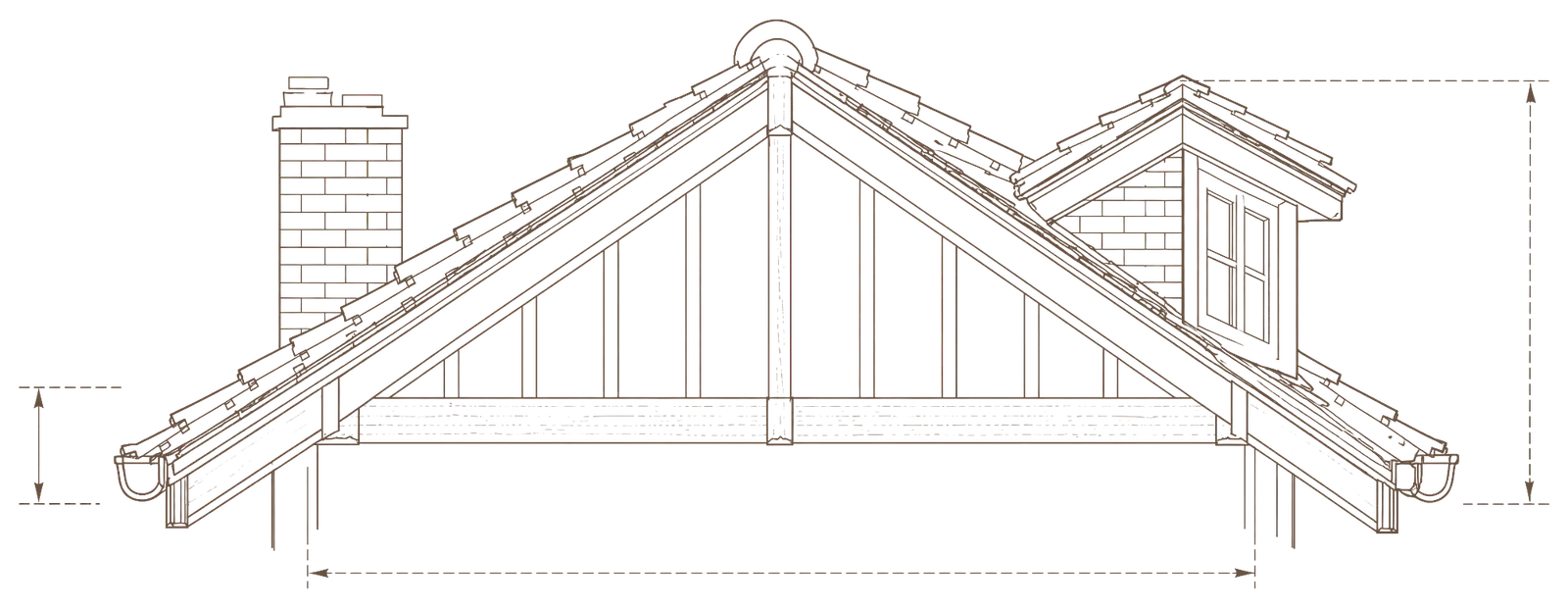
- Ridge Bedding cracks first; mechanical fixings keep each ridge tile in place.
- Eaves Brittle felt here lets driving rain reach the wall plate.
- Dormer cheek Lifted soakers and lead on the cheek let water in.
- Valley Cut tiles and old lead linings split where two slopes meet.
- Gutter outlet A blocked outlet backs water up under the bottom course.
The edges and the top line of a roof take the wind first, which is why coastal repairs so often begin there.
On a pitched roof in Bognor Regis the weak points are rarely in the middle of a slope. They are at the ridge, the hips and the verges, where tiles are cut, bedded in mortar and open to the weather on more than one side. Sea weather works on those details hard: gales, driving rain and salt air near the front. On slopes pitched below 30 degrees, Marley warns, the side facing the wind can suffer severe suction, the lifting force that pulls loose tiles out of a course. Low-pitched interlocking tiles on 1960s and 1970s bungalows are where that tends to show. On chalet bungalows the dormer adds more edges again: cheeks, a flat top and lead aprons, each a place where wind can work under a tile.
Bedded ridge
Ridge tiles set on a mortar bed, with a mechanical fixing added through each tile.
Dry-fixed ridge
Clips, screws and a ventilated roll seal with no mortar, tested to BS 8612:2018.
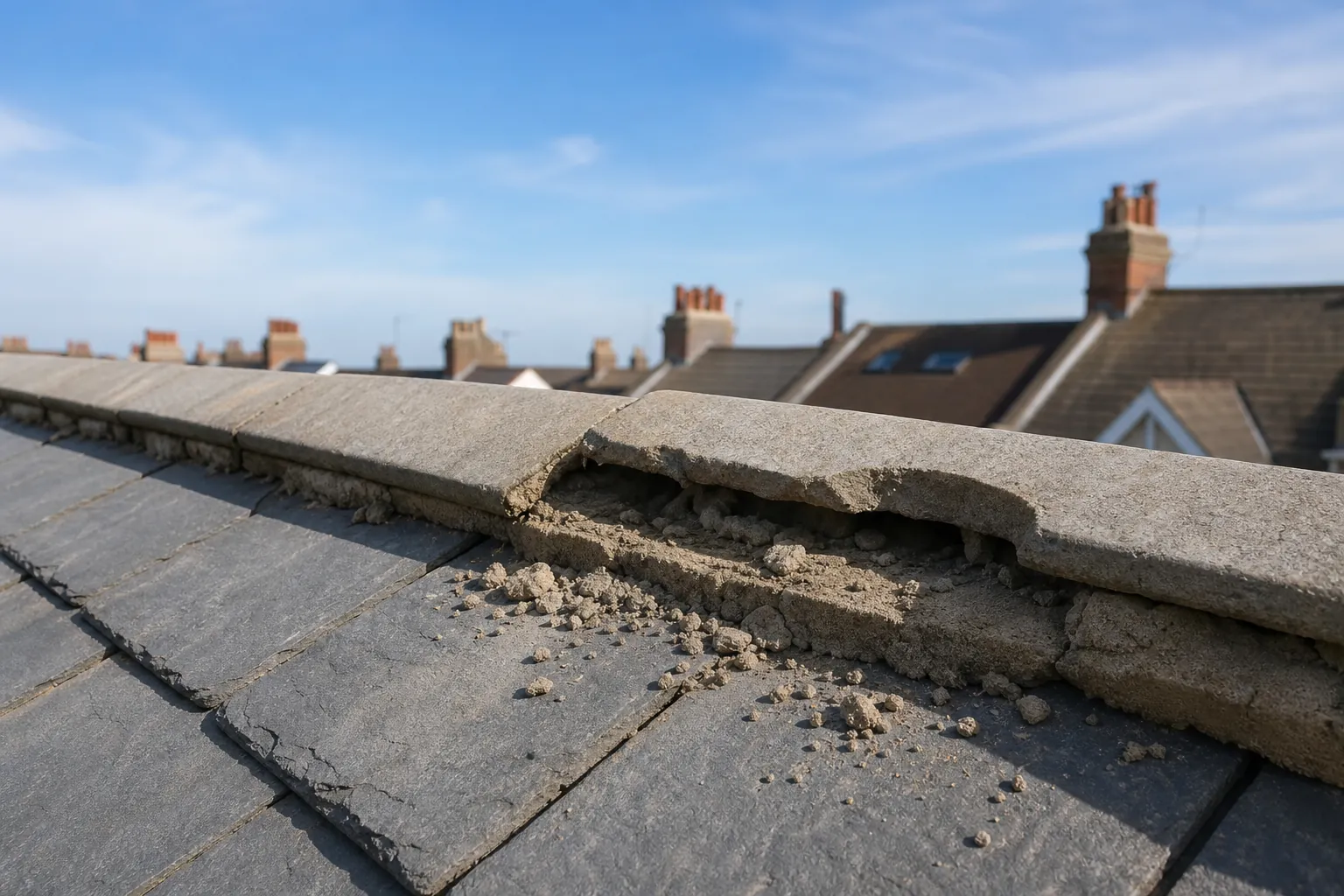
2.1 Bedded ridges and dry-fix
Older ridges on interwar and post-war roofs were simply bedded in sand and cement, with nothing else holding them. Mortar shrinks, cracks and lets go, and a ridge tile that has lost its bed can be lifted by one strong gust. Since BS 5534, the British Standard roofers work to for tiles and slates, was revised in 2014, mortar alone is not relied on to hold ridge and hip tiles: they get mechanical fixings as well. Marley points out that installing to BS 5534 is not a legal requirement, but it is the standard a quality repair should be measured against. Dry-fix means a system of clips, screws and seals with no mortar at all; BS 8612:2018 is the specification those systems are tested to. We use either, matched to the roof and to the look of the street.
2.2 Slipped tiles, slates and tingles
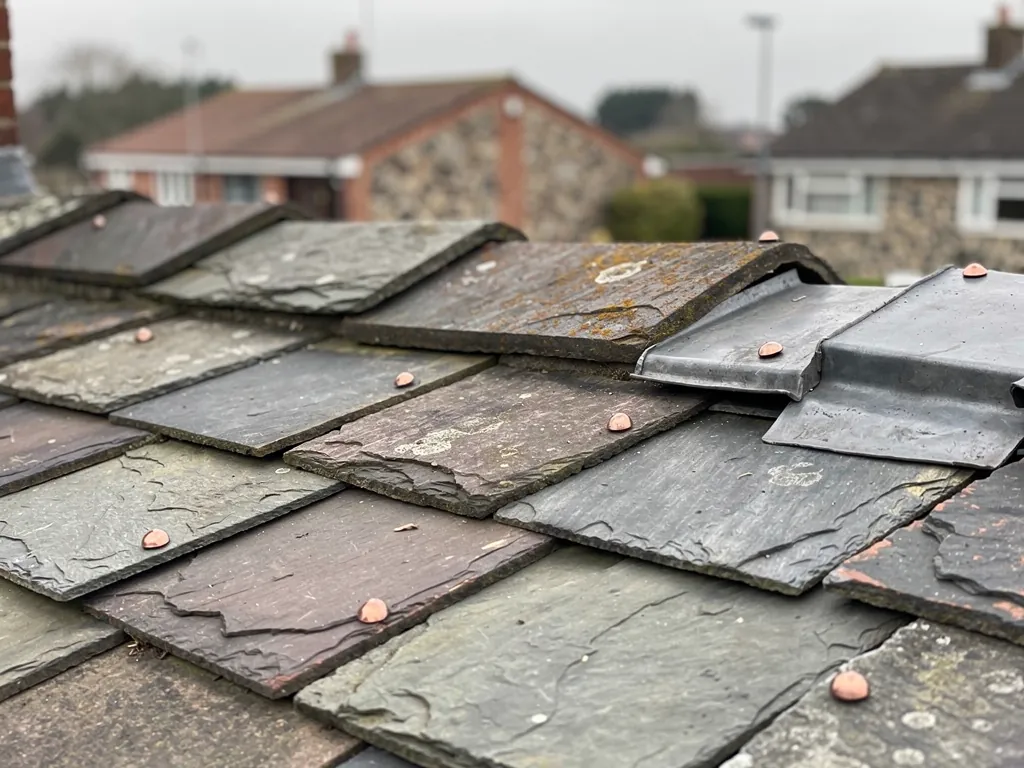
A single slipped tile is a small job if it is caught early. The usual causes are a snapped or rusted nail, a broken nib on the back of the tile or a batten gone soft. On a slate roof, a replacement slate is often held with a tingle, a strip of lead or copper nailed to the batten and folded up under the slate's tail. When slates are sliding across a whole slope because their nails have failed with age, that pattern is nail sickness, and replacing one slate at a time stops being sensible. Along Aldwick Road, Arun's conservation guidance notes that many original slates have given way to concrete interlocking tiles, so a repair on one terrace can involve two materials.
Verges deserve their own mention. The verge tiles sit over the gable wall and are usually bedded on mortar with an undercloak strip beneath. When that mortar falls out, the wind can get under the end course and peel tiles back along the line. A dry verge system replaces the mortar with interlocking caps screwed to the battens, which suits exposed gables close to the beach. For the full ridge picture, our page on dry ridge and ridge tile repairs weighs rebedding against dry-fixing in more depth.
Under 30 degrees
pitch where Marley warns of strong windward suction
Chapter 3: Lead flashings, valleys and chimney abutments2745
Sheet 03 / 06
Wherever a roof meets a wall, a chimney or another slope, lead or a lined valley is what keeps the water out.
Plenty of leaks that look like a tile problem turn out to be lead. A flashing is the strip of lead sealing the joint between the roof and a wall or chimney, wedged into a raked-out brick joint and beaten down to lie over the tiles. Beneath it, on a pitched abutment, sit soakers: small pieces of lead folded up the wall and laid between each course of tiles. When the pointing that holds the flashing falls out, the lead lifts in the wind and rain gets behind it. Chimneys on the Regency and Victorian terraces of The Steyne stand tall and exposed, and Arun's conservation guidance calls them important features on the skyline, so the lead round them takes real weather.
3.1 Choosing the right lead code
Lead sheet is sold by code, a number that sets its thickness and weight. Royston Lead's brochure lists code 3, at 1.32 mm, as recommended for soakers only; code 4, at 1.80 mm, for soakers, flashings, valleys and dormers; and code 5, at 2.24 mm, for flashings, gutters and dormers. Heavier lead copes better with movement on wide, exposed pieces. We dress new lead to the shape of the abutment, wedge it into the joint and point it, so it stays down without relying on mastic. Sealant smeared over a lifted flashing is a holding measure, never a repair.
What we check on every abutment
- Pointing that holds the flashing
- Soakers under each tile course
- Lead code suited to the job
- Cracks in the chimney flaunching
- Laps and joints in valley linings
Over 80 years
life of lead flashing, per MyJobQuote September 2026
Mastic over a lifted flashing buys a few dry weeks; dressed lead stays down.
3.2 Chimney stacks and flaunching
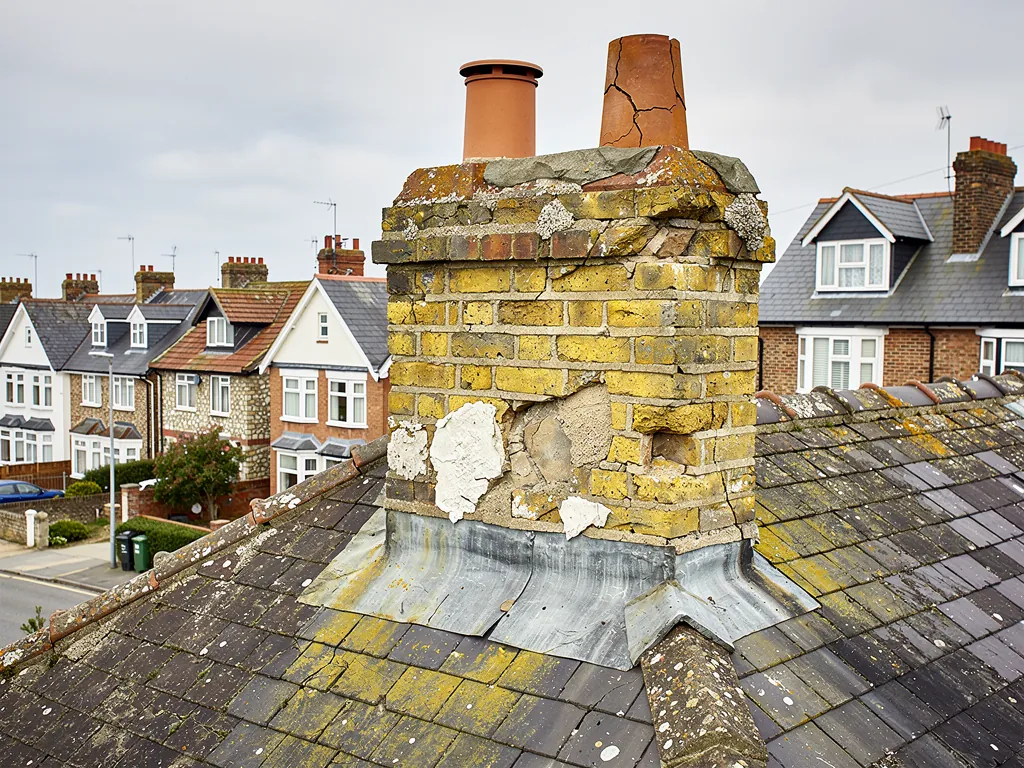
Flaunching is the sloped mortar cap round the pots at the top of a stack. When it cracks, water gets into the brickwork and can show as damp on a chimney breast indoors, well below the roof. Repointing, new flaunching and new lead often go together on one scaffold, which makes sense because access is a big part of the bill. MyJobQuote, last updated 22 September 2026, puts patching chimney leadwork at £150 to £250 and a full renewal at £350 to £460 without scaffolding, rising to £700 to £920 with it.
Valleys need the same care. A valley is the internal angle where two slopes meet and carry water down to the gutter. Older valleys are often lined with lead, and cracks open where the lead was laid in pieces too long for its code. Others are mortar-bedded cut tiles or a preformed GRP liner, GRP being glass-reinforced plastic. Leaves and moss collect in valleys, so we always check them after a wet spell, and whatever we lift out goes away with the rest of the waste.
Chapter 4: Flat roof repair or a new roofing system2440
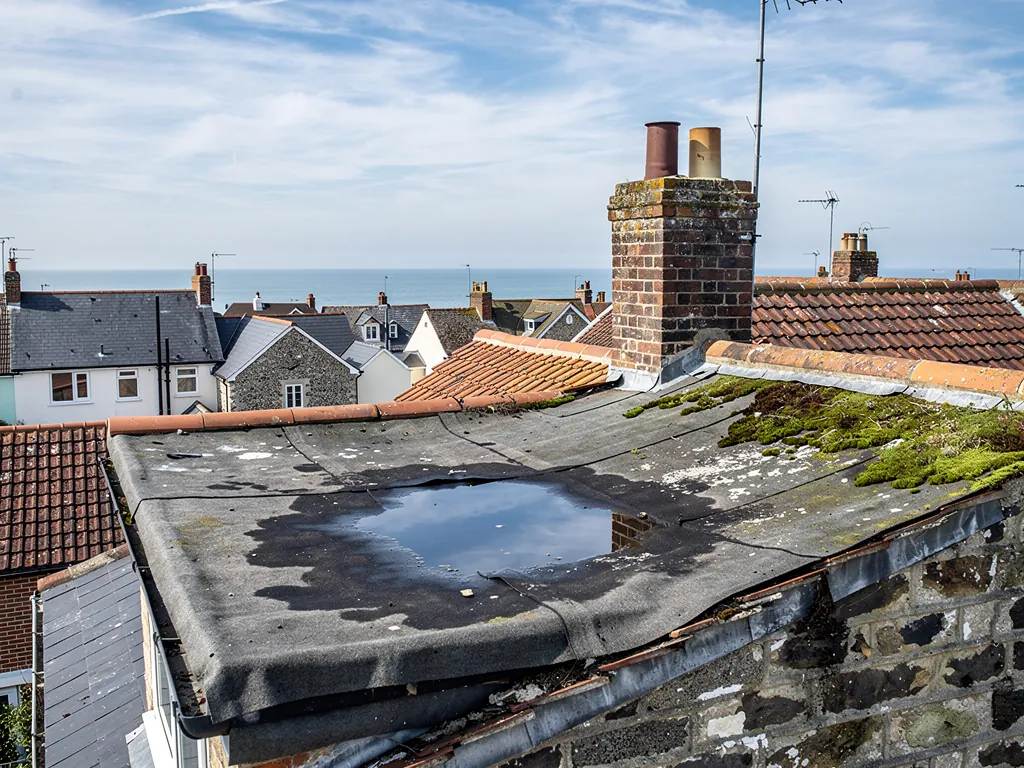
Sheet 04 / 06Flat roofs sit over a great many extensions, garages and dormers around Bognor, and over the shops, commercial units and blocks of flats along the coast from Selsey to Littlehampton. They fail in a few predictable ways: splits and blisters in old felt, open laps at the edges, upstands pulled away from a wall, and outlets choked with grit so water ponds. A local flat roof repair is worth doing when the covering is otherwise sound and the timber deck is dry. Press near the split: if the deck gives underfoot or the insulation is wet, a patch is only a lid on the problem. On commercial roofs the same logic applies at a larger scale: one blocked outlet over a shop can put water through a suspended ceiling, so outlets and gutters are cleared and checked as part of any repair.
A split in a flat roof can often be patched, but only while the deck underneath is still dry and sound.
1:80
minimum finished fall under BS 6229:2025
Patch, reseal or replace the flat roof
- PatchA dry deck with one split or open lap, the covering sound elsewhere.
- ResealUpstands or outlets letting water in while the main field still holds.
- ReplaceA soft or wet deck, ponding across the middle, or patch upon patch.
4.1 Felt, EPDM and GRP compared
Torch-on felt is layered bitumen membrane, melted onto the deck with a gas torch one layer at a time. The home improvement guide Less, last updated March 2026, puts its life at 10 to 20 years and warns that a poor felt job can fail in under ten. EPDM is a synthetic rubber membrane laid as one sheet; GreenSpec gives it an expected service life of 20 to 30 years. GRP is a fibreglass resin laminate that Less puts at 25 to 40 years. Each can be repaired, but each needs its own material: a felt patch on rubber or resin will not bond. The same guide puts small flat roof repairs at £150 to £500.
4.2 Falls and ponding
Standing water is the clue that a flat roof was laid without enough fall, the slight slope that carries rain to the outlet. BS 6229:2025, which replaced the 2018 edition in December 2025, sets a minimum finished fall of 1:80; roofers usually design steeper, around 1:40, so the finished roof still drains once the deck settles. Where a roof ponds across its middle, a patch over the low spot rarely lasts, and firring strips, the tapered timbers that create the fall, may need fitting under a new covering. That is the point where a new flat roofing system becomes the cost effective solution rather than another repair. We also check that the edge trims push water into the gutter rather than down the fascia, the timber or plastic face board that the gutter brackets screw to.
Replacing the waterproof membrane on a flat roof counts as renovation under Approved Document L. Where more than half of that roof is renovated, the insulation may need upgrading as well; the 2021 edition applies until the 2026 edition takes effect on 24 March 2027. That changes both the price and the work, so we say at the survey whether it is likely. Dormer roofs are the same story on a smaller scale, with the flat top and the cheeks where leaks begin. For full replacements, see our flat roofing service.
Chapter 5: What roof repairs cost in West Sussex2257
Sheet 05 / 06Repair prices turn on access, the covering and what is hidden under the damage, so ranges only go so far.
JJ Roofing's published guide range for a roof repair runs from £100 to £1,000. The lower end is a few slipped tiles reached from a ladder; the upper end is a length of ridge, a renewed flashing or a section of flat roof, often with scaffolding. National guides work differently, pricing repairs by the area of roof involved. Checkatrade's roof repair guide, with its table last updated in June 2026, prices repairs per square metre by covering, from £90 to £120 for concrete tiles up to £150 to £220 for natural slate, and lists ridge tile and lead flashing repairs at £50 to £70 a metre. It notes that its figures exclude VAT, which is charged at the standard 20 per cent. Per-metre pricing suits larger areas; a single slipped tile tends to be priced as a visit rather than by the metre.
Typical UK repair rates by covering
- Clay tile roof£110 to £160 per m²
- Bitumen felt flat roof£100 to £140 per m²
- EPDM rubber flat roof£120 to £170 per m²
- GRP fibreglass flat roof£130 to £180 per m²
National per-metre rates before VAT; your own figure arrives as one written total once we have surveyed the roof.
Source: Checkatrade roof repair cost guide, table last updated June 2026
5.1 What moves the price
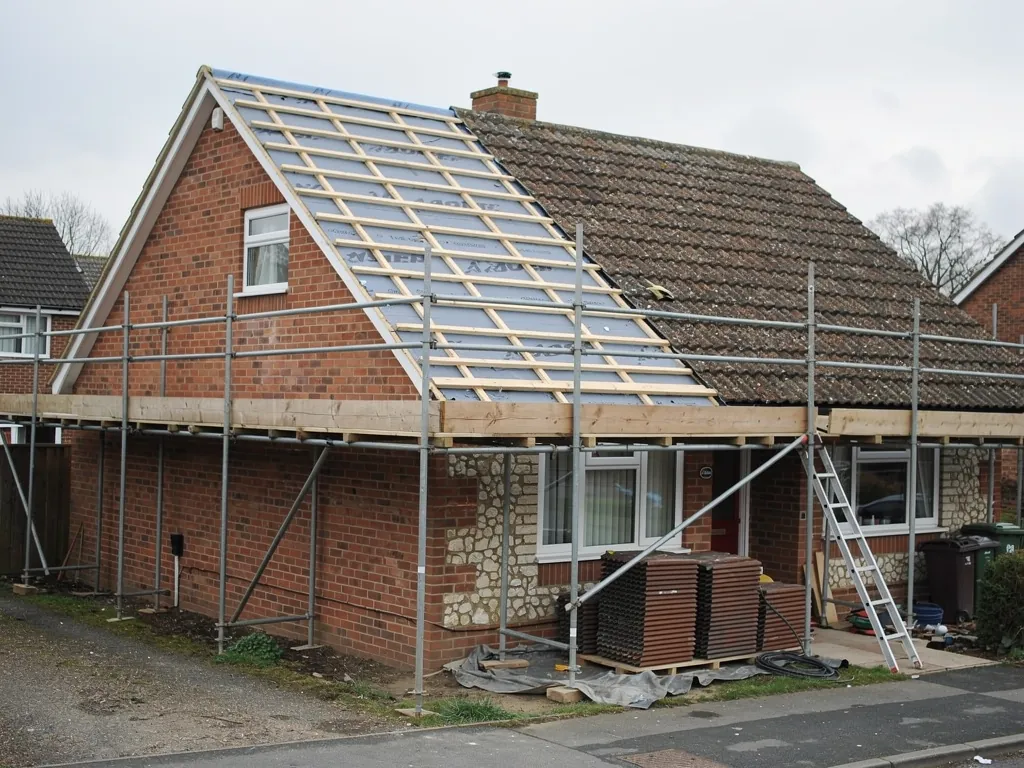
Access comes first, because it decides how long every other part of the job takes. Bungalow eaves you can reach from a ladder cost far less to work on than the rear slope of a tall town house needing a full scaffold and a highway licence. Then the covering: natural slate and handmade clay take longer to match and fix than concrete interlocking tiles. Then whatever the survey finds once the damage is opened up, such as soft battens behind a slipped course or a rotten deck under a split. Checkatrade gives roofers' rates as around £35 to £45 an hour or £280 to £360 a day, which is why a half-day job and a two-day job sit so far apart. For the size of job a survey shows, you will find our figure good and fair. Whoever you ask to price the work, check whether their figure includes VAT and scaffolding.
A patch that gives way in the next gale ends up being paid for twice.
£280 to £360
typical roofer day rate, Checkatrade June 2026
5.2 Scaffolding and licences
Repairs on two-storey houses often need a scaffold for safe access. Checkatrade's scaffolding guide, table last updated October 2026, puts a two-storey semi at around £875 a month and a detached bungalow at around £1,000. If the scaffold stands on the pavement or road, a licence is needed under the Highways Act; West Sussex County Council asks for at least 10 working days' notice and charges £266 for one month. Single-storey roofs can often be reached with ladders, roof ladders or a tower instead, and our guide to what a roof repair costs works through each case.
A quick patch can cost more over a few winters than one proper repair. Bitumen paint over a cracked flashing, or expanding foam pushed under a slipped tile, tends to hold until the next gale and then has to be stripped off before the real repair can start. We recommend the smallest job that properly fixes the fault, and that is the job we price. Ask any roofer you use what guarantee covers their workmanship and how long it runs. If money is the worry, our answer on whether you can get a grant to repair your roof sets out what help exists.
Chapter 6: When roof replacement makes more sense than repair3050
Sheet 06 / 06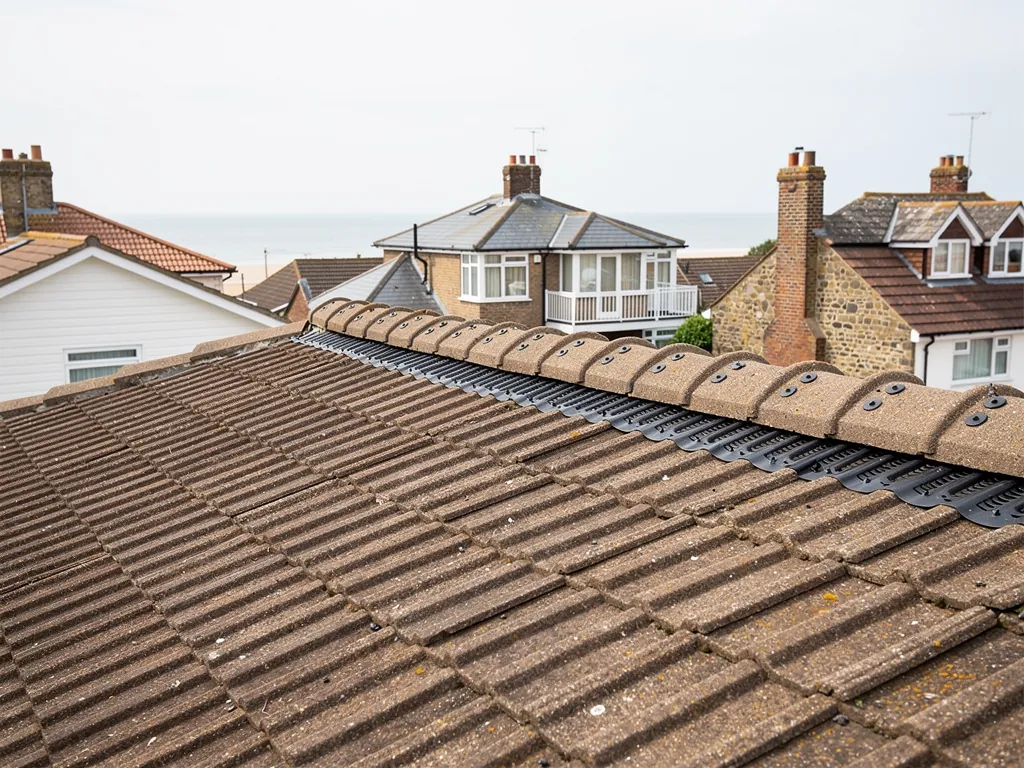
A repair holds when the underlay, battens and covering around it are sound; when they are not, patching only delays the bill.
The verdict we give after every survey is one of three: repair it, patch it for now, or replace it. Replacement only comes up when the evidence on your own roof points to it. The signs are faults spread across a whole slope rather than one spot: slates sliding everywhere from nail sickness, concrete tiles crumbling at the edges, underlay perished from eaves to ridge, or battens soft in more than one place. A reliable repair needs something sound to tie into; when the roof around the fault is failing too, each fix sets up the next leak. There is no single roofing solution that suits every roof, which is why the call is made on evidence.
When we say replace
Faults across a whole slope, underlay perished from eaves to ridge, or a third patch on the same roof: that is when replacement is the better spend.
6.1 Lifespans and the age of your roof
Age alone does not condemn a roof. Marley says concrete tiles are expected to last for around 60 years, while stressing that this is no guarantee of longevity, and the Confederation of Roofing Contractors says well-maintained slate can last 100 years or more. The fixings and underlay usually give out first: a slate roof can need relaying on new battens with its original slates long before the slates themselves are finished. Checkatrade's roof replacement guide, updated October 2026, gives a UK average of around £8,000, and around £12,000 for a typical three-bedroom semi, with a wide spread either side. Our page on whether it is cheaper to repair or replace sets the two side by side.
6.2 Building Regulations and permission
Repairs rarely need approval, but a larger re-roof can. The Planning Portal says a building control application is not normally needed when less than 25 per cent of the total building envelope and less than 50 per cent of the roof is affected, and it is needed where a new covering increases the weight of the roof covering by 15 per cent or more. Arun District Council's building control page includes re-covering pitched and flat roofs in its list of work needing approval, so Arun's team, or your roofer, can confirm for your job. Where work is notifiable we explain the consent and handle the notification. Planning permission is rarely needed to re-cover a roof in matching materials, though listed buildings and Article 4 areas can differ; our guide to roof repairs and Building Regulations has the detail.
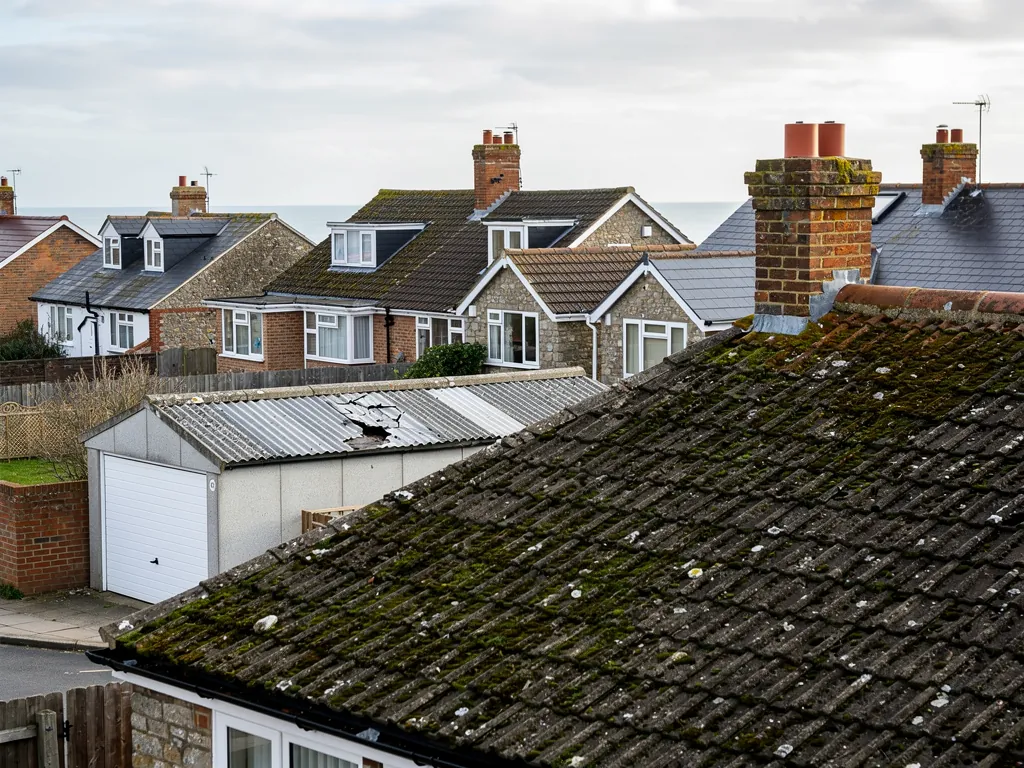
Two more checks come before any roof replacement. Bats are protected by law, and repairing or replacing a roof can disturb a roost, so we look for signs before anything is stripped. And on homes built or refurbished before 2000, HSE advice is to assume asbestos is present until checked, which matters for old cement garage roofs and soffits on some interwar bungalows. Careful removal of asbestos cement sheets is non-licensed work under HSE guidance, while sheets that have broken up badly make it notifiable non-licensed work.
Price guide
Typical UK roof repair prices
| Job | Typical range |
|---|---|
| Concrete tile roof repair | £90 to £120 per m² |
| Natural slate roof repair | £150 to £220 per m² |
| Ridge tile repairs | £50 to £70 per metre |
| Lead flashing repairs | £50 to £70 per metre |
National guide figures before VAT. Your written quote follows the survey and gives one total price for the whole repair.
Source: Checkatrade roof repair cost guide, table last updated June 2026
Guides and answers
Roof repair guides and answers
Short guides on leaks, costs, permissions, insurance and the repair-or-replace decision, written for roofs in and around Bognor Regis.
 How much does a roof repair cost in the UK?8 min read
 Is it cheaper to repair or replace a roof?10 min read
 Do roof repairs need Building Regulations approval?10 min read
 The most common roof problems and how they are repaired9 min read
 Nail sickness on slate and tile roofs: signs and repair9 min read
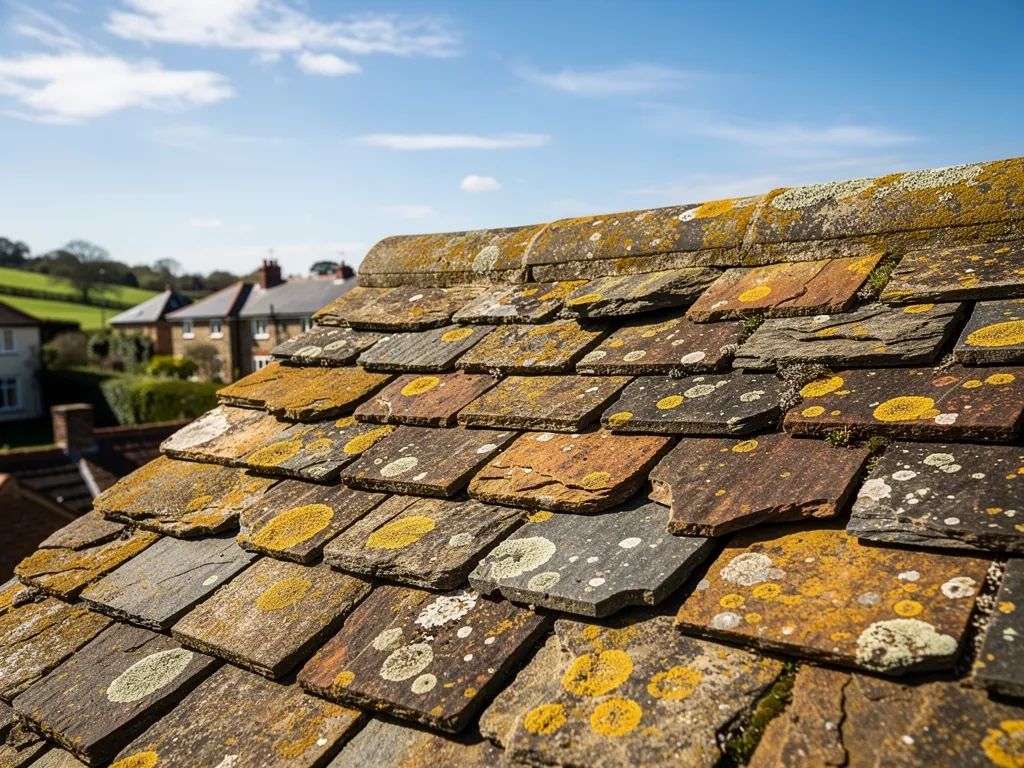 Will your home insurance pay for a roof repair?9 min read
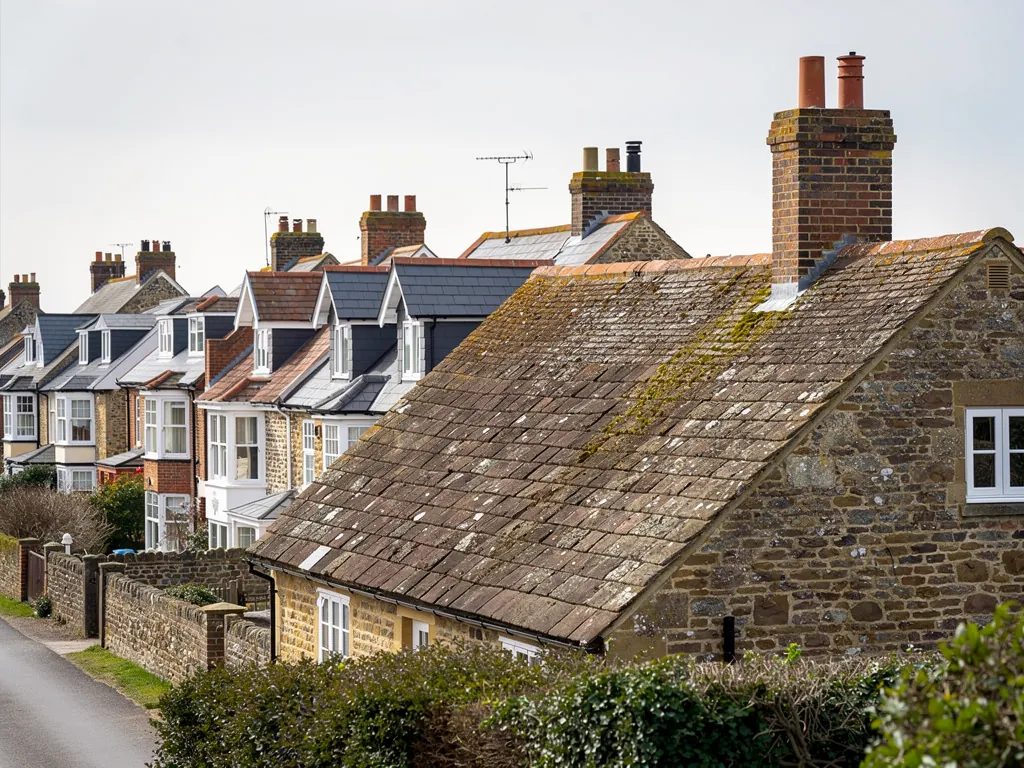 Repairing a roof in a conservation area or on a listed building9 min read
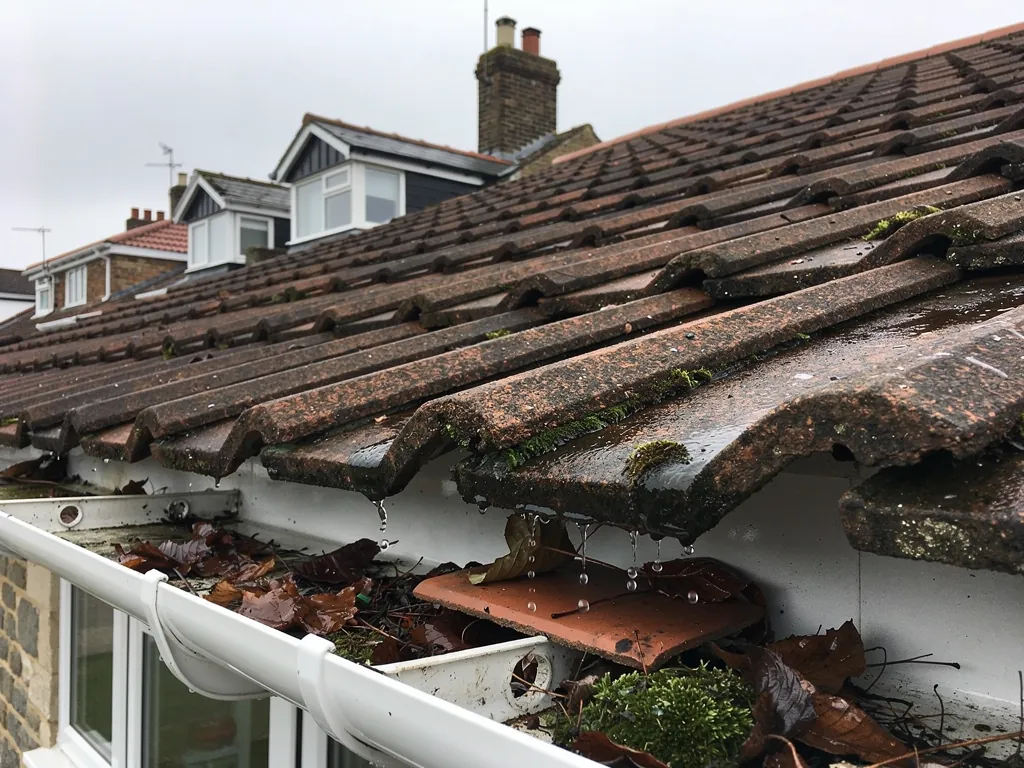 How roofers find a roof leak10 min read
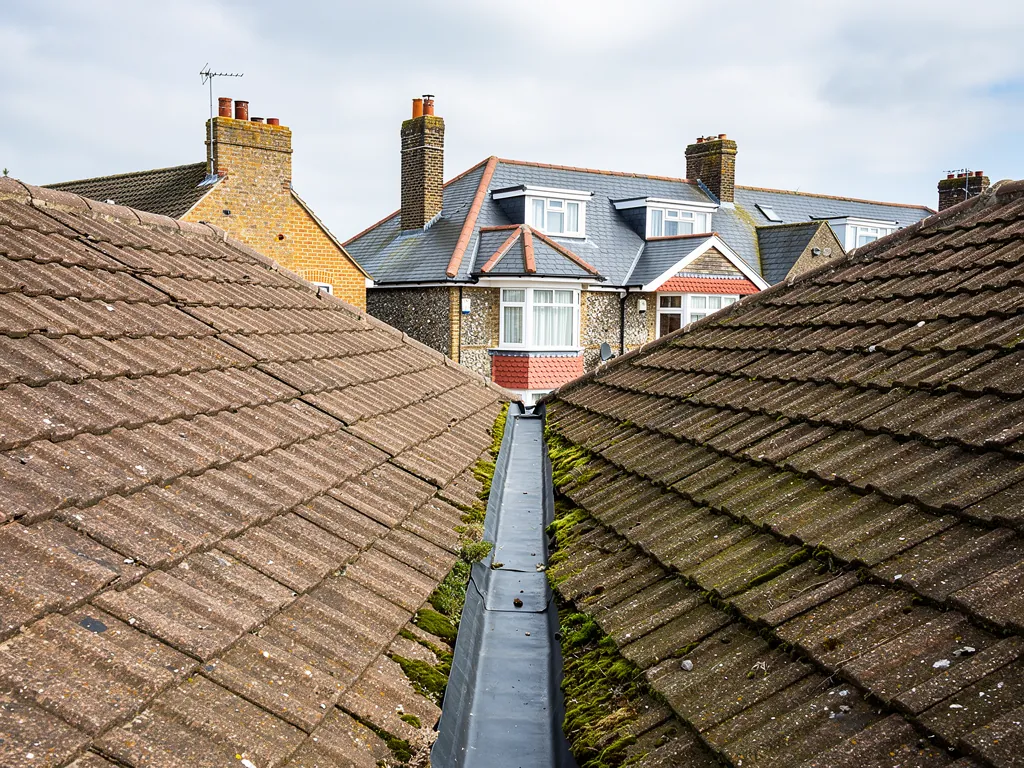 Roof valley repairs: lead, GRP and tiled valleys9 min read
 Do you need scaffolding for a roof repair?9 min read
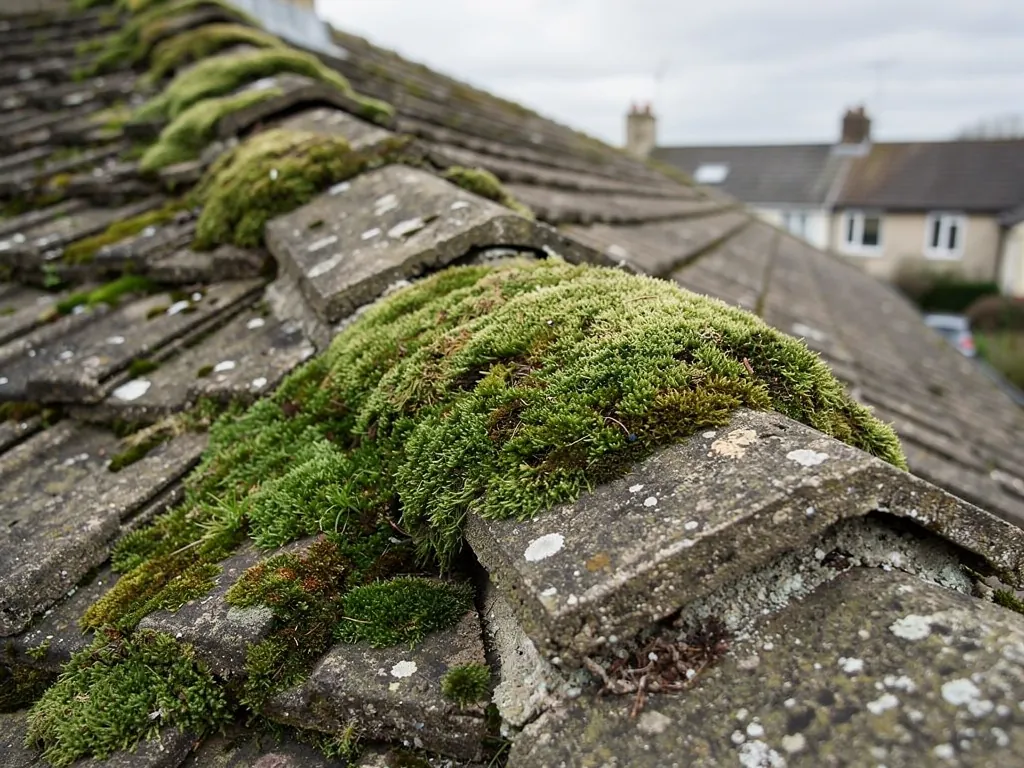
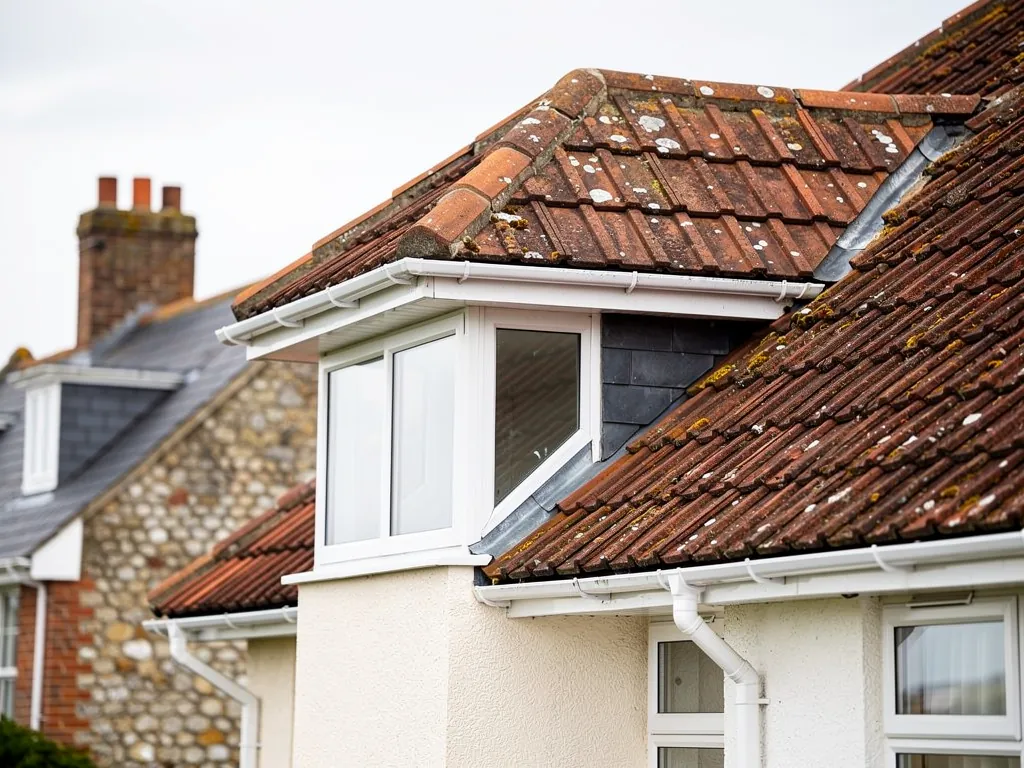 Photo evidence on roof repairs: what you should be shown9 min read
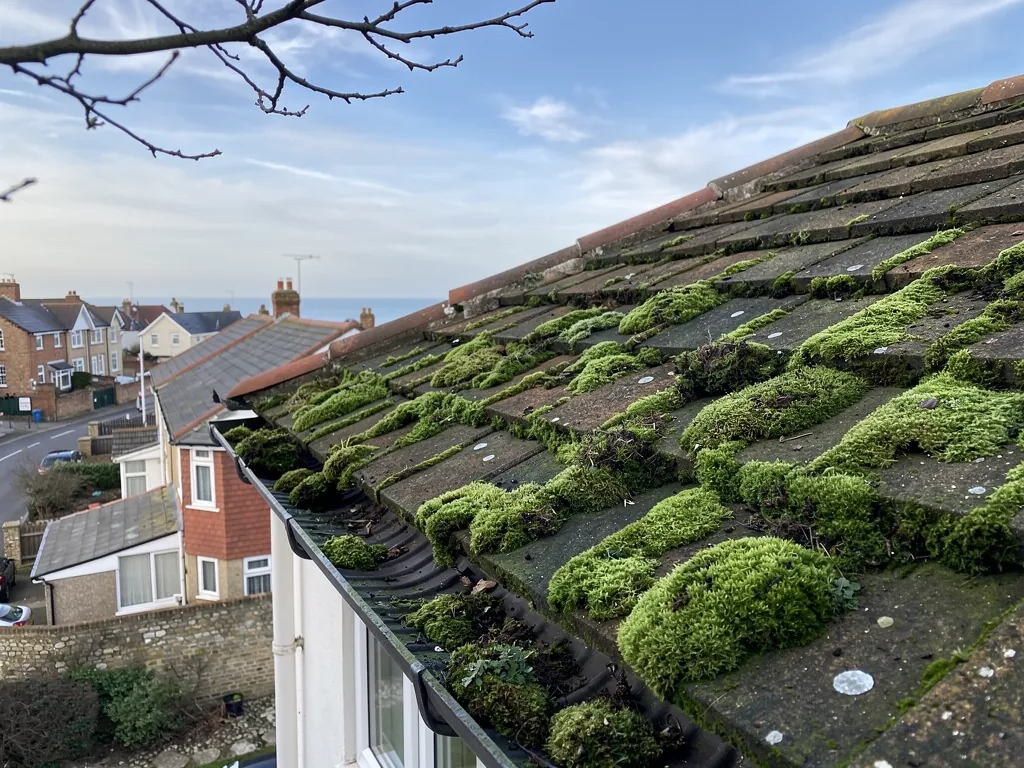 Roof repairs in winter: what can and can't be done9 min read
Quick answers
- Can you get a grant to repair your roof?
- How much do roof repairs cost per square metre?
- What signs show a roof needs repairing?
- How long does a roof repair last?
- Should you call a roofer or your insurer first?
- What are the most common causes of roof leaks?
- Is a damp patch on the ceiling a roof leak?
- Is one missing roof tile a problem?
- Can roofers repair a roof without scaffolding?
- How long does a roof repair take?
- Can moss cause a roof leak?
- Why is my roof leaking around a vent pipe?
- Does roof sealant stop leaks?
- Is bitumen paint a proper roof repair?
- Why do dormers leak?
- Should you repair your own roof?
- How are bay window roofs repaired?
- How are porch roofs repaired?
- How is a lean-to roof repaired?
- What happens when a roofer comes to look at a repair?
Questions
Roof repair questions, answered
How much should I pay for roof repairs?
That depends on what has failed and how hard it is to reach. JJ Roofing's published guide range for roof repairs is £100 to £1,000, with ladder jobs on single-storey roofs at the lower end and scaffolded ridge or lead work towards the top. Nationally, Checkatrade prices tile and slate repairs at £90 to £220 per m². Before you agree to anything, ask for a written price from someone who has actually been into the loft or onto the roof, and check whether it includes VAT and scaffolding.
Is it cheaper to repair or replace a roof?
On the day, a repair is far cheaper, and it is the right call when the fault is local and the rest of the roof is sound. Replacement becomes the cheaper path over time when the same roof keeps needing patches, the underlay has perished or slates are sliding across a whole slope. Checkatrade puts a typical three-bedroom semi at around £12,000 to re-roof, so the decision deserves evidence. We show you photographs and tell you which we would do, and why.
Can I get a grant to repair my roof?
Rarely. Government schemes fund things like insulation and heating, and none of them covers fixing or re-covering a roof. ECO4 funds energy measures such as insulation for eligible households and ends on 31 December 2026, and the Great British Insulation Scheme has closed. Households with a disability or a limited income can ask Arun District Council, or their own council, about local help, and look up what is open now on gov.uk, since schemes change and eligibility is never automatic.
Can a roof be repaired in wet or windy weather?
A leaking roof can be made safe in poor weather conditions, with a temporary cover or a refitted tile to stop the water. Permanent work is different: mortar needs dry, frost-free days to cure, torch-on felt and resin need a dry deck, and nobody should be working on a slope in a gale. We prioritise leaks and storm damage, make the roof safe first and come back for the proper repair once the weather settles.
Will my home insurance cover storm damage to the roof?
Sometimes. Storm damage may be covered, but wear and tear generally is not, and Which? gives the example of water getting in through a poorly maintained roof. Which? also reports Financial Conduct Authority figures showing only 32 per cent of storm-related claims made in 2024 resulted in a payout. Contact the insurer promptly, photograph the damage, keep receipts for any temporary repair and hold on to damaged items. If you disagree with the outcome, complain to the insurer and then the free Financial Ombudsman Service.
Do I need permission to repair a roof in a Bognor Regis conservation area?
Usually not for a like-for-like repair. Bognor's conservation areas include The Steyne and Waterloo Square, designated in August 1979 and extended in July 1994, and Aldwick Road, designated in July 1994. Arun's Article 4 directions in the town remove no roof rights, but a listed building needs listed building consent for works that affect its character. If your home is listed or you plan to change the covering, check with Arun District Council's planning team before work starts.
Get a quote
Tell us about your roof
Send a photo of the stain, the slipped tile or the lifted lead, and say when the leak shows; we start the survey in the loft.
Loading the enquiry form. You can also call 01243 252373.