
Roofers in Aldwick
Craigweil clay tile, Aldwick Road slate
Aldwick's roofs range from the plain clay tile of Auty's 1937 Craigweil estate to the slate and stucco of the Aldwick Road terraces, with three conservation areas to check before any change of covering.

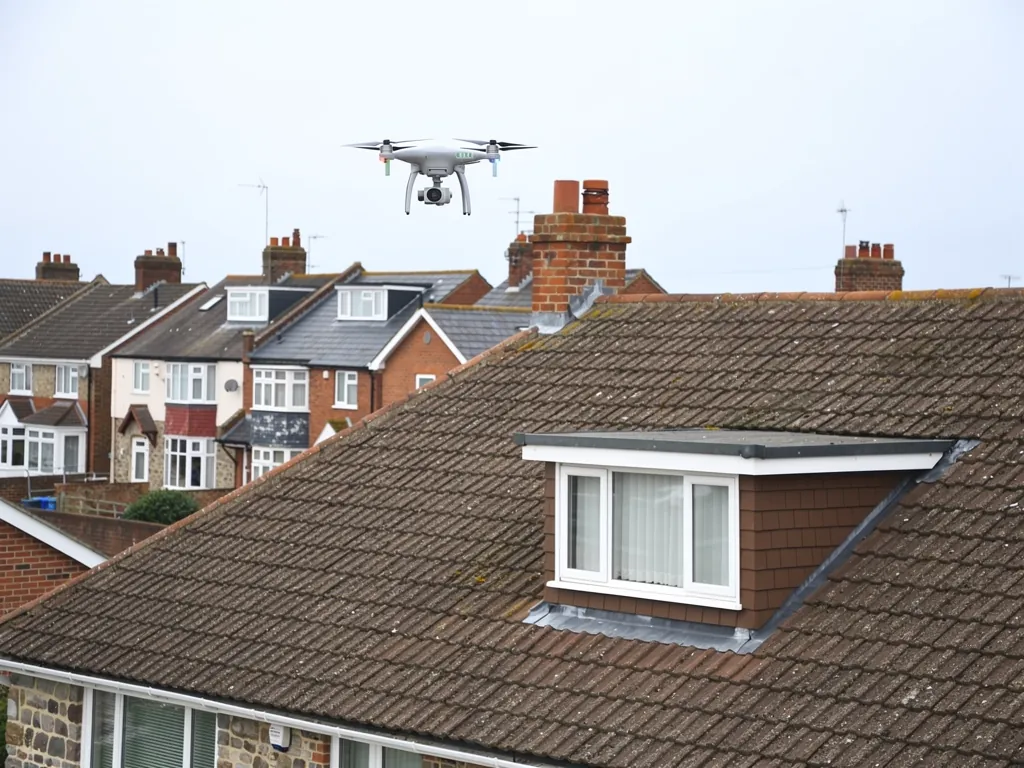
Aldwick roofs
Estate, seafront terrace and listed house
-
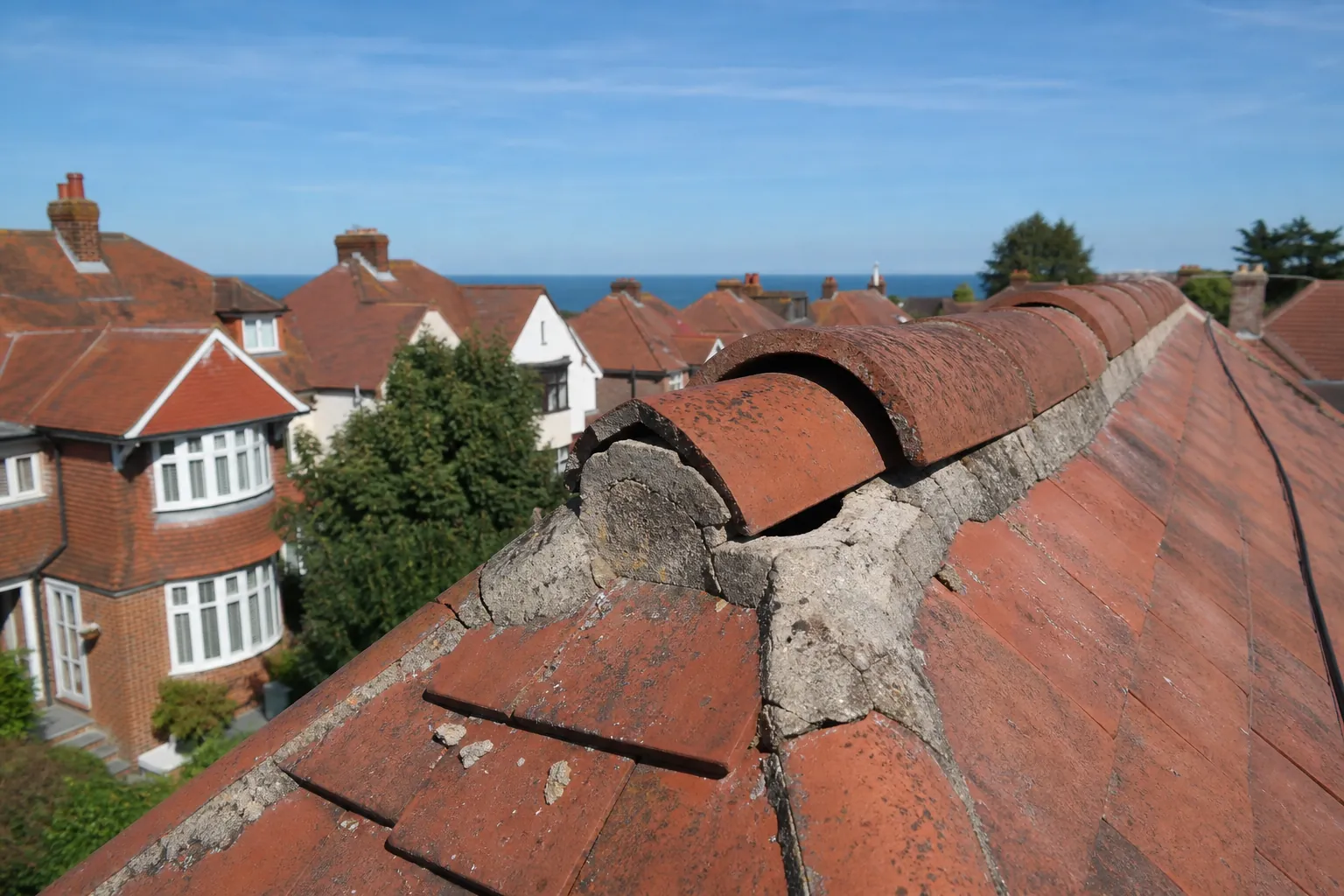
Craigweil's plain clay tile
The council's statement for the Craigweil House estate describes local stock brick walls under plain clay tile, with herringbone brickwork and tile creasing as marks of Josiah Auty's 1937 layout.
-
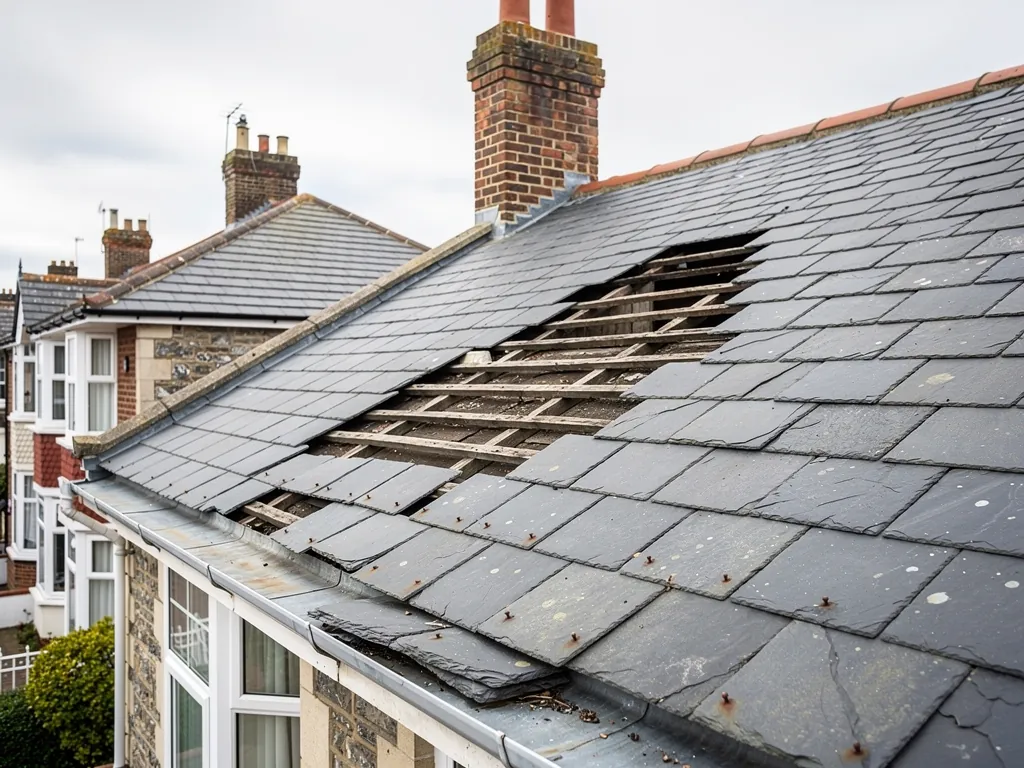
Slate on the Aldwick Road terraces
Arun describes early 19th century, Victorian and Edwardian terraces along Aldwick Road, and records that a good number of their slate roofs have since been recovered in concrete interlocking tile.
-
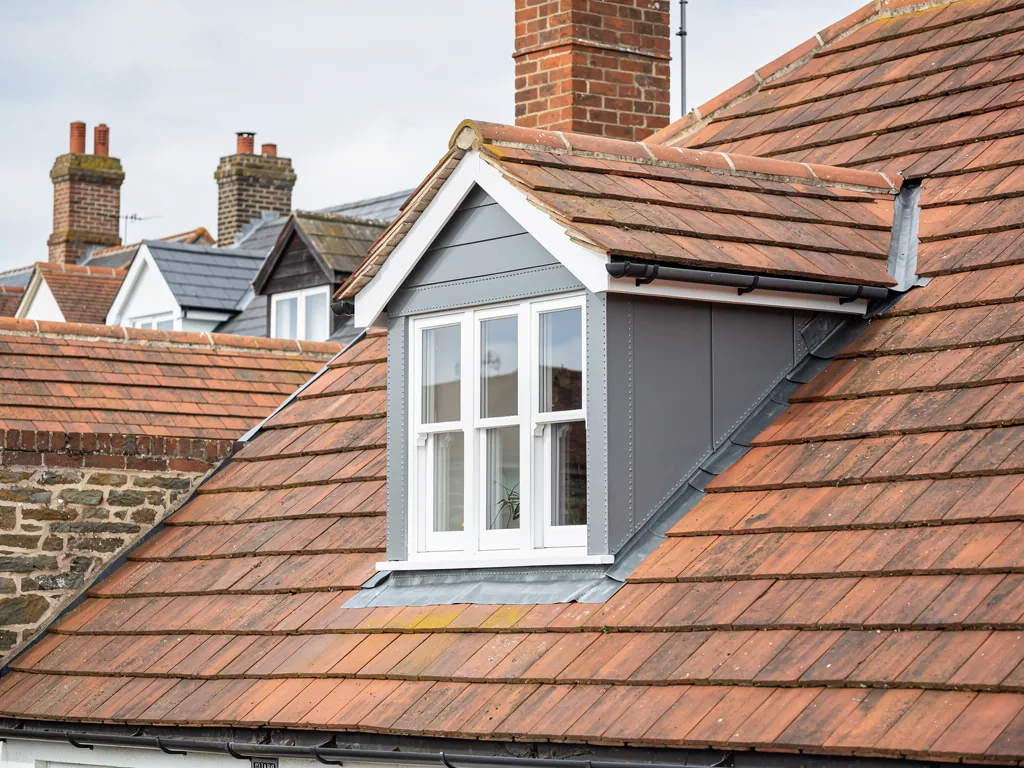
Silvergates and the leaded porches
Silvergates, 52 The Drive, is a Grade II listed house of 1934. At Wychwood, built from 1934, a number of the entrance porches carry leaded roofs, small jobs that still need proper dressing.
Map of Aldwick, 1.7 road miles west of Bognor Regis, with the nearest towns we also cover.
Three conservation areas on Aldwick's map
- Council
- Arun District Council
- County
- West Sussex County Council
- Conservation areas
- Aldwick Bay, Aldwick Road (designated July 1994) and Craigweil House (designated 15 April 2009)
- Article 4
- Craigweil House only: directions cover verges and front-garden hard surfaces, not roofs
- Listed landmark
- Silvergates, 52 The Drive, Grade II, built 1934
- Distance
- 1.7 road miles west of Bognor Regis, about 5 minutes by car
Estate and seafront
Auty's clay tile, Edwardian slate, 1930s lead
Three Aldwick settings come with three sets of consent questions, and each one shapes how a roof here is repaired.
Chapter 1: Craigweil: Auty's estate of clay tile2257
Sheet 01 / 03The Craigweil House Conservation Area was shaped by a single commission. In 1937 the architect Josiah Auty laid out an estate for Sir Arthur Du Cros in the grounds of Craigweil House, where King George V had convalesced in 1929, and Arun District Council's conservation statement draws the boundary on that layout. The statement's list of traditional materials is short: stock brick from local sources, and roofs of plain clay tile. That description belongs to this estate alone, so a house elsewhere in Aldwick may differ, and we read each roof as it stands instead of assuming.
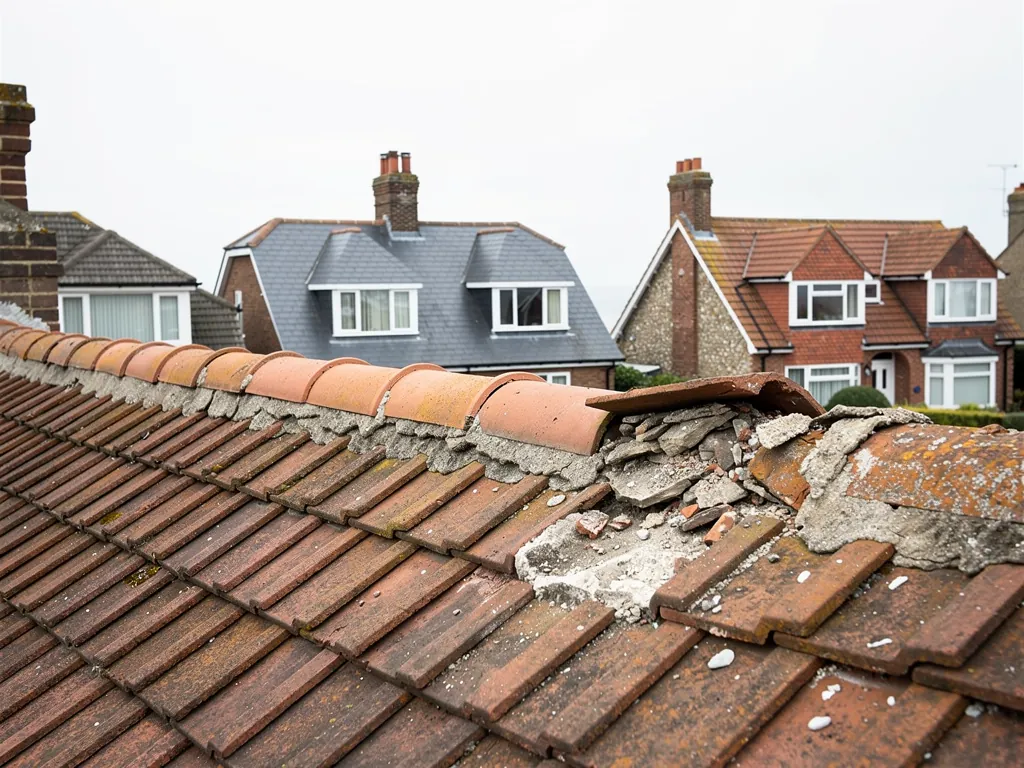
Before work on a Craigweil roof
- Find the house on Arun's map
- Read the list entry if listed
- Match the plain clay tile
- Leave tile creasing intact
1.1 Plain tiles, tile creasing and herringbone
Plain clay tiles are small, laid in overlapping courses, and each one hangs from a batten (the softwood lath fixed across the rafters). Marley publishes minimum pitches for clay plain tiles of 30 to 40 degrees depending on the tile, so a replacement has to suit the slope as well as the colour. The statement also picks out herringbone brickwork and tile creasing, which is a pair of tile courses set on edge at the top of a wall to throw water clear. Neither is part of the roof covering, yet both sit beside it, and a repair that smears cement over them shows from the road. Odd replacement tiles of the wrong colour or camber stand out on an old roof, so we ask for a matching sample before anything is ordered. Marley's guide gives clay tile a minimum life of 60 years, though an old roof need not follow that figure, so we judge by condition and by photographs rather than by the date on the deeds.
1.2 Leaded porch roofs and listed Silvergates
Wychwood, built from 1934, has leaded roofs over a number of its entrance porches, so lead was part of the estate's finish from the start. A porch roof is small, but it has the same weak point as a large one: the joint where the lead turns up the wall. We check that edge first. Lead sheet is sold in numbered codes by thickness, and Royston Lead's brochure lists code 4 and code 5 for flashings, with heavier codes for valley and parapet gutters. Silvergates, 52 The Drive, designed by Ernest B. Glanfield and built in 1934, is Grade II listed. Work that would affect a listed building's character needs listed building consent, so on Silvergates or any listed neighbour we read the list entry before writing a quote. Our lead roofing and leadwork page explains how flashings and small lead roofs are dressed.
Chapter 2: Aldwick Road: slate, stucco and the concrete swap2989
Sheet 02 / 03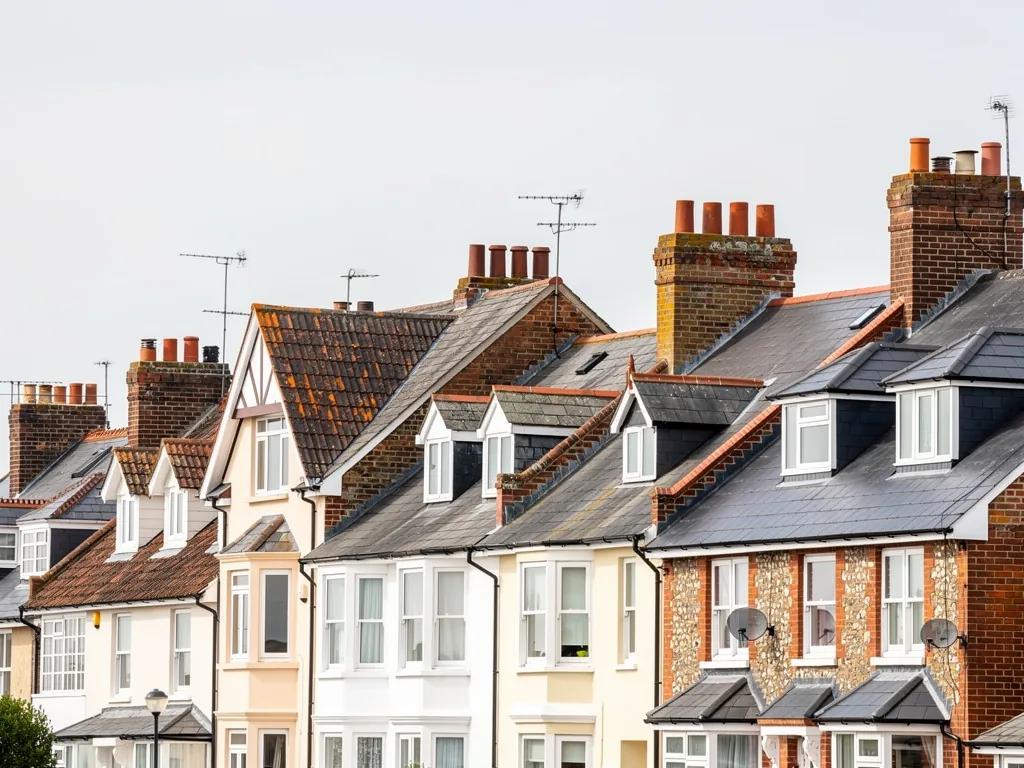
Aldwick Road runs along the seafront, and the council designated its conservation area in July 1994. Arun's guidance describes significant and imposing terraces from the early 19th century and the Victorian and Edwardian years, in which it sees stucco, slate and flint predominating, and it singles out the chimneys as features of the skyline. It also records a loss: many slate roofs there have been recovered in modern concrete interlocking tile, which the guidance says harms the look of the buildings and the street. Its advice is to restore the original roofing materials.
Slate or concrete interlocking tile
Relaid natural slate
Matches the terrace's original covering and can last 100 years or more when kept in order.
Concrete interlocking tile
A past swap that Arun's guidance says spoils the look of the buildings and the street.
2.1 Relaying slate rather than replacing it
A leaking slate roof is seldom a finished one. Natural slate kept in order can serve for a century or longer, Checkatrade's slate guide says, and the usual fault is the fixing rather than the slate: a nail lets go, a slate slips, and water follows. Slipped slates can be refixed with a tingle (a small metal strip that holds a slate without lifting the courses above), and cracked ones replaced individually. Where fixings have failed across a whole slope, the sound slates are lifted, sorted and relaid with new fixings, topped up with matching slate for the broken ones. A relay is also the moment to renew the underlay (the sheet beneath the slates) and any tired battens, which is far easier while the slope is open. Checkatrade puts new natural slate at £160 to £210 per square metre (table last updated September 2026). A relay costs what the access, the area and the surviving slate make it, and the written quote settles that after the survey. Our slate roofing page covers repairs and relays in detail.
2.2 Stucco, chimney stacks and shared walls
On a terrace the chimneys are where roofs, walls and neighbours meet. Stucco below and slate above come together at the stack, so the junction is where we look first, and after any gale a stack deserves a look from the ground. The flashing (the metal strip that seals roof to stack) and the soakers (small folded lead pieces worked in between the slates) are the usual places for a leak. A patch to chimney lead typically costs £150 to £250, with a full renewal at £350 to £460 before scaffold, according to MyJobQuote (22 September 2026). Removing a chimney breast needs Building Regulations approval, and a breast on a party wall also needs a party wall notice. Our chimney repairs page covers stacks, pots and flaunching (the mortar slope that a pot is bedded in).
Chapter 3: Craigweil's Article 4 direction and your re-roof2928
Sheet 03 / 03Aldwick has three conservation areas on Arun's list: Aldwick Bay, Aldwick Road and Craigweil House. Only Craigweil carries an Article 4 direction, which is a council order withdrawing specified permitted development rights across a defined area, and the one recorded there does not touch the roof. It pays to know exactly what it covers before assuming that a re-roof is restricted.
Order of work in a conservation area
- 1Check the mapConfirm which of Aldwick's three areas your house sits in, or whether it sits in none.
- 2Survey and photographsWe photograph each fault and give a plain repair, patch or replace verdict.
- 3Written quoteOne total price follows, naming the covering we would match.
- 4Consent firstPlanning questions and any building control notification are settled before the scaffold goes up.
3.1 What the Craigweil direction covers
Arun's Article 4 Direction No 1 of 2010, sealed on 30 November 2010, concerns two things: enclosing verge areas and hard surfaces in front gardens. Neither is a roof right. Re-roofing in the same material, with no visible change to how the building looks, is generally not development at all, though a listed building or an applicable direction can change the answer. The useful step is a call to Arun District Council's planning team with your address before you commit to a different covering. If you are weighing roof windows inside a conservation area, read our skylight planning permission guide first.
3.2 Sea weather on a front-line roof
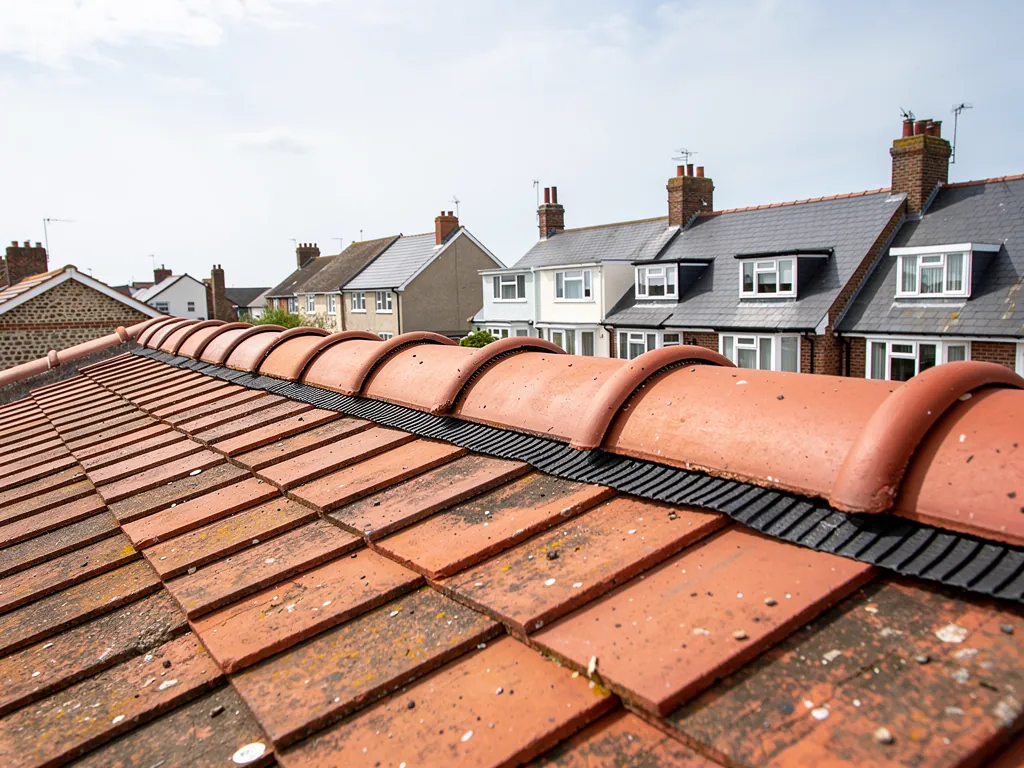
Aldwick sits on the Channel, and the council's statement records the full length of the Craigweil beach as a designated site of special scientific interest. For a roof the practical point is simpler. Off the water come gales and driving rain, and the shore adds salt to the air, so the ridge, hip and verge tiles take the first blow. Since BS 5534 was revised in 2014, bedding alone has not been enough for ridge and hip tiles, so each also gets a mechanical fixing. Marley warns that a windward slope under 30 degrees can be pulled hard by wind suction, so shallow roofs get extra attention along the edges.
3.3 Building control and the scaffold
The Planning Portal gives two tests for skipping a building control application: under 25 per cent of the total building envelope affected, and under 50 per cent of the roof. Arun's team lists replacement roof coverings as work that needs approval, so ask them to confirm for your job; where the work is notifiable, we handle the notification. A heavier new covering, roughly 15 per cent or more over the old one, brings building control in as well, and we raise that at the survey if you are considering a change of material. If scaffolding will obstruct the highway, the licence is issued by West Sussex County Council as highway authority, which asks for at least 10 working days' notice and charges £266 for one month.
Roofing services in Aldwick
Frequently asked questions
Aldwick: tile, slate, lead and consent
Can a Craigweil estate roof keep its plain clay tiles when some are cracked or slipped?
Usually, yes. Cracked or slipped plain tiles can be swapped individually, and a roof is only stripped when the battens or underlay beneath have failed. Because the council statement names plain clay tile as the estate's traditional roof covering, we match colour and camber from a sample rather than changing material. We photograph each fault, give a repair, patch or replace verdict, and the quote that follows is in writing, with a single total.
Do the Craigweil verge and front-garden directions affect a re-roof?
Arun's Direction No 1 of 2010 deals with enclosing verge areas and with hard surfaces in front gardens, so it removes no roof rights. A listed building is a separate matter, because alterations affecting its character require listed building consent. Rules change, so ask Arun's planning team about your address before altering the covering or adding roof windows, and we will explain what we find at the survey.
Is concrete interlocking tile acceptable on the Aldwick Road terraces?
Arun's guidance records that many slate roofs there have been recovered in concrete interlocking tile and says this harms the buildings and the street scene, advising owners to restore the original roofing materials. Whether a particular change needs consent is a question for the council's planning team. We can price a slate relay and a matching-slate replacement, so the choice rests on the survey photographs.
Can the leaded porch roofs on 1930s Aldwick houses be patched, or do they need renewing?
A small split, a lifted edge or a failed joint can often be patched with lead dressed properly, without renewing the whole porch. A sheet that has cracked across, or a deck beneath that has gone soft, points to renewal. MyJobQuote puts the life of lead flashing at over 80 years, so age alone rarely decides it. We photograph the lead and the deck, then say which job fixes it.
Nearby areas
Get a quote
Tell us about your roof
Describe what's happening and we'll call you back.
Loading the enquiry form. You can also call 01243 252373.