
Roof cleaning and moss removal in Bognor Regis
Moss, algae and lichen shorten the life of a roof that is otherwise sound. We remove the growth gently, treat what is left, clear the gutters and tell you plainly if cleaning has turned up a repair.
- Repair or replace,
said plainly - Photos of
your own roof - Written quote,
one total price - Ridges and verges
fixed to BS 5534
Signs
Signs a Bognor Regis roof needs cleaning
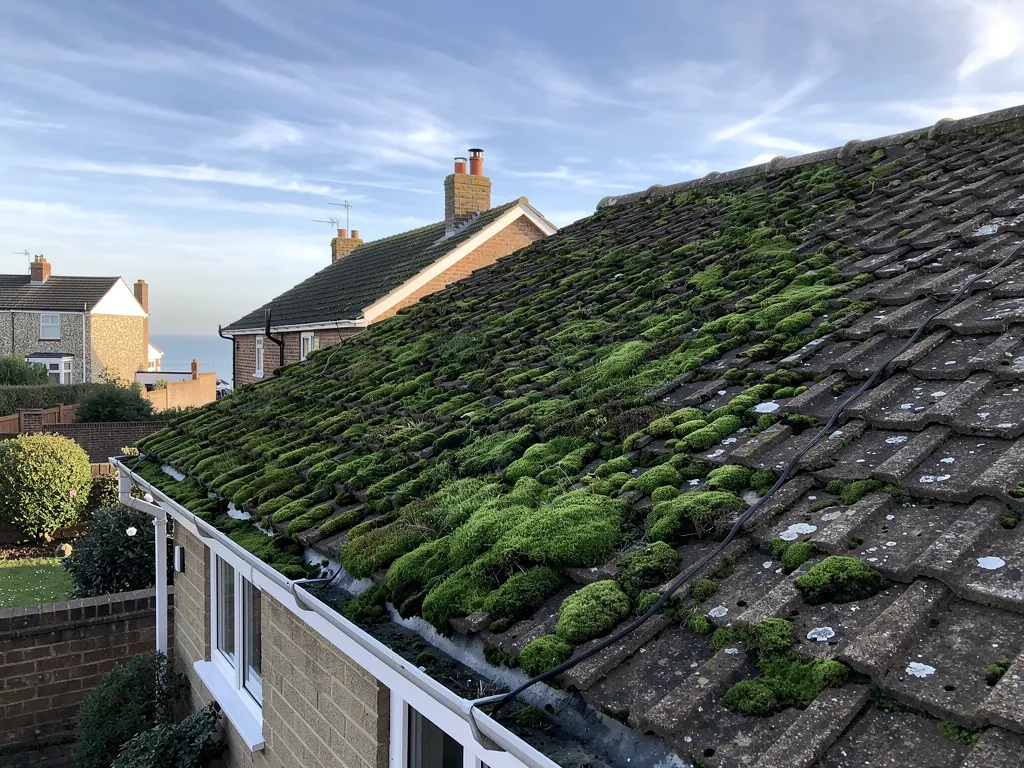
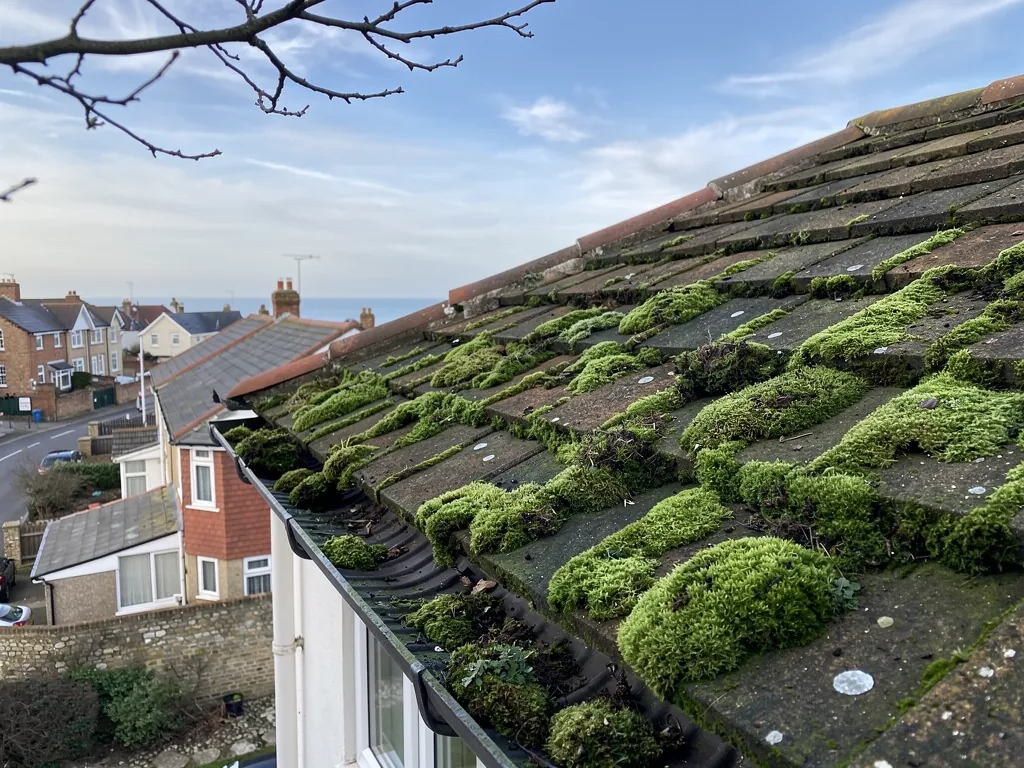
- Green cushions of moss along the tile courses
- Dark streaks running down a slope
- Grey or orange crust spreading on tiles
- Moss and grit piled in the valleys
- Gutters spilling over after rain
Cleaning we carry out
The roof cleaning and moss removal we carry out across West Sussex
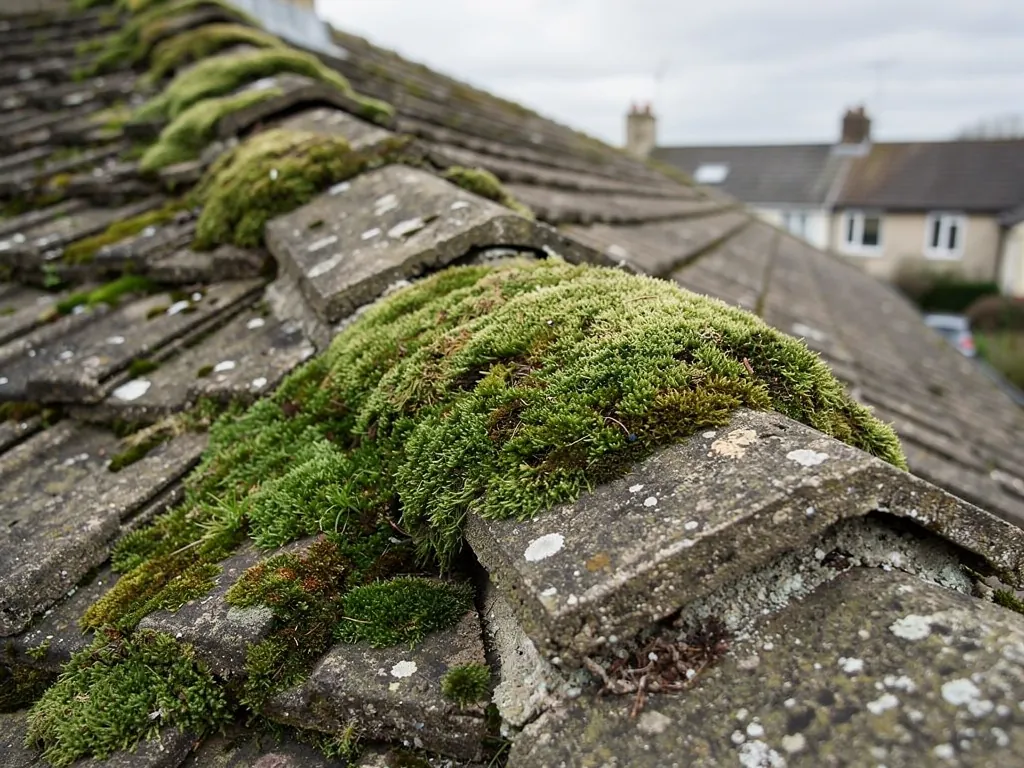
Moss removal by hand
Thick moss is lifted with scrapers and soft brushes, bagged and lowered to the ground, so the treatment reaches the tile surface and nothing lands in the gutters.
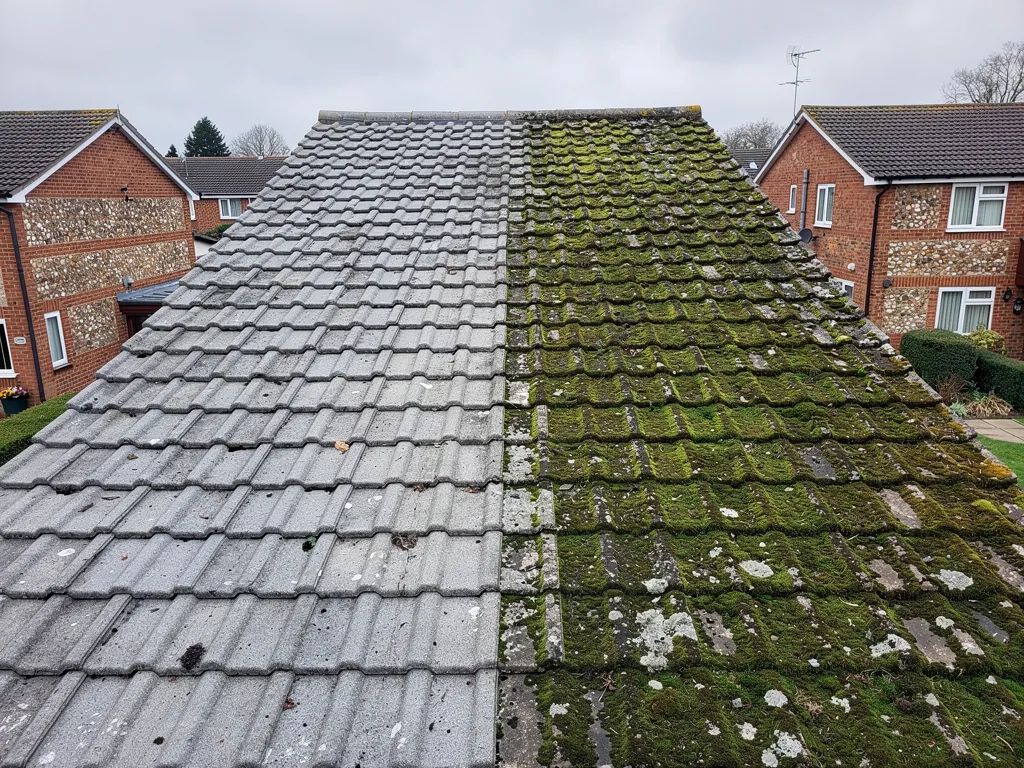
Biocide treatment
A biocide is a treatment that kills moss, algae and lichen. We apply it across the slope at low pressure and leave it to do the work.
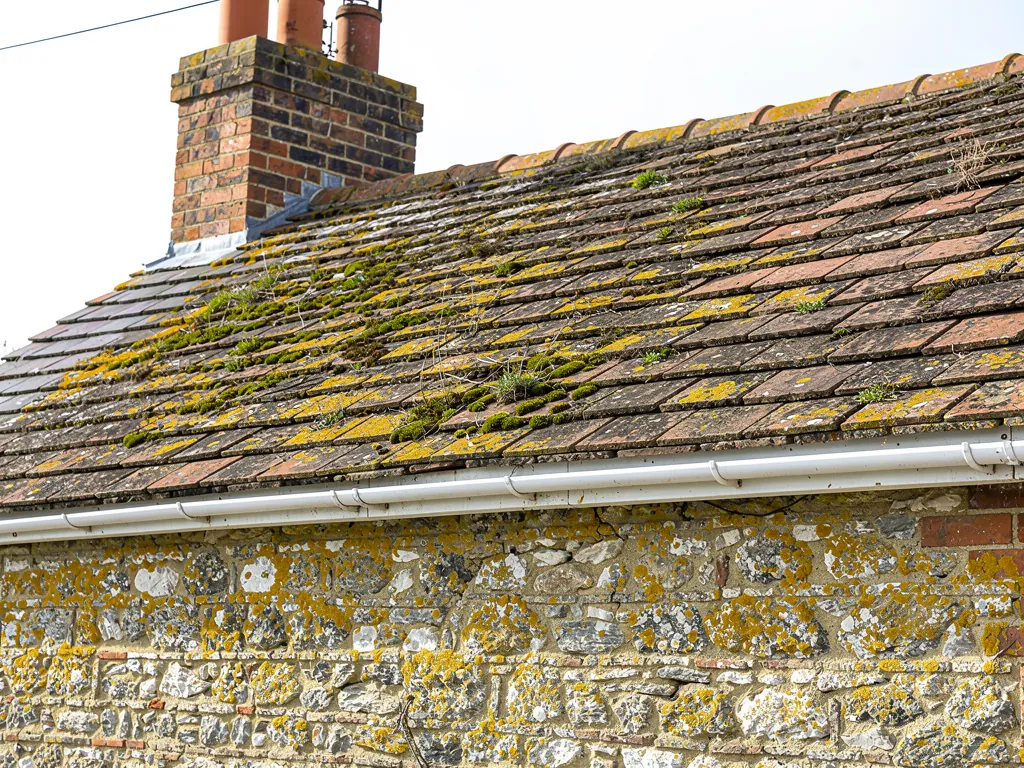
Algae and black streak cleaning
Dark streaks and green film on concrete and clay tiles are treated and washed down gently, without a jet that would strip the surface of the tile.
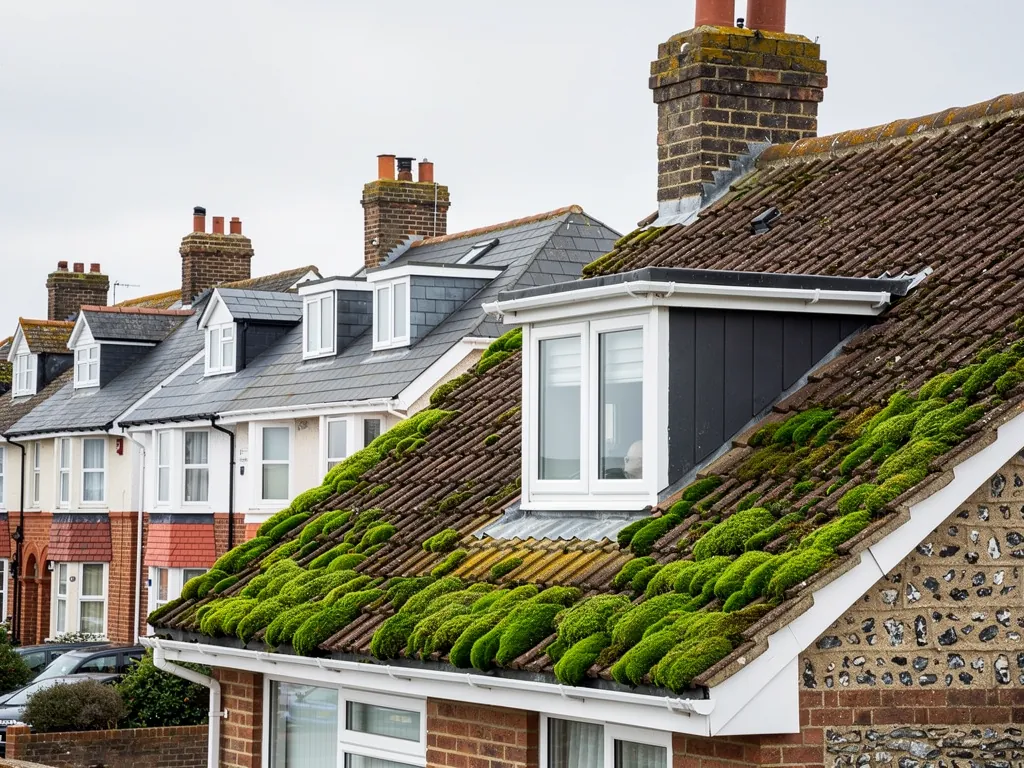
Gutter clearance
Gutters, outlets and downpipes are cleared of moss, grit and leaves by hand or with a gutter vacuum, then checked for sagging and open joints.
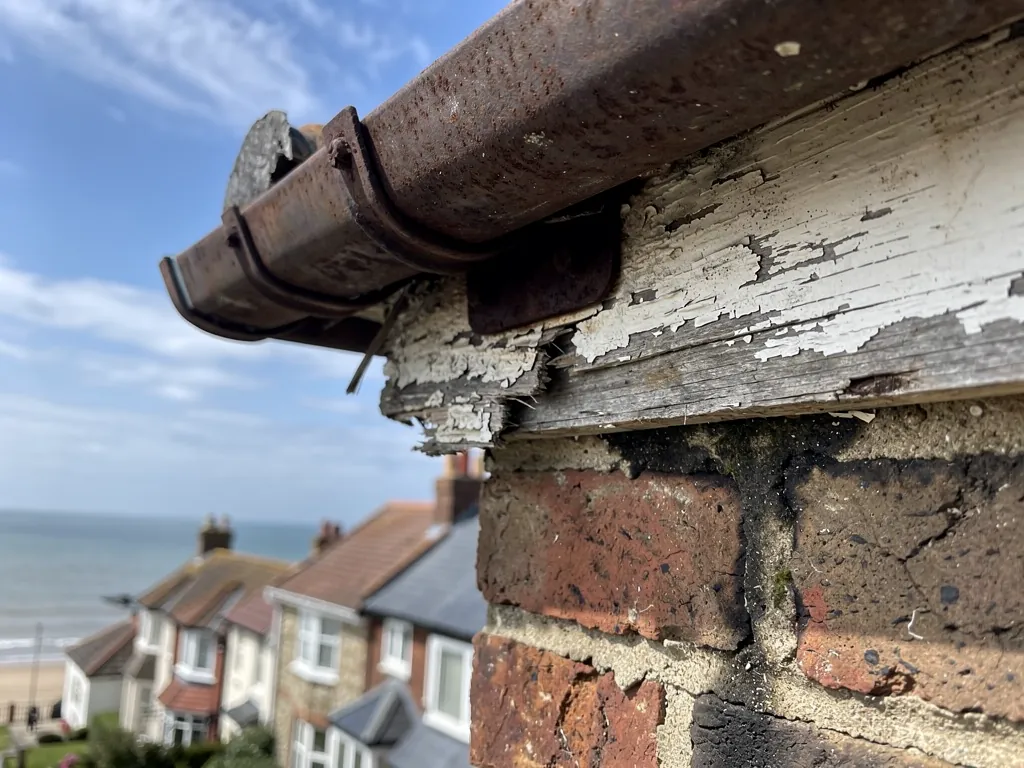
Fascia and soffit cleaning
Fascia means the face board that carries the gutter, and soffit the panel under the overhang. Both are washed down and checked for rot and splits.
Repairs found on the way
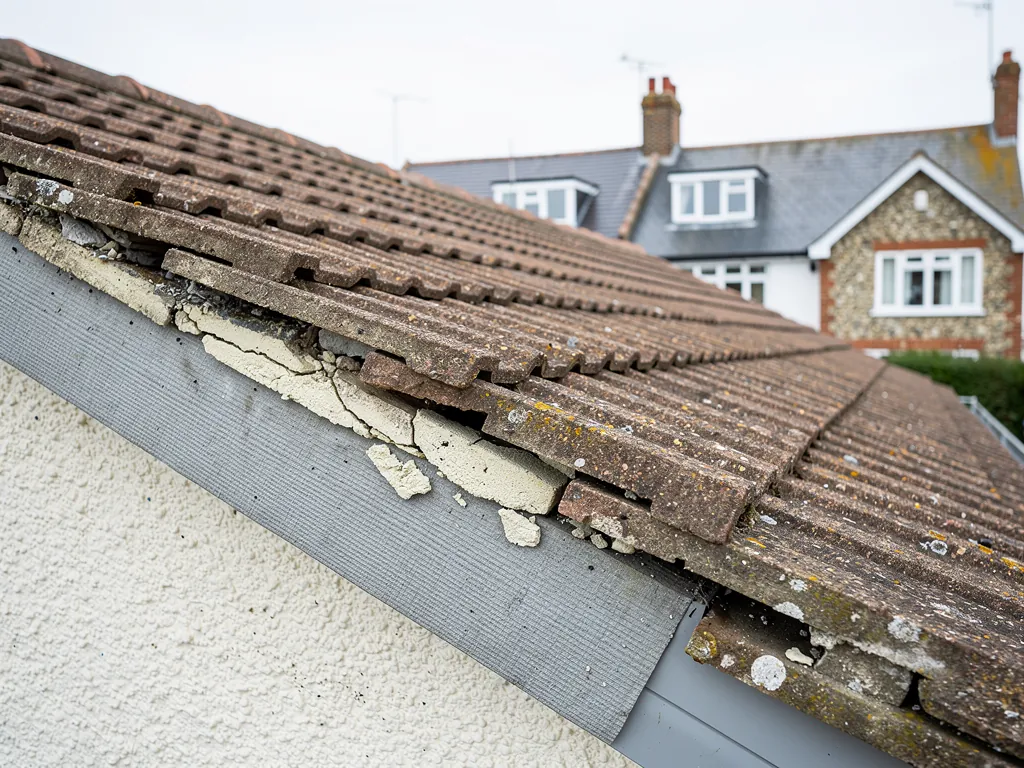
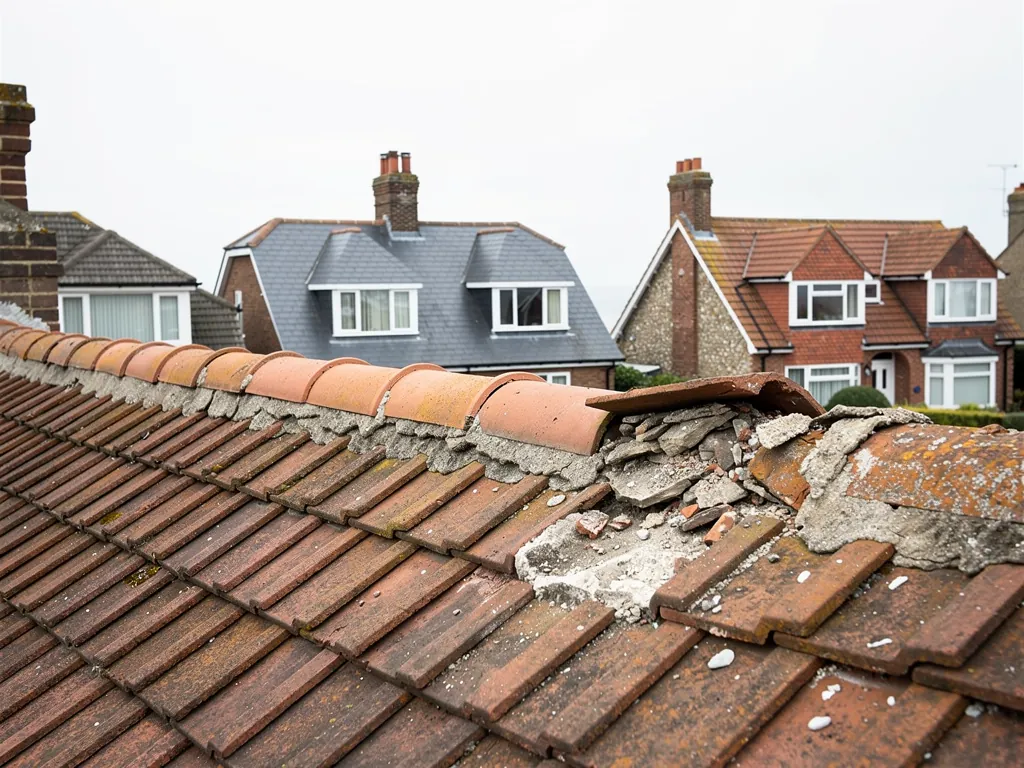
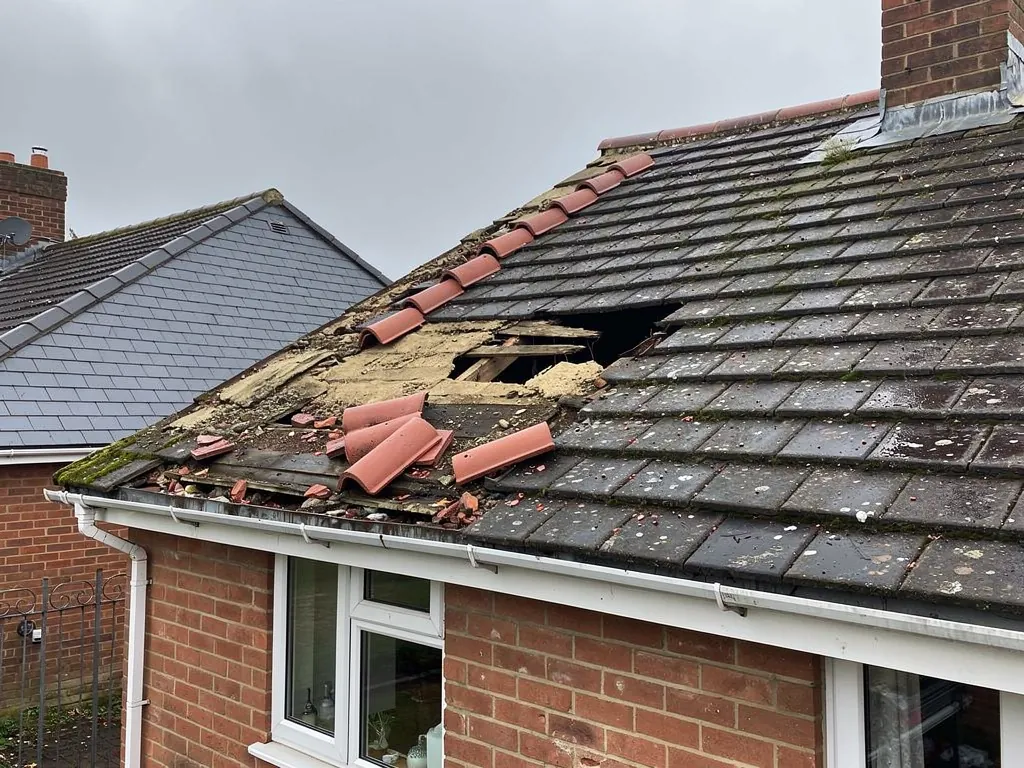
Cracked tiles, loose ridge tiles and lifted lead often show once moss is gone. We photograph them, quote them separately from the clean and fix them to match.
What it costs
What a roof clean costs on a Bognor Regis roof
priced on survey
Depends on size, pitch, access and the amount of growth
A low bungalow roof reached from a ladder sits well below a tall terrace that needs a scaffold and heavy moss lifting from the valleys.
What happens on a roof clean, from first call to finish
- 1Show us the roofRing 01243 252373, or WhatsApp us a photo of the worst slope and the gutters, and name the tile type if you know it.
- 2We assess the roof and guttersWe look at the covering, the growth and the gutters from the ground and from roof level, and photograph anything cracked or loose.
- 3Written quote, one total priceYou get the photographs, a plain view on whether cleaning is worth doing, and the method we would use, with one total price in writing.
- 4Moss off, treatment on, gutters clearWe remove the thick growth, apply the treatment, clear the gutters, photograph the finished roof and take every bit of debris away.
Roof cleaning, in depth
How roofs are cleaned properly on the Sussex coast
What grows on a roof, which cleaning method is safe, the order of work, the gutters, awkward materials and the cost of keeping a roof clear.
Chapter 1: Moss, algae and lichen on Bognor roofs2318
Sheet 01 / 06Three different things grow on roofs, and telling them apart decides whether a roof needs scraping, treating or simply leaving alone.
Plenty of roofs on this coast pick up something green or black sooner or later, and the first job is to name it. Moss is a cushion of tiny plants that roots into the gaps between tiles and into the rough face of concrete. Algae shows as dark streaks or a thin green film, usually where a slope stays damp longest. Lichen is the flat, crusty patchwork of grey, yellow or orange that grips tile and slate and grows slowly. Together they make up the organic growth on a roof, and each answers to a slightly different treatment. So a roof cleaning visit begins with an assessment, not a ladder and a scraper.
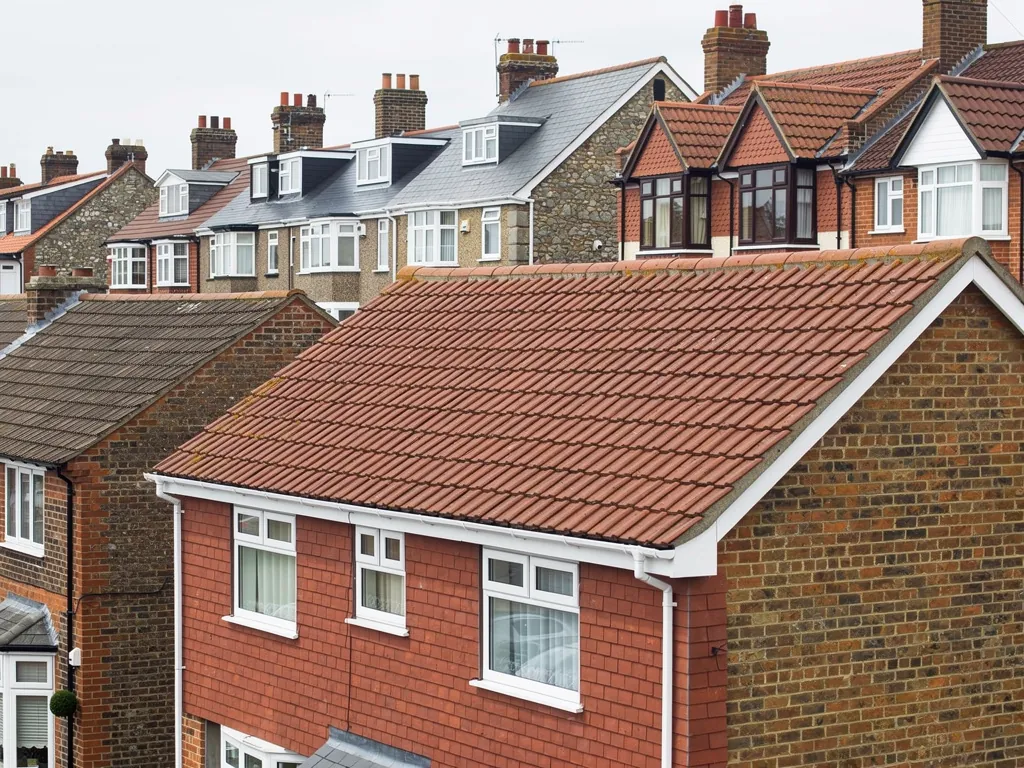
Moss shows where water lingers on a roof, not only how old the roof is.
Treat, remove or leave
- TreatLight algae or lichen on a sound slope, killed with a low-pressure biocide wash.
- RemoveThick moss across valleys, eaves and gutters, lifted by hand before any treatment.
- LeaveA little lichen on a sound roof where nothing is blocked and nothing is lifting.
1.1 Why moss takes hold in Bognor Regis
Moss needs moisture, shade and something to grip. Sea weather supplies plenty of the first: driving rain, damp air off the Channel and mornings when the roof never quite dries out. A slope shaded by a neighbouring house, a tall tree or a chimney stack stays wet longest, which is why moss often grows thickly on one side of a roof and barely touches the other. Shallow pitches shed water more slowly than steep ones, so a low bungalow roof can green over faster than a steep Victorian slope nearby. Dead leaves, grit and old moss then pile up in the valleys and along the eaves, and that layer feeds the next crop. A valley, for anyone new to the word, is the angle between two slopes that funnels rain towards the gutter.
1.2 Is moss really bad for a roof
A little moss on a sound roof is not an emergency, and we tell you when that is the case. Heavy growth is another matter. It keeps water against the tile surface long after the rain has stopped, and the clumps trap debris that blocks valleys and gutter outlets. Lumps that break loose in a gale wash into the gutter and settle at the outlet. Thick moss can also hide a slipped or cracked tile, which is why we look underneath it before treating anything.
Algae and lichen are mostly a matter of looks, though a roof streaked black is often a roof that stays damp. We judge each case on its own merits. A light film on a sound slope may only need a treatment, while a thick mat across a valley needs lifting by hand first. Growth that returns quickly usually points to shade, a blocked gutter or an overhanging tree, and we tell you which we can see.
Roof cleaning in Bognor Regis, West Sussex, is therefore a judgement about moss growth and the roof beneath it. To safely clean a roof, remove moss without harming the tiles and protect your property below, the order of work matters. Roof cleaning, moss removal and treatment belong together in one visit, whereas roof moss removal on its own, with no biocide, leaves the underlying growth free to return. After any roof cleaning, roof moss growth is the thing to watch, and Bognor Regis roof cleaning that includes the gutters keeps the water moving.
Chapter 2: Soft washing, pressure washing and hand removal2867
Sheet 02 / 06The method chosen decides whether the roof comes out clean and sound, or clean and damaged. For tiles, gentle almost always wins.
Roof cleaners use three methods, and the names get muddled. Pressure washing uses a narrow, powerful jet to blast the growth off. Soft washing applies a treatment solution and rinses at low pressure. Hand removal means scraping and brushing thick moss off before anything is sprayed. The best jobs combine the second and third, and the right mix depends on the covering, its age and how much has grown. A roof cleaning quote should name the method, so ask for it.
Low pressure
how we apply treatment and rinse a tiled roof
Pressure washing
A strong jet that can strip the tile face and push water under the laps.
Soft washing
Treatment applied and rinsed at low pressure, with thick moss lifted off by hand first.
2.1 What high-pressure washing does to roof tiles
Pressure washing is what many homeowners picture, and it is the method we steer people away from on tiled roofs. A strong jet can strip the surface from a concrete tile and wear the glaze or the edge from older clay. It can also drive water up under the laps, past the underlay, which is the felt or membrane laid beneath the battens, and into the loft. Battens are the thin timber laths that carry the tiles. The same jet can knock the pointing out of ridge and verge joints. A verge is the tiled edge that overhangs a gable end.
A roof blasted bare still has to be treated afterwards if the growth is to stay away, so the jet adds risk without saving the second step. For that reason our safe cleaning method keeps the pressure low and the hand tools busy.
2.2 How soft washing and biocide treatment work
Soft washing is the low-pressure method. A biocide is sprayed over the slope and left to work, then rinsed or left for the weather to wash off, depending on the product. Because the treatment does the killing, the water does not need to be forceful, which keeps the tile face, the pointing and the joints intact. The growth dies back gradually rather than vanishing in an afternoon, so a roof can look patchy for a while after treatment and then brighten as the dead growth washes away.
Soft washing also reaches the shaded slopes and tight corners where scraping alone leaves a film behind, and it leaves the roof surface looking even rather than patchy. Treatment run-off is kept away from planted beds and drains as far as the layout allows, and at the assessment we ask about ponds, pets and any plants close to the walls. Our page on soft washing and biocide treatment goes through the products in more detail.
Hand removal comes first wherever the moss is thick. Mats are lifted with scrapers and soft brushes, bagged and lowered to the ground so the treatment can reach the surface underneath. It is slower than a jet, and it is gentle on tile edges, on slate and on the mortar or dry-fix joints of ridges and hips. A hip is the external ridge line that runs down where two slopes turn a corner. Our guide to pressure washing roofs sets out what can go wrong in more depth.
Chapter 3: The cleaning process, from assessment to clear-up2989
Sheet 03 / 06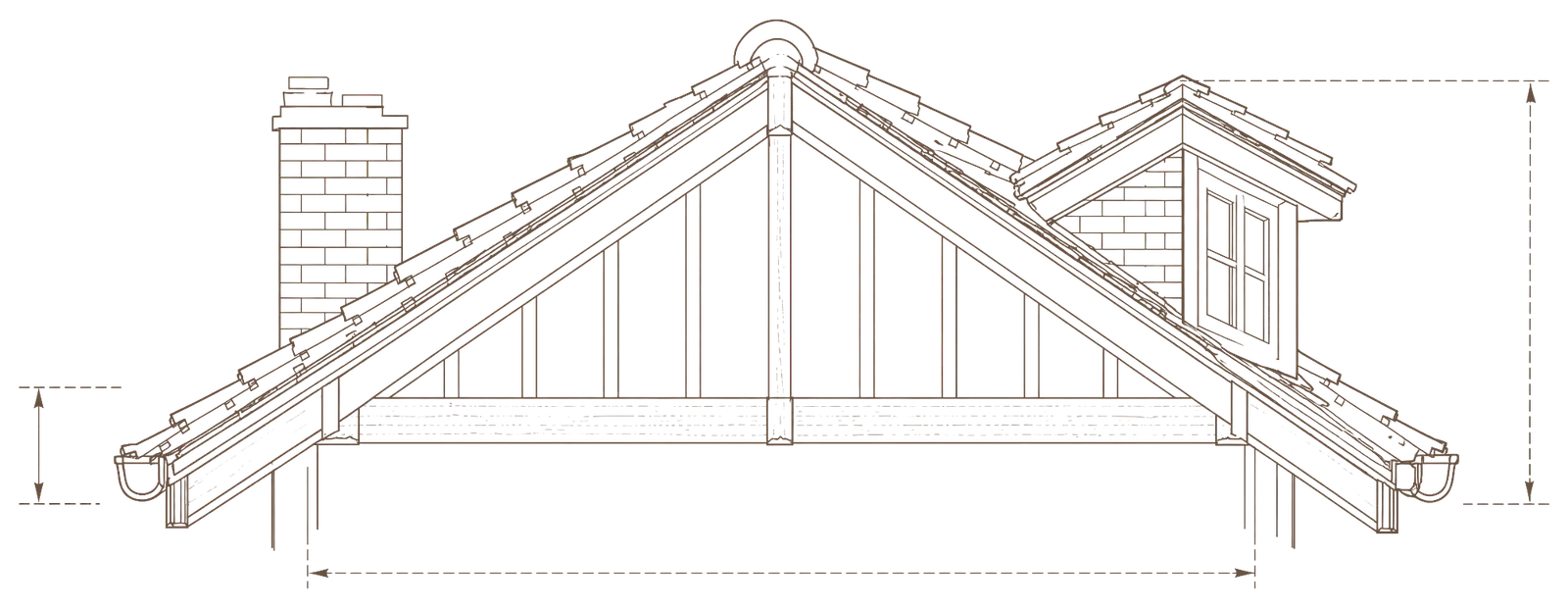
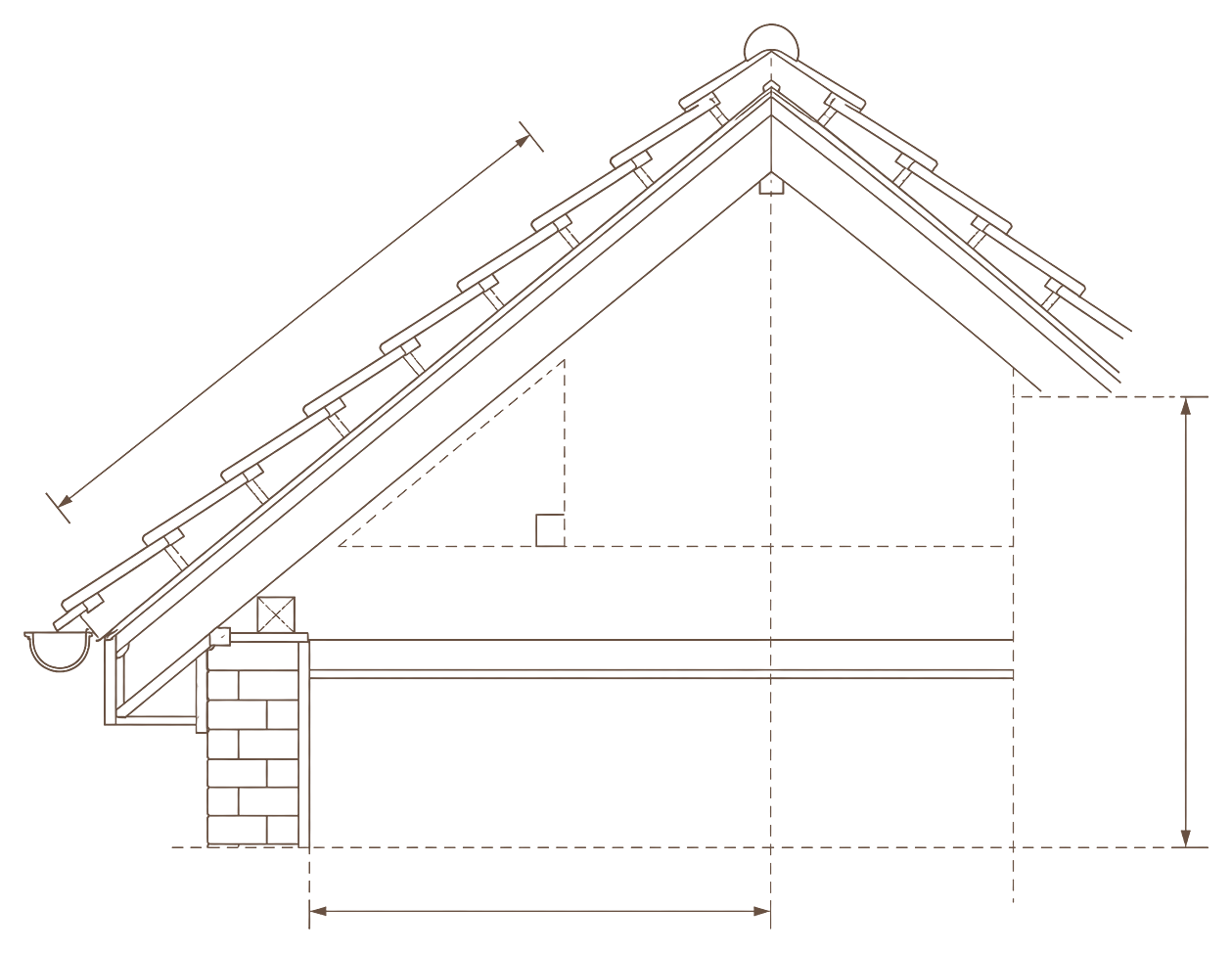
- Ridge Moss lifted first; ridge joints checked as it comes off.
- Eaves Wet, shaded courses where moss usually grows thickest.
- Dormer cheek Sheltered corners hold damp and debris.
- Valley Moss and grit pile up and slow the water.
- Gutter outlet Loose moss lands here and blocks the flow.
A good clean follows a set order: assess, make safe, lift the moss, treat, rinse, clear the gutters, then photograph the result.
Every job starts with an assessment, and it comes before any price. We look at the roof from the ground and, where access allows, from a ladder, a tower or the roof itself. We note the covering, the pitch, the amount of growth and the state of the gutters, and we photograph anything cracked, slipped or lifting. You receive the photographs with the written quote, which means you can check the findings for yourself from the ground. That quote is a single total price for the whole clean.
A roof clean, in order
- 1AssessPhotograph the covering, the growth, the gutters and any cracked or lifted tiles.
- 2Make safeSet up ladders, a roof ladder, a tower or scaffold to suit the roof.
- 3RemoveLift thick moss by hand from ridge to eaves and bag the debris.
- 4TreatApply the biocide at low pressure across every slope.
- 5Clear upClear the gutters, rinse the trims and take the waste away.
3.1 Access and safe working
Safe cleaning depends on access. A single-storey bungalow roof is frequently within reach of ladders plus a roof ladder, which spreads weight along the slope and hooks over the ridge. A tall terrace or a house with a steep rear slope usually needs a scaffold or a tower, and a scaffold on a pavement or road needs a licence from the highway authority. Fragile roofs, such as rooflights and old cement sheets, are marked and avoided. Wet moss and wet slate are slippery, so some jobs wait for a drier day. Overhead cables, a conservatory roof below the working area and the neighbour's boundary are all noted at the assessment, and we agree where the ladders and tower will stand before the day.
3.2 Moss off, treatment on, everything rinsed
Work runs from the top down. Moss is lifted from the ridge, then the hips and valleys, then across each slope towards the eaves. Debris is bagged and carried down rather than raked into the gutter. The biocide goes on next, at low pressure. Finally the gutters and downpipes are cleared, the fascia and soffit are washed, and the cleaning result is photographed from the same positions as the survey. Cracked tiles or lifted lead found on the way are shown to you, never fixed without your say-so.
3.3 Taking care of the roof as we go
Where moss has grown through the joint between two tiles, it is teased out rather than torn, so the tile is not dragged from its course. Valleys get particular attention, because a valley that stays clogged sends water sideways under the tile edges. We stay off ridge and hip tiles wherever we can, and we look at the bedding and fixings as we pass. When the work is finished, the site is cleared and the waste taken away: bagged moss, leaves and grit go in our vehicle, not your bin. Paths, drive and any patio below the roof are swept before we leave.
Moss goes in a bag and down a ladder, never into the gutter.
Chapter 4: Gutters, fascias, soffits and downpipes2379
Sheet 04 / 06The roof and its gutters are one drainage system. Cleaning the tiles without clearing the gutters leaves the next blockage waiting.
Moss does not stay on the tiles. It drops into the gutter, mixes with grit washed off the roof and settles at the outlet, where it dams the flow. When the gutter backs up, water spills over the front, soaks the fascia and runs down the wall. So gutter clearance is part of every roof clean, not an extra. In a wet spell we also look at the bottom courses of tiles, because a gutter full of sludge can hold water against them. Leaves from garden trees, grit washed off the tiles and dead moss all build into the same layer, so a gutter that looks clear from the drive can be part full when seen from a ladder. Bungalow gutters are within ladder reach. Those on a tall terrace are better done from a tower, with a person to steady it.
4.1 Gutter clearance and the gutter vacuum
Small amounts of silt can be scooped out by hand from a ladder or tower. For long runs, high gutters and anything awkward to reach, a gutter vacuum helps. It is a powered suction unit on a pole, which draws leaves, moss and silt out of the channel into a tank. Either way the outlets are cleared and a hose is run through to prove the water reaches the downpipe. A downpipe is the vertical pipe that carries water from the gutter to the drain. Standing water in a gutter points to a sag, since gutters are set with a gentle slope down to the outlet, roughly 1:600 to 1:350 depending on the system.
4.2 Fascia and soffit care
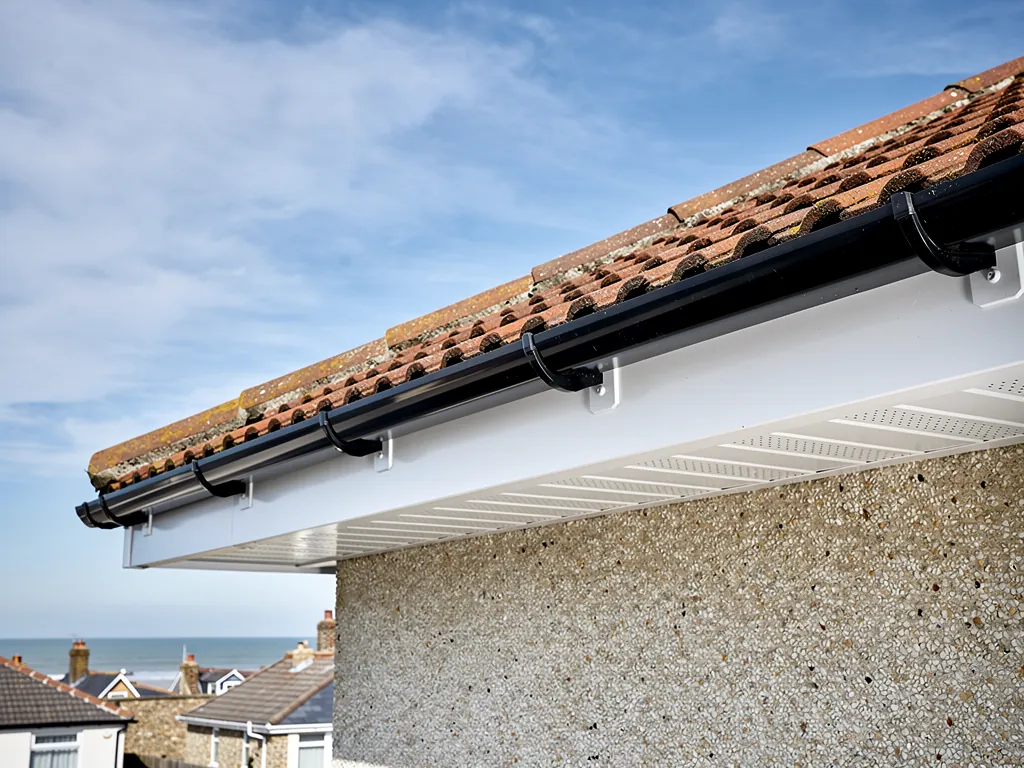
Fascia boards run along the eaves and carry the gutter brackets. Soffits close the underside of the overhang. Both collect green film and cobweb, and both can hide rot behind a coat of paint. We wash them down at low pressure, then look for splits, soft spots and open joints. Soffits often carry small vents that let the loft breathe, and we check that moss and debris have not choked them. Spotting a failing fascia now saves taking the gutter down twice. We photograph any board that has gone soft, and the photograph goes with the quote for the repair, so you can see exactly where the rot starts and stops.
If the gutters themselves are cracked, badly sagging or leaking at the joints, cleaning only buys time. Our guttering, soffit and fascia service covers renewal in uPVC and aluminium. Our guide to moss, gutters and downpipes explains why one job usually involves the other. Where a downpipe is cracked, or a gutter has parted at a joint, we show you the fault before the gutters are cleared, because loose silt can hide how bad it is. A gutter that has to be refitted after the clean costs less to fit while the tower is already up.
What we check while the gutters are clear
- Joints and brackets
- Fall towards the outlet
- Fascia board condition
- Soffit vents unblocked
- Downpipe flowing freely
Chapter 5: Slate, clay, concrete and cement roofs2318
Sheet 05 / 06Each covering is cleaned differently, and some roofs need permission, a pause or a specialist check before anyone touches them.
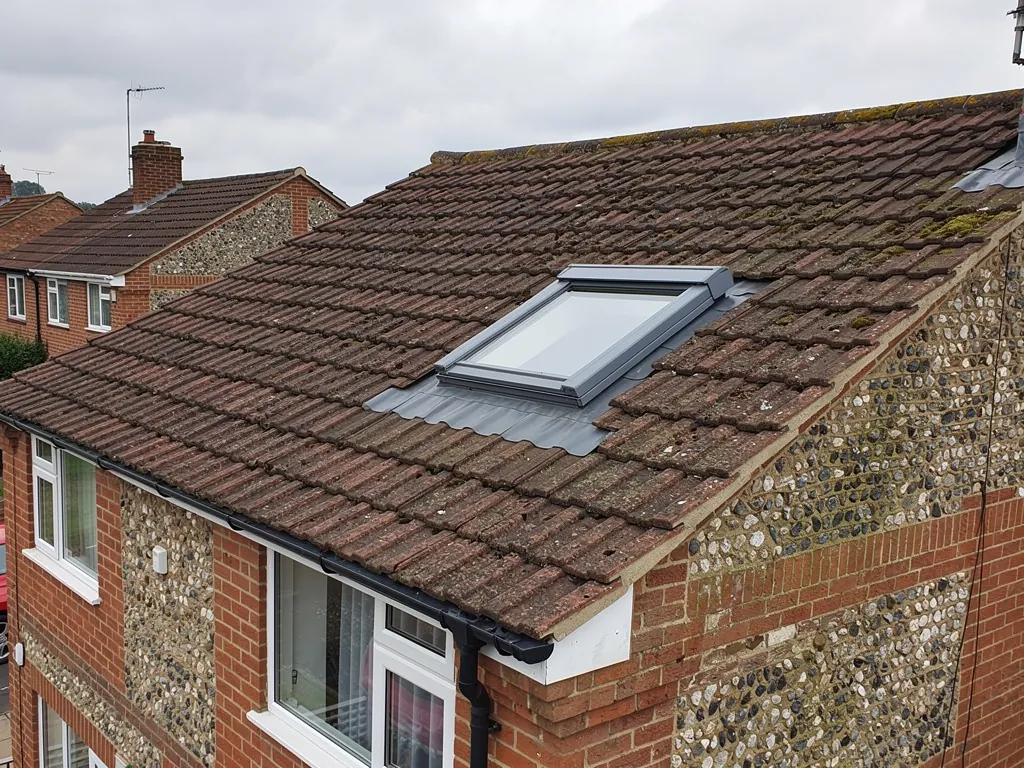
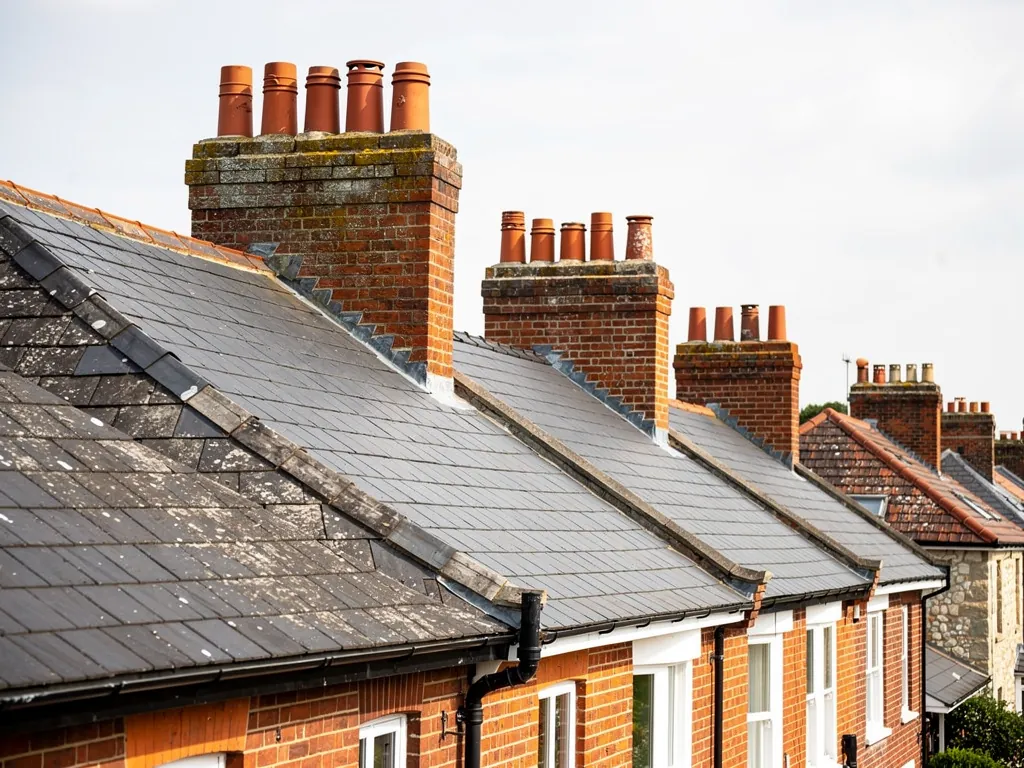
Concrete tiles are the most common covering on estates built since the mid twentieth century, and they tolerate treatment well provided the surface is not stripped. Marley gives concrete tiles an expected life of around 60 years, with no guarantee attached, and a surface scoured by a jet is unlikely to get there. Clay tiles, glazed or unglazed, are more varied, so we test a small patch first. Arun's Craigweil House conservation area statement records plain clay tiled roofs as part of the traditional construction in Aldwick, and old clay of that kind is cleaned by hand, a few tiles at a time. Natural slate is cleaned gently by hand, because well-kept slate lasts beyond 100 years according to the Confederation of Roofing Contractors and thin old slates break underfoot.
Before we touch an old roof
Slate, old clay, cement sheet and listed roofs are checked first and cleaned by hand, so nothing is stripped, broken or disturbed.
5.1 Listed buildings and conservation areas
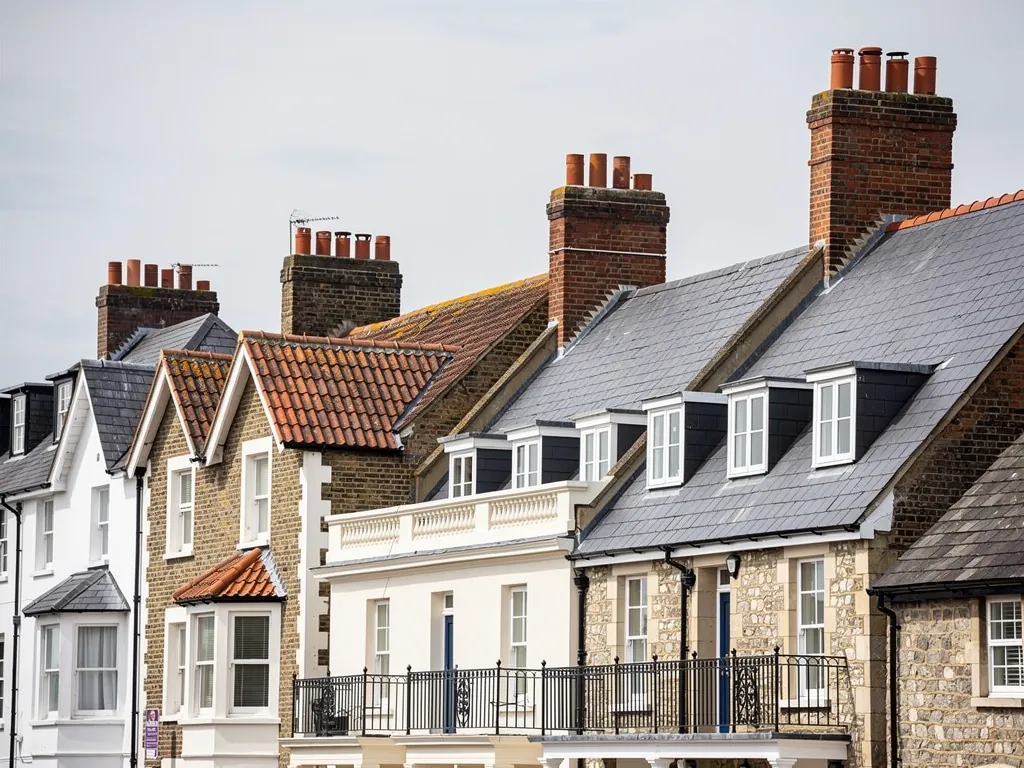
Cleaning a roof is maintenance rather than a change to its appearance, so it rarely needs consent, but the setting matters. Arun lists The Steyne with Waterloo Square as a conservation area, designated in August 1979 and extended in July 1994, and Aldwick Road as another, designated in July 1994. Arun's guidance there prefers natural slate or plain clay tile, and notes that on Aldwick Road slate has commonly been replaced with concrete interlocking tiles, so two coverings can share one terrace. If your home is listed, check with Arun District Council's planning team before anything beyond routine maintenance.
A roof that is cleaned the wrong way can lose years it would otherwise have kept.
100+ years
life of well-kept slate, per the Confederation of Roofing Contractors
5.2 Cement sheet, lead and solar panels
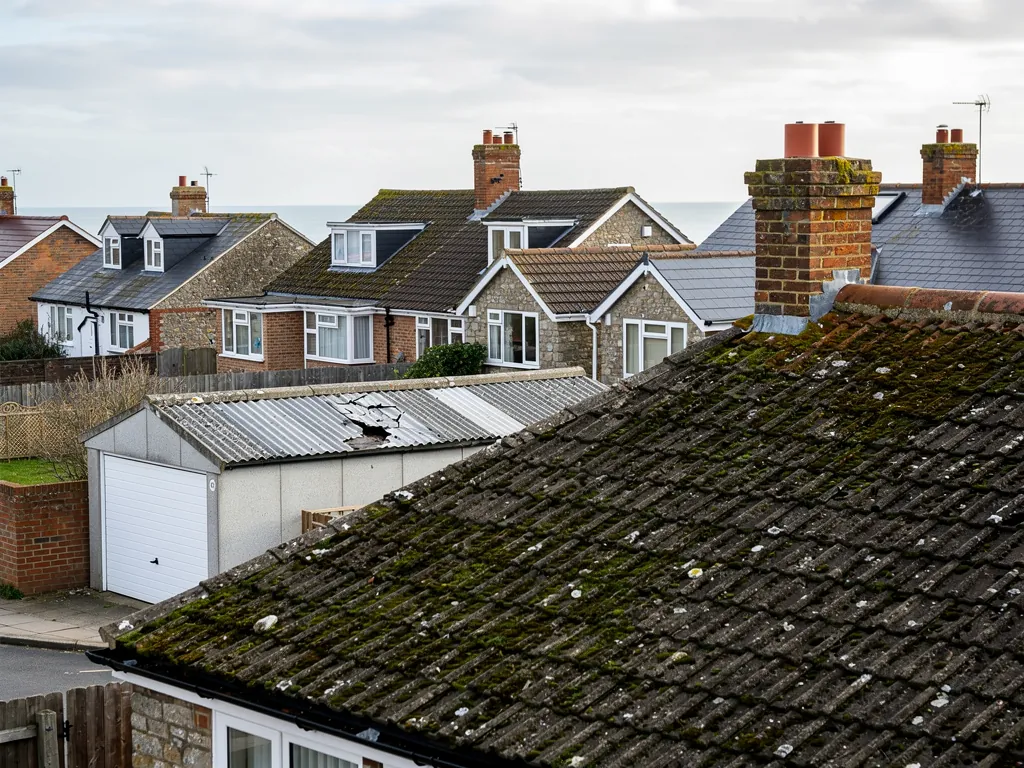
Corrugated cement sheet on an old garage or outbuilding is fragile, and HSE tells owners to treat any building built or refurbished before 2000 as if asbestos is in it. Those sheets are identified first, and nobody walks on them. Lead flashings, the metal strips that seal a roof against a wall or chimney, are looked over once the moss is off, and lifted lead is a repair rather than a cleaning job. Solar panels sit on many roofs here. We work around them, and solar panel cleaning is a task in its own right, so we agree it with you rather than assume it. Gutters and downpipes on a garage or extension get the same treatment as the main house, since a blocked outbuilding gutter tends to be forgotten until the wall turns green.
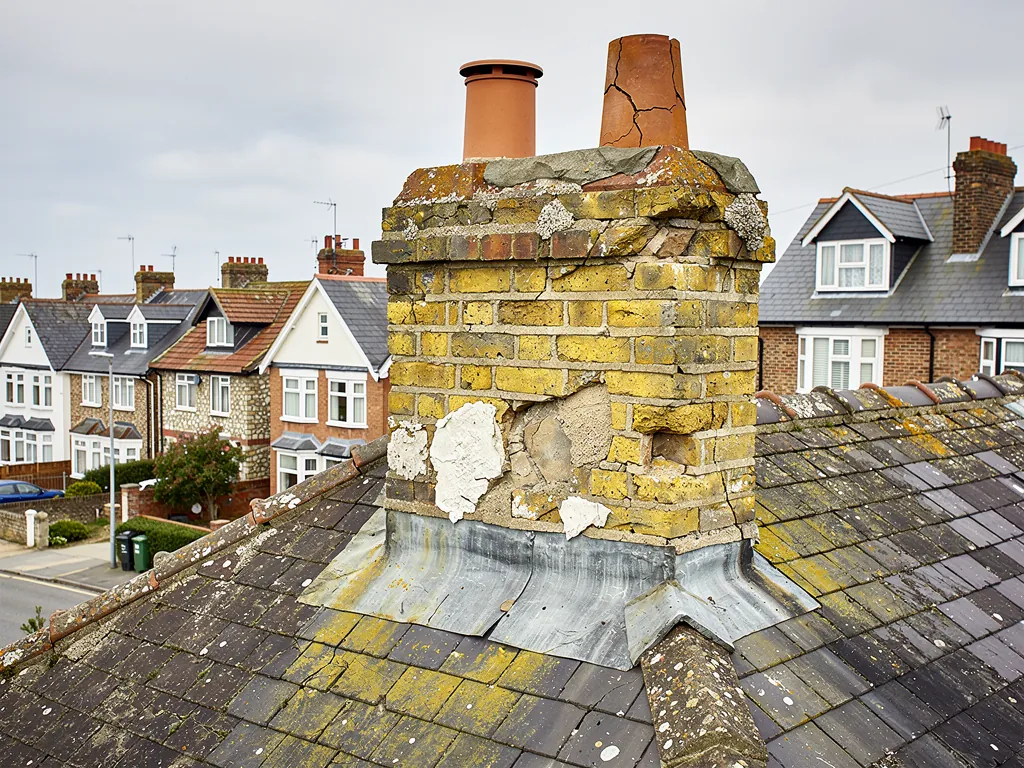
Bats are protected, and so are nesting birds, so we look for roosts and nests under eaves and ridge tiles before any scraping starts. Our page on cleaning roofs on historic and listed buildings covers consent routes in more depth. Chimneys on the older terraces stand tall on the skyline, and Arun calls them important features of the conservation areas, so moss round the flaunching, the sloped mortar cap around the pots, gets checked while we are up there.
Chapter 6: Pricing, maintenance and keeping moss away2562
Sheet 06 / 06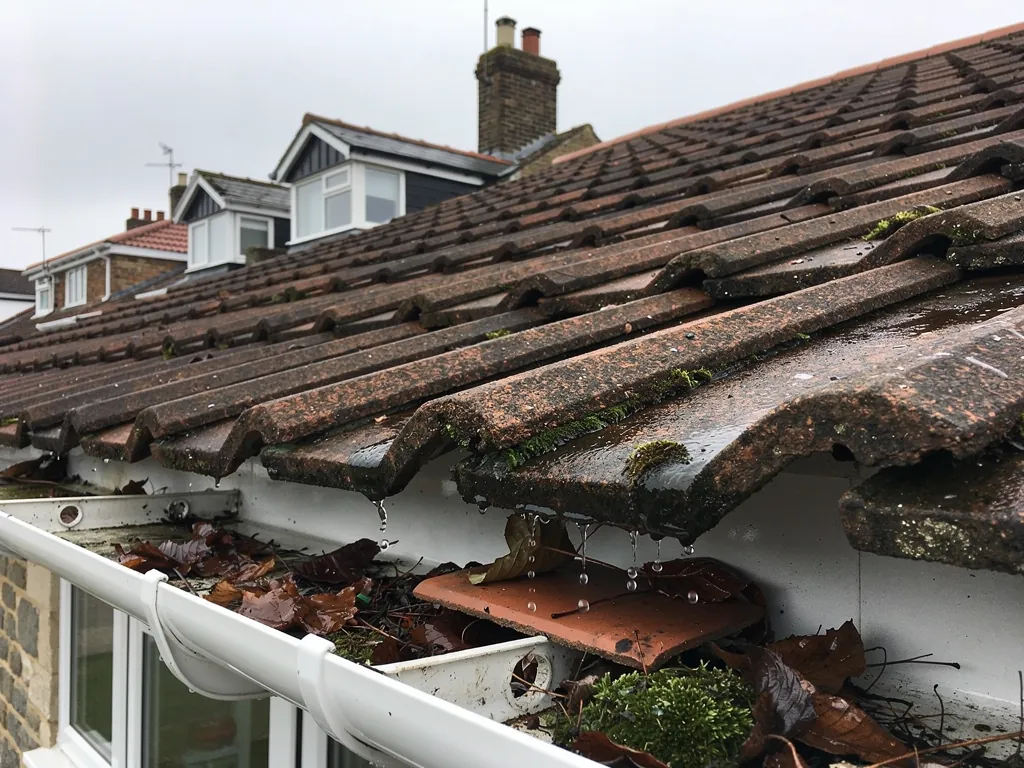
Cleaning is priced from the assessment. Keeping it clean afterwards is mostly about shade, gutters and an occasional look.
Roof cleaning pricing depends on the size of the roof, its pitch, how easily we can reach it and how much has grown. A single-storey roof reached from a ladder is a smaller job than a three-storey terrace needing a scaffold. The covering counts too, because slate and old clay need slower hand work than modern concrete. Gutter clearance, fascia and soffit washing and any panel work add time. Treatment itself is a small part of the bill beside access and labour. We give you the quote as one written total price after the assessment, and we keep the figure good and fair.
Keeping the roof clear, season by season
- 1Leaf fallLook at the gutters and valleys from the ground and clear any leaves.
- 2Wet winterCheck shaded slopes for new green and the gutters for standing water.
- 3Now and thenTrim overhanging branches and keep a dated photo to compare.
- 4Growth returnsSend us a photo and we say whether it needs treatment or only watching.
6.1 Scaffold, VAT and what to check in any quote
Whichever firm you ask, see whether the figure covers VAT, charged at the standard 20 per cent, and whether it covers scaffolding. Checkatrade's scaffolding guide (table updated October 2026) lists a two-storey semi at around £875 a month. Where the poles stand on the footway or in the carriageway, the highway authority has to grant a licence first, which takes notice. West Sussex County Council wants a minimum of 10 working days' notice and charges £266 for one month, so booking a tall house has a lead time. A single-storey roof often needs no scaffold at all.
6.2 Looking after the roof once it is clean
Maintenance is light. Look at the roof from the garden once the autumn leaves have dropped and once more after a wet winter, and keep the gutters free of leaves. Trim branches that overhang the slope, since they shade it and drop debris. If moss returns in the same place, it usually points to shade or a damp gutter, and we tell you what to change. We take photographs when we finish, so you have a record to compare against next time. A roof that is cleaned and then left alone for several wet winters will green over again, and that is normal; the sensible rhythm is to look, tidy the gutters and book a treatment only when the growth justifies it.
Cleaning sometimes turns up a repair, and the clean-up then becomes a short list of jobs: replacement tiles, refixed ridge tiles or renewed flashings. Those are priced as part of the same written quote, not added once the work is under way. Our roof repairs service covers the fixes, and the guide to what roof cleaning costs works through the price factors. A full roof inspection is the better first step when you want the whole roof checked and not only cleaned.
Price guide
Typical UK roofer rates behind a roof clean
| Job | Typical range |
|---|---|
| Roofer, hourly rate | £35 to £45 per hour |
| Roofer, day rate | £280 to £360 per day |
| Moss removal and treatment | priced on survey |
Guide rates only. Our written quote follows the assessment, and it is one total price for the whole clean, scaffold included where the roof needs one.
Source: Checkatrade roof repair cost guide, table last updated June 2026
Guides and answers
Roof cleaning guides and answers
Short guides on moss, algae, cleaning methods, historic roofs, gutters and cost for homes across Bognor Regis and West Sussex.
 How much should you pay to have your roof cleaned?9 min read
 Is getting your roof cleaned worth it?9 min read
 How can you remove moss from a roof in the UK?9 min read
 Pressure washing roofs: why it can do more harm than good9 min read
 Soft washing and biocide treatment explained9 min read
 Cleaning roofs on historic and listed buildings9 min read
 Cleaning slate, clay and concrete roofs: one method does not fit all9 min read
 Roof coatings after cleaning: do they work?9 min read
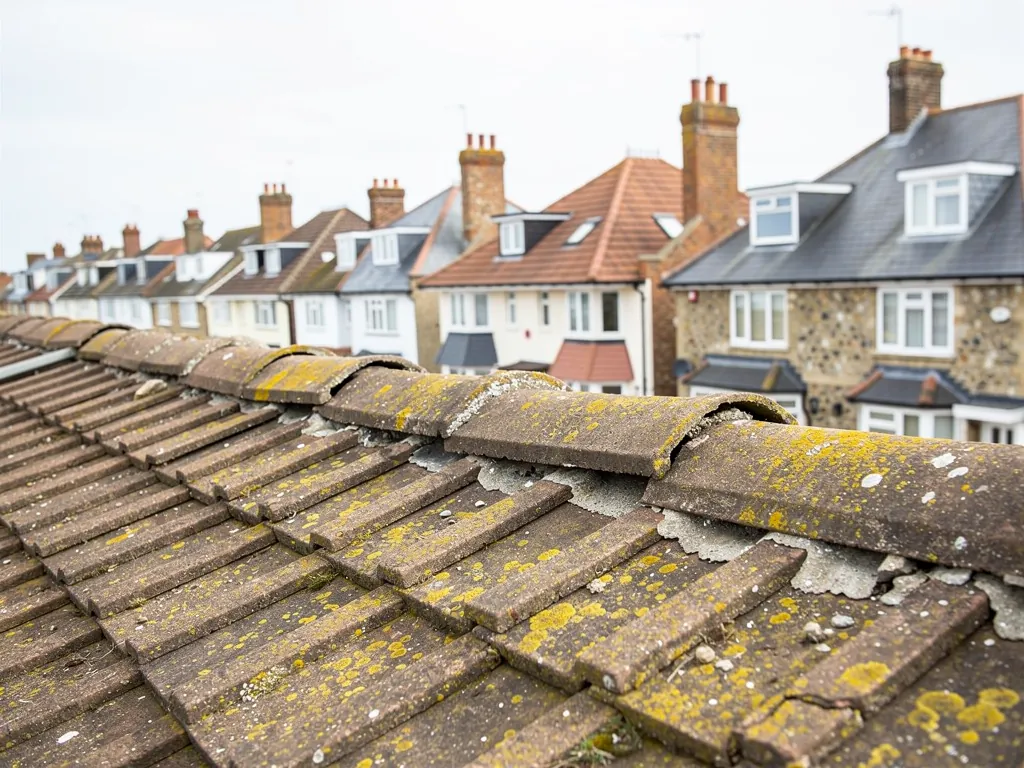 Lichen on roof tiles: harmless patina or a problem?9 min read
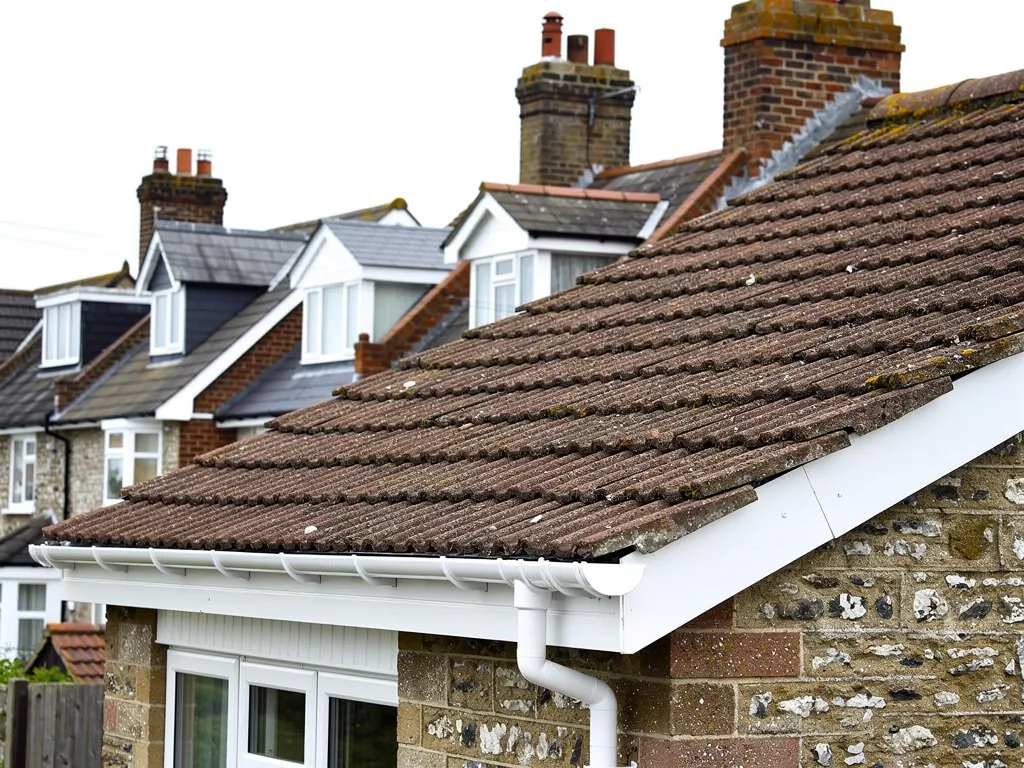 Moss, gutters and downpipes: why cleaning the roof means clearing the gutters9 min read
 Black streaks and green algae on roof tiles9 min read
 The best time of year to clean a roof9 min read
Quick answers
- How often should a house roof be cleaned?
- What affects the price of roof cleaning?
- Is moss bad for a roof?
- Will moss come back after a roof clean?
- Is roof cleaning safe for your tiles?
- How long does a biocide treatment take to work?
- Will the roof look clean straight after treatment?
- How long does it take to clean a roof?
- Is scraping moss off by hand the best method?
- Can you use moss killer on a roof yourself?
- Why does moss grow on one side of the roof?
- Should moss be removed from a flat roof?
- How is moss removed from a slate roof?
- Is gutter cleaning included with a roof clean?
- Is green algae on a roof the same as moss?
- Can a roof be cleaned in the rain?
- What if cleaning finds cracked tiles?
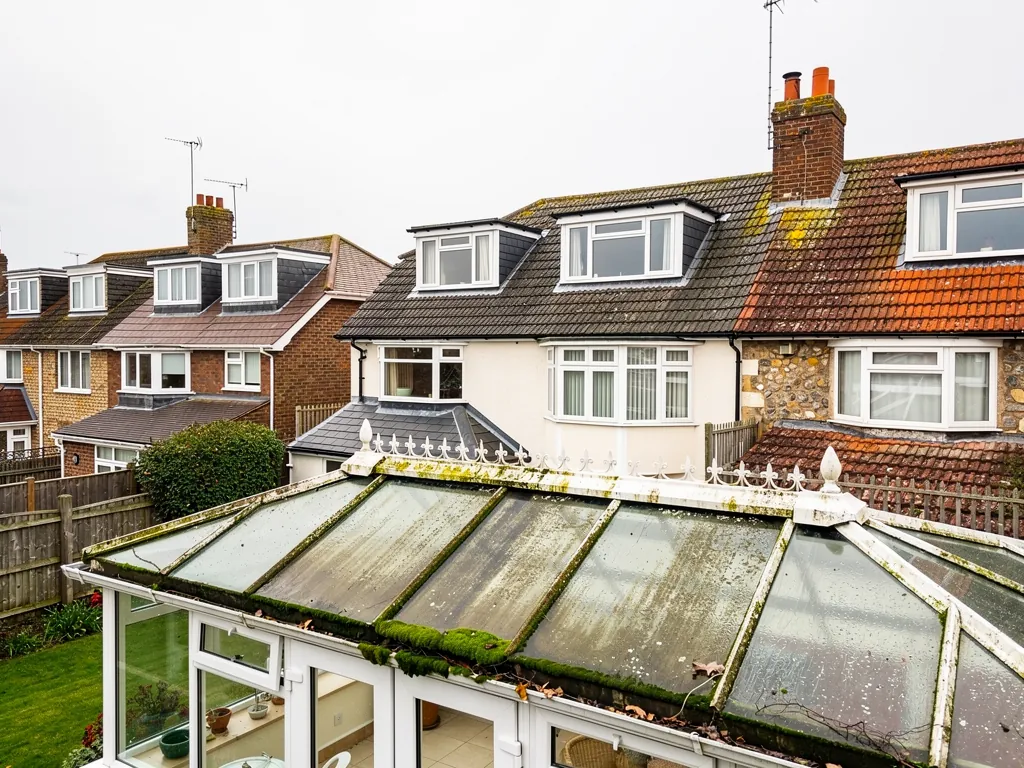
- How is a conservatory roof cleaned?
- Does roof cleaning need scaffolding?
- Is it worth cleaning the roof before selling a house?
Questions
Roof cleaning questions, answered
Can a two-storey house be cleaned without a scaffold?
Sometimes. A low pitch, a safe ladder position and a roof ladder can be enough for rear extensions and bungalows. A tall front slope, a steep pitch or a pavement below usually points to a tower or scaffold, and we tell you at the assessment which applies. Ask whether any figure you are given covers scaffolding and VAT, and allow time if a licence is needed, because it takes notice.
Does cleaning ever turn up other faults?
Quite often it can. Moss hides cracked tiles, slipped slates, lifted lead and ridge joints that have lost their bedding. We photograph each one as the moss comes off and show you before anything is touched. You can have them fixed at the same visit, or leave them and book the repair later. Either way the clean is priced on its own, so nothing is added to your quote without you agreeing it.
What happens to the debris that comes off my roof?
Moss, grit and leaves are bagged on the roof and carried down by hand, not raked into the gutter or dropped onto the garden. Gutters and downpipes are cleared at the end, so nothing washes into them afterwards. All of it leaves the site with us, and we clear the drive and paths before we go. Treatment run-off is kept off planted beds and drains where the layout allows.
Do you clean roofs outside Bognor Regis, such as Selsey or Arundel?
Yes. We work across Bognor Regis and every place within 30 road miles of the town, including Aldwick, Felpham and Pagham, the Manhood Peninsula, Chichester and the harbour villages, Littlehampton and Arundel, and out to Worthing and Midhurst. Send a photo and the postcode, and we can tell you whether access is simple or needs a tower or scaffold before we visit.
Is it worth cleaning a roof with only a few green patches?
Often a light film on a sound roof can wait, and we tell you that rather than sell a clean. Patches in valleys, along the eaves or around the chimney are different, because they collect debris and hold water against the tiles. Send us a photo of the worst slope and the gutters. We give a plain view on whether to clean, to wait, or to repair something first.
Can solar panels stay in place while the roof is cleaned?
Yes. The panels stay where they are, and we work around them and the cabling, keeping treatment off the glass where we can. Moss and debris often collect under the lower edge of the array, so we ask for the panel details at the assessment. Cleaning the panels themselves is its own job, with a different method, and we agree it with you before we start.
Get a quote
Send photos of the growth on your roof
Photograph the worst slope and the gutters, add the roof covering if you know it, and we begin the assessment from what the pictures show.
Loading the enquiry form. You can also call 01243 252373.