
Roof make-safe · 9 min read
What a roof make-safe involves: covers, tarpaulins and scaffold
A roof make-safe stops the water and the danger first and leaves the permanent repair for later. Here is what the work covers, from covers and tarpaulins to scaffold and the paperwork.
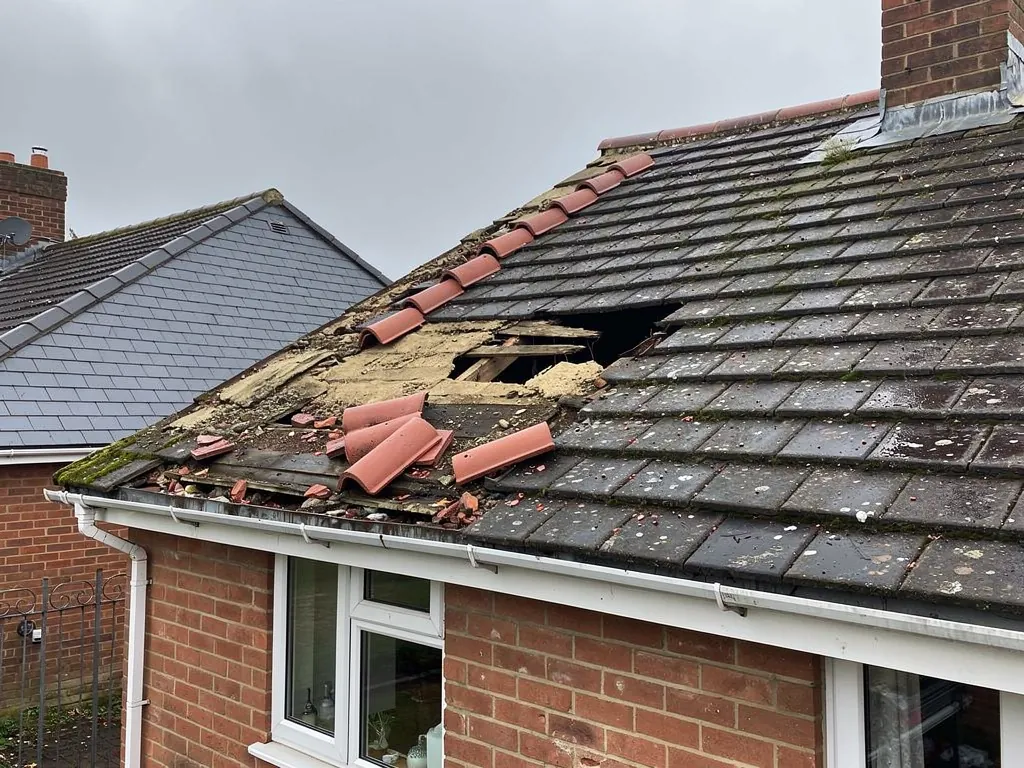
When a gale has torn a hole in the roof or a tree has dropped a limb across the slope, nobody wants a lecture on roofing. You want the water stopped and the danger gone. That is what a make-safe is for. It is the first visit, and its job is narrow: protect the people and the building until the permanent repair can go ahead in dry weather.
The term gets used loosely. Some people mean a tarpaulin thrown over a hole. Others mean a full scaffold with boards fixed over the damage. The right answer depends on what has failed, how high it is, what is underneath and what the weather is doing. A good make-safe is fitted to the roof being worked on, not taken from a standard list.
This guide explains each part: the covers and sheeting, what is done with loose material, when access equipment is needed, what to expect on paper and what comes next. Where we describe our own approach, it is simple. A leaking roof is covered first here; the damage is photographed, and a plain verdict on the permanent repair follows.
What a make-safe is, and what it is not
A make-safe has two goals and lasts only a short while. The first is to keep water out so that ceilings, insulation, wiring and furniture stop getting wet. The second is to remove or secure anything that could fall on someone: loose tiles, a leaning chimney pot, a dangling section of fascia or guttering, a broken ridge.
It is not the repair. A cover over a broken slope does not make the slope sound, and it will not last as the roof does. The Institution of Structural Engineers describes temporary coverings as a way to prevent water ingress, which is the right way to think about them. They buy time, they cost less than a permanent job, and they leave the real decision, repair or replace, for when you can see the roof properly.
That matters for money. If a roof has been made safe, you are not under pressure to agree to a bigger job on the day. Our temporary repair lifespan page looks at how long different measures are meant to last, which is a question the roofer should answer for your roof and not in general.
What triggers a make-safe
- a hole in the covering after a fallen tree or branch
- tiles or slates blown off, leaving the underlay exposed
- a leak that is wetting ceilings and cannot wait for dry weather
- a chimney, ridge or parapet that has moved or is cracked
- a flat roof membrane that has split or lifted in a storm
It is also what a roofer does when the structure is unsafe to work on and the sensible step is to protect the area first and make a plan.
Covers, tarpaulins and sheeting
The most familiar make-safe is a cover over the damaged area. For a pitched roof, that normally means a heavy-duty tarpaulin or a purpose-made roof sheet, laid over the hole and extending well beyond it on all sides. The cover is fixed down firmly enough to resist the wind lifting its edges. A tarpaulin that flaps loose in a gale does more harm than none, so the fixing is the part that matters most.
Water must be able to run off the sheet and not collect behind it. That is why the sheet is laid from the top down, so that each layer overlaps the one below like the roof covering it protects. A cover that traps water pushes it back under the tiles. Our guide on a tarpaulin on a roof goes through the common mistakes.
Boards and membranes
Where there is a hole in the roof deck itself, a board may be fixed over the opening first, with a sheet or membrane above it. This stops rain and stops people or animals falling through. On a flat roof, a membrane patch or a temporary sealant can close a split, though a section of the roof that is soft or saturated may need cutting out.
Why DIY covers go wrong
A householder with a tarpaulin and a ladder faces three risks. The roof is wet and slippery. The wind is strong. The fixings often go into tiles that are themselves loose. Falls from ladders and roofs are a serious danger, and we would not want anyone to go up for the sake of a plastic sheet. If the damage can be reached only from a roof or a high ladder, leave it to a roofer who has the equipment and the training to do it safely.
If you must act before help arrives, work from inside. Protect the room, shift belongings and catch water in containers.
Loose tiles, chimneys and other hazards
Water is only half the problem. A roof that has been hit by a storm may have material that is waiting to fall. Slipped tiles can slide off in the next gust. A cracked chimney pot may topple. A section of ridge that has lost its fixings can come away in one piece. A make-safe deals with those hazards.
Sometimes that means securing: re-fixing a pot with a temporary strap, wedging a ridge, or tying a loose cable out of the way. Sometimes it means removing. A pot or a loose capping that cannot be made secure is taken down and stored, because leaving it up is the greater risk. The roofer should tell you what has been removed and where it is, and should photograph the fault.
Chimneys and tall stacks
Tall brick stacks are a particular concern on the Victorian and Edwardian terraces of the seafront. Arun District Council's guidance for The Steyne conservation area describes chimneys as important skyline features, so there is often a case for propping and protecting a stack until it can be rebuilt properly. A stack that has shifted may need to be taken down to a safe level first. Our chimney repairs page covers the permanent options.
Dangerous roofs and who to tell
If a structure looks unsafe, or you are worried about parts overhanging a road, path or neighbour, keep people away from it. If part of the roof looks unsafe, the Institution of Structural Engineers points owners to their council's Building Control team. Our guide on how to report a dangerous roof explains the route.
Do not go back inside a room under a damaged ceiling or roof section until it has been checked. Wet plasterboard can fall without warning.
When a scaffold comes into it
A tarpaulin on a low bungalow roof can be fixed from a ladder. The same job on a three-storey house, over a pavement or against a steep slope cannot. Where the roofer cannot reach the damage safely, the answer is access equipment: a tower, a cherry picker or a scaffold. Scaffolding is not always quick, and that is worth knowing in advance.
Section 169 of the Highways Act 1980 covers scaffolding that obstructs a road or footway; the licence is issued by the highway authority before the scaffold goes up. West Sussex County Council wants at least 10 working days' notice, counted from the application date, and charges £266 for one month; its fast track decides within 1 working day for an additional £52. Hampshire County Council requires ten clear working days to separate application from start, and charges £211.90 for the first two weeks. For Portsmouth, ask the city council as highway authority.
On private ground, such as a driveway or garden, that licence does not apply, and access can be quicker. A make-safe often has to be done before any licence is granted, from the safest equipment available, with the scaffold arranged for the permanent repair.
What scaffold costs
Checkatrade's October 2026 table gives scaffolding for a semi-detached two-storey home as around £875 a month, £800 for a terrace, £1,000 for a detached bungalow and £1,200 for a detached house. These are typical UK figures from a national guide, and they exclude local licence fees. Our page on emergency roof repair costs sets out what moves the total.
When you compare any two quotes, check whether each includes scaffolding and VAT.
What you should have in writing afterwards
After a make-safe, you should leave with paperwork as well as a dry house. It helps with the permanent repair, and it matters if you are claiming on insurance.
Ask for these:
- A note of the work done. What was covered, secured or removed, where, and on what date.
- Photographs. The damage as found, and the cover or fix as left. Ask for copies you can keep.
- A plain description of what is temporary. The invoice should say the work is a make-safe and not a repair.
- One total price in writing. A single figure for the visit, with VAT stated.
- A recommendation. What the roof needs, and by when.
Which? advises letting your insurer know about any emergency work you arrange yourself and keeping the receipts, as the bills become part of the claim. The Institution of Structural Engineers also lists urgent repairs and photographs of the affected areas as information to give an insurer. Our storm damage insurance claim guide covers the order to do things in.
Consumer protection on urgent work
Urgent repairs have a special position in consumer law. Under the Consumer Contracts Regulations 2013, the cancellation rules in Part 3 do not apply where you have specifically requested a visit from the trader for the purpose of carrying out urgent repairs, though anything extra sold to you on that visit stays covered by the rules. Read what you are asked to sign, and ask for a written quote for anything beyond the emergency itself.
From make-safe to permanent repair
The make-safe ends when the roof has been surveyed and you have a decision. That usually happens once the weather has settled and the roof has dried. Rushing the permanent work in wet conditions makes for poor results, and a sound cover can be left in place for a while if it is doing its job.
The survey is the next step. A roofer gets onto the roof, photographs the damage and the roof around it, and writes down what is needed. The survey ends in a plain call: repair, stopgap or renewal, with the reasons. We recommend whichever job is smallest and still solves it. A sound roof with a storm-damaged corner should not become a full re-roof because it was an emergency.
Questions to ask before the permanent job
- What will the permanent repair involve, and how long will it take?
- Will it need scaffolding, and who applies for the licence?
- Does the quote include VAT?
- Will the work need a building control application? Arun District Council includes re-covering roofs in work needing approval, and where work is notifiable, consent is explained to you and the notification is handled for you.
- What is the plan if the weather turns?
If you are weighing up whether a leak or a hole really counts as urgent, our guide on when to call an emergency roofer helps you decide. The wider picture of how we handle storm and leak work is on our emergency roof repairs page.
After the permanent repair, the waste goes and the plot is left tidy. Keep the written records together with your photographs. If anything shows up in the following winter, the paperwork shows what was done and when.
Questions
Make-safe queries
How long can a tarpaulin stay on the roof?
It depends on the fixing, the weather and the roof underneath. A properly secured cover can protect a roof for a period, but it is not designed to last like a covering. Treat it as temporary, ask the roofer how long they expect it to hold, and arrange the permanent repair promptly.
Do I have to pay for a make-safe if the repair goes ahead later?
A make-safe is a separate visit, so expect it to be priced on its own, as one total. Ask the roofer to say in writing what the price covers. If the same firm carries out the permanent repair, ask whether the make-safe materials will be reused.
Can I make my own roof safe until the roofer arrives?
Work from inside. Move belongings, catch drips and keep people away from the area. Do not go onto a wet roof or up a ladder in a gale. Photograph the damage from the ground and tell your insurer. Leave the covering to a roofer with the right equipment.