
Lead alternatives · 9 min read
Lead alternatives: lead-free flashings and substitutes compared
The lead-free and substitute flashings roofers offer, what each is made of, where it is a reasonable choice and where lead still does the job better.
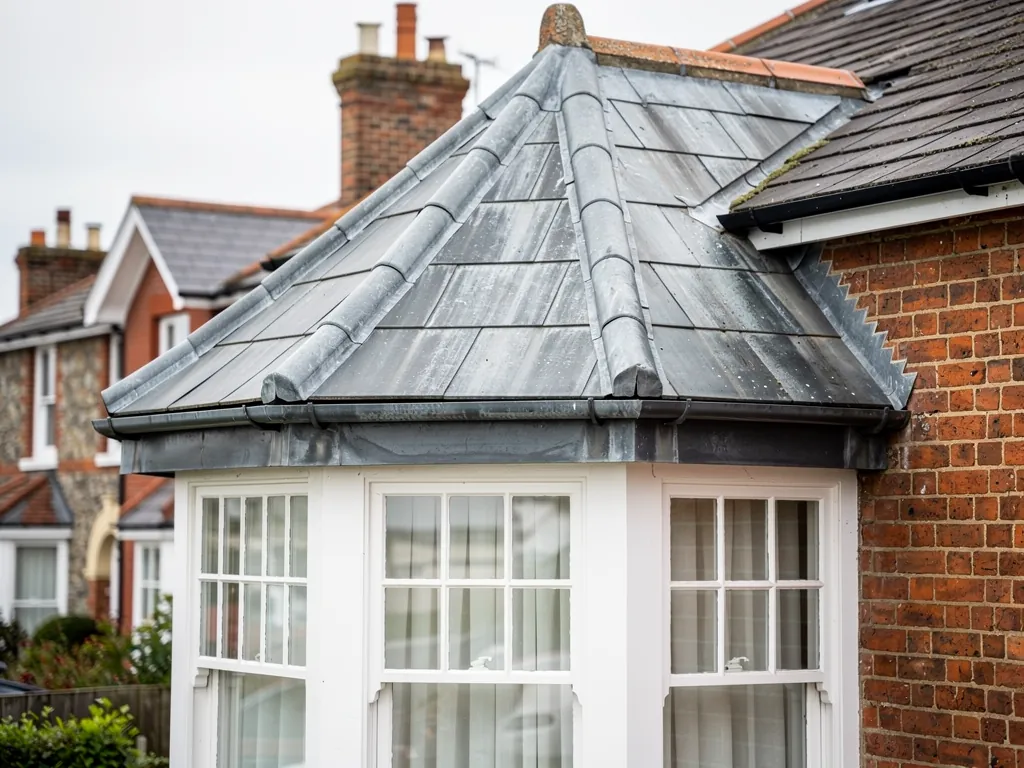
Lead has been the standard flashing metal for a very long time, so it is fair to wonder why you would want anything else. The reasons people give are practical. Some want a lower material price. Some worry about lead being taken from a roof, and some dislike the grey or white bloom that fresh lead can show. Others have been quoted for a job on a visible, awkward detail and ask whether a different product would do.
Alternatives exist, and some are perfectly sound in the right place. What matters is that a flashing has to do a hard job for many years. It must shape itself to brickwork, allow for the movement of the roof, stay watertight at its laps and cope with sun, frost and wind-driven rain for many winters without attention.
This guide goes through the main substitutes one by one, saying what each is, where it fits and what to ask before agreeing to it. It ends with the cases where lead is still the sensible choice, and how we weigh the decision on a real roof.
Why people look for something other than lead
The question usually arrives for one of three reasons, and each leads to a different answer.
Cost. Lead is a heavy metal sold by weight, and the code you choose changes the material bill. A homeowner comparing quotes may see a lead flashing priced above a tape or a formed trim and wonder if the difference is worth paying. Our guide to how much lead roofing costs sets out the published prices for the lead side of that comparison.
Theft. Lead is attractive to thieves because it is valuable and easy to peel from a roof. Householders on exposed buildings sometimes prefer a material that is not worth stealing. That is a reasonable concern, and a substitute is one answer among several.
Appearance. New lead is bright and then dulls to a soft grey. In its first months it can show white staining, which is harmless and passes. Some people would rather have a colour that matches the roof.
A question to ask first
Before choosing a substitute, ask whether the lead on your roof actually failed, or whether the way it was fitted did. A cracked flashing on a long run is often a problem of length and thickness, not of the metal. Replacing like with like but with the right code and short laps may give the best result. Our guide to lead flashing describes how the parts are formed and held.
What any substitute has to do
Judge every alternative against the same short list. If it cannot do these things, it is a stop-gap and not a replacement.
- Take the shape of the joint. The material must follow a stepped brick course or a curved tile profile without gaps.
- Move without splitting. A roof expands and contracts daily, and the flashing must flex with it.
- Stay sealed at the laps. Water finds any joint that depends only on a bead of sealant.
- Hold fast in the wall. The upper edge has to be gripped in a chase or otherwise fixed, and wind must not be able to get under it.
- Last as long as the roof around it. Fitting a flashing that wears out in a few years means paying for access again.
- Look right. On a visible face, the dressing counts, and it should be tidy.
Lead scores well on shape, because a roofer can bend it by hand to nearly any form, and it is long-lived. Published guides put lead flashing above 80 years and a lead flat roof at 50 to 100 years, which sets the bar a substitute is judged against.
No alternative matches lead on every point, and most make a trade. A material may be cheaper but harder to dress, or longer lasting but fussy at the joints. Ask the roofer to say plainly which trade they are making and why it suits your house.
Zinc: the nearest metal comparison
Zinc is the substitute with the clearest published record. A zinc manufacturer's technical pages state that a zinc roof can last in excess of 100 years, and HomeBuilding, quoting a contractor, gives 60 to 100 years. Those figures are for zinc as a roof covering, but they show a metal with a life in the same band as lead.
Zinc is stiffer than lead and does not take a tight hand-dressed bend as easily. It is usually folded and seamed to a plan, and it weathers to a soft blue-grey. In places with a straight, simple junction, such as a long wall abutment or a flat roof edge, a zinc flashing can look neat and perform well. On a stepped chimney or an awkward dormer cheek, the pieces are fiddly to form and the laps need care.
The same manufacturer notes that salt can build up on zinc surfaces that the rain misses, on sheltered parts like soffits and facades, and advises rinsing with fresh water twice a year or more. Near the sea, raise that with the roofer, since a sheltered flashing may miss the rain.
Zinc against lead on a small roof
Our answer on lead or zinc for a small roof compares the two for porches, bays and similar details. Ask a roofer proposing zinc how it will be joined to other metals and how the seams will be formed.
Self-adhesive flashing tape and bitumen strip
The most common substitute you will see in a quote is a roll of self-adhesive flashing tape, usually a bitumen-based strip with a foil or coloured surface. It is stuck to the roof and wall, pressed into shape and trimmed. Because it needs no chasing and no dressing, it is fast to fit and cheap to buy.
That convenience is also its limit. A stuck-on strip depends on adhesion to the surfaces beneath it, and adhesion depends on the surface being clean, dry and sound. Old brickwork that sheds dust, a damp wall or cold weather during fitting can all undermine the bond. Tape also does not move in the way a mechanically fixed metal does, so the edge can lift or the strip can split where the roof shifts.
It has a place as a temporary measure, for example to keep water out until a proper repair can be made, and it is sometimes used under other materials. It is less convincing as a long-term replacement for a lead flashing on a chimney or a main wall, where the detail has to last for the life of the roof around it.
If a quote offers tape in place of lead, ask what makes it the right product for that position, how the edges will be sealed and what happens in a few years when the adhesive ages. Our answer on whether self-adhesive tape is as good as lead goes into the details, and our view is stated plainly there.
Other metals and formed trims
Beyond zinc and tape, a few other products turn up. Each has its place, and each has questions attached.
Copper and aluminium
Copper and aluminium are both used for flashings and trims. Both come in factory-bent profiles that suit repetitive details. Copper weathers to a green patina, and some people like that on a period building. Aluminium is light and comes powder-coated in a range of colours. The questions are about joining and compatibility: different metals in contact in damp conditions can interfere with one another, so ask how the flashing will be separated from the other metal parts of your roof, and how the joints are made watertight.
Pressed and formed flashings
Makers supply ready-made flashings in plastic, rubber or coated metal for standard shapes such as a pipe or a roof window. They suit the detail they were designed for and avoid on-site dressing, but they are less suited to old, uneven brickwork, where the shape has to be worked to the wall.
Membrane upstands on flat roofs
At the wall edge of a flat roof, the membrane itself, EPDM or GRP, is often turned up the brickwork as an upstand with a trim fixed over its top edge. That is a legitimate construction and can stand in for lead at that junction, provided the fixing is sound and the trim stays sealed.
Mortar fillets and bead sealant belong in a different category. They are not flashings, and they are best treated as a finish or a stop-gap.
Old and listed buildings: check before you change the material
For a listed building, changing the flashing material is more than a matter of taste. Section 7 of the Planning (Listed Buildings and Conservation Areas) Act 1990 requires consent where works would harm a listed building's character as a place of special interest. The South Downs National Park Authority states that small repairs made in the same material need no listed building consent, so the line falls at repair in kind.
Swapping lead for another product is a change of material and not a repair in kind, so raise it with the council before any work starts. In Arun, that means the district council's planning team. Inside the National Park the right contact depends on which district you are in, and the park authority's website explains who deals with your address. A flashing on a street-facing chimney in a conservation area is also visible, so the council may take an interest. Our guide to leadwork on listed buildings explains the consent routes further.
Why lead is the default on old roofs
On a Victorian or Georgian roof, lead is often the original material, and putting back lead keeps both the appearance and the way the roof works. Changing it can alter the look from the street and cause a mismatch with the pieces you leave in place. For those reasons we recommend like-for-like lead on period buildings unless there is a clear reason to do otherwise.
Choosing between lead and its alternatives
A sensible decision starts from the detail, not the product. Look at what the flashing has to do, how long it needs to last and how hard it will be to get at later, and then see which material meets those needs at a price you accept.
Lead is the strongest choice where the shape is complex, the position is hard to reach, the building is old or protected, or the flashing has to last as long as the roof. Zinc is worth considering for straight, simple runs and where its look suits the building. A tape suits a short-term fix. A factory-formed or membrane-based detail works where it was designed for exactly that junction.
The comparison that matters runs across the years and not across the quotes. A low-priced material replaced twice, with scaffold each time, ends up dearer. Our answer on whether roofers still use lead explains why the metal remains the first choice for so many details.
How we advise
On survey we look at the existing flashing and the wall, photograph the details, and say what we would fit and why. If a substitute genuinely suits a position, you will hear that from us. If lead is the right answer, we say that too and explain the reason, such as the shape of the brickwork or the age of the building. What reaches you afterwards is a quote on paper with one overall figure for that work.
For the wider range of lead work we carry out, see our lead roofing and leadwork page.
Questions
Lead alternative questions
Is there a lead-free flashing that lasts as long as lead?
Zinc has the closest published record, with a manufacturer stating that a zinc roof can last in excess of 100 years and HomeBuilding quoting 60 to 100. How long a flashing lasts also depends on the detail, the fixing and the joins, so the figure is a guide to the metal and not a promise for your roof.
Can I replace lead with something else on a listed home?
Possibly, but check first. A change of material can count as an alteration affecting the building's character, which needs listed building consent, whereas like-for-like repair in place usually does not. Put the question to the council's planning team before work begins, or to the park authority for an address within the Downs.
Why would a roofer still recommend lead if cheaper options exist?
Because a flashing costs more than its material. A product that is quicker to fit but wears out sooner can prove dearer across the years, once access is paid for again. Where the shape is complex or the building old, lead is usually the better fit, and we show why in the survey photographs.