
Roof inspection cost · 9 min read
How much does it cost for someone to check your roof?
What national guides say a roof inspection costs, what moves the price between a quick look from the ground and a full written survey, and what to ask before you book anyone.
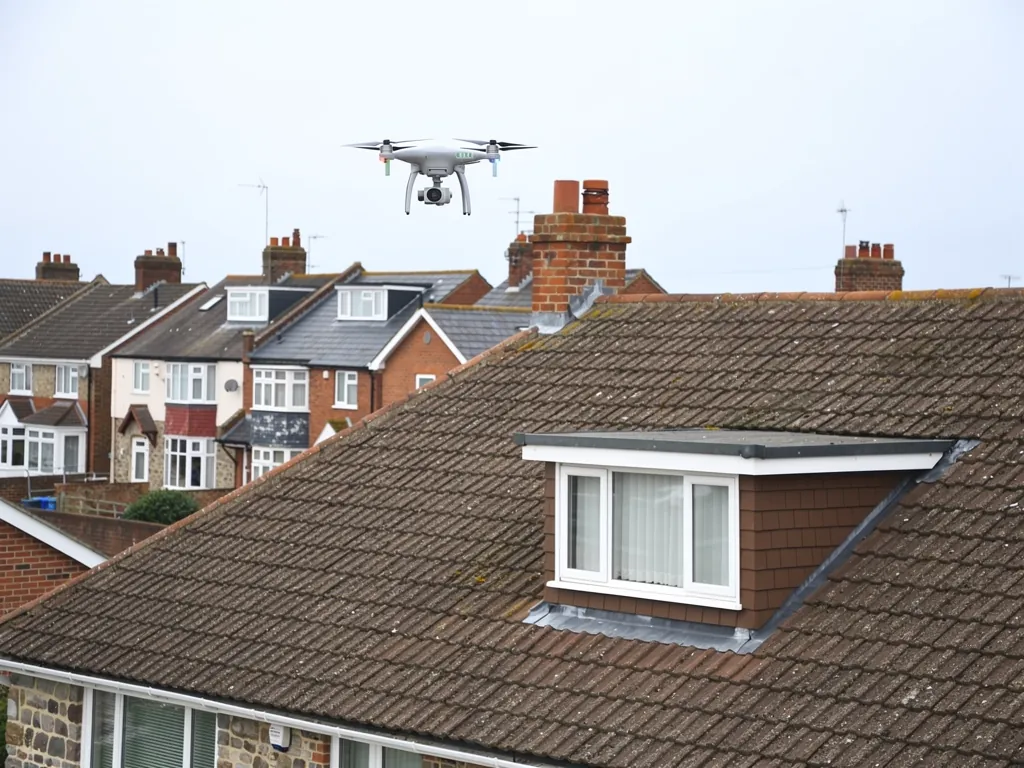
Checking a roof sounds as if it ought to have one price. It does not, because "checking" can mean three quite different jobs: someone glancing at the slopes from your garden, a roofer going up for a close look with photographs, or a full written survey you could hand to a buyer, a landlord or an insurer. Each takes a different amount of time and leaves you holding something different at the end.
This guide starts with the national range, then goes through what pushes a figure up or down: the height and shape of the roof, whether it needs a tower or scaffold, how much paperwork you want afterwards, and whether the number you were given includes VAT. Only one price here is a published inspection figure. The rest explains why two firms can look at the same roof and name different amounts.
Our own way of working is simple. The survey comes first, photographs of your roof come with it, and the price for any work comes to you in writing, as one figure. Whoever you choose, you should be able to say what you are paying for before anyone climbs a ladder.
What the national guides say a roof check costs
Checkatrade's table, last updated September 2026, gives about £260 for a roof inspection, £300 to £500 for a fuller survey, around £210 by drone and about £150 for a flat roof, all plus VAT. A spread like that tells you the label covers more than one kind of job, so it helps to see the rungs on the ladder.
| Kind of check | What you get | Where it helps |
|---|---|---|
| Look from the ground | A view of the slopes, ridge and chimney from the garden or the road | A first opinion after a gale or a stained ceiling |
| Close inspection | Someone on the roof or a tower, handling tiles and checking flashings and gutters | Tracing the cause of a leak |
| Drone survey | Photographs and video taken from the air, with nobody on the slope | High, steep or fragile roofs |
| Written survey | Photographs, notes on each fault and a repair or replace verdict on paper | Buying, selling, a landlord's file or an insurer |
The range is not a price for your roof. It shows the amount of work a single figure is trying to cover, and it is why the first question for anyone offering an inspection is which of those four you are getting.
A look from the ground costs least because it takes least time and needs no access. A written survey sits towards the top because someone has to go through the whole roof, photograph what they find and write it up so a stranger could follow it. Our guide to what a roof survey checks goes through that last kind in order. Where a roof is out of reach and a drone does the first pass, the cost moves again, and the next sections take the factors one at a time.
What moves the price up or down
Size is the obvious factor, but shape matters as much. A plain gable bungalow can be read in one pass. A roof with hips, valleys, a dormer and two chimneys has far more places where water can get in, and each one needs its own look and its own photograph.
Height is next. A single-storey extension can be checked from a ladder. A three-storey terrace with a front facing the pavement is a different undertaking, because the person doing the checking either needs a tower or has to rely on a drone and a zoom lens.
The covering underneath
The material on the roof changes how it is checked. Natural slate and old clay tiles break easily underfoot, so a careful inspector spends longer picking a route or stays off them altogether. Flat roofs call for a different set of checks: standing water, blistered felt, edges, outlets. Those extras add time, and time is what you are paying for.
The report at the end
A verbal summary on your drive takes the least effort to produce. A dated report with a photograph of every fault, a note on which faults are urgent and which can be left, and a clear verdict takes real time to write. If the report is going to a buyer, a landlord or an insurer, ask for it up front, because it is often the part that decides whether the figure sits nearer £150 or nearer £500.
Last of all, travel and timing play a part. A roof a few streets from Bognor seafront costs a firm less to reach than one up on the Downs, and a visit squeezed in at short notice is not priced like one booked a fortnight ahead.
When a tower or scaffold turns a check into a bigger bill
Most of the variation between a cheap inspection and a dear one comes down to how the person gets up there. A ladder and a roof ladder cost nothing extra. A scaffold is a separate hire, with its own price and its own paperwork, and it can cost more than the inspection it serves.
Checkatrade's scaffolding table (October 2026) lists monthly hire at about £875 for a two-storey semi, £800 for a terrace, £1,000 for a detached bungalow and £1,200 for a detached house, with a chimney scaffold adding about £660 a week. For a check that may find nothing wrong, nobody wants to pay that, which is why scaffolding is rarely the right first step.
Scaffolding on or over the pavement needs a licence under section 169 of the Highways Act 1980. West Sussex County Council quotes at least 10 working days' notice and £266 for one month, and Hampshire County Council quotes £211.90 for the first two weeks. Ask who will apply, because the notice period sets the earliest start date.
Ways to look without scaffolding
Plenty of roofs can be read without it. A drone sees the whole roof surface, a tower reaches an eaves line, and the loft shows daylight through gaps, stained timbers and damp insulation from underneath. Our answer on inspecting a roof without scaffolding covers what each method can and cannot see, and our drone roof inspection guide goes further into the aerial option. Neither replaces a close look at a suspect flashing, but together they often answer the first question without anyone paying for a scaffold, which is the sensible order to do things in.
A survey visit and a repair visit are different jobs
People often mix up two things. One is a paid survey, which produces a report. The other is a roofer coming to look at a leak so they can price the repair. They overlap, but they are not the same, and the price attached to each should reflect that.
A repair visit ends with a quote for the work. A survey ends with a document. If you only want the leak fixed, you may not need a report at all, and the right course is to ask the roofer whether the visit itself carries a charge and, if so, what it buys. If you are buying a house, selling one or building a file for a rented property, the report is the whole point.
Labour rates explain why time matters. Checkatrade puts roofers at around £35 to £45 an hour or £280 to £360 a day. Small visits often carry a minimum fee, as the roofer has to get there, rig ladders and tidy up whatever the size of the job. A survey that takes most of a morning, with photographs and a report to follow, will cost more than a brief look at a single slipped tile for exactly that reason.
Two of our answers help you decide where you stand: one on whether you should pay for a roof inspection, and one on whether a free roof inspection is worth having. If your reason is a sale or a purchase, ask for a condition report that a buyer's solicitor can read without needing the roofer on the phone.
Whichever route you choose, agree it before the visit. Say what the roof is for in your plans, whether that is a sale, a lease or simply peace in the loft, and ask the firm to price the check against that purpose.
VAT, minimum charges and the small print
The standard rate of VAT is 20 per cent, so a figure quoted without it becomes noticeably bigger once it is added. Checkatrade states that its repair costs exclude VAT. The inspection range above carries no such label, so treat it as a number to confirm: ask whether the price you are given includes VAT, and ask it before you say yes.
Look for these four things in any inspection price:
- whether VAT is in the figure
- whether a tower, scaffold or drone is included or added later
- whether the report is part of the price or a second fee
- whether the fee is charged if you go ahead with the repair
That last point varies from firm to firm, and it is a perfectly fair thing to ask. Some firms treat the visit as the first step towards a repair and say so up front. Others charge for it separately because the report is a product in its own right. Neither approach is wrong, provided you know which one you are being offered before the ladder goes up.
Ask for the price of the inspection in writing before anyone comes, and ask what the report will contain.
If you are comparing two roofers, compare like with like. One may be quoting a look from the ground and the other a full report with photographs, and the cheaper figure is not the better value if it leaves you with nothing to show a buyer or an insurer. Our guide on roof work costs in the UK puts inspection money next to the cost of the repairs that often follow it, so you can see the whole picture before you commit to either.
Getting value for the money
A good inspection pays for itself by stopping a small fault becoming a ceiling-sized one. A cracked slate, a slipped ridge tile or a lifted flashing costs little to put right when it is found early. Left through another winter of sea weather, the same fault can let water into the loft timbers, and the bill grows with it.
The best value comes from asking the right things before the visit:
- What exactly will be checked: slopes, ridge, hips and verges, chimneys, flashings, gutters, the loft?
- Will it be done from a ladder, a tower, a drone or the loft, and who pays for access?
- What will I receive afterwards: photographs, a written report, a verdict?
- Does the price include VAT?
At the other end of the visit, look for a plain verdict. A report that lists thirty observations and no conclusion is no use to you. What you need is a view on whether the roof should be mended, patched for now or replaced, and the reason for it, set beside the photographs that show the fault. That verdict is the part that lets you act, and it is what you are really paying for.
The work we put forward is the smallest that fixes the fault properly. Where a repair is enough, the quote is for that repair alone; where it is not, the photographs of your own roof show the reason. You do not have to take our word for it, because the evidence is in your hands before any work is agreed.
When you are ready, our roof inspections and surveys page sets out the process, and the quote form takes photographs if you would like us to look at your roof first.
Questions
Roof inspection price questions
Why do two firms name different prices to check the same roof?
They are often pricing different jobs. One may be looking from the ground and giving a verbal opinion, while the other goes up, photographs every fault and writes a report. Access, VAT and whether a scaffold is included can all differ too. Ask each firm to say what is checked, how, and what you receive.
Is a drone survey cheaper than someone going up on the roof?
Usually. Checkatrade puts a drone survey at around £210 against about £260 for a typical inspection. A drone saves on access, since there is no tower or scaffold, but it cannot lift a tile or feel a soft spot in a flat roof deck. For a high or fragile roof it is often a sensible first step.
Does the quoted price for checking a roof include VAT?
Not necessarily. The standard rate is 20 per cent, and some national cost guides state outright that their figures exclude it. Ask each firm whether VAT is in the number they give you, and whether the report, a tower or any other access is included or charged on top, before you agree a date.