
Replacing a roof window · 10 min read
Replacing an old Velux window: like-for-like swaps and upgrades
How an old roof window comes out and a new one goes in, when the swap can be like for like, what has to be matched, and the upgrades that are worth choosing at the same visit.
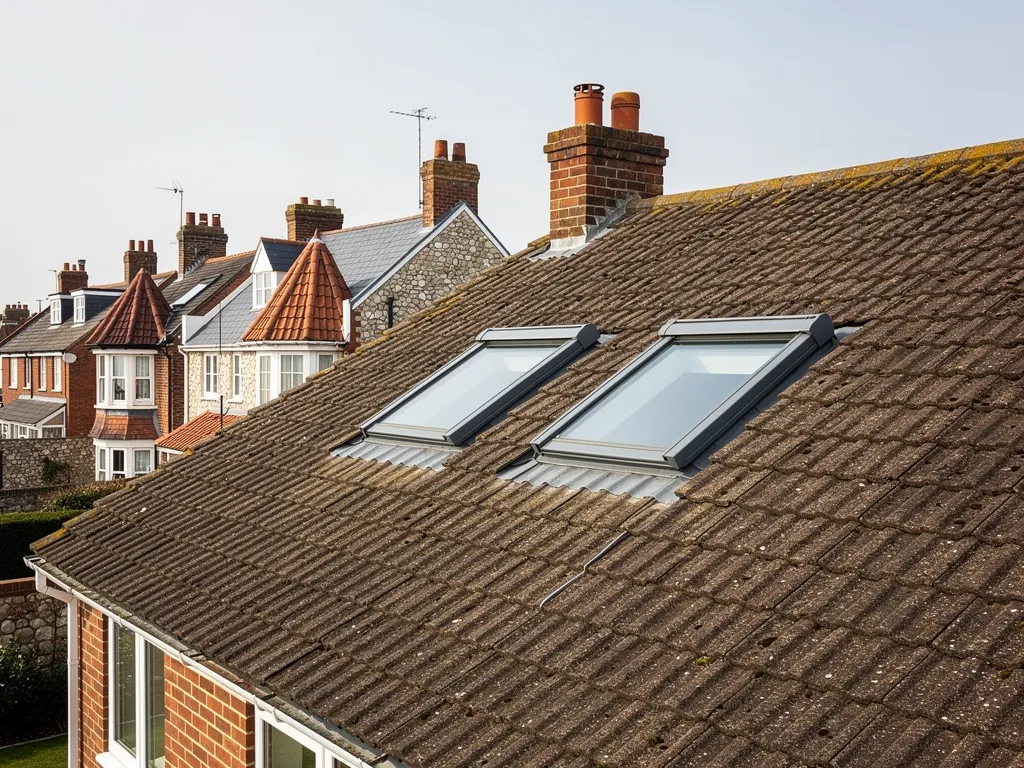
A roof window rarely outlasts the covering that surrounds it. The glazing can mist, the frame can swell or rot, the opening mechanism can wear, and the seals can harden. Sooner or later the question comes up: is it better to repair the old unit or to take it out and fit a new one?
Often the answer is a swap. Replacing like for like keeps the same opening in the roof, the same rafters and the same position on the slope, so the work is smaller and cleaner than cutting a fresh hole. But it is not simply lifting one unit out and dropping another in. The flashing that seals the window to the covering usually has to come out with it, the surrounding tiles or slates have to be lifted and relaid, and the new unit has to match the old frame closely enough to sit in the existing timber.
This guide takes you through the decisions in order: whether to replace at all, how the old window is measured and matched, what happens to the flashings, which rules apply to a swap, and which upgrades are sensible to choose at the same visit. Each trade term is explained once, and the price is a written total set after we have seen the roof.
Signs an old roof window has reached the end
Not every problem means a new window. Before anyone orders a unit, it is worth working out which part has failed, because a failed part is sometimes the cheaper thing to mend.
Misting between the panes of a sealed glazing unit means the seal around the unit has failed and moist air has got in. Wiping does nothing, because the moisture is inside. Condensation on the room-side face of the glass is a different problem, caused by humid air meeting a cold surface, and the separate answer on why a Velux window gets condensation explains it.
A sash that sticks, or a handle that no longer holds the window open, may be down to worn hinges or a swollen frame. A rotting timber frame, with soft wood at the bottom corners, is more serious, because water has been sitting there. Staining around the window on the ceiling points to the flashing as much as the window, and the guide on leaking roof windows later in this section of the site looks at how to tell the two apart.
Age matters too. A unit from before the current energy standards may have a much higher heat loss than a modern one, so replacing it can make the room warmer. Parts for a very old model can be hard to find, which tips the balance towards a new unit.
If only a pane, a seal or a motor has failed, our answer on whether a broken Velux window can be repaired sets out what can be mended and what cannot. If the frame is rotten, or the window leaks and has done for years, replacement is the better route.
Measuring and matching the old window
A like-for-like swap depends on getting the size right. The new unit has to fit the existing opening between the rafters, so the frame size matters more than the glass size.
Most roof windows carry a size code and a model reference on a label on the frame or the sash. The label is often found on the inside edge, hidden once the room has been decorated, so a surveyor looks for it first. Where the label has gone, the frame is measured, the pitch of the roof is worked out and the maker's size chart is matched to the readings.
Several details have to be recorded, not just the width and height:
- how the window opens, for example top-hung or centre-pivot (hinged at the top, or turning on a central pivot);
- the roof pitch, since some models are made for a range of slopes;
- the type of roof covering, since that decides which flashing is needed;
- the lining and the depth of the roof build-up, so the new frame sits level with the inside finish.
The usual size ranges are listed in a separate answer on what sizes roof windows come in.
If the old unit is an unusual size, or a discontinued one, a swap may need small changes to the framing. The new frame might be a little narrower or shallower than the old, and the gap is made up with timber and insulation. A slightly larger unit means cutting a rafter or two, which turns the swap into a new opening with its own structural work. That is the point at which a like-for-like job stops being like for like, and it is a decision to make at the survey, not on the day.
Flashings: reuse them or renew them
A flashing is the weatherproof collar around a roof window. On a tiled roof it is usually a set of pressed metal pieces, with a soaker (a thin piece that runs under the covering) along the sides and a gutter-like apron at the bottom, so that water is led down over the tiles.
When a window is replaced, the old flashing normally comes out with it. The unit and the flashing were fitted as a pair, and the kit that suits one model of window may not suit another. Reusing old flashings with a new window is a known cause of leaks, because the pieces may not fit the new frame, and old metal can be bent or fatigued from the first removal.
The answer is a new kit for the new window, chosen for your covering. Our answer on what a Velux flashing kit is explains the parts. The covering around the opening comes up, then goes back against the new flashing in the proper order, with any cracked ones swapped for sound ones. On an older roof, matching the covering can be harder than fitting the window, and reclaimed or matching tiles may be needed.
When lead is the better flashing
Some roofs call for leadwork around the window instead of a factory kit. That suits an unusual covering, a group of windows side by side, or an opening that was already dressed in lead. Lead sheet is graded by a numbered code tied to thickness, and the Royston Lead brochure lists code 4 for flashings while code 3 is for soakers alone.
Checkatrade gives lead flashing repairs at £50 to £70 per metre (June 2026). A full surround for a roof window is not the same job as a repair, but the metre rate shows how the length of lead affects the price.
What the rules say about a swap
A replacement window is still building work, and a few rules apply even when nothing about the opening changes.
Energy performance
Approved Document L 2021 treats a replacement as a new element in an existing home. Its Table 4.2 allows a roof window no more than 1.4 W/m²K, or alternatively a Window Energy Rating in Band B, and a rooflight no more than 2.2 W/m²K. In the 2026 edition, effective from 24 March 2027, the same limits sit in Table 3.2. A new unit is therefore likely to be better than the old one, and the old one need not be the benchmark.
Planning
Under the Town and Country Planning Act 1990 (section 55(2)(a)), works that leave a building looking much as it did from the street are not counted as development. That is why a true swap, matching the old unit, normally needs no planning permission. Two cautions apply. A listed building needs listed building consent for any alteration that affects its character, and an Article 4 direction can remove permitted development rights. Havant's Langstone direction covers alteration to a roof where it fronts the highway, with roof light windows named as an example. If you are unsure, ask the planning team at your district council.
A larger or higher window is not a like-for-like swap. Under Class C of the permitted development rules, a roof alteration must not protrude more than 0.15 metres beyond the plane of the slope, and any window in a side slope must be obscure-glazed.
Building control
Roof windows count within the building envelope when the Planning Portal's thresholds are applied. Ask your building control body whether the swap needs an application. Arun's building control page lists new roof coverings among approval work, so read the two together and ask.
Upgrades worth choosing at the same visit
Once the old unit is out and the scaffold or access is in place, small changes cost far less than they would on their own later.
Opening method and controls
If the old window was hard to reach, or hard to open, a different opening type can help. An electric or solar-powered window is operated by a switch or a remote, which suits a high or awkward position. Our answer on whether a manual roof window can be made electric covers converting an existing unit. A new window can be ordered with the motor from the start.
Glazing and comfort
Modern units have better glazing than older ones. Laminated glass on the inside pane holds together if it breaks, and toughened or laminated glass is a matter to discuss at the survey, particularly over a stair or a bed. Blinds, a rain-noise reduction pane or a solar-control coating are options, and each adds to the price. Whether one is worth it depends on the room and the aspect.
Ventilation and condensation
A window with a trickle vent or a ventilation flap can help to clear damp air in a bathroom or a loft room. It does not replace an extractor fan where a bathroom needs one.
Changing the size
Moving to a larger window can be the best upgrade, since a roof window is a direct way to add light, but it means a new opening: cutting rafters, fitting trimmers and possibly a fresh look at planning and building control. Say at the start if you are thinking of this, so the survey covers it.
How the work goes and what moves the price
A replacement follows a set order, and knowing it helps you judge a quote.
- Protect the room below with dust sheets and clear the area under the window.
- Set up access: a ladder, a tower or scaffold, as the roof height requires.
- Lift the surrounding tiles or slates and strip off the old flashing.
- Take out the old unit, check the timber frame and repair it where needed.
- Fit the new window and flashing, then relay the covering around it.
- Make good the lining and insulation inside, and clear the site.
The time depends on the roof and the unit. A single window on an accessible roof is a short job, while a pair on a slate roof takes longer. The opening is only exposed while the work goes on, and it is closed in before the fitters leave.
Several things move the price. The size and type of window, the flashing kit or lead, the covering to be lifted and relaid, the condition of the timbers and the access all count. Checkatrade puts roofers at around £280 to £360 a day (June 2026), and its October 2026 scaffold table lists a detached bungalow at around £1,000 a month and a terrace at £800. A licence is needed where scaffold stands on the pavement. VAT is charged at the standard 20 per cent, so ask each roofer if their figure already carries it.
We survey the roof first, photograph the window and its surround, and give a plain view on whether a repair would hold or a new unit is wiser. Our written quote then gives one total price. For the full list of work, see our skylights and roof windows page.
Questions
Replacing roof window questions
Can I fit a different make of roof window in the old Velux opening?
Sometimes. The new frame has to suit the opening between the rafters and the existing pitch, and it needs its own flashing kit for your covering. If the sizes do not line up, the framing is adjusted or the opening is changed, which makes the job larger. Ask for the model and size to be confirmed at the survey.
Will a new roof window make the room warmer?
A modern unit is likely to lose less heat than an old one, because new windows must meet a limiting U-value. How much difference you feel depends on the age of the old window, the insulation around the frame and how well the new one is sealed. Fitting insulation properly around the frame is as important as the glass.
How do I know if the old flashing can stay?
In most replacements it cannot, because the flashing is made for the old unit and is disturbed when the window comes out. A new kit that matches the new window and your covering is the safer choice. The survey photographs show how the existing metal and the neighbouring covering have weathered.