
Chimney repointing · 9 min read
Chimney repointing: when it is needed and what it involves
Chimney repointing replaces worn mortar joints in the stack before water gets into the brickwork. Here is how to tell it is due, what the job involves and what it costs.
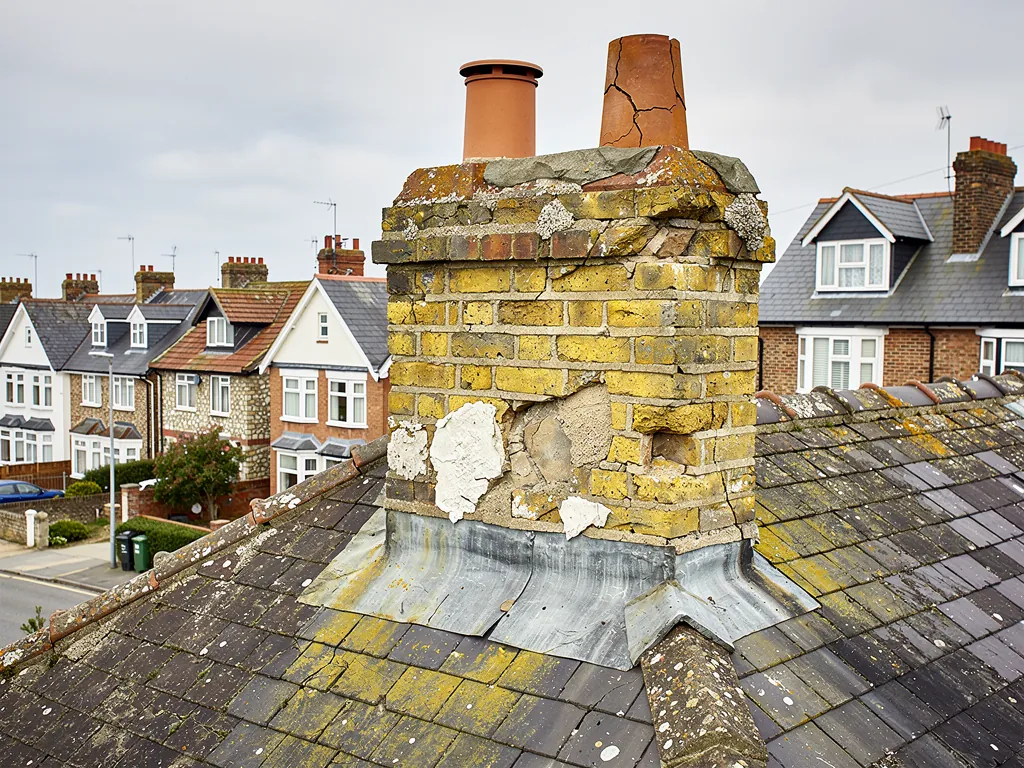
The mortar between the bricks of a chimney does a quiet job. It keeps rain out of the stack, spreads the load from one brick to the next, and lets the stack dry after a storm. It is also the first part to wear, because a chimney has no roof over it and every face meets the weather. Repointing is the repair that renews those joints before the damage spreads to the bricks.
Done in time, it is one of the smaller jobs on a roof. Left too long, the joints open, water soaks in, frost can break the brick faces, and a repoint turns into a rebuild. The skill lies in knowing whether a stack is at the first stage or the second.
This guide covers the signs you can spot from the ground, how the work is done, the mortar choice that matters on older stacks, what a national cost guide says it costs, and the extra checks that apply to a listed or conservation-area home. It sits alongside our other pages on chimney repairs, so each job can be read on its own.
Signs that a stack needs repointing
You do not need to climb up to spot the early signs. A pair of binoculars in the garden, on a bright day, tells you a good deal about the state of a stack.
Clues visible from the garden
Joints that have turned from a firm line into a hollow, sandy groove are the commonest sign. You may also see gaps wide enough to take a fingertip, bricks standing proud because the mortar around them has gone, or a ragged edge along the top courses. Fine grit in the gutter below, or on the ground beside the chimney, has usually fallen from the stack above.
What it looks like indoors
Damp on the chimney breast, a brown stain that appears after driving rain, or flaking paint on the wall can all trace back to a stack that is taking in water. Not every damp patch comes from the joints, since flashing and flaunching leak too, so the cause needs confirming before anyone repairs anything. Our guide to a damp chimney breast explains how to tell the sources apart.
A stack that leans, or has bricks missing from a corner, is past the stage where repointing alone will help. The brick itself is the problem then, and new joints cannot hold up a stack that is moving. In that case the survey will point towards a partial rebuild and say why, before anyone talks about a price.
Early repointing is a modest job and it protects everything below it, including the loft timbers, the ceiling and the chimney breast inside the room. Water that gets into a stack seldom stays in the stack, so the damp you see inside is often the last sign of a fault that began outside months before.
Choosing the mortar for an older stack
Mortar is not one material. A strong cement mix, a softer lime mix and everything in between behave differently once the weather reaches the stack, and the mix matters more on old brickwork than on new.
The principle on older walls is that the joint should be the weaker part. Moisture in a wall escapes through both the joints and the brick faces. If new mortar is harder and less porous than the brick, the water tends to leave through the brick instead, and over the years the face of the brick can flake and break away. A softer mortar takes the wear itself and can be repointed again later without harm to the brick.
That is why many Victorian and Edwardian stacks, and the older cottage stacks around Chichester, Arundel and the Downs, are repointed in a lime-based mortar. Newer brick on a modern estate may suit a stronger mix. A roofer should look at the brick, ask how old the stack is and match the mortar to it, not use one bag for every job.
Sand matters as much as the binder. The sand sets the colour and grain of the dried joint, and a good match to the old mortar keeps the repair from showing. Colour and finish decide how the job looks from the street. A repointed stack in the wrong shade, or with mortar smeared across the brick faces, stands out for years. A neat joint, flush or slightly recessed and struck cleanly, is what we mean by a square finish. Our answer on lime mortar for chimney repointing goes into the choice in more detail.
What happens on the day
Repointing follows a fixed order, and any step skipped shows up later as a joint that fails early.
Access and protection
First comes access. On a bungalow the roofer may reach the stack from a roof ladder. On a taller house a scaffold or tower is the safe way to work on all four faces and the top courses together. Gardens, paths and cars below are covered so dust and grit do not land on them, and any pots are lifted off and set aside safely if the cap needs work.
Raking out and filling
The old mortar is raked out to a depth that leaves room for a sound joint, taking care not to chip the edges of the bricks. Loose dust is brushed out and the joints are dampened, so the dry brick does not pull the water out of the new mix too fast. The new mortar is pressed in firmly in layers, then struck to a clean finish once it has stiffened enough to hold its shape.
Any bricks that are cracked or have lost their face are cut out and replaced before the pointing, because fresh mortar cannot hold a brick that is breaking up. Work in cold or very wet weather is held back, since new mortar needs time to cure without freezing or washing out.
To finish, we clear the roof, gutters and ground of debris and haul the rubble off site. The survey photographs taken beforehand give you something to compare the finished stack against.
One visit for brickwork, cap and lead
A chimney is a set of parts that fail in turn. Repointing the brickwork while worn lead or a cracked cap stays in place can mean a second visit, a second scaffold hire and the same expense again within a year or two.
Two neighbouring parts are worth checking whenever the scaffold is up. The first is the flaunching, the sloped mortar crown that beds the pots and throws rain clear of the flues. When it cracks, rain drops straight into the stack. The page on chimney flaunching explains how it is repaired and replaced.
The second is the lead flashing, a band of sheet metal that closes the gap between brick and slope. Lead can last a very long time, since MyJobQuote notes that flashing can last for over 80 years, but it fails at the folds and at the edges where it is tucked into the joints. Those are the very joints being repointed, so the lead can be lifted and refitted into fresh mortar while the roofer is already on site.
A sensible survey records all three parts and tells you which are sound. If the lead and the cap are in good order, the repoint can stand alone, and we leave them be. If either is on its way out, replacing it in the same visit costs far less than coming back for it.
The order matters too: brickwork first, then the cap, then the lead dressed into the new joints, so each part seals against work that has already been finished.
What chimney repointing costs
Checkatrade gives a UK average of about £750 for chimney repointing, from around £300 for a small, low stack to £1,000 where the stack sits centrally on a semi under scaffold. That spread is the right shape for the job: a short stack with joints worn at the top sits near the bottom, and a tall multi-flue stack needing bricks replaced sits near the top.
Access moves the figure more than the pointing does. Checkatrade, in a scaffolding guide whose table is dated October 2026, gives a chimney scaffold at around £660 a week, and £875 a month for a full scaffold on a typical two-storey semi. Where scaffolding stands across a footway, section 169 of the Highways Act 1980 calls for a licence, and West Sussex County Council lists 10 working days' notice and £266 for a month.
VAT at the standard 20 per cent goes on top of most national figures, so ask any roofer whether the quote includes it, and whether the scaffold is in the price.
The survey comes first. A written quote follows it, stating one total figure for the job. For a closer look at what shapes the figure, read the answer on how much chimney repointing costs, and for the wider picture of chimney work, our guide to the average cost to repair a chimney.
Spending on repointing early is usually the lower-cost path. A stack allowed to fail for several winters can end up needing a rebuild, and a rebuild adds the cost of taking down, new brick, a new cap and refitted lead.
Consent for repointing older and protected homes
For most houses, repointing a chimney in matching mortar needs no planning application. Under the Town and Country Planning Act 1990, section 55, works that do not materially alter how the outside of a building looks are not counted as development, and a repoint to match the old work falls into that group. Two cases change the picture.
Listed buildings
A listed building cannot have its special character altered without listed building consent. The South Downs National Park Authority advises that ordinary maintenance, carried out like for like in matching materials, does not need that consent. A repoint that changes the colour, width or style of the joints may not match what is there, so check with the planning team of the council that covers your address before work starts.
Conservation areas and Article 4 directions
A conservation area adds controls, and some councils have made Article 4 directions that withdraw permitted rights. Portsmouth City Council's directions for parts of Old Portsmouth and Southsea, for example, name the taking down or altering of chimney stacks. Repointing is neither, but the wording shows how closely a council can watch a skyline. The Article 4 directions Arun District Council has made, covering Craigweil House at Aldwick and houses in multiple occupation, take away no roof rights.
Should your house be listed, or stand inside a conservation area, put the question to the council before you book anyone. Where consent matters we explain the route, and the quote describes the repair in plain words.
Questions
Repointing questions
How long does chimney repointing last?
It depends on the mortar, the brick and how exposed the stack is, so no single number holds for every chimney. A well-matched mortar, applied to sound brick and finished neatly, should see out many seasons. It will not outlast a leaking cap or failed lead, which is why those are looked at on the same visit.
Can a stack be repointed without scaffolding?
Sometimes. A low stack on a single-storey roof may be reachable from a roof ladder, which keeps costs down. On a taller house the roofer needs a stable platform around every face. The survey settles it, and the written quote shows the outcome as part of one total.
Will repointing stop damp on my chimney breast?
Only if open joints are the cause. Damp can also come from cracked flaunching, failed flashing, an uncapped unused flue or condensation inside the flue. A look at the stack and the loft shows which one it is, and mending the wrong part only delays the next stain.