
Leaning chimney · 9 min read
Leaning chimney stack: causes, risks and repair
A chimney that seems to tilt is worth a proper look. Here is how to tell a real lean from an optical trick, what lets a stack move, and when a repair is enough.
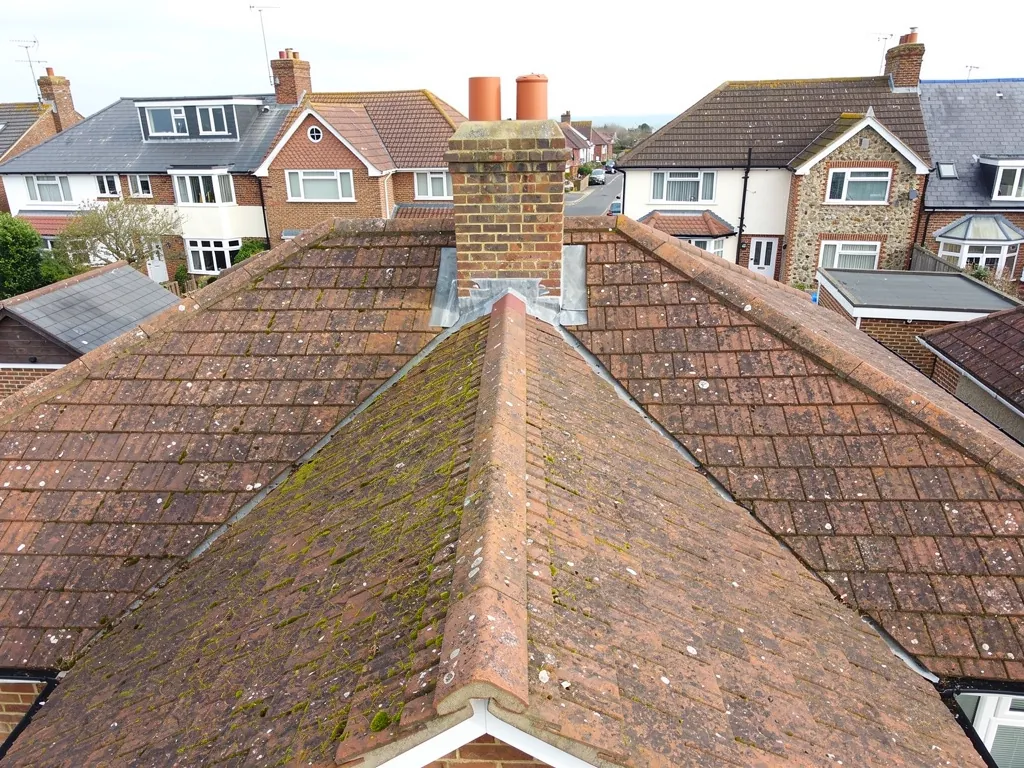
Chimney stacks are tall, narrow and heavy, and they stand on the most exposed part of the house. They are also easy to misjudge from the ground. Roof lines slope, houses sit on sloping streets and a stack seen from a low angle can look crooked when it is perfectly upright. So begin by working out whether it really leans.
If it does, the question changes to why. A stack moves because something that held it has given way: mortar that has crumbled, flashing that let water into the base, support that was altered below, or a roof structure that has shifted underneath. The cause decides the repair, and the repair decides the cost.
This guide covers how to check a lean without leaving the ground, the usual causes, how seriously to take the risk and what to do while you wait for a roofer. We then look at the repair choices, from repointing to a rebuild, and at the extra rules that apply to chimneys in conservation areas.
If bricks are loose or the lean has grown quickly, treat the stack as unsafe and keep everyone clear underneath.
Checking whether the stack really leans
Begin from a spot that shows the full stack beside a straight edge. A tall, plain building next door, a door frame or a garden post will do. Stand square to one face of the chimney, then move to the adjacent face, because a stack can lean towards one side only and look fine from the other.
Hold a plumb line, a string with a weight, at arm's length and line it up against the corner of the stack. The brick corners should run parallel to the string. Do this from two positions at right angles, and take a photograph each time with the string visible.
What to look for besides the angle
A lean is rarely the only sign. Look for a pot that sits at a tilt, a crack that opens up the face of the brickwork, a step in the courses where the stack has slid, and daylight showing where the stack meets the roof slope. On the outside, white streaks and missing mortar often come before the movement.
Indoors, a crack in the chimney breast, a gap between the breast and the ceiling or a stain in the bedroom nearest the flue can be linked. If the stain is the first thing you notice, read our guide to a damp chimney breast.
Repeat the plumb line check after a month and again after a gale. A stack that has not moved between photographs is a very different problem from one that has. Keep the pictures and show them to the roofer, because they save a good deal of guessing at the survey.
One caution. Do not climb up to have a look, and do not push or lean on a ladder against a stack you suspect is loose.
Why a chimney stack starts to lean
Brick stacks are held together by mortar, and mortar is the first thing to go. On the face that takes the weather, joints erode and open, and the bricks lose their grip on each other. Over the years the courses can shift, and the stack drifts towards the side with the least support.
Water makes it worse. A failed flashing or a cracked crown lets rain into the stack, where it soaks the mortar from the inside. Wet mortar softens, and a stack that is wet inside is weaker than one that is dry.
Movement below the stack
Sometimes the stack is fine and the support is not. Chimney breasts carry the weight of the stack above them, and the Planning Portal is clear that breasts are part of the building's structure. If a breast has been taken out downstairs without proper support, or cut back in the loft, the stack above can lose its footing. That is why removal always needs Building Regulations approval.
Timber can fail too. Rot in the roof timbers that sit around the stack, or in the wall plate under it, lets the whole assembly drop on one side. Settlement of the house itself is much rarer, but it shows in other cracks around the building and not only at the chimney.
Tall stacks add leverage. A gable stack at the end wall is held on one side by the wall and can lean away from it, while a ridge stack stands free of the structure for more of its height. Tall Victorian and Regency stacks are a feature of Bognor's older terraces, and Arun's guidance for the Steyne and Aldwick Road areas treats them as skyline features, so there are plenty of them to watch.
Frost, driving rain and the occasional gale test every weak joint in turn.
How dangerous is a leaning chimney?
How worried to be depends on how far it leans, how fast and how sound the brickwork is. A small, long-standing lean in sound masonry may only need watching and a repair to the joints. A new or growing lean, or a stack with open cracks and loose bricks, is a hazard that needs action.
The danger is falling masonry. A chimney that fails in a gale can drop bricks and a pot onto the roof, the garden or the pavement, and it can punch through the roof covering below. The area underneath is the problem, so look at who and what is standing in it: a path, a parking space, a bedroom directly below, a neighbour's yard.
What to do if it looks unsafe
Move people and vehicles out of the zone beneath the stack, and keep out of the rooms immediately below it if you can. Do not use the fireplace. If the stack is a risk to the public, the Institution of Structural Engineers says a dangerous structure may be reported to the building control team at your council.
Photograph the stack and any fallen material, and tell your insurer early. Which? says to tell the insurer about any emergency repair you commission, and to keep every receipt. Its own example of uninsured wear and tear is a poorly maintained roof, so the cause matters to the outcome. We cannot promise any claim will succeed.
Our own role is to make the stack safe first. That can mean taking the top courses down before a full rebuild, so that nothing is left standing that could fall.
Repair or rebuild: how the choice is made
The question is how much of the stack is still sound. A repair keeps the existing brickwork and fixes what has failed. A rebuild dismantles the stack to a level where the masonry is good and builds up again from there.
Repointing suits a stack that is upright and solid but has lost mortar. The old joints are raked out and new mortar is packed in. Checkatrade gives about £300 to repoint a small, low chimney and around £1,000 for a mid-roof stack on a scaffolded semi (October 2026), which shows how much access and size move the price. Repointing does not cure a lean that is already there, though. It stops the stack getting worse.
A stack that has leaned, or whose bricks crumble when you touch them, usually needs rebuilding from the level where the damage ends. The bricks that are sound are cleaned and reused where they match, new bricks go in where they do not, and the stack is built plumb on a firm base. The flashings are then dressed again in lead, and the flaunching and pots are bedded on top.
Taking it down altogether
If the flue is no longer used, removing the stack to under the roof line and making good the slope is a second route. That is a bigger decision, with its own rules, covered in our guide to chimney removal.
Which route is right comes out of the survey. From the roof we take close photographs and tell you whether the stack needs repointing, a partial rebuild or a full one, choosing the smallest job that leaves it sound. Our chimney stack rebuild guide describes the work, and the quote that follows is a single written total.
Conservation areas, listed buildings and chimney stacks
In some places the stack is not yours alone to alter. Removing or altering a chimney can need consent where a council has restricted permitted development, and the rules differ from one council to the next, so check before you commit.
Portsmouth has several Article 4 areas that control altering or removing stacks. Havant's direction for Langstone covers pulling down any stack that faces the road. In the Adur district, directions for Old Shoreham and Kingston Buci cover installing, altering or replacing a chimney anywhere on the building.
What this means in Bognor
Arun District Council's conservation area guidance for Bognor values the skyline stacks, and its enhancement notes ask for original roofing materials to be reinstated. Arun's directions remove no roof rights, but conservation area status can still affect how a stack should be rebuilt, with matching brick, pots and a traditional profile expected. Ask the council's planning team before you take a historic stack down, and confirm in writing what it expects.
If the house is listed, the position is stricter, because listed building consent is needed for works touching its special character. That applies to repairs that change the stack's appearance as well as to demolition. Your council's conservation officer is the right first contact.
None of this means you cannot repair a stack. Like-for-like repair of a sound stack is normally a different matter from demolishing one. But where a stack must be rebuilt, expect the council to care how it looks, and expect a written method to be useful. We can describe the existing brick, mortar and pots in our survey photographs so that the council has something to look at.
Access, scaffolding and what to do while you wait
Chimney work is access work. A stack that is leaning has to be reached safely, and the person reaching it must not stand on or lean against it. A scaffold is the normal answer, and Checkatrade's scaffolding table, last updated in October 2026, gives around £660 a week for a chimney scaffold. That is a typical UK figure, and your own scaffold will depend on the house.
If the scaffold sits over the highway, section 169 of the Highways Act 1980 requires a licence, which has to be granted before it goes up. West Sussex County Council needs 10 working days' notice and charges £266 a month. Hampshire County Council needs ten clear working days and charges £211.90 for the first fortnight. Build that waiting time into your plans, and ask whether it can be shortened if the stack is a danger. A make-safe job can often be done without waiting for the full scaffold.
Between the survey and the repair
If you have to wait, the aim is to keep people away and keep water out. Cordon off the ground beneath the stack, keep children and pets clear and do not light fires in the flue. If a ceiling is wet, put a bucket under it and move furniture.
Check for fresh debris after every gale. Bricks or mortar on the ground, or in the gutter, mean the stack is shedding material. Report it at once and send us the photograph.
A dangerous or leaking roof gets made safe first. The full repair follows once the scaffold, the weather and the materials line up. Our chimney repairs page describes the work we carry out.
Questions
Leaning chimney questions
Can a leaning chimney be pulled straight again?
Not by pulling or pushing it. Brickwork that has moved off true has cracked joints, and forcing it back risks a collapse. The usual remedy is dismantling the stack as far as sound brickwork and building it back plumb. Only a survey can say how much comes down.
Is a leaning stack covered by home insurance?
That depends on your policy and the cause. Which? gives a poorly maintained roof as a wear-and-tear example, while sudden storm damage is treated differently. Tell your insurer first, photograph everything and keep the receipts for stopgap work. We cannot say a claim will succeed.
Do I need permission to rebuild a chimney stack?
It depends on the house. A listed building needs consent for works touching its special character, and some conservation area directions control chimney work. Check with the council planning team before you start, and ask your building control body whether the work is notifiable.