
Commercial roof maintenance · 9 min read
Planned maintenance for commercial roofs
A commercial roof maintenance plan finds small faults while they are cheap and keeps leaks away from stock, tenants and ceilings. This guide sets out what a visit covers, how often, and what the records are for.
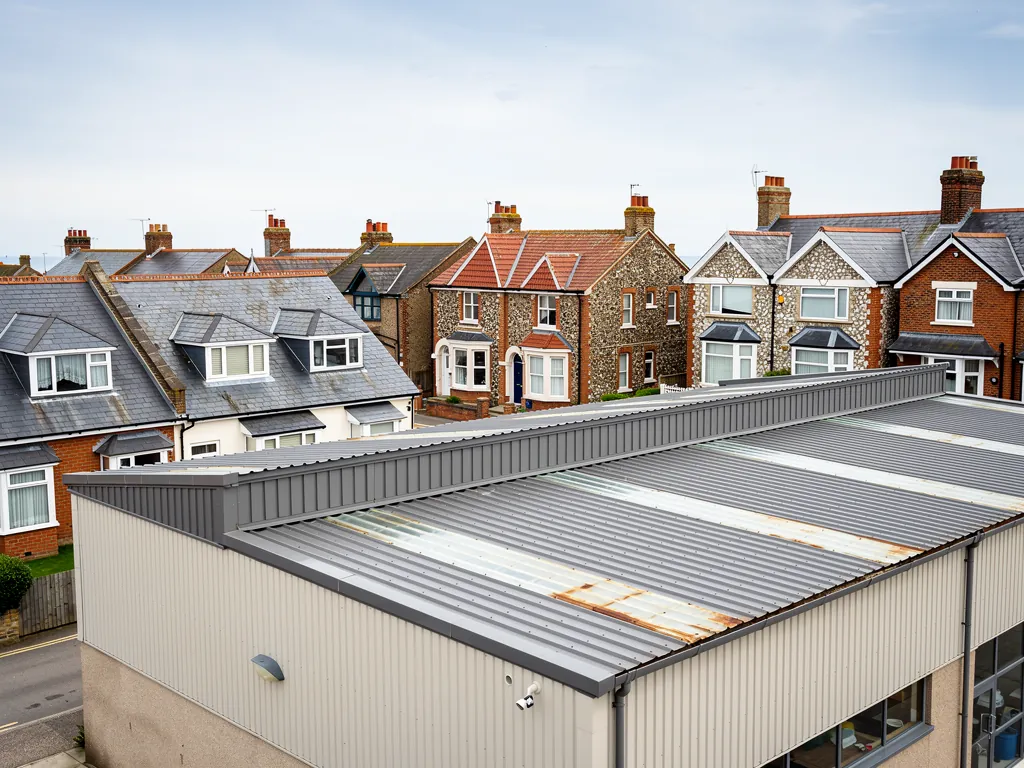
Commercial roofs tend to be ignored until water appears. Nobody sees the top of a warehouse, a parade of shops or a block of flats, so a blocked outlet or a lifted lap can sit there through a season before the first stain shows on a ceiling. By then the insulation is wet, the deck may be soft and the repair has grown.
Planned maintenance is the cheaper habit. A roofer visits on a set pattern, looks at the same list of details every time, clears what needs clearing, fixes the small things on the spot and writes down the rest. Over a few visits the building owner has a record of how the roof is ageing and a fair idea of when a bigger decision is coming.
It is not a promise that nothing will ever go wrong, and no honest roofer can offer that. It is a way of putting the failures in daylight. This guide explains what a visit looks at, what moves the frequency, how long common coverings last, what small repairs cost according to national guides, and how to keep the people who do the checking safe on the roof.
What a planned maintenance visit actually looks at
A good visit follows a checklist, so that nothing depends on memory. The details differ between a metal-clad shed and a felt-covered flat roof on a shop, but the main headings are the same.
Drainage
Water that cannot leave the roof is the cause of more commercial leaks than any other fault. The visit clears outlets, hoppers and gutters of leaves, silt and debris, checks that downpipes run freely and looks for standing water on the surface. A pool that is still there a day or two after rain points to a drainage or fall problem that clearing alone will not cure. Our guide to ponding water on commercial flat roofs explains what to do next.
Laps, seams and upstands
Where one sheet or membrane meets another, or where the roof turns up against a wall, the covering is at its weakest. The visit looks for lifting, splitting, open seams, failed sealant and flashings that have pulled away from the wall. On a bituminous roof it also looks for blisters and cracking, and on a single-ply roof for signs that welds or adhesive have let go.
Rooflights, plant and edges
Every hole through a roof is a place for water to enter. Rooflights, vents, flues, cable routes and the supports for air-conditioning units all need checking. So do the perimeter details at the edge, which take the most wind and the most foot traffic. Anything found loose is made safe on the day or recorded for a proper repair.
Inside the building the visit often includes a look at the ceiling line, the liner and any wet patches on the insulation, because the underside tells you what the top cannot. Staff can help here by reporting stains, drips after rain and a smell of damp, with the date and the area, long before a roofer arrives.
Metal roofs add one more item: the cut edges and fixings of the sheets, where corrosion starts. Corrosion there is slow, and it is far cheaper to catch early.
How often to look, and what changes the answer
There is no single interval that suits every building, and anyone who quotes you one without seeing the roof is guessing. What can be said is that the pattern should match the way the roof is likely to fail.
Many owners settle on a visit in autumn, after the leaves have come down and before the weather turns, and another in spring, to find what winter did. A further visit after a severe storm is sensible, since gales lift edge trims and loosen sheets that looked fine a week earlier. Those are starting points, and several things move them:
- The age and covering of the roof. An older roof with a tired covering deserves more frequent attention.
- Trees overhanging the building, which fill outlets with leaves.
- Roof traffic. A roof carrying plant that engineers visit every month wears faster and collects more damage.
- The cost of a leak. A warehouse of stock or a server room justifies tighter checks than a store of bulk materials.
Using lifespans to plan
Lifespans give the longer view. Less, in its flat roof guide last updated in March 2026, gives these typical ranges:
| Covering | Typical life |
|---|---|
| Torch-on felt | 10 to 20 years |
| GRP (fibreglass) | 25 to 40 years |
| EPDM (synthetic rubber) | 30 to 50 years |
Less also says workmanship swings felt a long way, from 20 years when laid well to under 10 when laid badly. GreenSpec gives EPDM 20 to 30 years, lower than Less does. Where sources disagree like this, read a lifespan as a planning range and never as a promise. Our guide to commercial roof lifespan goes into the detail by covering.
What small repairs cost, and what a record is worth
The reason to maintain a roof is partly financial, so some numbers help. They are national figures, not a price for your building, and the written quote after a survey is the figure that counts.
Less, in its guide updated in March 2026, puts small flat roof repairs at £150 to £500. These are jobs such as sealing a split, re-dressing an edge trim or patching a blister. For a commercial building, Checkatrade's September 2026 table puts a drone roof survey at £770 to £1,100, plus VAT. Those two figures give a feel for the size of the sums in play when a roof is looked after regularly.
When a patch is no longer enough
Things change once leaks have gone on for some time. Patches will not stay on a wet deck, and beyond a certain point mending costs close to what re-covering would. A maintenance record helps here, because it shows how often the same area has been fixed and whether the faults are spreading. That evidence makes the repair-or-replace decision a calm one. The choice between mending and replacing is easier to make with that history on the table.
VAT and who pays
The standard rate of VAT is 20%, and national cost guides often leave it out, so ask whether each price you are given includes it. If you lease the building, read the lease to see who is responsible for roof repairs and whether a landlord expects a maintenance schedule to be followed.
Keep the paperwork in one place, ideally a roof file held at the premises and copied to whoever manages the building. It should carry the survey, each visit report, the dated photographs and any guarantee documents for earlier roof work, so that a change of manager or tenant does not erase the history.
Records matter beyond cost. A dated set of photographs and visit notes helps with a lease dispute, a sale, a lender's survey or an insurance conversation, because it shows the roof was looked after. It also gives the next roofer a head start.
Keeping the people who check the roof safe
Maintenance is when everyone go onto the roof, so it is where the danger is. The HSE says that people carrying out small, short-term maintenance and cleaning jobs are over-represented in the injury statistics, and that falls through fragile surfaces, particularly fibre cement roofs and rooflights, account for 22% of all fall from height fatal injuries in the construction industry.
A plan therefore needs to cover access before it covers anything else. Our guide to fragile roofs and rooflights explains the hierarchy: avoid going on the surface where possible, control the remaining risk with stagings, guard rails and similar measures, and tell everyone who might go up what the hazards are.
Staff who clear gutters
A common habit is to ask a member of the premises team to clear a gutter outlet or retrieve a ball. That is exactly the kind of short job the HSE warns about. Unless the roof has been confirmed as non-fragile by a competent person, nobody should step out onto it without the right access and protection, however brief the task.
Wildlife on the roof
One more point belongs in the plan. Bats and nesting birds are legally protected species, and a visit that harms a roost or an active nest can break the law. If you spot signs of them, stop and take advice before the work continues.
Put the rules in writing: who may go on the roof, with what equipment, after what notice, and who signs the visit off. The more people who can reach the roof, the more important it is that the answer does not depend on who happens to be on site.
Setting up a plan with a roofer
A maintenance arrangement works best when it is simple and written down. Start with a survey, so the first visit has something to measure against. That survey photographs the roof, records the covering, the drainage layout and the rooflights, and gives a plain verdict on whether the roof needs repair now, can wait or is nearing the end of its life.
From there, agree three things.
- The visit pattern, such as autumn and spring, plus a call-out after a storm, with the contact route for the person who will book it.
- What happens on the day: which small jobs are done at the visit, and which are recorded and quoted separately.
- What you receive afterwards: a dated report with photographs of any defects found.
On our side, we explain what we find in plain words and write up the repair as one total price. On our side, a wet roof is made safe before it is mended, and active leaks go ahead of routine jobs in the diary. The commercial roofing page lists the work we do for shops, units and blocks.
Think about the basics of the building as well. Where is roof access, who holds the key, and what must be moved before a platform can stand at the eaves? Settling these once, in the plan, saves an argument on each visit and stops the roofer or your own staff improvising.
Ask about the exclusions too. Work needing scaffolding, a licence for the highway or a roof access platform is usually outside the scope of a routine visit, and you should know that before the day arrives. Planning for those items early keeps small faults from turning into emergencies, and it helps if the written quote says what the visit price does and does not take in.
Questions
Roof maintenance questions
How often should a commercial flat roof be inspected?
No single interval suits every roof. Many owners choose one visit in autumn and one in spring, with an extra check after a severe storm. Age, covering, overhanging trees, roof traffic and the cost of a leak all move that pattern. A survey of your own roof is the best way to set it.
Can our own staff clear the gutters and drains?
Only if the way to reach them is safe and the surface is confirmed non-fragile. The HSE says small, short-term maintenance jobs are over-represented in the injury statistics, and it expects all roofs to be treated as fragile until a competent person says otherwise. A ground-level or platform approach is safer than stepping out.
Does planned maintenance make a commercial roof last longer?
It removes avoidable failures, such as blocked outlets and open seams, but no one can promise extra years. National lifespans are ranges, and Less notes that felt laid badly can fail inside 10 years while a careful job can reach 20. Regular checks give you early warning and a clear record.