
Winter roof work · 9 min read
Planning commercial roof work around winter and trading hours
Commercial roof repairs in winter run to the weather and your opening hours. This guide covers licence lead times, what rain and wind do to a programme, and when a patch now beats a full job in bad conditions.
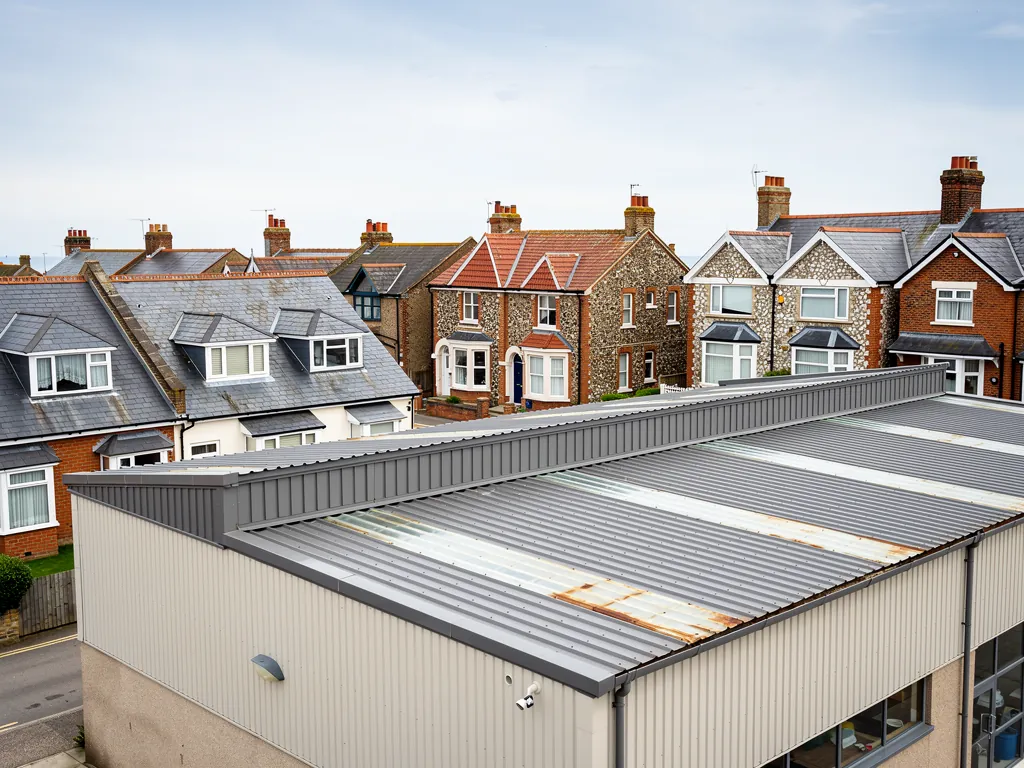
Winter is when commercial roofs show their faults. Rain finds the open lap, wind lifts the loose edge trim, and a stain that appeared on a ceiling tile in October is a drip onto the shop floor by January. It is also the time of year when the weather makes roof work harder to carry out, so the faults arrive just as the conditions get worse.
There is a second constraint that has nothing to do with the weather. Commercial buildings are usually in use while the roof is worked on. A shop has customers, a unit has deliveries and a forklift route, a block has residents or tenants, and each of them limits when and where a roofer can work. The two constraints together decide how a winter job is planned.
This guide is written for the person who manages a building and has to decide what to do now. It explains how to stop the water first, how long permissions and access take to arrange, what the weather does to a programme, how work is phased around trading, and how to tell a job that should go ahead in winter from one that is better held until conditions improve.
Make it safe now, then decide on the proper repair
The first question in winter is not how to fix the roof. It is how to stop water getting into the building today. Stopping the leak comes before everything else. That may mean a temporary covering over the opening, a sealed patch, clearing a blocked outlet so the water can leave, or protecting stock and equipment below with sheeting. These measures buy time. They do not replace the proper repair, and they should be described that way.
Owners often do the right thing by instinct and then weaken their position later. The IStructE tells people dealing with storm damage to put safety first and to notify their insurer promptly. It also wants the urgent repairs written down, such as any urgent repairs temporary coverings that stop water entering. It adds that photographs are vital evidence. Which? agrees: contact the insurer early, say so if you arrange emergency repairs yourself, keep every receipt, and hold on to damaged items unless they endanger health.
What to photograph and keep
Photograph the damage before anything is moved, including the ceiling, the stock and the roof if it can be seen safely from the ground. Keep receipts for temporary works, note the date and time water first appeared, and write down who you told. Read the policy for wear and tear exclusions, because a leak from a roof that was poorly kept is treated differently from sudden storm damage. Our guide to commercial roof insurance goes into this in detail.
Then ask for a survey, and send the photographs with the request so the roofer can see what you saw. The temporary fix has given you breathing space, and the survey tells you whether the proper answer is a repair, a patch to see the roof through the season or a replacement.
Lead times: permissions and access take weeks, not days
Winter jobs often run late for reasons that have nothing to do with roofing. Access is usually the culprit. If a scaffold needs to stand on or over the public highway, section 169 of the Highways Act 1980 requires a licence, which comes from the council that looks after the road. That council sets the timescales.
| Highway authority | Notice and fee for a scaffold licence |
|---|---|
| West Sussex County Council | At least 10 working days' notice; £266 for one month |
| Hampshire County Council | A minimum of ten clear working days; £211.90 for the first two weeks |
West Sussex also offers a fast track, within one working day, for an additional £52. Hampshire does not offer extensions, so an overrunning job needs thought. Portsmouth is its own highway authority, so for a site in the city ask the council directly. These details come from the councils' own pages, and they can change, so confirm them at the time.
What this does to a winter plan
Ten working days is two calendar weeks before anything is built. On top of that sit the survey, the written quote, your own approval and the supply of materials. A repair agreed in the first week of December may not start until the new year. If the roof cannot wait, tower and platform access that stays off the highway, or a temporary repair, may bridge the gap. The sensible time to line up permissions for a larger job is late summer or early autumn, before the weather turns.
It also pays to think hard about where the scaffold or platform will stand relative to deliveries, car parking and the front door, and to say so at the survey stage. Our guide to roof work while the business keeps trading covers the on-site side of the same planning.
What wet and windy weather does to a programme
Weather decides more of a roof programme than any other single factor, and a sound plan allows for it. The useful point is qualitative: a roof is a working surface, and wind, rain and cold each stop different tasks.
Wind
Wind affects anything large and light. Sheets, membranes and insulation boards can catch the air as they are lifted, and a gust that is harmless on the ground becomes a hazard at the eaves. Work with large sheets stops first when the wind rises, and loose materials must be secured before anyone leaves the roof each evening.
Rain and damp
Waterproofing relies on dry surfaces. Felt, single-ply membranes, sealants and liquid coatings stick to the roof or to each other, and a wet or damp substrate can spoil the bond. Manufacturers publish the conditions their products need, and a good roofer follows the data sheet, not a guess. A part-finished roof is also at its most exposed. If rain is forecast, the open area needs to be small enough to close up before the rain arrives.
Cold and short days
Cold affects how some products cure and how stiff membranes are to handle. Short daylight hours shorten the working day, and a wet, frosty or slippery surface makes the work harder to do safely. Fragile surfaces are harder to spot in poor light, which the HSE flags for rooflights. Our guide to fragile roofs and rooflights explains why that matters.
The practical result is that winter programmes carry slack. A job described as four days of work may sit across two or three weeks of calendar, and a good plan says that at the start.
Working around trading hours and the people inside
A commercial roof sits above people. Below it are staff, customers, stock, machinery, and sometimes residents who did not choose to be part of a building project. Roof work creates noise, vibration, dust and the possibility of dropped materials, so the plan needs to deal with the premises as well as the roof.
Start by dividing the roof into zones that can be opened up and closed again one at a time. Working on one section means a smaller exposed area, a smaller area to protect inside and a leak risk that is easier to manage if the weather turns. It also lets the business keep trading in the parts that are not being worked on.
Hours, noise and deliveries
Agree the working hours with you before the work begins, and agree them in writing. Think about the times when noisy work would cause the most trouble: opening hours in a shop, shift changes in a unit, a quiet period in an office, or the school run near a block of flats. Plan delivery times so that vehicles and roof materials do not compete for the same yard, and keep a clear route for emergency services past any compound or skip.
Protecting what is below
Heavy or sensitive items may need to be moved or covered. Where sheets are being stripped, protection under the area, whether netting, boards or temporary ceilings, keeps debris out of the workspace, and in some cases it also serves as a safety net under a fragile roof. The HSE tells contractors on business premises to work closely with the client and agree arrangements together. Knowing which section is leaking saves opening up the wrong zone.
Patch now or wait for better weather: the straight answer
Winter is not always the wrong time for roof work, and it is not always the right time either. The decision turns on how bad the fault is, how much of the roof is involved and what the weather allows.
When it should go ahead
Work should proceed when water is entering, when a section of covering is loose and a hazard to people below, or when drainage has failed and the roof is holding water. In those cases, the water is stopped first and the proper repair follows when conditions allow. A short, contained repair also usually suits winter, because the exposed area is small and can be closed up quickly. Clearing a blocked outlet, re-fixing a lifted flashing or sealing a split lap are examples of jobs that fit into a dry window without committing the whole roof.
When it may be better to wait
A full re-cover is a different matter. If the roof is leaking slowly and a patch will hold, a replacement can be planned for a drier, longer-daylight period. That avoids a long open roof during unreliable weather, and it gives time to arrange permissions and price the job properly. Waiting only makes sense if the temporary measures are sound and someone is checking them after every gale and every spell of heavy rain, with the findings written down. It is a decision for after the survey, not before it.
Our approach is to give a plain verdict from the photographs: repair it now, patch it to see the roof through winter, or replace it when the weather allows. The quote then comes in writing as one total price, along with our view of the right timing and the reasons for it. Check whether any quote includes VAT, which is currently 20%, and scaffolding.
If you are weighing a full job, the size of the roof, its covering and the access needed set most of the figure, and our commercial roofing page sets out the range of commercial work we take on.
Questions
Winter roof work questions
Can a commercial roof be replaced in winter?
It can be, but it is often better to wait if the roof is not letting water in. A full re-cover leaves a large area open, and wet, windy and cold days stop several tasks. If a patch will hold safely, planning the replacement for a drier spell often gives a neater result. A survey will tell you which applies.
Will a scaffold licence hold up an urgent repair?
It can, if the access has to stand on the highway. West Sussex asks for at least 10 working days' notice, with a fast-track option, and Hampshire asks for a ten-day minimum, counted in clear working days. A temporary repair or access that stays on your own land can bridge that gap while the licence is arranged.
Who should I tell first when storm damage lets water in?
Once the area is safe, tell your insurer promptly. Which? and the IStructE both advise photographing the damage, recording any temporary repairs and keeping receipts. Then book a survey so the proper repair is planned. If you are unhappy with the insurer's response, complain to the insurer first; a smaller business may then be able to refer it to the Financial Ombudsman Service.