
Lowest-cost options · 9 min read
What is the cheapest way to replace a conservatory roof?
The lowest-cost route to a sound conservatory roof is rarely the lowest quote. Here is how to spend as little as the job allows, and where trimming the figure costs more later.
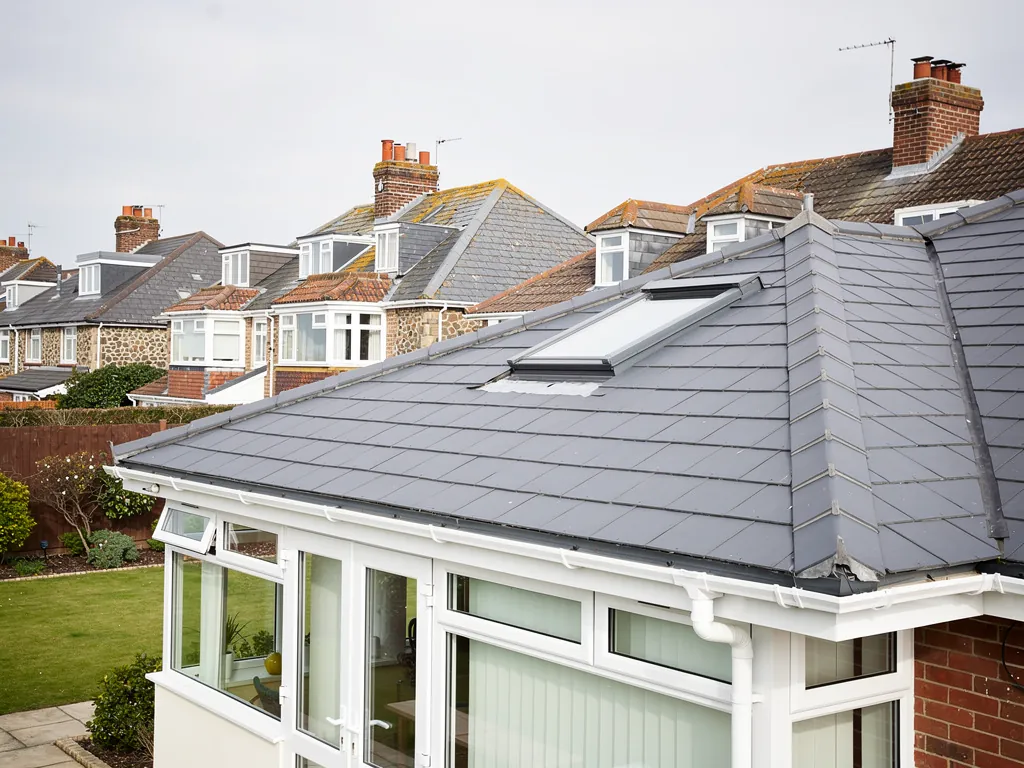
Anyone asking this question usually has a roof that leaks, clouds over or rattles in the wind, and a budget that does not stretch to a full rebuild. That is a fair thing to want, and the answer is usually better than they expect. A conservatory roof is one of the few roofs where a modest, well-targeted job can give the room another decade.
The catch is that the lowest figure on a quote and the lowest total spend over the life of the roof are often two different things. A cracked sheet swapped for a matching one is cheap. A whole roof patched year after year, with the frame left to rot underneath, is not. The route that costs least is the one that fixes the actual fault and nothing more.
This guide goes through the options in order of outlay, from cleaning and resealing to new sheets on the existing frame, and then looks at the choices that look thrifty and are not. For context, Checkatrade gives around £10,000 as the average to replace a conservatory roof (March 2026), and most of the routes below sit well beneath that.
Check whether the roof needs replacing at all
The smallest bill is the one for a roof that did not need replacing. Plenty of conservatory roofs that are called failed only have a failing part, and parts can be swapped.
A leak is the usual alarm. It tends to come from one of four places: the lead flashing where the roof meets the house, a perished seal or glazing tape along a bar, a cracked or lifted sheet, or a gutter that has overflowed and run back under the cill. The first three are repairs. The fourth is a tidy-up. None of them is a reason to take the whole roof off.
Green staining, moss and a film of dirt make a roof look beyond help when it is only dirty. Soft washing and clearing the gutters cost a fraction of replacement. We have a short answer on how a conservatory roof is cleaned, and cleaning the sheets sometimes shows that the cloudiness was on the surface.
When a repair stops being the right answer
A repair is not a bargain if the sheets themselves have gone brittle, yellowed or crazed, or if the bars underneath are rotten or corroded. Fixing around those faults buys a few months. We tell you plainly at the survey, with photographs, and we do not suggest a new roof when a repair will hold.
Replacing a single panel or a few sheets
Where one sheet or one unit has cracked after a knock or a falling branch, replacing only that piece is the lowest-cost fix there is. It works best when the new piece can be matched to the old, the bars around it are sound and the damage was an accident, such as a branch in a gale, rather than a sign that the whole roof is tired.
Matching is the sticking point. Polycarbonate sheets come in different thicknesses and finishes, and a new sheet next to a weathered one will look different for a while. Glass units have to be made to size, so they take longer than sheets. An older double glazed unit that has misted internally has failed at its seal, and those are replaced as a unit, not mended.
Our answer on replacing a single conservatory roof panel goes through what makes the job simple or awkward. The principle is the same either way. If the sheets are all from the same age, the others will follow the cracked one, and a pair of repairs can cost more than the plain set of new sheets you were trying to avoid.
It is worth asking for the closure strips and seals on that bar to be renewed at the same time. They are a small cost, and a tired seal is the usual reason a new sheet starts to drip.
New sheets on the frame you already have
When the sheets have clouded, cracked or gone brittle across the whole roof but the frame is square and sound, the lowest-cost full replacement is usually a new polycarbonate roof fitted to the existing bars. Because polycarbonate is light and the frame already carries it, there is no structural work to price. The old sheets come off, the bars are cleaned and checked, new sheets, closures and seals go on, and the junction with the house wall is dressed.
HomeBuilding, in a guide published on 18 April 2024, gives a typical life of 10 years for a polycarbonate conservatory roof, and the Eco Experts, updated on 29 April 2024, say 10 to 15. That is the honest trade for the lower outlay. You get a sound, dry roof, but not one that will outlast the house.
One caution applies even here. The Planning Portal's guidance on conservatory roofs says a new roof has to meet the Building Regulations covering structure, energy use and ventilation. That reads as a rule for roof replacement in general, so do not assume that a straight swap of sheets is exempt. Ask your building control body, or Arun District Council's building control team, before you start. We explain what is needed and, where the work has to be notified, we deal with it.
It helps to ask early because the answer can change the sums. If the new sheets would be thicker or the roof is altered in any way, building control may want to see the details, and it is simpler to know that before the date is booked.
Compare this with the other sort of lowest-cost spend, where a repair is made to a roof that is close to the end of its useful life. A new set of sheets fitted properly is often better value than three repairs.
Why the lowest quote is not always the lowest cost
Two quotes for the same conservatory can sit hundreds of pounds apart and still describe different jobs. One may include the VAT, and the other leave it off, and VAT is 20 per cent. One may include a tower or scaffold, and the other assume the roofer will manage from a ladder. One may take the old roof away, and the other leave it on your drive.
Before you compare, ask each roofer the same questions:
- Is VAT included in the total?
- Does it cover any scaffold or tower needed to reach the roof safely?
- Is the old roof taken away and the site cleared?
- Are the seals, closures and lead at the house wall renewed, or only the sheets?
- What happens if the frame turns out to be in poor condition?
The last question matters most. A low figure that assumes a perfect frame becomes a higher one when the first sheet comes off and the bars are found to be soft. A quote written after a survey, with photographs of the frame, is less likely to change on the day.
After the survey you get a written quote as a single total, and the price is good and fair. It states what it assumes about the frame and the access, so there is little to discover halfway through. Should scaffolding have to stand on the footway, a licence is required from the council as highway authority, and the wait can move your start date.
Keep the quotes side by side and tick off the answers. The one that costs a little more but covers the frame, the flashing and the clearing away is often the lower real price.
False economies to avoid
Some savings cost more than they save. The common ones on conservatory roofs are worth knowing before you choose.
Sealing over a failed seal is the first. Silicone or sealant run along a bar can stop a drip for a season, but it does not replace a perished gasket, and water finds the next gap. It also makes the proper repair harder, because the old sealant has to be cut out first.
Thin or low-grade sheets are the second. Sheet quality varies, and a very low price for a replacement set can reflect lighter material that clouds sooner or gets brittle faster. Ask what is being fitted and what the maker says about it, not only how much it costs.
Leaving the lead and the gutter alone is the third. A new roof that is joined to the house with a tired flashing, or drains into a sagging gutter, will leak at exactly the point the old one did. Renewing both is a small share of the job and protects the rest of it.
Ignoring a frame problem is the fourth. If a bar is rotten, a new roof sits on a weakness, and the next leak will be blamed on the sheets. Fix the frame first, or at the same time.
The last is ignoring the weight. A glass or tiled roof fitted to a frame that was built for sheets can strain the bars. That is a matter for a proper survey, not for hope.
Doing it yourself, and doorstep offers
Fitting sheets yourself looks like the lowest-cost option, and for a handy person on a small lean-to it can be tempting. A conservatory roof is a fragile surface, though, and one that cannot be walked on. Working above it means boards, safe access and a second pair of hands, and a slip through a roof is costly in more ways than the replacement sheet. If you do go ahead, set up for the height, not for the sheet.
Doorstep offers deserve more caution. A caller who says your conservatory roof is failing and can be done today, for cash and at a price that drops if you agree now, is giving you a reason to hurry. Ask for a written quote, ask whether it includes VAT, and take a day over it.
Your cancellation rights
A contract made at your home is an off-premises contract. Under the Consumer Contracts Regulations 2013 you can cancel it within 14 days of agreeing it without giving a reason, and a trader who has not told you of that right must give you more time. If you ask the firm to start work within the 14 days, you must say so in writing. Urgent repairs you have specifically asked a trader to visit and carry out are an exception.
Nothing here should hold you back from dealing with a genuine leak. Make the room safe, keep the water out with a temporary cover, and then collect proper quotes. The conservatory roof replacement page explains the work we do, and the comparison of glass, polycarbonate and tiled roofs helps you decide how far to go.
Questions
Keeping the cost down: your questions
How do I know whether my frame will take new sheets?
Look for bars that are bowed, split, corroded or soft when pressed, gaskets that have shrunk back, and doors or windows that stick. A survey checks these properly. If the frame is square and sound, new polycarbonate sheets can go straight onto it. If it is not, tell the roofer before you agree a price, because the repair of the frame changes the job.
Is it worth repairing an old polycarbonate roof?
It depends on how old and how bad. A single cracked sheet on a roof that is in other respects sound is worth swapping. A roof that is clouded, brittle and leaking in several places is near the end of the 10 to 15 years typical for polycarbonate, and replacing it once usually costs less than repairing it again and again.
Does a new conservatory roof need a scaffold?
Not always. A low lean-to may be reached with boards and a tower, while a taller conservatory against a two storey wall may need scaffold along the house wall. Where the scaffold would obstruct the footway, a licence from the highway authority is needed. Ask each roofer whether access is in the total.