
Conservatory roof options · 9 min read
Glass, polycarbonate or tiled: comparing conservatory roof options
How polycarbonate, glass and tiled conservatory roofs compare on weight, warmth, rain noise, daylight and lifespan, and what to ask before you choose one for a room you actually use.
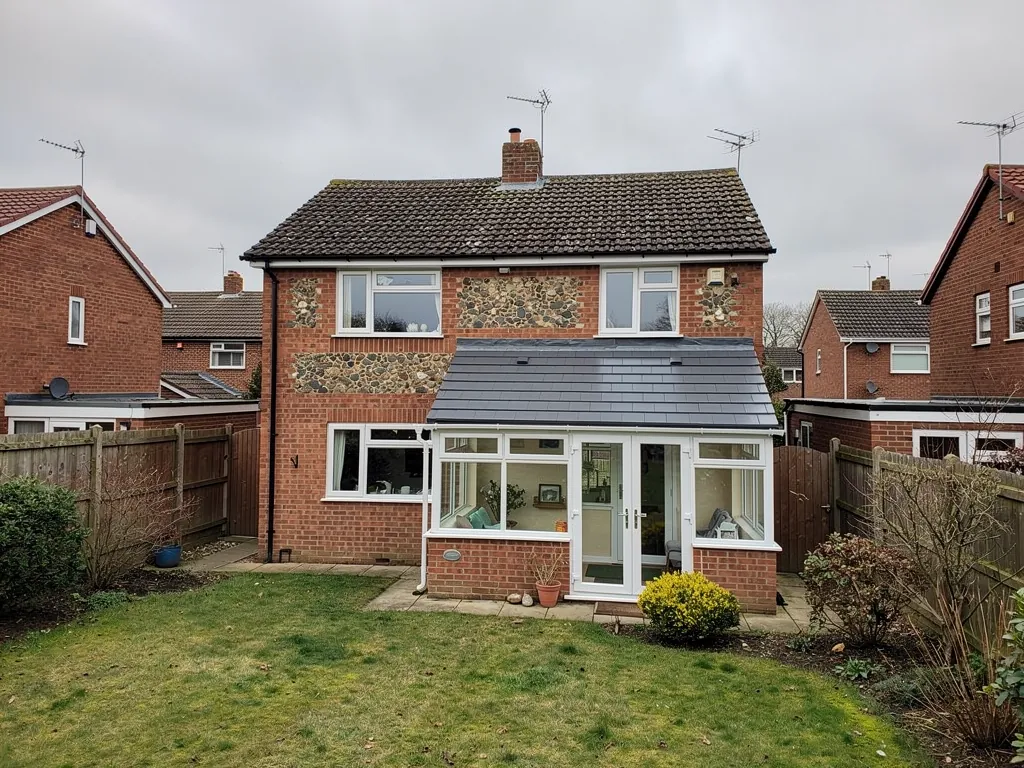
Three kinds of roof turn up again and again on conservatories: hollow plastic sheets, sealed glass units and a solid tiled roof. Each can be the right answer. Each can also be the wrong one for a particular room, and the difference is rarely visible from the garden.
The choice comes down to five things. How much weight the existing frame can carry. How warm the room needs to be in January. How much a heavy shower on the roof bothers you. How much daylight you want to keep. And how long you expect the new roof to last before you are paying for another one.
This guide takes the three options in turn and puts them side by side. It uses the lifespans and the one national average price that published guides give, and it keeps to general descriptions where the real figure belongs on a manufacturer's data sheet. None of it replaces a look at your own frame. Our survey comes first, with photographs of what is actually up there, and the price you receive in writing is a single total for the roof we recommend.
What you are really choosing between
Every conservatory roof shares the same skeleton. Glazing bars, usually aluminium or aluminium over timber, run down each slope from the high point, the ridge, to the eaves, which is the low edge where the gutter hangs. On a conservatory the bars are also what carries the weight of the infill and holds the rain out at every joint. The infill between the bars is what this guide compares, and it is the part that decides how the room feels.
Polycarbonate is a rigid plastic sheet with hollow channels through it. The channels hold air, which makes it warmer than a single skin, and the sheets are light enough to lift into place without a crane. Glass arrives as sealed double-glazed units: two panes with a gap between, bedded between the bars and capped to keep rain out. A tiled roof is a different build altogether. It is a solid roof on its own rafters, with a ceiling beneath and lightweight tiles or slates above, usually with a roof window or a lantern (a raised glazed section) to bring daylight back.
| What you notice | Polycarbonate | Glass | Solid tiled |
|---|---|---|---|
| Load on the frame | Lightest | Heavier | Depends on the system |
| Winter warmth | Modest | Better, with good units | Best of the three |
| Rain on the roof | Loud | Quieter | Quietest |
| Daylight | Diffused | Clear, bright | Only where you add glazing |
| Paperwork | Usually none | Check with building control | Building Regulations approval |
Read the table as a starting point. A well-made polycarbonate roof beats a tired one in glass, and the reverse is just as possible.
Polycarbonate: cheap to fit, shorter in life
Polycarbonate is what many conservatories were built with, and it is the usual choice when the aim is to stop a leak without disturbing the room beneath. Its strengths are plain. It is light, so it asks the least of the frame. It can be cut to fit awkward bays. And a replacement can often be done quickly, because there is no ceiling to build and no heavy unit to lift.
Its weaknesses show up with age. Published guides put the life of a polycarbonate conservatory roof at around 10 to 15 years: HomeBuilding gives a typical lifespan of 10 years in its April 2024 guide, and the Eco Experts, updated in April 2024, say 10 to 15. Over that time sheets can cloud, scratch and pick up algae in the channels, where no cloth reaches. Sheets that were fitted without sealed ends are the worst offenders, because water and dust creep into the channels from the open edge.
Heat and noise
The two complaints we hear about polycarbonate are heat in July and the drumming on the roof in a downpour. Both come from the thin, light sheet. Blinds and solar-control film can take the edge off the first. For the second, nothing short of a different roof really cures it, though a thicker sheet or a secondary lining helps a little. We cover the options in our answer on stopping rain noise on a conservatory roof.
None of this makes polycarbonate a poor roof. For a conservatory used as a lightly heated utility space, or for a frame that could not carry more, it can be exactly right. The sensible question is not whether it is good enough in the abstract, but whether it suits the way you use the room and the frame you already have. If you are only part way through the life of the sheets and one panel has failed, a patch may serve you better than a new roof.
Glass: clear light, and a frame that must carry it
Glass changes the room. It lets in clear daylight and the garden stays visible, which is why people who use the conservatory as a sitting room tend to ask for it. A modern sealed unit also holds heat far better than a single plastic skin, and it is much quieter in rain.
The catch is weight. Glass units are heavier than polycarbonate sheets, and the glazing bars, the frame and the base beneath all have to carry the extra, along with wind and any snow. A frame built around plastic sheets may need strengthening before glass goes on, and that is a job for the survey, not a guess from the ground. We look at the bar sections, the condition of the frame joints and whether the supports are sound.
What glass asks of you later
Sealed units can fail. When the seal goes, moisture gets between the panes and the unit mists inside where no cleaning reaches. A unit that mists is not leaking rain, but it will not clear. Glass also needs washing, and a roof you can only reach from a ladder soon looks neglected. Coatings that help with dirt or with summer glare exist, and they are covered in our separate answers on which glass suits a conservatory roof and whether the self-cleaning kind is worth the extra money.
Replacing polycarbonate with glass is possible in many cases, and we deal with it in a separate answer on swapping one for the other. Whichever way you go, the new units arrive made to size, so the measuring at survey stage has to be exact. A unit that is a few millimetres out cannot be trimmed on site the way a plastic sheet can, and a second order costs time as well as money.
Solid tiled roofs: the biggest change, and the paperwork
A solid roof turns the conservatory into something closer to an extension. A ceiling goes in, insulation goes above it, and tiles or slates finish the top. The room is quieter, steadier in temperature and easier to heat. You lose the glass overhead, so a solid roof is often fitted with roof windows or a lantern to keep some light.
It is also the option that brings the rules in. On its conservatory roof FAQ, the Planning Portal tells owners that a replacement roof has to meet Building Regulations on three counts: sound structure, energy performance and ventilation. In practice that means a building control application, through your council or a registered building control approver, and a roof designed to the energy standard for a new element. Ask us about it at the survey, and we explain what the application involves. Our guide on Building Regulations for a solid conservatory roof explains the steps.
A solid roof can weigh more than the glass or plastic it replaces, so ask the roofer to show how the frame and base will carry it before you agree to anything.
Lightweight systems
Some solid roofs are factory-made lightweight systems designed so that an existing frame can take them. They are worth a look when weight is the problem. The guide to solid and tiled conservatory roofs covers how they are built, and the details always rest with the maker's data sheet and an inspection of your own frame.
Cost and lifespan over the years
Price alone is a poor guide. Checkatrade's March 2026 table does split by type, giving a 4 x 4 m conservatory about £9,600 in polycarbonate, £12,000 in tiles and £14,400 in glass, but no table can price the frame work, the lead at the house wall and the guttering that bring a real quote up or down. Our guide to the cost of a conservatory roof takes those parts one at a time.
A better sum is cost per year of use. Polycarbonate at around 10 to 15 years has to be redone sooner than a covering built to outlast it. Marley expects concrete tiles to give around 60 years while adding that the figure is no warranty, and for clay tiles it cites a minimum 60 years from the Building Research Establishment. The covering is only part of a solid roof, since the structure and the junctions below it age too. Even so, a solid roof costs more at the start, and each year it earns its keep costs less. Glass sits between the two, and its life rests on the seals, the bars and the gaskets.
Cost also covers things nobody enjoys budgeting for. Tax is one: ask whether any figure includes VAT, which is 20 per cent at the standard rate. Access to a garden is another. A roof that needs a scaffold tower or a crane for glass costs more than one that can be carried through the house.
What you receive after the survey is a written quote with one total, covering the roof we recommend rather than three roofs for you to choose among on cost alone. If two roofers quote you, check that both include VAT and any scaffold or tower, and that both describe the same kind of roof. A figure for plastic sheets and a figure for glass are not comparable, however alike the headline numbers look.
Matching the roof to how you use the room
Start with the room, not the roof. Ask what the conservatory is for in January. A dining room used every evening wants warmth and quiet. A utility space that holds the freezer and the washing machine wants a dry, tough roof and not much more. A plant room wants light above all else.
Then look at what the frame can bear. A tired frame, with bars that have corroded or joints that have moved, may be better off with the lightest roof that can be fitted properly, or with repairs first. A sound, well-fixed frame has more choice. The base matters too: a roof is only as steady as the wall and floor beneath it.
The sensible shortlist
- Polycarbonate when weight is the limit, the room is rarely used in winter, or the budget is tight.
- Glass when you want the light and the view and the frame can carry the load.
- A solid roof when the room is to be lived in all year and you accept the approval process.
Whichever roof wins, our survey gives you photographs of your own frame and a plain verdict on whether the existing roof can be repaired for now or needs replacing. We recommend the smallest job that fixes the problem properly. If the better answer is to patch a leak and leave a sound roof alone, you will read that in the verdict. Our general page on conservatory roof replacement explains how the work runs once you have decided.
Questions
Choosing between glass, plastic and tiles
Is glass always warmer than polycarbonate in winter?
Not always. A good sealed unit usually beats a thin sheet, but an old glass roof with failed seals or poor bars can lose heat badly, and a multiwall sheet in good condition holds its own. Warmth also depends on the frame and the walls. For a room that must be comfortable all year, a solid insulated roof is the most reliable answer.
Will my conservatory frame cope with a heavier roof?
Sometimes, and sometimes only after strengthening. The frame, the bars and the base all share the load, and an old frame built for plastic sheets may not suit glass. We check bar sections, joints and supports at the survey and say so in writing before anything is ordered.
Can I swap polycarbonate for a tiled roof without Building Regulations approval?
Not in the usual case. The Planning Portal expects a replacement conservatory roof to meet Building Regulations, and a solid roof is covered by that. Your council's building control team or a registered building control approver can confirm what your project needs, and we explain how the application works at the survey.