
Conservatory roof costs · 9 min read
What is the average cost to replace a conservatory roof?
One national average for replacing a conservatory roof, what that average leaves out, and the features of your own conservatory that push a written quote up or down.
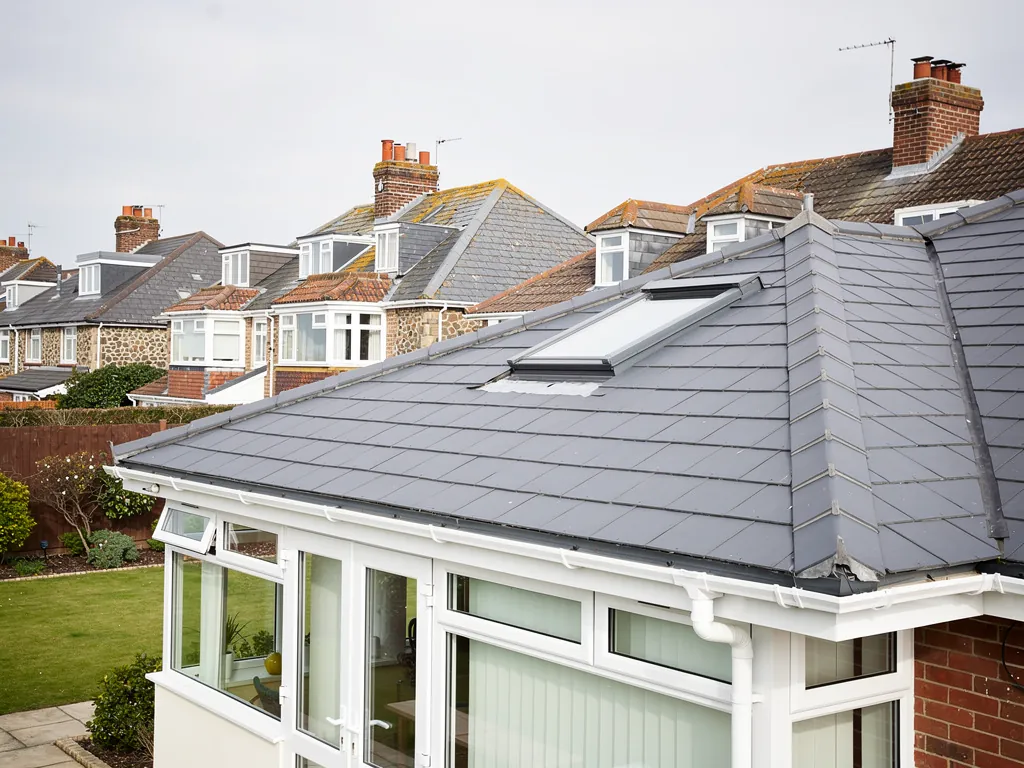
Search for the price of a new conservatory roof and the numbers scatter: a few hundred pounds for sheets, several thousand for glass, more again for a tiled roof with a ceiling. The scatter is not carelessness. A conservatory is one of the most varied things a roofer is asked to price, because the new roof will be no sounder than the frame and base beneath it, and no two frames were built quite alike.
This guide uses Checkatrade's figures, an average of around £10,000 within a £6,300 to £18,225 spread, and explains what sits behind numbers like those. It covers the type of roof, the size and shape of the room, the state of the frame, access, lead at the house wall, guttering and tax. It also sets the price against the other half of the sum, which is how long each kind of roof lasts.
None of it is a price for your conservatory. The written quote follows a survey, arrives as one total, and comes with the survey photographs, which show the roof exactly as it stood on the day we visited.
The national average and what it leaves out
Checkatrade's cost guide, with a table last updated March 2026, gives an average of around £10,000 to replace a conservatory roof, from about £6,300 for a small polycarbonate roof to £18,225 or more for a large glass one. It is a useful marker, and it carries a warning built into the word average: it sits in the middle of jobs that have little in common. A set of new sheets fitted to a sound frame lies well below it. A glazed or tiled roof that needs the frame altered lies above it.
An average also hides the order of the work. Before any new roof goes on, someone has to take the old one off, deal with whatever is underneath and make the junction with the house watertight. On one conservatory those jobs are tiny. On the next they are the largest part of the bill. A frame in good order costs nothing extra to prepare. A frame with soft timber, a corroded bar or a base that has moved takes time and materials before anything new can sit on it.
So a fair price starts with a look at the conservatory. We photograph the roof, the bars and the house wall, then give a plain verdict: re-sheet it, re-glaze it, convert it to a solid roof, or leave it alone because it still has years in it. No upsell to a bigger job when a smaller one will hold.
The sections below take the main things that pull a conservatory roof towards one end of the national spread or the other. Read them as a map of where the money goes, not as a price list, because the only price that counts is the one written after the survey.
How the type of roof changes the sum
The roof type is the largest single choice, and the three common options sit at different points on the price scale.
Polycarbonate is the lightest. Multiwall sheets are cut to fit between the glazing bars, the aluminium or uPVC sections that carry the roof, and held down with caps and seals. The frame takes very little extra load, which is why a polycarbonate roof is usually the lowest-cost new roof. It also lets in plenty of light, but it can run hot in summer and loses warmth in winter.
Glass costs more. Sealed double glazed units are heavier, they must sit on bars that can carry them, and the gaskets and caps have to be right or the bars leak. Some frames built for polycarbonate cannot take glass without strengthening, and that work is added to the bill before the first unit is lifted into place. Our guide on glass, polycarbonate or tiled roofs compares them side by side.
What a solid roof adds
A solid tiled roof is a different kind of job. It brings in new roof structure, insulation, an underlay, battens, lightweight tiles, lead at the house wall and a plasterboard ceiling inside, with plastering and any lighting wiring to follow. It also needs Building Regulations approval, and an application to a building control body carries a fee of its own, set by the body you use. In broad terms the price climbs from polycarbonate to glass to solid, but a polycarbonate roof on a rotten frame can cost more than a glass roof on a good one.
Size, shape and the frame underneath
Area counts, but shape counts almost as much. A plain lean-to has one sloping plane, so the sheets or units run in straight lines and the cuts are simple. A Victorian style conservatory with a faceted front has a ridge, several hips and often a valley where it meets the house. A hip is the angled edge formed where two planes of roof meet around an outside corner, and a valley is the matching junction at an inside corner. Each one needs extra cutting, extra bars and extra sealing, so a small, complicated conservatory can cost more to roof than a larger, simpler one.
The frame is the hidden variable. Timber bars can rot at the joints and at the foot of the glazing. Aluminium and uPVC bars can bow, lose their gaskets or split at the corners. The base wall and the eaves beam carry everything above them, and if either has moved, a new roof will not sit square however well it is made. Doors and windows that stick in wet weather are a hint that something has shifted.
Strengthening for a heavier roof
Swapping sheets for glass or tiles puts more weight on those same members. Sometimes the frame can take it with minor changes. Sometimes new timbers or steel are needed, and that is the point where a quote moves from hundreds of pounds to thousands. We check the frame at the survey and say so before any roof is chosen. Our answer on whether your conservatory frame can take a tiled roof explains what we look at.
Access, scaffold and the house wall
A conservatory is a single storey roof, so it often needs less access equipment than a house. It is also a fragile roof, and nobody can be left to walk across sheets or glass. Crawling boards, a tower or a short run of scaffold may still be needed to reach the ridge and the point where the roof meets the house. Checkatrade's scaffolding table, last updated in October 2026, lists £875 per month for an ordinary two storey semi, £800 for a terrace and £1,000 for a detached bungalow. Those are house figures, and a conservatory job often needs less, but they show how quickly access can become a visible part of a bill.
If the scaffold has to stand on or reach over a public footway, a licence under section 169 of the Highways Act 1980 is needed from the highway authority. West Sussex County Council asks for at least 10 working days' notice and charges £266 for one month. A conservatory at the back of a house seldom reaches the highway, but one on a corner plot or beside a shared path may.
Lead at the house wall
Lead flashing is the strip that seals the new roof against the wall of the house. It is where conservatory roofs most often leak, so it is renewed whenever the roof is replaced. Checkatrade puts lead flashing repairs at £50 to £70 per metre, last updated in June 2026. Add gutters and downpipes if the old ones sag or fall the wrong way, and the labour at Checkatrade's typical £280 to £360 a day for a roofer, and the shape of a bill becomes clear.
Lifespan: the other half of the price
A roof that costs less today can cost more over the life of the conservatory. HomeBuilding, in a guide published on 18 April 2024, gives a typical polycarbonate conservatory roof lifespan of 10 years, and the Eco Experts, updated on 29 April 2024, say 10 to 15 years. Those are typical figures for the material, not promises, and a roof in a sheltered spot with sound seals can outlast one that has been left to clog and crack.
Set that against a spend. If a polycarbonate roof is already near the end of its range, repairs are borrowed time. Each one costs money and a visit, and the underlying problem, such as brittle sheets or perished seals, stays. Replacing the whole roof once may be a better use of the same money than patching it three times.
For glass and solid roofs, how long they last depends mainly on the frame, the seals and the flashing. We would rather tell you what we find in the frame at the survey than quote a number of years that no one can stand behind.
Our answer on how long a polycarbonate conservatory roof lasts looks at what shortens the life of the sheets, such as a blocked gutter, sun wear and a cracked closure strip.
Whatever roof you choose, a little upkeep protects the investment. Clearing gutters, washing off moss and algae gently and checking the seals every year are small jobs next to a full replacement, and they are the quickest way to stretch the years you get from any covering.
VAT, extras and how to read a quote
The standard rate of VAT is 20 per cent, and it is the easiest item to miss when comparing figures. A national average may or may not include it, and a roofer's price may or may not include it either. Ask each roofer in so many words, and ask whether any scaffold or tower, taking the old roof away and clearing the site are inside the total. A total that omits those is not really the lower figure if they appear later as extras.
Insulation can change the VAT picture. Under VAT Notice 708/6, installing specified energy-saving materials carries the zero rate from 1 May 2023 to 31 March 2027, after which they revert to the reduced rate of 5 per cent, and the notice names insulation for roofs. Whether insulation in a conservatory job qualifies turns on how the work is invoiced, because a mixed job can count as a single supply. We explain how it applies on the quote.
What goes into our quote
After the survey you get the written quote, which is one total figure, set at a good and fair price. The survey photographs come with it, so what you are paying for is something you have seen.
Ask for it in writing, take your time over it, and put any question you have to us. If the frame needs work, we tell you before you decide on the roof. The conservatory roof replacement page sets out the jobs we take on, from new sheets to a full tiled conversion.
Questions
Conservatory roof price questions
Is a bigger conservatory always dearer to re-roof?
Usually the larger roof costs more, but not always. Shape matters as much as size. A large, plain lean-to with sound bars can cost less than a small faceted conservatory with several hips and a valley, because each junction adds cutting, sealing and bars. The state of the frame can outweigh both, which is why the survey comes before a price.
Can I get a grant towards a new conservatory roof?
Most homes will not. The national schemes fund insulation and heating rather than re-covering a roof, ECO4 closes on 31 December 2026, and the Great British Insulation Scheme has had no new installations since 31 March 2026. Arun District Council can point you to local support for anyone whose income is low or who has a disability, and gov.uk shows which national schemes are open.
Does an old conservatory roof reduce the value of the house?
We cannot give a valuation. What we can say is that a roof which leaks, clouds over or overheats makes the room hard to use, and a buyer will notice that on a viewing. A dry, sound roof with its paperwork in order is easier to sell than one that leaves open questions for the next owner to deal with.