
Conservatory comfort · 10 min read
A conservatory too hot in summer and cold in winter: what the roof can fix
A conservatory that bakes in July and chills in January is usually a roof problem plus a few smaller ones. Here is how to tell which is which before you spend anything.
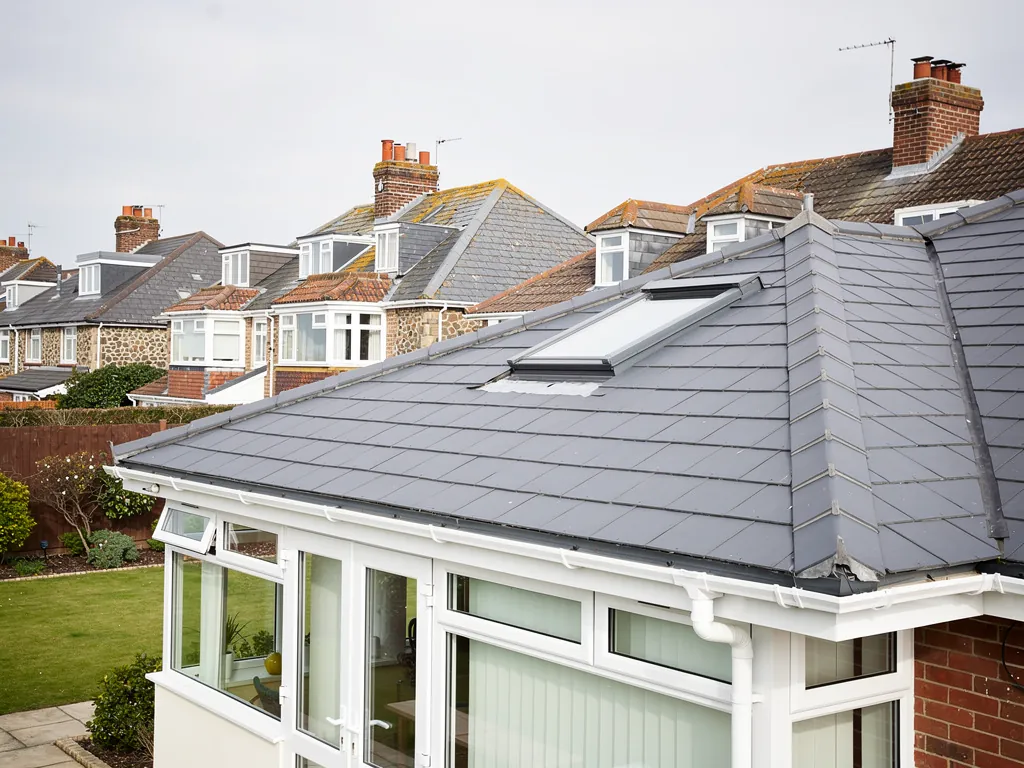
The story is nearly always the same. In summer the room is too hot to sit in, and by midwinter it is too cold to use at all. The sofa has gone back into the lounge, the dining table has turned into a place for boxes, and the door stays shut. The conservatory was meant to be an extra room, and it behaves like a greenhouse bolted to the back of the house.
The roof is the largest surface in that room that looks up at the sky, so it takes the blame first, and often fairly. It is rarely the whole story. Glazed walls, the doors, the floor, the direction the room faces and whether anything lets stale warm air out all play a part, and a new roof fixes only some of them.
This guide sorts out which parts of the problem a roof can change, which parts it cannot, and what is worth trying first. It explains how polycarbonate, glass and solid roofs behave differently, what a replacement involves where consent is concerned, and how we look at a roof before giving a price. Our conservatory roof replacement page describes the full service.
Why a conservatory swings between two extremes
A conservatory is built from large panes of glazing and thin roof sheets on a light frame. That is what makes it bright, and it is also what makes it unstable as a room. Sunlight passes straight through the glazing and warms the floor, the furniture and the air. A conventional house wall is thick and heavy, so it soaks up heat slowly and gives it back slowly. A conservatory has very little of that heavy material, so the temperature rises quickly on a sunny afternoon and falls just as quickly once the sun goes.
In winter the same thin construction works against you. Warm air from the house drifts into the room, meets cold glass and plastic, and the heat leaves through them. You can feel the cold coming off the roof sheets when you stand underneath on a frosty morning, and you can often see the damp it leaves behind as condensation on the inside face.
Summer and winter have different causes
It helps to treat the two seasons separately. Summer overheating is mostly about sun coming in faster than it can be shed. Winter chill is about heat escaping faster than the heating can replace it. A fix that helps one season does not automatically help the other, which is why a cheap blind can solve July and do nothing for January.
The roof matters in both seasons because it is exposed to the sky all day and all night. Walls and the floor are shielded by the ground and the neighbouring house. If you want to understand where your own room loses or gains the most, stand in it on a hot afternoon and a cold morning and note where the heat and cold seem to come from. We ask the same question at a survey.
How much of the problem is really the roof
The roof carries a large share of the blame, though never all of it. Before anyone talks about replacing it, walk round the room and look at what else is letting heat in or out.
- The direction the room faces. A south or west facing conservatory takes the afternoon and evening sun, and no roof will turn that into a shady room.
- The glazed walls. In many conservatories the side glazing is a bigger area than the roof, and it admits sun at a low angle in the evening.
- The doors and opening windows. Worn rubber seals and sagging door hinges let cold air in all winter.
- The floor. A bare tiled floor over a cold base takes warmth from your feet.
- The link to the house. A connecting door left open means the house heating tries to warm the whole glazed room.
A roof is usually the largest single part of the problem. It faces the sky, it is the area most exposed to the summer sun at midday, and in winter it is where warm air collects and leaves. That is why a change of roof can make a visible difference where changes elsewhere will not.
What a roof cannot do is cure the glazed walls. A well insulated solid roof on a room with big single sheets of side glass will still let in a lot of afternoon sun through the sides. We raise this at the survey, because there is no point selling a new roof to someone whose real problem is a west facing wall of glass. Sometimes the smaller job is to improve the roof and add blinds to the sides.
Polycarbonate, glass and solid: how each roof behaves
Three roof types account for nearly every conservatory. They behave very differently in the heat and the cold, and the differences are the reason a replacement can change how the room feels.
Polycarbonate sheets
Polycarbonate is a rigid, light plastic made in multiwall sheets. It is the usual covering on older and budget conservatories. It lets in plenty of light, but the thin sheet does little to slow heat moving through it, so the room heats quickly in sun and loses warmth quickly at night. It also ages. A typical lifespan quoted by HomeBuilding is around 10 years, and the Eco Experts give 10 to 15 years. As the sheets cloud and the seals fail, the room gets noisier in rain, darker, and more prone to condensation.
Glass roofs
A glass roof uses sealed double glazed units, often with a coating that cuts the sun's heat while still letting in daylight. It is a clear step up from polycarbonate for comfort, and it keeps the bright, open feel. It still lets in the full sky view, so a south facing room can be warm in summer even with a good coating, and it does not insulate like a solid roof.
Solid and tiled roofs
This type swaps the glazing overhead for an insulated structure, usually with a tiled or slate look, and plastered or panelled underneath. It cuts sun gain from above and holds heat in during winter, so the room stays steadier through the year. It also takes away some natural light, which is why many solid roofs include roof windows or a glazed lantern. Our guide to glass, polycarbonate or tiled roofs compares them in more detail.
Cheaper fixes worth trying before a new roof
Replacing a roof is a real investment, and some rooms improve noticeably with smaller changes. These are worth trying first, particularly if the roof is still in good condition.
- Opening vents. Overheating gets worse when hot air has nowhere to go. Roof vents and opening side windows let warm air escape, and a through draught on a hot day does more than you might expect.
- Blinds. Roof blinds on the inside, or shading outside, stop the sun reaching the room in the first place. Outside shading works better than inside shading because the heat is stopped before it enters the glazing.
- Solar control film. A film on the glazing cuts some of the sun's heat. Some films also darken the room, so try a small panel first.
- Insulated roof panels. Panels that fit under the glazing can help in winter and add some shade in summer.
- Draught sealing. New seals on doors and opening windows cost little and take little time.
None of these gives the steady comfort of a solid roof, and several of them make the room darker. If you want to see how blinds and insulation compare, our answer on roof blinds or insulation explains the trade-off.
If the roof is leaking, clouded, or noisy, these workarounds are only a delay. A leaking roof needs the covering and seals fixed whatever you do about temperature, and an old roof that is giving up is better replaced once than patched year after year. Where a smaller fix will last, that is the job we recommend and price. A fix that buys one more summer is worth knowing about, and we will tell you plainly where the limit is.
When a new roof is the right answer
A replacement makes sense when the roof is the main cause and the cheaper fixes have not been enough, or when the roof itself is failing. These are the signs we look for.
- Clouded or yellowed polycarbonate sheets that have lost their clarity.
- Leaks at the sheet joints, the ridge or the wall where the conservatory meets the house.
- Condensation that drips from the roof in winter.
- A room that you want to use all year, as a dining room, an office or a playroom.
- A frame that is sound but a covering that has aged.
- Sheets that rattle or drum in heavy rain so loudly that you cannot sit in the room.
Any one of these on its own may have a smaller cure. Together they tell us the covering has done its job, and that putting money into patches would only postpone the bill.
Do not overlook the frame underneath. A solid roof is heavier than polycarbonate, and the frame, the walls and the base need to cope with the extra weight. Our answer on whether a conservatory frame can take a tiled roof explains how that is checked.
Consent when the roof changes
A glazed or polycarbonate replacement is a simpler change than a solid one. A solid roof is different: the Planning Portal makes it clear that a replacement roof falls under the Building Regulations. That means an application through building control, which you can make to the council or to a registered building control approver. At the survey we explain which route applies, and we deal with the notification where the work needs one.
If your home is in a conservation area or is listed, check with the council's planning team before you commit, because those places have their own rules on external changes.
How we look at the roof and give a price
We start at the roof itself. At the survey we look at the covering, the seals, the ridge, the gutters, the junction with the house wall and the frame underneath, and we photograph what we find. The pictures come with the quote, so the faults we point to are ones you can look at yourself.
Alongside that comes a plain verdict. If a repair will hold, that is the advice. If the covering has simply worn out, you will hear that as well. If the real cause of the overheating is a west facing wall of glass, we tell you that before you spend on a roof that cannot fix it.
Our quote is written and carries a single total figure for the work. Four things move it: the footprint and shape of the roof, the type you pick, how awkward the conservatory is to get at, and whether a scaffold has to go up. Scaffolding that stands over the pavement needs a highway licence, so a wait before the start date is possible.
When two firms quote, ask each three questions: whether each price includes VAT, which is 20 per cent on most work, whether it includes scaffolding, and whether the Building Regulations notification is covered. A figure that leaves any of those out is not the lower price once they turn up later.
Nothing is left behind once the job ends, because the old roof leaves with us and the base is swept clear. If you would like to be sure the roof is the right place to spend money, share some pictures of the room, from inside and outside, along with the direction it faces and what bothers you most. That is enough to tell you whether to book a survey or try a smaller fix first.
Questions
Heat, cold and the conservatory roof
Will a solid roof stop a south facing conservatory overheating?
It will help, because it removes the largest area of glazing facing the midday sun and adds insulation above you. It will not stop sun entering through the side glazing, so a south or west facing room may still warm up on a bright afternoon. Opening vents and shading on the sides finish the job.
Is clouded polycarbonate making my room colder?
Clouding mostly reduces light, but it usually goes with ageing seals and sheets, and those let heat escape and water in. If the sheets are old, the room is likely to feel cold and look dim for the same reason. A survey shows whether new sheets, or a new roof, makes more sense.
Do I need approval to change the roof to keep the room cooler?
A solid roof needs Building Regulations approval, as the Planning Portal says a new roof must comply with them. A like-for-like glazed change is simpler, but the rules for your property depend on its location and status. Check with Arun District Council's planning and building control teams, and we explain the position at the survey.