
Storm preparation · 9 min read
Before the storms: preparing a coastal roof for winter gales
Most storm damage starts as a small weakness that sat unnoticed through the summer. A short autumn check, from the ground and from the loft, finds many of them before the first big blow does.
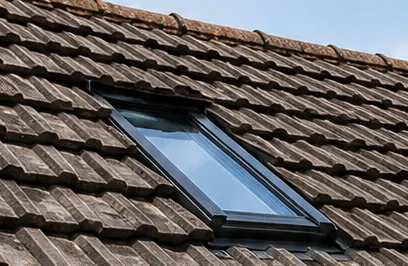
Nobody enjoys thinking about winter in September, yet the least costly storm repair is the one that never happens. A roof near the Channel spends half the year being pushed, soaked and dried out again. Fixings loosen, mortar crumbles, sealant splits and gutters fill with whatever the summer dropped into them. When a proper gale arrives it finds the weakest spot on the roof and works at it.
This guide is a plain checklist for homeowners in Bognor Regis, the Manhood Peninsula and the harbour villages. Some of it you can do yourself with a pair of binoculars and a torch. The rest is better left to a roofer who can get up safely, and we say which is which. You will not need to buy anything or climb anything for the first two parts.
None of the advice here promises that a roof will come through a bad winter untouched. Gales still win sometimes. What preparation does is shrink the list of things that can go wrong, and it leaves you holding photographs of the roof in good order, which counts for something if you ever need to call the insurer. If the worst does happen, our guide to a storm-damaged roof picks up from there, and the emergency roof repairs page shows how we handle urgent jobs.
Why the autumn check pays for itself
Roofs rarely fail from one cause. A loose tile, a cracked flaunching and a blocked gutter are each minor on their own. A strong wind lifts the loose tile, rain then runs into the gap, the blocked gutter overflows into the eaves and the damage spreads along the timber. A small problem fixed in October stays small, and the cost of fixing it barely registers. The same problem found in January, in the dark, with water coming through the ceiling, is a bigger job and a worse week.
Timing matters for practical reasons too. Roofers get busy after the first big storm of the season, and work that could have been booked quietly ahead of time turns into a queue. If a repair needs scaffolding over the pavement, the licence takes time. Waiting time on a scaffold licence is real. In West Sussex the county council wants a minimum of 10 working days from application to erection. A job needing scaffold on the pavement cannot happen the day you spot the problem, because the licence has to come first. Getting a look at the roof early gives that lead time room to run.
What the coast changes
Homes here sit low and close to open water, so roofs take sea weather and wind-driven rain on their exposed slopes. That puts a premium on the edges of the roof, where wind lifts first, and on anything that depends on a seal or a bed of mortar to keep water out.
A ten-minute walk-round from the ground
Pick a dry, bright morning and walk right round the house. Stand back far enough to see each roof slope in full. Binoculars or a phone with a good zoom bring detail closer, so you never need a ladder.
Look first for line and pattern. Tile courses should run straight. A dip, a ripple or a tile sitting a little higher than the ones around it suggests a failing fixing or a rotten batten beneath. Look for missing or cracked tiles, slipped slates, broken or leaning chimney pots, and any moss or vegetation building up in valleys or on north-facing slopes. Check the ridge line at the top is straight and the mortar joints still look whole.
Then look down. Tile fragments in the borders, mortar crumbs on a path or a flat roof, and black stains on the wall below a gutter all say something about what is happening above. Make a note of anything you find and photograph it with the date on the file.
The loft check
Take a torch into the loft on a dry day. You are looking for daylight where none should be, damp or dark staining on the timbers, wet insulation, and drips or a musty smell. Underlay that sags or has torn is a warning. So is a ceiling that shows brown rings below a particular patch of roof. Put your phone on its side against the underside of the roof and take pictures that show where any marks sit relative to the chimney, valley or eaves.
Do not walk on the joists carelessly, and never step between them onto the ceiling below. If you are not comfortable in the loft, ask someone to go with you, or leave it to the roofer.
Ridges, hips and verges: the edges the wind goes for
Wind lifts a roof at the edges first. On a pitched roof, that means the ridge along the top, the hips where two slopes meet at an outward angle, and the verge, the sloping edge where tiles finish over the gable wall. These are also the parts most often done badly in the past, with the capping held by a mortar bed and little besides.
The standard has moved on. BS 5534 was revised in 2014, and it stopped trusting a mortar bed on its own for capping tiles along a ridge or hip: each now needs a mechanical fixing too. BS 8612:2018 is the test specification for dry-fix ridge, hip and verge kits, in which the capping is screwed or clipped with no mortar bed. Marley, the tile maker, points out that working to BS 5534 is not a legal requirement, yet it is the yardstick good roofers use. Our ridge tile repairs page explains how each method works and how to tell which one your roof has.
Signs a ridge or verge needs attention
On a ridge, you are looking for cracked or missing mortar, capping tiles that are out of line, daylight under a cap or green growth in the joints. At a verge, look for the mortar fillet along the gable edge falling out, tiles hanging over unevenly or a gap between roof and wall. Any of these will let wind-driven rain in, and the first strong gust can lift the whole run.
Checkatrade's June 2026 table gives UK ridge tile repairs at £50 to £70 per metre. Treat that as a national guide rather than a price for your roof, since access and scaffold can shift it a long way. Our own price comes in writing, as one sum, once we have seen the roof.
Chimneys, flashings and lead
Anywhere a roof meets something vertical is a place where water can get in. Chimneys, walls, dormer cheeks and roof windows all rely on flashings, strips of lead worked into the mortar joints and laid over the tiles so rain is sent down the slope. They get less attention than tiles, because they tend to be hidden from the ground, but they are a frequent route for leaks in strong winds.
From the ground, check the chimney for a visible lean, cracked pointing or a pot that is sitting at an angle. Look for lead that has lifted away from the brick, split along a fold or slumped down the slope. The flaunching, the mortar fillet that holds each pot, should be dense and unbroken, shedding water outward. Cracks there let rain into the flue and the stack.
Lead and sealant
Lead is sold by code, a number tied to its thickness. In the Royston Lead brochure, code 4 is the lightest listed for flashings, and code 3 is recommended for soakers only. If a flashing has been patched with sealant, treat it as a temporary fix. Sealant dries, shrinks and splits, and a bead along a lead edge may last a season or two.
MyJobQuote, last updated 22 September 2026, gives a typical UK range of £150 to £250 for a patch repair to chimney lead, and £350 to £460 for full replacement without scaffold, rising to £700 to £920 with it. The gap is mostly access. For more on the chimney side, our chimney repairs page covers pots, stacks, flaunching and flashings in detail.
Flashings and flaunching fail slowly, so catching a cracked fillet in autumn is far cheaper than a ceiling repair in February.
Gutters, trees and flat roofs
Gutters carry rain off the roof, and when they block, the water backs up under the lowest tiles and runs into the fascia and soffit, the boards that close the roof edge and underside of the overhang. Clear leaves, moss and silt before the autumn leaves finish falling, and check that joints are sound and brackets are firm. Gutters need a slight fall towards the outlet. Manufacturers such as Brett Martin give roughly 1mm for every 600mm, with brackets no more than 900mm apart. Sagging runs that hold water are better re-hung than patched.
Trees close to the house deserve a look as well. Overhanging branches drop debris into gutters and valleys, and in a gale a heavy limb can strike the roof. Ask the tree's owner, or a tree surgeon, to cut back branches that overhang before the winter, and check any rules that apply if the tree is protected.
Flat roofs and extensions
Flat roofs carry a lot of the weather-exposed risk on bungalows and extensions. Walk the edge with your eyes and look for lifted trims, split seams, blisters in felt and puddles that stay long after rain has stopped. BS 6229:2025 sets a minimum finished fall of 1:80 for flat roofs, and roofers usually design steeper, around 1:40, so the finished roof still drains. Standing water points to a roof that is not falling properly, or a gutter that is not clearing. Our flat roofing page explains the main coverings and their lifespans.
Loose edge trims are an easy way for wind to get underneath a membrane and peel it back. If you can lift the edge of a trim by hand, it needs fixing before the first gale, not after it.
Booking the work, and what to keep
Not everything on the list is a job for the weekend. Work at height, ridge refixing, lead and chimney repairs, and anything that needs scaffold are best done by a roofer with the right equipment. A good time to ask for a survey is early autumn, when diaries are open and the weather is still kind enough for repairs to bed in. Photographs of the roof taken from the ground, and a note of what you saw, make a useful starting point for that conversation.
When we survey a roof we photograph the faults and tell you plainly whether each one needs a repair, a patch to hold for now, or something bigger. Where patching will do the job, patching is the advice, with no nudge towards a new roof. When you hold our price up against others, check whether each quote includes scaffolding and VAT.
Wildlife and insurance
If you find signs of bats in the roof space, stop and take advice before disturbing anything, because bats and their resting places are protected by law. Insurers also treat a storm differently from long-term wear. Which? classes a leak through a badly maintained roof as wear and tear, not storm damage, so a dated record helps. Surveys and repairs noted with dates show that a roof has been looked after.
Finally, keep the survey photographs, the quote and the receipts together in one folder. If the weather does break something, you will have a before picture ready, and the roofer will have a starting point for the repair.
Questions
Getting ready for winter gales
When is the best time of year to have a roof checked before winter?
Early autumn is ideal: the weather is dry enough to work, the diaries are open and any repair needing scaffold has time to get its licence. Leaving it until the first named storm means joining a queue, and work done in cold, wet weather has less time to settle before the next gale.
Can I check my own roof for storm weak points safely?
You can do a lot from the ground with binoculars or a zoom lens, and from inside the loft with a torch. Look at tile lines, the ridge, chimneys, gutters and the underside of the roof. Leave anything that needs a ladder, a scaffold or walking on the roof to a roofer who is equipped for it.
Is a sealant repair enough to get a flashing through the winter?
Sometimes, as a stopgap. Sealant dries and splits, so it is not a lasting answer on lead or flaunching. If a flashing has lifted or split, the fix that holds is to re-dress or replace the lead properly. Ask the roofer to show you photographs of the problem so you can judge for yourself.