
Storm damage · 9 min read
Storm-damaged roof: what to do first
A step-by-step order of play for the hours after a gale has damaged your roof: protect people first, record the damage, limit the water, tell your insurer and then arrange a proper repair.
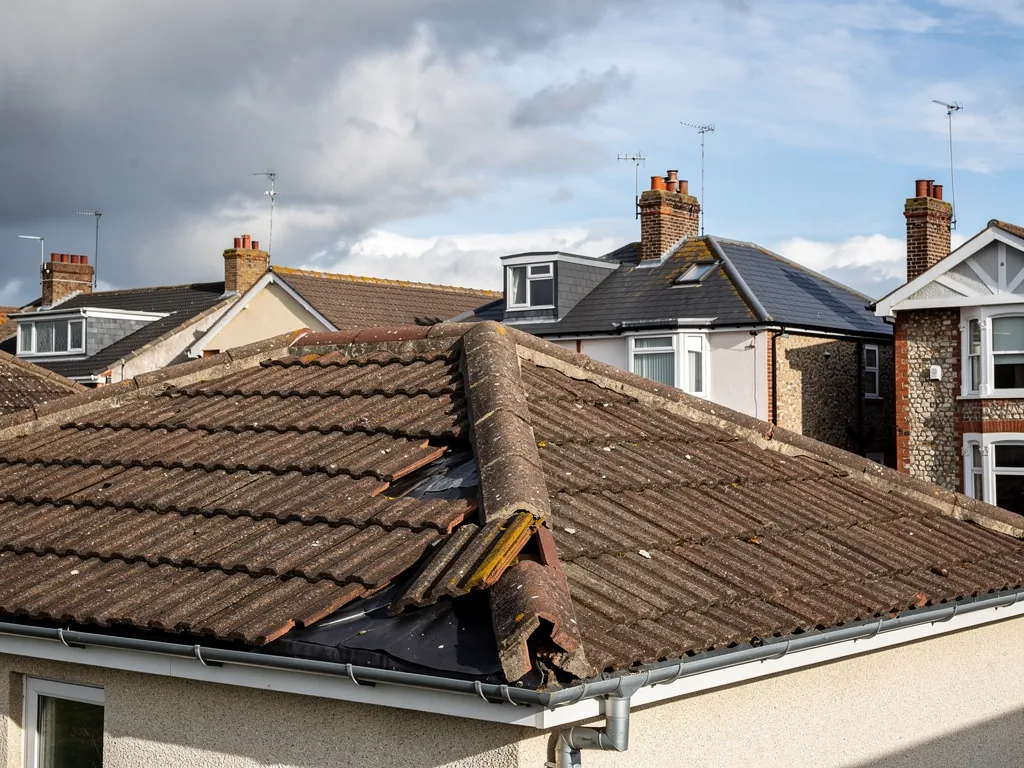
The morning after a gale you step outside and see slates on the lawn, a ridge tile in the road or a gutter hanging off the fascia. The temptation is to grab a ladder. Please don't. The order in which you do things matters more than the speed, and the first jobs are all done from the ground and from indoors.
Living near the Sussex coast means sea weather arrives with some force, and a sound roof can be caught out by one bad night. A storm can also expose a weakness that was building for years: a tired ridge bedding, a lifted flashing, a slate with a rusted nail. That distinction between sudden damage and long-term wear affects insurance later, which is why this guide asks you to photograph everything early.
What follows is the sequence we would follow ourselves if it were our own house. It covers safety, evidence, containing the water, the call to your insurer, choosing someone to do the work and what to expect once they arrive. Where a point has a longer page of its own, we link to it.
None of it needs special equipment. A phone, a torch, some buckets and a little patience will do for the first stage.
Make people safe before the roof
The roof can wait an hour. People cannot be repaired. Circle the house at a distance and look up before you go near the walls. Loose slates, tiles and chimney pots can still drop, and so can a length of ridge or a hanging gutter. Keep children and pets out from under the damage, and move cars away from it as well.
Indoors, look at the ceilings below the damaged part of the roof. A ceiling that bulges, sags or shows a brown stain that is spreading is carrying water, and it can come down without much warning. Leave that room. If water is running near a light fitting, a socket or the wiring, stay clear of it and speak to an electrician before using those circuits.
If a tree has come down on the house, or a chimney stack has shifted, treat it as a structural problem. The Institution of Structural Engineers (IStructE) puts safety first and adds that the local authority's Building Control team is where a dangerous structure should be reported. Our page on a tree fallen on a roof goes through what comes next.
Do not go up there yourself
Wet slates and tiles are slippery, and some roof materials are fragile. Asbestos cement sheeting is fragile whatever its age, according to the HSE, and a building from before 2000 should be treated as containing some. Stay on the ground and use binoculars or a phone zoom.
Record the damage before anything moves
Photographs are the most useful thing you can have, for your insurer and for a roofer. IStructE calls them vital to a claim, since they show the damage as it was. Take them before anyone moves anything.
Work from outside to inside. Start with wide shots that show the whole house and the damaged area in context, then closer ones of individual tiles, slates, lead, the chimney and any debris. Photograph fallen items where they landed, including anything that has hit a car, a fence or a neighbour's property. Then go indoors and photograph the ceilings, walls and floors that have been affected, with something in the frame such as a tape measure or a coin to show size.
- Let your phone record the date and time, and do not edit or filter images.
- Film a short video walking from room to room if water is still coming in.
- Hold on to any broken pieces that fall, unless they are a hazard.
Which? makes a related point about belongings: do not bin damaged items unless they are a risk to health, because they may form part of a claim. Roof material that has come off is no different.
We work the same way when we survey a damaged roof. Our survey photographs, taken on the roof itself, go with the written quote. If you have already taken your own, send them over, using the guide to photographing roof damage as a checklist.
Stop the water getting further in
Once people are safe and the photographs are done, limit what the water can spoil. Put buckets or bowls under drips, with towels round the edges to stop splashing. Move furniture, rugs, electrical goods and anything precious out of the room, or at least away from the wet patch. Pull back carpets if you can without strain, and lift curtains clear.
A bulging ceiling is a particular worry. Water collects above the plasterboard, and the weight can bring it down. Keep out of the room, and leave any attempt to release the water to a professional, because standing underneath it is the one place you should not be.
Outside, the temporary measure is a covering over the damaged slope, usually a tarpaulin fixed properly rather than weighed down with bricks. That is a job for a roofer, working at height with the right access, and it is what people usually mean by making a roof safe. Our guides on tarpaulins on a roof and what a make-safe covers explain the method.
Check the loft too, if you can reach it from the hatch without stepping off the joists. A torch will show wet insulation, daylight where there should be none, or a slipped felt. Our loft check page explains what each sign means.
Tell your insurer first
Before you book anyone, contact your home insurer. Which?, writing on 20 November 2025, urges an early call to the insurer and notes that many run emergency helplines. Where you end up arranging emergency repairs yourself, it adds, tell the insurer and hold on to every receipt, because those costs form part of the claim.
IStructE says much the same and lists what to pass on: any urgent work already done, including any temporary cover put on to stop leaks, plus photographs of the affected areas.
Storm damage and wear and tear
Insurers separate sudden damage from gradual failure. Which? cites rain getting through a roof nobody maintained as an everyday wear-and-tear case, and quotes Financial Conduct Authority data that only 32% of storm-related claims made in 2024 resulted in a payout. That is a reason to keep your evidence tidy, not a reason to panic. A roofer can describe what the roof looks like, but only your insurer decides whether a claim is accepted. We cannot promise an outcome, and nobody honest can.
If you are unhappy with the response, complain to the insurer first. The Financial Ombudsman Service is the next step, and Which? points out that it costs nothing to use.
Our pages on storm damage insurance claims and on storm damage versus wear and tear go into the detail.
Choosing who comes to the roof
Storms bring door knockers. A stranger who says he spotted loose tiles from the road and can fix them now for cash is the kind of caller to be wary of. A genuine roofer can explain what is wrong, show you a photograph of it and give you a written quote. If someone cannot do those three things, say no.
Get the price on paper, as a single sum. Ask whether it includes VAT and any scaffolding. Ask what happens if the survey finds more than the visible damage, and how the work is guaranteed. Be cautious about any request for the full amount before work begins.
You also have rights. Where you have asked a trader to come out for an urgent repair, that visit sits outside the 14-day cancellation period that applies to many contracts signed at home; anything extra sold to you then remains covered by the rules. Our page on cooling-off rights for urgent repairs gives the detail. A clear written quote before work begins is your best protection.
We put leaks and storm damage at the front of the queue, stop the leak before we talk about anything else. Sometimes the answer is refixing five tiles. Sometimes it is a longer conversation about the condition of a whole slope. Either way you hear the verdict before the price, and you get the price on paper.
Different roofs, different storm damage
What a gale does depends on what is on the roof. On tiled pitched roofs, the usual casualties are ridge and hip tiles, verges and loose single tiles. Ridge and hip fixing changed with the 2014 revision of BS 5534: each cap now needs a mechanical fixing, since mortar is not left to do the job unaided. A ridge that blows off and was only bedded in mortar is a candidate for being refixed properly rather than simply re-bedded.
Verges are the side edges of a roof where it meets a gable wall. Where a verge has been pointed in mortar and the mortar has failed, the tiles at the edge can lift. Marley warns that a windward slope below 30 degrees can see severe suction, which is why low-pitched roofs deserve a careful look after a blow.
On slate roofs, a slipped slate often means a failed nail. Where several have gone, the slope may need stripping and relaying instead of repairing slate by slate. Flashings, the lead strips that seal the roof against a chimney or wall, can lift or tear. Flat roofs suffer split seams, lifted edge trims and blown-off felt. Our pages on tiles blown off in a storm and flat roof storm damage cover each in turn.
If your home is listed or in a conservation area, ask the council about consent before changing the look of the roof. Inside the South Downs, the National Park Authority says ordinary maintenance and small matching repairs made in place need no listed building consent.
After the make-safe: the proper repair
A tarpaulin or a temporary patch is not the end of the job. It holds the weather off while a proper repair is arranged, and it should not be left for months. Water still finds its way past a temporary cover in time, and a covering that moves in the wind can tear more tiles off. Our page on how long a temporary repair lasts covers this.
When you book the repair, expect a survey first. A roofer should look at the damaged area, the surrounding tiles or slates, the lead, the timber underneath and, if possible, the loft. The aim is to find out whether the storm exposed other weaknesses nearby. Once the survey is done we send a written quote with one total on it. Where the access tower or scaffold has to sit on the public footway, the council as highway authority licenses that, and the wait varies, so ask early about timing.
Roofs sometimes hold nests or roosts, and the creatures involved are protected, so a good roofer looks first.
Keep your paperwork together: photographs, receipts, the insurer's reference, the written quote and any report. If the claim is accepted, it will help. If it is not, you still have a clear record of what was done and why.
For the wider picture, our emergency roof repairs page sets out how we work, and the check your roof after a storm guide gives a calm, ground-level routine for the following days.
Questions
Storm damage questions
Should I climb on the roof to check for storm damage?
No. Use binoculars or a phone zoom from the ground, and check the loft and ceilings from indoors. Wet roofs are slippery and some sheet materials give way underfoot. Photograph what you can see, then ask a roofer to survey it from the roof with proper access.
Do I tell my insurer before or after getting a roofer?
Before, wherever you can. Photograph the damage first, then ring the insurer and ask what it expects. A temporary covering to keep rain out is a sensible step, and receipts for it matter. Policies differ, so read yours, and do not agree to a full repair before the insurer has been told.
Can a storm-damaged roof wait for the weather to improve?
Sometimes the proper repair can, but the water cannot. If rain is entering the house, it needs a temporary cover straight away. If the damage is a few lifted tiles and the loft is dry, a booked repair may be fine. A roofer can judge which after seeing photographs of the roof.