
Leaking garage roofs · 9 min read
Leaking garage roof in winter: quick fixes and real repairs
What to do when a garage roof starts dripping in winter: make the space safe, use stopgaps that help, work out where the water enters and decide between a patch and a proper repair.
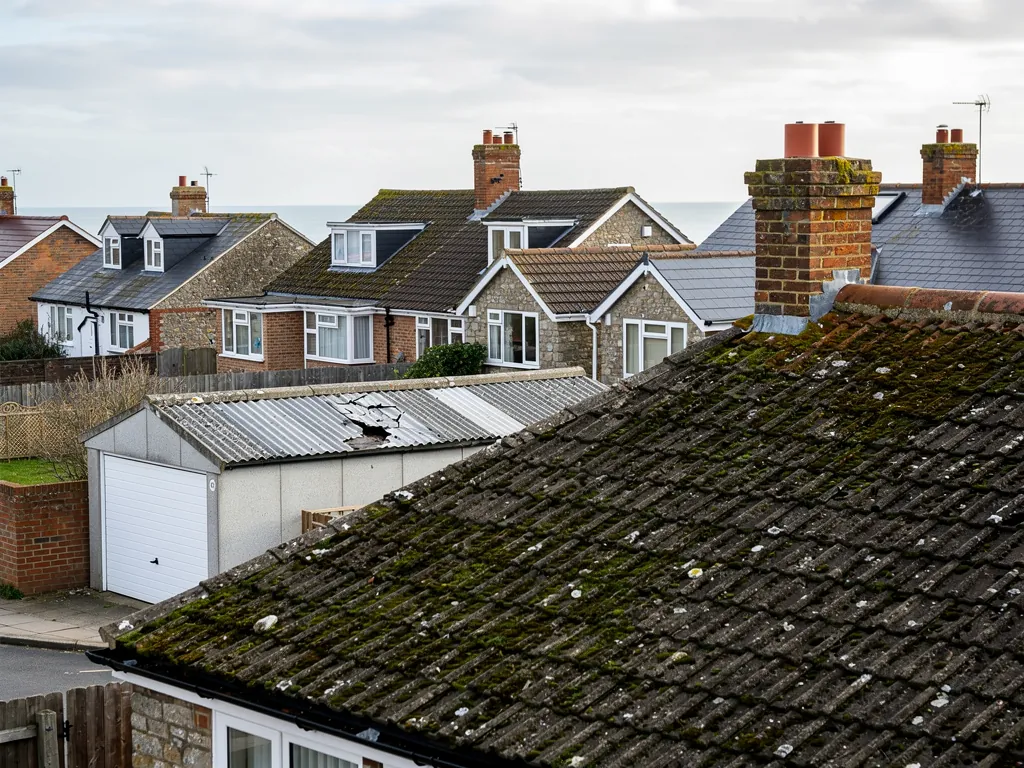
A garage roof usually starts to leak on a wet night, when nobody can see it. You hear the drip on the bonnet or find a damp patch on the bench in the morning, and the first question is whether this is an emergency or something to sort out when the weather improves.
The answer sits in between. A leak is rarely dangerous in itself, but it keeps getting worse for as long as it runs. Water soaks into the deck, lifts the felt from below and swells the edges of boards, so a split that would have taken a morning to patch in November becomes a section of rotten decking by February. Fixing the cause early is cheaper than clearing up after it.
This guide takes the sequence in order: safety, stopgaps, finding the source, the real repair, the paperwork for insurance and what to expect from a survey. The figures come from named national guides, and none of them is a quote. Your own written total follows once somebody has looked at your garage roof.
Make the garage safe before you do anything else
Start at ground level. Water finding its way into a garage can reach the wiring, the consumer unit, a freezer or a charging point for an electric car, and none of those mix with it. If water is running near sockets, lights or a fuse board, switch off at the supply when it is safe to reach the switch and leave the repair to someone qualified. Then move anything that will spoil: paper, cardboard, tools that rust, paint tins that sit on the floor.
Next, check the ceiling. A sagging, bulging or dark and sodden patch of plasterboard or boarding can hold a surprising weight of water. Putting a bucket beneath it and piercing the lowest point of the bulge lets the water out in a controlled way, instead of letting the whole ceiling drop on you. Stand clear while you do it.
Keep off the roof itself
Climbing onto a wet garage roof in winter is how people end up in hospital. Felt is slippery when damp, moss makes it worse, and a flat roof gives no warning where the edge is. Many garages have rooflights or corrugated sheets that will not take a person's weight. HSE names fibre cement sheets and rooflights among fragile roof materials, and it adds that a roof of asbestos cement should always be treated as fragile. A surface that looks solid from the top of a ladder may not be. If the garage was built before 2000 and has corrugated sheets, assume they could contain asbestos and keep your hands off them.
Photograph the leak from inside, with the date, and note where the water is falling. Those pictures help whoever looks at the roof, and they matter later if you make an insurance claim.
Stopgaps that help, and ones that make things worse
A stopgap should buy a few days, not hide a problem for a season. Some of the things people reach for do exactly the opposite.
What helps: buckets and a plastic sheet to protect belongings; clearing leaves and debris from the gutter or outlet if you can reach it safely from the ground or a firm ladder; and, if a roofer advises it, a temporary covering over the damaged area. IStructE's storm advice includes passing on to your insurer any urgent work you have done, a temporary cover being its example, so write down what you did and why.
What does not: lashing a tarpaulin down in a gale, which can tear off tiles, edge trims and the felt itself; smearing roof sealant over wet felt, which seals the damp in; and spraying foam over a leak. The Energy Saving Trust advises against foaming a roof that is still leaking, and the water stays trapped behind the foam, unable to dry.
Small splits on felt
A bitumen repair tape or cold-applied patch can hold a small, dry split for a short while. It needs a clean, dry surface, and in January that is hard to get. Treat any such patch as a way of reaching the next dry spell, not as the repair. If the felt is bubbled, curling at the edges or cracked across a large area, patching it again and again costs more than doing it once.
When you are not sure whether to climb up, send photographs and let a roofer judge. Our guide to whether a roof leak counts as an emergency sets out when to act at once.
Finding where the water gets in
Water on the garage floor tells you where it ended up, not where it entered. Roofing water runs along timber, down felt laps and over the tops of walls before it drips. The stain on the ceiling can sit a metre or more from the hole.
On a flat garage roof, the same handful of places keep turning up. The felt or membrane may have split, usually along a lap or where it was folded over an edge. A blister may have opened. Water may be ponding in a dip and finding every pinhole. The outlet or gutter may be blocked, so water backs up under the covering. The edge trims and drip details may have lifted. Or the line where the garage roof abuts the house may have failed, which is why the flashing there is dressed in lead and not just sealed with mastic. Our guide to finding a flat roof leak goes through the checks.
On a pitched garage, look for slipped or cracked tiles, a loose ridge, failed flashings at the house wall and an underlay that has split. Wind-driven rain can push water up a tile lap that stays dry in ordinary showers.
When it is not a leak at all
A garage that drips only on cold, still mornings, or that has water beads on the underside of metal sheets, may be suffering condensation. Steam off a damp coat, a hosed-down car or a washing machine hits a cold surface and condenses. Look at the weather record: if drips arrive without rain, suspect condensation. Our answer on why a garage roof drips inside explains the cause and cure.
Corrugated sheets add their own causes: cracked sheets, missing or rusted fixings and open side laps.
When a patch is enough and when it is not
The question that settles it is what lies under the covering. A patch works on a dry, sound deck. It fails over wet boards, because the covering sticks to wet timber badly and the damp keeps rotting the deck from beneath. Press on the roof from the inside if you can reach it. Spongy, dark or flaking timber says the deck is wet or rotten.
Age is the second test. Less, in a flat roof cost guide whose table is dated March 2026, gives torch-on felt 10 to 20 years. It notes that careful laying can reach 20, while a poorly laid roof might give out before 10. If your garage felt is already at the older end of that spread and leaking in more than one place, repeated patching is a poor use of money.
Ponding
Standing water long after rain has stopped means the roof is not draining. BS 6229:2025, which replaced the 2018 edition in December 2025, keeps a minimum finished fall of 1:80, and the usual design target is nearer 1:40, which leaves room for the finished roof to drain. A roof that holds puddles will keep failing at the same spot. The cure is usually tapered timbers called firrings under a new covering, which makes it a re-cover and not a repair.
What the national guides show
For small flat roof repairs, such as sealing a split or patching a blister, the same Less guide shows £150 to £500. Checkatrade, in its October 2026 roof replacement guide, gives £1,000 to £2,000 for re-felting a garage, averaging £1,500. Those figures are national, and they leave open whether VAT is included, so ask each roofer to say. Our guide to repairing or replacing a garage roof works through the sum.
Telling your insurer and keeping a record
A winter leak may be a storm claim, or it may be wear and tear, and the difference is not always obvious. Which? advised in November 2025 to contact your insurer as soon as possible, and to tell them if you arrange emergency repairs yourself, keeping any receipts, since these form part of a claim. It also says to hold on to damaged belongings, except where they are a health hazard.
The same article offers water entering through a roof that was never looked after as a wear and tear case, and it cites Financial Conduct Authority data: 32% of storm claims made in 2024 ended with money paid out. How your own policy responds depends on its wording and the cause, not on how bad the leak looks. We cannot predict an outcome, and nobody honest can.
What to keep
IStructE describes photographs as vital evidence for a claim. Shoot them before and after any temporary work. Keep receipts for tarpaulins, hire and call-out fees. Note the date and the weather when the leak began, and whether a storm came through. If a gale has lifted a section of felt or blown tiles off, that is the kind of sudden damage insurers ask about.
If you are unhappy with the outcome, Which? points to the Financial Ombudsman Service, which is free to use after you have complained to the insurer.
Our guides on roof leak insurance and storm damage compared with wear and tear cover the distinction in more depth. Neither is a guarantee of cover, and the policy wording is what counts.
Winter timing, the survey and the written quote
Permanent repairs need dry surfaces, and winter weather does not always oblige. That is not a reason to leave a leak running. It means the sequence is: make the space safe, stop the worst of the water getting in, then fix the cause when conditions allow. A roofer will tell you which parts can be done now and which wait for a window.
Leaks and storm damage are what we prioritise, and the first job on a leaking roof is making it safe. A survey of the garage roof follows, with photographs of what is there. You get a plain verdict, either a repair, a stopgap to see you through, or a new covering, along with the reasons. The aim is whichever job is smallest while still solving the problem, so a garage roof that needs a new section of felt and some boards does not get sold a whole new roof.
What helps us help you
Send photographs by WhatsApp or the enquiry form: the ceiling inside, the stain or drip, the outside of the garage from the ground, and the gutter or outlet if you can see it. Tell us how old the garage roof is, what the covering is, and whether it has leaked before. If the sheets are corrugated, say so. Do not climb up to take pictures.
One total price arrives in writing. Check whether it covers VAT and waste removal, and whether the job needs scaffolding. Scaffold over the pavement needs the highway authority's consent, and West Sussex County Council wants 10 working days' notice, so raise the question early. Our garage roof replacement page explains when a repair stops being enough.
Questions
Leaking garage roof questions
Should I put a tarpaulin over a leaking garage roof?
Only if it can be done safely and secured properly. A loose tarpaulin in a gale can lift felt and tiles and cause more damage than the leak. Working from a ladder in the wet is risky, and a flat roof gives no warning of its edge. Often a bucket indoors and a prompt survey is the better course.
Is it safe to leave a garage roof leak until spring?
It rarely helps. Water keeps soaking into the deck and the timbers while it leaks, so a small repair can become a boarding replacement. If the garage contains electrics, a freezer or a car charger, the risk is bigger. Make the space safe, stop the worst of the ingress, and have the cause looked at.
Why does my garage only drip in a gale from one direction?
Driving rain can push water sideways under tile laps, past a worn verge, into the gap beside a flashing or behind a loose edge trim. Those faults stay dry in calm showers. Note which wall the stain is nearest and when it happens, and pass that to your roofer with photographs. It narrows the search.