
Repair or replace · 9 min read
Garage roof repair or replacement?
How to decide whether a worn garage roof can be mended or needs renewing, using the signs you can see yourself, the age of the covering, and how sound the boards underneath are.
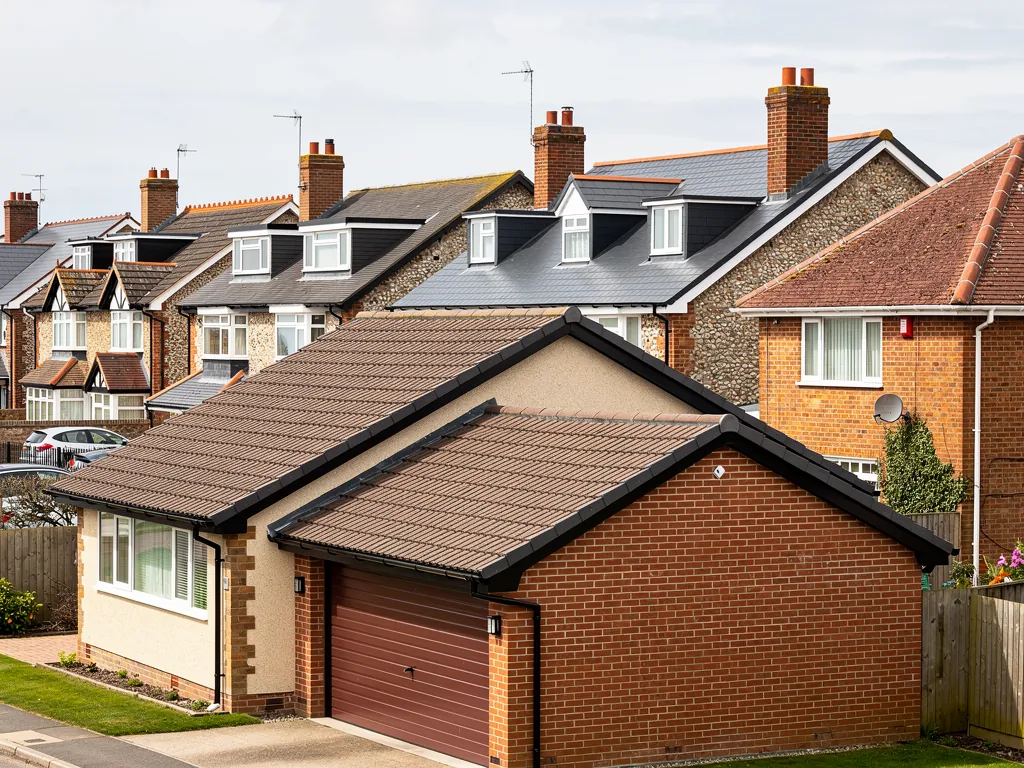
A garage roof is easy to ignore until the day a damp patch spreads across the ceiling or the roller door sticks because the frame has moved. By then the question is urgent, and the two obvious answers pull in opposite directions. Patch it and hope, or pay for a whole new roof?
Neither is right for every garage. Some roofs have one small fault in an otherwise healthy surface and need an afternoon. Others have a covering that is finished, a deck that is soaked and a fall that sends water the wrong way, and no number of patches will hold them. The skill lies in telling the two apart before money is spent.
This guide sets out what points to a repair, what points to a replacement, how the answer shifts with the type of covering, and what a proper survey looks at. It assumes nothing about your particular garage, so read the signs against what you can see from the drive and from inside.
Start with where the water is getting in
The first job is to find the path of the water, because that tells you whether the fault is a point or a pattern. A point is one place: a split at a corner, a lifted edge, a hole where something fell. A pattern is a roof that leaks in several places, or leaks in different places after different storms. Points suit repairs. Patterns suggest a covering that has simply worn out.
Water rarely shows up directly beneath the fault. On a flat roof it travels along the deck or the underside of the felt before it drips, so the stain on the ceiling can be a metre from the hole. On a pitched garage it can run down a rafter before dropping. That is why guessing from indoors usually leads to the wrong patch.
Signs visible from the drive and the garage door
Outside, look for ponds of standing water a day after rain, sagging, felt lifting from the edge, moss and plant growth in the gutter, and slipped or missing tiles on a pitched garage. Indoors, look for dark staining, daylight, damp timbers and any dripping that follows the same route each time. Do not climb on the roof, particularly if the sheets are corrugated and old, because asbestos cement is fragile and so is weathered felt over soft boards.
Photograph what you find, with the date, because it helps a roofer give a clear verdict and helps with an insurer if a storm was the cause. Our guide to a leaking garage roof covers quick fixes for the worst of the weather.
Signs a repair will hold
A repair stands a good chance when the damage is local and what surrounds it is sound. The usual candidates are these.
A split or blister in felt
Felt can open at a lap, crack along a fold at the wall, or lift into a blister where moisture was trapped. Cut out, dry and patched, a small area can last for years if the boards below are firm. If the blister is the size of a dinner plate and the felt around it is still flexible and well stuck down, a patch is reasonable.
A damaged edge or trim
Edge trims shift with time, and a gap lets wind-driven rain behind the covering. Refixing or swapping a trim and sealing the edge is a short job, and it deals with a point where roofs often fail.
A puncture in EPDM or a crack in GRP
EPDM is a single rubber sheet, so a puncture can be mended with a patch if the sheet is clean and still well stuck down. GRP can crack where the structure moves, and a small, local crack can be cut out and laid again. Both depend on the deck beneath being sound.
Slipped tiles or slates on a pitched garage
On a pitched roof, a few slipped tiles are a repair. A run of them across a slope, with rusted or failed fixings, points the other way, and our guide to nail sickness explains why.
The Less guide dated March 2026 sets £150 to £500 against small flat roof repairs. Set against a re-felt, which Checkatrade gives as £1,000 to £2,000 in its October 2026 guide, a repair that holds is a clear saving. The word that matters is holds. A repair that fails the next winter is a second callout on top of the first.
Signs the roof needs replacing
Some faults cannot be mended, and the signs tend to arrive together.
Age against the typical lifespan
Less gives torch-on felt 10 to 20 years, GRP 25 to 40 and EPDM 30 to 50. Those are typical ranges, not promises, but a felt roof near 20 that has begun to leak is rarely worth patching. Marley expects concrete tiles to give about 60 years, with the reminder that this is not a warranty, so a tiled garage has far longer before age becomes the issue.
Soft or dark boards
Once the deck has taken in water over several winters, it loses strength, and a new surface laid on top fails where the boards flex. Wet insulation in a warm roof does the same. When a roofer lifts a corner of the felt and finds black, spongy timber, the boards are part of the problem.
Ponding and the wrong fall
BS 6229:2025 keeps 1:80 as the lowest acceptable finished fall, with 1:40 the figure many roofers aim for. A garage that holds water long after rain is not draining, and new firrings, which are tapered timbers that create the slope, can only go on under a new covering.
Many patches and a general crazed look
A roof with several old patches, brittle felt, cracked GRP or sheeting that has gone chalky and sagging between the purlins is telling you something. Another patch buys a season. The money may do more good towards a roof that lasts.
Read more about the sums in our guide to the average cost of replacing a garage roof.
How the answer changes with the covering
The same fault means different things on different roofs.
Bitumen felt
Felt is the garage standard, and it is also the shortest-lived of the common flat coverings. It repairs well while it is young and pliable. When it turns brittle and cracks across the field of the roof, as opposed to at a single seam, replacement is the usual advice.
EPDM
Because it is one sheet, EPDM leaks at its edges and at details such as outlets and corners. Faults tend to be local, which favours repair, unless the sheet has been damaged widely or the adhesive has let go over a large area.
GRP
GRP is a cured skin with no joins, which makes it durable when the deck is firm and unforgiving when the structure moves. A crack that returns in the same place after repair says the movement has not been dealt with, and replacing the covering without fixing the deck will not help.
Corrugated sheets, especially old ones
An old garage with wavy grey sheets may have asbestos cement overhead. HSE's line on buildings from before 2000 is to presume the material is there until a test proves otherwise. Never drill, scrub or screw into such sheets for a quick fix. Under HSE rules, taking off sound weathered sheets carefully is non-licensed work. Sheets that are badly broken push it into the notifiable category. The guide on how to tell whether a garage roof is asbestos is the place to start.
Tiles and slates
A pitched garage behaves like a house roof. Isolated damage is repairable, and widespread failure of fixings or the underlay beneath is not.
What waiting and patching really cost
Delay has its own price, and it is paid indoors. Water that reaches the walls, the lintel above the door or whatever is stored below does more harm than the roof itself, and a garage used as a workshop or store can lose tools and boxes quickly.
Compare the options on a ten-year view, not a one-year view. If a repair gives two more winters and the roof is then replaced anyway, the repair was a short-term cost on top of the replacement. If it gives ten, it was the right call. Three things separate the cases: the roof's age, the condition of the boards, and the covering's typical range. A roofer who has looked at all three can say which case yours is.
Temporary repairs
A temporary repair is not a failure of principle. Making a garage weathertight until a dry spell, a booking or a decision is a sensible step, and it should be described as temporary in writing so that nobody mistakes it for the fix. Where water is coming in, we prioritise making it safe.
When a repair is the wrong place to spend
If the quote for a repair is more than half the cost of the replacement, the sum deserves a second look, because the new roof may offer a better return. Checkatrade quotes roofers at around £35 to £45 an hour or £280 to £360 a day, so a repair that needs a full day and extra boards builds up quickly.
Insurance treats the two situations differently too. Which? treats rain coming through a roof that was badly kept as wear and tear, whereas damage from a sudden storm can be a different matter. If you suspect the latter, call the insurer before booking anyone, take photographs and hold the receipts for temporary cover.
What a proper survey looks at, and what happens next
A survey of a garage roof is short but it is not a glance. We look at the roof from above when conditions allow, from inside the garage where the underside is accessible, at the gutters and outlets, at the junction with the house or the neighbouring wall, and at the deck where the covering can be lifted.
The verdict
The outcome comes back as a plain call, with photographs behind it: patch it for the time being, mend it properly, or renew it. We favour the least work that deals with the fault properly. When mending will do, the written quote is for mending, not a bigger job dressed up as a necessity.
The written quote
The figure arrives as one total in writing, and we think our prices are good and fair. As with any roofer, check that the quote says whether VAT is in it, that rubbish removal is covered, and what is agreed if the boards prove worse once uncovered.
Rules to keep in mind
For the Planning Portal, a building control application is unlikely when under 25 per cent of the building envelope and under 50 per cent of the roof is involved, which puts a small repair well inside the line. Replacement is a different matter. Arun District Council's building control pages include re-covering roofs, so raise a full garage re-roof with the council or your roofer before it starts. Part L adds a wrinkle: renewing a flat roof membrane is renovation, which can bring insulation into the job.
When you are ready, our garage roof replacement page explains how we survey, quote and finish the work.
Questions
Repair or replace: questions
How many patches are too many on a garage roof?
There is no set number, but the pattern matters more than the count. Patches spread across the roof, brittle felt between them and a deck that is soft in more than one spot say the covering is finished. A single patch on a young roof with firm boards is a different case entirely.
Can I leave a leaking garage roof until spring?
You can often make it weathertight now and decide on the long-term job later. A temporary repair keeps more water out while the weather is poor, though a soaked deck will keep deteriorating, so it is better to have the roof looked at than to guess. Protect anything stored beneath it in the meantime.
Does a garage roof repair need Building Regulations approval?
A small repair rarely needs an application. The Planning Portal's test is whether less than 25 per cent of the building envelope and less than 50 per cent of the roof is affected. A full replacement is another matter, and Arun's building control team can say what applies to your garage.