
Autumn and winter gutters · 9 min read
Gutters in autumn and winter: leaves, overflow and ice
Why gutters overflow in heavy rain, how autumn leaves and a cold snap make it worse, what you can safely check from the ground, and when the job needs a roofer.
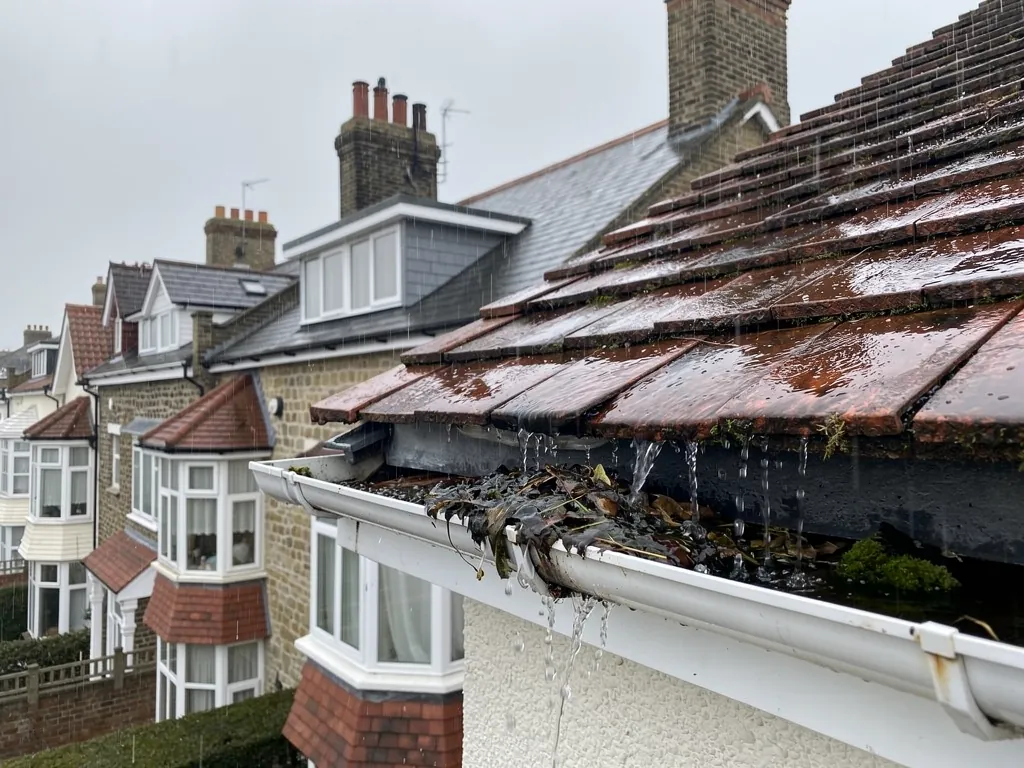
Gutters spend most of the year doing their job unnoticed. Then comes a wet October night, a week of leaf fall and a gale, and water is pouring over the front of the gutter beside the front door. On a coast with plenty of sea weather, those nights come round often.
Overflow is a symptom, not a fault in itself. Something is stopping the gutter from carrying the water it is being given. Sometimes that is debris, sometimes a gutter that has dropped, and sometimes a gutter that was never big enough for the roof above it. Winter adds one more cause: ice, which can freeze a pipe solid and leave the gutter above it holding the weight.
This guide works through the autumn and winter picture in order: what leaves do, how to tell what is causing a spill, what a cold snap does to plastic and cast iron, what you can safely check yourself, and when to call someone. It stays qualitative on weather, because no figure for rainfall or frost on this coast is worth quoting, and it points to the repair guides where a fault needs more than a clear-out.
What autumn leaves do to a gutter
Leaves arrive in two waves. First comes the steady fall from trees close to the house, which lands straight in the gutter. Then a gale brings the rest, along with twigs, seed cases and moss torn loose from the roof. Within days a gutter that was running clear can be packed along a stretch near the outlet.
A blockage rarely forms at random. Leaves drift with the flow towards the outlet and the downpipe, and that is where they stack. Once the outlet is covered, water that cannot leave backs up along the run and spills at the lowest point, which is usually a joint, a corner or the face of a sagging section.
Wet leaves are heavier than they look
A gutter full of sodden leaves is carrying a good deal more than the water in it. Plastic gutters can bow under the load, brackets can pull out of a weak board, and a bracket already loose will go. That is how a clogged gutter becomes a sagging gutter, and a sagging gutter holds water even when the blockage clears. A run that has dropped even slightly will keep holding water after the leaves are gone.
Moss and silt are the other half of the story. Fine grit from the roof settles in the gutter bed all year and mixes with leaf mould to form a thick paste that holds water. Even a gutter with no visible leaves can be half full of it. The leaves are what you see, but the paste is what makes the gutter slow.
Why gutters overflow in heavy rain even when they look clear
Many people clean a gutter, watch it overflow in the next downpour and conclude the cleaning did nothing. Usually the cleaning did its job and something else is wrong. A roofer looks for several causes, one after another.
The fall is wrong
A gutter is laid with a slight fall towards the outlet. Brett Martin suggests about 1 mm for every 600 mm, and FloPlast quotes 1:350 for its MiniFlo system, so the slope is tiny. If a section has sagged, or the brackets were set wrong, water pools in the dip, and it overflows from there while the rest of the run stays dry. Our guide to why a gutter overflows goes into this.
The gutter is too small for the roof
A large roof plane sends a lot of water to one gutter, and a small section cannot swallow it in a heavy downpour. An extension added later may also drain onto an older, narrower gutter. No fix with a trowel will cure that; the capacity has to match the roof.
Water is missing the gutter
If the gutter sits too far back or too high, fast roof water can shoot over the front. If it sits too low, it can miss the roof edge altogether. A clear gutter that spills only at one point in heavy rain, with a stain on the wall below, often has a position problem and not a blockage.
Photographs taken during rain help most. A phone clip from the ground showing where the water leaves the gutter tells a roofer a great deal.
What a cold snap does to gutters and downpipes
Ice causes a different kind of overflow. When water in a gutter freezes, it expands and fills the channel, and the next rain has nowhere to go. A downpipe that holds water at the bottom, because the gully is blocked or the shoe is full, can freeze solid and stay frozen after the gutter above has thawed.
Frozen water also weighs on the gutter. A run that is already tired can be pushed down by the load, and joints can be forced apart as the ice grows. When the thaw comes, those joints leak where they did not before. A drip that appears only after frosty mornings is a sign of that.
What to do, and what not to do
Do not pour boiling water on frozen plastic. It can crack the gutter, and the water can freeze again further down. Do not climb up and chip at ice, which is dangerous and can split the channel. Leave it to thaw, then check the joints and the outlet once it has gone.
If a downpipe has frozen and split, you will see a crack or a bulge, often at a joint, and water running down the wall in the next rain. A roofer should look at that once the weather allows. Our guide to downpipe repair sets out the options.
Overflowing ice and meltwater can also run behind the gutter and soak the board. That is how an old overflow becomes a rotten fascia over a couple of winters. The pattern is slow, and it is easy to miss until a board gives way.
What you can safely check from the ground
Most of the useful checking can be done without a ladder, and you can do it in a few minutes on a wet day.
- Stand back across the road and look along the roofline. A run that dips, or leans away from the wall, has probably lost its brackets.
- Look for green or black streaks on the wall below a joint or corner. They show where water has been leaving the gutter.
- Watch the gutters in a heavy shower. Note where water spills, and take a short video.
- Check the downpipe foot. Water should leave the pipe freely and drain at the gully.
- Look in the roof void on a wet day if you can reach it safely, for drips near the eaves.
Why not a ladder
A ladder against a gutter is the single most common way people damage plastic guttering. The gutter flexes, the brackets loosen, and a ladder leaning on wet plastic can slide. Cleaning gutters is also a job where people overreach, one more step up and one more stretch. If a gutter needs a hands-on clean, a roofer with a tower, a platform or a cleaning pole is the safer route.
Gloves, eye protection and a bucket are standard for whoever does the work. Pests, sharp edges and old nests can all be inside a neglected gutter. A bird's nest in use is protected, so if you find one, leave the gutter alone until the young have gone.
Where anything looks wrong, photographs of the whole run, taken from different positions, help a roofer say what is wrong before a visit.
Cleaning before winter and how often to repeat it
A clear-out in late autumn, after most of the leaf has come down, does more good than one in early autumn. Many owners clean once the first heavy leaf fall has finished, and then look again after a gale.
Houses under or beside trees may need more than one visit between October and the new year. A house with no trees nearby may manage with one. How often to clean depends on the trees, the roof and the gutter profile, and there is no number that suits every house. Our guide to how often to clean gutters works through the factors.
What a good clean includes
A proper gutter clean means more than lifting leaves from the top. The gutter bed is scraped or washed clear of the paste, the outlet is checked, the downpipe is tested by running water through it, and the joints are looked at for drips. A roofer cleaning from a platform will see problems that never show from the ground, such as a slipped bracket, a split in the back of the channel or a stained board.
A clean is the right time to inspect the roof edge too. A slipped tile near the gutter, or a tilting fascia, can cause an overflow that cleaning does not touch. The survey photographs show the whole line, and the verdict says whether the answer is a clean, a repair or something bigger.
Weighing up cost? A proper clean is a smaller bill than the damp wall and soft board that follow a winter of spills, and it is the first thing to try before replacing anything.
Storm damage, insurance and when to call a roofer
Some overflows are signs of damage rather than neglect. A gale can lift a section of gutter, snap a bracket or knock a downpipe off the wall. A fallen branch can crack a run. If that is what has happened, treat it as storm damage and tell your insurer first.
The Institution of Structural Engineers advises making a house safe, then notifying the insurer promptly, and keeping photographs of the damage and a record of any temporary repair. Which? gives the same advice on receipts. It adds that damage from a badly kept roof can be classed as wear and tear, and quotes regulator figures in which only 32% of storm-related claims made in 2024 ended in a payout. So keep records, and do not assume a claim will succeed.
Signs you need a roofer, not a bucket
- Water inside the house near an outside wall, or damp patches on a ceiling by the eaves.
- A gutter pulling away from the wall or visibly out of line.
- A downpipe cracked, bulging or detached.
- Soft or dark boards along the roof edge.
- Overflow that continues after a clean.
Leaks and storm damage get our priority, and anything letting water in is made safe before the rest. Once we have surveyed, you get a plain verdict and one written total. If a clean and a new bracket is all it needs, that is what we recommend. Waste goes with us when we leave. The main guttering, soffits and fascias page lists the rest of our roofline work.
Questions
Autumn gutter questions
Why do my gutters overflow only in the heaviest rain?
A gutter that copes with ordinary showers but spills in a downpour is usually a little too slow or too small for the water arriving. Silt in the bed, a shallow dip in the run or a narrow outlet are common causes. Clearing the bed and checking the fall often cures it. If not, the gutter size may need a rethink.
Is it safe to knock ice out of a frozen gutter?
No. Chipping ice from a plastic or cast iron gutter can crack the channel, and doing it from a ladder is dangerous. Let the ice thaw, then check for leaks at the joints and outlet. A downpipe that stays frozen, or splits, needs a roofer once the weather eases.
Do I need to clean gutters if I have trees nearby?
Yes, and probably more than once a season. Leaf fall near the house loads the gutter fast, and wet leaves are heavy enough to bend brackets. A clear-out after the main fall, and a look after any gale, keeps the water moving. Gutter guards can cut the work but do not remove it.