
Lead codes · 9 min read
Lead sheet codes explained: code 3 to code 8
What the code numbers on a roll of lead mean, how thick and heavy each one is, and how a roofer matches code 3, 4, 5, 6, 7 or 8 to a part of your roof.
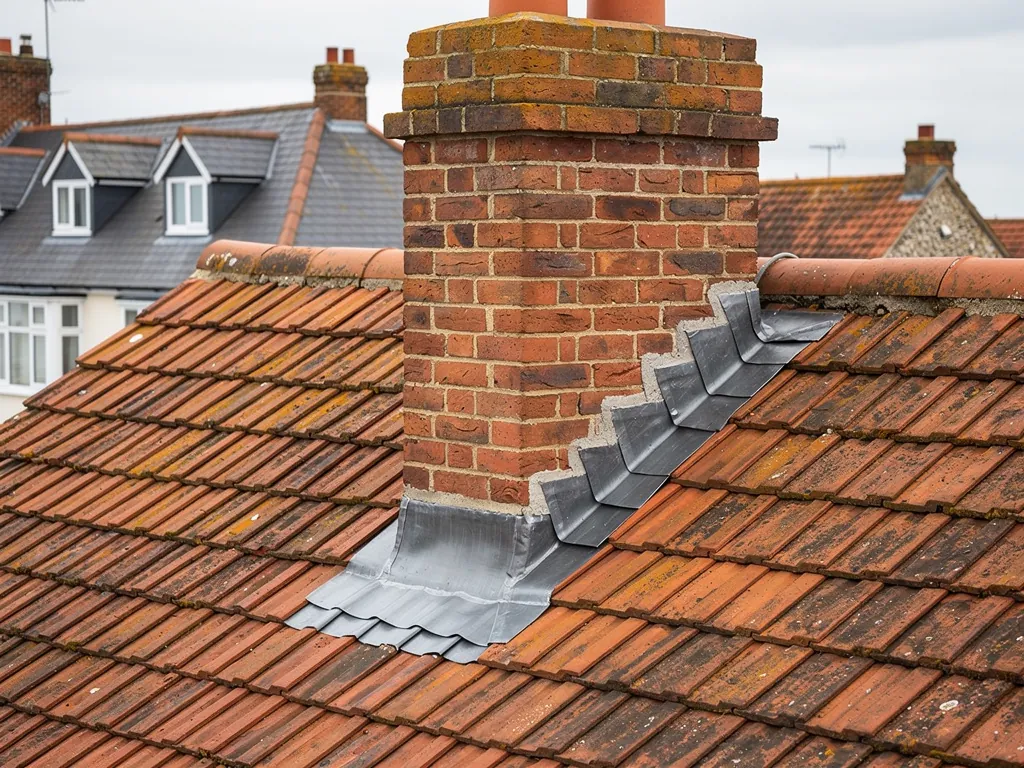
Anyone who has had a roofer talk about lead will have heard a number dropped into the conversation. Code 4 for the flashings, code 5 for the valley, code 6 for the box gutter. The numbers are not a brand, a grade of purity or a price band. They are a way of naming the thickness of the sheet, and every roll of cast lead carries one.
The code matters because lead does two jobs at once. It keeps water out, and it has to survive being bent, stretched and heated for decades. A sheet that is too thin for a wide gutter will crack along its folds. A sheet that is thicker than the position needs costs more, weighs more and is harder to dress into a tight corner. The skill is choosing the code that suits the part of the roof in front of you.
This guide sets out the six codes in common use, with the thickness and weight of each as the Royston Lead brochure prints them, then shows where each is normally used and what to ask your roofer when a quote names a code.
What a lead code actually tells you
A lead code is a single figure, running from 3 to 8, that stands for the thickness of the sheet. The higher the number, the thicker and heavier the lead. Each code also has a fixed weight per square metre, which is how suppliers sell it, and a colour mark printed or stamped on the sheet so a roofer can tell one from another across the yard or on a scaffold.
The codes are part of a long-standing trade system. Royston Lead, a cast-lead manufacturer, prints the thickness and weight of each in its brochure, and those are the figures used throughout this guide. Weight is what really separates one code from the next, and thickness in millimetres follows from it. You can see it in the arithmetic. Code 8 is about 2.7 times as thick as code 3 (3.55 mm against 1.32 mm), and it weighs about 2.7 times as much per square metre.
That weight has real consequences. Lead is dense, so a roof with a lot of heavy sheet on it carries a real load. Ten square metres of code 4 weighs about 204 kg, ten square metres of code 6 about 301 kg, and ten square metres of code 8 about 403 kg. On a small flashing the difference is a few kilograms. On a lead-lined gutter or a flat roof, it adds up.
Cost follows weight as well, because the metal is the largest material expense. That is why a quote that mentions the code tells you something about what is being bought. Our guide to how much lead roofing costs shows how the code feeds into the final figure.
The six codes side by side
Royston's brochure gives the following for each code, together with the uses it lists. The letters in the last column are its own: soakers, flashings, pitched valley gutters, parapet, box and tapered valley gutters, and dormers.
| Code | Thickness | Weight per m² | Colour mark | Listed uses |
|---|---|---|---|---|
| Code 3 | 1.32 mm | 14.97 kg | Green | Soakers only |
| Code 4 | 1.80 mm | 20.41 kg | Blue | Soakers, flashings, pitched valleys, dormers |
| Code 5 | 2.24 mm | 25.40 kg | Red | Flashings, pitched valleys, parapet and box gutters, dormers |
| Code 6 | 2.65 mm | 30.05 kg | Black | Flashings, pitched valleys, parapet and box gutters, dormers |
| Code 7 | 3.15 mm | 35.72 kg | White | Pitched valleys, parapet and box gutters, dormers |
| Code 8 | 3.55 mm | 40.26 kg | Orange | Pitched valleys, parapet and box gutters, dormers |
Two points follow from the table. First, the lists overlap. Several codes can be used for the same part, and the choice among them rests on the size of the piece, how exposed it is and what the roofer judges the structure can carry. Second, the table is a manufacturer's guide to uses and not a rule that stops a roofer using another code on a specific job.
Read the table as a map of the range and not as an instruction for your roof. Where a detail on your house sits between two codes, the surveyor will explain which one we propose and why. The colour marks are worth remembering too: if a roll is delivered to site, the stripe tells the roofer at a glance whether the right sheet has arrived for the right job.
Codes 3 and 4: soakers and light flashing
At the thin end of the range sit the pieces that have to be bent into small, tight shapes. Code 3, green, is the lightest sheet and Royston lists it for soakers only. A soaker is a little bent piece of lead that goes in with every course of covering along a wall or chimney side, rising up the masonry at one edge and lying beneath the tiles at the other. Because it is cut small and hidden under tiles, it does not need to be thick, and the thinner sheet folds easily.
Code 4, blue, comes next at 1.80 mm. Royston names soakers, flashings, pitched valleys and dormers as its uses. It is the lightest code in the brochure that is listed for flashing, so it appears wherever a flashing is short, protected from direct weather and not asked to span much.
Where a light code is a poor choice
A thin sheet will be dressed more easily, which is its attraction, but it is also the first to fatigue. Lead that is repeatedly warmed by the sun and chilled at night moves, and thin sheet is more likely to develop cracks where the movement concentrates, such as the corner of a step. Our answer on lead soakers describes where the lightest code earns its place.
A long run of flashing along a gable wall, or a flashing in a place that will be hard to reach later, argues for a heavier code. Paying for the extra thickness once is usually cheaper than paying for access twice. That is a judgement rather than a rule, and we put it to you in plain terms at survey with photographs.
It is also worth knowing that the same house can use two codes for different details. A roofer fitting soakers in code 3 or 4 and the apron above them in code 5 is following the table, not making a mistake.
Codes 5 and 6: the usual flashing and valley sheet
Code 5, red, at 2.24 mm, and code 6, black, at 2.65 mm, are the middle of the range. Royston gives both for flashings, pitched valleys, parapet and box gutters and dormers. In other words they are the codes that cover the widest set of positions, from a chimney apron to a gutter between two slopes.
For flashings the step up from code 4 matters most where the lead is exposed and long. A thicker sheet resists being lifted and kinked by gusts, holds its shape when it is dressed over a deep tile profile, and has more metal to give before it wears through. For a valley, the extra thickness helps the sheet carry a steady flow of water without sagging between its supports.
The weights make the trade-off clear. Code 5 is 25.40 kg per square metre and code 6 is 30.05 kg, so the move from one to the other adds almost 5 kg for every square metre. A valley that runs for several metres across two slopes makes that difference tangible, and a gutter lined in code 6 costs more in metal than one lined in code 5.
Matching code to valley and gutter
Valleys and gutters carry the combined flow of water from a whole slope, so they are the place where a thicker code earns its cost. Our answer on which lead code is used for valleys goes through the options and the factors that tip the choice.
Neither code is a universal answer. We choose on the survey, looking at the length of the run, the shape of the detail and the age and condition of what the lead rests on.
Codes 7 and 8: heavy sheet for gutters, valleys and dormers
Code 7, white, at 3.15 mm and 35.72 kg per square metre, and code 8, orange, at 3.55 mm and 40.26 kg, are the heavy end of the range. Royston does not list either for flashings or soakers. Its table sets them against valleys, parapet and box gutters and dormers, which are the positions that carry the most water and sit hardest to reach.
A box gutter or parapet gutter is a trough of lead that runs between a roof slope and a wall, often tucked behind a parapet where nobody can see it. Water collects there and has to be carried away to an outlet, and the lead may stand in it during heavy rain. Replacing a failed lining means opening up the roof edge and sometimes scaffolding the full height of the building. Putting in a heavier sheet reduces the chance of doing it twice.
Heavy lead brings weight with it. A lead-lined gutter of ten square metres in code 8 adds about 403 kg to the structure, and the timber beneath has to be sound and properly supported before it goes on. That is one reason a survey looks at the boards and joists and not only at the metal.
Thick does not mean better everywhere
Heavier sheet resists bending, so on a small detail it is awkward to work and may not follow the contour of the tiles. Used where it is not needed, it adds expense and load without a benefit. If a quote proposes code 7 or 8 for an ordinary chimney flashing, it is reasonable to ask why. Our answer on how heavy lead sheet is per square metre carries the weights in more detail.
Choosing the right code for your roof
No single code suits a whole house. The right one depends on the position of the lead, how far it spans, how exposed it is and what lies underneath. A reasonable roofer will therefore specify more than one code on a job and will tell you which goes where.
The questions that decide the choice are straightforward.
- Is it a soaker, a flashing, a valley or a gutter?
- How long is the piece, and how wide is the area it covers?
- How exposed is the position to wind and rain?
- Can the structure under it carry the weight, and is the timber sound?
- How hard will it be to get to this spot again if it fails?
None of these can be answered from the ground. They need a close look at the actual details, which is why we survey first and photograph the roof. The photographs let you see for yourself what the lead is protecting and why we favour one code over another.
What to ask a roofer who names a code
Ask for the code on each part, not a single code for everything. Ask why that code suits the position. Ask whether the boards or joists need attention before heavy sheet goes on. If a roofer cannot say what code is going on a flashing, that tells you something about the care that will go into fitting it.
We name the code in the written quote and explain it in words you can follow. For the wider work we undertake, see our lead roofing and leadwork page.
Questions
Lead code questions
Is code 4 lead too thin for a chimney?
Not necessarily. Royston lists code 4 for flashings as well as soakers, and it is the lightest code listed for that use. Many chimney details suit it. A tall, exposed or long-run flashing may be better in code 5 or 6. The survey decides, and we tell you why.
How can I tell which code is on my roof already?
From the ground, you cannot. Colour marks are printed on the sheet, but they are not visible once it is fitted. A roofer can measure the thickness of an exposed edge or cut sample, and that gives the code. Photographs from a survey record what is there.
Does a higher code mean the lead lasts longer?
Thickness helps, but fitting matters as much. MyJobQuote gives lead flashing a published life of over 80 years, and a well-dressed code 4 can reach it in the right place. A poorly fixed heavy sheet can still crack. Code, detail and workmanship work together.