
Lead roofing costs · 9 min read
How much does lead roofing cost?
Typical UK prices for lead work in 2026, from a patch of chimney flashing to a renewed lead roof, using published cost guides and the things that push a lead bill up or down.
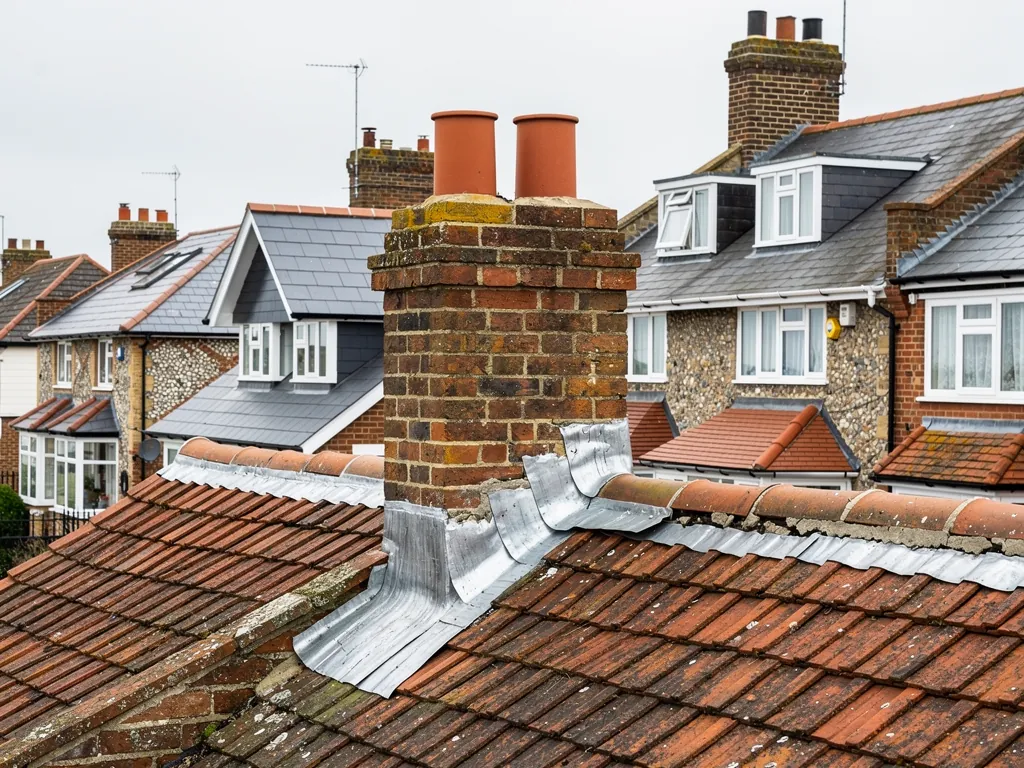
Lead is the metal roofers reach for wherever a slope butts against brickwork or a gutter, and it is also a roof covering in its own right. People ask what it costs because the answer is hard to guess. A strip of flashing round a chimney is a small job. A lead flat roof on a bay or a porch is a different order of work, and the two share almost nothing in their pricing except the metal.
This guide sets out the figures that national cost guides publish for lead, each with its source and date, and then explains what moves a bill within those ranges: the thickness of the sheet, the area, the labour and the way the roofer gets to the work. It also covers VAT, which catches people out when they compare two prices.
Treat every number as a typical UK range and not as a price for your house. A whole lead roof has no useful published average, so its total is set on survey, by the area, the code and the boards underneath. For your own roof the order is a survey first, then one overall figure in writing.
The typical UK ranges published for lead work
Published figures for lead are thinner than for tiles, and most of them cover flashing rather than whole roofs. Two sources give a workable picture. MyJobQuote, in a guide last updated on 22 September 2026, prices the lead around a chimney. Checkatrade, in a repair table last updated in June 2026, prices lead flashing repairs by the metre, with VAT left off the figures it shows.
| Lead job | Published range |
|---|---|
| Patch repair to chimney lead | £150 to £250 |
| Full chimney lead, no scaffold | £350 to £460 |
| Full chimney lead, with scaffold | £700 to £920 |
| Lead flashing repair, per metre | £50 to £70 |
Read the two full-replacement rows as a pair. The gap between £350 to £460 and £700 to £920 is access and nothing else: the same lead goes on, but one stack needs a scaffold round it and the other does not. A chimney on a bungalow reached with a roof ladder sits near the lower figure, and a stack at the ridge of a three-storey house sits near the upper one.
The per-metre figure for repairs helps with longer runs, such as the stepped flashing where a roof meets a gable wall. It does not stretch to a new valley, a box gutter or a flat roof, because those jobs also involve the boards underneath and the way the sheets are lapped, fixed and welted together at the joints.
Our answer on lead flashing repair cost goes into the per-metre figure in more detail, including what changes it from one run to the next.
How the lead code and the area change the price
Lead is sold by weight, and each thickness carries a code number. Code 3 is the thinnest in common supply and code 8 the thickest. Royston Lead's cast-lead brochure lists the weight of each code per square metre of sheet, and that is the starting point for a material bill.
| Code | Thickness | Weight per m² |
|---|---|---|
| Code 4 | 1.80 mm | 20.41 kg |
| Code 5 | 2.24 mm | 25.40 kg |
| Code 6 | 2.65 mm | 30.05 kg |
| Code 7 | 3.15 mm | 35.72 kg |
The arithmetic is worth doing. Ten square metres of code 5 weighs about 254 kg, and the same area in code 7 weighs about 357 kg. A supplier charges for metal by weight, so stepping up a code adds to the material cost across every square metre you lay. It also adds load for the roof structure to carry, which is one reason a thick code is not simply the safer choice.
Royston's guidance matches code to position. Soakers, the small pieces of lead that interleave with tiles, sit at code 3 or 4. Flashings run from code 4 to code 6, pitched valleys start at code 4, and parapet, box and tapered valley gutters begin at code 5. So a large gutter lined in a heavy code costs more per metre than a short flashing in a light one, even before labour.
Area matters too, but it works unevenly. A small bay roof needs the same set-up, tools and site visits as a larger one, so the cost per square metre tends to fall as the area grows. The right code for your roof is chosen on survey, and our guide to lead sheet codes explains each one.
Labour, day rates and what access adds
Labour is the second large piece. Checkatrade gives roofers at around £35 to £45 an hour or £280 to £360 a day. Lead is slower to fit than most coverings. Each piece is cut, dressed to the shape of the roof or wall and held with clips or wedges, then laps and drips are formed by hand. A simple apron flashing is quick, while a chimney with a back gutter, side flashings and soakers can take a skilled worker most of a day.
Scaffolding on a lead job
Access is the big variable. Checkatrade's scaffolding table, last updated in October 2026, gives around £875 per month for a 2-storey semi-detached house and around £660 per week for a chimney scaffold. A short job that ties up a scaffold for a week can therefore cost more in access than in metal.
Where the poles stand over a pavement or road, section 169 of the Highways Act 1980 makes a highway-authority licence a must, so ask your roofer who is applying for it. West Sussex County Council charges £266 for one month and asks for at least 10 working days' notice. Hampshire, across the county line, wants ten days of lead time and charges £211.90 for the first two weeks. If your house fronts a public road, that wait comes before any lead work starts, so a leak that cannot wait gets a temporary cover first.
Not every lead job needs a scaffold. Flashing at a low bungalow chimney or a porch roof can often be reached from ladders and a roof ladder, and a bay window roof may be done from a low tower. We decide at survey and show you the roof in photographs, so you see the reason for any access that goes into the price.
Lead against other coverings over its life
Lead is long-lived, and a fair comparison looks at cost over the years and not at the figure on the day. Less, updating its flat roof page in March 2026, gives a lead flat roof 50 to 100 years. MyJobQuote puts lead flashing at over 80 years. These are typical published ranges for lead that is well fitted and left alone, and they are not promises about any particular roof.
The same Less guide puts the other common flat coverings much lower: torch-on felt at 10 to 20 years, GRP at 25 to 40 years and EPDM at 30 to 50 years. EPDM here means a single-sheet rubber membrane, and GRP means fibreglass resin cured on site. Zinc is the nearest metal comparison, and its maker quotes a service life above 100 years for a roof in that metal.
On price, Checkatrade's replacement table, dated October 2026, shows a full flat roof at £2,800 to £7,500, shown plus VAT. That range covers the mainstream membranes and is not a figure for lead. A lead flat roof is specialist work, and a borrowed average would mislead more than help.
For flashings the sum is different. Lead is often chosen because it can be dressed tight into a brick joint and stays put, and a cheaper material that needs replacing in a few years can cost more in the long run, once a second round of access is counted. Our answer on how long a lead roof should last covers lifespan in more depth.
VAT and what to check on any lead quote
GOV.UK gives the standard rate of VAT as 20 per cent. Because Checkatrade leaves VAT off its repair figures, a £60 per metre flashing repair becomes £72 a metre once tax is added, and the chimney figures deserve the same caution unless their guide says otherwise. When you set two quotes side by side, the first question is whether each one includes VAT, since that alone can explain a gap of a fifth.
Ask every roofer three things before you compare prices: does the figure include VAT, does it include scaffolding, and which lead code is being fitted.
Scaffolding is the second question. A price that omits it can look low until the scaffold turns up as an extra, and on a chimney it can double the bill, as the chimney figures above show.
The third question is the lead itself. A written quote should say which code is going on and where, because a flashing in code 4 and a flashing in code 6 are different products at different weights. If a quote says only "lead flashing", you cannot tell what you are buying or how it will last.
What our written quote looks like
Once we have surveyed, the quote arrives as a document giving one figure, together with photographs of each place where lead will be renewed or repaired. We describe the work in plain terms, so you can hold any other quote up against the same scope. Where a small repair is enough to keep the water out, that is the job we price, and a full renewal is not pushed on you.
Repair, patch or renew: where the money is best spent
The smallest lead job is usually the quickest to price, so the first decision is how much needs doing. A lifted section of flashing, a gap where old mortar has fallen out or one cracked soaker is a repair, and the cost sits at the low end of the ranges above. A flashing that has split along several runs, or lead that has worked loose across the whole of a chimney, usually costs more to keep patching than to renew.
A patch has a place when the lead is sound overall and one detail has failed. It also has a place when full renewal would be wasted because the roof covering round it is due to be replaced soon. In that case the sensible plan is a repair now and new lead at the re-roof, so that the lead and the tiles around it are done once, with one lot of scaffolding.
Signs that renewal is the better value
Look for lead that cracks in several places, flashing that has been smeared with sealant more than once, staining on the ceiling below that returns after each repair, or an old stack where the mortar joints are loose. Sealant is a stop-gap rather than a fix, as our answer on pointing lead with mortar or sealant explains.
Whichever way the survey points, the verdict comes first and the price second. We tell you whether the lead can be repaired, patched to see it through or needs replacing, and why, using photographs of your own roof. Our wider lead roofing and leadwork page describes the jobs we take on, from small flashings to full lead coverings.
Questions
Lead cost questions
Will a lead flashing repair always need scaffolding?
No. The chimney lead figures from MyJobQuote roughly double depending on whether a scaffold is needed, and that gap is access alone. A low chimney reached by roof ladder may not need one, while a tall stack on a steep roof usually does. Only an inspection of the stack and the slope beside it can decide, and the figure follows in writing.
Does a thicker lead code always give a better result?
Not always. A higher code is heavier and costs more for the metal, and Royston's guidance matches codes to positions, with lighter sheet for soakers and flashings and heavier for gutters. Fitting the code that suits the position is better than fitting the thickest sheet available.
Can you give me a rough lead price without visiting?
The published ranges above give a rough idea for chimney lead and flashing runs, and you can send photographs with the enquiry form or WhatsApp. A firm figure needs a survey, because access, the condition of the boards or mortar beneath and the code all change what the work involves.