
Repair photo evidence · 9 min read
Photo evidence on roof repairs: what you should be shown
You cannot see your own roof, so pictures do the looking for you. Here is what a proper set of before and after images shows, and what should make you ask questions.
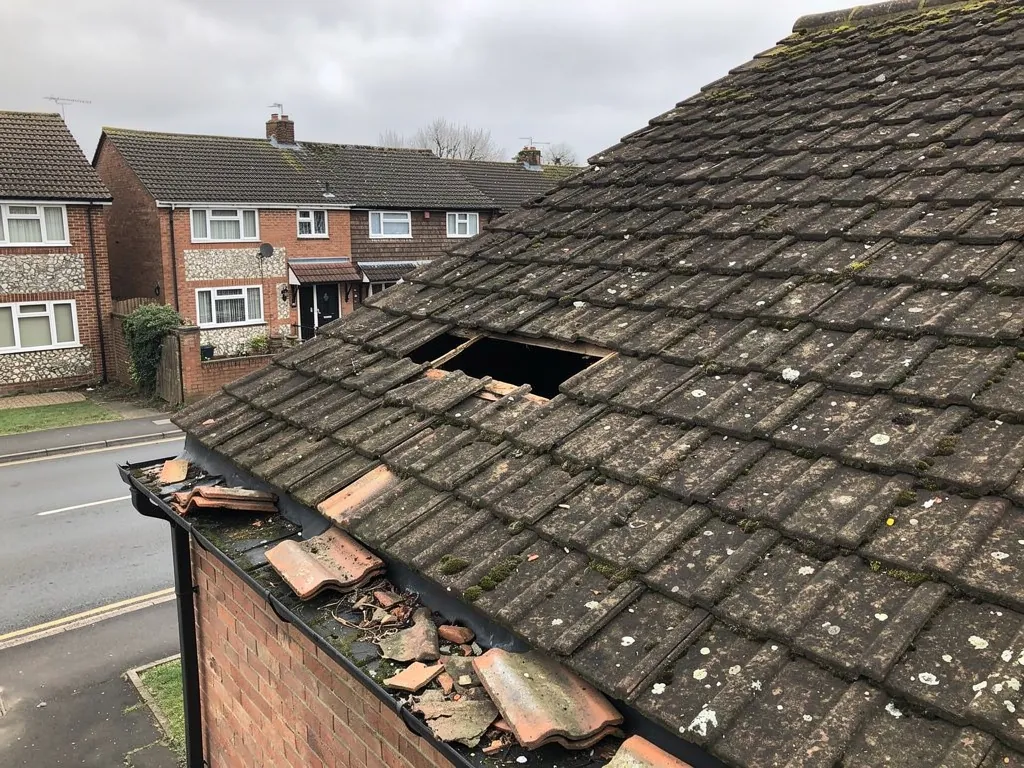
Hardly anyone climbs up to inspect the work after a roofer has been. The slope is out of sight from the garden, the ridge cannot be seen from the road, and the loft side of the job is behind insulation and boards. That leaves a homeowner relying on a description over the phone, which is a thin basis for paying out hundreds or thousands of pounds.
Pictures fix most of that. A decent set shows the fault as it was, the method used to mend it and the finished result, taken from angles you can follow. It lets you check that the problem described is the problem found, that the repair matches the quote and that nothing has been left half done. It also gives you something to keep: a dated record for a buyer's surveyor, a later guarantee query or an insurer.
This guide sets out what you should expect to be shown, how before and after pictures ought to be taken, where photographs fall short, and the signs that a set of images is hiding more than it reveals. We send pictures of your own roof with every written quote, so the examples below describe how we work.
Why a repair needs pictures at all
A roof repair is judged by what you cannot see. If a roofer says a lead flashing has lifted, a run of battens has rotted or a valley has split, you are being asked to take the diagnosis on trust. A picture turns trust into something you can inspect, and a good one makes the repair-or-replace question far easier to answer.
Before we mention money you get a plain verdict on the roof: mend it, make a stopgap fix, or renew it, with the reasoning set out. Pictures are what carry that verdict. If we say a repair will hold, you see the sound area around the fault. If we say a slope is past mending, you see the slipped, crumbling or sagging parts that led us there. Either way the decision stays with you, and it rests on evidence.
What pictures protect you from
Evidence protects both sides. It stops a vague argument about what the roof looked like at the start, and it deals with the awkward case of a leak that appears again in the same spot. With a dated image of the repaired area, anyone can tell whether the new leak is the old fault or a fresh one somewhere else.
The same record matters when a house changes hands. A buyer's surveyor may ask what was done to the roof and when, and a tidy set of images answers faster than a hazy memory ever will. Our guide to the roof repair survey visit describes what happens before the first picture is taken.
The pictures a proper survey should include
Quantity matters less than coverage. A useful survey set starts wide and finishes close. The first shots show the whole roof or the whole slope, so you can see where the fault sits in relation to the chimney, the ridge and the eaves. The next ones close in on the fault itself, with enough surrounding covering to show whether the neighbouring tiles are sound.
Then come the details that explain the leak. For a slipped tile, that means the gap it left, the batten underneath and the condition of the nail. For a flashing, it means the joint between the lead and the brick. For a flat roof, it means the surface around the split, any standing water and the edge trim. Without these, a diagnosis is only an opinion.
Inside the loft
Many faults are easier to read from beneath. Pictures of the underside of the covering can show daylight where none belongs, dark staining on rafters, wet insulation or a sagging section of felt. They also help tell a genuine leak from condensation, which can drip from cold surfaces in a poorly ventilated loft and look the same on the bedroom ceiling.
A set that has only distant roof shots, or only extreme close-ups with no context, is incomplete. You should be able to look at the pictures in order and follow the argument from the roof as a whole down to the particular defect, with something in each frame to show where on the building it was taken.
Before and after: how matching pictures should look
Before and after pictures only prove something when they match. A fair comparison uses the same position, the same direction and the same distance, so the eye can move between the two and see exactly what changed. A close-up of a broken tile followed by a wide shot of a roof that looks fine proves nothing, because the two views have no common ground.
Look for a landmark that appears in both: a chimney, a vent, a window or a line of the ridge. With one in each frame you can be confident that both pictures show the same part of the roof. If a set has no landmarks and every frame looks like any other stretch of tiles, ask where each was taken.
Pictures during the work
The middle of a repair often matters more than the ends. Once new underlay, a fresh lead soaker or a replaced batten has been covered by tiles, nobody can check it again. A few pictures taken as the work goes in prove that the hidden layers were done, and they are the part most often missing from poor-quality evidence.
We also expect finished pictures to show the details that fail first on exposed coastal roofs. A ridge capping that is clipped or screwed down, not just bedded, an edge trim that sits tight and lead dressed neatly into a joint all belong in the after set. The tidy lines of a finished job should be visible, not hidden behind a general view from the garden. Our guide on inspecting roof work after completion lists what to check.
What pictures cannot show you
Photographs are evidence, not magic. A picture cannot show the strength of a rafter, whether a batten is rotten on its hidden face or how much moisture is trapped in the insulation. It captures one angle at one moment, and an experienced eye can read a good deal from it while still missing things that only a hands-on check reveals.
That is why a camera does not replace a survey, and why some faults need a closer look than an image allows. Checkatrade gives about £260 as the typical price of a paid inspection, plus VAT, and a proper survey should leave you a full set of pictures rather than a handful of snaps. A drone can reach a ridge or a chimney top without anyone climbing, though it cannot touch or test what it sees.
Light and weather also limit what a picture can say. A wet roof shines and hides cracks. Bright sun flattens the shadows that show a slipped tile. A rushed shot from a ladder can blur the one detail that mattered. A good roofer takes a number of frames and picks the clear ones, and will happily retake one if you ask. Telling you what a given picture cannot prove is part of being straightforward about it.
Pictures are not a quote
An image shows what is wrong, but not how much the fix costs. Price depends on access, the covering, the size of the area and what the repair uncovers once it starts. Our written quote comes after the survey carrying a single total, so the pictures explain the work while the figure on paper settles the cost.
Pictures and your insurer
When storm damage is behind the repair, your pictures can end up in a claim file. Which? advised on 20 November 2025 that policyholders should get in touch with their insurer quickly, and that receipts for any emergency work they arrange will count towards the claim. Separately, the Institution of Structural Engineers (28 January 2025) calls photographs vital evidence and names temporary coverings and shots of the affected areas as things to report.
So the order is simple. Make the house safe, phone the insurer before you phone anyone else, take pictures before anything is shifted, and keep every receipt. When we make a leaking roof safe, we take pictures of what we find so you have them, though what your insurer does with them is a matter for your policy and your insurer.
Wear and tear is treated differently
Not every leak is an insured event. The same Which? piece uses a neglected roof letting rain in as its example of wear and tear, and it reports Financial Conduct Authority data showing 32% of 2024 storm claims paid out. Dated images from before the weather turned do no harm, and they can help show what changed since.
Disputes over a decision go to the insurer's complaints process first and the free Financial Ombudsman Service after that. Our guide on home insurance and roof repair covers the wider picture.
Warning signs in a set of repair pictures
Some patterns should make you pause. The first is a set of pictures that shows only the finished result and nothing of the fault. If no before images exist, there is nothing to compare the repair with. The second is a set of pictures with no sign they were taken at your house: no recognisable chimney, no neighbouring roofline, nothing to tie them to the building. Stock images and pictures lifted from elsewhere do turn up, so check that a landmark matches.
A third warning is the vague close-up. A tight shot of a few damp tiles, with no way to place it, can illustrate almost any diagnosis. Be wary too of a roofer who is reluctant to send images at all, or who explains the fault only in alarming words. Fear is a poor substitute for evidence, and we would rather show you the roof than frighten you about it.
If the finished work does not match
Under the Consumer Rights Act 2015, section 49, a trader must carry out a service with reasonable care and skill. Pictures from the day make that easier to discuss. Send them to the roofer, point to the difference between what was agreed and what was done, and give the chance to put it right.
Keep the originals, in date order, on a device other than the phone that took them, and note the date and the address on the folder so the set can be found years later. Our roof repairs page explains the repairs we carry out, and each one starts with a look at the roof and pictures you can keep.
Questions
Repair photo questions
How many pictures should a roof repair survey include?
There is no set number. What counts is coverage: a wide view of the roof, close views of each fault, and loft views where they help. A single tile may need a handful of frames, while a chimney, valley and ridge may need a few dozen. Ask for pictures that explain every item on the quote.
Can I ask for pictures while the work is happening?
Yes, and it is a sensible request. Hidden layers such as underlay, battens and lead soakers disappear under the covering once the work is finished. Pictures taken at that stage are the only proof they were done, so ask for them before the repair is closed up.
Do pictures from a drone count as proof of a repair?
They help, but they have limits. A drone reaches the ridge and chimney without anyone climbing, which makes it good for before and after views. It cannot touch or test anything, and it cannot see under the covering. Treat drone pictures as one part of the record, not the whole of it.