
Insurance and roof repairs · 9 min read
Will your home insurance pay for a roof repair?
Whether home insurance pays for a roof repair turns on what damaged the roof and which policy sits over it. This guide looks at the repair side of a claim, from who insures the roof to what a settlement may leave out.
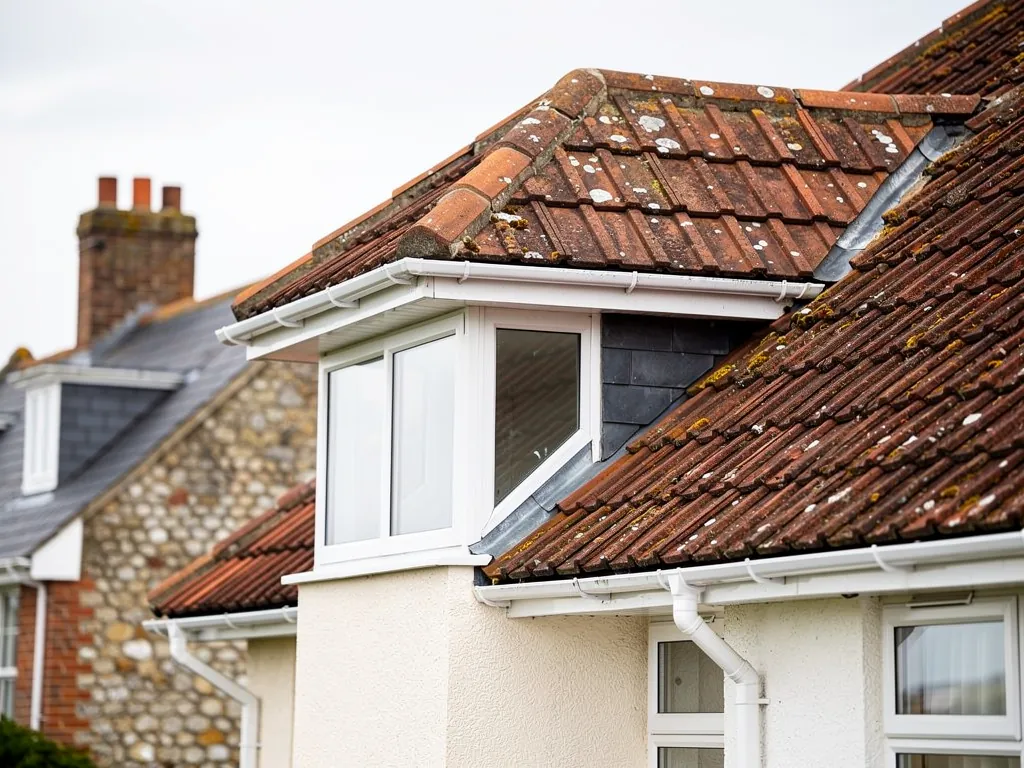
Plenty of owners assume that a leaking roof is exactly what home insurance is for. Sometimes it is. Often the first conversation with the insurer ends with a question the owner did not expect: was this sudden, or was it coming for a long time?
That one question explains most outcomes. A buildings policy is built around events that happen to a sound house, such as a gale, a falling branch or a fire. It is not built to fund the gradual decline of a covering that has simply reached the end of its working life. A roof repair can be either, and the same pair of missing tiles may be a claim in one house and a maintenance bill in the next.
The pages on storm claims cover the emergency steps in detail. This guide stays with the repair itself. It asks who actually insures your roof, what a policy may count as part of it, what a settlement can leave out, and how the plan for the repair affects the claim. None of it predicts what your insurer will decide. It is there so that the roof work and the claim do not trip over each other.
Who insures the roof depends on how you hold the home
Start with the basics, because they are often wrong. The roof belongs to the building, so it falls under buildings insurance, not contents insurance. If you own a house outright, that is your policy, and the mortgage lender will normally have required it. Contents cover looks after furniture, carpets and belongings. A ceiling that has come down with the water is a building matter, while the sofa underneath it is a contents matter, and a single leak can give you two separate claims.
Flats and shared buildings change the answer. In a block, the structure and roof are usually insured under one policy arranged by the freeholder or a management company, and the cost is recovered through service charges. A leaseholder in the top-floor flat who finds water through the ceiling should write to the managing agent, not call a roofer and send the bill. Your lease says who repairs what, and the repair obligation usually follows the roof.
Landlords have a similar split. A tenant is not normally responsible for the roof, so a landlord will want to know about a leak quickly, and the landlord's own policy may apply. Holiday lets and second homes can carry different policies altogether, sometimes with conditions about empty periods, so read the schedule rather than assuming it matches a standard home policy.
Where a freeholder insures the building, do not commission permanent roof work yourself before agreeing it. A repair ordered on the side can leave you paying for something the buildings policy would have met. If you are unsure which policy applies, ask the insurer or managing agent to confirm in writing before work starts.
The cause test: sudden event or slow decline
Which?, in a November 2025 article, gives a roof that lets water in because it was poorly maintained as a typical case of wear and tear, and passes on regulator data: only 32% of storm-related claims made in 2024 ended in a payout. Those numbers include every kind of storm claim, but they show that bad weather alone does not settle the matter.
Insurers apply the cause test to a roof by asking what changed, and when. A roof that was watertight in September and lost a run of ridge tiles in October's gales tells a clear story. A roof with scattered slipped tiles, moss in the valleys and a ceiling stain that has been creeping for a year tells a different one, even when a storm was the final trigger.
Why the age of the covering matters less than its condition
People assume a sixty-year-old roof cannot be claimed on. Age on its own is not the test. A tired roof damaged by a clear event can still be a valid claim, and a young roof that was badly laid can still be a maintenance failure. What counts is the evidence of what happened.
Where a repair tells the story
The repair work often proves the cause. Sound battens and tight neighbours around the damage suggest an event. Rusted fixings across a whole slope, soft timber and old water marks suggest decline. You do not need to argue either point. Have the roofer record what is found, and let the record speak. Our guide to nail sickness explains the fixing failure that most often sits behind slipping tiles.
Sequence: tell the insurer, secure the roof, then plan the repair
The order of events protects a claim. First make the house safe: stay out of any room where water is near electrics or a ceiling is sagging. Next, ring the insurer. Which? says most insurers run emergency helplines, and the person on the line can say whether they want the repair done through their own network. Then stop the water. A tarpaulin, a patched section or a swapped tile is fine as a stopgap, and the insurer expects you to prevent further damage.
Photographs come before every step. Shoot the roof from the ground, the room where water showed, the loft above it and any wet insulation. IStructE's January 2025 advice for storm-hit homeowners stresses the point, and asks owners to report any urgent works already done, such as a temporary covering over the gap. Add dated notes alongside the pictures, since memory fades fast once the repair is finished and the insurer's questions arrive weeks later.
Pictures first, then the insurer, then a stopgap that keeps water out, with every receipt filed away. Settle the permanent repair last.
Permanent work is the step to hold back. If the insurer wants to inspect or send an assessor, mending the evidence before they arrive can undermine the claim. Where the roof cannot wait, record each stage so nothing is lost.
Our guide to calling a roofer or the insurer first takes this order further, and the page on a temporary repair before the insurer agrees covers the stopgap itself. When we get a call about a live leak we prioritise it and make the roof safe, and the lasting job comes after the cause is known.
What a settlement can leave out
Even when a claim is accepted, the settlement may not match the quote in your hand, so it pays to check what is included. These are questions to put to the insurer before work begins, not assumptions.
- Access. Does the agreed figure include scaffolding or a tower if the repair needs one? Scaffolding sometimes outweighs the repair bill.
- Matching. If tiles are discontinued or weathered, will the insurer pay for a close match across a slope, or only for the damaged units?
- The cause of the leak. Some policies pay to put right damage but not to trace or open up the structure to find the source.
- Inside the house. Wet insulation, plaster and decoration are separate items from the roof covering and may be settled differently.
- VAT. Check whether the figure is stated with or without VAT, since the standard rate is 20 per cent and it changes the sum.
Settlements also differ in kind. An insurer may offer to pay a roofer directly, to send its own contractor, or to pay you a cash sum. A cash sum puts the choice of contractor back in your hands, but it carries a risk if the repair turns out larger than expected, so ask for the quote before you accept one.
Get the written quote early. Our written quote arrives after the survey, backed by pictures of your roof, and states a single total. Many insurers want to see a figure for the repair before they agree to anything, and a clear total is easier to compare with their offer. Our guide to roof repair costs shows what moves a price.
Repair, replace or claim nothing at all
Claiming is not the only route. For scale, Checkatrade, in a table updated June 2026, puts typical UK roof repairs at £90 to £220 per m² for tiles and slate. Set that against the excess in your policy. If the excess is bigger than the repair bill, there is nothing to pay out, and a small job is quicker if you simply book it. Ask your insurer how a claim would affect your cover and premium before you decide.
The opposite problem is a repair that fixes less than the roof needs. Insurers tend to pay to make good the damage that was caused, which can mean repairing a section of an old roof that is failing everywhere else. A roofer's verdict on the whole covering is useful here: if most of the slope is on its last legs, a claim might fund the part that was hit and leave you facing a larger bill soon afterwards. Our guide to repairing or replacing a roof sets out how to weigh that up.
Nor does every repair have a funding route. Most homes will not get a government grant for a roof, and the insulation schemes pay for loft and wall work rather than re-covering. Where a household is short of money or includes a disabled person, a question to Arun District Council about local assistance costs nothing, though no outcome is promised. We cover that on the grants to repair a roof page.
Whatever you decide, keep the roof watertight while you decide it. Further water damage tends to come out of your own pocket.
When the answer is no: complaints and a second opinion
A refusal is not the end of the matter, but it is worth testing calmly. Ask for the decision and the reasons in writing, then compare them with the exact wording of your policy. Insurers sometimes rely on a clause that does not fit the facts, and sometimes the facts really are against the claim.
Which? sets out the route for a complaint: raise it with the insurer first, and if the answer is still unsatisfactory, take it to the Financial Ombudsman Service, which is free to use. Gather your photographs, dated notes, receipts and any roofer's report in one place before you start, because that bundle is what will be read.
Using an independent survey
Where the dispute is about cause, an independent survey can help. It should describe what was found, with photographs, and say whether the signs look recent or long-standing. It should not be written to reach a chosen answer. A report that argues for a result carries little weight, while one that describes the roof accurately sometimes helps and sometimes does not. Our page on roof inspections for insurance claims describes what a survey records.
Do not leave the roof waiting
An appeal can take weeks. If the roof is letting water in, do the repair on your own account in the meantime, record it, and keep the paperwork so that any later settlement can account for it. Rain in the loft will not wait for a ruling.
Whichever way the claim goes, the practical side stays the same: get a written verdict on the roof, a written total price for the work, and the photographs. The roof repairs page explains how we handle that.
Questions
Roof repair insurance questions
Does buildings insurance cover the ceiling damage as well as the roof?
Usually water damage to the plaster and structure is a buildings matter, while carpets, furniture and belongings belong to contents cover. Wording differs from one policy to the next, so check both sections and the schedule. A single leak can lead to two claims, each with its own excess.
I am a leaseholder with a leak from the roof above. Who pays?
Normally the freeholder or management company insures and repairs the roof, with the cost shared through service charges. Report the leak to the managing agent in writing and send photographs. Your lease sets out who is responsible, so read it before arranging any work on the roof yourself.
Can an insurer insist on its own roofer?
Many policies let the insurer choose how a claim is settled, and some use their own contractors. Others pay a cash sum. Ask which applies before you book anyone, and get the settlement terms in writing so that your choice of roofer does not cost you the payment.