
Heritage roof repairs · 9 min read
Repairing a roof in a conservation area or on a listed building
A leak will not wait for a consent decision. This guide covers repairing a roof in a conservation area or on a listed building: where maintenance ends, who gives permission and how to prepare the job.
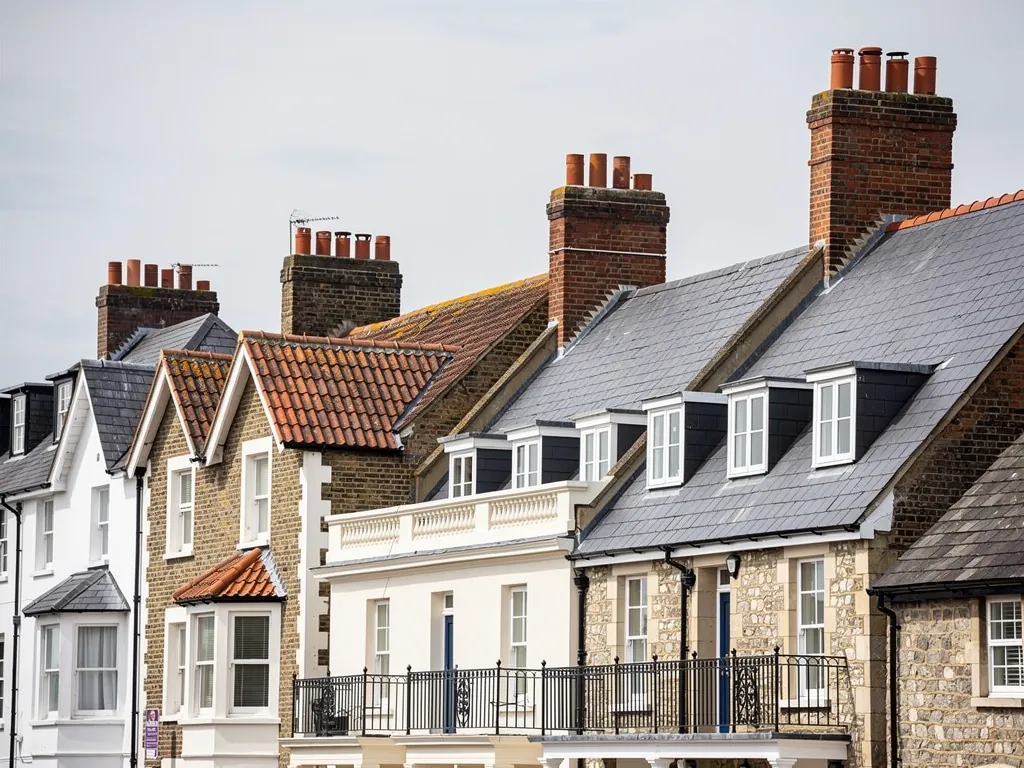
A slipped slate in a conservation area looks like any other slipped slate from the pavement. The difference lies in what happens next. Mend it with the right material, in the same way, and you are probably just looking after the house. Swap it for a different covering, take a chimney down or add a roof window, and you may have stepped into a different set of rules.
Two separate systems apply. Conservation area status controls what may change in the character of a street. Listing protects one building, inside and out, and brings its own consent process. Many Bognor and Chichester homes sit under one, a few under both, and plenty of owners are unsure which. Finding out is step one, and it costs a phone call.
This guide is about repairs, the day-to-day business of keeping water out. It explains where a repair stops and an alteration starts, how the councils around Bognor Regis treat the question, how different kinds of listed building are handled, and what to prepare before anyone goes up a ladder. Treat it as background, not legal advice: for your own address the council has the final word, and we say where to ask.
Where a repair ends and an alteration begins
The law gives repairs more room than many owners expect. Section 55 of the Town and Country Planning Act 1990 treats works that leave a building's outside appearance materially unchanged as falling outside the meaning of development. That is why a straight swap for the same covering rarely calls for a planning application. Two caveats follow straight after: listing, and any Article 4 direction that withdraws rights in your area.
Listed buildings use a different test. Under section 7 of the Planning (Listed Buildings and Conservation Areas) Act 1990, alterations touching what makes a listed building special need authorisation first. The South Downs National Park Authority adds the practical reading: routine upkeep needs no listed building consent, nor do small repairs carried out where the fault is, using matching material.
A working rule follows. A repair that restores the existing detail with matching material, size and method counts as maintenance. Anything that alters how the roof looks is alteration. That covers a new covering, a new opening, a different ridge line or a switch of metal.
The grey area
Real jobs sit between the two, and a surveyor's eye helps. Replacing a dozen nail-sick slates is maintenance. Replacing them with machine-made tiles in a different tone is not. Re-bedding a ridge is repair, but a new capping profile may not be. When the line is unclear, ask the council before ordering materials rather than after. A short email with photographs costs nothing, and an answer in writing protects you if someone queries the work later.
Our roof repairs page lists the faults we deal with. The sections below cover what changes on a protected building.
What conservation area status changes for roof work
Designation does not freeze a roof. The permitted development rule for other roof alterations to a house, Class C, carries no exclusion for conservation areas, so it can apply unless an Article 4 direction or condition has taken it away; listing adds its own consent. Flats sit outside it, because the order defines a dwellinghouse so as to leave out flats and the buildings containing them.
Dormers are the clear exception. Class B does not apply on article 2(3) land, which takes in conservation areas, the South Downs National Park and Chichester Harbour National Landscape (its label until 2023 was outstanding natural beauty area), so a new dormer there needs planning permission.
Bognor's designated areas
The council dates are worth knowing if you own in one. Designation of The Steyne with Waterloo Square dates from August 1979, extended in July 1994. Aldwick Road followed in July 1994, the Railway Station area in September 1994, Craigweil House in April 2009, and Felpham village in February 1985. Arun's current count is 29 conservation areas across the district. None of Arun's Article 4 directions removes roof rights: the Craigweil one deals with verges and front-garden surfacing, and the other is about houses in multiple occupation.
Neighbouring councils differ. Portsmouth's directions in Old Portsmouth and parts of Southsea reach chimney stacks and front roof cladding. Havant's Langstone direction reaches roof changes fronting the highway. In Chichester District, the planning team can say which rules cover your street.
Trees and other surprises
A repair can disturb the surroundings. Arun wants six weeks' notice of work to trees in a conservation area, which matters if a branch has to come back for scaffold or access.
Listed buildings: which body gives consent
For an ordinary listed house, shop or barn, the local planning authority grants listed building consent for anything beyond maintenance. Places of worship follow their own routes, which surprises people.
- Church of England churches in use: exempt, with the faculty system instead.
- Methodist and Roman Catholic places of worship in use: exempt, with each body running its own approval process.
- Baptist and United Reformed churches: exempt only under certain trust arrangements.
- Other faiths, such as Quakers and Unitarians: not exempt, so the council grants consent.
- Closed churches and Churches Conservation Trust churches: the ordinary secular controls apply.
- Scheduled monuments, churchyards included: a separate scheduled monument consent applies, decided by the Secretary of State.
- Listed shops, pubs and flats over shops: the same listed building consent route as a house, decided by the council.
Release from listed building consent is not release from planning, which still governs changes to the outside of a place of worship. The exemption is narrower than people assume.
Who decides inside the South Downs
Within the National Park the deciding body varies by district. The Authority takes applications directly across its Arun, Horsham, Adur and Worthing land. In the Chichester and East Hampshire areas the district council processes them for the Authority. Building control remains with the district council whichever applies, and Arun states that the Park is responsible for conservation areas inside its boundary.
If you are unsure whether a house is listed, check the national list or ask the council. For bigger jobs than a repair, our page on re-roofing a listed building picks up where this one stops.
Matching slate, clay and lead to the street
Councils care about materials because the roof is the biggest visible surface on most buildings. Arun's appraisals say what it would like to see. For The Steyne, where stucco dominates, it asks for the original natural slate or plain clay tile to be put back where unsuitable modern materials went on. For Aldwick Road, it records slate and flint among the stucco and observes that concrete interlocking tiles have commonly taken the place of slate and harm the street scene.
Elsewhere the descriptions differ. The Felpham village appraisal describes orange and red clay roofing, and the Craigweil estate in Aldwick with plain clay tiles above local stock brick. Treat these as guidance for repairs: use what the building and its neighbours were built with.
Sourcing the right tiles and slates
Matching takes time. Old clay tiles vary in size, colour and camber, and new ones can stand out for years. Reclaimed units from a similar roof often sit better, though they cost more and take longer to find. When a few are damaged, a careful roofer keeps the sound ones, reuses what can be reused and replaces only what has failed.
Fixings on old roofs
BSI's entry for the slating and tiling standard BS 5534 warns that some recommendations may not suit re-slating or re-tiling an old roof, particularly with traditional or reclaimed materials. Take that as a prompt to discuss the fixing method with the roofer, and on a listed building with the conservation officer, rather than assume a modern specification suits an old roof.
Lead flashing brings another choice. A cost guide quotes a life of over 80 years for lead flashing, which argues for re-dressing sound lead rather than ripping it out. Sheet is graded by code, and code 4 is the lightest suitable for flashings.
Chimneys, ridges and the details a street notices
On a seafront terrace the roofline belongs to everyone who walks past. Arun's notes on The Steyne and Aldwick Road single out the stacks as skyline features, and Portsmouth's directions name chimney stacks directly. A chimney repair is rarely a private matter in a protected area.
The principle is to keep what is there and mend it. Repointing a stack in matching mortar, resetting the pots and re-forming the flaunching (the sloped mortar bed around the pots that sheds rain) all preserve the outline. Taking a stack down to the roof is a change that may need consent, and on a listed building very probably does. If a stack is unsafe, a temporary measure to protect the street is fine, but agree the permanent answer first.
Ridges and verges
The ridge runs along the top and the verge is the edge at a gable end. Both can be repaired without changing the look of the roof. Since BS 5534 was revised in 2014, the standard no longer treats a mortar bed as enough for ridge and hip capping, so screws or clips back it up. Done well, the fixing is invisible from the road and the traditional bedded appearance stays. Our guide to changing tiles in a conservation area goes into the covering.
What to leave out
Avoid the quick fix of bitumen paint and sealant slapped on the wrong places. It hides a fault without curing it, looks wrong beside old materials, and a conservation officer will notice. Plain repairs in the right material are easier to defend than clever substitutes. Our note on a missing roof tile shows how a small gap is handled, and the roof repair cost guide explains what moves the price when matching materials are needed.
Getting ready: whom to ask and what to send
Preparation makes protected-building repairs run smoothly. Establish which controls apply: conservation area, listing, Article 4 direction, National Park, National Landscape, or none. A planning officer can confirm it, and Arun publishes a conservation officer's address for enquiries. Planning sits with the district, the borough, the Authority or the city, depending on where you live.
Then assemble the evidence. A written survey with photographs of the fault, the existing covering and its condition does most of the persuading. Add the specification: what is on the roof now, what you propose to put on and why. Read the list entry's description of the building too, because it shows what the council treats as important and gives you a common starting point with the conservation officer. On an old roof, pictures taken from the loft show how it is built and whether the structure is sound.
Scaffold and access
Some repairs need scaffolding. Where it stands over a public pavement or road, section 169 of the Highways Act 1980 requires a licence from the county council. West Sussex wants 10 working days' notice and charges £266 a month. Hampshire County Council's rate is £211.90 for the first fortnight, and the applicant must leave ten clear working days. On a listed building, mention any scaffold tied to the fabric to the conservation officer in advance.
When the roof is leaking now
A leak should not wait on paperwork. A temporary cover is sensible, and we prioritise leaks and secure the roof first. Photograph the damage before any cover goes on, keep the stopgap reversible, and speak to the council before any permanent change that goes beyond matching what was there.
Once we have surveyed, you get our verdict on the roof, followed by a written quote whose price is one total. Most protected-roof faults turn out to be repairs, and a repair is what we recommend when it will hold.
Questions
Heritage roof repair queries
Can I replace a few missing slates on a conservation-area terrace without asking?
Matching replacements are generally maintenance, not development. Listed house, or a street under an Article 4 direction? Ask the council first. Either way, use the same material and size and take dated pictures either side of the job.
My flat is in a conservation area. Do the same roof rules apply?
The permitted development roof rights are written for houses, and the order's definition leaves flats out. In a block, the freeholder usually controls and insures the roof anyway. Ask the managing agent and the council before any work is arranged.
Who decides on a roof repair inside the South Downs National Park?
It depends on the district. In some areas the Park Authority decides directly, and in others the district council acts for it. Building control stays with the district council. Ask the council for the right contact before you commit to materials.