
Listed and conservation-area roofs · 9 min read
Re-roofing a listed building or a house in a conservation area
Which permissions can apply when a listed building or a conservation-area house gets a new roof, who decides around Bognor and the Downs, and what to settle before scaffolding goes up.
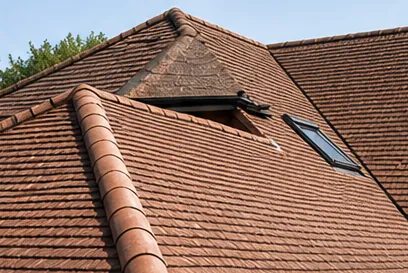
Take two neighbouring houses and the same new roof, and the paperwork can differ completely. One is unlisted and outside any protected area, so replacing its covering with the same thing is not normally a planning matter. The other is listed, or stands in a conservation area, a National Park or the Chichester Harbour landscape, and the position shifts. Start without the right consent and the cost of putting it right lands on the owner, because enforcement can follow work done without it.
The sections below explain the law in plain terms, then turn to the local ground: the seafront conservation areas of Bognor, the villages on the Downs and the harbour shore. It is general guidance and not legal advice. Your council decides what your roof needs, and asking it comes first.
The material matters as much as the permission. Historic roofs tend to be slate, plain clay tile or stone, and councils expect repairs and renewals to respect that. Our roof replacement and new roofs page explains our way of working on a full replacement, and the sections below deal with what needs settling before a quote turns into a start date.
Listed buildings: when consent is needed
Section 7 of the Planning (Listed Buildings and Conservation Areas) Act 1990 forbids work to a listed building that touches the special architectural or historic interest it was listed for, unless that work has been authorised. The authorisation is listed building consent, granted by the council acting as planning authority. A listing covers the whole structure, and the roof is rarely a minor part of its character.
Not every roof job triggers it. The South Downs National Park Authority says routine upkeep, along with minor repairs matching the existing fabric, can proceed without consent. Re-covering a whole roof is a much bigger step. Stripping the old covering, changing the material, altering the pitch, swapping handmade tiles for machine-made ones or putting concrete where slate sat all change appearance and fabric. Treat each as a consent question until the council tells you otherwise.
Ask before you price
Write to the conservation officer or the planning team with photographs, the existing covering and your proposal, and ask for a written answer on whether consent is needed. Arun District Council publishes an email address for its conservation officer. Keep the reply. A roofer who prices the job without asking has quoted for work that may not be allowed.
Responsibility sits with the owner, not the roofer. We explain consent and can give the council the facts about the roof, but the application belongs to the owner or their agent. Our page on listed building consent for re-slating goes deeper into the slate case.
Conservation areas, and what an Article 4 direction removes
A conservation area is a different thing from a listing. The house itself may be unlisted, while the area is protected for its overall character, and councils can narrow what owners may do without applying. Under the General Permitted Development Order, Class C covers other alterations to a dwellinghouse roof, and living in a conservation area does not by itself remove it. What can remove it is an Article 4 direction. The Planning Practice Guidance describes one as withdrawing named permitted development rights across a defined area.
Directions differ widely from council to council. Portsmouth has directions covering parts of Old Portsmouth and Southsea, aimed at new roof cladding on street-facing elevations and at chimney stacks being removed or altered. In Havant, the Langstone direction takes in roof alterations visible from the street side. Arun's directions, as far as we found, concern shared houses and the Craigweil House conservation area in Aldwick, and neither removes a roof right.
Bognor's own designated areas
The Steyne and Waterloo Square conservation area dates from August 1979 and was extended in July 1994. There Arun's guidance favours reinstating natural slate or plain clay tile where unsuitable modern materials have crept in. In Aldwick Road, designated in July 1994, the council observes that original slate has often been swapped for concrete interlocking tile, to the harm of the terraces and the street scene, and wants the original roofing brought back. Felpham village, designated in February 1985, is described in its appraisal as having orange and red clay tile roofs.
Chichester District Council's own directions are not covered here, so contact its planning team. Our Bognor Regis conservation areas page covers the town in more detail.
Park and harbour: who you ask near Bognor
Two landscape designations lie close to Bognor and both alter the picture. Neither forbids a new roof. Each changes who you ask and what you can do without an application.
The South Downs National Park runs along the northern edge of the area we cover. Where the Park falls inside Arun, Adur and Worthing or Horsham, the National Park Authority handles planning itself. Where it falls inside Chichester, East Hampshire or Winchester, the district council takes the applications for the Authority. Building control never moves: wherever you are in the Park, the district council keeps it. Arun's own conservation pages add that the Park Authority is responsible for conservation areas inside the Park boundary.
The harbour shore is protected too. Chichester Harbour National Landscape received its original designation on 4 February 1964, under the name Area of Outstanding Natural Beauty, and was renamed in 2023. The permitted development rules still use the older term, so the land counts as article 2(3) land.
Adding a dormer in a conservation area, in the National Park or within the Harbour landscape always means a planning application, because the national dormer right does not reach that land.
Roof windows during a re-roof
Class C can still cover roof windows on such land, unless a direction or condition removes it, but any window set in a side-facing slope has to be obscure-glazed. A listed building is separate, because consent governs it. Our guide to roof windows in conservation areas covers the detail. Settle the question at the start and not halfway through the job.
Churches, chapels and scheduled sites
Places of worship follow rules of their own, and they catch people out. The ecclesiastical exemption lets certain denominations manage works to listed churches in worship use through internal processes instead of listed building consent. It is narrower than it sounds.
A Church of England church that is still in worship use is exempt, although works need a faculty from the diocese. Roman Catholic and Methodist congregations in worship use are exempt too, under approval processes run by the denominations. A Baptist church qualifies only if a trust corporation named in the legislation holds it, and then it follows its own procedure. A United Reformed Church is exempt if it is on the specified trusts. A few other denominations benefit, so a Quaker or Unitarian meeting house needs listed building consent from the council.
Where the exemption stops
Government guidance is plain that the exemption leaves planning permission in play for development altering the outside of a listed building used for worship. It also ends for a church closed under the Pastoral Measure, and for any building held by the Churches Conservation Trust, which comes under the usual listed building and conservation area controls. A scheduled monument, including one in a churchyard, needs scheduled monument consent, which comes from the Secretary of State and is not covered by the exemption.
If you look after a church, chapel or village hall roof, establish which route applies before asking for prices. Work started on the wrong route can be halted, and putting right an unauthorised roof is the owner's cost. Our page on emergency repairs to listed roofs covers the case where water is coming in and the roof has to be made safe first.
Building Regulations still apply
Planning and listed building consent run on one track, and the Building Regulations run on another. A consent never stands in for them. According to the Planning Portal, building control approval is normally unnecessary provided the work touches under 25 per cent of the total building envelope and under 50 per cent of the roof. Cross either limit, or pick a covering that would react quite differently to fire, or one at least 15 per cent heavier, and approval is needed. Arun District Council also lists pitched and flat roof recovering among the jobs it wants applications for, so put the question to the council's team or your own building control body.
Weight matters most on old buildings, where timbers were sized for the original material. Should the new tile differ greatly in weight from the old, the Planning Portal wants a structural engineer or surveyor consulted before work begins.
Fixings on older roofs
BS 5534 sets out recommendations for slating and tiling, and BSI cautions that they can be a poor fit for old roofs being re-covered, above all those reusing traditional or reclaimed slates and tiles. A conservation officer may expect a method that respects the original, and a sound roofer can explain how to fix it securely without losing its character.
Thermal upgrades enter the picture as well. Where over half of a roof's thermal element is renovated, Part L can call for an upgrade, and our guide to insulating when you re-roof sets out what is asked. On a listed building, talk to the conservation officer before choosing any product. Spray foam is another trap, because the RICS guide says a listed or other protected building needs prior consent before any is installed.
Choosing materials and a roofer for a protected roof
With the consent route clear, the covering is the next decision, and councils often hold a view. Natural slate and plain clay tile are what Arun wants reinstated on the seafront terraces. Reclaimed slates and tiles cost more to source and take longer to match, but they look right for decades. Published lifespans point the same way: CORC puts well-kept slate at 100 years and more, while one building conservation article cautions that the usual 60-year clay figure is no reliable yardstick for old peg-tile roofs. These are typical ranges and never promises.
What to ask a roofer
Ask what they have laid on protected buildings, and what they propose for the ridge, hips, valleys and lead. Detailing is where a protected roof is judged from the street. Lead should be dressed neatly to the masonry, verges finished cleanly and chimney flashings sound. These are the details we give most care, since weather works at every joint on this coast.
- Ask the council whether consent or a notification is needed, and keep the reply.
- Ask for one written total covering the whole job.
- Check whether the quote includes scaffolding and VAT.
- Ask what happens if the council requires a different material.
Scaffolding on or over a pavement needs a highway licence, and it takes notice: in West Sussex at least 10 working days. Build that into the timetable. Our planning permission to replace a roof guide covers the general case, and the quote page is where to send photographs of the roof along with the council's reply.
Questions
Listed and conservation-area roof questions
Can I replace my roof like for like in a conservation area?
Often no planning permission is needed, because work that does not materially change the outside appearance is not counted as development, unless an Article 4 direction applies; a listed building still needs listed building consent. Check with the council's planning team first. Arun's directions found so far remove no roof rights, but other councils differ.
My house is within the South Downs: which authority do I approach?
That turns on the district. The Park Authority itself decides planning where the Park lies in Arun or Horsham, while the councils for Chichester and East Hampshire take in applications for it. Building control remains with the district council across the whole Park, so if you are unsure, put the question to both.
Does the council need to approve a different roofing material?
On a listed building, changing the material is likely to need listed building consent. In a conservation area it may need planning permission, depending on any direction. Even where no consent is needed, a much heavier covering can bring in the Building Regulations, so ask building control before ordering anything.