
Roofers in Lyminster
Clay tile, flint and tile hanging
Lyminster's roofs lean on clay tile, with slate on some buildings, and sit among flint walls beside a Grade I church in the low-lying Arun Valley, with long views north to Arundel Castle.


Lyminster roofs
From a Grade I church to the valley ditches
-
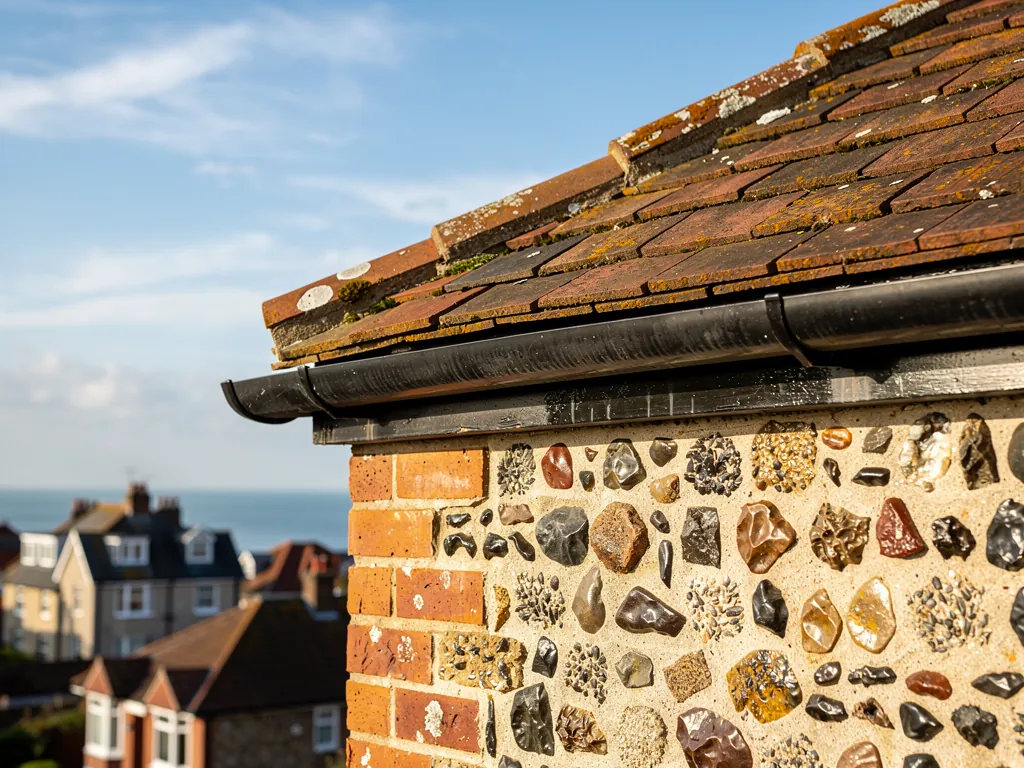
Clay tile above flint walls
Arun's appraisal records flint as the dominant walling material and puts clay tile first among the roof coverings, with slate also on some buildings. Where tile meets flint, the junction details do most of the work of keeping water out.
-
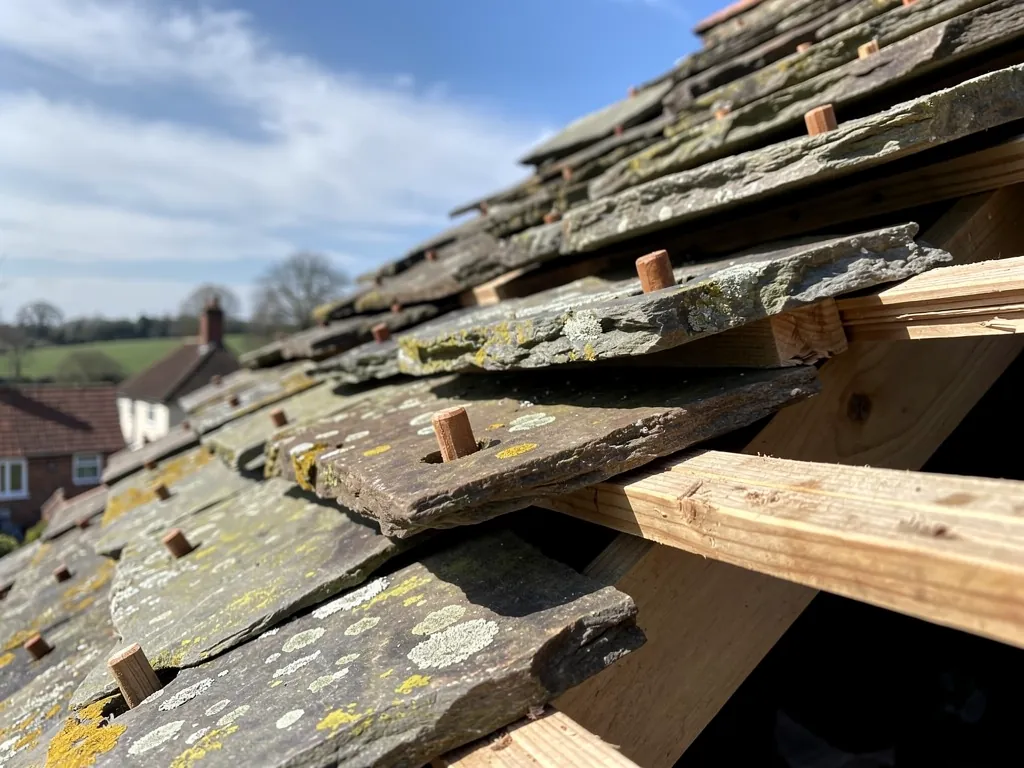
Tile hanging and weatherboard
Alongside flint and red brick, the appraisal names render, tile hanging and weatherboarding among Lyminster's materials. Tile hanging means small tiles fixed in overlapping rows over a wall, and it shares its flashings and gutters with the roof above.
-
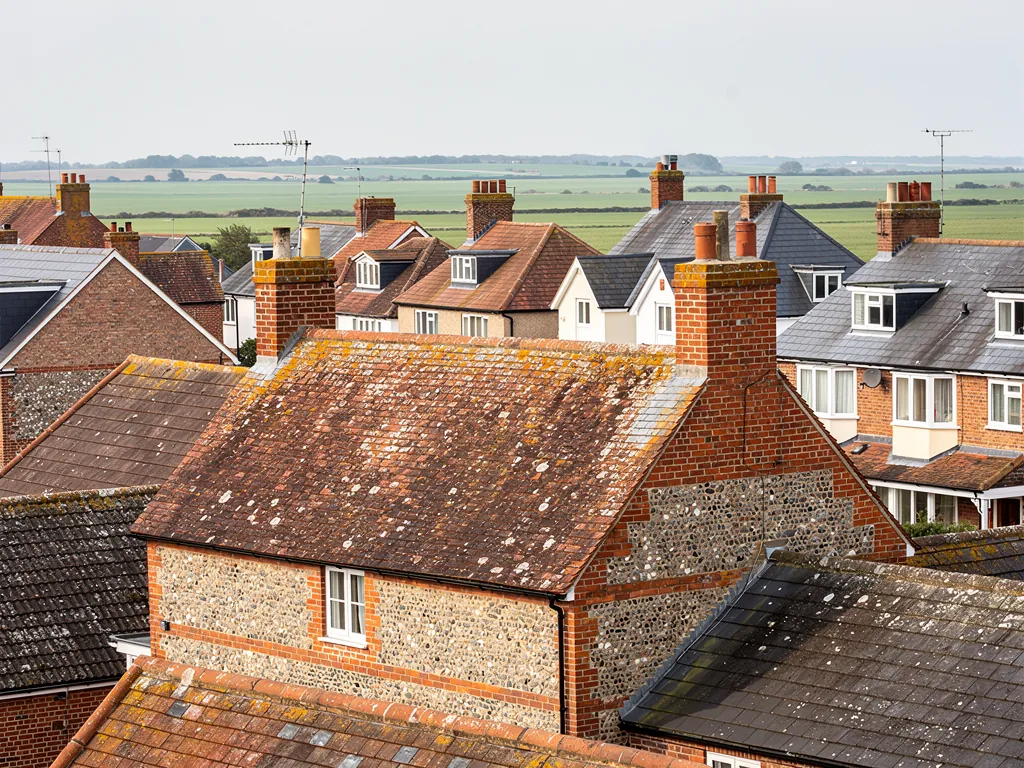
An eleventh-century church
St Mary Magdalene has sections of chancel and nave dating from around 1040 and is listed Grade I. Houses close by share its flint boundary walls, which the appraisal calls one of the village's most distinctive features.
Map of Lyminster, 9.3 road miles north-east of Bognor Regis, with the nearest towns we also cover.
Lyminster's conservation area and its church
- Council
- Arun District Council
- County
- West Sussex County Council
- Conservation area
- Lyminster Conservation Area, designated March 1998
- Article 4
- Nothing is recorded against Lyminster on Arun's conservation areas page
- Listed landmark
- St Mary Magdalene, a Grade I church
- Distance
- 9.3 road miles north-east of Bognor Regis, about 16 minutes by car
Valley notes
Flint walls under tile in the Arun Valley
Three sides of a small village, and what each of them asks of the roof overhead.
Chapter 1: Clay tile roofs round a Grade I church2318
Sheet 01 / 03Lyminster is small, and a good deal of its character comes from one building. Substantial parts of the chancel and nave of the parish church of St Mary Magdalene date from around 1040, and the church is listed Grade I. The priory that once stood here had its estates granted by Henry VI to Eton College, which still holds the patronage of the parish. Arun District Council's conservation area appraisal, dated August 2026, describes flint as the dominant walling material and puts clay tile first among the roof coverings, with slate also present on some buildings. That shapes how we plan a job: we expect to be matching new clay to old clay beside flint walls, not simply choosing whichever tile is easiest to get.
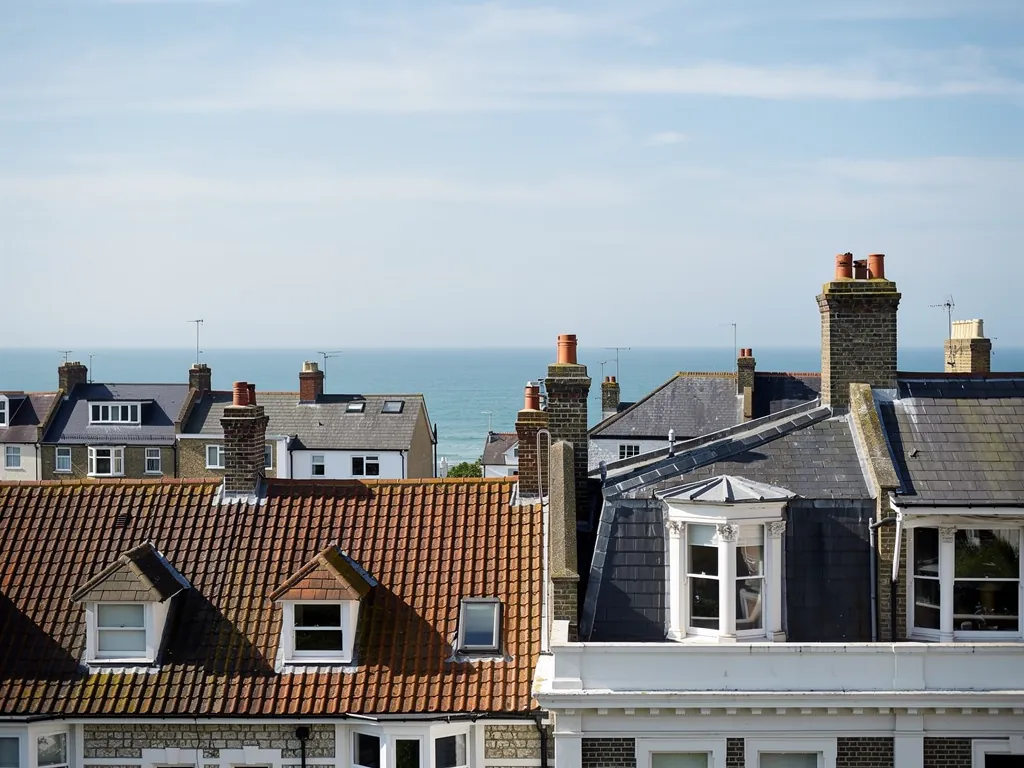
Two coverings in one village
Clay tile
Look for crumbling faces, slipped tiles and tired fixings before anything else.
Natural slate
Look for slipped courses, rusted nails and cracked slates under the lead.
1.1 What clay asks of a roofer
Clay tiles can last a long time when they are looked after. Marley cites a Building Research Establishment figure of at least 60 years for clay, while buildingconservation.com cautions that on an old peg-tile roof the 60-year figure tells you little, so age alone never settles the question. We look for tiles with crumbling faces, for gaps where tiles have slipped, and for fixings that no longer hold. If a slope is sound apart from a run of slipped tiles, refixing those tiles is the whole job. If the whole slope is going, we tell you plainly and mark the failing areas on the photographs. Our pitched roofing page explains how a clay slope is stripped, re-battened, covered with new underlay and relaid, with the good tiles reused wherever they will go back.
1.2 Slate on some buildings
Where a Lyminster building carries slate, the covering behaves differently. Slates are thin and flat and held by nails, and a slipped one can be re-secured with a tingle, a slim metal strip bent to grip the slate while leaving the row above undisturbed. If the nails have rusted through along a whole slope, individual repairs only buy a little time, and relaying the sound slates on new battens is the more lasting fix. A mixed village like this one often has a clay roof and a slate roof side by side, and each wants the right person looking at it with the right materials to hand.
Because the church is Grade I, the houses around it deserve care in their own right. Work on the church goes through the Church of England's faculty system and is a matter for its parish, not for a roofing firm. For a neighbouring house, the first question is whether it is listed, and the second is whether any change goes beyond putting back what was there. A like-for-like repair, with matching tile and the same pitch, is normally the lighter route, and it is the one we start from.
Chapter 2: Flint boundary walls, tile hanging and weatherboard3111
Sheet 02 / 03
The appraisal calls flint boundary walls one of Lyminster's most distinctive features, and anyone driving through can see why. They line the lanes and run beside gardens and the churchyard, and they influence the roofs that sit behind them. Gutters on a house set against a flint wall have little room, downpipes discharge close to old footings, and a leaking joint can drip onto stonework that took centuries to settle. The materials list in the appraisal reaches beyond flint: red brick, render, tile hanging and weatherboarding all appear. A house in the village can therefore have a roof, a hung-tile wall, a weatherboarded gable and a flint plinth within a few metres of each other.
Tracing a stain on a Lyminster wall
- 1Inside firstWe note where the stain sits and which wall it backs onto.
- 2Roof edgeThe roof edge above gets checked for lifted lead and open joints.
- 3Gutter lineWe look for blockages and failed joints that spill onto the wall.
- 4Written quoteThe cause is photographed, with the written quote to follow.
2.1 Where tile hanging meets the roof
Tile hanging is a covering of small tiles fixed vertically over a wall. A roof can end against it, or the side wall of a dormer is clad with it, and the junction depends on a flashing, which is a strip of lead that sheds water out over the tiles. When that lead is missing or lifted, water runs behind the hung tiles and into the wall. The leak shows up inside as a stain well away from the cause. We trace it back by looking for the point where the roof and the wall meet, and we photograph it from close up. Our lead roofing and leadwork page shows how those details are shaped and fixed.
2.2 Weatherboarding and its gutters
Weatherboarding is overlapping timber cladding, usually painted. Where it lies under a roof edge, the gutter and its fascia board shield it from the worst of the rain. If the gutter is blocked or the joint has opened, water pours down the boards, paint blisters and timber starts to rot from the bottom upwards. Replacing a length of gutter is small work, and if the board itself has softened we explain that at the same visit. Where an old lead flashing sits above the cladding, we check it before the boards are touched, because a repaired board under a failing flashing will rot again. Boards that are sound can be rubbed down and repainted after the water has been dealt with, which keeps the repair small. Hung tiles that are cracked or missing are replaced with a match, so the wall does not end up patched in a different colour from the rest.
Chapter 3: Ditches, open fields and the view to Arundel Castle3111
Sheet 03 / 03Lyminster's setting is rural. The appraisal describes open fields, drainage ditches and low-lying land belonging to the wider Arun Valley, with long views north to Arundel Castle. The Lyminster bypass and the realigned A284 have reduced the through traffic in the village, so the lanes are quieter than they were. For roofs, an open valley floor means little shelter. Weather arrives across the fields, and a ridge or a verge that is not properly fixed will be the first thing to show it. Wind-driven rain finds any gap between the tiles and the wall at a verge, and a damp mark on an inside gable wall is often the first sign. Photographs of the gable from the garden are a good start if you want to send us something before the survey. We see no reason to alarm anyone, but a roof with loose capping or a patched verge deserves attention before the autumn gales and not after them.
Before the autumn gales on open ground
- Loose or rocking ridge capping
- Patched mortar at gable verges
- Gutters carrying leaf litter
- Soft edges on flat roofs
- Old cement-sheet garage roofs
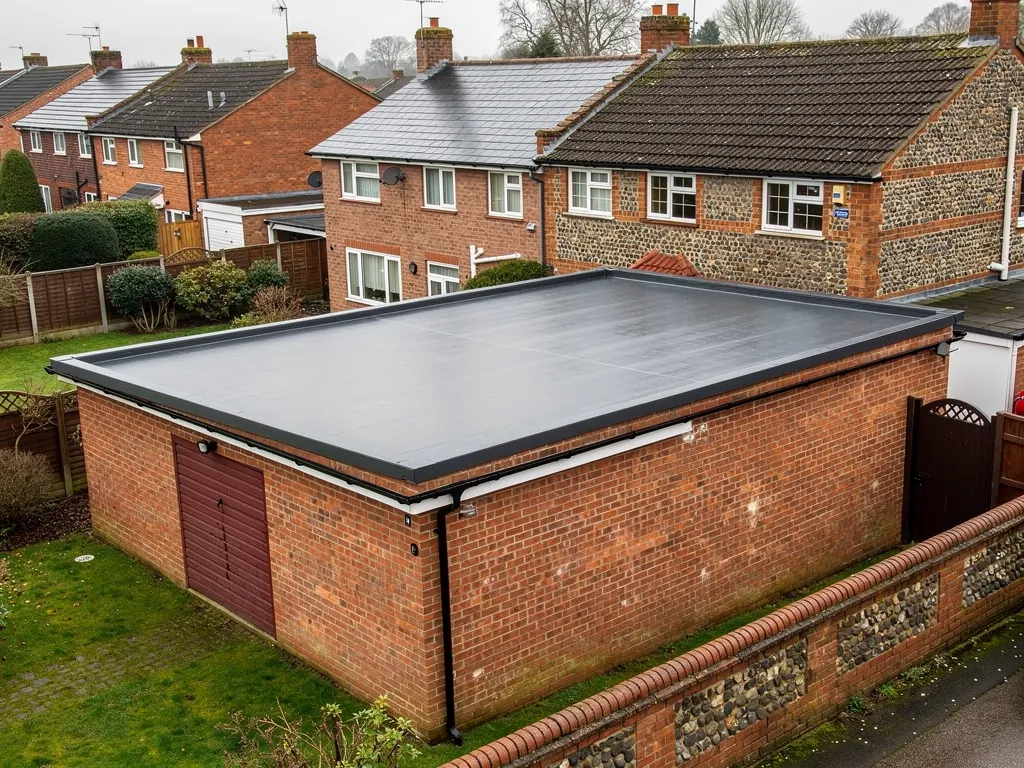
3.1 Outbuildings, extensions and flat roofs
Alongside the older houses, a village like this has garages, utility rooms and extensions with flat roofs. A flat roof must be built with a slight slope, the fall, to shed rainwater. BS 6229:2025 sets a minimum finished fall of 1:80, and roofers usually design steeper, around 1:40, so the finished surface still drains. Ponding water, blistered felt and a soft edge are the signs that a covering is failing. For a garage re-felt, Checkatrade (updated October 2026) gives around £1,000 to £2,000, with an average of £1,500, as a typical UK range; the figure for your own building comes from the written quote after our survey. Our roof repairs page covers the smaller jobs that avoid a full replacement.
3.2 Old buildings and wildlife
An old roof close to fields and ditches can house bats and nesting birds, which are both protected. If we see signs of either, we stop and tell you before any work goes further. Garages and sheds built or refurbished before 2000 may contain asbestos, according to the HSE, which advises you to assume it is present until checked. We would send you to a proper sample test before touching an old cement-sheet roof, and we would not break it up. Asbestos cement is only non-licensed work when it is handled carefully and not broken, and it becomes notifiable if it is substantially damaged, so this is a job for a proper survey before any quote.
Our roofing work in Lyminster
Frequently asked questions
Questions from the flint lanes of Lyminster
Does a clay roof beside a Lyminster flint wall need relaying or just patching?
That turns on the tiles and the fixings. A run of slipped tiles or a cracked few can be refixed or swapped singly, and we match the colour of the old clay as closely as we can. If the face of the tiles is crumbling across the slope, or the fixings have failed everywhere, relaying is the better call. We photograph the roof, show you which it is, and put the answer in a written quote.
Is Lyminster Conservation Area covered by an Article 4 direction on roofs?
On Arun District Council's conservation areas page the only Article 4 Directions listed belong to Craigweil House at Aldwick, so none is recorded for Lyminster, whose conservation area dates from March 1998. A listed home is different: listed building consent applies once work touches its character. Because rules shift, ask Arun District Council's planning team before altering any roof here.
My Lyminster house has tile hanging next to the roof. Why does a leak appear on the wall below?
Water that gets behind hung tiles runs down inside the wall and surfaces somewhere else. The usual culprit is lead flashing that has lifted or split where the roof meets the tiling. We trace the stain upwards, photograph the junction, and fit new lead, dressed over the hung tiles so it sheds water outward, before refixing any tiles that were disturbed.
What can we do about moss and slipped tiles on a roof that faces open Arun Valley fields?
Moss is cleaned off first, so we can see the tiles beneath, then any slipped and cracked tiles are replaced and the ridge and verge fixings checked. If the roof is exposed to the weather across the fields, a firm mechanical fixing matters more than appearance. If the tiles are sound beneath the moss, cleaning is often all it needs.
Nearby areas
Get a quote
Tell us about your roof
Describe what's happening and we'll call you back.
Loading the enquiry form. You can also call 01243 252373.