
Roofers in Climping
Knapped flint, Horsham slate, the Arun shoreline
Climping lies on the coast, on the west bank of the Arun, with knapped flint and red brick manors, Horsham slate at Bailiffscourt and a shore the sea has reshaped for centuries.

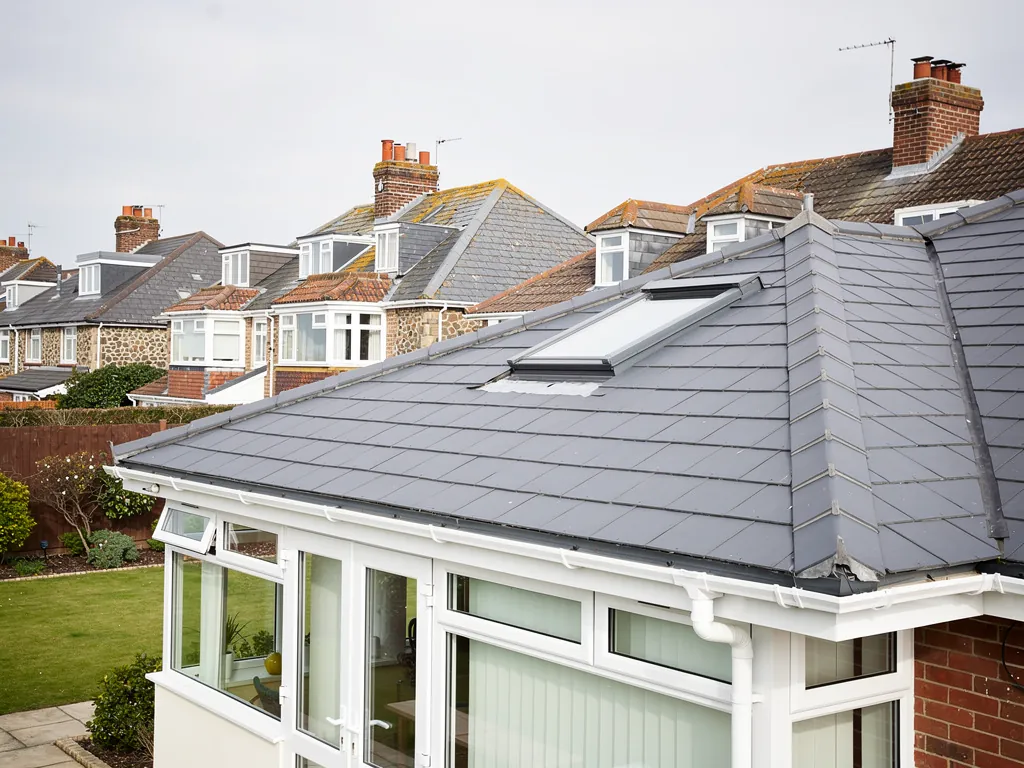
Climping roofs
From Brookpits Manor to the Climping shore
-
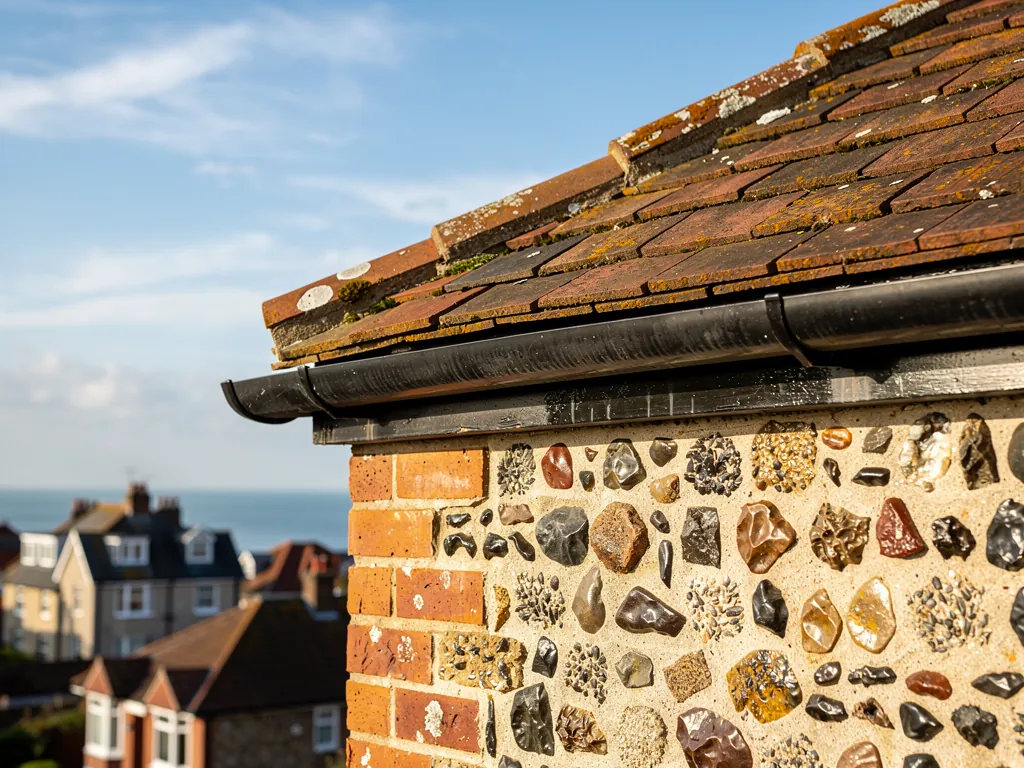
Flint walls under old roofs
Brookpits Manor is built of knapped flint with red brick dressings and brick mullioned windows. Flint walls do not take a screw or a nail, so every roof edge, flashing and gutter bracket there has to be planned to suit them.
-
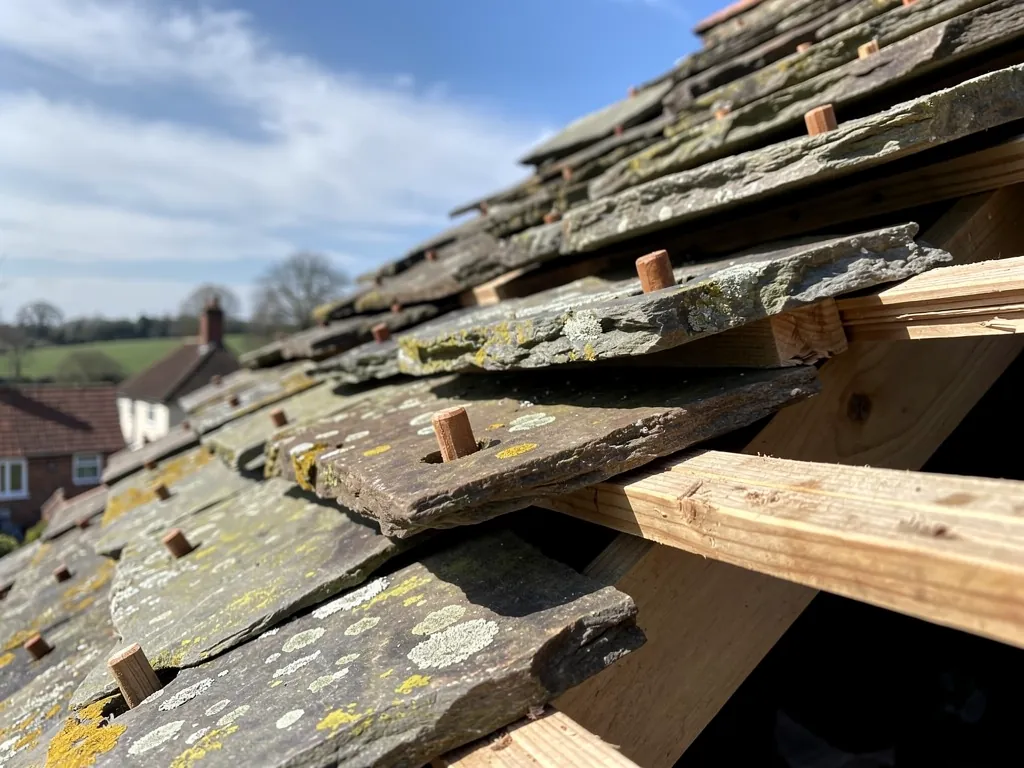
Horsham slate at Bailiffscourt
Bailiffscourt, made from reused medieval masonry and new work weathered to look old, has a roof of Horsham slate and has been a hotel since the late 1940s. Stone roofs like this are heavy and need specialist handling.
-
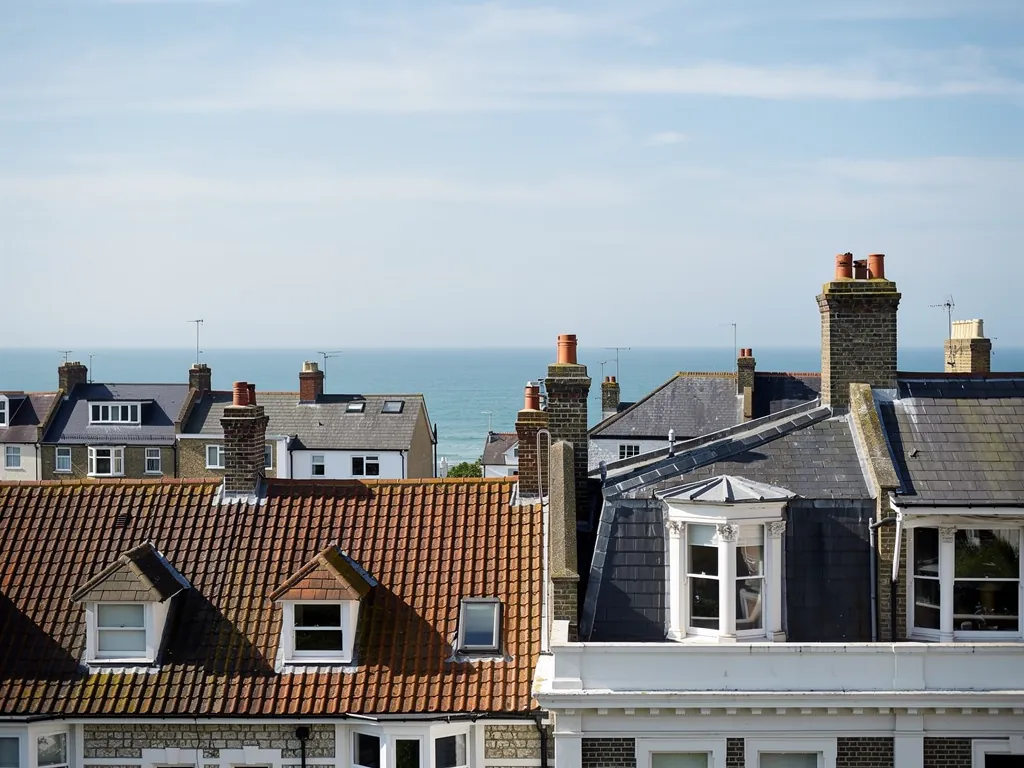
A coast the sea has reshaped
The sea has taken most of the former parish of Cudlow, and erosion was recorded at Atherington from the late 15th century into the 18th. The coast that survives is undeveloped in the main and sits under National Trust covenants.
Map of Climping, 6.9 road miles north-east of Bognor Regis, with the nearest towns we also cover.
The west bank of the Arun, on the coast
- Council
- Arun District Council
- County
- West Sussex County Council
- Conservation area
- None named for Climping on Arun's conservation areas page; confirm your address with the council
- Roof rights
- No Article 4 Direction recorded for Climping
- Tower
- St Mary's church, with a later 12th-century tower
- Distance
- 6.9 road miles north-east of Bognor Regis, about 13 minutes by car
Climping notes
Lost land, flint manors, heavy stone slates
Three things that shape a Climping roof: an exposed shoreline, old walls of flint and brick, and heavy stone slates.
Chapter 1: A shoreline that the sea keeps reshaping2440
Sheet 01 / 03Climping lies along the coast on the west bank of the River Arun. Most of the former parish of Cudlow has been lost to the sea, and the record shows erosion at Atherington from the late 15th century into the 18th. For a roofer that history is more than a curiosity. It is a reminder that this stretch of coast is open, and that the buildings nearest the shore take the weather first. The coastline has stayed undeveloped and under National Trust covenants, with a beach that drew summer day visitors from London and elsewhere. Open ground with little built up around it gives a roof less shelter than a house tucked into the middle of a town, so the shoreline houses and farm buildings here deserve a careful look after every rough spell.
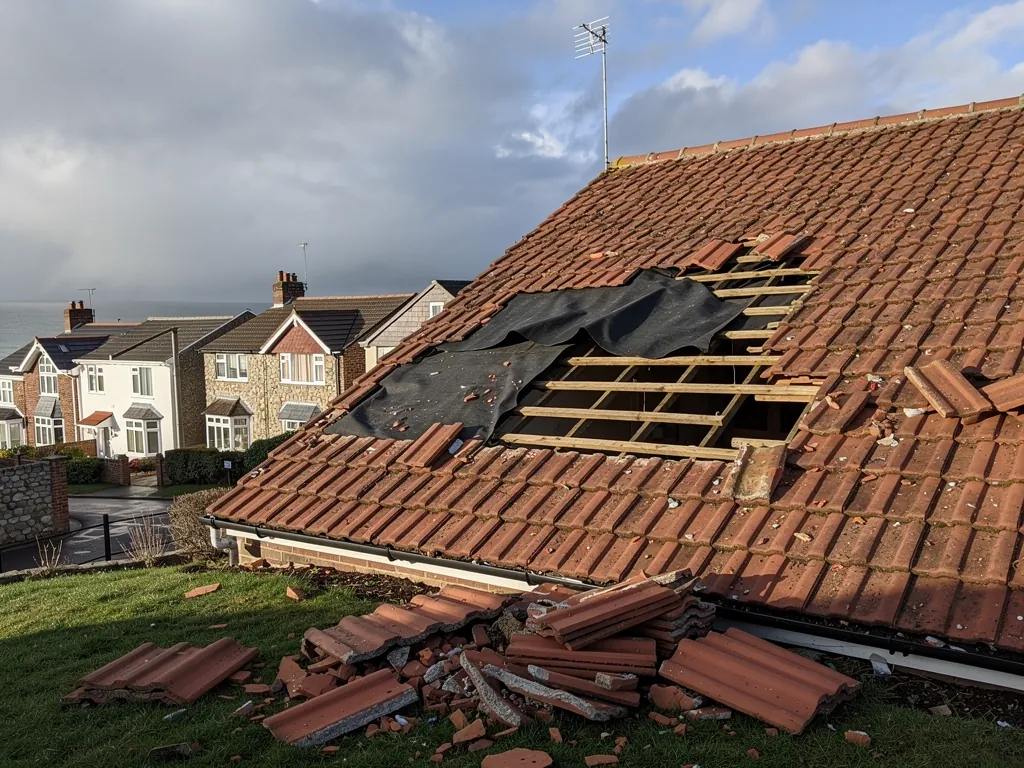
Exposed-edge checks near the Climping shore
- Verge tiles on each gable
- Ridge and hip fixings
- Flashings dressed in lead
- Flat-roof edge trims
- Gutter brackets and outlets
1.1 Gales, driving rain and salt air
Weather off this shore means gales, driving rain and, close to the water, salt air. We do not grade a roof with a number. We go through the weak points one by one and write up what each looks like in your roof's photographs. Tiles on a gable are held at the verge, the exposed edge of the roof, and lifted by wind first. Ridge and hip tiles are held mechanically as well as in mortar, since the 2014 revision of BS 5534, which means screws or clips as well as a bed of mortar. Flashings, the lead dressed between a slope and a wall, need shaping into the joint, not smearing over with sealant. Where a roof has a shallow pitch, the wind can pull at the windward slope, and the fixing needs to suit. Gutters get the same attention, because a bracket that has worked loose lets a full run drop in a gale and throw water against the wall. Painted fascias and soffits near the water also need rinsing and re-coating, and on a house with tired timber boards we flag it early so the roofline is renewed in one visit and not piecemeal.
1.2 Flat roofs and extensions near the water
Many coastal houses carry a flat-roofed extension, garage or porch. A flat roof is only flat in name: it must be laid to a fall so the water runs away, and BS 6229:2025 sets a minimum finished fall of 1:80, which roofers usually exceed in design. Edge trims, the metal or plastic profiles that finish the covering at the perimeter, are the first place a coastal gale gets under a membrane, and a trim that has lifted a few millimetres is enough to let water in. A membrane that has blistered or split along a seam can sometimes be repaired, but a roof that has been patched several times is better replaced to a proper fall. Our flat roofing page explains the coverings and the details we use at the edges.
Chapter 2: Knapped flint, red brick and Horsham slate2562
Sheet 02 / 03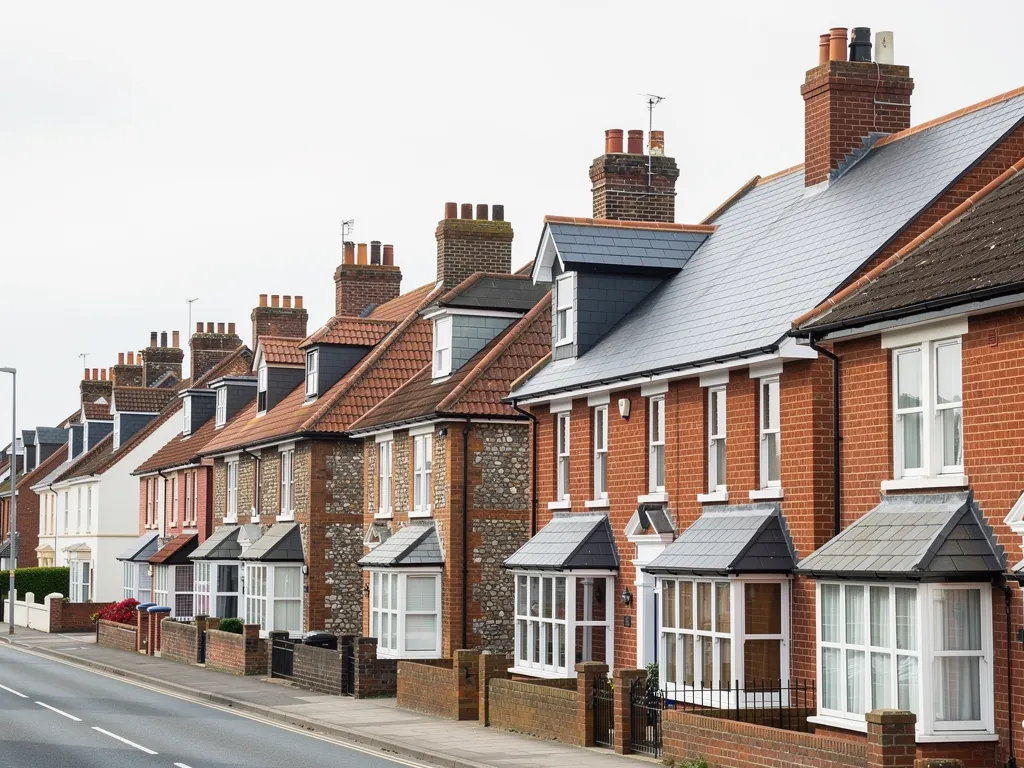
Climping's older buildings are the best guide to its materials. Brookpits Manor is built of knapped flint, flint that has been split to show its dark, glassy face, with red brick dressings round the corners and openings and brick mullioned windows. At Bailiffscourt, the house was assembled from reused medieval masonry alongside new work that was deliberately weathered to look old. Its roof is Horsham slate, and the building has been a hotel since the late 1940s. Few roof types are more distinctive in West Sussex, and few are more demanding to look after.
Two roofs found in Climping
Stone slab roof
Very heavy, pegged to heavy timbers, repaired slab by slab and never swapped lightly.
Clay tile roof
Far lighter, nailed to battens, repaired tile by tile or relaid when the battens fail.
2.1 What Horsham slate is, and why it is heavy
Horsham slate is not slate in the usual sense. It is a thick, rough-split sandstone laid in diminishing courses, which means the slabs are largest at the eaves and shrink steadily towards the ridge. Each slab weighs far more than a Welsh or Spanish slate, so the roof timbers beneath are built heavier and the roof is fixed with pegs. A stone roof like this is repaired by lifting and re-hanging the slabs, not by swapping them for a lighter tile. Under the Planning Portal's guidance, building control approval is needed where a new covering makes the roof covering 15 per cent or more heavier, and a structural engineer's view is advised before any much heavier or lighter tile goes on. Our Horsham stone roofing page explains the material and its repairs.
2.2 Flint and brick at the roof edge
At the point a roof abuts a flint wall, lead goes into the mortar joints and is dressed down across the covering. Flint is hard but the joints are soft, so the work has to be done with lime-based mortar, not a hard cement that cracks the flint face. Brick stacks stand tallest and take the most weather, so they are often the first part of an old house to loosen. Pots, pointing and flaunching all get a look from the ladder, and the lead around the base is checked for gaps where the old mortar has shrunk away. The flaunching, the mortar cap holding the pots, needs renewing from time to time, and the flashing round the base is checked on every survey. A stack that leans is made safe before it is repaired.
Chapter 3: Church tower, riverbank and open ground2379
Sheet 03 / 03St Mary's, the parish church, has a tower dating from the later 12th century. A roof on a medieval church follows the approval route that applies to the church. A church in use may fall under the ecclesiastical exemption and go through its denomination's own process, while a church that is not exempt needs listed building consent from the council. Work on the tower roof or the nave is not something to start before the right consent is in hand. Part of Ford airfield lay within the parish, and the open ground around a former airfield is a reminder that a barn or a long shed catches the wind in a way a village roof never would.
How a Climping survey runs
- 1Walk the groundWe look at the exposed edges first: verges, ridge, flashings and any flat roof trims.
- 2Check the wallsFlint, brick and stone are examined where the roof meets them.
- 3Check consentsWe record whether the house is listed and what Arun's list says about the address.
- 4Give the verdictYou get our call on repair, patch or replacement, with photographs, before any price appears.
3.1 Larger roofs on open ground
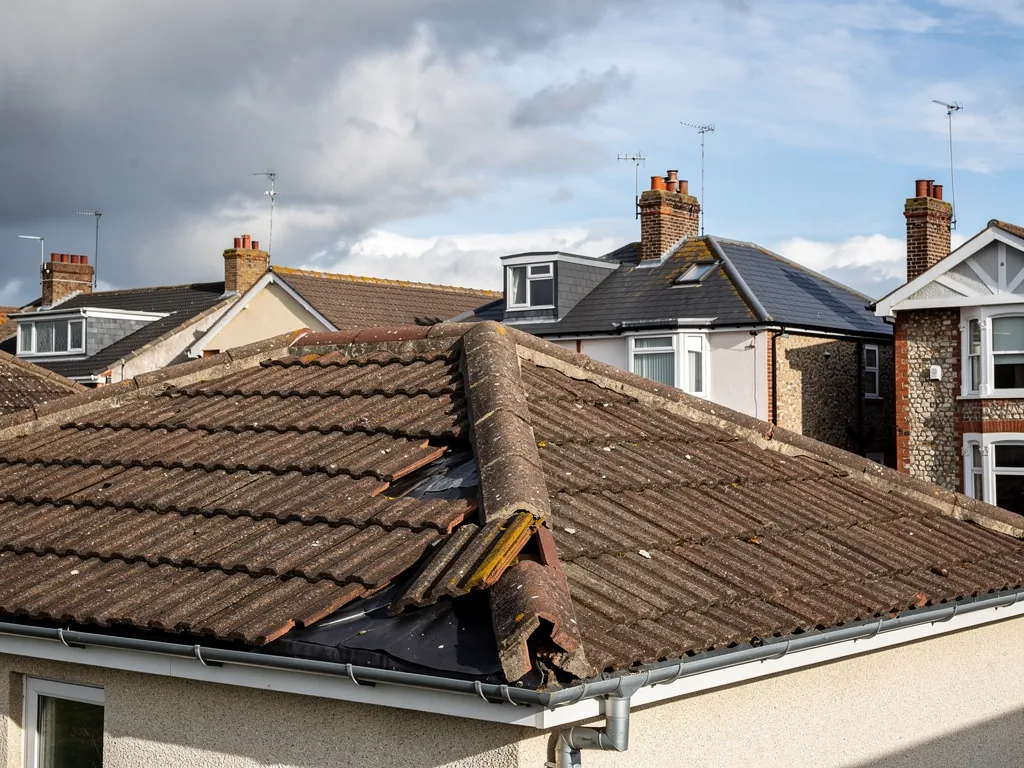
If you own a barn, a workshop or a large outbuilding in Climping, the roof may be metal sheeting or an older fibre-cement sheet. For a building put up or refurbished before 2000, HSE guidance says to presume asbestos is present until a check shows otherwise. Weathered asbestos cement that is still whole can be taken down as non-licensed work; sheeting that is substantially damaged turns it into notifiable work, and the waste needs a consignment note. Cement sheet is also brittle, so nobody steps onto it without crawling boards and edge protection. Our commercial roofing page covers larger buildings.
3.2 Choosing who decides on consent
For Climping, Arun District Council acts as both planning authority and building control team. Its conservation areas page names none for the parish, and the council can confirm whether your own address sits inside one. If your house is listed, works that affect its character need consent. Putting the same covering back on a plain house seldom raises a planning question, because the street sees no change. The survey gives its verdict first, with photographs of your roof, and the quote follows.
3.3 Scaffold by a riverbank lane
Narrow lanes beside the Arun make delivery and scaffolding awkward, and a lorry of stone or tile may have to unload some way from the house. Scaffolding over a public highway is licensed by West Sussex County Council, and it asks for at least 10 working days' notice, so find out from your roofer who is lodging it. Leave time for it in your plans, and warn anyone whose drive the poles will cross.
Roofing services across Climping
Frequently asked questions
Questions from Brookpits to the Arun bank
Can a Horsham slate roof like the one at Bailiffscourt be repaired without relaying it?
In many cases. Each slipped or cracked slab is lifted and rehung, the sound stone is kept, and pegs and lead are renewed wherever they have failed. If the timbers underneath have weakened, or many slabs have split, relaying the slope is the sounder job. We photograph the underside of the roof so you can see what each choice involves.
How do you fix a flat roof extension on a coast open to gales?
We look first at the falls, then the edge trims and upstands, because those are the first places wind and driving rain get in. A flat roof is laid to a proper fall so water drains away, and edges are finished neatly and held down firmly. If the deck beneath has gone soft, the old surface is stripped, the deck is renewed, and only then does the new covering go down.
Is Climping inside a conservation area, and do I need permission to re-roof?
Arun District Council's conservation areas page names none for Climping, and no Article 4 Direction is recorded here. Confirm your own address with the council all the same. Putting back the same covering seldom calls for planning permission, though a listed house wants consent for anything altering its character. When in doubt, check with Arun's planning team.
What should I do about a fibre-cement sheet roof on a barn or shed near the old airfield land?
Do not walk on it, and do not break it up. Assume asbestos until it has been checked, because an older sheet can contain it. Carefully removing weathered asbestos cement that is not substantially damaged is non-licensed work, but damaged sheets make it notifiable, and the waste needs a consignment note. We survey it from a safe position and explain the options.
Nearby areas
Get a quote
Tell us about your roof
Describe what's happening and we'll call you back.
Loading the enquiry form. You can also call 01243 252373.