
Roofers in Ford
Airfield conversions, flint pebble and red brick
Ford's roofs range from the flint pebble and brick of St Andrew's and Newhouse Farm to the houses made from airfield buildings in the 1920s and the homes that followed them.
Ford roofs
Airfield buildings, a flint church and a farm
-
Airfield buildings made into homes
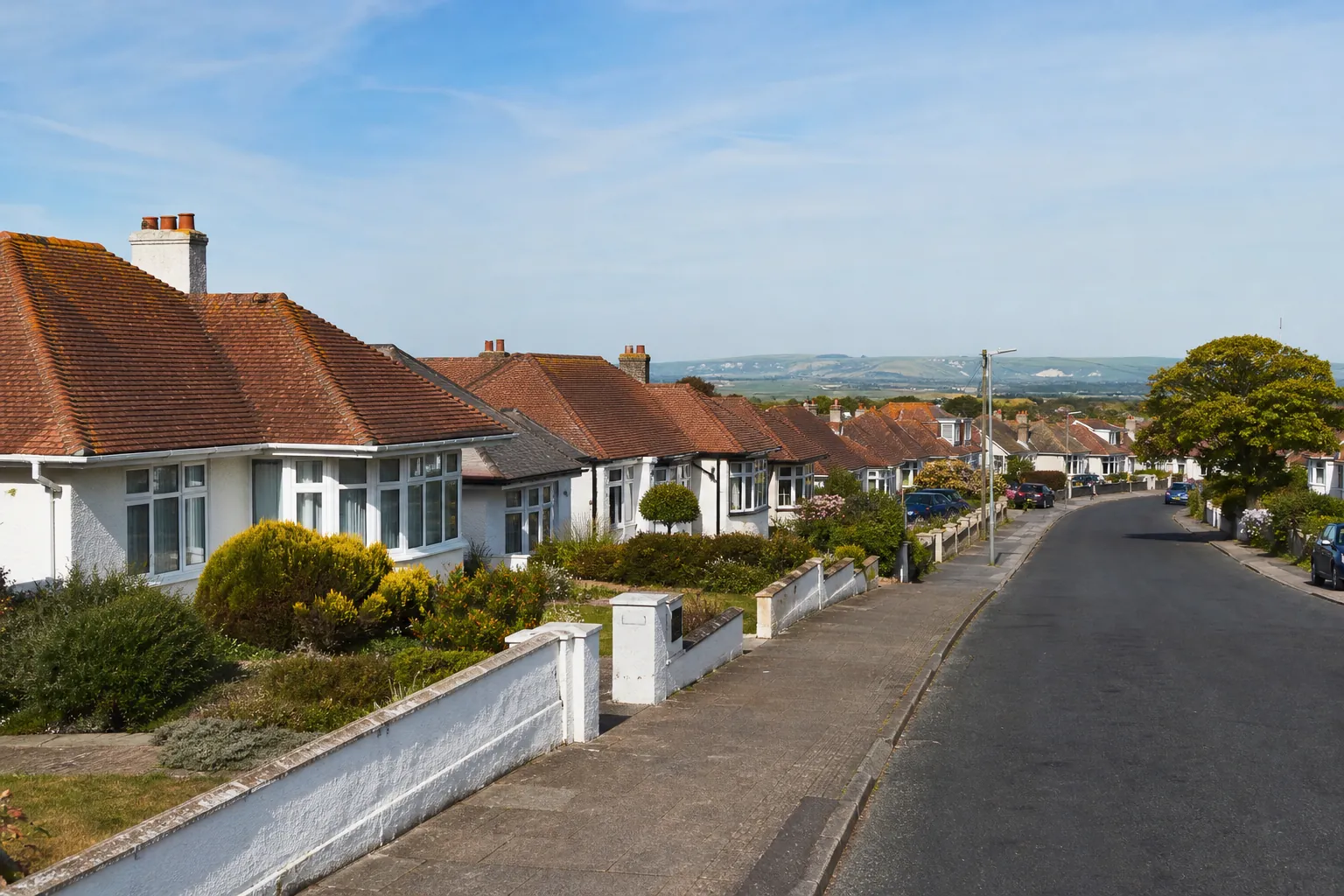
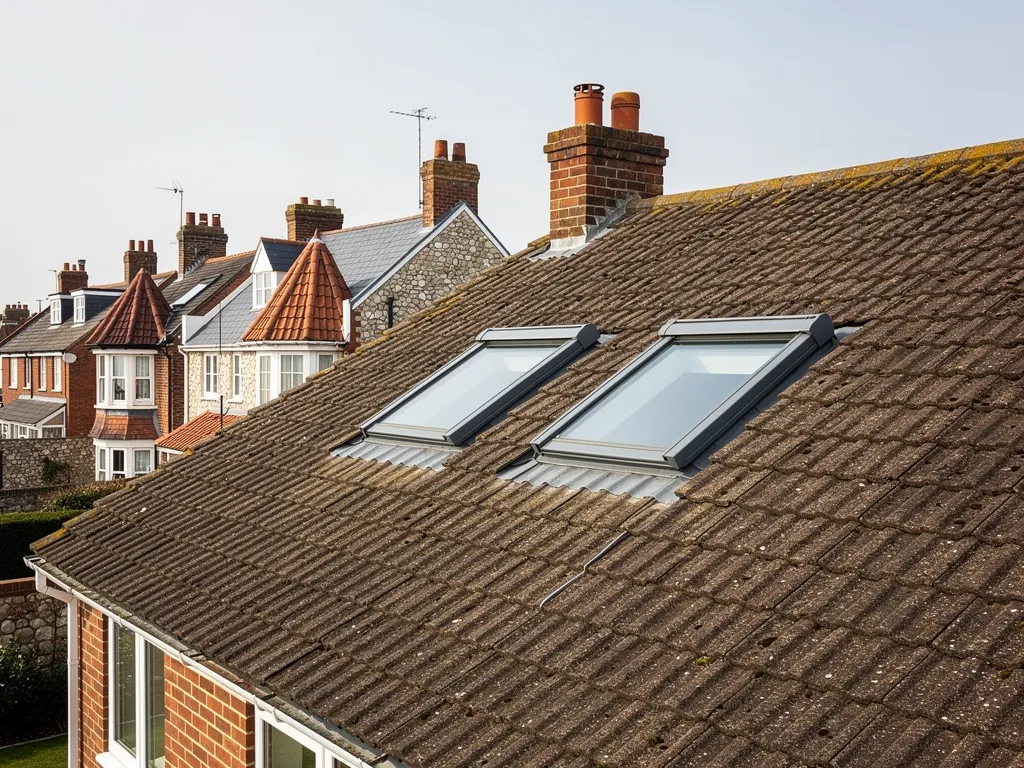
An airfield opened in the south-west of the parish in 1918. In the 1920s the population grew fourfold, from 90 to 360, mainly because the airfield buildings were converted into dwellings.
-
St Andrew's church, flint and brick
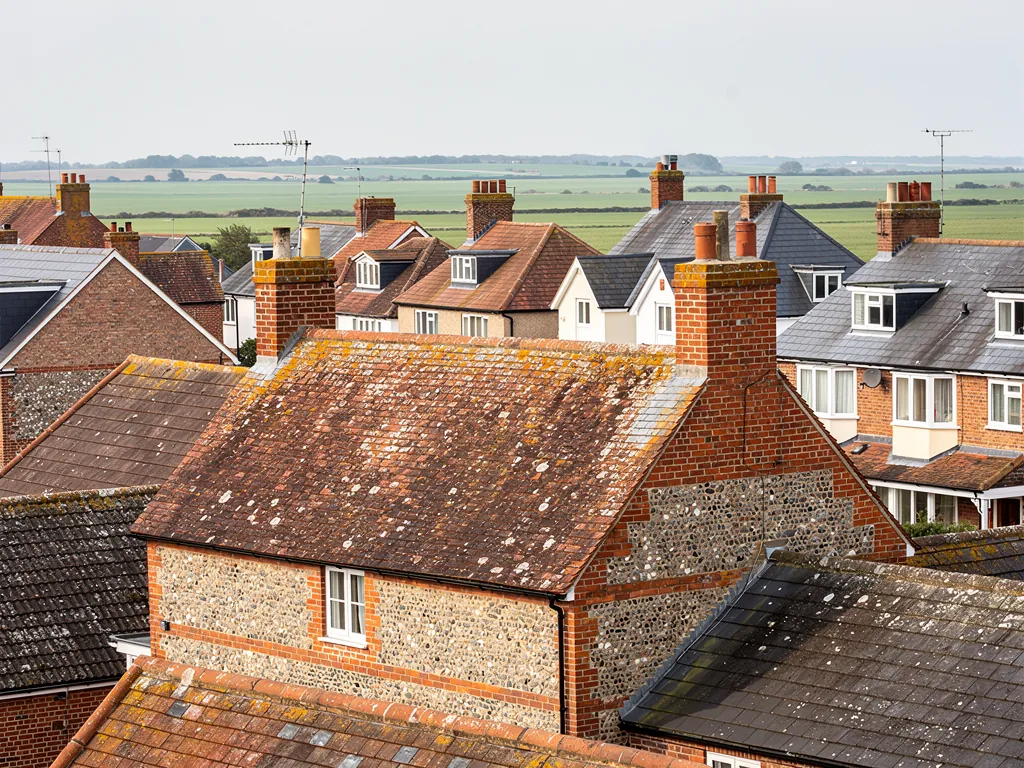
The church of St Andrew is of flint pebble and brick with stone dressings and has a timber bellcot, a small timber turret on the roof. The nave is probably late 11th-century.
-
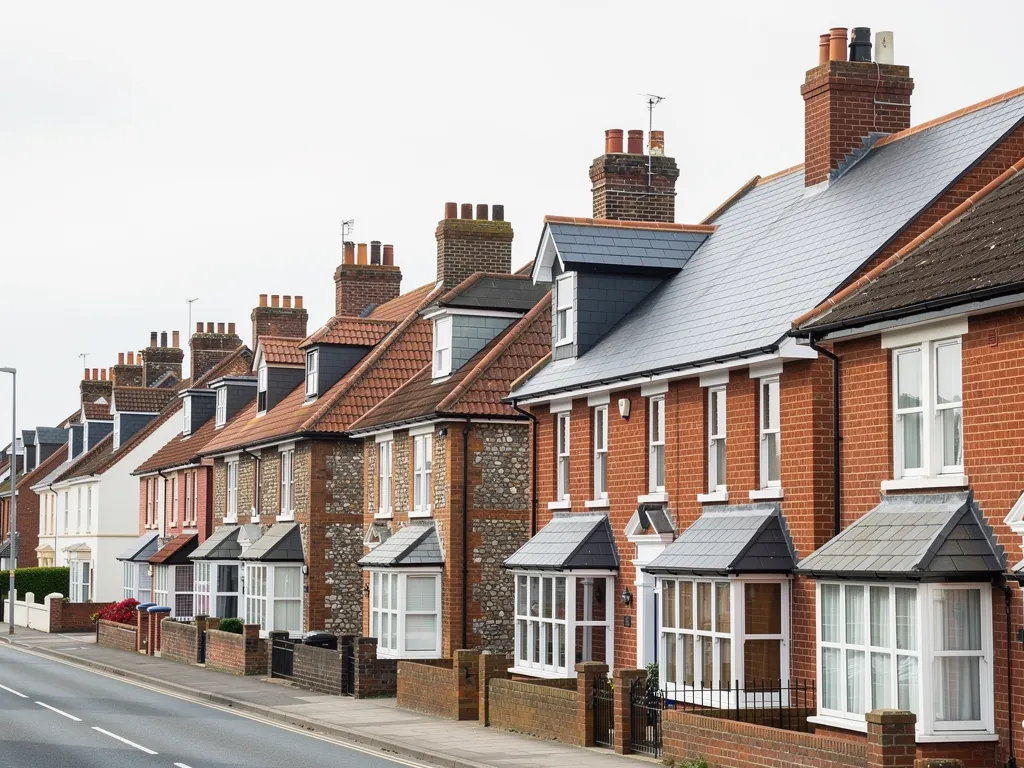
Newhouse Farm in cobbles and red brick
Newhouse Farm, built shortly before 1800, is of cobbles with red brick dressings. Cobble walls with brick dressings like this are a reminder that roofs here meet uneven walls, and the lead has to follow them.
Map of Ford, 7.7 road miles north-east of Bognor Regis, with the nearest towns we also cover.
Ford beside the river Arun
- Council
- Arun District Council
- County
- West Sussex County Council
- Conservation area
- None on Arun District Council's conservation areas page
- Article 4
- None for Ford; Arun's page lists directions only for Craigweil House
- Landmark church
- St Andrew's, flint pebble and brick with a timber bellcot
- Distance
- 7.7 road miles north-east of Bognor Regis, about 15 minutes by car
Ford notes
Airfield huts, flint church, river bank
Three strands of Ford's building history, each with its own roof problems, and what the lack of a conservation area means for repairs.
Chapter 1: From airfield buildings to family homes2379
Sheet 01 / 03The parish of Ford lies on the river's western side, and in the 20th century it gave its name first to an airfield and then to an open prison. The airfield opened in the south-west of the parish in 1918, first called Ford junction airfield and also known as Yapton aerodrome, and it had its modern name by 1931. It closed in 1959. In the 1920s the parish population grew fourfold, from 90 to 360, mainly because the airfield buildings were converted into dwellings. That is an unusual start for a village. It means some Ford homes began life as buildings made for aircraft and their crews, and the roofs on them were never designed as house roofs. Later houses and bungalows were added around them, so a single road can offer several ages of construction side by side.
How we read a converted roof
- 1CoveringWe identify what the roof is covered with and how it is fixed.
- 2DrainageWe trace where water goes, from the slope to the outlet.
- 3Past repairsWe photograph every earlier patch, junction and change of material.
- 4VerdictEach part of the roof gets its own call, with reasons.
1.1 When a building changes use, the roof follows
A hangar, a hut or a workshop turned into a dwelling brings a roof that was made for a different job. It may have a low pitch, wide spans or a lightweight covering. After a century of alterations, extensions and repairs, a roof like that can carry several coverings and several different ways of leaking. So the first step on a home with this history is to learn what is up there: the covering, the fixings, the drainage and the position of earlier repairs. We photograph each slope and each junction, then tell you what needs doing now, what can wait and what should be left alone. If the survey shows the structure is sound and only the covering has failed, that is the smaller job, and it is the one we recommend.
1.2 Low pitches and flat extensions
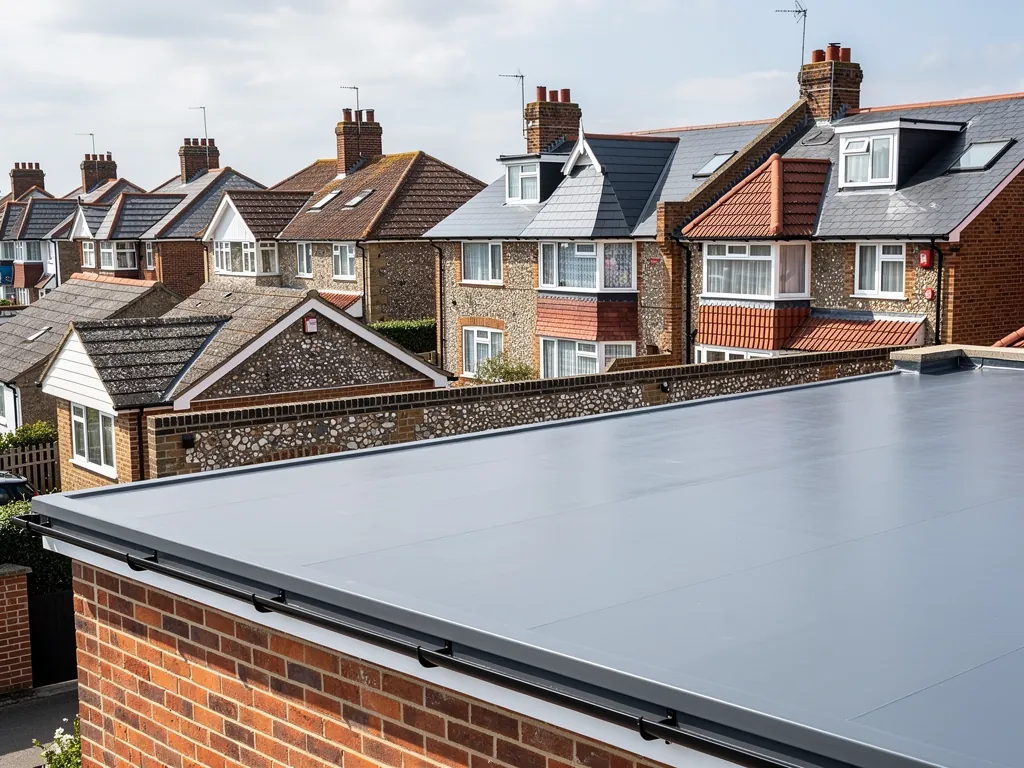
Low-pitched and flat roofs rely on the fall, the slight tilt that carries water to the gutter. BS 6229:2025 keeps a minimum finished fall of 1:80, and roofers design nearer 1:40 so that the surface still drains once it is built. Water that stands on a roof after rain is a warning sign. The cause might be a sagging deck, a blocked outlet or a covering that is worn out. Our flat roofing page explains the coverings we lay, including EPDM, a synthetic rubber sheet, and GRP, a glass-fibre laminate. When a roof over an old extension has been patched again and again, fresh boards and a new covering set to better falls can be the more sensible fix than another patch. A pitched roof that is old enough to need attention is the other half of the picture, and the pitched roofing page covers how slopes of tile and slate are renewed.
Chapter 2: Flint pebble, cobbles and red brick2135
Sheet 02 / 03Away from the airfield, Ford's older buildings are made from what the land offered. The church of St Andrew is of flint pebble and brick with stone dressings and has a timber bellcot, and the nave is probably late 11th-century. Newhouse Farm, built shortly before 1800, is of cobbles with red brick dressings. The Victoria County History also records that the Lyminster to Chichester railway opened through the northern tip of the parish in 1846. A roof on any of these buildings meets rough, rounded stone, and rounded stone is difficult to seal against.
Two ways to meet a cobble wall
Surface-stuck seal
A bead of mastic or mortar that cracks as the stones and roof move.
Chased lead flashing
A cut groove holds the lead, which flexes and keeps rain out of the joint.
2.1 Lead against pebble and cobble walls
A flashing seals the line where a roof meets a wall. On a smooth brick wall the lead is tucked into a joint in a straight line. On a flint pebble or cobble wall, the joints are irregular and the stones round, so the groove for the lead, called a chase, has to be cut by hand and the lead dressed to follow it. A sticky mastic seal will not last on stone that moves and weathers. That is why the lead for a chimney or an abutment on an older Ford house is cut on the day, from a measured template, rather than ordered as a standard strip.
2.2 A timber bellcot and old rafters
A bellcot is a small timber structure that carries a bell above a church roof. Roofs around it need careful detailing, because a vertical timber rising through a slope needs a flashing all round. The roof beneath an old building often rests on old rafters, which can be uneven. When we re-cover, we check that battens sit true and that each rafter is sound. Replacing a covering with a much heavier one, a change of 15 per cent or more in weight, brings building control into the job and may need a structural check. A roof laid with machine-made concrete tile in place of hand-made clay can cross that line, which is why we weigh both before we quote. The same checks apply to a roof on a cobble farmhouse as to one on a hut conversion.
2.3 Chimney stacks on brick farmhouses
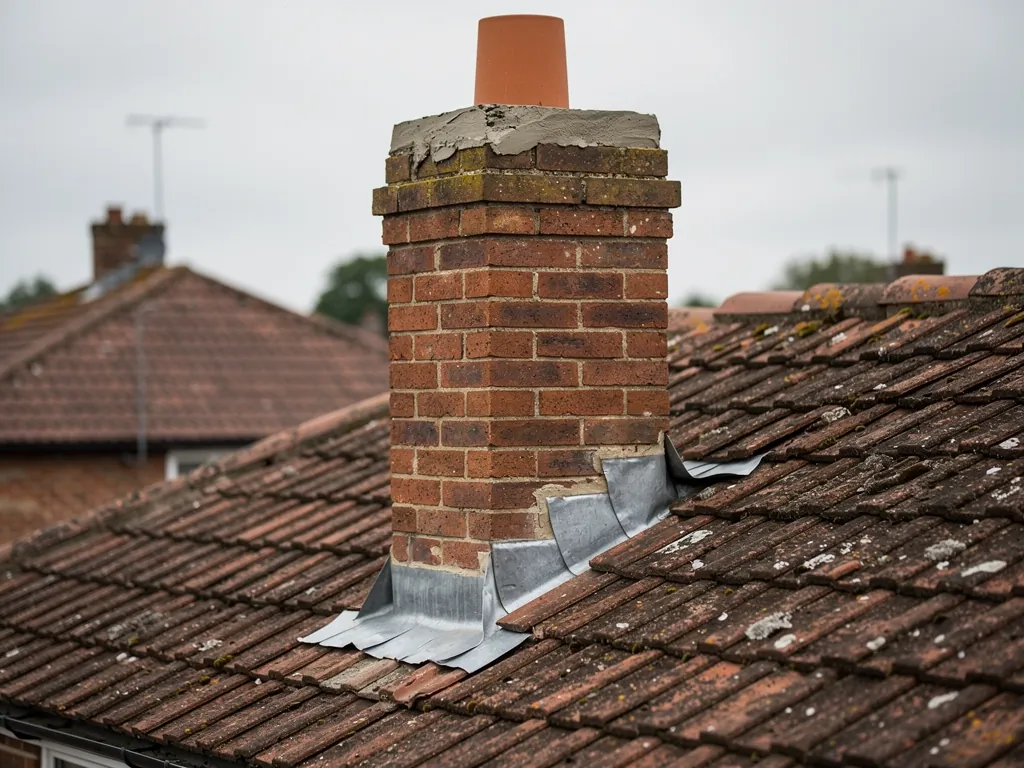
Brick dressings and brick stacks go with a farmhouse like Newhouse, and a stack takes the weather on every face. Pointing wears out, the cap cracks and water finds the flue. A stack on a party wall between two houses can also involve a neighbour. Our chimney repairs page describes what we can do with a stack short of a rebuild, from repointing to renewing the lead and flaunching around the pots.
Chapter 3: No conservation area, but plenty of rules2501
Sheet 03 / 03Arun District Council's conservation areas page lists no conservation area in Ford, and its Article 4 directions apply only at Craigweil House in Aldwick. None of that means the rules are relaxed. A listed building still needs listed building consent for works that would change its character, and a flat does not carry the permitted development rights that a house does. Putting back the same covering rarely needs planning permission, but if the new covering will look different from the old, put the question to the council's planning team before the work is booked.
Questions to put to any Ford roofer
- What is the roof covered with?
- Does the quote include VAT?
- Is scaffold included?
- Who notifies building control?
- Are my photographs in the report?
3.1 Building control on a re-roof
According to the Planning Portal, building control approval is not normally required where less than 25 per cent of the total building envelope and under half of the roof itself is touched. Arun names the replacement of roof coverings in its own list of work needing approval, so the two sources can appear to disagree. Put the question to Arun's building control team, or your roofer, how the rules apply to your particular job. Where the work is notifiable, we deal with the notification ourselves. Approved Document L sets a limiting U-value of 0.15 for a new roof element, and an energy upgrade may be required where more than half of a roof element is renovated.
3.2 Garages, outbuildings and asbestos
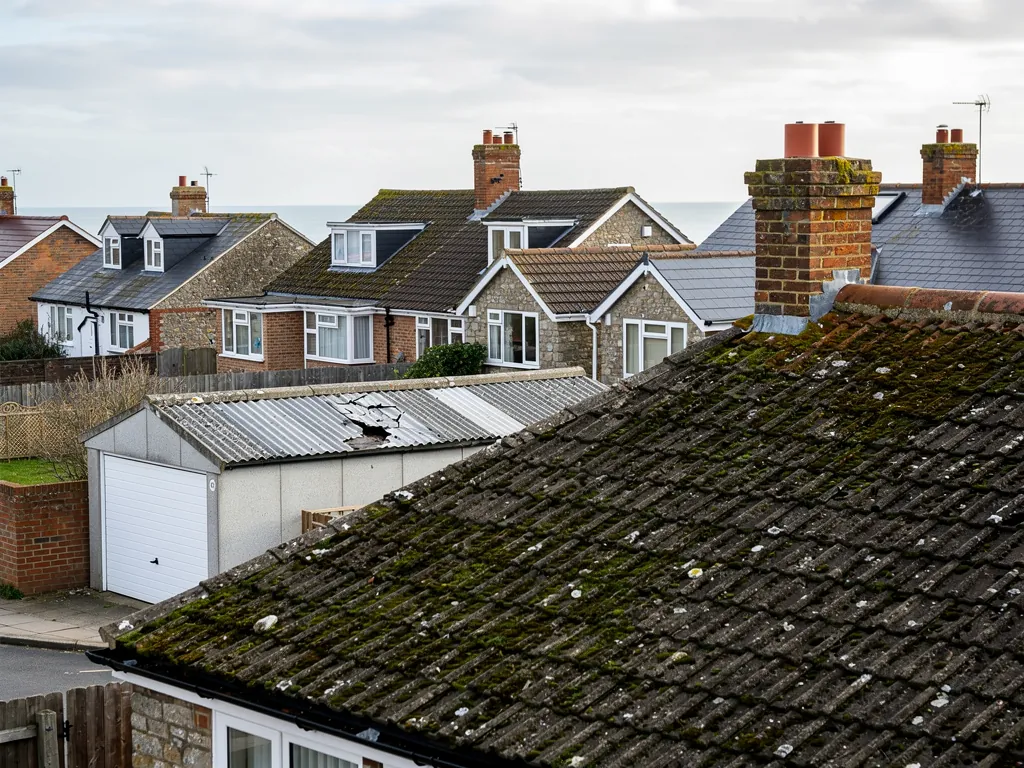
A village whose homes grew from buildings of the 1920s may well include garages and outbuildings of similar age. For a building put up or reworked before 2000, the HSE's advice is to assume asbestos is in it until someone has checked. Taking weathered asbestos cement sheeting down with care counts as non-licensed work, but the sheets are fragile, and if they break up substantially the job becomes notifiable. Household asbestos waste needs a consignment note. We establish the material of the roof before we climb on it, and we tell you if a sample test is the right first step.
3.3 Scaffold and the road
A scaffold standing on the public highway has to be licensed by West Sussex County Council, and the council wants at least 10 working days' notice before the scaffold goes up. On a plot with a drive or a front garden, the scaffold can stand on private land, which avoids the wait. Whoever quotes, ask if scaffold and VAT are in the price.
Roofing services around Ford
Frequently asked questions
Questions from the airfield road to St Andrew's
Can a Ford house with airfield origins be re-roofed like any other home?
Yes, though the survey carries more weight. We find out what covers each slope, how it is fixed and where it drains, because a roof first made for a hut or workshop can differ from a house roof. We then say whether the job calls for mending, patching or replacing, with a photograph of each fault, and one written total price follows.
Why does lead on a flint pebble wall need cutting by hand in Ford?
Round stones and irregular joints leave no straight line to tuck a strip of lead into. The chase is cut by hand, joint by joint, and the lead is dressed to follow it, so it flexes with the wall and keeps rain out. A factory-made strip or a bead of sealant will not follow cobbles and pebbles as well, and it tends to fail sooner.
Does Ford have a conservation area or an Article 4 direction that affects roofs?
Arun District Council's conservation areas page lists none for Ford, and its Article 4 directions apply only to Craigweil House in Aldwick. Rules change, and a listed building is a separate matter. If you plan to alter the roof, put your address to the council's planning team, and ask its building control team whether a re-roof is notifiable.
Is a garage roof from the old airfield days likely to contain asbestos?
For anything built or reworked before 2000 the HSE says to assume asbestos is present until a check proves otherwise. That is a rule of caution, not a finding about any particular garage. Do not walk on or drill into fibre cement sheets. Ask us to look, and we tell you whether it needs sampling, careful removal or simply leaving alone.
Nearby areas
Get a quote
Tell us about your roof
Describe what's happening and we'll call you back.
Loading the enquiry form. You can also call 01243 252373.