
Chimney storm damage · 9 min read
Chimneys in winter storms: the checks to make before the gales
A stack stands highest and most open to the weather, so it suffers first when gales arrive. These autumn checks catch most trouble before the wind does.
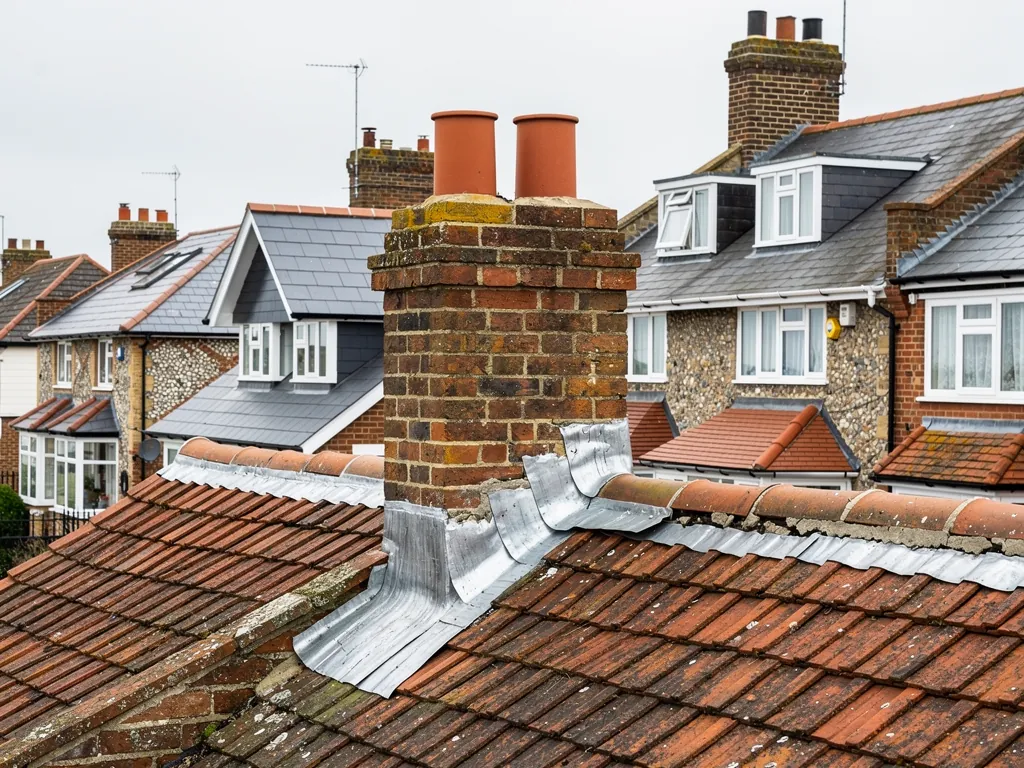
Storm damage to a chimney rarely comes from nowhere. A gale finds the weak point: a pot sitting in cracked cement, a flashing with a lifted edge, mortar that has been washing out for a few winters. The weather gets the blame, but the stack was already half way to failing.
That is good news in one respect, because most of the weak points can be seen in advance. A few minutes with a pair of binoculars, a torch in the loft and a note of what you find will tell you whether the stack is ready for the season. If it is not, a repair in calm weather costs far less in money and trouble than a make-safe in the middle of a gale.
This guide sets out the checks in the order we would do them: first from the ground, then from the loft, then what a roofer looks at on the stack itself. It then covers the hours after a storm has hit, including safety, photographs and the insurer, and the way a damaged stack is made safe and repaired.
If a stack is already moving, cracked across or shedding bricks, skip the checks and keep people away from below it.
Why the stack takes the first hit
A chimney stands above the roof ridge on a small footprint, with nothing to shelter it. Wind reaches it from every direction, and rain driven by a gale hits all four faces. On the Sussex coast, where the roofs sit low and open to the sea weather, the stack is often the highest thing on the street.
Everything about its construction works against it. It is made of many small units, bricks and mortar joints, and the joints are the soft spot. It carries a heavy cap of cement and clay pots at the top, so it is top-heavy. And it is full of junctions where water can enter: the flashing where it meets the roof, the flaunching round the pots and the brick joints themselves.
What a storm does to it
Wind can loosen a pot that is already sitting in a tired bed, lift the edge of a flashing that has lost its grip, or work a crack in the cement wider until the pot goes. Driving rain can then get into the gaps that were already there. Frost does the rest later, expanding any water that has soaked the masonry.
The point of the autumn check is to find these gaps while they are small. A stack with sound joints, a tight flashing and a firm crown can take a good deal of weather. One with all three tired will not.
Notice also what is attached to the stack. Aerial brackets, dishes and satellite fittings add wind load and can crack the brickwork around their fixings. Ask a roofer to look at any aerial fixings while they are there.
The ground-level check
Pick a dry, bright day and stand where you can see the whole stack, not just the top. Binoculars help, and the zoom on a phone works nearly as well when you take a photograph and enlarge it. Do not climb to get a better view.
Look first at the pots. They should stand upright, with no visible cracks and no chips at the rim. Then look at the flaunching, the cement that holds them. It should be smooth and sloping, without a gap round any pot and without a crack running through it. A rim of moss growing on the crown suggests water sits there.
The brickwork and the lead
Move down to the brickwork. Look for joints that have receded into dark grooves, bricks with a crumbling face and white crust on the surface. Check whether the stack stands upright against a straight line.
At the base, look at the lead flashing. It should lie flat against the stack and the roof, with its top edge tucked into a joint. Gaps, lifted corners, cracks in the folds or a line of sealant instead of a proper joint all show the lead is going to let go in a blow. Check the tiles beside the stack too, since a slipped tile there lets rain behind the flashing.
Walk round the garden or the pavement beneath. Fallen mortar, flakes of pot or bits of cement on the ground are the stack telling you it is shedding. Take photographs of anything odd, with the date, and compare them with the same view after the winter. That comparison is how you tell a stable defect from a growing one.
Repeat the check from the road if you can. Some faults show only from the side.
The loft check
The loft shows what the outside hides. If the stack passes through it, go up with a torch on a dry day, step only on boards that are properly laid, and look at the brickwork where it meets the roof.
You are hunting for damp. Dark staining on the timbers beside the stack, a wet patch on the underlay, insulation that is flattened or discoloured, or a drip mark on the ceiling joists below all say water has been arriving at the junction. A faint smell of damp is a clue too. If you can, look at the same patches after the next heavy rain.
Gaps, light and soot
Look for daylight round the stack. Round the stack at roof level there should be no gap that lets daylight in. Check that no bricks have shifted, no cracks run up the loft face of the stack, and no debris has fallen from above.
Soot or crumbled mortar on the loft floor beside the stack suggests the flue lining or the brickwork is breaking up. Check that nothing is stored against the stack, since damp materials against warm brickwork can hide trouble.
Then look at the rooms below. A stain on the chimney breast, a patch of lifting wallpaper or a damp smell near the fireplace may be the other end of one fault. It helps to read the pattern of the stain.
If you find signs, write them down with the date. A roofer who has your notes and photographs can go straight to the likely spot and does not have to start from scratch.
What a roofer checks on the stack itself
Once we are up there, we do the work you cannot do safely. We start with the pots, testing each by hand and looking inside for blockages or nests. We check the flaunching all round and look for cracks in the cement that would let water into the flue walls. Next we move to the brickwork, sounding the joints and checking for bricks that have lost their face or that rock under pressure.
Then we look at the lead. A flashing in good order is stepped up the side of the stack, tucked into cut joints and clear of dirt and debris. We look for gaps, split folds, lifted edges and signs that the stack has moved away from it. The back gutter behind the stack needs to be clear and sloping, because a blocked one can overflow into the loft.
The verdict before the winter
The point of the visit is a plain answer. Either the stack is sound and needs nothing, or it needs a small repair before the weather turns, or it needs more. We photograph each part from the roof, so that you see the same view, and we tell you what we would repair now and what can safely wait.
Small jobs done in calm weather are cheaper and less disruptive than storm repairs. A re-bedded pot, a short run of new lead or a repointed face is often all it takes, and we aim for the least work that holds. The written quote after the survey is one total.
Our guide on preparing a roof for storms covers the rest of the roof. For how often a stack should be checked, our answer on how often to check a chimney sets out a sensible rhythm.
In the hours after a storm: safety, photographs, insurer
If the wind has done damage, the order of things matters. Safety comes first. When a stack is leaning, a pot is hanging or bricks lie on the ground, keep everyone out from below and stay out of the rooms directly underneath. Do not go up to look. Do not light a fire in the flue, and bring pets and children indoors until the stack has been checked.
The Institution of Structural Engineers (advice dated 28 January 2025) advises reporting a structure you think unsafe to the building control team at your local authority. Its list of what to give your insurer includes temporary coverings put on for urgent repairs, and photographs of the damaged areas.
Telling the insurer first
Which?, on 20 November 2025, urges you to contact your insurer promptly. If you arrange emergency repairs yourself, it says to let the insurer know and keep every receipt, and to keep damaged items unless they pose a risk to health. Unhappy with the answer? Complain to the insurer, then go to the Financial Ombudsman Service, which is free.
The same article offers an example of wear and tear: rain entering through a roof that was poorly maintained. It also quotes Financial Conduct Authority figures showing only 32% of storm-related claims made in 2024 resulted in a payout. What your insurer decides is its own call. What we can supply is a clear photographic record of the stack and what was found. Our guide to chimney insurance covers the claim side in more depth.
Making the stack safe, then repairing it properly
After a storm the first call is a make-safe, which is not the same as a rebuild. A roofer takes down loose pots and top courses, covers an open flue or a damaged slope to keep the water out, and clears fallen masonry from the roof, the gutters and the ground, so nothing else can drop. Leaks and storm damage are what we prioritise, and anything letting water in is stopped before the rest.
The permanent repair follows in better weather with proper access, meaning a scaffold. Checkatrade's scaffolding table, updated in October 2026, gives a chimney scaffold at around £660 a week as a typical UK price. Where the scaffold stands over the highway, section 169 of the Highways Act 1980 means a licence is needed, and it comes from the highway authority; ask the roofer who is making the application. The West Sussex County Council charge is £266 for a month with at least 10 working days to allow, while Hampshire County Council asks for ten clear working days.
What the repair might cost
Published guides give a feel for the smaller jobs. MyJobQuote (last updated on 22 September 2026) prices a patch on chimney lead at £150 to £250. Checkatrade, in a table updated October 2026, gives repointing a chimney at around £750 on average. A rebuild is priced after the survey. These are typical UK ranges, not a quote for your stack.
Put two questions to any roofer: does the price take in VAT and scaffolding, and what did the survey turn up? Be wary of a caller at the gate after a storm; ask for photographs, a written quote and time to decide.
See our chimney repairs page for work from repointing to rebuilds. Our prices are good and fair.
Questions
Chimney storm damage questions
When is the best time to check a chimney before winter?
Autumn, on a dry day, before the first gales. A ground and loft check takes a few minutes. If you can see cracks, loose pots, lifted lead or damp, book a roofer then rather than waiting for a storm, because calm-weather repairs are easier to plan and to price.
Who do I call first if a pot comes down in a gale?
Clear the area first, then ring your insurer. Take photos of the damage and hold on to every receipt for temporary work. After that, call a roofer to make the stack safe. If it threatens passers-by, building control at your council is the place to report it.
Will a damaged chimney leak into the loft straight away?
Not always. Water may soak into the brickwork first and show later as a mark on the breast below or as wet insulation. After any gale, check the loft and the rooms below the stack for a few weeks, and photograph anything new.