
Commercial re-roofing rules · 9 min read
Commercial re-roofing, Building Regulations and insulation
Re-covering a shop, unit or block can trigger Building Regulations, an insulation upgrade and consent checks. Here is what to ask before work starts, and where the published house thresholds stop.
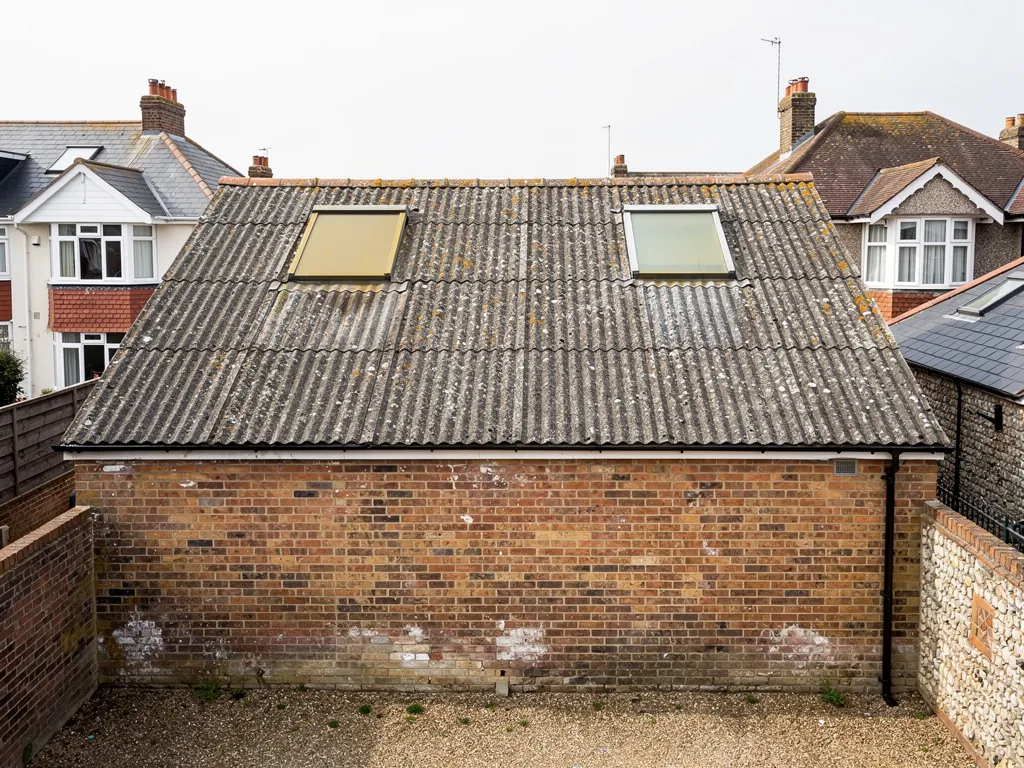
Roofers often say a re-roof needs approval, and some owners hear that as a way of adding cost. The truth is more useful. Whether a commercial re-covering needs a building control application depends on how much of the building the work touches, what goes onto the roof, and what the roof forms part of. Sometimes nothing is needed. Sometimes the whole job is notifiable.
Much of the published guidance is written for houses. The Planning Portal sets out thresholds for homes, and the technical standards we can point to for insulation come from the dwellings volume of Approved Document L. Commercial premises are judged under different guidance for energy, fire and access, and the answer for yours comes from your building control body, which is either the council or a registered building control approver. This guide gives the house thresholds as a reference point, says plainly where they stop applying, and lists the questions that settle your own case.
Treat it as general information rather than legal advice. For a particular building, the council's inspectors or your roofer can say what applies, and the survey records the facts those answers depend on, so nobody is guessing about the roof's age, build-up or condition.
When a re-roof needs a building control application
For a dwelling, the Planning Portal says an application is normally not needed when two tests are both met. First, under 25 per cent of the total building envelope is affected. Second, under 50 per cent of the roof is. The envelope means every outer element added up: walls, floor, roof, glazing, doors, roof windows and rooflights. The two tests measure different things, so do not collapse them into a single percentage of the roof.
The same guidance lists what pushes a job into approval. Exceeding either limit does it, as do structural alterations, a fire rating on the new covering that differs markedly from the old, and a covering that makes the roof 15 per cent heavier or more.
Two sources, one answer
On its own site, Arun District Council counts re-covering pitched and flat roofs among the alterations needing approval. That sits comfortably beside the Planning Portal. The thresholds are a starting point, and local building control has the final word on each job. In plain terms, a re-roof often does need Building Regulations approval, and the building control office, or your roofer, can tell you where yours falls. Ask early, since an application takes time to process.
What applies to commercial premises
The thresholds above are published for dwellings. A shop, a unit or a block of flats is assessed on its own merits by the building control body. Put a short question to them before you sign for the work: here is the building, here is the proposed covering, here is the share of roof affected, does this job need an application? Keep their reply in writing, since it settles the programme, the specification and who is responsible for the notification.
Where an application is needed, we explain the process and make the notification for work that is notifiable. Our commercial roofing page lists the buildings and roof types we cover, from shops and units to blocks of flats.
Weight, fire behaviour and the structure underneath
Swapping one covering for another changes what the building carries, and two checks follow from that.
Weight
Approved Document A calls a significant change in roof loading an increase of more than 15 per cent, and classes the strengthening needed to cope with it as a material alteration. The Planning Portal states the trigger as 15 per cent or more. The wording differs slightly, so we name whichever source we are quoting. The practical rule is the same: when a new covering is much heavier, take a structural opinion before ordering it.
The Planning Portal further suggests consulting a structural engineer or surveyor first, whenever the new covering is clearly heavier or lighter than the old. That matters on older units whose frames or purlins were sized for a light sheet roof, and on any roof where a ballast or paving finish is proposed.
Fire behaviour
A covering that would perform very differently in a fire from the old one brings the work into approval. We put the fire performance of the proposed system in the specification, so the building control body sees it from the outset.
The deck and the frame
Neither check can be settled from the street. Opening up a roof can reveal corroded fixings, a rotten deck or a frame that has moved. When that happens, the programme and the price shift, which is why the survey records findings in photographs and separates them from assumptions. Our guide to commercial roof surveys explains what is recorded.
If an engineer's opinion is needed, it should come before the price is fixed, not after the roof has been stripped, because a late discovery changes both the cost and the weeks the building spends under scaffold.
Insulation: when Part L enters the job
Insulation is where re-roofing most often grows beyond what the owner expected. Approved Document L covers conservation of fuel and power, and the volume we can cite is the one for dwellings, in its 2021 edition with the 2023 amendments. The document lists a new flat roof waterproof layer as renovation. Upgrades are triggered when more than half of one thermal element's surface is renovated, and a major renovation is flagged once the figure passes 25 per cent of the external envelope.
For a dwelling, a new or replacement roof has a limiting U-value of 0.15 W/m²K. A rooflight is held to 2.2 and a roof window to 1.4, or Window Energy Rating Band B. Those come from Table 4.2 of the 2021 edition. The 2026 edition takes effect on 24 March 2027 and repeats the same values in its Table 3.2.
Commercial buildings
Those numbers belong to homes. A commercial roof is dealt with under the guidance for buildings other than dwellings, and your building control body names the standard that applies. What carries across is the principle: if you strip a flat roof and renew the membrane, expect to be asked to bring the insulation up to standard, and budget for it from the start. Raising it at the quote stage keeps the cost visible, instead of arriving as a surprise once the old membrane is off and the thickness of the build-up is known.
Warm roofs, cold roofs and moisture
The layout of the insulation matters as much as its thickness. Placing it above the deck keeps the structure warm and cuts the risk of condensation inside the build-up. Placing it below the deck means the space above must be ventilated so moisture can leave.
Thicker insulation changes upstand heights, door thresholds, parapet capping and rooflight kerbs, and a change at one of those points can ripple through the whole detail. We check those junctions at the survey, because they decide whether the finished roof drains and looks right from the street.
Planning, listed buildings and protected wildlife
Building Regulations and planning are separate systems, and a job can need one without the other.
Like-for-like work
Section 55(2)(a) of the Town and Country Planning Act 1990 treats works that leave the external appearance of a building materially unchanged as falling outside development. A like-for-like re-covering is therefore not usually a planning matter. A different colour, profile or material on a visible roof may be, and so may a raised parapet. Listed buildings and Article 4 areas carry caveats of their own.
Listed buildings and churches
Works that would affect a listed building's character need listed building consent. The South Downs National Park Authority says ordinary maintenance and minor repairs in matching materials are exempt from it. Replacing a roof is a bigger step, so ask the local planning authority first. Exempt churches in use follow denomination routes, such as the faculty system for the Church of England; other faiths need listed building consent.
Conservation areas and the National Park
Arun District Council counts 29 conservation areas in its district. Working in one does not stop a like-for-like repair, but visible changes need checking with the council. In the Arun, Horsham, Adur and Worthing parts of the South Downs National Park, the Park Authority makes the planning decisions, while building control stays with the district council throughout the Park.
Bats and nesting birds
Every bat species and its roost has legal protection, and roof repair or replacement is among the activities GOV.UK says can affect them. Birds' nests in use are protected too. If the survey turns up signs of either, work pauses while we take advice.
Most commercial re-roofs need none of this, but the check takes minutes, and a mistake can halt a job halfway. Tenants, landlords and managing agents should each know who is responsible for asking.
Who signs it off, and what we do on site
There are two routes to building control approval. One is the council's own building control team. The other is a registered building control approver, a private body on the statutory register that has operated since 6 April 2024. Private building control predates that, but registration is new, and GOV.UK says it can issue sanctions to an approver that breaks the conduct rules. If you use a private approver, check the register.
Arun's building control team
Arun's team asks for a day's notice before completion inspections and does not take requests made on the day itself. Build that into the programme. It matters most on trading premises, where a late inspection can hold up handing the roof back.
Our part of the process
We tell you whether your job is notifiable, write a specification that shows the covering, its fire performance, the weight and the insulation, and make the building control notification where one is due. Rubbish leaves with us when the job ends. Our quote is put in writing after the survey, with one total.
Asbestos comes first on older buildings
HSE advice is to presume asbestos in premises built or refurbished before 2000. That question has to be settled before re-roofing begins, and it can alter the programme. Our guide to asbestos cement roofs on industrial units explains the handling rules.
Ask your building control body three things before the quote is signed: does the job need an application, what insulation standard applies, and how much notice do inspections need?
For the money side of a re-roof, see commercial roof replacement cost.
Questions
Commercial re-roofing rule queries
Does re-covering a shop roof always need a building control application?
Not always. The Planning Portal's thresholds for homes are under 25 per cent of the building envelope and under 50 per cent of the roof, with no major change in weight or fire behaviour. Arun's website includes re-covering roofs in the work needing approval, so ask the team to confirm your own job.
Do I have to upgrade the insulation when I replace a flat roof covering?
Often yes. For dwellings, Approved Document L classes a renewed flat-roof waterproof layer as renovation, and upgrades follow once its renovation thresholds are passed. Commercial buildings are assessed under their own guidance, so your building control body states the standard. Plan for the cost before you compare quotes.
Is a registered building control approver as valid as the council?
Both are routes to approval. Registered approvers have sat on a statutory register since 6 April 2024, and they can be sanctioned if they break the conduct rules. Check that yours is registered. Inside the South Downs National Park, building control stays with the district council, even where the Park Authority decides planning.