
Over-roofing · 9 min read
Over-roofing an industrial unit: when to overclad instead of strip
When fitting a new roof over the old one is the sensible route for a warehouse or factory, when stripping is the only honest answer, and the checks that decide between them.
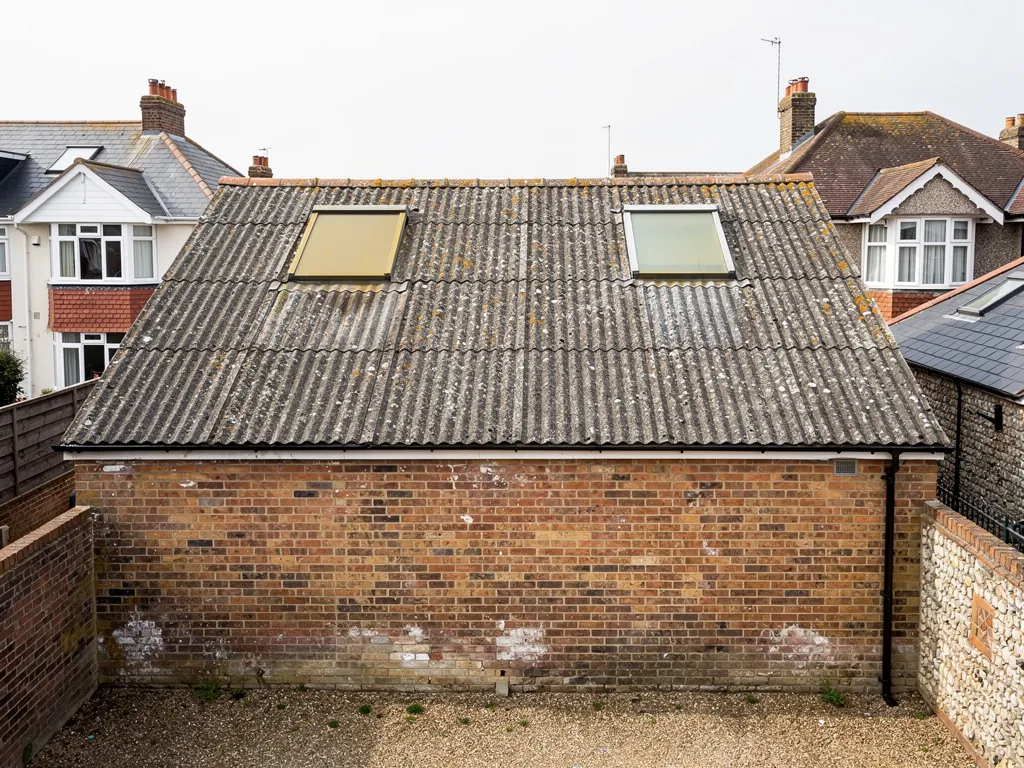
Over-roofing, sometimes called overcladding or sheeting over, means leaving the existing roof in place and building a new weathering layer above it. The old sheets stay as a deck. A framework is fixed through them to the steelwork, insulation goes in the gap and a new sheet closes it off. For an industrial unit with a leaking roof, it can look like the obvious way to avoid a mess, a skip lorry and a month of disruption.
Sometimes it is exactly that. On the right building, over-roofing is quicker, cleaner and cheaper than a strip. On the wrong one it buries a problem under a good-looking new surface, adds weight the frame was never meant to carry and traps moisture where nobody will find it for years. The difference between the two is not visible from the car park. It comes out in a survey.
This guide covers how to tell which side your roof falls on, how a typical system goes together, the regulatory checks, and the questions of asbestos and trading that so often decide the matter. It belongs to our commercial roofing work for warehouses, workshops and agricultural buildings.
What over-roofing involves, step by step
The process is easy to describe, which is partly why it is attractive. First the existing roof is surveyed and cleaned, loose or broken sheets are secured or replaced, and rooflights are dealt with. Then the new supporting layer goes on: brackets or spacer bars fixed through the old sheets into the purlins, with rails laid across them at the right spacing. Insulation fills the cavity, and the new outer sheets are fixed to the rails and lapped and sealed in the usual way.
Several parts of that sequence deserve a closer look.
The fixings carry the load
Once the new roof is up, its weight and every gust that tries to lift it are carried by the brackets back to the structure, not by the old sheets. That is why the fixings must reach the purlins and not just the old cladding, and why the design checks the load path as carefully as a new build would.
Flashings and edges are rebuilt
The new roof sits higher than the old one, so ridges, verges, eaves, gutters and wall abutments all need new details. Parapet gutters and valleys can be awkward, because the extra build-up shrinks the room for drainage. These junctions are where a rushed overclad fails, and where a careful one shows its quality.
The method suits several materials for the new outer layer, from profiled single-skin sheets with separate insulation to factory-insulated panels. Our page on composite roof panels looks at the second option.
When overcladding makes sense
Over-roofing earns its place when a handful of conditions hold together. The structure is sound, the existing roof is the thing letting the building down, and getting the old covering off would be costly or disruptive.
The best candidates share these traits:
- purlins and rafters in good order, with no serious corrosion or sagging
- old sheets that are still firmly fixed and give a reasonably even surface
- a building that must keep trading, with stock and machinery below
- a roof that leaks mainly at laps, fixings and gutters rather than everywhere
- an existing covering that is expensive or risky to remove
The last of those is the commonest reason owners choose this route. Taking a roof off exposes the whole building to the sky one bay at a time, disturbs the dust and debris of decades and requires careful sequencing around the people working beneath. Keeping the old roof as a temporary ceiling while the new one goes on removes most of that.
The upgrade in comfort
An old single-skin roof is cold in winter and hot in summer, and often drips with condensation. Putting insulation in the new build-up can change how the building feels to work in, and it is the moment to deal with thermal performance without stripping out the interior. Condensation in a warehouse roof is a subject of its own, and the way the build-up is ventilated decides whether it returns.
None of this lets us promise anything from the car park. The survey decides, and the verdict we give you comes with photographs of the actual roof.
When to strip instead
Over-roofing is the wrong answer more often than the brochures suggest. Several findings push the decision towards stripping, and a competent contractor will say so even though it makes the job larger.
Structure that cannot carry more
A new layer adds weight. Old roofs were often designed with little spare capacity, and years of rust or rot in purlins may have reduced it further. If the frame is corroded, bowed or has had previous overloading, adding a second roof can make a bad situation worse. An engineer's opinion is the safe course whenever there is doubt, and we advise one in good time and not after the order is placed.
Wet insulation or rotten decks
If the old roof has insulation, and that insulation is soaked, covering it simply seals the water in. The same goes for a timber deck that has gone soft. A leak that has been running for years leaves damage that overcladding does not reach.
Too many layers already
Some buildings have been overclad once or twice before. Each layer adds weight and fixing depth and makes it harder to trace the cause of a fresh leak. When a roof already carries a previous overclad, the sensible position is usually to take stock of what is underneath before stacking a third system on it.
Rooflights and details that will not rise
Old rooflights are usually the weakest and most dangerous parts of the roof. In an overclad they must be replaced or raised to match the new height. If there are many of them, the saving shrinks. The extra height can also clash with parapets, doors and plant that were set to the old roof level.
Where the finding is stripping, our repair or replace guide explains how the whole decision is framed.
Weight, fire performance and Building Regulations
An overclad job is still re-roofing in the eyes of building control. The Planning Portal lists when approval is needed, and two of its triggers matter here. One is a new covering that would behave significantly differently in a fire. The other is a covering that makes the roof 15 per cent heavier or more. A second skin, with insulation added, can well cross the weight line, and an insulated sandwich can alter fire behaviour, so each is checked rather than assumed.
The same source puts the cut-off for small jobs at under 25 per cent of the building envelope and under 50 per cent of the roof. An overclad covers the whole roof, so expect to be over it. Arun District Council also names replacing roof coverings in its building control list, so confirm the local position early.
Thermal performance
Part L of the Building Regulations deals with the energy performance of the roof. For non-domestic buildings the requirements are set in a different volume of Approved Document L from the one used for houses, so the target for your building is agreed with building control before the insulation is chosen. In practice the overclad insulation is usually specified to meet it.
Who sees to the paperwork
If the job is notifiable we set out the route and file the notification, whether it goes to the council or to a registered building control approver, the private route that has been under a registration regime since April 2024. Keep the approval and completion paperwork with the building records. A buyer, lender or insurer may ask for it years later.
If you have an existing guarantee on part of the roof, check what the new work does to it before work starts.
Asbestos cement roofs and over-roofing
This is the situation in which owners most often hear that over-roofing is the answer, and it deserves careful treatment. Many industrial buildings from before 2000 were roofed in asbestos cement sheets, and the HSE tells owners of anything built or refurbished before then to treat asbestos as present until shown otherwise.
Leaving sheets in place has an obvious appeal, since the material is left undisturbed. The catch is that the new fixings must go through the old sheets, every hole disturbs the material, and brackets, screws and drilling dust are the usual route by which fibres are released. A roof of this kind is also fragile, since HSE guidance calls every asbestos cement roof fragile. Nobody walks on the sheets, and crawl boards or a platform are used for access.
What the rules say
For HSE, sheet that comes off whole, with care, is non-licensed work. Once the material is badly damaged or crumbles, the job becomes notifiable non-licensed work, and notice goes in before the work starts. If sheets are removed, the waste needs double-wrapping and labelling and a lockable skip, and household asbestos waste is not exempt from a consignment note.
Our page on asbestos cement industrial roofs goes through the options in more detail. In practice an asbestos survey comes first. Only then can anyone say responsibly whether overcladding or removal is the better route for your unit.
Trading during the work, access and cost
One of the strongest arguments for over-roofing is that the building can stay open. With the old roof left as a ceiling, rain does not come in during the works and the interior stays largely clear. That does not make it painless. Fixing through the old sheets makes noise, drilling drops swarf and dust onto whatever lies below, and the sheets themselves arrive by crane or hoist and need a loading zone. Pallets, racking and sensitive stock should be covered or moved for the days involved.
Safe working
The roof is a working platform, and the edges are where people fall. Edge protection, safe routes and fall-arrest planning come before the first bracket goes in. Scaffolding on the pavement is licensed by the highway authority, and the notice period has to be built into the programme.
What affects the price
Quotes for overcladding differ because buildings do. The roof area, the specification of the insulation and outer sheets, the number of rooflights, the amount of preparation the old roof needs, the eaves and gutter work and the access method all move the total. Weighing the final figure against a strip-and-replace option is the fair way to decide, and the comparison should include the cost of disruption to the business and not only the roofing.
Standard-rate VAT is 20 per cent, so check whether each price includes it. You get one total in writing after the survey, and if stripping would give a better result for the money, we tell you that first.
Questions
Over-roofing questions
How many times can a roof be overclad?
There is no tidy number. Each layer adds weight and fixing complexity, and the frame has a limit. A roof that has been overclad before needs an inspection to see what lies under the outer layer, and an engineer's opinion if the structure is in doubt, before another system is put on top.
Will overcladding stop condensation inside the unit?
It can reduce it, because new insulation keeps the inner surface warmer. It will not help if the build-up traps moisture or the building produces a lot of humidity with no ventilation. Condensation is best treated as part of the design, with the cavity detailed so damp air can escape.
Do I need an asbestos survey before any over-roofing quotation?
For a building from before 2000 with fibre cement sheets, yes, the sheets should be identified before anyone drills them. A sample test or a survey tells you whether asbestos is present, and the answer shapes both the method and the cost, so it is worth having at the outset.