
Repair or replace · 8 min read
Repair or replace a commercial roof?
A leak in a shop, unit or block does not mean the whole roof has failed. This guide sets out the tests that separate a patch from a re-cover, and the evidence that tips the balance.
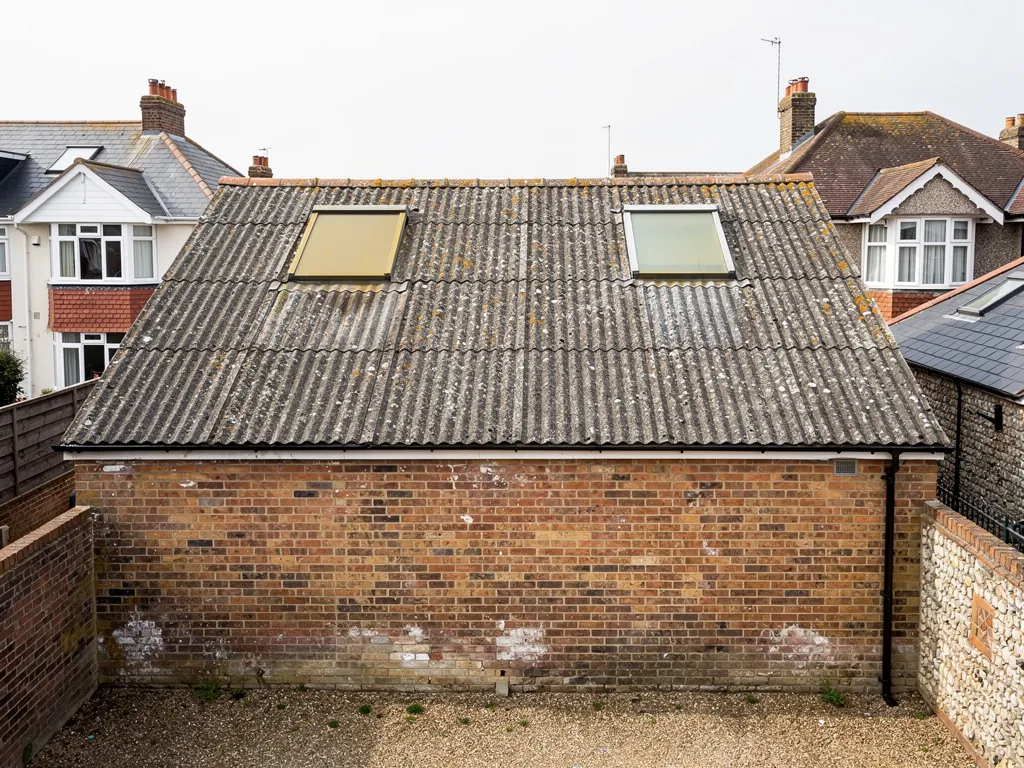
Every commercial owner reaches the same fork sooner or later. Water is coming through, the roof is not young, and somebody has said the word replacement. Spending thousands on a roof you did not need is a poor result. So is paying for the fourth patch on a roof that was past saving after the second.
The question is not really about the leak. It is about what the leak tells you. One failed joint at a drain outlet is a small fault in a sound roof. A scatter of leaks across a wide area, over a deck that has gone soft, is a roof telling you its covering has run out. The skill lies in reading which one you have.
We begin with evidence. A survey looks at the covering, the laps and seams, the drainage, the junctions at upstands and rooflights, and the deck wherever it can be reached. Photographs of your own roof then carry the argument. Where a repair will hold, we recommend the repair. Where it will not, we say that and show why. The sections below set out the tests we apply, so that you can apply them too and judge any advice you are given, ours included.
Where one fault ends and a failing roof begins
The most useful test is a count and a map. Mark every leak and every old patch on a plan of the roof and see where they fall.
Leaks that cluster around one junction point to a junction problem. A rooflight upstand with tired sealant, a parapet flashing that has lifted, an outlet with a loose clamp ring or a seam that has opened along one lap are all local faults. They can be mended, and the rest of the roof carries on working.
Leaks that appear across open areas, away from any junction, point to the covering itself. Once the surface of a felt roof is crazed and split, a membrane has turned brittle at its seams, or a coating has lifted from its base in sheets, the trouble is general. Each patch then holds only until the next weak spot opens up.
The age and the history
Age gives context. Published lifespans run from 10 to 20 years for torch-on felt (Less, March 2026) to 25 to 40 years for GRP, with EPDM at 20 to 30 years according to GreenSpec and 30 to 50 years according to Less. A roof inside its range with a local fault is a repair candidate. A roof at the far end of its range with several faults is a replacement candidate.
The repair history counts just as much. Ask for the record: who patched past leaks, and where. If the same area has been repaired more than once, the cause lies beneath the patch rather than in it.
No formula settles this. A three-year-old roof with a badly formed junction can leak sooner than a thirty-year-old roof that was laid well and looked after. The survey exists to find which story your roof is telling, and to put that story in photographs you can keep, share with a landlord or tenant, and show to anyone else asked to give a view.
What the deck and the insulation reveal
The covering keeps rain out, but the deck and the insulation show how far damage has travelled. A roof with a wet deck cannot be mended from the surface, however good the patch.
Signs of a wet build-up include spongy areas underfoot, blisters in a felt surface, staining on ceilings or soffits below, and condensation or mould on the underside. On a profiled metal roof, look for rust along cut edges and fixings, and for sheets that have lost their coating. Where a roof is insulated, wet insulation stops insulating and holds water against the deck. Moisture meters, thermal imaging and small test openings can find all this without stripping the roof, and they help separate a localised problem from a general one.
When a wet deck changes the answer
If the wet area is small and the rest is dry, cutting out and renewing one section can be a fair repair. If the dampness has spread, the choice becomes a string of patches against replacing the whole build-up. At that point a re-cover costs little more than chasing leaks, and it removes the risk of a repair that fails within months.
Standing water is a related warning. BS 6229:2025 keeps a minimum finished fall of 1:80, with roofers usually designing for around 1:40. A roof laid flat and ponding will keep shortening the life of whatever you put over it. Our guide to commercial flat roof systems explains how the main coverings deal with falls and drainage, and why the choice matters when you only have a fixed budget this year.
When the deck is sound and only the covering is weak, going over the top can sometimes avoid a full strip. That depends on the deck, the added weight and the rules, so it is a survey decision rather than a sales line.
Asbestos cement and fragile roofs
Some commercial roofs force the decision for reasons unconnected with leaks. The biggest is an older roof of asbestos cement sheeting, still seen on industrial units, farm buildings and early workshops.
Under HSE advice, any premises built or refurbished before 2000 are treated as containing asbestos until a survey proves they do not. Taking down asbestos cement roof sheeting counts as non-licensed work, provided the sheets are lifted away carefully and not broken up, and the HSE places weathered sheets that are not otherwise badly damaged in the same group. Once the material is substantially damaged or broken, the work becomes notifiable non-licensed work, with notice due before it starts. Anything past that line calls for a specialist with the right authority, and we tell you where the line falls on your roof.
Why that matters to repair or replace
Repairing an asbestos cement roof means disturbing it, which pulls the handling rules into what looks like a small job. Waste has to be double-wrapped, labelled and kept apart from other waste. Often the sensible outcome is one planned replacement rather than a run of patches that each disturb the sheeting. Our guide to asbestos cement roofs on industrial units goes through the options.
Fragile surfaces
The HSE classes every asbestos cement roof as fragile, and fibre cement sheets and old rooflights can be fragile as well. A fragile roof limits how any repair is done, because everyone who goes on it needs a safe system of work. That adds time and cost even to a small patch.
An old fragile roof is a repair that costs more than it appears, and the case for replacement grows with every visit.
A fair way to run the numbers
Put the two options on the same footing before you choose. A repair has a price now and a risk later. A replacement has a larger price now and a longer life.
For scale, Less prices small flat roof repairs between £150 and £500 in its March 2026 guide. Checkatrade's October 2026 table, marked plus VAT, lists £2,800 to £7,500 for replacing a house flat roof. These are domestic benchmarks, not commercial prices, but they show the gap a repair has to cover before it stops making sense. Our commercial roof replacement cost guide explains what drives the larger figure on bigger buildings.
The five-year sum
Add up what you expect to spend on repairs over the next five years, including the disruption each leak causes. Add what the water is damaging inside: stock, ceilings, electrics and lost trade. Then lay that total beside the cost of replacement, spread across the years the new roof will last.
If the repair total keeps climbing towards the replacement price, replacement tends to win. If the roof has years left in it and the faults are local, repair wins easily.
Count the cost of the next leak as well as the price of the next patch. A repair that fails in a trading week costs more than its invoice.
Whatever you decide, check what each quote includes. Ask whether VAT and scaffold sit inside the total, since the standard rate is 20 per cent and scaffold is usually priced by the month. A middle route also exists: a part re-cover of the worst area, with a maintenance plan for the rest of the roof. That suits a building where money is tight this year and the roof has a few good years left, as long as the plan is written down and someone owns the follow-up.
Insurance, leases and timing
Money is not the only input. Who pays, how long you will occupy the building and when the work can happen all shape the best choice.
Insurance
If a storm caused the damage, tell your insurer first, make the roof safe, photograph what you can see and hold on to every receipt for temporary repairs. Which? treats a badly kept roof that lets rain in as a typical wear-and-tear case, outside cover, and cites Financial Conduct Authority figures: only 32% of storm-related claims made in 2024 resulted in a payout. Whether a claim succeeds depends on your policy and your insurer. We supply photographs and a plain description of the fault, and the claim stays between you and the insurer.
Leases and responsibility
In a let building, the lease usually decides who repairs and who replaces. Landlords and tenants often disagree about whether a job is repair or improvement, so read the lease before you commission anything larger than a patch. A clear survey, with dated photographs, gives everyone the same set of facts to argue from, and it is far easier to settle a cost-sharing question from evidence than from memory.
Timing
Replacement needs more planning than repair. Ordering materials, arranging scaffold with its licence and fitting the work around opening hours or neighbouring tenants all take time. A leak stopped properly now, with a planned replacement later, can serve you better than a rushed replacement in bad weather.
On a leaking roof we deal with the water first and prioritise storm damage. The verdict comes next, with photographs behind it: does the roof need mending, holding or replacing? Our quote is then written as a single total. For the full range of work on these buildings, see commercial roofing.
Questions
Commercial roof decision queries
How many repairs are too many before replacing a commercial roof?
No fixed number applies, so look at where the repairs sit. Several patches around one junction suggest fixing that junction. Repairs scattered across open areas, or the same spot patched twice, suggest the covering or deck has failed. A survey with photographs separates the two cases, and the verdict follows from what it shows.
Can a leaking commercial roof be patched through winter?
Often yes, as a temporary fix. We deal with leaks first and prioritise storm damage. Some materials cannot be worked properly in cold or wet conditions, so a winter patch may be a holding repair until the weather allows a proper one. We tell you which it is before work starts, so there are no surprises.
Do I need building control approval to repair or replace a commercial roof?
A small repair is unlikely to. A replacement can be different. For homes, the Planning Portal sets limits of 25 per cent of the building envelope and 50 per cent of the roof, under which approval is normally unnecessary. For commercial premises, ask your building control body before work begins.