
Emergency or not · 9 min read
When is a roof problem an emergency?
How to tell a roof problem that needs a roofer now from one you can book for next week, with clear signs on each side, what to do in between and who to ring for what.
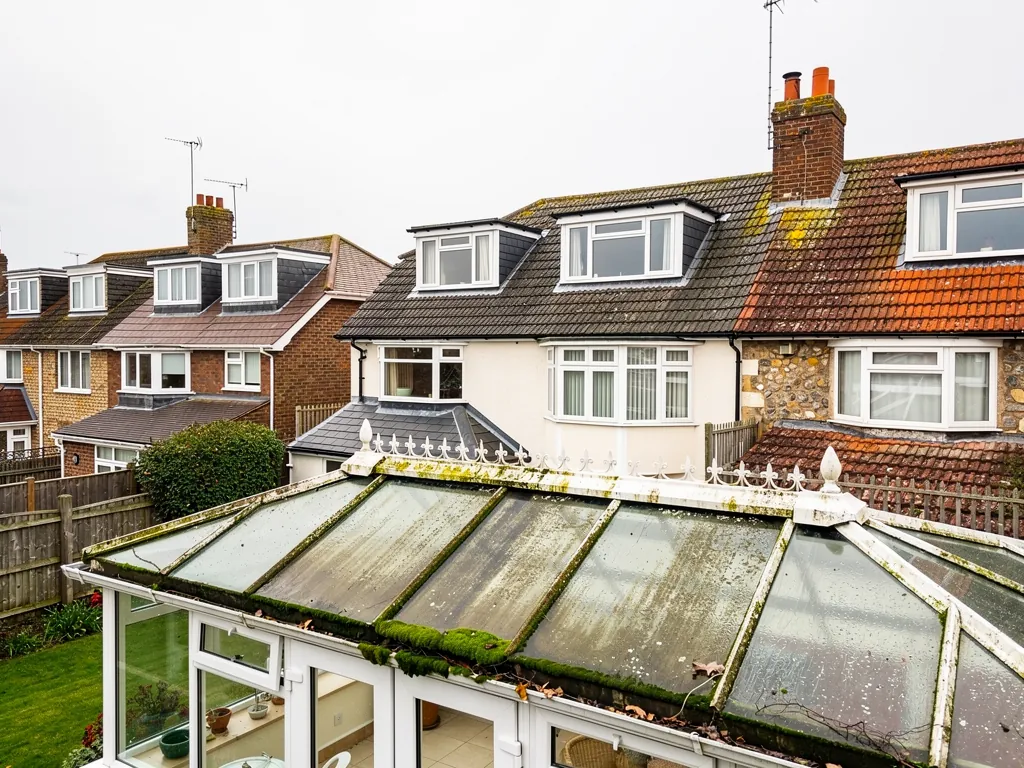
Roof problems do not announce how serious they are. A brown ring on a bedroom ceiling might be an old stain from a leak fixed years ago, or the first sign of a slate that slipped last night. A dripping sound in the loft might be a gutter overflowing or a hole in the covering. The cost of guessing wrong runs both ways: you can call out an urgent repair you did not need, or you can leave a leak running into the structure for a fortnight.
This guide sorts roof problems into three groups. The first group needs action now, because people or the structure are at risk, or because water is entering in quantity. The second needs a roofer soon, perhaps within days, because the damage is real but contained. The third can wait for a normal booking, though it should not be forgotten.
It also covers what to do while you decide, because the first few steps are the same in every case: stay on the ground, take photographs, limit the water and keep your insurer in the loop. A roofer who looks at a photograph can often help you place the problem in the right group before anyone drives out.
Signs that need a roofer straight away
Call a roofer immediately if any of these apply. First, water is coming through a ceiling or down a wall in quantity, and weather is still on the way. Second, a ceiling is bulging or sagging, because trapped water has weight and the plasterboard can fail. Third, a tree, a chimney stack or a large section of roof has moved or fallen. Fourth, a big area of the covering has gone, so that you can see sky or felt from inside the loft. Fifth, something hanging off the roof could drop onto a path, a drive or a neighbour's garden.
These share one feature: waiting makes the damage worse by the hour, or leaves someone at risk. For us, a roof that is letting water in jumps the queue. We stop the leak, and only after that explain what we found and what the proper repair involves.
Some situations need a different first call. If anyone is hurt or a building has partly collapsed, ring the emergency services. If you smell gas, leave the house and ring the gas emergency line. If water is running through a light fitting or near wiring, stay away from it and speak to an electrician. IStructE points to the local authority's Building Control team as the place to report a dangerous structure.
Our page on reporting a dangerous roof explains who to contact, and the one on water coming through a ceiling covers the indoor side.
Signs that need a roofer soon, but not tonight
A second group of problems is real but contained. A few slipped or missing tiles with a dry loft underneath. A ridge tile that has moved but is still sitting in place. A slate that has dropped a few millimetres. A flashing that has lifted at one corner. A drip that only shows in driving rain and stops when the weather clears. A gutter that has come loose at one joint.
None of these needs a ladder in the dark. All of them need attention in the following days, because a gap that lets in a little rain today can let in a lot of it after the next blow. Water that gets under tiles runs along battens, the slim timbers nailed across the rafters that the tiles hang on, and soaks into rafters and insulation long before a stain shows up on a ceiling.
The test: is water getting in right now?
The simplest question to ask is whether water is entering the house at this moment. If it is, you are in the first group. If you can see the damage but the loft is dry, you are probably in the second. Our guide to whether a leak is an emergency adds detail on this test.
Intermittent leaks deserve a note. A roof that leaks only when the wind blows from one side is telling you something specific about where the gap is. Our page on roofs that leak only in wind explains how roofers read these patterns, and photographs with dates help them. Jot down the day, the weather and which room was affected each time it happens, and the pattern will often point to a single spot on the roof.
Signs that can wait for a normal booking
Plenty of roof problems are worth fixing but are not urgent. Moss growing on a north-facing slope. Weathered or faded tiles. Mortar that has crumbled at the foot of a chimney stack but has not yet let water through. A cracked tile with a sound tile beneath. Peeling paint on a fascia board. A stain on a ceiling that is dry to the touch and has not changed over several weeks.
These should still be looked at, because small faults grow. A dry stain does not tell you whether the leak behind it has been fixed or is only paused until the next heavy rain. A cracked tile can look harmless until frost or wind finds the crack. The point is that you have time to get a proper survey, compare written quotes and arrange scaffolding if it is needed, instead of paying for a rushed visit.
For a problem in this group, the best step is a survey and a clear verdict on whether to mend it, hold it with a patch for a season, or replace it. If a repair will do the job, we say that, and pictures of your own roof show why. It is also the moment to ask about maintenance, because clearing gutters and checking ridges once a year is cheaper than reacting to damage.
Condensation can mimic a leak. Black mould on a bedroom ceiling that appears in cold weather without any link to rain may be a ventilation problem. Our page on roof leak or condensation helps you tell them apart.
What to do while you decide
Whichever group you are in, start with the same few steps. Keep off the roof. Wet slates are slick, ladders shift, and some sheeting gives way underfoot. A roof that is hard to judge from the ground is better judged from photographs and a survey.
Take pictures of the outside from the ground, and of any room the water has reached. Put a bucket under any drip and move belongings away from wet areas. Note the date and time you first noticed it, and what the weather was doing. A roofer finds these notes useful, and so does an insurer.
- Photograph the outside from the ground, with wide and close shots.
- Photograph ceilings, walls and floors indoors.
- Contain the water with buckets, towels and moved furniture.
- Keep any receipts for temporary measures.
Then contact your insurer. Which? recommends a prompt call, with receipts kept for any emergency work you pay for yourself.
Finally, send the photographs to a roofer and describe what you are seeing. We can often tell from the pictures whether a visit needs to be urgent. Use the quote form, the WhatsApp button or ring 01243 252373, and say whether water is coming in now. For more on the insurer side, see our page on roof leak insurance.
Who to call for what
People waste time ringing the wrong number. A roofer deals with the roof covering, the lead, the chimney flashings, the gutters and the flat roof membrane. A roofer does not deal with a failed ceiling, a damaged electrical circuit or a gas leak, and a good one will tell you so.
If the problem is structural, such as a chimney stack that is leaning, a wall that has moved or a roof that is visibly sagging, you may need a structural engineer in addition to a roofer. A structural engineer or surveyor is worth a call before swapping to a covering of very different weight, and the Planning Portal gives the same advice. Local authority Building Control can also be contacted about dangerous structures.
Landlords and leaseholders have an extra question: who is responsible? In a flat or a rented house, the roof may belong to the freeholder or the landlord, and you should report the leak in writing to them as well as to your own insurer. Photographs and dates matter here too.
Our page on who to call about a leaking roof sets this out in a little more detail. If you are a commercial owner, tell your building insurer and your managing agent as well as a roofer.
Tradespeople who knock on the door unasked after a storm, or who ask for payment in full before they begin, are a reason to pause. A genuine roofer can show you the fault in a photograph and give you a written quote.
Costs, consent and the next step
People often put off a call because they dread the bill. National guides at least give a sense of scale. Checkatrade prices typical roof repairs at £90 to £220 per m² depending on the covering, and says its repair figures exclude VAT, which is 20 per cent. Our guide to emergency roof repair cost goes through those figures, with scaffold and labour.
An emergency repair is usually small enough to need no formal consent. The Planning Portal's test is that a building control application is normally unnecessary when under 25 per cent of the total building envelope and under 50 per cent of the roof is affected. Listed buildings and conservation areas add consent questions, so ask the council before changing anything beyond what was already there.
If you are weighing up a bigger job after the emergency, our page on whether it is cheaper to repair or replace a roof works through the sum.
Whichever group your problem falls into, the next step is the same: send us photographs and a few lines. You get a clear verdict, then a single written figure once the survey is done, and a repair sized to the fault. Our emergency roof repairs page explains how we handle these jobs around Bognor Regis.
Questions
Emergency or not: questions
Is a small roof leak that only drips in heavy rain an emergency?
Not always, but it should not be ignored. If it stops when the rain does and the damage is contained, a roofer can usually book a survey in the following days. Put a bucket under it, photograph it, and note which weather brings it on. If it spreads or the ceiling starts to bulge, treat it as urgent.
Do I need an emergency roofer for a few missing tiles?
Check whether the loft is dry. If water is getting through the gap, a make-safe is worth arranging promptly. With a handful of tiles gone and a dry loft, a survey and repair in the coming days is reasonable. Keep an eye on it, because a gap can let in more rain after the next blow.
Who do I call if I am not sure whether the roof is dangerous?
Send photographs to a roofer and describe what you see. If a structure looks unsafe, such as a leaning chimney or a sagging roofline, keep people away and report it to your local authority's Building Control team, as IStructE advises. For injury or collapse, ring the emergency services first.