
Repair or replace · 10 min read
Is it cheaper to repair or replace a roof?
A repair is nearly always the smaller bill on the day, though not always over the years. This guide weighs the two using national price ranges, how old the covering is and how the timber beneath it has fared.
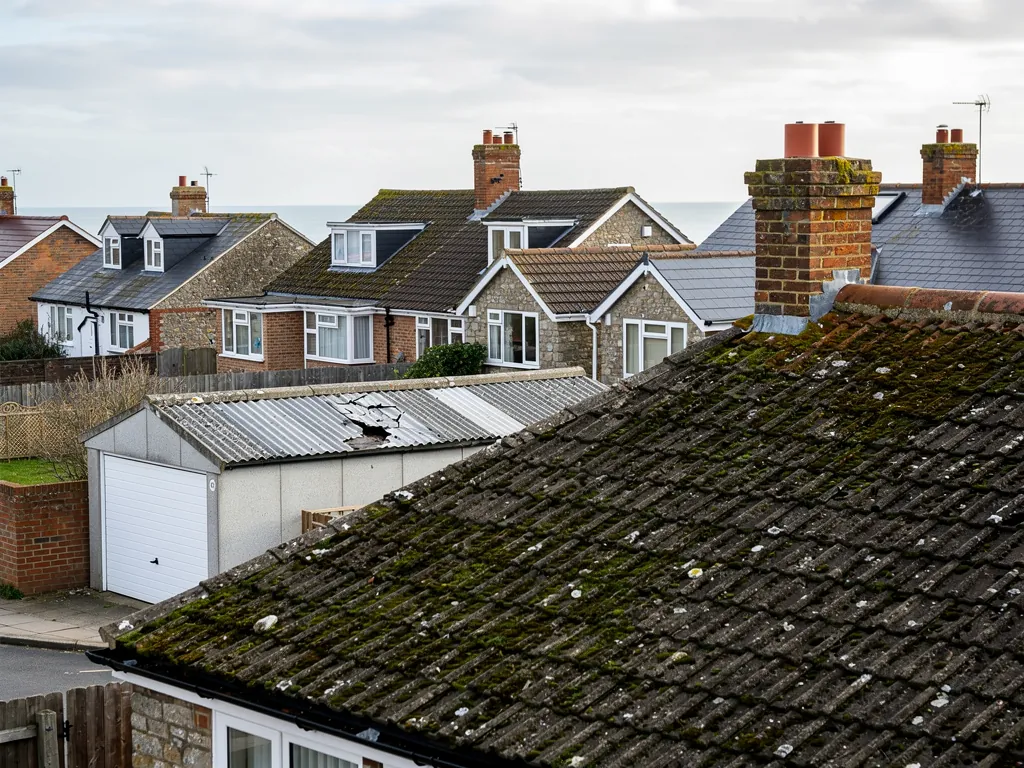
A leak starts with a bucket on the landing and a question that cannot wait: mend it, or spend the big money? Both answers can be wrong. Replace a roof with ten good years left and you have bought a covering you did not need. Keep patching one that is worn out and you pay call-out after call-out for work that never holds.
The sum has four parts: the repair in front of you, the cost of replacing, the life each choice buys, and the extras that come with a bigger job, such as scaffolding, VAT and the Building Regulations. We take them in turn, with published national ranges and the date of each guide, because a figure with nothing behind it is only an opinion.
None of these ranges is a price for your roof. They show how the arithmetic works. The deciding evidence is on the roof itself, which is why a survey and photographs of the fault come before any figure.
The first test: what is failing, and how widely
Start with the cause, not the stain on the ceiling. Repair suits a fault confined to one spot while the surrounding covering stays sound. Slipped tiles, a split flashing, a loose ridge capping or one blister in a flat roof membrane all fit. Cure the fault and the roof carries on as it was.
Replacement enters the conversation when the covering itself is failing. Slates that crumble at a touch, tiles gone soft and flaky, felt cracked across every slope, battens that snap under a roofer's weight: each says the material has run out, and a patch treats a symptom that keeps spreading.
Three questions that settle most cases
Is the fault in one place or several? Is the timber underneath dry and firm? Would this repair be followed by another within a season or two? One place, dry and firm, and no: repair. Several places, damp or soft, and probably yes: the repair only buys time.
A middle answer exists too. A patch can be right for a roof with a few years left when you would sooner plan the larger spend than rush it. We tell you when that applies and how long we expect the patch to be useful. We never push a new roof where a repair will hold; the written quote follows from that call.
A look from the garden and a torch in the loft will tell you plenty, and our survey pictures show the same things up close.
What each route costs according to national guides
The published figures show a wide gap, which is the reason to hesitate before replacing early. Checkatrade's repair table, updated June 2026, prices tile and slate repairs at £90 to £220 per m², excluding VAT. Checkatrade's roof replacement guide, updated in October 2026, gives an average near £8,000, with most replacements between £4,000 and £19,000, and does not state whether VAT is in that range.
The same guide splits replacement by roof shape. It marks the table as plus VAT, so read these as figures before tax:
| Roof shape | Typical replacement cost (plus VAT) |
|---|---|
| Hip roof | £9,250 to £18,000 |
| Gable roof | £7,000 to £16,250 |
| Flat roof | £2,800 to £7,500 |
Checkatrade also quotes about £12,000 for a three-bedroom semi-detached. The figures spread widely, as they should, because floor area, covering, access and the survey findings all move the number.
Reading the gap
Set a repair near the bottom of its range beside a replacement near the bottom of its own and several thousand pounds separate them. That is the money you keep if the repair lasts. How long it lasts is the question for the next two sections.
Our guide to how much a roof repair costs in the UK takes the repair side covering by covering.
Age: how much working life is left in the covering?
Age shifts the answer more than anything else. Repairing a covering with decades ahead of it is money well spent. The identical repair on a covering near the finish is closer to paying rent on a roof you already expect to replace.
Published lifespans are typical ranges, and a manufacturer's warranty is not a lifespan. Marley expects concrete tiles to give around 60 years, with the caveat that this promises nothing. CORC puts well-maintained natural slate at 100 years and more. For old clay peg tiles, a conservation article treats the 60-year figure as unreliable, so age on its own never settles it.
Flat coverings age sooner
Less, in a flat roof guide updated in March 2026, gives torch-on felt 10 to 20 years, GRP 25 to 40 and EPDM 30 to 50, while GreenSpec puts EPDM at 20 to 30, so sources disagree at the top end. A felt roof with a split at eighteen years is a different case from a GRP roof of the same age with a split.
A long-lived covering that has lost a few pieces is a repair job nearly every time. A short-lived covering well into its spread, with trouble in more than one spot, is where replacement starts to add up. If you know when the roof was last done, tell us. If not, the survey photographs usually show the age of the covering clearly enough.
When small repairs add up to a poor deal
At some point the bills for small jobs become a real fraction of a new roof while the roof gets no better. Each repair looks sensible alone, which is how the total goes unnoticed.
Keep a list. Write down every repair with its date and cost, and mark where on the roof it happened. Scattered across several slopes, the entries suggest a covering failing everywhere. Clustered round one chimney, one valley or one gutter run, they point to a single detail that can be put right once, and replacing the whole roof would be the wrong answer.
Slate, fixings and the creeping repair
Slate roofs show the pattern clearly. A few slipped slates are routine. When slates keep sliding across a slope because their fixings have given way, mending them singly wastes money; the better repair strips that slope and relays it, reusing the sound slates. It is a bigger job than a patch but far smaller than a new roof. Our guide to nail sickness on slate and tile roofs shows how to recognise it.
Flat roofs and a soft deck
On a flat roof the matching warning is the timber deck. A patch laid over wet or soft boards will not hold, and once boards need renewing the bill creeps towards a new covering. Water standing long after rain is another warning. A repair that leaves the roof ponding is likely to fail again, so the sounder choice can be a fresh covering with proper falls built in.
Our working rule is simple. If a repair fixes the cause and the roof has service left, repair. If the roof would need mending again within a season or two, price both routes and compare them across the years, not only on the day.
What a bigger job brings with it
Replacement carries costs and obligations a small repair never meets, and they belong in the comparison.
Scaffolding comes first. Checkatrade's scaffolding table, updated in October 2026, gives roughly £875 monthly for a typical semi, £800 for a terrace, £1,000 for a detached bungalow and £1,200 for a detached house. Its replacement guide puts scaffold for a re-roof at £700 to £1,300. A minor repair may be reached from a ladder or tower; a full re-roof nearly always needs the lot.
VAT is next. The standard rate is 20 per cent, and a price that omits it is smaller than the real one. Ask whether each quote includes VAT and scaffolding before setting one against another.
Building Regulations on a larger roof
Then comes the Building Regulations question. The Planning Portal's test is that no application is normally needed while under 25 per cent of the total building envelope and under 50 per cent of the roof is affected. Among its triggers is a new covering that is 15 per cent or more heavier in weight. Arun District Council's building control pages count replacing pitched and flat roof coverings among work needing approval, so the council or your roofer should confirm what your job needs. Re-roofing may also bring thermal upgrades under Part L. Where work is notifiable, we explain what is needed and make the notification.
A simple repair meets none of this, so a well-judged small repair can be the cheaper path in more than one sense. Our guide to Building Regulations and roof repairs goes through the thresholds.
Partial replacement: the option between the two
Repair or replace is rarely a choice of two. Between a patch and a full re-roof sit options that cost less than the second and outlast the first, and they suit a roof failing in one area but sound elsewhere.
One is re-covering a single slope. The side facing the weather often wears first while the sheltered side stays in good condition. Stripping and renewing the worn side can solve the problem for a fraction of a full job. The catch is the join: new material beside old can look different from the street, and the junction at the ridge and the verge needs careful detailing.
Renewing the weak details
Another is renewing the vulnerable details and keeping the covering. Ridge and hip cappings can be refixed so each is held mechanically, because BS 5534 (2014 revision) wants a screw or clip in each capping tile as well as the mortar bed. Flashings can be redressed in lead, valleys relined and verges refixed. These are the spots where water enters an otherwise good roof, and renewing them can add years at moderate cost.
For a chimney, MyJobQuote (updated 22 September 2026) prices a patch to the lead at £150 to £250 and full replacement at £350 to £460 without scaffolding or £700 to £920 with it. Set that against the cost of a new roof and fixing the detail wins easily whenever the covering is sound.
On a flat roof, a third option is laying a new membrane over the existing deck, provided the boards are dry and firm. It is cheaper than stripping to the joists but only works if the deck passes inspection. We check, and the photographs show what we found.
How we reach the verdict on your roof
We begin on the roof. A survey means getting up, studying the covering, the details and, if we can reach it, the timber underneath. We photograph the fault and anything else that bears on the decision, so you can check our reasoning against the pictures.
Then comes one of three answers: repair now, patch for the moment, or renew the roof, each with its reasoning. Where a repair will hold, that goes in writing, even though it is the smaller job. If the covering is spent, we tell you and show you the pictures. You receive the quote in writing as a single total, and we aim to keep our pricing good and fair.
For a fair comparison, ask every roofer whether the price covers VAT, scaffolding and taking the waste away.
Useful things to have to hand
Photographs of the leak and the ceiling, the date of any earlier work and old paperwork all help. So does noting when water appears: only in heavy rain, only when the wind drives it, or after a long wet spell. Each pattern suggests a different cause.
If insurance may be involved, speak to your insurer first. Which? lists rain entering through a neglected roof under wear and tear, so cover depends on the cause. Make the roof safe, take pictures and keep receipts for temporary work.
When you are ready, the roof repairs page describes our repair work, and the roof replacement page covers the other side of the decision.
Questions
Repair or replace: follow-up questions
Is a cheap patch ever a false economy?
It can be, when the patch hides a bigger fault. Sealing over a leak without finding where water gets in may stop the drip for a few weeks while the timber below stays wet. A patch is sound when it cures the cause. It is poor value when the same spot needs patching again within a season or two.
Can only part of a roof be replaced?
Yes. One slope can be stripped and re-covered, or a failing detail such as a valley, ridge or flashing renewed, while everything else stays. The join between old and new needs careful detailing, and new material can look different from the street. The written quote follows the survey.
Does the price change a lot on a bungalow?
Often, because access is easier. Checkatrade's scaffolding table gives a detached bungalow around £1,000 a month against around £1,200 for a detached house, and a smaller roof can mean less covering to buy. The total still turns on the covering, the survey findings and whether VAT is included.