
Liquid roofing · 9 min read
Liquid roofing and flat roof coatings: when they work and when they don't
A liquid roof is rolled or brushed on wet and cures into a joint-free membrane. It can rescue some tired flat roofs and cannot rescue others. This guide shows which is which.
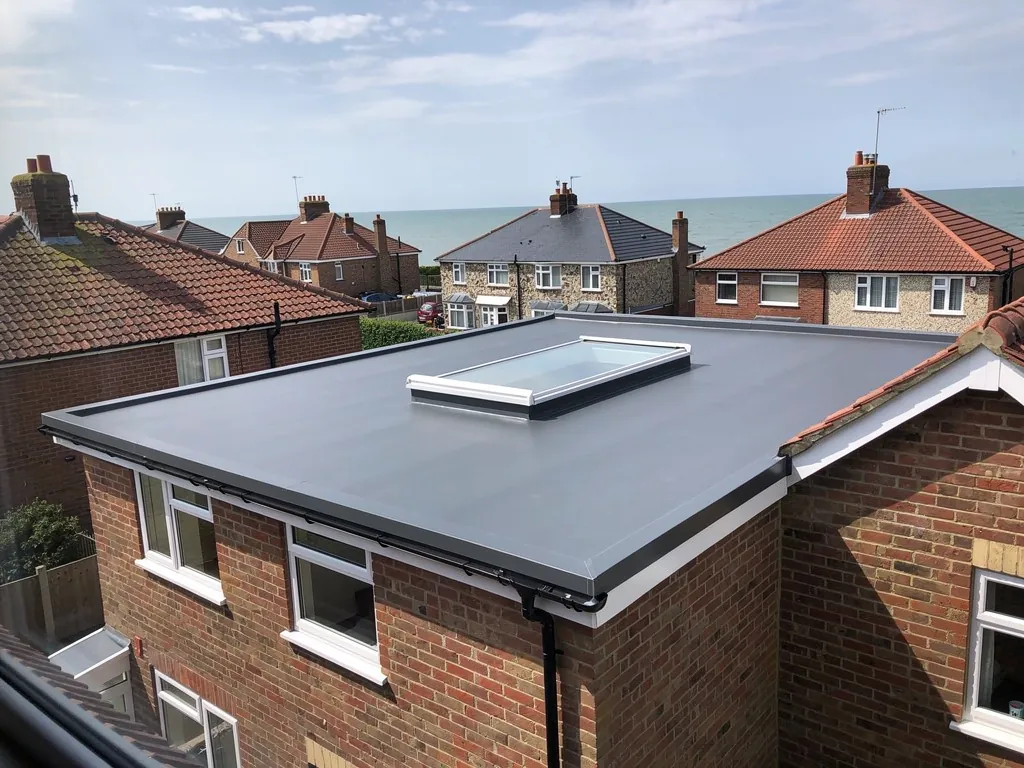
Liquid roofing is the quiet option in flat roofing. Nothing is stripped, no rolls are unrolled and nobody lights a flame. A cleaned and repaired roof is primed, then coated in a liquid that cures into a flexible, continuous membrane. For the right roof it is a tidy, low-disruption fix that saves a strip-out and the waste that goes with it.
For the wrong roof it is money spent on a surface that will fail again. A coating is a skin. It can seal what is sound but it cannot dry out a wet deck, cure ponding or hold together a covering that has already come away from what is under it. Many disappointing coating jobs were sold to roofs that needed a different answer.
The sections below explain what the product is, how a coating goes on, the situations where it works well, the ones where it will not and the questions that separate a careful quote from a hopeful one. The cost figures are national ranges with their sources and dates, and every roof is different, so the figure that matters is the one written after a survey of yours.
What liquid roofing actually is
The name covers a family of products rather than one. Liquid-applied membranes come in several chemistries, such as acrylic, polyurethane and bitumen-based, and they differ in how flexible they are, how they cope with standing water and how they are applied. What they share is a method: a wet material goes onto the roof, flows into every corner and cures into a single membrane with no overlaps and no heat welded joins.
That is the appeal. Flat roofs leak at joins, corners and penetrations, and a liquid has no seams to open. It wraps round pipes, rooflights, vents and odd-shaped upstands, the short vertical sections at a wall or a kerb, without the cutting and folding a sheet needs.
Coating or full membrane
There is a difference between a thin protective coating and a reinforced liquid membrane. A coating is a surface treatment: it protects and refreshes an existing covering that is still working. A reinforced system includes a fabric layer, often a polyester fleece, bedded in the wet material, and it is built to waterproof the roof in its own right. Quotes that blur the two are worth questioning, because the first extends a roof's life a little and the second replaces its waterproofing.
Liquid roofing is also separate from GRP. Both are made wet on site, but GRP cures hard and uses glass matting, while liquid membranes stay flexible. Our guide to GRP fibreglass flat roofs explains the rigid alternative.
One more caution: tins of flat roof paint from a builders' merchant are not the same thing as a professionally specified system. The product, the primer, the reinforcement and the method are matched to each other, and they work as a set.
How a liquid roof is applied
The result is decided before any liquid is opened. Preparation takes more of the day than the coating does.
Survey and repair
The roofer first finds out what is on the roof and what state it is in. Is the existing covering felt, asphalt, metal, concrete or an older coating? Is it firmly stuck down? Is there water inside the layers? A moisture check may involve opening a small inspection cut. Loose areas are cut out and patched, splits are repaired, and any blistered felt that has come away is removed or fixed.
Cleaning and priming
The surface is cleaned of moss, dirt, grease and loose grit, because liquid sticks only to what is clean and sound. A primer matched to the surface and the chosen product follows. Skipping or shortcutting the primer is among the most frequent reasons coatings peel.
Reinforcement and coats
Details such as corners, outlets and upstands receive reinforcement in the wet material first. The main areas are then coated, usually in more than one pass, rolled on to an even thickness. The maker sets the thickness and the number of coats, and a good roofer works to that and shows you photographs along the way rather than relying on a quick look at the finish.
Weather and cure
Liquids need dry surfaces and dry weather to cure. Rain on a half-cured coat can wash it or leave it patchy. That is why coating jobs wait on the forecast and why the schedule can shift. The finished surface may be a single colour, and some products take a light-coloured top coat that reflects sunshine.
When a liquid roof works
A coating is at its best on a roof that is basically sound. The deck is dry and solid, the existing covering is still stuck down, there is no wet insulation and the drainage is adequate. The problem is surface fatigue: crazing, small splits, perished seams, patches of wear and dull, weathered mineral finish. Restoring such a roof can add useful years without the cost and mess of stripping it.
It is particularly handy for roofs with a lot of detail. A flat roof with several rooflights, a cluster of pipes and a stepped parapet gives a sheet system plenty of cut edges to get wrong. A liquid flows round them in one pass.
Roofs that are good candidates
- An older felt roof that is firm, dry and only showing surface wear
- A GRP roof whose topcoat has worn but whose laminate is intact
- A metal or concrete roof with failed joints but a sound structure
- A roof with so many penetrations that sheets would be fiddly
It also suits places where a flame or a big strip-out is awkward: a roof over a business that has to stay open, or a flat roof beside timber cladding. Waste and disturbance are lower because the old covering stays put.
The key phrase is stays put. A liquid job leaves the existing covering in place, so the covering has to deserve it. That is a judgement the survey makes with photographs, and we say plainly if a coating is a sensible choice or a way of postponing a bigger job. Our short answer on laying a new flat roof over the old raises the same test for sheet coverings.
When it does not work
The failures follow a pattern, and most can be spotted in advance.
A wet roof is the first. If water has got into the insulation or the deck, a coating seals it in. Damp that cannot escape becomes blisters, rot and a ceiling that stains in spite of a new surface. The cure is to open up, dry or replace what is wet, and then cover.
Ponding is the second. A coating follows the shape of the roof, so it cannot add a fall. Where water lies in puddles, the liquid is left holding water for days, and that shortens its life. Fixing the slope means new firrings, the tapered timbers that build a fall, and new covering above them. BS 6229:2025 gives a minimum finished fall of 1:80, which a coating does not create. Our guide to flat roof falls and drainage shows what a proper fall involves.
A moving or rotten deck is the third. Soft boards, sagging spans and joints that flex all crack a membrane eventually, however flexible it is.
A covering that has lost its grip is the fourth. Felt that is blistered across the roof, lifting at the edges or detached from the deck gives the coating nothing to stick to. The fault underneath carries on moving and the coating rides on top of it.
Finally, there is the roof that has simply reached the end. Coating something that has failed throughout is a repair dressed as a restoration. We would rather tell you to re-cover and explain why than sell a coat that lasts a season.
A coating can extend a working roof. It cannot make a failed one sound.
Lifespan and what it costs
Lifespan for liquid roofing depends on the product, the thickness applied, the preparation and the condition of the roof underneath. Makers publish their own expected lives and often back them with a warranty, but a warranty sets out the maker's obligations when the product itself fails under set conditions, which is not a forecast of how long your roof lasts. Ask to see the maker's document and read the conditions, particularly any about the state of the existing roof and the way the system is installed.
On cost, liquid systems fall between a small repair and a full re-cover. National guides do not agree on a single figure because the jobs vary so much. For context, the Less flat roof guide (March 2026) gives £150 to £500 for small flat roof repairs, and Checkatrade's replacement table, last updated October 2026 and headed plus VAT, gives £2,800 to £7,500 for replacing a flat roof. A coating job lands somewhere inside that span depending on area, preparation and the system chosen. Checkatrade's repair figures, from a June 2026 table, exclude VAT, and standard VAT is 20 per cent.
What moves the figure
Preparation is the biggest variable. A clean, sound roof takes little repair before coating; a patchy one needs cutting out, drying and patching first. Roof area, the number of outlets and details, and whether the job needs a scaffold also count. If a coat is being priced against a re-cover, check that both quotes assume the same deck work, because a coating quote that quietly leaves out the repairs will always look the cheaper job.
Fair, good pricing is the aim, and what you receive is a single total, in writing, following our inspection. A liquid job is a sensible spend only if the roof underneath deserves it, and the survey is where we decide that.
Insulation, approval and questions to ask before you agree
Approved Document L raises a question about coatings that is not one to guess at: does coating count as renovation? In that document, a flat roof given a new waterproof skin counts as renovated, and once over 50 per cent of the element's surface is renovated the roof must be upgraded. A thin protective coating over a working covering is a different thing from a new membrane, and where the line falls for your job is a question for your building control body.
The Planning Portal puts the line for a building control application at 25 per cent of the total building envelope and 50 per cent of the roof, below which one is not normally needed. It adds that a covering with a significantly different fire performance brings approval into play. Arun District Council lists the replacing of roof coverings among work needing approval. Check with the council's building control team or a registered building control approver, and where notification is required, we handle it.
Questions that separate a careful quote from a hopeful one
- What is under the existing covering, and has anyone checked it for moisture?
- Is this a protective coating or a reinforced membrane?
- What is the primer, and is it the maker's own?
- How many coats go on, and will I see photographs of each stage?
- What happens to the ponding, if there is any?
We give a plain verdict: coat it, patch it or re-cover it, with photographs of your own roof beside the reasons. We point you to the lightest job that fixes the fault for good, and we leave the site clean. More coverings are covered on our flat roofing page.
Questions
Liquid roofing questions
Can a liquid coating be put over a roof that is still leaking?
Not safely. A leak means water is already in the layers, and a coating over it traps the damp. The cause is found first, the wet material is dried or replaced, and then the coating goes on. A leak can also have a source at a flashing or outlet that is cured by a local repair, which a survey will show.
Is liquid roofing the same as the flat roof paint sold at builders' merchants?
No. A tin of roof paint is a surface treatment. A specified liquid system pairs a primer, a reinforced membrane and a top coat, applied to the maker's method. Cheap products can still help on a sound roof, but they do not waterproof a failing one, and a maker's warranty is unlikely to cover a DIY job.
Will a coating stop condensation forming under my flat roof?
Rarely. Condensation comes from warm, damp air reaching a cold surface inside the roof build-up, and a coating on the outside does not change that. The fix lies in insulation, a vapour control layer or ventilation, depending on the roof. A survey can show which problem you have before money is spent on the wrong cure.