
Asbestos garage roofs · 9 min read
Asbestos garage roofs: removal, rules and what to expect
How a corrugated asbestos cement garage roof comes off, which HSE rules apply, where the waste goes and what a sensible contractor explains before a single sheet is touched.
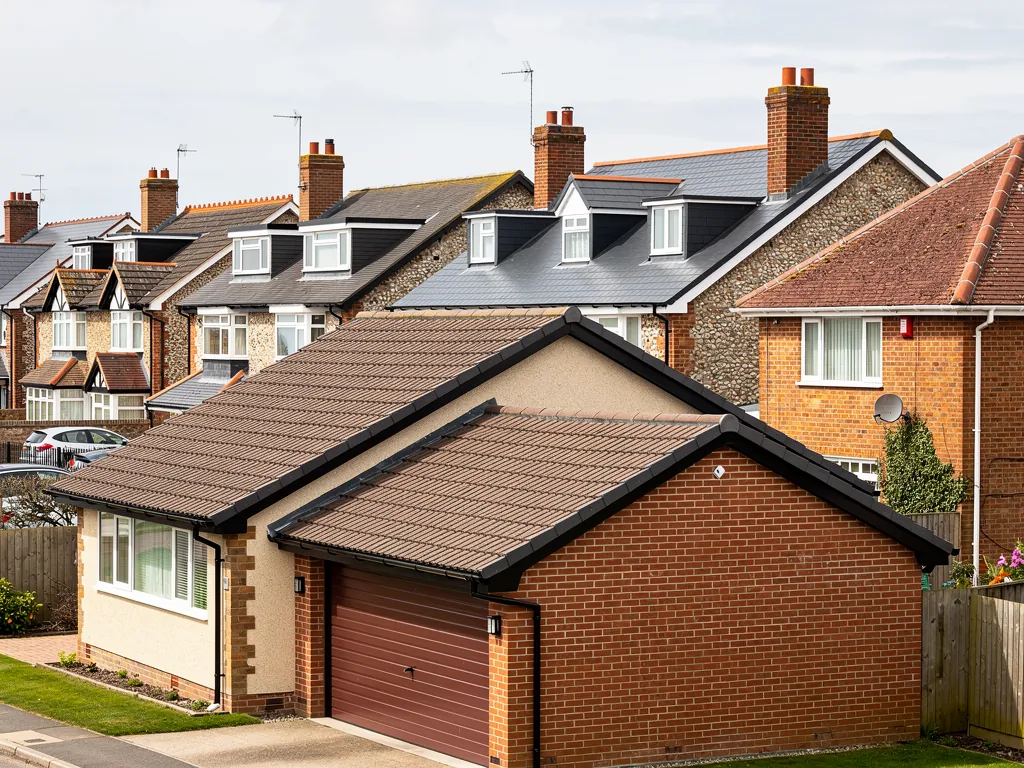
Most garage roofs of corrugated cement sheet went on decades ago, and plenty are still doing their job. What stops people is the thought of taking one off. It sounds like a hazardous-materials operation, and in places it is, but for an ordinary single garage in reasonable condition the rules are more workable than the fear suggests. What matters is how the sheets come off, where they go and who is responsible for the waste.
This guide follows the work in the order it happens: the HSE's split between licensed, non-licensed and notifiable work, the handling of fragile sheets, the wrapping and disposal of the waste, and the new roof that replaces them. It is written for homeowners who want to understand a quote, not for anyone planning to do the removal themselves.
Everything here assumes the sheets really are asbestos cement. If you are not sure what is on your garage, read how to tell whether a garage roof is asbestos first. Our garage roof replacement page covers the wider job of putting a new roof on.
Licensed, non-licensed and notifiable: where a garage roof sits
The HSE sorts asbestos work into three groups, and a garage roof of corrugated cement sheets usually lands in the gentlest one. For asbestos cement the HSE says non-licensed work covers roof sheeting and rainwater goods, so long as the sheets are handled with care and lifted out whole. That includes cement which is weathered but not otherwise substantially damaged, so a sheet gone green with lichen is not automatically a different category of job.
The second group is notifiable non-licensed work, for sheeting that is substantially damaged or broken up. Notice goes to the enforcing authority ahead of any work, and the HSE sets no minimum lead time for it. A register of the work, which acts as a health record, is kept for 40 years. The dividing line, per HSE guidance A14, is significant dust: as soon as the sheets begin to crumble and give off that dust, the job becomes notifiable.
Why insulating board is a different matter
The third group is licensed work, and most removal of asbestos insulating board (AIB) falls there. Garages sometimes carry it away from the roof, in the soffit board under the overhang at the eaves, and external soffits appear on the HSE's own list of locations. The same page concedes that the board is hard to tell from non-asbestos equivalents by eye. That is one reason a survey before the quote matters: a cement-sheet roof with a board soffit can be two jobs under two sets of rules.
Ask any contractor which category they think your job is in, why, and what they will do if a sheet breaks while it is being lifted.
Fragile sheets and why nobody should stand on them
A14 calls these roofs fragile without exception. A sheet that looks solid from the drive can give way under a person's weight, and a fall from a garage roof onto a concrete floor or a parked car is an immediate danger in its own right. The HSE keeps separate guidance on fragile roofs, covering fibre cement sheets and rooflights, and every sound plan starts by assuming the sheets will not carry anyone.
The second hazard is what breaking a sheet does. Breaking one up can create dust, and significant dust is what moves the work from non-licensed to notifiable. So the aim on removal is to unfasten each sheet and take it off in one piece. A14's advice on handling is to lower large pieces to the ground, never drop them and never send them down a rubble chute.
What this means for scaffold and access
Because nobody should lean on the roof, access is planned from outside it: from the edges, from a platform or tower, or from beneath. On a detached single garage that can be simple. Where the garage sits hard against a boundary wall or a neighbour's fence, working room is tighter and the plan has to allow for it. A garage on the road frontage may need scaffolding over the highway, which needs a licence from the county council under section 169 of the Highways Act 1980. The licence needs notice, and that period is worth building into the plan.
A few practical points before work starts: the garage should be emptied of anything that cannot be covered, the car should be elsewhere, and the neighbours should know what is happening.
Double wrapping, lockable skips and the consignment note
With the sheets off, the HSE's leaflet on waste (EM9) is short and specific. Asbestos waste is double-wrapped and labelled. Asbestos cement sheet goes into a lockable skip. It is not mixed with other waste, whether to save on skip hire or to bring a load under the 0.1 per cent threshold, because the guidance tells people not to mix waste to get below it. A contractor who proposes tipping the old sheets in with the rest of the garage rubble is proposing something the HSE says not to do.
Householders meet a special rule here and are often surprised by it. The government's guidance on hazardous waste consignment notes exempts domestic hazardous waste, with one exception: asbestos waste. The contractor takes the place of the waste producer and completes the consignment note. Ask also whether the firm moving the waste holds a waste carrier registration. On gov.uk the upper-tier registration costs £191.02 for a new application and £130.25 to renew every 3 years, so it is a record you can ask to see.
Keeping the paperwork
File the note when it arrives. A buyer's solicitor may ask what happened to the old roof one day, and the paperwork answers it. If a quote prices removal and is silent on where the sheets end up, ask. A good answer names the kind of skip, where the waste is taken and who completes the paperwork. A vague one, such as "we sort all that", is the warning sign. Our answer on how asbestos roof sheeting is disposed of gives a shorter version of this section.
What happens on the day the sheets come off
A removal day on a single garage is quieter than most owners expect. The garage is cleared, the area below the roof is covered and the surrounding ground is kept free of people. The fixings holding each sheet are released one at a time, and each sheet is lifted clear in one piece, lowered and wrapped. Working from one end across the roof, sheet by sheet, matters more than speed.
Underneath the sheets sit the purlins, the horizontal timbers running across the rafters that the sheets are bolted or screwed to. Once the roof is open, they are the first thing to inspect. Years of condensation drip, or a long-term leak at a sheet joint, can leave the timber soft at the ends, and whatever goes on top depends on what it is fixed to. If some timber needs replacing, that is the moment, and the written quote should say how a soft purlin will be handled if the survey could not see it from below.
Weather and the open frame
An open garage frame is at the mercy of the weather, so the new covering is planned to follow the old without a gap. On this coast, with sea weather arriving fast, a roof stripped and left for several days is a risk to whatever is stored below. If the new covering cannot start at once, a temporary cover over the opening is sensible.
At the end, the site is left clear. The wrapped sheets leave in the lockable skip, and the consignment note is the record of where they went. If the garage gutters look like the same material, mention that at the survey so they are looked at too.
Choosing the new roof for the same garage
Taking the sheets off is half the decision. The other half is what replaces them. A garage roof of corrugated sheets is usually pitched at a shallow angle, and the choice divides into two families. One is a new sheeted roof, in modern non-asbestos fibre cement, steel profile or bitumen sheets, fixed to the existing purlins. The other is a flat-roof system on a boarded deck: felt, EPDM (single-sheet synthetic rubber) or GRP (glass-reinforced plastic, cured in place).
The first is the closer match to what was there and often the lighter job. The second gives a clean finish and a longer service life if it is built properly, but it asks more of the garage. A deck needs boards and a fall, and BS 6229:2025 keeps a minimum finished fall of 1:80 for flexible coverings on continuously supported roofs, with roofers designing nearer 1:40 so the finished roof still drains. Reshaping a sheeted frame into a flat roof with falls can mean new timbers, which adds to the total.
Comparing the options
Lifespans are a rough guide only. Less (flat roof guide, March 2026) gives GRP 25 to 40 years and EPDM 30 to 50 years, and none of that is a promise. Checkatrade's October 2026 roof replacement guide gives a garage re-felt as around £1,000 to £2,000, averaging £1,500: a typical UK figure for felt alone, before any asbestos sheets are removed.
What to ask before you accept a removal price
Most of the questions that protect you are plain ones, and the quote should answer them without prompting. First, does the written price say how the sheets will be removed and where the waste goes? Second, did the survey cover the soffit and gutters as well as the roof? Third, has the price been written as one total, with VAT and scaffolding either in it or clearly stated as outside it? The standard rate of VAT is 20 per cent, so a price that omits it is a fifth short.
Ask too what happens if the sheets prove worse than they looked. Sheets already broken up can change the category of the job and the notice required, and a contractor who has thought about it will say so before starting.
How we handle the survey
When we survey a garage with cement sheets, we photograph the roof, the fixings, the eaves and the soffit, and tell you plainly whether the roof can stay for now, be overclad or has to come off. The written quote follows the survey, one total price, with the removal method and the waste route set out in words. Where price comes up, ours are good and fair, and we point you to the smallest job that settles the matter.
You can also ask us about overcladding an asbestos roof when the sheets are sound, or send photographs through the quote form. We start from photographs of the roof in its current state, because they show the fixings, the state of the sheet edges and the access, which are the points that move a removal price more than the size of the garage does. Ask for one written total that covers both the removal and the new roof.
Questions
Asbestos garage roof removal questions
What changes if a cement sheet cracks while it is being lifted?
The work then counts as notifiable non-licensed, once the cement is breaking up and making significant dust. Notice goes to the enforcing authority before work starts, and the register is kept for 40 years. Ask any contractor what the plan is if that happens.
Who signs the paperwork for asbestos sheets taken from a house?
Household waste is exempt from the hazardous waste consignment note rules, but the gov.uk guidance excludes asbestos waste from that exemption. The contractor completes the consignment note as the waste producer. Ask for the note once the job is done and keep it with your house papers, since a later buyer may want to see where the old roof went.
Is a board soffit on my garage the same as the cement sheets?
Not necessarily. Board soffits can be asbestos insulating board, which the HSE says is hard to distinguish from non-asbestos boards, and most AIB removal is licensed work. A soffit can therefore fall under different rules from the sheets, so have it checked during the survey before anyone prices the job.