
Lead valleys · 10 min read
Lead valleys: repair, replacement and alternatives
A lead valley carries the water from two roof slopes down to the gutter, and when it fails the ceiling shows it. Here is how to judge a valley, replace it, or choose a different material.
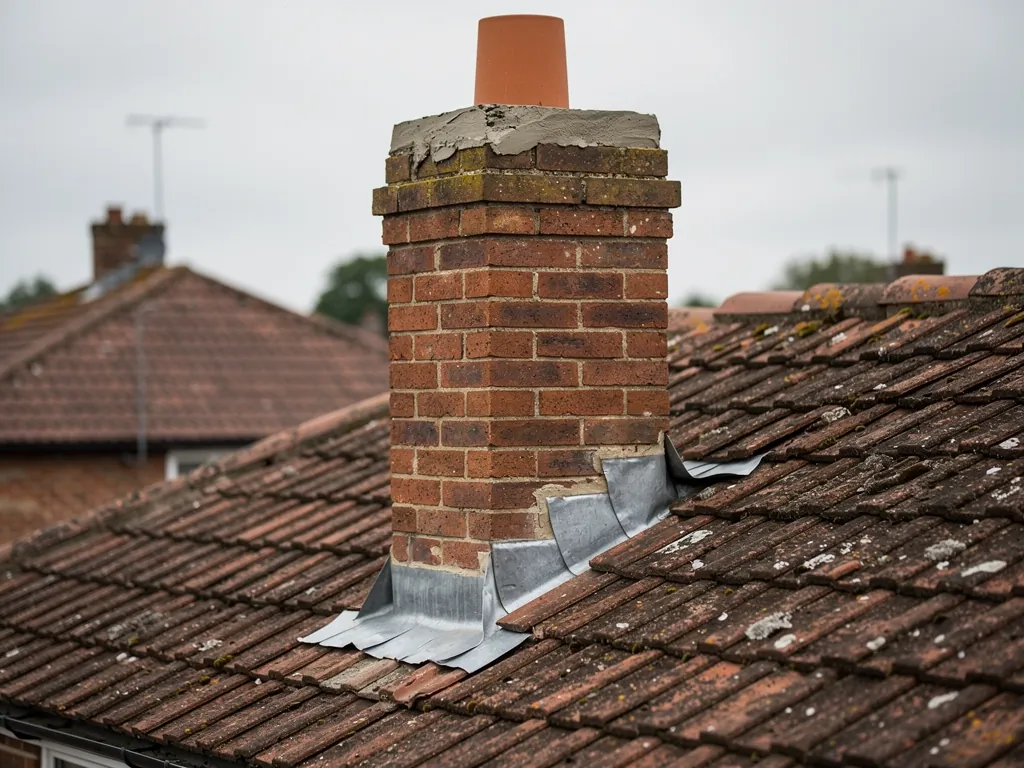
A valley is the inward corner formed where two slopes meet, such as the line between a main roof and a side extension, or beside a dormer cheek. Every drop of rain that lands on both slopes ends up running down it. That makes it the busiest few metres of water-carrying surface on the house, and the place where a small defect shows itself soonest.
Lead has been the usual lining for an open valley for a very long time. It can be dressed into the angle, it is hard to puncture with ordinary wear, and a sound lead lining can outlast the tiles on either side. But a valley can still go wrong: through movement, a blockage, a thin sheet or one badly lapped, or tiles cut so that they pinch the channel.
This guide helps you judge what you are looking at. It sets out the signs of a failing valley, the repair-or-replace decision, the lead code suited to the job, what replacement involves from the first photograph to the last tile, and what you can choose instead of lead. It closes with the cost drivers and the regulations that sometimes come with a larger job.
What a valley does and how it fails
On most houses the valley is an open channel of lead set on boards, with the tiles or slates stopping short of its centre line so that a strip of metal stays visible. Water coming off both slopes joins in that strip and runs to the eaves, where it drops into the gutter. Because the channel collects flow from a large area, it carries far more water than a flashing ever does.
If a valley goes wrong, you usually spot it indoors first: a stain on a ceiling or an upstairs wall beneath the junction of two slopes, sometimes only after a long spell of rain. Outside, a roofer looks for several things. A split along the centre of the lead points to metal that has moved and tired. Debris, moss and leaves piled in the channel show where water has been held back and pushed sideways under the tiles. Lead that has slid or rippled shows an under-fixed sheet.
Why the details matter more than the metal
A valley rarely fails because lead as a material has given out. More often the fault is in the build. If the channel is too narrow, leaves jam it. If the lead laps are short, wind-driven rain gets past them. If the boards beneath have softened after years of damp, the lead sags and holds a pool. If the tile cuts along the edge are untidy, they leave gaps and trap grit.
Published lifespans give a sense of the metal's potential. MyJobQuote (last updated 22 September 2026) puts lead flashing at over 80 years, and Less gives a lead flat roof 50 to 100 years. A valley that fails in a fraction of that time has usually been let down by its detail, by neglect, or by a missed blockage.
Repair, patch or replace: reading the valley
You can tell a lot from the ground and more from the roof. We start with photographs along the full length of the valley, from the ridge end to the eaves, and then look at what lies under the edges of the tiles.
- A clean, local fault. A single split or a failed lap in lead that is otherwise sound can often be repaired. The damaged section is cut back and renewed, and the rest is left in place.
- A tired valley that still holds. If the lead is thin, crazed or patched, but the boards are firm and the covering is sound, a patch may carry it through for now. We call it a stopgap.
- A failed valley. Repeated leaks, soft boards, a lining that has moved out of line or lead that has worn through all point to replacement.
The plain verdict matters because the cost jumps between those three. Replacing a valley means lifting the tiles or slates on both sides, so the job reaches well beyond the channel itself. Selling a whole new valley when a repair would hold is poor advice, and patching lead over rotten boards wastes money.
Several clues push towards replacement: a leak that returns in the same spot, repeated staining on the ceiling below, lead smothered in mastic, bitumen or tape, or a channel built too narrow from the start.
A valley that leaks again after a repair is usually telling you the problem is in the boards or the build, not the lead alone.
Whichever way it goes, you get the photographs with the quote, and the advice is the least work that mends the roof properly. Our roof repairs page explains how we approach the repair-or-replace call across a whole roof.
Choosing the right lead code for a valley
Roofing lead is graded by code. Under Royston Lead's cast-lead brochure, each code carries a thickness, a weight and a list of positions it suits. For valleys, two of its categories apply. Pitched valley gutters are listed for codes 4 to 8. Parapet, box and tapered valley gutters are listed for codes 5 to 8.
| Code | Thickness | Valley use in the brochure |
|---|---|---|
| Code 4 | 1.80 mm | Pitched valley gutters |
| Code 5 | 2.24 mm | Pitched and tapered valley gutters |
| Code 6 | 2.65 mm | Pitched and tapered valley gutters |
| Codes 7 and 8 | 3.15 mm and 3.55 mm | Valley gutters generally, with the heavy end for the largest |
A pitched valley between two tiled slopes is a gutter set at the pitch of the roof. A tapered valley is different: it is a gutter formed in a hollow, wider at one end than the other, often found behind a parapet. Because the flow in a tapered or large valley is greater, the brochure points to heavier codes there.
What decides the code on your roof
The brochure gives the range, not the answer. The choice on survey depends on the length of the valley, the area of roof draining into it, the width of the channel and the exposure of the site. A short valley on a small side extension is a different job from a long one collecting from two large slopes. The code is written on the quote.
Bigger is not automatically better. Heavier sheet weighs more, costs more per square metre, and is harder to dress tightly into an angle. The aim is a lining thick enough for the load and the detail, laid so that it can move without splitting. Our answer on the lead code for valleys covers the question in a shorter form, and the lead codes guide shows the full table.
What replacing a lead valley involves
A valley replacement is a staged job, and the order matters. We tell you what happens before it begins, so there is no surprise on the day the roof is opened.
Opening up and checking the structure
The tiles or slates on either side of the valley are lifted and stacked, working along the valley a section at a time so that the opening stays covered for as long as possible. The old lead is removed and the boards beneath are checked. Sound boards stay. Any that are soft, split or stained dark are cut out and replaced, and the supports under them are checked. The underlay is renewed where it has perished or been disturbed.
Laying the new lining
New lead is cut to the length of the valley and dressed into the angle. It is lapped from the top downwards so that water always runs over a joint and never into it, and it is fixed at the edges in a way that lets the sheet expand and contract without tearing. Where the valley meets the ridge, the eaves or a dormer, the junctions are dressed and finished by hand.
Then the roof covering goes back. Tiles or slates are cut to leave an even strip of metal exposed, wide enough to carry the flow. Cut edges are made neat, and the finished valley is checked for a clear run from top to bottom.
A square finish matters most here. A lining dressed tidily with clean cuts and tight junctions looks right from the street and sheds water cleanly. A hurried one catches leaves and starts to leak again.
We tidy up when the lining is done, and the old lead and rubbish leave with us. If the survey showed other faults on the roof, the quote says whether they are folded in.
Alternatives to lead in a valley
Lead is not the only way to line a valley, and there are good reasons to look at the alternatives. Cost, weight, appearance and the building's age can all play a part. Our guide to lead flashing alternatives weighs substitutes for flashings, and several of the same points apply to valleys. The wider lead roofing and leadwork service covers the rest.
Zinc
Zinc is a rolled sheet metal, and the maker's own FAQ says a zinc roof can outlast a century, citing the Building Research Establishment environmental declaration. HomeBuilding quotes a contractor at between 60 and 100 years. Zinc can be formed into a valley liner much as lead is, but it is stiffer, so the joints are detailed differently.
GRP and pre-formed liners
Glass-reinforced plastic can be laid wet and cured in place to form a channel with no joints. Less gives GRP 25 to 40 years on a flat roof. It suits awkward shapes and has no lapped joints to open, but it is a different look from metal, and a rigid material set into a roof that moves needs care where it meets the tiles.
Choosing between them
Several questions narrow the field. Is the building listed or in a conservation area, where matching the original material is the safer route? Is the valley visible from the street? Is the roof old and flexible, or recent and rigid? Is the budget for a hundred-year answer, or a good twenty-year one?
In a conservation area, check with the council's planning team before you change the visible material of a roof. Arun District Council's Aldwick Road guidance advises restoring original roofing materials after slate was swapped for concrete interlocking tiles, which shows how closely visible roofs are read.
We fit the option that suits the roof and explain why in the quote.
What a valley replacement costs, and what else it can trigger
A lead valley is priced on survey. The nearest published lead figures cover chimney work: MyJobQuote, last updated on 22 September 2026, gives full chimney lead at £350 to £460 without a scaffold and £700 to £920 with one. They are not valley prices, but they show the pattern. Access can double a small lead job.
What sets a valley price is the length of the channel, the code of lead, how many tiles or slates must be lifted and relaid, whether the boards need renewing, and how the roofer reaches the work. A short valley on a bungalow reached by ladder is modest; a long one on a tall house may need a scaffold. Checkatrade's scaffolding table, updated in October 2026, gives around £800 per month for a terrace and £1,200 for a detached house.
Labour follows the day rate. Checkatrade puts roofers at £280 to £360 a day before VAT, which then goes on at 20 per cent. Before you weigh two prices, find out whether each covers VAT and the scaffold.
Building Regulations on bigger jobs
Replacing one valley is repair work and does not normally need a building control application. If the work grows into a re-roof, the Planning Portal sets the test: under 25 per cent of the total building envelope and under 50 per cent of the roof affected. Arun District Council's building control pages also put re-roofing on the approval list, so for anything beyond the valley, ask Arun's building control team or a registered building control approver.
We write the quote after the survey and give you a single total. It names the work, the lead code and the boards we expect to replace, and it says what we will do if the boards turn out worse than they look.
Questions
Valley lead questions
Can a single split in a lead valley be repaired without relaying the roof?
Often. If the lead around the split is sound and the boards below are firm, the damaged section can be cut out and renewed, with the tiles on each side lifted only as far as needed. Repeated splits, soft boards or a lining that has slipped suggest the valley needs replacing as a whole.
Is a valley that keeps blocking with leaves a lead problem or a design problem?
Usually design. A channel that is too narrow, or a roof with overhanging trees close by, will collect debris whatever the lining. Clearing it regularly helps, and when a valley is relaid, the width of exposed metal can be set wider so that leaves wash through instead of jamming.
Is permission needed to swap a lead valley for zinc in a conservation area?
Possibly. A matching repair seldom needs it, but changing a visible material can alter the look of the roof, and a listed building is a different matter. Ask the council's planning team before work starts, and send a photograph and a short description of what you propose.